5.30.19
Ascension Day
Transcend
Inhibition
超越抑制
Chāoyuè yìzhì
トランセンド抑制
Toransendo yokusei
ps47
transcende inhibitionis
Transcend your limits with the management
of creation for enfranchisement.
What is the measure
for your household treasure?
What do you need to do
to produce a value for more than you?
Recognize what's right about your achievement
in the production of service with the power at your finger tip.
Applaud the ascension you people.
Shout to God with joy that is regal.
The providence of mind imitates design
for the conservation of goodness for the date line.
Divine design subdues prejudice to increase productivity
to leave appreciation for objectivity.
Inheritance is a model for conservation
in the management of property for station
in relations.
The Son has gone up in a cloud.
He has risen with authority endowed.
See the future of your leadership in him.
You will develop the ability to play to win.
Sing praise with your voice
to make beautiful music a choice.
The light of love shines for all the earth.
Sing praise for all that you are worth.
The law of nations governs the world.
The standard for divine authority has been unfurled.
Nobility has grown in behalf of people
with the Father of nations reincarnate sequel.
Rulers heed the power of the Spirit.
Real presence is exalted near it.
Scripture shows the path to hoe
based on precedent that has been known
to grow service from that which we have sown.
Reform of punishment in the legal code
is documentation of what our ancestors bestowed.
Classical consciousness was the unstated objective for circumstance.
Justice with Iesu Christus was the straight on check for the determined stand.
Christ ascended to rule with authority
in the individual expression of uniformity.
Apostolic power bears witness to God in the temple with peace
with work and prayer in the effort to improve ease
despite the storms that cause damage to material increase.
----------------------------
47 Omnes gentes, plaudite
All people, clap
1 Clap your hands, all you peoples;
shout to God with a cry of joy.
2 For the Lord Most High is to be feared;
he is the great King over all the earth.
3 He subdues the peoples under us,
and the nations under our feet.
4 He chooses our inheritance for us,
the pride of Jacob whom he loves.
5 God has gone up with a shout,
the Lord with the sound of the ram's-horn.
6 Sing praises to God, sing praises;
sing praises to our King, sing praises.
7 For God is King of all the earth;
sing praises with all your skill.
8 God reigns over the nations;
God sits upon his holy throne.
9 The nobles of the peoples have gathered together
with the people of the God of Abraham.
10 The rulers of the earth belong to God,
and he is highly exalted.
---------------------------
Acts 1:1,6-9
I wrote about all that Jesus did and taught in the first book, Theophilus. The book was from the beginning until the day when he was taken up to heaven after giving instructions through the Holy Spirit to the apostles whom he had chosen.
When the apostles had come together, they asked him, 'Lord, is this the time when you will restore the kingdom of Israel?' He replied, 'It is not for you to know the times or periods that the Father has set by his own authority. You will receive power when the Holy Spirit has come upon you. You will be my witnesses in Jerusalem, all Judea, Samaria and to the ends of the earth.' When he had said this as they were watching, he was lifted up and a cloud took him out of their sight.
---------------------------
Scripture shows the path to hoe
based on precedent that has been known
to grow service from that which we have sown.
Reform of punishment in the legal code
is documentation of what our ancestors bestowed.
====================
Ephesians 1:20-21
God put this power to work in Christ when he raised him from the dead and seated him at his right hand in the heavenly places far above all rule, authority, power, dominion and above every name that is named not only in this age but also in the ages to come.
---------------------------
Christ ascended to the rule with authority
in the individual expression of uniformity.
====================
Luke 24:51-53
While he was blessing them, he withdrew from them and was carried up into heaven. They worshiped him and returned to Jerusalem with great joy and they were continually in the temple blessing God.
---------------------------
Apostolic power bears witness to God in the temple with peace
with work and prayer in the effort to increase ease.
====================
Fully Human Nature
Ascension of Jesus
The ascension provides another element of the royalty in the authority of Jesus. The resurrection had demonstrated that his instruction had to be lived to perpetuate the Church.
It was to take on the incarnation of faith in the people as testimony to the real presence of Christ in Jesus. This makes the Eucharist a sacramental element in the expression of the Christian faith. It is a perpetuation of the transformation of Roman society from polytheism to monotheism.
The ascension is not just a titular exaltation. He is not just seated on the throne of glory to support an empty expression of elitest theism. He has risen above the partiality of prejudice for the benefit of the public. He is the executive authority for the Church as a model for civilized life.
The gospel of Luke and the Acts of the Apostles is presented as a single work from the same author. It provides the only narrative account of the ascension. Luke chapter 24 tells how Jesus led the eleven disciples to Bethany, a village on the Mount of Olives, where he instructed them to remain in Jerusalem until the coming of the Holy Spirit: "It came to pass while he blessed them, he parted from them and was carried up into heaven. They worshiped him and returned to Jerusalem with great joy."
Acts 1 describes a meal at which Jesus commanded the apostles to await the coming of the Holy Spirit. A cloud took him upward from sight. Two men in white appeared to tell the disciples that he will return "in the same way you have seen him go into heaven."
Luke and Acts appear to describe the same event, but present different chronologies. Luke placed it on the same day as the resurrection. The Acts had it forty days afterwards. Various proposals have been put forward to resolve the contradiction, but the question remains open.
The Gospel of John has three references to ascension in Jesus' own words: "No one has ascended into heaven but he who descended from heaven, the son of man" (John 3:13); "What if you (the disciples) were to see the son of man ascending where he was before?" (John 6:62); and to Mary Magdalene after his resurrection, "Do not hold me, for I have not yet ascended to my father..." (John 20:17).
Jesus is claimed to be the apocalyptic "one like a son of man" of Daniel 7 in the first and second statements. The last has a curious element. Why should Mary be told not to hold the risen but not yet ascended Christ, while Thomas was later invited to touch his wound?
Various epistles (Romans 8:34, Ephesians 1:19-20, Colossians 3:1, Philippians 2:9-11, 1 Timothy 3:16, and 1 Peter 3:21-22) also refer to the ascension like Luke-Acts and John. It is equated with the post-resurrection "exaltation" of Jesus to the right hand of God.
There is a consensus among scholars that the brief ascension account in the Gospel of Mark (Mark 16:19) is a later addition to the original version of that gospel.
Ascension stories were fairly common around the time of Jesus. These were known to the gospel-authors. The stories signified the deification of a noteworthy person. The Romans adapted stories about ascension for their emperor.
The ascension of the son of man in Judaism was an indication of divine approval. Another function of heavenly ascent was as a mode of divine revelation reflected in Greco-Roman, early Jewish and early Christian literary sources. Particular individuals with prophetic or revelatory gifts were thought to have experienced a heavenly journey during which they learned cosmic and divine secrets.
Figures familiar to Jews would have included Enoch from the Book of Genesis and a popular non-Biblical work called 1 Enoch; the 5th-century sage Ezra; Baruch the companion of the prophet Jeremiah (from a work called 2 Baruch, in which Baruch is promised he will ascend to heaven after 40 days); Levi the ancestor of priests; the Teacher of Righteousness from the Qumran community; the prophet Elijah (from 2 Kings); Moses, who was deified on entering heaven; and the children of Job, who according to the Testament of Job ascended heaven following their resurrection from the dead.
Non-Jewish readers would have been familiar with the case of the emperor Augustus whose ascent was witnessed by Senators; Romulus the founder of Rome, who, like Jesus, was taken to heaven in a cloud; the Greek hero Heracles (Hercules); and others.
The common thread linking all the New Testament ascension references reflected in the major Christian creeds and confessional statements is the exaltation of Jesus. It is by his ascension that Christ, the Son, took his seat at the right hand of God, the Father, in Heaven: "He ascended into heaven, and is seated at the right hand of God the Father almighty." (Apostles' Creed)
It implies that the fully human nature of the Son was taken into Heaven. It marked the beginning of Christ's heavenly rule. its hold on the Christian imagination is evidenced by its importance in Christian art through the centuries.
The Feast of the Ascension is one of the ecumenical feasts of the Christian liturgical year. It is celebrated along with the Passion, Easter, Pentecost and Christmas. Ascension Day is traditionally celebrated on the sixth Thursday after Easter Sunday, the fortieth day from Easter. Some Roman Catholic provinces have moved the observance to the following Sunday to facilitate the obligation to attend Mass.
Jerome held that it was of Apostolic origin, but the ascension was originally part of the liturgical celebration of Pentecost as the coming of the Holy Spirit. It developed as a separate celebration only slowly from the late 4th century onward.
It begins with a three-day "rogation" to ask for God's mercy in Catholic tradition. The feast itself includes a procession of torches and banners, the extinguishing of the Paschal candle and an all-night vigil. White is the liturgical color. The procession represents Christ's journey to the Mount of Olives and entry into heaven.
The orthodox tradition has a different calendar. Easter is called Pascha. Pascha is celebrated in consonance with the Jewish Passover. It is determined by the lunar cycle. It can be celebrated up to a month later than in the Western tradition. The ascension is also celebrated 40 days after Pascha in accord with the biblical account.
The Anglican communion continues to observe the feast, but most Protestant churches have abandoned the traditional Christian calendar of feasts.
wiki on Ascension of Jesus
Modes for Perception
G.K. Chesterton
b. 5.29.1874 Kensington, London, UK
d. 6.14.1936 Beaconsfield, UK
Gilbert Keith Chesterton was an English journalist, writer, poet, lay theologian and literary critic. He has been called the "prince of paradox". Time magazine has observed of his writing style: "Whenever possible Chesterton made his points with popular sayings, proverbs, allegories—first carefully turning them inside out."
He is well known for his fictional priest-detective Father Brown and for his reasoned apologetics. Even some of those who disagree with him have recognized the wide appeal of such works as Orthodoxy and The Everlasting Man.
He routinely referred to himself as an "orthodox" Christian. He came to identify this position more and more with Catholicism. He eventually converted from High Church Anglicanism.
Kensington, London
Campden Hill is located in Kensington, West London. The hill contains the former deer-park of Holland House. The remains of the important mansion stands on the south-west corner of the hill. The south-west side of the hill is to the east of Holland House. It is characterized by large Victorian houses which are part of the Phillimore estate.
Kensington is an affluent area in general. This is a trait that it shares with Chelsea, its neighbor to the south. The area has some of London's most expensive streets and garden squares. The Holland Park neighborhood became particularly high-status at about the turn of the 21st century.
G.K. Chesterton
Gilbert was born in Campden Hill in Kensington, London, the son of Marie Louise, née Grosjean, and Edward Chesterton. He was baptised at the age of one month into the Church of England. His family was irregular in the practice of the Unitarian religion.
Chesterton was educated at St Paul's School. He then attended the Slade School of Art to become an illustrator. The Slade is a department of University College London where Chesterton also took classes in literature. He did not complete a degree in either subject.
He married Frances Blogg in 1901. The marriage lasted the rest of his life. He credited Frances with leading him back to Anglicanism. He later considered the form to be a "pale imitation" of Christianity. He entered full communion with the Catholic Church in 1922.
He began working for the London publisher Redway in September 1895. He remained there for just over a year. He moved to the publishing house T. Fisher Unwin in October 1896 where he remained until 1902.
He undertook his first journalistic work as a freelance art and literary critic during this period. The Daily News gave him a weekly opinion column in 1902. This was followed in 1905 by a weekly column in The Illustrated London News. He continued to write there for the next 30 years.
He showed a talent for art early in his career. He had planned to become an artist. His writing shows a vision that clothed abstract ideas in concrete and memorable images.
Even his fiction contained carefully concealed parables. Father Brown is perpetually correcting the incorrect vision of the bewildered folks at the scene of the crime and wandering off at the end with the criminal to exercise his priestly role of recognition and repentance.
Father Brown entreated the character Flambeau to give up his life of crime in the story "The Flying Stars" for example. His was told that he still had youth and honor, but these would not last in the trade. Men may stay on a level of good, but no one was able to stay on one level of evil. That kind of road led down. "Many a man I've known started like you to be an honest outlaw, a merry robber of the rich, and ended stamped into slime."
Chesterton loved to debate. He often engaging in friendly public disputes with such men as George Bernard Shaw, H. G. Wells, Bertrand Russell and Clarence Darrow.
He was a large man. He stood 6 feet 4 inches (1.93 m) and weighed around 286 lbs (130 kg). His girth gave rise to a famous anecdote.
He remarked to his friend George Bernard Shaw, "To look at you, anyone would think a famine had struck England." Shaw retorted, "To look at you, anyone would think you had caused it."
A lady in London asked why he was not "out at the Front" during the First World War. He replied, "If you go round to the side, you will see that I am."
Chesterton wrote around 80 books, several hundred poems, some 200 short stories, 4000 essays and several plays.
The priest-detective Father Brown appeared only in short stories. He was depicted as "shabby and shapeless." His face was "round and expressionless, his manners clumsy." He dropped typical Chestertonian quips as he solved ghastly transgressions not with Holmes-sharp logic but "by 'getting inside' the criminal mind."
He based his conclusions on his knowledge of human nature rather than using deductive methods to discover the perpetrator of a crime. This knowledge was drawn in part from his experience in the confessional box, but also from his recognition of his own capacity for evil.
The mystery story became less a portrait of the detective's personality and more a puzzle that the detective and the reader could both solve under the influence of Chesterton's Father Brown.
The Man Who Was Thursday is arguably his best-known novel.
His political thought divided the various parties into dominant trends. The whole modern world has divided itself into Conservatives and Progressives. The business of Progressives was to go on making mistakes. The business of Conservatives was to prevent mistakes from being corrected.
He was a convinced Christian long before he was received into the Catholic Church. Christian themes and symbolism appear in much of his writing.
The Church of England presented a dilemma to Roman Catholics. Catholics defined the pope as the vicar for Christ and the head of the Church. English law has declared the sovereign for the state to be the head of the Church in England. Papal claims to power over secular authority had raised opposition to the same.
The Renaissance was a resurgence of interest in classical culture. This included art, literature and philosophy. The culture had an emphasis on construction with the attendant artistic forms. Statues and paintings adorned buildings that had structural geometric expressions in style. Writing came closer to mass distribution due to the invention of the printing press.
Classical literature was surprisingly progressive in the sense that Homer had written the Iliad and the Odyssey to protest war. Virgil wrote in a way that asserted that war was a fate established by the gods. While Plato and Aristotle had conceded to slavery as an institution, other philosophers did not.
This adaptive aspect of classical culture gave European society a justification for seeking change in the established political and social conventions.
Inventions were entertained for practical application. The value of the inventions extended into the common household when industrial production was to become one of the evolved conventions.
Science was looking to define the elements as a productive feature in design when they weren't used to justify violent aggression or cruelty in punishment. The Reformation touted itself as more scientific than the superstition promoted by the rites and rituals associated with traditional Roman religion.
Classical culture also entertained slavery and cruelty in punishment as means to accomplish goals in construction, art and government. This aspect of the competition between Catholicism and Protestantism was entertained by both sides of the argument. Royal families made statements to distance themselves from slavery and the mistreatment of natives in foreign lands.
It can't be said that the Roman Church maintained neutrality when it came to the Royal Act of Supremacy. While the Romans had allowed for monarchy in the secular leadership of kingdoms, the election of the pope was a development of a republican political form.
Monarchy was a developmental step beyond the primitive state of tribal life. The republicans considered their form of government to be more civilized, but certain actions were massively destructive according to descriptions of the events.
The Church of England had to battle insurgents from the Roman Catholic Church and the Calvinist Reformation. The battle was such that the Calvinists were allowed success if only to maintain the right to a national church. Prejudice against Roman Catholicism became a norm for a long time.
The Royalism of Hobbes and the Oxford Movement paved the way for the Anglo-Catholicism of writers like G.K. Chesterton (1874-1936), T.S. Eliot (1888-1965) and C.S. Lewis (1898-1963).
The recognition that baptism and the eucharist were rites instituted by Jesus defined the rites as sacraments.
This allowed the Anglican Church to reincorporate liturgical forms that had been rejected as papist inventions to promote superstition. Research into Ecumenical documents affirmed that there was a long standing connection between the Church of England and the doctrine espoused by the ecumenical councils.
The notion that Christianity was a cultural entity that looked at Roman Catholic and Protestant developments of a single religious view suggested that impartial judgment regarding faith was the mark of a good Christian.
Chesterton's apologetic works were key in the conversion of C.S. Lewis. His playful style was adopted by that writer. Poet T.S. Eliot remarked that he "did more than any man in his time … to maintain the existence of the [Christian] minority in the modern world."
Chesterton's first published books were of poetry. Poetry is usually distinct from journalism. There is a close connection between his poetry and his everyday journalism. T. S. Eliot described Chesterton's poetry as 'first-rate journalistic balladry.'
The Rolling English Road
The description turns out to have been particularly perceptive since it is a reminder about his essential characteristic as a writer. His first aim was to comment on the political and social questions of the day in his verse as in all his written work.
C.S. Lewis and T.S. Eliot managed to avoid the disparagement of other religious views.
Chesterton faced accusations of anti-Semitism during his lifetime that continued posthumously. He had been an early supporter of Captain Dreyfus in France, but he turned into an anti-dreyfusard by 1906. His fictional work included caricatures of Jews, stereotyping them as greedy, cowardly, disloyal, communists from the early 20th century.
Chesterton considered the royal decree of 1290 by which Edward I expelled Jews from England in a work of 1917 titled A Short History of England. The policy remained in place until 1655. He wrote that the popular perception of Jewish moneylenders could well have led Edward I's subjects to regard him as a "tender father of his people" for "breaking the rule by which the rulers had hitherto fostered their bankers' wealth."
He felt that Jews were "a sensitive and highly civilized people" who "were the capitalists of the age, the men with wealth banked ready for use."
These might legitimately complain that Christian kings, nobles, popes and bishops had used for 'Christian' purposes such as the Crusades and the cathedrals "the money that could only be accumulated in such mountains by a usury they inconsistently denounced as unchristian; and then, when worse times came, gave up the Jew to the fury of the poor."
It looks like at least some of his Semitic statements were made in order to criticize that Christianity which was Christian in name only.
Chesterton made it clear that he believed that there was a "Jewish Problem" in Europe in The New Jerusalem. He believed that Jewish culture, not ethnicity, separated itself from the nationalities of Europe.
He blasted German race theories. He wrote: "the essence of Nazi Nationalism is to preserve the purity of a race in a continent where all races are impure." Then he turned his perspective and defined Hitlerism as "almost entirely of Jewish origin" in the Judaism of Hitler.
The BBC invited Chesterton to give a series of radio talks in 1931. He accepted. He delivered over 40 talks per year from 1932 until his death. He was encouraged to improvise on the scripts. This allowed his talks to maintain an intimate character as did the decision to allow his wife and secretary to sit with him during his broadcasts.
The talks were very popular. A BBC official remarked, after Chesterton's death, that "in another year or so, he would have become the dominating voice from Broadcasting House."
Chesterton died of congestive heart failure on the morning of 14 June 1936 at his home in Beaconsfield, Buckinghamshire. His last known words were a greeting spoken to his wife.
Gilbert Chesterton
吉尔伯特切斯特顿
吉爾伯特切斯特頓
吉 Ji lucky 吉 kichi joy Gi ぎ ギ Gil 길 way
尔 er you 爾 ji you ru る ル beo 버 bur
伯 bo elder 伯 haku chief ba ば- バ- teu 트 the
特 te unique 特 toku special to と ト Che 체 sieve
切 Qie tangent 切 setsu cut Che ちぇ チェ seu 스 switch
斯 si this 斯 shi this su す ス teo 터 foundation
特 te special 特 toku special ta た teon 턴 turn
顿 dun arrange 頓 ton suddenly ton とん タトン
---------------------------
Classical consciousness was the unstated objective for circumstance.
Justice with Jesu Christus was the straight on check for the determined stand.
====================
GKC Poetry Foundation
GKC org
Lectionary GKC
JKC Christianity Today
Showing posts with label law of nations. Show all posts
Wednesday, May 29, 2019
Transcend
Labels:
ancestors,
apostolic,
authority,
bestowed,
Christ,
classical consciousness,
damage,
determined,
Justice,
law of nations,
nobility,
objective,
power,
scripture. real presence,
standard,
storms,
temple,
uniformity
Wednesday, May 1, 2019
Judge
5.2.19
Victoria Justice
Judge
Fairly
公平地判断
Gōngpíng dì pànduàn
公正に裁判官
Kōsei ni saibankan
ps26
Judge me fairly.
Treat me squarely.
I live with integrity.
I recall what you said to me.
I put my trust in you.
Don't make me feel blue.
Test me.
Try me.
Don't fry or deny me.
Examine my heart and mind.
See what good you can find.
Love is before my eyes.
Each color shades the sky.
I have walked in faith.
Trust has become a character trait.
The status of character restrained extension beyond expansion
to avoid the edge of crudeness in the loveliness of fashion.
I have not agreed to deception.
Relation qualifies the inception
of conception.
I don't deceive with the deceitful.
Repeated deceit makes regal truth look needful.
I have avoided destructive behavior.
I will not consort with the violent as a savior.
I wash my hands with the hope
that I will not exceed the scope
that is allowed by the sacrifice on your altar.
I will sing a song of thanks that does not falter.
I will recount your wonderful works
until the perks are heard by Turks and clerks.
Rain has come as our vindication.
Abundance has settled the dust of tribulation.
The threshing floors will be full of grain.
Wine and oil are also products that are gained.
I love the house in which you dwell.
It is the place where goodness swells
then excels.
The knowledge of fact is sense with memory.
Science is the recognition of consequence without reverie.
The judgement of fact is rated for constancy.
Knowledge is conditional for economy.
It can be corrected or amended honestly.
The endlessness of investigation may be viewed as a cause for contempt for study,
but over or under generalization is the cause of error in reason when attempted by anybody.
The propensity for trade is common to humans.
Agreement is made by contract when prudent.
Animals cooperate in movement for purposeful amusement,
but they lack speech with language as a civilized institution.
The Romans confounded the law of nations with nature.
The inference of design for economy is the portraiture.
Primitive society is closed to civilization by belief in magical forces.
Rebellions have tried to overthrow civilization as a matter of course.
Factionalism is tribalist in populist democracy when it come to the threat of force.
Having reaped a general principle from a particular experience
ascetics have fallen in love with pain as a prurience.
A good will is the strongest of values
when the goodness is not idealized into a vacuum.
All generations will call me blessed.
Faith confessed is enmeshed
with life for the best.
----------------------
Psalm 26
Judica me, Domine
Judge me, Dominated
1 Give judgment for me, O Lord,
for I have lived with integrity;
I have trusted in the Lord and have not faltered.
2 Test me, O Lord, and try me;
examine my heart and my mind.
3 For your love is before my eyes;
I have walked faithfully with you.
4 I have not sat with the worthless,
nor do I consort with the deceitful.
5 I have hated the company of evildoers;
I will not sit down with the wicked.
6 I will wash my hands in innocence, O Lord,
that I may go in procession round your altar,
7 Singing aloud a song of thanksgiving
and recounting all your wonderful deeds.
8 Lord, I love the house in which you dwell
and the place where your glory abides.
9 Do not sweep me away with sinners,
nor my life with those who thirst for blood,
10 Whose hands are full of evil plots,
and their right hand full of bribes.
11 As for me, I will live with integrity;
redeem me, O Lord, and have pity on me.
12 My foot stands on level ground;
in the full assembly I will bless the Lord.
--------------------------
Joel 2:23-4
O children of Zion, be glad
Rejoice in the LORD your God.
He has given the early rain for your vindication.
He has poured down for you abundance
with the early and the later rain, as before.
The threshing floors will be full of grain.
The vats will overflow with wine and oil.
--------------------------
Rain has come as our vindication.
Abundance has settled the dust of tribulation.
The threshing floors will be full of grain.
Wine and oil are also products that are gained.
===================
Luke 1:48
He has looked with favor on the lowliness of his servant.
Surely, from now on all generations will call me blessed.
-----------------------
All generations will call me blessed.
Faith confessed is enmeshed
with life for the best.
=================
Elisabeth Cruciger
b. 1500, Międzyrzecze, Poland
d. 5.2.1535, Wittenberg, Germany
Lectionary
Wiki
Międzyrzecze
Międzyrzecze (Meseritz) is a town in western Poland. The town's name refers to Mesopotamia ("between rivers" in Polish). It is located at the confluence of the Obra River and the Paklica tributary. The municipal area is in a particularly green part of Poland. Extensive forests and numerous lakes can be found in the vicinity.
The settlement is on the road leading from Magdeburg, Saxony to Gniezno in central Poland. it was first mentioned as Mezerici by the medieval chronicler Thietmar of Merseburg in the course of the 1005 campaign of King Henry II of Germany into the Polish lands of Duke Bolesław I Chrobry.
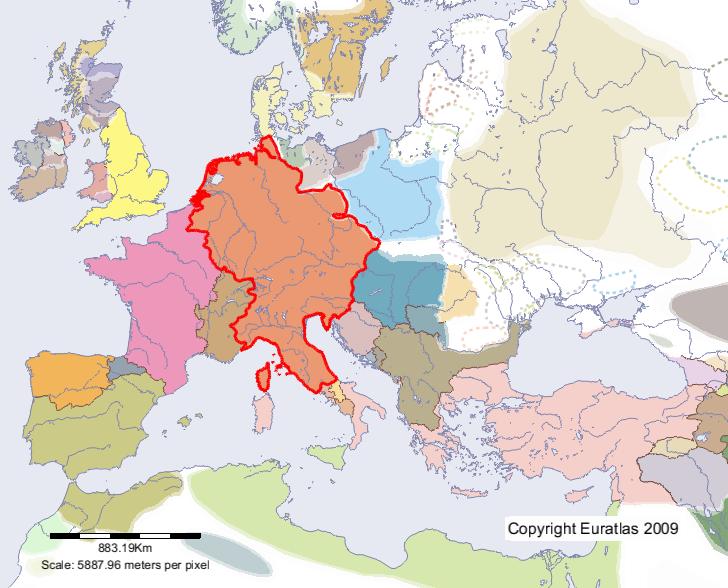
Map of the Holy Roman Empire
The Hohenstaufen dynasty (1155–1268)
Miedzyrecze was located close to the border with the Holy Roman Empire. It remained a western outpost of the Duchy of Greater Poland established by the 1138 Testament of Bolesław III Krzywousty. It was incorporated into the Poznań district of the Polish Crown upon the coronation of King Władysław I the Elbow-high in 1320.
German settlers began to migrate into the area in the course of the eastern expansion under the rule of his successor Casimir III the Great (1333–1370). Town privileges were confirmed by King Casimir IV Jagiellon in 1485.
Elisabeth Cruciger
Elisabeth Cruciger was the first female poet and hymn writer of the Protestant Reformation and a friend of Martin Luther.
She was born into a noble family in Meseritz in Farther Pomerania (now part of Poland). She entered Marienbusch Abbey in Treptow an der Regawhile still a child.
She got to know the ideas of the Reformation through Johannes Bugenhagen. She converted to Lutheranism. She left the abbey to move to Wittenberg in 1522. She married the theologian Caspar Cruciger the Elder, a student and assistant of Luther in 1524.
She is primarily known as the author of the hymn, Herr Christ, der einig Gotts Sohn (Lord Christ, the only son of God). She died in Wittenberg on 2 May 1535.
Elisabeth Cruciger
S. 伊丽莎白克鲁西格
T. 伊麗莎白克魯西格
伊 Yi she 伊 i that one Eri えり エリ El 엘 L
丽 li pretty 麗 rei lovely za ざ ザ li 리 lee
莎 sha insect 莎 sa sedge be べ ベ ja 자 character
白 bai bright 白 haku white su す ス be 베 the
克 Ke restrain 克 koku kindly Ku く ク seu 스 switch
鲁 lu crude 魯 ro foolish ru るっ ルッ Keu 크 big
西 xi west 西 sei west chi ち チ lu 루 sack
格 ge pattern 格 ko status ya ゃ- ャ- si 시 city
geo 거 roughness
---------------
The status of character restrained extension beyond expansion
to avoid the edge of crudeness in the loveliness of fashion.
==================
Thomas Hobbes
Leviathan
1651
Text
"No Discourse whatsoever, can End in absolute knowledge of Fact, past, or to come. For, as for the knowledge of Fact, it is originally, Sense; and ever after, Memory. And for the knowledge of Consequence, which I have said before is called Science, it is not Absolute, but Conditionall. No man can know by Discourse, that this, or that, is, has been, or will be; which is to know absolutely: but onely, that if This be, That is; if This has been, That has been; if This shall be, That shall be: which is to know conditionally; and that not the consequence of one thing to another; but of one name of a thing, to another name of the same thing."
------------------------
The knowledge of fact is sense with memory.
Science is the recognition of consequence without reverie.
The judgement of fact is rated for constancy.
Knowledge is conditional for economy.
It can be corrected or amended honestly.
==================
George Berkeley
Principles of Human Knowledge
1710
Text
"When men consider the great pains, industry, and parts that have for so many ages been laid out on the cultivation and advancement of the sciences, and that notwithstanding all this the far greater part of them remains full of darkness and uncertainty, and disputes that are like never to have an end, and even those that are thought to be supported by the most clear and cogent demonstrations contain in them paradoxes which are perfectly irreconcilable to the understandings of men, and that, taking all together, a very small portion of them does supply any real benefit to mankind, otherwise than by being an innocent diversion and amusement--I say the consideration of all this is apt to throw them into a despondency and perfect contempt of all study. But this may perhaps cease upon a view of the false principles that have obtained in the world, amongst all which there is none, methinks, has a more wide and extended sway over the thoughts of speculative men than this of abstract general ideas."
------------------------
The endlessness of investigation may be viewed as a cause for contempt for study.
Over or under generalization is the cause of error in reason when attempted by anybody.
==================
Adam Smith
Wealth of Nations
1776
Text
"Whether this propensity [for trade] be one of those original principles in human nature of which no further account can be given; or whether, as seems more probable, it be the necessary consequence of the faculties of reason and speech, it belongs not to our present subject to inquire. It is common to all men, and to be found in no other race of animals, which seem to know neither this nor any other species of contracts. Two greyhounds, in running down the same hare, have sometimes the appearance of acting in some sort of concert. Each turns her towards his companion, or endeavours to intercept her when his companion turns her towards himself. This, however, is not the effect of any contract, but of the accidental concurrence of their passions in the same object at that particular time. Nobody ever saw a dog make a fair and deliberate exchange of one bone for another with another dog. Nobody ever saw one animal by its gestures and natural cries signify to another, this is mine, that yours; I am willing to give this for that. When an animal wants to obtain something either of a man or of another animal, it has no other means of persuasion but to gain the favour of those whose service it requires."
------------------------
The propensity for trade is common to humans.
Agreement is made by contract when prudent.
Animals cooperate in movement for purposeful amusement,
they lack speech with language as a civilized institution.
==================
Immanuel Kant
Metaphysics of Morals
1796
Text
"THERE is nothing in the world which can be termed absolutely and altogether good, a good will alone excepted. Intellectual endowments, wit, and extent of fancy, as also courage, determination, and constancy in adhering to purposes once formed, are undeniably good in many points of view; but they are so far from being absolutely good, that they are qualities capable of being rendered bad and hurtful, when the will, under whose control they stand, is not itself absolutely good."
------------------------
A good will is the strongest of values
when the goodness is not idealized into a vacuum.
==================
Emer de Vattel
The Law of Nations
1797
Text
"The Romans often confounded the law of nations with the law of nature, giving the name of “the law of nations” (Jus Gentium) to the law of nature, as [iv] being generally acknowledged and adopted by all civilised nations. The definitions given by the emperor Justinian, of the law of nature, the law of nations, and the civil law, are well known. “The law of nature” says he, “is that which nature teaches to all animals”: thus he defines the natural law in its most extensive sense, not that natural law which is peculiar to man, and which is derived as well from his rational as from his animal nature."
------------------------
The Romans confounded the law of nations with nature.
The inference of design for economy is the portraiture.
==================
Jeremy Bentham
Principles of Morals and Legislation
1823
Text
"The principle of asceticism seems originally to have been the reverie of certain hasty speculators, who having perceived, or fancied, that certain pleasures, when reaped in certain circumstances, have, at the long run, been attended with pains more than equivalent to them, took occasion to quarrel with every thing that offered itself under the name of pleasure. Having then got thus far, and having forgot the point which they set out from, they pushed on, and went so much further as to think it meritorious to fall in love with pain. Even this, we see, is at bottom but the principle of utility misapplied."
------------------------
Having reaped a general principle from a particular experience
ascetics have fallen in love with pain as a prurience.
==================
Karl Popper
The Open Society and Its Enemies, Vol.2
1944
Text
"[This book] attempts to show that this civilization has not yet fully recovered from the shock of its birth — the transition from the tribal or 'closed society', with its submission to magical forces, to the 'open society' which sets free the critical powers of man. It attempts to show that the shock of this transition is one of the factors that have made possible the rise of those reactionary movements which have tried, and still try, to overthrow civilization and to return to tribalism."
------------------------
Primitive society is closed to civilization by belief in magical forces.
Rebellions have tried to overthrow civilization as a matter of course.
==================
Victoria Justice
Judge
Fairly
公平地判断
Gōngpíng dì pànduàn
公正に裁判官
Kōsei ni saibankan
ps26
Judge me fairly.
Treat me squarely.
I live with integrity.
I recall what you said to me.
I put my trust in you.
Don't make me feel blue.
Test me.
Try me.
Don't fry or deny me.
Examine my heart and mind.
See what good you can find.
Love is before my eyes.
Each color shades the sky.
I have walked in faith.
Trust has become a character trait.
The status of character restrained extension beyond expansion
to avoid the edge of crudeness in the loveliness of fashion.
I have not agreed to deception.
Relation qualifies the inception
of conception.
I don't deceive with the deceitful.
Repeated deceit makes regal truth look needful.
I have avoided destructive behavior.
I will not consort with the violent as a savior.
I wash my hands with the hope
that I will not exceed the scope
that is allowed by the sacrifice on your altar.
I will sing a song of thanks that does not falter.
I will recount your wonderful works
until the perks are heard by Turks and clerks.
Rain has come as our vindication.
Abundance has settled the dust of tribulation.
The threshing floors will be full of grain.
Wine and oil are also products that are gained.
I love the house in which you dwell.
It is the place where goodness swells
then excels.
The knowledge of fact is sense with memory.
Science is the recognition of consequence without reverie.
The judgement of fact is rated for constancy.
Knowledge is conditional for economy.
It can be corrected or amended honestly.
The endlessness of investigation may be viewed as a cause for contempt for study,
but over or under generalization is the cause of error in reason when attempted by anybody.
The propensity for trade is common to humans.
Agreement is made by contract when prudent.
Animals cooperate in movement for purposeful amusement,
but they lack speech with language as a civilized institution.
The Romans confounded the law of nations with nature.
The inference of design for economy is the portraiture.
Primitive society is closed to civilization by belief in magical forces.
Rebellions have tried to overthrow civilization as a matter of course.
Factionalism is tribalist in populist democracy when it come to the threat of force.
Having reaped a general principle from a particular experience
ascetics have fallen in love with pain as a prurience.
A good will is the strongest of values
when the goodness is not idealized into a vacuum.
All generations will call me blessed.
Faith confessed is enmeshed
with life for the best.
----------------------
Psalm 26
Judica me, Domine
Judge me, Dominated
1 Give judgment for me, O Lord,
for I have lived with integrity;
I have trusted in the Lord and have not faltered.
2 Test me, O Lord, and try me;
examine my heart and my mind.
3 For your love is before my eyes;
I have walked faithfully with you.
4 I have not sat with the worthless,
nor do I consort with the deceitful.
5 I have hated the company of evildoers;
I will not sit down with the wicked.
6 I will wash my hands in innocence, O Lord,
that I may go in procession round your altar,
7 Singing aloud a song of thanksgiving
and recounting all your wonderful deeds.
8 Lord, I love the house in which you dwell
and the place where your glory abides.
9 Do not sweep me away with sinners,
nor my life with those who thirst for blood,
10 Whose hands are full of evil plots,
and their right hand full of bribes.
11 As for me, I will live with integrity;
redeem me, O Lord, and have pity on me.
12 My foot stands on level ground;
in the full assembly I will bless the Lord.
--------------------------
Joel 2:23-4
O children of Zion, be glad
Rejoice in the LORD your God.
He has given the early rain for your vindication.
He has poured down for you abundance
with the early and the later rain, as before.
The threshing floors will be full of grain.
The vats will overflow with wine and oil.
--------------------------
Rain has come as our vindication.
Abundance has settled the dust of tribulation.
The threshing floors will be full of grain.
Wine and oil are also products that are gained.
===================
Luke 1:48
He has looked with favor on the lowliness of his servant.
Surely, from now on all generations will call me blessed.
-----------------------
All generations will call me blessed.
Faith confessed is enmeshed
with life for the best.
=================
Elisabeth Cruciger
b. 1500, Międzyrzecze, Poland
d. 5.2.1535, Wittenberg, Germany
Lectionary
Wiki
Międzyrzecze
Międzyrzecze (Meseritz) is a town in western Poland. The town's name refers to Mesopotamia ("between rivers" in Polish). It is located at the confluence of the Obra River and the Paklica tributary. The municipal area is in a particularly green part of Poland. Extensive forests and numerous lakes can be found in the vicinity.
The settlement is on the road leading from Magdeburg, Saxony to Gniezno in central Poland. it was first mentioned as Mezerici by the medieval chronicler Thietmar of Merseburg in the course of the 1005 campaign of King Henry II of Germany into the Polish lands of Duke Bolesław I Chrobry.
Map of the Holy Roman Empire
The Hohenstaufen dynasty (1155–1268)
Miedzyrecze was located close to the border with the Holy Roman Empire. It remained a western outpost of the Duchy of Greater Poland established by the 1138 Testament of Bolesław III Krzywousty. It was incorporated into the Poznań district of the Polish Crown upon the coronation of King Władysław I the Elbow-high in 1320.
German settlers began to migrate into the area in the course of the eastern expansion under the rule of his successor Casimir III the Great (1333–1370). Town privileges were confirmed by King Casimir IV Jagiellon in 1485.
Elisabeth Cruciger
Elisabeth Cruciger was the first female poet and hymn writer of the Protestant Reformation and a friend of Martin Luther.
She was born into a noble family in Meseritz in Farther Pomerania (now part of Poland). She entered Marienbusch Abbey in Treptow an der Regawhile still a child.
She got to know the ideas of the Reformation through Johannes Bugenhagen. She converted to Lutheranism. She left the abbey to move to Wittenberg in 1522. She married the theologian Caspar Cruciger the Elder, a student and assistant of Luther in 1524.
She is primarily known as the author of the hymn, Herr Christ, der einig Gotts Sohn (Lord Christ, the only son of God). She died in Wittenberg on 2 May 1535.
Elisabeth Cruciger
S. 伊丽莎白克鲁西格
T. 伊麗莎白克魯西格
伊 Yi she 伊 i that one Eri えり エリ El 엘 L
丽 li pretty 麗 rei lovely za ざ ザ li 리 lee
莎 sha insect 莎 sa sedge be べ ベ ja 자 character
白 bai bright 白 haku white su す ス be 베 the
克 Ke restrain 克 koku kindly Ku く ク seu 스 switch
鲁 lu crude 魯 ro foolish ru るっ ルッ Keu 크 big
西 xi west 西 sei west chi ち チ lu 루 sack
格 ge pattern 格 ko status ya ゃ- ャ- si 시 city
geo 거 roughness
---------------
The status of character restrained extension beyond expansion
to avoid the edge of crudeness in the loveliness of fashion.
==================
Thomas Hobbes
Leviathan
1651
Text
"No Discourse whatsoever, can End in absolute knowledge of Fact, past, or to come. For, as for the knowledge of Fact, it is originally, Sense; and ever after, Memory. And for the knowledge of Consequence, which I have said before is called Science, it is not Absolute, but Conditionall. No man can know by Discourse, that this, or that, is, has been, or will be; which is to know absolutely: but onely, that if This be, That is; if This has been, That has been; if This shall be, That shall be: which is to know conditionally; and that not the consequence of one thing to another; but of one name of a thing, to another name of the same thing."
------------------------
The knowledge of fact is sense with memory.
Science is the recognition of consequence without reverie.
The judgement of fact is rated for constancy.
Knowledge is conditional for economy.
It can be corrected or amended honestly.
==================
George Berkeley
Principles of Human Knowledge
1710
Text
"When men consider the great pains, industry, and parts that have for so many ages been laid out on the cultivation and advancement of the sciences, and that notwithstanding all this the far greater part of them remains full of darkness and uncertainty, and disputes that are like never to have an end, and even those that are thought to be supported by the most clear and cogent demonstrations contain in them paradoxes which are perfectly irreconcilable to the understandings of men, and that, taking all together, a very small portion of them does supply any real benefit to mankind, otherwise than by being an innocent diversion and amusement--I say the consideration of all this is apt to throw them into a despondency and perfect contempt of all study. But this may perhaps cease upon a view of the false principles that have obtained in the world, amongst all which there is none, methinks, has a more wide and extended sway over the thoughts of speculative men than this of abstract general ideas."
------------------------
The endlessness of investigation may be viewed as a cause for contempt for study.
Over or under generalization is the cause of error in reason when attempted by anybody.
==================
Adam Smith
Wealth of Nations
1776
Text
"Whether this propensity [for trade] be one of those original principles in human nature of which no further account can be given; or whether, as seems more probable, it be the necessary consequence of the faculties of reason and speech, it belongs not to our present subject to inquire. It is common to all men, and to be found in no other race of animals, which seem to know neither this nor any other species of contracts. Two greyhounds, in running down the same hare, have sometimes the appearance of acting in some sort of concert. Each turns her towards his companion, or endeavours to intercept her when his companion turns her towards himself. This, however, is not the effect of any contract, but of the accidental concurrence of their passions in the same object at that particular time. Nobody ever saw a dog make a fair and deliberate exchange of one bone for another with another dog. Nobody ever saw one animal by its gestures and natural cries signify to another, this is mine, that yours; I am willing to give this for that. When an animal wants to obtain something either of a man or of another animal, it has no other means of persuasion but to gain the favour of those whose service it requires."
------------------------
The propensity for trade is common to humans.
Agreement is made by contract when prudent.
Animals cooperate in movement for purposeful amusement,
they lack speech with language as a civilized institution.
==================
Immanuel Kant
Metaphysics of Morals
1796
Text
"THERE is nothing in the world which can be termed absolutely and altogether good, a good will alone excepted. Intellectual endowments, wit, and extent of fancy, as also courage, determination, and constancy in adhering to purposes once formed, are undeniably good in many points of view; but they are so far from being absolutely good, that they are qualities capable of being rendered bad and hurtful, when the will, under whose control they stand, is not itself absolutely good."
------------------------
A good will is the strongest of values
when the goodness is not idealized into a vacuum.
==================
Emer de Vattel
The Law of Nations
1797
Text
"The Romans often confounded the law of nations with the law of nature, giving the name of “the law of nations” (Jus Gentium) to the law of nature, as [iv] being generally acknowledged and adopted by all civilised nations. The definitions given by the emperor Justinian, of the law of nature, the law of nations, and the civil law, are well known. “The law of nature” says he, “is that which nature teaches to all animals”: thus he defines the natural law in its most extensive sense, not that natural law which is peculiar to man, and which is derived as well from his rational as from his animal nature."
------------------------
The Romans confounded the law of nations with nature.
The inference of design for economy is the portraiture.
==================
Jeremy Bentham
Principles of Morals and Legislation
1823
Text
"The principle of asceticism seems originally to have been the reverie of certain hasty speculators, who having perceived, or fancied, that certain pleasures, when reaped in certain circumstances, have, at the long run, been attended with pains more than equivalent to them, took occasion to quarrel with every thing that offered itself under the name of pleasure. Having then got thus far, and having forgot the point which they set out from, they pushed on, and went so much further as to think it meritorious to fall in love with pain. Even this, we see, is at bottom but the principle of utility misapplied."
------------------------
Having reaped a general principle from a particular experience
ascetics have fallen in love with pain as a prurience.
==================
Karl Popper
The Open Society and Its Enemies, Vol.2
1944
Text
"[This book] attempts to show that this civilization has not yet fully recovered from the shock of its birth — the transition from the tribal or 'closed society', with its submission to magical forces, to the 'open society' which sets free the critical powers of man. It attempts to show that the shock of this transition is one of the factors that have made possible the rise of those reactionary movements which have tried, and still try, to overthrow civilization and to return to tribalism."
------------------------
Primitive society is closed to civilization by belief in magical forces.
Rebellions have tried to overthrow civilization as a matter of course.
==================
Subscribe to:
Posts (Atom)