Showing posts with label history. Show all posts

Wednesday, August 28, 2019

Build

8.28.19
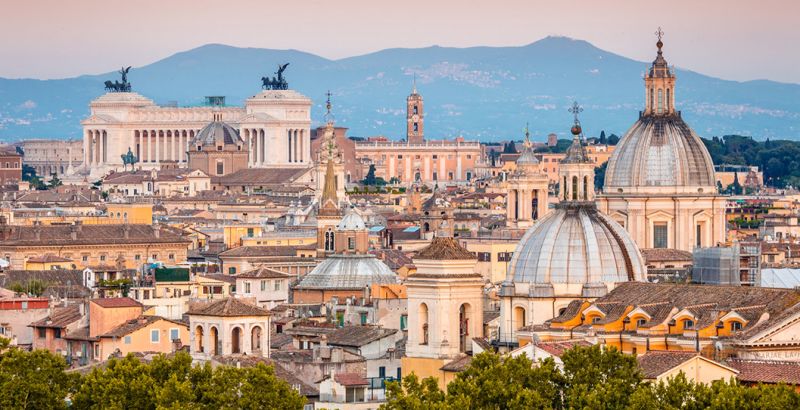
Rome, Italy

Build
Defense
建立防御 
Jiànlì fángyù
防御を構築する 
Bōgyo o kōchiku suru
ps87
Aedificare defensionis

The city was built on a mountain.
The mountain grounded that which was founded.

Height held the advantage of sight for distance.
When invaders attacked the city prepared for resistance.

Traders from different directions could be seen.
Welcome was prepared by the social machine.

The gate to the city welcomed visitors, family and friends.
It wasn't closed to ministers, misters, sisters or gems.

The gate was the way through which travelers entered.
Messengers shared word as a gift from the sender. 

Egypt and Babylon were among those who knew me.
Revelation was the gate for the truth of our history.

Philistia, Tyre and Ethiopia were partners in trade.
Weapons, wheels and cattle were the offerings they made.

The ring of fellowship is that which unites.
Power is grounded in defense of alliance.

Alliance against the destructive elements 
prepares people for defense against violence.

The military is drawn from the people.
Training in strength overcomes feeling feeble.

Search for those lost while at work or at play
lends experience to training in a beneficial way.

The source of life is love.
Rescue comes from within and above.

Zion is a lion on a hill.
Orion and Kiron match the iron will.

------------------------

Psalm 87
Fundamenta ejus

1 On the holy mountain stands the city he has founded; *
the Lord loves the gates of Zion
more than all the dwellings of Jacob.
2 Glorious things are spoken of you, *
O city of our God.
3 I count Egypt and Babylon among those who know me; *
behold Philistia, Tyre, and Ethiopia:
in Zion were they born.
4 Of Zion it shall be said, "Everyone was born in her, *
and the Most High himself shall sustain her."
5 The Lord will record as he enrolls the peoples, *
"These also were born there."
6 The singers and the dancers will say, *
"All my fresh springs are in you."

--------------------------

8.28

Freedom
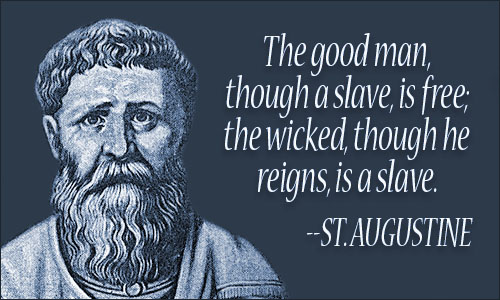
Augustine was an early Roman Christian theologian and philosopher from Africa. He was born in Thagaste. He became the bishop of Hippo Regius. Both cities are in present day Algeria.

He is viewed as one of the most important Church Fathers in western Christianity. He wrote in the Patristic era. “The City of God,” “On Christian Doctrine” and “Confessions” are among his most important works.

Augustine has been criticized as neo-Platonic in his philosophy and theology. His statement about the good man is a modification of what Plato had to say about slavery.

There isn't a king that wasn't descended from a slave. There is not a slave who did not have royal ancestors. When slavery was a spoil of war, the rulers who were not killed were enslaved to serve the conquering force.

He has been criticized for his philosophy because he defined human nature as totally corrupt. This had dark political implications in relation to Plato's definition of republic.

The Spartans were in the ascendance politically when he shifted the dialog of Socrates from the defense of democracy as practiced with Pericles to an advocacy for a form of government that was oppressively militaristic in aggression.

Athenian men were actively involved in the decisions made for the city state. The citizens were controlled by the destructive use of elements in the republic. Plato defined democracy as dictatorship when he overturned an earlier judgment.

Augustine's statement about the good man wasn't a rejection of slavery. It was a qualification of goodness in corrupted nature The statement was made in the "City of God." Given the postulation of a 'just war' this has dark implications in the context of a Constitution that ascribes the 'right' to declare war to an authority of the state.

Augustine said that John the Baptist did not bid soldiers to give up soldiering. He told them to do no violence and to be content with pay. This doesn't forbid soldiering or war.

It is a ban against invasion. The crusader popes thought that reclaiming the city of Jerusalem and the surrounding territory was a just cause for invasion. The proposal wasn't well received by those who had to pay for it.

Much of the domestic political strife in Europe resulted from immoral political proposals from the papal office. The popes had had to work their way into a position of authority with the development of monotheism as the prevailing cultural force for the European homeland.

There are grounds to argue that the crusades were conducted for a defensive purpose, but there was a significant consequence that resulted from the sectarian position that promoted the policy.

The Judean homeland was redefined as 'Christian' when it was Roman. Jews in Europe weren't the only ones who suffered from the Inquisition as the aggressive policy that sought to insure victory for Christian monotheism. Those Christians, Druids and Wiccans who did not agree strongly enough with the position of the Church militant were persecuted as well.

Augustine was on the ground floor for the development of monotheism as the dominant cultural force for Europe. What was his life like? Why did he write the "City of God"? How did his life affect the future that he envisioned for Rome?

Augustine of Hippo
b. 11.13.354 Thagaste 
d. 8.28.430 Hippo Regus, Numidia

Augustine was born on November 11 in the year 354 in the municipium of Thagaste  in the Roman province of Numidia. Thagaste is now Souk Ahras, Algeria.

Tipaza, Home of the Gods

He learned about the religious differences in the Roman empire from his parents. His father was a pagan who honored the Punic gods. His mother was a zealous Christian. Augustine was not interested in religion and education in his youth.
Pigs

The adolescent Augustine was interested in sex and mischievous living. He confessed that he had joined with friends to steal pears from a neighbor's vineyard. The purpose was "not to eat them ourselves but simply to throw them to the pigs."

Ruins in Carthage

Augustine set off to school in Carthage at age 17. The country boy was in the jewel of North Africa. There the underachiever became enraptured with his studies and started to make a name for himself.

He immersed himself in the writings of Cicero and the Manichaean philosophers. He cast off the vestiges of his mother's religion.

Amphitheater in Thagaste

Augustine returned to his home town of Thagaste to teach rhetoric when his studies were completed. He taught some Manichaeism on the side.

The philosophy was based on the teachings of a Persian named Mani. Mani believed that the teachings of the Buddha, Zoroaster and Jesus were incomplete. His revelations were for the entire world. He called his teachings the "Religion of Light." He claimed to be the Paraclete for truth as promised by Jesus.

Mani

Manichaeism purported to be the true synthesis of all the religious systems then known. It composed of Zoroastrian Dualism, Babylonian folklore, Buddhist ethics and some small and superficial additions of Christian elements. It was a dualist corruption of Christianity in the western world.

Seneca on Religion

It professed to be a religion of pure reason as opposed to Christian credulity. It professed to explain the origin, the composition and the future of the universe. It had an answer for everything and despised the mysteries of Christianity. The sacraments of Christianity were developed in relation to the mystery cults of polytheism when it was an 'underground' religious development.

Manichaeism taught that the world of light and the world of darkness constantly war with each other. War caught humanity in the struggle.

The Higher Nature

Manichaeism offered Augustine a way to accommodate his conflicts. He could pursue his career and retain his partner while purging his sins through his service to the pure Elect. He could blame his sins on his lower alien nature. The lower nature had been made by the power of evil like the material world. The doctrine taught that his true self would eventually shed this alien nature.

Quote Against Religion
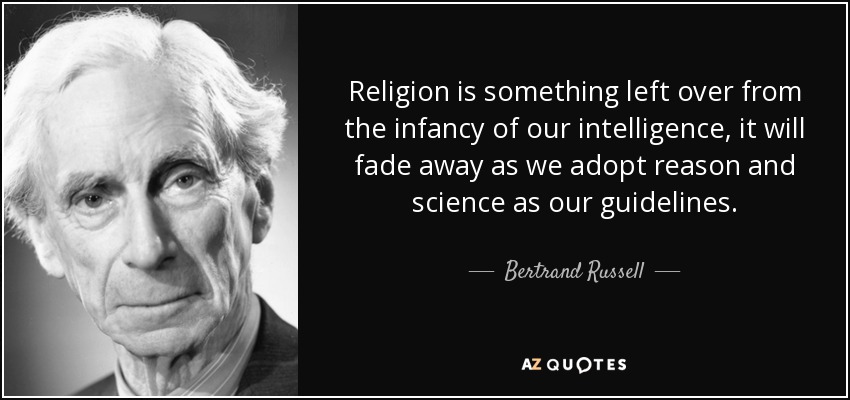
Manichaeism also modified the need to respect the name of Christ that was instilled by his childhood. His initial distaste for the Christian scriptures was gratified. He could regard the Bible as a crude and contaminated attempt at the truth. The Manichaean scriptures offered the name of Christ and what seemed to be a profound understanding of the universe and of human life.

Slave to Pleasure
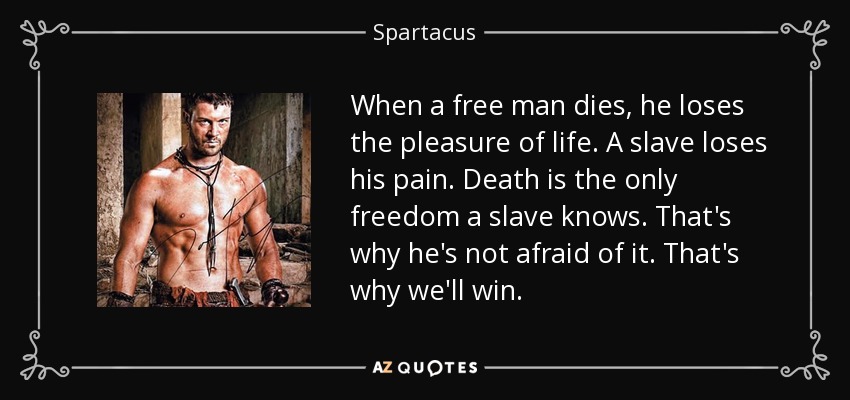
Augustine had joined the wildest young men of Carthage. They were called the "overturners" or the "destroyers." He became the delighted slave to pleasure in Carthage as a Manichee. Festivals celebrating the gods were used for drunken revelry. He took a partner. They soon were parents of a baby boy whom they named Adeodatus.

Augustine tried to hide his views from his mother, Monica. She threw him out of the house when she discovered them.

Monica had dreamed that her son would become a Christian. She continued to pray and plead for his conversion. She followed him to Carthage when he moved there to teach. She begged him not to go when Augustine was offered a professorship in Rome. He told her to go home and sleep comfortably in the knowledge that he would stay in Carthage. He boarded a ship for Rome when she left.

Rhetoric – Plato
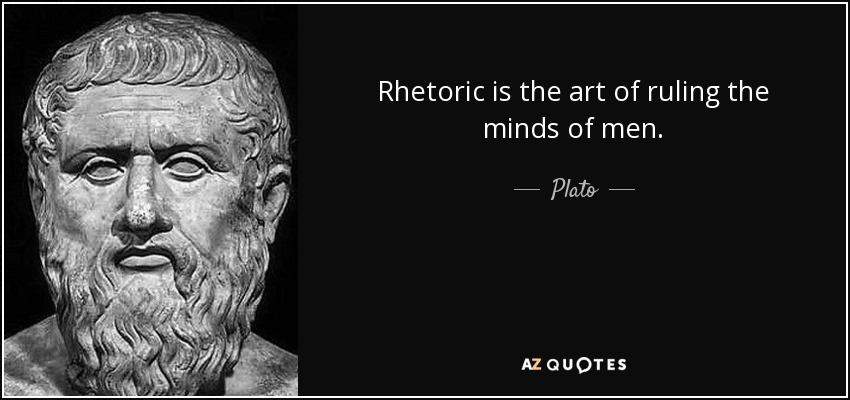
Augustine moved again after a year in Rome. He became the professor of rhetoric for the city of Milan. There he began attending the cathedral to hear the impressive oratory of Ambrose the bishop.

He kept attending because of Ambrose's power as a preacher. He soon dropped his Manichaeism in favor of Neoplatonism. This was the philosophy of both Roman pagans and Milanese Christians.

Pears

Augustine was struggling with himself. This struggle added to the emotional strain of forsaking his lover and the shift in philosophies. He had sought to overcome his fleshly passions for years. Nothing seemed to help.

It seemed to him that even his smallest transgressions were weighted with meaningful consequence. When he wrote about the pear stealing of his youth he reflected, "Our real pleasure consisted in doing something that was forbidden. The evil in me was foul, but I loved it."

“Take up and read.”
Benozzo Gozzoli

He wrestled anxiously about such matters one afternoon while walking in his garden. Suddenly he heard a child's sing-song voice repeating, "Take, read." (Tolle, legge) A collection of Paul's epistles that he'd been reading laid on a table.

He picked it up and read the first thing he saw: "Not in reveling and drunkenness, not in lust and wantonness, not in quarrels and rivalries. Rather, arm yourselves with the Lord Jesus Christ, spend no more thought on nature and nature's appetites" (Romans 13:13-14)

He later wrote, "No further would I read; nor needed I: for instantly at the end of this sentence, by a light as it were of serenity infused into my heart, all the darkness of doubt vanished away."

Cassiaco

Augustine's conversion sent shockwaves through his life. He resigned his professorship, dashed off a note to Ambrose telling of his conversion and retreated to a country villa in Cassiciacum with his friends, mother and his son, Adeodato.

There he continued discussing philosophy and churning out books in a Neoplatonist vein. He wrote the “Dialogs.”  He returned to Milan after a year to be baptized by Ambrose, then headed back to Thagaste to live as a writer and thinker.

He had lost his mother, his son and one of his closest friends by the time he reached his home town. The journey was lengthened by political turmoil.

These losses propelled Augustine into a deeper, more vigorous commitment. He established a lay ascetic community in Thagaste to spend time in prayer and the study of the Scriptures with his friends.

Church Ruins Annaba (formerly Hippo)
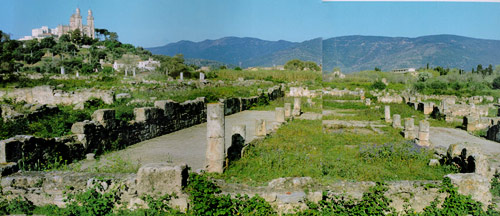
Augustine traveled to Hippo in 391 to see about setting up a monastery in the area. His reputation went before him. The story goes that Bishop Valerius put aside his prepared sermon and preached on the urgent need for priests in Hippo when he saw the renowned layman in church one Sunday.

The crowd stared at Augustine. They pushed him forward for ordination. Augustine was made a priest against his will. The laity thought that his tears of frustration were due to his wanting to be a bishop rather than priest. They assured him that good things come to those who wait.

Neo-Punic from Tunisia
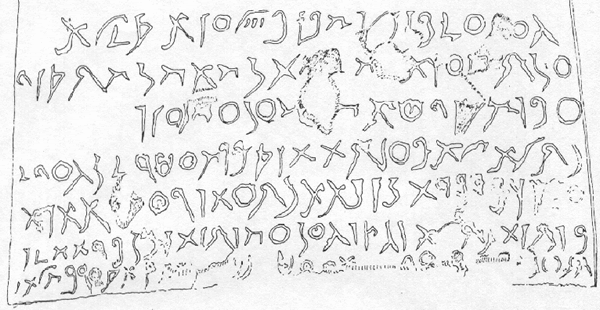
Valerius spoke no Punic. It was the local language from Phoenician sources. He quickly handed over teaching and preaching duties to his new priest. Augustine spoke the local language fluently. Augustine became bishop of Hippo within five years after Valerius died.

Dispute with Fortunatus
Church of St. Augustine
San Gimignano, Italy
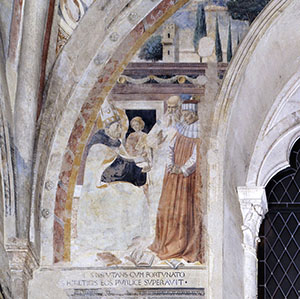
Guarding the church from internal and external challenges topped the new bishop's agenda. The church in North Africa was in turmoil. Though Manichaeism was already on its way out, it still had a sizable following.

Augustine knew its strengths and weaknesses. He debated Fortunatus, a former schoolmate from Carthage and a leading Manichaean at the public baths. The bishop argued against the errors in the doctrine. Fortunatus left town.

Dispute with the Donatists
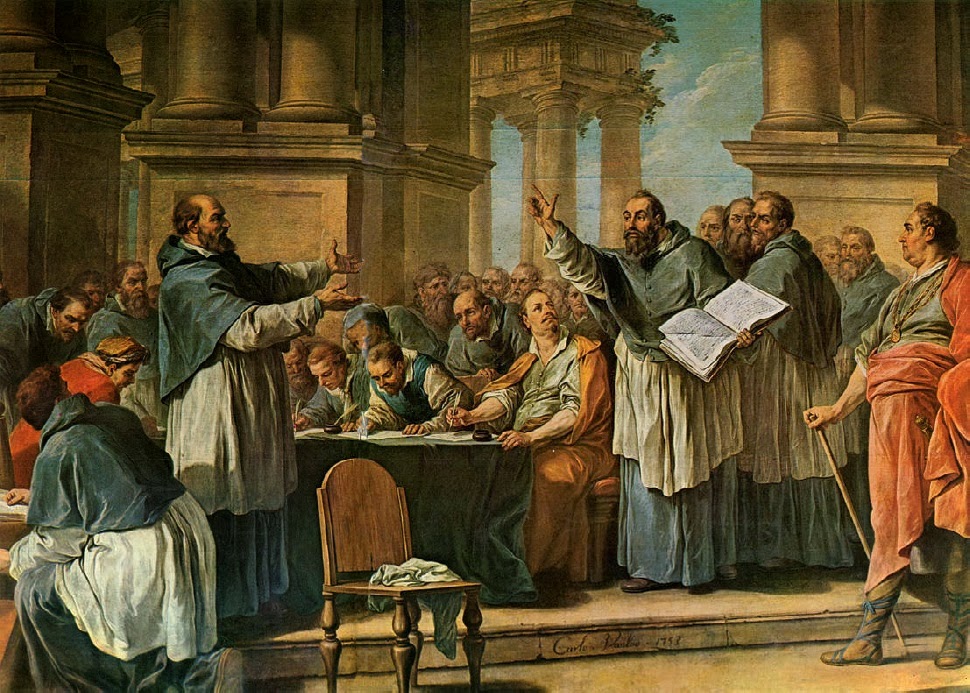
Donatism was more difficult to handle. It was a schismatic and separatist North African movement in the church. The Roman governor of North Africa had been lenient to the large Christian minority during his rule through the persecutions. 

“Traditors” is the root word for traitors.

He was satisfied when Christians handed over their scriptures as a token repudiation of their faith. Christians who did so were called traditors or “those who handed things over” by their critics. The critics were mainly from the lower class.

The Donatists were rigorists like the third century Novatianists. They held that the church must be a church of “saints”, not “sinners.” Sacraments administered by traditors were invalid.

No one without a past.


Donatists believed the Catholic Church had been compromised and that catholic leaders had betrayed the church during earlier persecutions. Augustine argued that catholicism was the valid continuation of the apostolic church.

He wrote scathingly, "The clouds roll with thunder, that the house of the Lord shall be built throughout the earth; and these frogs sit in their marsh and croak 'We are the only Christians!' "

None Righteous
Romans 3:10

The controversy came to a head as the imperial commissioner convened a debate in Carthage in 411 to decide the dispute. The commission had been appointed by Pope Militiades. Augustine's rhetoric refuted the Donatist doctrine. The commissioner pronounced against the group.

No Sin
1 John 1:8

The Donatists were repressed along with the Circumcellions. They condemned property and slavery. They advocated free love, canceling debt and freeing slaves.

The term "Circumcellions" was coined by others, based on "circum cellas euntes". They “go around units” because "they roved about among the peasants, living on those they sought to indoctrinate."

The condemnation of Donatism did not produce a time of rejoicing for the church. The year before the Carthage conference, the barbarian general Alaric and his troops sacked Rome.

Many upper-class Romans fled for their lives to North Africa. It was one of the few safe havens left in the empire. Augustine was given a new challenge. He wrote a defense for Christianity against claims that it had caused the empire's downfall by turning eyes away from Roman gods.

City of God

Augustine's response to the criticism came in “The City of God.” The work included 22 volumes. It took over 12 years to write. He argued that Rome was punished for past sins, not new faith.

His neo-Platonism provided a bridge to monotheism, but the convictions regarding the corruption of human nature and 'just war' allowed for the perpetuation of the fatalism that was so reflective of the polytheistic Roman order.

His lifelong obsession with original sin was fleshed out. His work formed the basis for the medieval mind. "Mankind is divided into two sorts," he wrote. "Such as live according to man, and such as live according to God. These we call the two cities… The Heavenly City outshines Rome. There, instead of victory, is truth."

Sin City

Pelagianism was another front Augustine had to fight to defend Christianity. Pelagius was an Irish monk. He gained popularity just as the Donatist controversy ended. He rejected the idea of original sin. He insisted instead that the tendency to sin is humankind's own free choice.

Jerome and Augustine saw Pelagianism as the ‘heresy of Pythagoras and Zeno.’ It amounted to the act of saying that slavery was not slavery. It was the ‘sin’ that had justified the overthrow of Babylon by Cyrus and the Achaemenid Persians.

Divine grace was not seen as necessary to do the will of God. The church excommunicated Pelagius in 417, but his banner was carried on by young Julian of Eclanum.

Julian took potshots at Augustine's character as well as his theology. He argued that Augustine and his other low-class African friends had taken over Roman Christianity. Augustine argued with the former bishop for the last ten years of his life.

Vandal Invasion

The Vandals invaded North Africa in the summer of 429. They met almost no resistance along the way. Hippo was one of the few fortified cities. It was overwhelmed with refugees.

The 76-year-old Augustine died in the third month of the siege. He was not killed by an arrow. He died from a fever.

His writings survived the Vandal takeover miraculously. His theology became one of the main pillars on which the church of the next 1,000 years was built.

And the Son
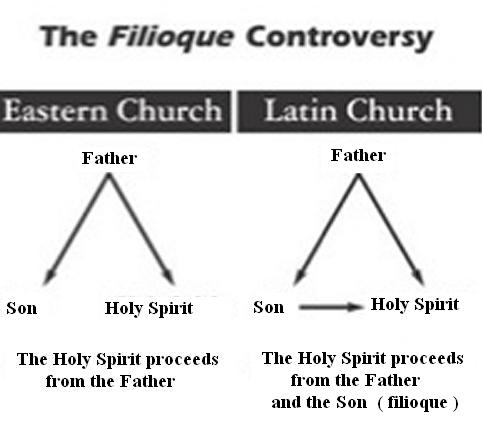
Some of his teachings have been disputed in the East. Theologians such as John Romanides have questioned his assertion regarding the degree of depravity in human nature and the Neo-Platonic argument regarding the names of God.

Theologians like Georges Florovsky in the Eastern Orthodox Church have shown significant appropriation of his writings.  The most controversial doctrine surrounding his name is the fililoque clause.

The clause regarding the procession of the Spirit added “from the Son” to the Nicene Creed. This clause has been rejected by the Orthodox Church.

Predestined to Original Sin?

Other disputed teachings include his views on original sin, the doctrine of grace and predestination.  Though considered to be mistaken on some points, he is still considered a saint.

He has even influenced Eastern Church Fathers like Gregory Palamas. Augustine "established anew the ancient Faith" according to his contemporary Jerome.


Lectionary Augustine of Hippo
wiki Augustine of Hippo
Christianity Today: Theologian Augustine
IEP Philosopher Augustine
Augustinian Augustine
Manichaeism
Persian Religion

Sunday, June 16, 2019

Judge

6.23.19

Selma Blair

Judge
for Me
为我判断 
Wèi wǒ pànduàn
私のために裁判官
Watashi no tame ni saibankan
ps43
Iudex pro me

Judge for me, God.
Defend my cause against the hostile anthropod.

Deliver me from deceitful hypocrisy
and those that seek to damage me or my property

You are the source of my strength.
Why have you put me from you at length?

Why do I trod so heavily
while the enemy oppresses me?

Send out your truth and your light
that I may see with the help of your insight.

Bring me to the height of my heart
with your indwelling spark.

Watch your will despite the pandemonium.
Welcome the silence as the presence of your Custodian.

There is promise in philosophy for history.
Inference from observation decreases mystery.
Creation with organization builds consensus for practical simplicity.


Grace Church, Panama City Beach, FL

I want to visit your altar with joy and gladness.
I want to feel relief from this bounty of sadness.

Why are you so full of heaviness my soul?
Why are you so disquieted in your role?

The deviant pressures in life are countermanded
by the authority of love's commandment.

It was the cruelty of punishment that made the law oppressively severe.
Redemption in the real presence of Christ made us as heirs to the promise draw near.  


Lake Eola, Orlando, FL

Renew your faith in God.
Give thanks for the flowery sod.

Let your countenance shine like the sun.
Be the emblem of faith for the Holy One.

-------------------------

43 Judica me, Deus
Judge me, God

1 Give judgment for me, O God,
and defend my cause against an ungodly people;
deliver me from the deceitful and the wicked.
2 For you are the God of my strength;
why have you put me from you?
and why do I go so heavily while the enemy
oppresses me?
3 Send out your light and your truth, that they may lead me,
and bring me to your holy hill
and to your dwelling;
4 That I may go to the altar of God,
to the God of my joy and gladness;
and on the harp I will give thanks to you, O God my God.
5 Why are you so full of heaviness, O my soul?
and why are you so disquieted within me?
6 Put your trust in God;
for I will yet give thanks to him,
who is the help of my countenance, and my God.

----------------------------
====================
----------------------------

1 Kings 19:11-13

The LORD said, 'Go out and stand on the mountain and watch for me to pass.' Now there was a great wind. It was so strong that it toppled trees, but the LORD was not in the wind. After the wind came an earthquake that split slabs and broke rocks, but the LORD was not in the quake. After the earthquake came a fire that set the mountain ablaze, but the LORD was not in the fire. After the fire came the sound of silence.

When Elijah heard it, he wrapped his face in his mantle and went out to stand at the entrance to the cave. He heard a voice that said, 'What are you doing here?'

----------------------------

Watch your will despite the pandemonium.
Welcome the silence as the presence of your Custodian.

=====================

Galatians 3:23,27-29

Before faith came, we were imprisoned and guarded under the law until faith would be revealed.
As many of you as have been baptized have clothed yourselves with Christ. There is no longer Jew or Greek. There is no longer slave or free. There is no longer male and female. All of you are one in Christ Jesus. If you belong to Christ, then you are Abraham's offspring. You are heirs according to the promise.

----------------------------

It was the cruelty of punishment that made the law oppressively severe.
Redemption in the real presence of Christ made us as heirs to the promise draw near.

=====================

Luke 8:30-33

Jesus then asked him, 'What is your name?' He said, 'Legion.'  Many demons had entered him. They begged him not to order them to go back into the abyss. There was a large herd of swine feeding on a hillside. The demons begged Jesus to let them enter these. He gave them permission. The demons left the man and entered the swine. The herd rushed down the steep bank into the lake and was drowned.

----------------------------

The deviant pressures in life are countermanded
by the authority of love's commandment.

=====================

Truth
Verum Factum

Giambattista Vico
b. 6.23.1668 Naples, Kingdom of Naples
d. 1.23.1744 Naples, Kingdom of Naples

Giambattista Vico was an Italian political philosopher and rhetorician, historian and jurist of the Age of Enlightenment. He has been credited with the invention of the philosophy of history.

He spent most of his professional life as Professor of Rhetoric at the University of Naples. He was trained in jurisprudence, but read widely in Classics, philology and philosophy. His study informed his original views on history, historiography and culture.

He criticized the expansion and development of modern rationalism as an apologist for Classical Antiquity. He was a precursor of systematic and complex thought in opposition to Cartesian analysis and other types of reductionism. He was the first expositor of the fundamentals of social science and of semiotics.

His thought is most fully expressed in his mature work, the Scienza Nuova or The New Science.

Naples

Naples is located on the west coast of Italy, 225 km (140 miles) south of Rome. It is the third-largest municipality in Italy after Rome and Milan.

The city was an important part of Magna Graecia. It played a major role in the merging of Greek and Roman society. It was a significant cultural center under the Romans.

The Kingdom of Naples  comprised that part of the Italian Peninsula south of the Papal States between 1282 and 1816.

It was created as a result of the War of the Sicilian Vespers (1282–1302). When the island of Sicily revolted, it was conquered by the Crown of Aragon. It became the separate Kingdom of Sicily.
Naples continued to be officially known as the Kingdom of Sicily, the name of the formerly unified kingdom. The realm was contested between French and Spanish dynasties for much of its existence.

Naples had become Europe's second-largest city by the 17th century. Paris was larger. It was the largest European Mediterranean city with around 250,000 inhabitants. The city was a major cultural center during the Baroque era  from the early 17th until the mid-18th century.

The English word baroque comes directly from the French adaptation of the Portuguese term barroco, a flawed pearl. It wasn't used in a favorable sense initially. It was literally applied to pearls that weren't round. The style came to refer to art that used  contrast, movement, exuberant detail, deep color, grandeur and surprise to achieve a sense of awe.

Giavon Battista Vico

Giovanni Battista Vico was born in Naples, Italy, June 23 1668, to a bookseller and daughter of a carriage maker. He was the sixth of eight children in a poor family.

He fell from the top of a ladder in his father’s bookshop at the age of 7 and seriously injured his head. He became a teacher of himself at the advice of his father, but complained of bouts of ill health for most of his life.

He received his formal education at local grammar schools and from various Jesuit tutors.
He accepted a job as a tutor in Vatolla, south of Salerno, in 1686 after surviving a bout of typhus.

The  nine-year professional engagement lasted till 1695. He gave up his study of scholastic philosophy during this time and concentrated on the study of Plato and poets such as Virgil, Dante and Petrarch. He described these years as a time when he lived in isolation and during which Naples was overrun by Cartesian scientists.

He remained in contact with Naples and completed his study at the University from which he graduated in 1694 as Doctor of Civil and Canon Law.

Vico became a professor of rhetoric at the University of Naples in 1699. He held the position until 1741. He married during this time and had eight children. Three of them survived.

Vico returned to Naples from Vatolla to find "the physics of Descartes at the height of its renown among the established men of letters." Developments in both metaphysics and the natural sciences abounded as the result of Cartesianism.

Descartes's method was widely disseminated by the Port Royal Logic of Antoine Arnauld and Pierre Nicole. The method was  rooted in verification. The only path to truth, and thus knowledge, was through axioms derived from observation.

Descartes's insistence that the "sure and indubitable" (or, "clear and distinct") should form the basis for reason had an impact on the prevailing views of logic and discourse. Studies in rhetoric and all studies concerned with civic discourse and the realm of probable truths met with increasing disdain.

Vico  prepared students for higher studies in the fields of Law and of Jurisprudence as Royal Professor of Latin. His lessons were about the formal aspects of the canon of rhetoric, including the arrangement and the delivery of an argument.

He chose to emphasize the Aristotelian connection of rhetoric with logic and dialectic. Aristotle's method was characterized by the consideration of what others had to say about something.

Vico's objection to modern rhetoric is that it is disconnected from common sense (sensus communis), defined as the “worldly sense” that is common to all men.  His rhetoric started from a central argument (medius terminus), which was to be clarified by following the order of things as they arise in our experience. Probability and circumstance retained their proportionate importance. Discovery was reliant upon topics (loci) that superseded axioms derived through reflective, abstract thought.

Vico set out to educate the orator (rhetorician) as the transmitter of the oratio, a speech with ratio (reason) at the center. What was essential to the oratorical art (Gr. ῥητορική, rhētorikē) was the orderly link between common sense and an end commensurate with oratory.

This end was not imposed upon the imagination from above in the manner of the moderns and dogmatic Christianity. It was drawn from common sense, itself. His true orator would be midwife to the birth of “the true” (as an idea) from “the certain”, the ignorance in the mind of the student as in the tradition of Socrates and Cicero.

Vico's position held that the realms of verifiable truth and human concern share only a slight overlap, yet reasoning is required in equal measure in both spheres. He did not argue that the Cartesian method was irrelevant. Its application could not be extended to the public through the civic sphere.

He argued along with the ancients that appeals to phronēsis (φρόνησις or practical wisdom) must also be made. Organization in the Dutch republic suggested that business interest would control government as an expression of axiomatic relations.

The idea of the 'Dutch book' bet was such that the business executive was made a government official so the man would turn a profit from the pricing of products in business and the taxation of service for government.

Modern politicians organize their campaigns in relation to larger funding sources in an effort to make themselves more powerful than the business leaders who provide the larger contributions.

Vico is best known for his verum factum principle. The principle was first formulated in 1710 as part of his De antiquissima Italorum sapientia, ex linguae latinae originibus eruenda (1710) ("On the most ancient wisdom of the Italians, unearthed from the origins of the Latin language").

The principle states that truth is verified through creation or invention and not, as per Descartes, through observation.  This belief opens the door to dependence upon the sword of Damocles. 'Fake news' is the modern term for it.

Once government officials persuade the public that they are necessary to solve all problems related to national security, accountability is discarded to favor increase in the public sense of dependency upon the government official.

Business interest may have been organized so the organizer of the production of a product for profit could not lose once official status was gained in the Dutch republic, but organization was ordered to provide a product or service for the public.

When the government makes itself the solution to all problems there is no end to the deception that is rendered against people as though it were for the public interest.

The political system derived from the Cartesian or the Verum Factum method doesn't entertain free market competition within the context of a nation. Either allows for competition between nations, but the Verum Factum is closer to the concept of a nation without borders. It is the more liberal of the two views.

The Verum Factum has been employed by liberals in Congress or Parliament statistically. Cartesian organization has prevalence at the state level in the US or county in the UK, but national overreach has been imposed on this system of organization.

Vico lived until he was 75 years of age. He died in Naples on January 23, 1744.

------------------------

Giavon Vico
S. 约翰维科
T. 約翰維科

约  Yue    to invite                 約  yaku     promise               Jo       じょ    ジョ         Ji     지  G     
翰  han    writing                   翰  kan       writing                ban    ばん バン             o     오  five   
维  Wei   to maintain             維  i            fiber                    Vi       ヴぃ  ヴィ          ban  반  half     
科  ke      rules                       科  ka         department          ko       こ      コ              Bi    비  ratio
                                                                                                                                     ko   코   nose   

----------------------------

There is promise in philosophy for history.
Inference from observation decreases mystery.
Creation with organization builds consensus for practical simplicity.

====================                                   

wiki Giovan Vico
IEP: Vico
SEP: Vico

Friday, April 5, 2019

Heal

4.6.19


Heal
Yourself
治愈自己 
Zhìyù zìjǐ
あなた自身を癒す 
Anata jishin o iyasu
ps147

Security for the nation state
is secure when it isn't late.
The expansion of alliance 
for trade, travel and science
will reduce the defiance
that opposes guidance
to compliance
with reliance 
on license
for triumph.

Responsibility
will set us free. 

I have been appointed 
to bring good news to those anointed
with the management of labor.
Freedom is ours to savor.

The blind will receive insight.
The redeemed will take delight
in their part in leadership
as the spirit dripped device
for us to sip.

Respect your role in the healing art.
Medicine treats malady after the start.

It works until you find something better
to avoid illness or injury as your debtor.

The pharmacologist makes a tricky mixture 
of herbal extracts to work as an elixir
to change the body's texture
until good health becomes the fixture.

The physician  provides a service
though it may make you feel nervous
it will teach you to refrain 
from that which causes pain.

Diagnosis is a skill
that helps you redirect your will
to find the cause of malady
to deter avoidable tragedy.

Give up your faults as they are found.
Diet, exercise and hygiene are elements to which we're bound.

Adjust that which you are able
around the home and at your table.

The soul is often healed
when the cause of malady has been revealed.

It is good to sing your praise.
Your spirits will be raised.


Your house will be rebuilt with peace.
Return from exile will be achieved.

The broken heart will be unbroken.
The wound will be bound as healing spoken.

The length of night decreases each day.
Equal lengths have found their say.

The light will increase as it's spun.
Earth's axis is starting to tilt toward the sun.

The Spring Equinox has passed drawing near.
The axis will tilt more toward the sun from here
in the northern hemisphere.
The lean won't stray far or sharply veer.

Gravity keeps our sphere 
on course for the warmer part of the year.

The number of the stars are counted
as a course set with majesty unbounded.

Hope in the heart of lowliness is lifted.
Pride from the reach of passion is sifted.

The harmony of the spheres is music.
Fluids move in amusement 
inside and out of that which is human.

The heavens are covered with clouds that are fluent.
Rain is prepared for life rooted and unrooted.
The earth will be given that for which it is suited.

Dormant grass on mountains lays beneath the snow.
Much of the north awaits the warmth to sow.

Flocks and herds find food where it can be known.
Ravens will feed on anything edible where it is thrown.

The might of a horse is a sight for delight.
Exercise strengthens the human device.

Pinellas Bike Trail

The background for creativity waxes with courage.
Bravery aspires that leadership may flourish.

Become all things to all people for this reason.
You may save some within the season.

Work for the good of the community as a whole.
You will reap good meaning from what you sow.

Faith comes by seeing beyond what was seen
when that which was seen was violent or mean.

Pleasure is preserved for those who work with fear.
Favor is shown to those who are dear.

Demons are purged when correction is urged.
Concept and practice are merged when the detection has surged.

Community that seeks that which is best
earns that reprieve known as rest from the test.

Jesus gave thanks and broke the bread.
The disciples shared with others as he said.
There was leftover after the imitation of those who led.

Language is the word 
that decreases the absurd.

The power of the other in the ancestor
reduces the mystery of history as a spectre.

When you target history as the mountain in your heart
you can form something better than that with which you made a start. 

Change by revolution
is not a good solution. 

Coercion by evolutionary subversion
does not fit the utility of reasonable conversion.

Direct yourself to responsibility even as the director.
Respect outsiders to decrease dependence as a vector.

Efficiency in production is increased with organization.
The reduction of thought for action is a form of liberation.

Security is strengthened with the bars on your gates. 
Your children are protected with the element of grace.

Peace has been established with your borders.
Immigration is constrained when by necessity it's ordered.

We have been satisfied with wheat and corn from the earth.
Fiber and nutrients were provided for health that has worth.

Heal yourself from the cause of malady found.
You will see your self as more experienced now.

====================

147 Laudate Dominum

1 Hallelujah!
How good it is to sing praises to our God!
how pleasant it is to honor him with praise!
2 The Lord rebuilds Jerusalem;
he gathers the exiles of Israel.
3 He heals the brokenhearted
and binds up their wounds.
4 He counts the number of the stars
and calls them all by their names.
5 Great is our Lord and mighty in power;
there is no limit to his wisdom.
6 The Lord lifts up the lowly,
but casts the wicked to the ground.
7 Sing to the Lord with thanksgiving;
make music to our God upon the harp.
8 He covers the heavens with clouds
and prepares rain for the earth;
9 He makes grass to grow upon the mountains
and green plants to serve mankind.
10 He provides food for flocks and herds
and for the young ravens when they cry.
11 He is not impressed by the might of a horse;
he has no pleasure in the strength of a man;
12 But the Lord has pleasure in those who fear him,
in those who await his gracious favor.
13 Worship the Lord, O Jerusalem;
praise your God, O Zion;
14 For he has strengthened the bars of your gates;
he has blessed your children within you.
15 He has established peace on your borders;
he satisfies you with the finest wheat.
16 He sends out his command to the earth,
and his word runs very swiftly.
17 He gives snow like wool;
he scatters hoarfrost like ashes.
18 He scatters his hail like bread crumbs;
who can stand against his cold?
19 He sends forth his word and melts them;
he blows with his wind, and the waters flow.
20 He declares his word to Jacob,
his statutes and his judgments to Israel.
21 He has not done so to any other nation;
to them he has not revealed his judgments.
Hallelujah!

-----------------------

Jeremiah 29:7
Seek the welfare of the city where I have sent you into exile and pray to the LORD on its behalf for in its welfare you will find your welfare.

--------------------------------

Work for the good of the community as a whole.
You will reap good meaning from what you sow.

========================

1 Thess. 4:11-12
Aspire to live quietly, to mind your own affairs and to work with your hands as we directed you, so you may behave properly towards outsiders and be dependent on no one.

--------------------------------

Direct yourself to responsibility even as the director.
Respect outsiders to decrease dependence as a vector.

========================

Mark 8:6-8
Jesus ordered the crowd to sit on the ground. He took the seven loaves and after giving thanks he broke them and gave them to his disciples to distribute. They distributed them to the crowd.  They also had a few small fish. After blessing them, he ordered that these too should be distributed. They ate and were filled. They took up seven baskets full of the broken pieces left over.

--------------------------------

Jesus gave thanks and broke the bread.
The disciples shared with others as he said.
There was leftover after the imitation of those who led.

========================

Alexander the Great

Daniel G. C. Wu
b. 1883, Taishan, Guangdong, China
d. April 6, 1956, San Francisco, California

Taishan

Taishan is located about 80 km (50 miles) west from Macau and 135 km (85 miles) southwest of Guangzhou, formerly known as Canton.

It is part of the Pearl River Delta. This delta is made up by the confluence of three rivers. The Xi Jiang (West River) and the Bei Jiang (North River) empty into the South China Sea.  The Dong Jiang (East River) flows into the Pearl River in the east.

The flat lands of the delta are criss-crossed by a network of tributaries of the Pearl River. There are 95 islands and islets in the delta.

The Treaty of Nanjing ended the First Opium War in 1842. There had been a trade imbalance between Qing Imperial China and Great Britain caused by the demand for silk, porcelain and tea in Europe. The British East India company had opium grown in India smuggled to China.

The sale of the smuggled narcotic reversed the trade deficit. It also induced addiction among users in the Chinese population. When a large amount of opium had been confiscated by a Chinese official, Parliament sent the Royal Navy to inflict damage on the empire in a tactic that has come to be called gunboat diplomacy.

The treaty was regarded as unfair, but it opened China to greater foreign trade just before the California Gold Rush. The prospect of emigration to the United States acquired appeal.

Many served as contract workers in Hawaii, Cuba and California. The Chinese made up 80% of the company workforce for the Central Pacific half of America's Transcontinental Railroad. They laid track over the mountains and deserts of the west.

Daniel Wu

Wu was given the name Ng Gee Ching at his birth in China in 1883. He moved to Honolulu, Hawaii as a child.

Deaconess Emma Drant taught him English in exchange for information about the Cantonese language. Gee Ching felt lukewarm towards Christianity at first. He was inspired by Drant's faith. He added Daniel Wu to his name when he converted.

Wu initially remained in Hawaii when Drant moved to the San Franciso Bay area in 1905 to assist the Chinese community with the True Sunshine Episcopal mission. The 1906 San Francisco earthquake resulted in fires. 3,000 people were killed. 80% of the city was destroyed.

Chinese immigrants were especially hard hit. Wu responded to Drant's call for help with the mainland community. Many immigrants from Chinatown moved across the bay to the Oakland area. Another mission was opened by the name the Church of Our Saviour.

When Drant left to respond to another assignment in the east, Wu helped to manage both missions. He studied for the priesthood at the Church Divinity School of the Pacific. He was ordained as a priest in 1912. He became the vicar for both missions.

Wu married King Yoak Won (1890-1982) in 1913 after a 3 year courtship. She was the granddaughter of immigrants from Toi San county in what became southern Guangdong Province. Her father (by then deceased) had arrived during the California Gold Rush and worked to build railroads.

King Yoak Won had been introduced to Christianity by a Chinese Methodist missionary. She was baptised in a Congregationalist church. They met when she was rolling bandages for the army of the new republic in China. The Xinhai Revolution had overthrown the Manchurian Qing, Puyi in 1911. The Qing dynasty had ruled China from 1644 to 1911.

Sun Yat Sen had been the first president for the nationalist Republic of China. His term in office only lasted months in 1912. Yuan Shikai was elected president of the ROC in 1913 after his opponent had been assassinated. He eventually declared himself the emperor of China in 1915.

Wu was married to Won in Grace Cathedral in San Francisco in a ceremony in both English and Chinese. The Wus eventually had 4 children.

He frequented the port of entry to make contact with newly arrived immigrants. Many of them were Cantonese people. Wu and his wife offered English and sewing classes for adults as well as Chinese language classes for children in the two congregations. About 250 persons attended the daily classes at each school.

King Yoak Won Wu also assisted immigrants through the Chinese YWCA that had been founded in 1916. She was on the board of directors for many years.

Fr. Daniel retired from both his congregations in 1944.

He died on April 6, 1956. His wife King Yoak Wu survived him by 26 years.

Both congregations that Wu shepherded survive to this day albeit in different locations. They offer services in English, Cantonese and Mandarin, as well as continue to offer language and sewing classes.

--------------------------------

Daniel Wu
吴彦祖
吳彥祖

吴  Wu       Wu                            吴  go     surname          Da    だ  ダ        Da  다   all   
彦  Yan       accomplished          彦  gen   boy                   ni     に   ニ        ni   니   nee     
祖  zu          ancestor                  祖  so      ancestor           e     え     エ        el    엘   L       
                                                                                           ru   る     ル        U   우   right         
                                                                                           U    う-  ウ-                 
-----------------------------

Language is the word
that decreases the absurd.

The power of the other in the ancestor
reduces the mystery of history as a spectre.

======================

http://satucket.com/lectionary/daniel_wu.htm
https://en.wikipedia.org/wiki/Daniel_G._C._Wu
http://www.truesunshine.org/historypast1.html

--------------------------------------

Religion

Alexander Herzen
b. April 6, 1812, Moscow, Russia
d. January 21, 1870, Paris, France

Moscow

The city of Moscow gradually grew around the Kremlin beginning in the 14th century. The city is situated on either side of the Moskva River in the eastern part of Russia.

The city grew in five divisions separated by walls in the 16th to 17th centuries. The Kremlin ("fortress"), Kitaigorod ("walled town"), Bielygorod ("white town") and Zemlianoigorod ("earthworks town") were in city limits. Miestchanskygorod ("bourgeois town") was outside the city walls.

The city was destroyed in the Russian campaign by Napoleon in 1812.

The Napoleonic Empire seemed to be at its height in 1810 and 1811, but it was starting to decline from its apogee in 1806–1809.  Most of Western and Central Europe was under his control either directly or indirectly through various protectorates, allies and countries defeated by his empire and under treaties favorable for France. The Peninsular War in Spain and Portugal was costly and drawn out.

The Russian campaign began on 24 June 1812 when the Grande Armée crossed the Neman River in an attempt to engage the Russian army. Napoleon hoped to compel Tsar Alexander I of Russia to cease trading with British merchants through proxies in an effort to pressure the United Kingdom to sue for peace.

He pushed the army rapidly through Western Russia in an attempt to catch up with the Russians through series of long marches. Scorched-earth tactics were employed. Villages, towns and crops were destroyed. The French were forced to rely on a supply system that was incapable of feeding their large army in the field.

The French caught up with the Russian army on September 7. The army had dug itself in on hillsides before a small town called Borodino, seventy miles west of Moscow. The battle that followed was the bloodiest single-day action of the Napoleonic Wars. It produced a narrow French victory. The Russian army withdrew the following day. The French were left again without the decisive victory Napoleon sought.

The French entered Moscow a week later. The Russians had abandoned the city. Major buildings had been destroyed. Small fires were growing into large ones. Most of the buildings were made of wood.

The loss of Moscow did not compel Alexander I to enter into negotiations. Napoleon stayed on in Moscow for a month. The offer for peace never came. The French army left Moscow on October 19. Napoleon began to retreat back to the Polish border.

The Grande Armée suffered from the onset of the Russian Winter in the following weeks. Lack of food and fodder for the horses, hypothermia from the bitter cold and persistent attacks upon isolated troops from Russian peasants and Cossacks led to great losses in men. There was a breakdown of discipline and cohesion in the army.

When the remnants of Napoleon's main army crossed the Berezina River in late November, only 27,000 soldiers remained. The Grande Armée had lost some 380,000 men to death. 100,000 were captured during the campaign.

The campaign was a turning point in the Napoleonic Wars. It was the greatest and bloodiest of the armed conflicts.  More than 1.5 million soldiers were involved. There were over 500,000 French and 400,000 Russian casualties.

The reputation of Napoleon was severely shaken. French hegemony in Europe was dramatically weakened. The Grande Armée was reduced to a fraction of its initial strength. These events triggered a major shift in European politics. Prussia, soon followed by Austria, broke their imposed alliance with France and switched sides.

The reconstruction of Moscow was delayed by at least five years due to lack of funds.  Alexander I set up the Commission of Building in Moscow in February 1813 with the instruction to produce a viable master plan for the city. The Commission hired numerous local architects and topographers who produced the final master plan by 1817.

The city ramparts were replaced with the Boulevard Ring and Garden Ring roads. These roads replaced the walls around Bielygorod and Zemlianoigorod, respectively. The city's population grew from 250,000 to over a million in the 19th century.

Alexander Herzen

Herzen was born in Moscow shortly before Napoleon's invasion and brief occupation of the city. His father was allowed to leave Moscow after a personal interview with Napoleon. He agreed to bear a letter from the French to the Russian emperor in St. Petersburg. His family accompanied him to the Russian lines. They returned to Moscow a year later.

His father was Ivan Yakovlev, a wealthy landowner. His mother was a young German Protestant woman, Henriette Wilhelmina Luisa Haag from Stuttgart.  He was born out of wedlock.  Yakovlev gave his son the surname Herzen because he was a "child of his heart" (German-Herz).

His struggle for achieving liberty began in his undergraduate years at Moscow University when he was deeply influenced by the liberal views of Comte de Saint-Simon and Charles Fourier. His pledge to devote his life to liberation of Russia and establish a good social order was even more intensified by the injustice he faced from the anarchist rule.

Herzen and his lifelong friend Nikolay Ogarev were arrested and tried on charges of treason in 1834. They attended a festival during which verses by Sokolovsky were sung. The verses were uncomplimentary to the tsar. He was found guilty in 1835. He was banished to Vyatka, now Kirov, in north-eastern European Russia. He remained there until 1837.

The tsar's son, Grand Duke Alexander (later to become tsar Alexander II), accompanied by the poet Zhukovsky, visited the city and intervened on his behalf. Herzen was allowed to leave Vyatka for Vladimir where he was appointed editor of the city's official gazette.

He eloped with his cousin Natalia Zakharina in 1837. They were secretly married.

He returned to Moscow in 1840. He was appointed as secretary to Count Alexander Stroganov in the ministry of the interior at St Petersburg. He was sent to Novgorod as a consequence of complaining about a death caused by a police officer. He was a state councillor until 1842. His father died in 1846. He was left a large amount of property.

His literary career began in 1842 with the publication of an essay on Dilettantism in Science. It was published under the pseudonym of Iskander, the Turkish form of his Christian name.
His second work was his Letters on the Study of Nature (1845–46).

His novel Who is to Blame? appeared in 1847. This is a story about the domestic happiness of a young tutor. The tutor married the unacknowledged daughter of a Russian sensualist of the old type. He was dull, ignorant and genial.

The tutor is troubled by a Russian sensualist of the new school. He was intelligent, accomplished and callous. A tragic ending prompted the question in the title of the novel.

A number of other stories were published in Russian periodicals in 1847 also. These were later collected and printed in London in 1854 under the title of Prervannye Razskazy (Interrupted Tales).

Herzen emigrated with his wife, mother and children in 1847. He would never return to Russia. He hastened to Paris from Italy after hearing about the revolution of 1848.  There were a number of revolutionary movements that year. He supported the revolutions, but was bitterly disillusioned with European socialist movements after their failure. He moved to Switzerland.

Herzen and his wife Natalia had four children together. His mother and one of his sons died in a shipwreck in 1851. His wife died from tuberculosis in 1852. He left Geneva for London that same year. He settled there for many years. He founded the Free Russian Press in 1853.

It was as a political writer that Herzen gained his reputation. He had always admired the French Revolution and broadly adopted its values. He viewed Revolution as the end of history in his early work. It was the final stage in social development of a society based on humanism and harmony.

Herzen saw himself as a revolutionary radical called to fight the political oppression of Nicholas I of Russia. He wrote against the ruling elites in Europe, against Christian hypocrisy and for individual freedom in self-expression.

He promoted both socialism and individualism. He argued that the full flowering of the individual could best be realized in a socialist order. He would however always reject grand narratives such as a predestined position for a society. His writing in exile promoted small-scale communal living with the protection of individual liberty by a non-interventionist government.

He came to be known known as the "father of Russian socialism." He was one of the main fathers of agrarian populism. This made him an ideological ancestor of the Narodniki, Socialist-Revolutionaries, Trudoviks and the agrarian American Populist Party.

Herzen opposed the aristocracy that ruled 19th century Russia. He supported an agrarian collectivist model of social structure.

He attempted to influence the situation in Russia with his work from London. He contributed  to a political climate that led to the emancipation of the serfs in 1861.

He spent time in London organizing with the International Workingmen's Association. He became well acquainted with revolutionary circles including the likes of Bakunin and Marx.

He returned to Geneva in 1864. He moved to Paris after some time. He died from complications with tuberculosis in 1870.

A rise in populism by 1880 led to a favorable re-evaluation of his writings. He is also remembered for his rejection of corrupt government of any political persuasion and for his support for individual rights.

He had been a Hegelian in his youth. This translated into no specific theory or single doctrine dominating his thought later. Herzen came to believe the complex questions of society could not be answered. Russians must live for the moment and not a cause. Life is an end in itself.

His position was supported by the sale of his work. It was a misdirection in its own right. He was writing about socialism, populism and individualism to sell his magazines. Hegelian thought has been characterized by this deficit.

The idealist rejection of conservative policy for revolution has resulted in conditions that have made matters worse. The core value is based on the refusal to accept anything established as satisfactory.

Socialism is voluntary slavery. People are taxed by the government to pay for problems that were created by liberal officials so as not to be solved.  Fake news is circulated in order to make the problem seem worse than it actually was.

The stories want people to believe that their tax money will be used to solve the problem of something like gun massacres, but the liberal element is aimed at increasing taxation for national security in order to reduce the right to bear arms.

The net result is more money for the power of those officials that are dedicated to increasing the tax burden. Those elected officials who have been successful at gaining re-election with fake news have made the government more costly. They haven’t improved it.

Reform has to be conducted conservatively or it is an offense to the citizens that constitute the nation.

Alexander Herzen
S. 亚历山大的心
T. 亞歷山大的心

亚 Ya      second          亞 a            rank               Are   あれ  アレ            Al   알   egg         
历 li        history          歷 ri           history           ku     く        ク              leg  렉   rake     
山 shan mountain        山 san      mountain         sen   さん  サン             san  산  mountain     
大 da      huge              大 dai       large                da    だ-    ダ-                 deo  더  more       
的 De      truly             的  teki      target              He   へ      ヘ                  He   헤  he               
心 xin     core               心 shin     heart                ru    る       ル                 leu   르   le         
                                                                             zen  ぜん ゼン               jen   젠    zen
--------------------------------

When you target history as the mountain in your heart
you can form something better than that with which you made a start.

=======================

https://en.wikipedia.org/wiki/Alexander_Herzen
https://spartacus-educational.com/RUSherzen.htm

---------------------------------

Adam Smith
Wealth of Nations
1776
Text

"The advantage which is gained by saving the time commonly lost in passing from one sort of work to another, is much greater than we should at first view be apt to imagine it. It is impossible to pass very quickly from one kind of work to another, that is carried on in a different place, and with quite different tools. A country weaver, who cultivates a small farm, must loose a good deal of time in passing from his loom to the field, and from the field to his loom. When the two trades can be carried on in the same workhouse, the loss of time is, no doubt, much less. It is, even in this case, however, very considerable."

--------------------------------

Efficiency is increased with organization.
The reduction of thought for action is a form of liberation.

=======================

Jeremy Bentham
Morals and Principles for Legislation
1823
Text

"A man may be said to be a partizan of the principle of utility, when the approbation or disapprobation he annexes to any action, or to any measure, is determined by and proportioned to the tendency which he conceives it to have to augment or to diminish the happiness of the community: or in other words, to its conformity or unconformity to the laws or dictates of utility."

--------------------------------

Support for change by revolution
Is not a good solution.

Coercion by evolutionary subversion
does not fit the utility of reasonable conversion.

=======================

Sunday, February 17, 2019

Don't

2.24.19
Paris Hilton

Don't
Worry
别担心
Bié dānxīn
心配しないで
shinpaishinaide
ps37

Don't fret. 

You'll teach yourself to regret.


Do not worry when you lose.
The loss is a marker for how to choose.

The confidence that you can win is important to begin.

Adjustment to conditions is a variant form to avoid loss to sin.

Remember the skill that was used to beat what you had.

See capacity as the benefit in relation to other contests in the dyad.

Build your skill with drills that aspire to better performance.
Develop what you can. The results will be enormous.

The memory of the opposition will wither like grass.

Like the green of the plant, the sense of loss will fade and pass.

Trust in your Leadership and do your best.
Enjoy the privilege of reasonable tests.

Own your responsibility.
It will enhance your ability.

Delight in what was given by Providence.
You are a valued member in the larger populace.

Establish a goal that you can achieve.
Challenge yourself to actually believe.
Commit to your goal to make it succeed.

Goshen, Egypt

Cultivated land produces a surplus of grain.
Storage makes the product last beyond drought or hunger pain.

Substance defines a unit as unique as a grain of wheat.
Quantity allows equitability to repeat.

Your honor in nobility will be made as clear as light.
Loyalty to royalty is a state that exists in your insight.

Be still.
Watch your will.

Listen for the power of faith.
Wait for the feeling that you can be great.

Watch to see what moves your body.
Move with that which seeks to embody
goodness as a vocation, not just a hobby.

Don't measure yourself against those who prosper.
The prosperous have moved into what they have to offer.

Don't feel jealous of those who profit from fraud.
They did not prosper in a way you should applaud.

They are liable for the harm caused by their theft.
Liability hinders the ability to achieve that which is best.

The detriment will consume the place where they dwell.
Their will to succeed will suffer more as well.

Pray for the abused and the abuser.
Redemption for prevention is the prime mover.

Refrain from anger aimed at destruction.
Keep your eye on the prize to build your production.

Organize for economy as the efficiency clause.
There is so much to manage. Don't damage your cause.

Enslavement to success is a loss in itself.
Your achievement must be governed by self-regulation to excel or do well.

Those who own responsibility with action will manage their land.
Violent aggression will be transcended with a productive hand.

The energy of anger will be redirected to reconstructing yourself.
Shaping the body anticipates action for improving where you dwell.

Nature has a law to govern it.
Speech is allowed to utter this.

The physical comes first.
Then the spiritual is nursed.

The gospel has a beautiful reach into history.
Good news has become less of a mystery.\


Wisteria above a stream on Mt. Fuji
aka Fuji on Fujiyama


The mystery of beauty was hidden in the bells of wisteria.
Happiness bloomed with unusual radiance and no hysteria.

No one ought to cause damage to the health or property of another.
Wishing harm precedes damage unless the wish is replaced by something other.

The management of labor for production from private property
employs those who might otherwise have been unemployed and living in poverty.

Management is a principle of knowledge
that can be applied for organization after college.

Principle can be applied in organization
for government, business, society or household station.

The market is the measure for service to the public.
Supply is built for sales to meet the convenience need has structured.

The market is a measure
for pleasure to treasure.

The ownership of responsibility
is applicable to each at any level of ability.

Logic and metaphysics suppose existence for abstraction.
Abstraction is framed as a quality for attention's attraction.


Psalm 37
Part I Noli æmulari

1 Do not fret yourself because of evildoers;
do not be jealous of those who do wrong.
2 For they shall soon wither like the grass,
and like the green grass fade away.
3 Put your trust in the Lord and do good;
dwell in the land and feed on its riches.
4 Take delight in the Lord,
and he shall give you your heart's desire.
5 Commit your way to the Lord and put your trust in him,
and he will bring it to pass.
6 He will make your righteousness as clear as the light
and your just dealing as the noonday.
7 Be still before the Lord
and wait patiently for him.
8 Do not fret yourself over the one who prospers,
the one who succeeds in evil schemes.
9 Refrain from anger, leave rage alone;
do not fret yourself; it leads only to evil.
10 For evildoers shall be cut off,
but those who wait upon the Lord shall possess the land.
11 In a little while the wicked shall be no more;
you shall search out their place, but they will not be there.
12 But the lowly shall possess the land;
they will delight in abundance of peace.
13 The wicked plot against the righteous
and gnash at them with their teeth.
14 The Lord laughs at the wicked,
because he sees that their day will come.
15 The wicked draw their sword and bend their bow
to strike down the poor and needy,
to slaughter those who are upright in their ways.
16 Their sword shall go through their own heart,
and their bow shall be broken.
17 The little that the righteous has
is better than great riches of the wicked.
18 For the power of the wicked shall be broken,
but the Lord upholds the righteous.

Goshen

Goshen is located in the northeastern region of Egypt on the eastern side of the Nile delta. The sons of Jacob traveled from Hebron in the second of a seven year drought to ask for food from Joseph in the land of Goshen.

Gen. 45:9
Hurry to my father. Say to him, "Thus says your son Joseph, 'God has made me lord of all Egypt. Come down to me. Do not delay.'

---------------------------------

Joseph- increase
Goshen- Gosem- cultivated

Cultivated land produces a surplus of grain.
Storage makes the product last beyond drought or hunger pain.

==================

1 Corinth. 15:46
It is not the spiritual that is first. The physical comes, then the spiritual.

---------------------------------

The physical comes first.
Then the spiritual is nursed.

==================

Luke 6:27
"I say to you that listen, 'Love your enemies. Do good to those who hate you. Bless those who curse you. Pray for those who abuse you.'"

---------------------------------

Pray for the abused and the abuser.
Redemption for prevention is the prime mover.

========================

John Locke
Two Treatises of Civil Government
1689

"The state of nature has a law of nature to govern it, which obliges every one: and reason, which is that law, teaches all mankind, who will but consult it, that being all equal and independent, no one ought to harm another in his life, health, liberty, or possessions… (and) when his own preservation comes not in competition, ought he, as much as he can, to preserve the rest of mankind, and may not, unless it be to do justice on an offender, take away, or impair the life, or what tends to the preservation of the life, the liberty, health, limb, or goods of another."

Naturalization

Nature has a law to govern it. No one ought to cause damage to the life, health or property of another. Causing damage is a criminal act. Wishing harm is immoral.

The management of labor for production from private property is a principle of knowledge. The principle can be applied to government, business, social or household organization.

There are ways in which organization works the same. There are also ways in which there is significant difference. The ownership of responsibility helps to determine that which is manageable in any case.

---------------------------------

Nature has a law to govern it.
Speech is allowed to utter this.

No one ought to cause damage to the health or property of another.
Wishing harm precedes damage unless the wish is replaced by something other.

The management of labor for production from private property
employs those who might otherwise have been unemployed and living in poverty.

Management is a principle of knowledge
that can be applied for organization after college.

Principle can be applied in organization
for government, business, society or household station.

The ownership of responsibility
is applicable to each of any ability.

========================

George Berkeley
The Principles of Human Knowledge
1710

"...the mind has a power of framing ABSTRACT IDEAS or notions of things. He who is not a perfect stranger to the writings and disputes of philosophers must needs acknowledge that no small part of them are spent about abstract ideas. These are in a more especial manner thought to be the object of those sciences which go by the name of LOGIC and METAPHYSICS, and of all that which passes under the notion of the most abstracted and sublime learning, in all which one shall scarce find any question handled in such a manner as does not suppose their existence in the mind, and that it is well acquainted with them."

---------------------------------

The mind has the power to frame ABSTRACT IDEAS. Logic and metaphysics suppose the existence of abstract ideas. A mind is able to consider each quality for an object singly as abstracted from those other qualities with which it is united. This is how abstraction is framed.

Abstraction is used to discourage investment in the Platonic “world of forms” as having an existence independent from human thought. The primal existence of a chair as a form in the mind of God is regarded as an unlikely thing.

---------------------------------

Logic and metaphysics suppose existence for abstraction.
Abstraction is framed as a quality for attention's attraction.

========================

Adam Smith
Wealth of Nations
1776

The Product of Labor
"...this produce, or what is purchased with it, bears a greater or smaller proportion to the number of those who are to consume it, the nation will be better or worse supplied with all the necessaries and conveniencies for which it has occasion.

"But this proportion must in every nation be regulated by two different circumstances: first, by the skill, dexterity, and judgment with which its labour is generally applied; and, secondly, by the proportion between the number of those who are employed in useful labour, and that of those who are not so employed. Whatever be the soil, climate, or extent of territory of any particular nation, the abundance or scantiness of its annual supply must, in that particular situation, depend upon those two circumstances."

----------------------------------

The nation will be supplied with all the necessities and conveniences with the product of labor in proportion to those who consume it. This proportion must be regulated by two different circumstances. The skill, dexterity and judgment with which its labor is generally applied is first. The proportion between the number of those who are employed in useful labor and those who are not is second. The abundance of the annual supply depends upon those two circumstances whatever the soil, climate or extent of territory of any particular nation.

---------------------------------

The market is the measure for service to the public.
Supply is built for sales to meet the convenience need has structured.

The market is a measure
for pleasure to treasure.

========================

2.24.19

Amanda Berry Smith
b. Jan. 23, 1837, Long Green, Maryland
d. Feb. 24, 1915, Sebring, Florida

Mason-Dixon Line

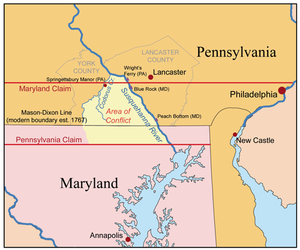
The Mason-Dixon line was surveyed between 1763 and 1767 by Charles Mason and Jeremiah Dixon. The line was demarcated to resolve a border dispute between Maryland, Pennsylvania and Delaware in Colonial America.

The Penn's of Pennsylvania and the Calvert's of Maryland disagreed about the boundary.  Charles II granted a charter for Pennsylvania in 1681. Charles and William Penn though the that 40th parallel would intersect with the 12 mile circle around New Castle, Delaware. The 40th parallel actually runs north of Philadelphia.

New Castle
https://upload.wikimedia.org/wikipedia/commons/thumb/e/e1/Cresapwarmap.png/300px-Cresapwarmap.png

The difference in interpretation was significant for the claim to the resources of the land. An agreement in 1732 settled for something in between the two claims. Delaware was seded as a satellite to Pennsylvania. Cresap's war was fought between settlers on the respective sides starting in the mid-1730's.

The English surveyers, Charles Mason and Jeremiah Dixon, were commissioned by the Penns and Calverts to survey a line 15 miles south of the southernmost house in Philadelphia. The line was extended due west 5 degrees of longitude from the Delaware River for the southern border of Pennsylvania in 1779.

The border became a line of demarcation between slave and free states after Pennsylvania abolished slavery in 1781.

It is still used to mark the border for 4 of the United States. West Virginia and Maryland are distinguished from Pennsylvania. Delaware is designated as east of Maryland.

It became known as the border between the northern and southern U.S. It was used to draw the northern limit for slavery before the Missouri Compromise.

Long Green

Long Green was once home to an Amish community. The community was founded in 1833. It lasted for 120 years.

The community was established by Amish from Lancaster County, but few settlers moved to the area. Maryland was a slave state at the time. Few Amish crossed the Mason-Dixon line due to their opposition to slavery.

Amanda Berry Smith
(1837-1915)

Amanda was born to slaves in Long Green, Maryland. Her father's name was Samuel. Her mother's name was Mariam Matthews. The Smiths had 13 children. Her father was a well-trusted man. His master's widow trusted him enough to place him in charge of her farm.

Mr. Berry was allowed to earn extra money for himself and his family after his duties for the day were done. He would go without sleep many nights because he was busy making brooms and husk mats for the Baltimore market. He made the money to buy freedom for himself and his family. The Smiths move to Pennsylvania after their freedom was secured.

Amanda was taught by her parents to read and write. Her father read to his family from the Bible on Sunday mornings. Her mother helped her to learn reading before whe was 8. She was sent to school after she turned this age.

The Smith children were privileged to learn in their early youth. The school only held summer sessions. It was forced to close after Amanda and her  brother had attended for 6 weeks.

They were given the option of attending another school 5 years later at the age of 13. The school was 5 miles from their home. They were only taught if there was time after the teachers gave the white kids their lesson. The siblings felt that it was not worth traveling in the cold to receive lessons only if time was permitted. They dropped out after attending for two weeks. They were taught at home by their parents. Sometimes they taught themselves.

Amanda went to work in York, PA after only three and a half months of formal education. She worked as the servant for a widow with 5 children.  She attended a revival service for the Methodist Episcopal Church while there.

Her husband was killed in the American Civil War.  She had lost two husbands and four of her five children by the time she was thirty two.

She worked hard as a cook and a washerwoman to provide for herself and her daughter She worked through her grief by attending religious camp meetings and revivals. She immersed herself in the African Methodist Episcopal (AME) Church.

Prayer became a way of life for her. She trusted in God for shoes, the money to buy her sister's freedom and food for her family.  She became well known for her beautiful voice and inspired instruction. Opportunities to evangelize in the South and West opened up for her.

She wore a plain poke bonnet and a brown or black Quaker wrapper wherever she went. She carried her belongings in her own carpetbag suitcase.

The appearance of women in the 19th century was described as fraught with volatile meaning. African American women struggled to receive respect even when they dressed the part of a lady. The shadowed stereotypes bred by slavery pressed for division between wanton Jezebels and pious Mammies. If free women dressed out of their respective class, judgments were made against them.

Amanda arranged for her daughter, Mazie, to study in England in 1878. They traveled overseas and stayed in England for two years. The captain invited her to conduct a religious service on board on the journey over. She was so modest that the other passengers spread word for her.

She traveled to India alone next. She ministered there for 18 months.

She spent 8 years in Africa evangelizing in churches. She went to Liberia and West Africa. She expanded her family by adopting two African boys. She suffered from repeated attacks of "African fever" but persisted in her work.

She was a strong advocate for the Temperance Movement in Africa and the US. She was invited by the noted temperance promoter, Rev. Dr. Theodore Ledyard Cuyler to preach at his Lafayette Avenue Presbyterian Church in Brooklyn, NY upon her return to the USA. It was the largest church for the denomination.

Temperance turned out to be an over-extension of religion into public policy. It was too close to establishment to allow it to stand as an amendment.

Smith pursued her long-time dream of educating African American children by founding the Amanda Smith Orphanage and Industrial Home for Abandoned and Destitute Colored Children in Harvey, Illinois in 1899. She couldn’t support the school sufficiently despite her relentless fundraising efforts.

She left the school at the age of 75 and moved to a home in Sebring, Florida. She passed away on February 24, 1915.

Amanda Berry Smith
S. 阿曼达史密斯
T. 阿曼達史密斯

阿  Ah       ah                    阿  a            flatter                        A        あ      ア           A     아  a
曼  man   beautiful           曼  man       wide                          man  まん  マン        man  만  just
达  da       reach                達  da         accomplished            da      だ      ダ            da     다  all
史  Shi     history              史  shi        history                       Su      す      ス            Seu   스  switch     
密  mi      thick                 密  mitsu    secrecy                      mi      み      ミ            mi     미  beauty 
斯  si        this                   斯  shi        this                             su      す      ス            seu   스  switch                                 

---------------------------------

The gospel has a beautiful reach into history.
Good news has become less of a mystery.

========================

Max Black
b. 2.24.1909 Baku, Russian Empire
d. 8.27.1988 Ithaca, New York

Philosophy of Mathematics
Max Black

Max Black was born in Baku, Azerbaijan of Jewish descent.

His family moved to London in 1912. He grew up there.

He studied mathematics at Queens’ College, Cambridge where he developed an interest in the philosophy of mathematics.

Bertrand Russell, Wittgenstein, G.E. Moore and Ramsey were all at Cambridge at the time. Their influence on Black was considerable.

He graduated in 1930 and was awarded a fellowship to study at Gottingen for a year.

He was the mathematics master at the Royal Grammar School in Newcastle, England. The school had received royal foundation by Queen Elizabeth II.

His first book was The Nature of Mathematics (1933). It was an exposition of Principia Mathematica and the current developments in the philosophy of mathematics.

Black made notable contributions to the metaphysics of Identity. He presented an objection to Leibniz’ Law in “The Identity of Indiscernibles.”

He conceived of two distinct spheres having exactly the same properties in a hypothetical scenario.

The scenario contradicted Leibniz second principle in his formulation of identity. The existence of two objects even in a void with identical properties denies their identicality.

Identity

Max Black worked with Peter Geach to translate the philosophical writings of Gottlob Frege. Both Black and Geach were interested in the question of what constitutes identity.

A always has the property of being A itself. This can never be true of B insofar as it is B. The objects can be identical with respect to the intrinsic internal information when the extrinsic properties are ignored.

The object’s position in space and time remains the only distinction between the two spheres in the otherwise empty space.

Black lectured in mathematics at the Institute of Education in London from 1936 to 1940. He moved to the United States. He joined the Philosophy Department at the University of Illinois at Urbana-Champaign in 1940.

He accepted a professorship in philosophy at Cornell University in 1946. He became a naturalized citizen of the U.S. in 1948.

He was elected a Fellow of the American Academy of Arts and Sciences in 1963.
Black died in Ithaca, New York at the age of 79.

Metaphors

Max Black
S. 嘛佳卜啦赫
T. 嘛佳卜啦赫

嘛  Ma      well                      嘛  ma        wheat               Maku   まっく   マック   Mae  매   every 
佳  jia       good                     佳   ka        excellent           su          す          ス          keu    크   big   
卜  Bo      to divine              卜  boku     divining            Bu         ぶ          ブ          seu     스  switch
啦  la        la                         啦  ro         assertion            ra         ら            ラ          Bol     볼  ball
赫  he      awe-inspiring       赫  kaku     illuminate          kku      っく       ック       lag     락  rock                                                             
---------------------------------

Substance defines a unit as unique as a grain of wheat.
Quantity allows equitability to repeat.

========================


Miki Fujimoto 2.26.1985  Takikawa, Hokaiddo, Japan
藤本美貴
米奇福即墨拖
UPFRONT
Morning Musume- Sexy Boy

米  Mi    meter                    藤  Fuji     wisteria           Fu    ふ     フ             Hu    후   after                 
奇  qi      unusual                本  moto  book                 ji       じ      ジ            ji       지   G                     
福  Fu    happiness             美  Mi       beauty             mo   も      モ             mo    모   mother
即  ji      immediately        貴  ki         value                to     と       ト            to      토   sat                   
墨  mo  ink                                                                   Mi    み     ミ             Mi     미   beauty     
拖  tuo  to mop                                                             ki     き      キ            ki      키   key             

--------------------------------

The mystery of beauty was hidden in the bells of wisteria.
Happiness bloomed with unusual radiance and no hysteria.

=======================                   

Takikawa

Takikawa is located in the west central part of the island of Hokkaido. The name comes from the Ainu language, 'Sorapuchi.' It means 'under the river.' The city is south and west of a waterall in the Sorachi River. The Ishikari splits from the the Sorachi just west of the city.

Takikawa
https://upload.wikimedia.org/wikipedia/commons/thumb/c/c0/Takikawa_view_from_glider.jpg/800px-Takikawa_view_from_glider.jpg

Takikawa is surrounded by nature. About 60 percent of the metropolitan area is covered in greenery by either forest or farmland. The population is estimated at 41,300.

It is the transportation hub for surrounding towns.

The average temperature in summer is 19 degrees Celsius (66 F). The winter temperature is about --5.9 C (21 F). It is the snowiest location in Hokkaido. It gets about 0.8 meter (31 in.) of snow per year. 

A lantern festival is held each year in late February. The event was organized by an artist named Igarashi Takenobu. He was born in the city. People are encouraged to craft their own lanterns. The festival lights the streets at night with over 10,000 hand crafted lamps.

Fujimoto Miki

Fujimoto Miki was born on February 26, 1985 in Takikawa. She wanted to become an enka singer when she was young due to her grandmother. Enka is sentimental Japanese ballad music.

Hello! Project offered Miki training lessons when she didn't pass the third audition to become a 4th generation member in 2000. She worded as a receptionist for UP-FRONT Agency during her training period.

It was announced in October 2001 that she would perform as a soloist. She started as a solo singer in 2002. Her first album was released on her 18th birthday in 2003. She was added to Morning Musume as a 6th generation member by Tsunku after the release of the solo album.

Miki became the sub-leader for Morning Musume in April 2005 when Mari Yaguchi resigned. When Yoshizawa Hitomi graduated in 2007 Miki took over as the leader. She was the fifth leader for the group.

She resigned as the leader of Morning Musume after she admit to dating someone in 2007. She remained a soloist with UP-FRONT.

She was married to Shouji Tomoharu in 2009. She had a baby boy in 2012. She had a girl in 2015.  She appeared in a Kamen Rider film in 2017.