Showing posts with label sponsor. Show all posts

Friday, August 9, 2019

Restore

8.20


Restore
Fortune
恢复财富 
Huīfù cáifù
回復フォーチュン 
Kaifuku fōchun
ps126
Restituere fortuna

When leadership restored fortune,
we were like those who received our portion.

We felt like those who dream while still awake.
There was the distinct feeling that this fortune wasn't fake.

Our mouth was filled with laughter.
It was like starting again after a climatic chapter.

The rider and the fighter were twins in the sky.
They fought for the standard to know how and why.

They released many captives from the burden of plight.
The captives were freed with the capacity for flight.

Courage watched leadership rise with his word.
Reason was challenged to struggle with the absurd.

The hunter drank in the storm faint though it had been.
He stalked the prey that he had yet to win.

The rider rested with his horse
in the investigation of the state of the forest.

Wildness preceded the primitive me.
Food and water have been granted to proceed.

Our tongues lifted sound above vocal cords.
Our joy was profound. Our bliss was adored.

Restore fortune with the cosmic sorter for order.
Grow us flowers plentiful as stars in the heavenly quarters.

Give us fertility instead of ashes.
Let water pour down while the lightening crashes.

Let oil be squeezed from olives or vegetables.
Let want be appeased, not made palid or miserable.

Let the mantle of praise lift up the weakness of spirit.
Feel the energy of love before you hear or go near it.

Augurs of chance read spirits instead of birds.
Test your statements for the truth of the words.

Righteousness is based on faith with grace.
Redemption with Christ places destiny over fate.

Great things have been done for us in the strength of this time.
The length of light grows as sublimely prime.

Let love be as genuine
as lessons drawn from the benign within.

Hate what is evil
as the retrieval 
of the primevally penal.

Love one another with mutual affection.
Let the joy of your smile show for detection.

Outdo one another in showing honor. 
The proper offer can win a sponsor. 

Those who managed labor throughout the last year
made a memory to transcend the feeling of fear.

Celebrate the presence of the essential essence.
Gratitude for service beats sacrifice as penance.

Those who sowed seed with the toil of their tears
will reap joy with the music of love in the heavenly spheres.

The deluge washed the mass of seashells.
Polish was added to the shine of cells
and bells.

Those who went weeping to water their seeds
will return with shoulders of sheaves to fulfill basic needs.

This voice is like that of the cry in the darkness
unbroken in facing the strength of the starkness.

You bear fruit when you glorify our Father
in a way that shows your sense of honor.

Give as you have made up your mind to afford.
Cheerful giving is benefit that you define for accord.

God provides blessing in cheerfulness.
The feeling reproduces peer coolness. 

You are loved by the Son
when your will is aligned with the divine one.

The Father will honor the production of value
in accord with benefit for the public cachou.

Abide in this love by the power of the Spirit.
The real presence of the divine essence will let you draw near it.  

Restore our fortune. Transform the harm of the past.
Let us have our portion. Give us confidence to last.

Making continual reparation for misdeeds from the past
isn't a policy that will make fortune last.

Liberals made the public pay for legal reform,
then they make us pay for damage caused by the storm
from the reform.

----------------------------

Psalm 126
In convertendo
When

1 When the Lord restored the fortunes of Zion,
then were we like those who dream.
2 Then was our mouth filled with laughter,
and our tongue with shouts of joy.
3 Then they said among the nations,
"The Lord has done great things for them."
4 The Lord has done great things for us,
and we are glad indeed.
5 Restore our fortunes, O Lord,
like the watercourses of the Negev.
6 Those who sowed with tears
will reap with songs of joy.
7 Those who go out weeping, carrying the seed,
will come again with joy, shouldering their sheaves.

-------------------------

2 Corinth. 9:7-8

Each of you must give as you have made up your mind, not reluctantly or under compulsion for God loves a cheerful giver.  He is able to provide you with every blessing in abundance that by always having enough of everything you may share abundantly in every good work.

-------------------------

Give as you have made up your mind to afford.
Cheerful giving is benefit that you define for accord.

God provides blessing in cheerfulness.
The feeling reproduces peer coolness.

==================

John 12:26

Whoever serves me must follow me. Where I am, there will my servant be. Whoever serves me, the Father will honor.

-------------------------

The Father will honor the production of value
in accord with benefit for the public cachou.

==================

Accountability

The second letter of Valerian to Rome in 258 CE allows for the execution of Laurence to be dated.

The events that preceded the report of the persecution shed light on the historical situation. There was a crisis in leadership in the third century that contributed to the persecution of Christians as an anti-Roman sect in Rome.

Septimus Severus
(193-211 CE)

The Severan Dynasty ruled the Roman Empire between 193 and 235. The dynasty was founded by the general, Septimus Severus. He rose to power as the victor of the 193-7 Civil War.

Severus increased the pay and benefits for the military. A soldier’s pay was raised from 300 to 500 denarii annually. The increase in pay was overdue, but the size of the armed force was increased to meet the challenges from beyond the borders of the empire.

The value of the currency was debased by adding less precious metal to the coinage to pay for the change. This was an initial debasement. It set a precedent for later emperors.

Roman forts were primarily military bases, but they were also home to the troops who garrisoned them. The forts also housed a retinue of dependents and camp-followers.

All had to be fed and clothed. Since the soldiers’ relatively high rates of pay gave them considerable purchasing power, the forts were provided with a wide range of goods and services.

Severus weakened the role of the emperor by playing to the military. He had almost doubled the pay. The position increased dependence on the loyalty of the army.

The emperor had always relied on the support of the military to one degree or another, but courting the military became more pronounced.

The right of succession would be replaced by a competition among military leaders after the end of the Severan Dynasty. The danger didn’t become apparent until  after the death of the last emperor of the dynasty, Alexander.

The Severan dynasty was disturbed by unstable family relations and constant political turmoil. Each of the Severan emperors was killed during a campaign or was assassinated.

Septimius Severus had his Praetorian Prefect executed in 205. He was killed in a campaign in Britain in 211. He was succeeded by his sons Caracalla and Geta.

They had been appointed as Caesars when Septimius was Augustus. His sons reigned under the influence of their mother, Julia Domna.

Geta was assassinated by order of Caracalla in 211. Caracalla became the Augustus. He was assassinated by a Praetorian Guard while enroute to campaign against the Parthians in 217. 

Macrinus was the Prefect of the Guard who conspired to assassinate Caracalla. He was not Severan. He was declared Augustus after the assassination. His reign was short. He was executed after he lost a battle with Elagabalus in 218.

Elagabalus was persuaded to accept his young cousin Severus as Caesar. Alexander was popular with the troops.

Elagabalus behaved as a transgender. Objections to his behavior increased. Elagabalus removed the title of Caesar from his cousin. The Praetorian Guard staged a mutiny to assassinate him in 222.

Severus Alexander
(207-235 CE)

When Alexander had just turned thirteen on March 6, 222, a rumor went around the city among the troops that he had been killed.

The eighteen year old Elagabalus and his mother were both taken from the palace, dragged through the streets, killed and thrown in the Tiber river by the Praetorian Guard. Alexander Severus was proclaimed the Augustus.

He ruled from the age of fourteen under the influence of his mother, Julia Avita Mamaea. Alexander restored the moderation that characterized the rule of Septimius Severus to an extent.

The rising strength of the Sasanian Empire (226-651) heralded the greatest challenge that Rome faced in the 3d century, but German tribes invaded Gaul. This created a different front to fight.
Alexander had lost the respect of his troops at twenty seven years of age. He was overthrown during the war in 235.

The troubles of the Severan Dynasty foreshadowed the Crisis of the Third Century. It was one of the last lineages of the Principate founded by Augustus. The death of Alexander was the epochal event that started the crisis.

A number of rebellious generals and counter-claimants created a succession of short reigns by military emperors who presided over governmental chaos, civil war, general instability and economic disruption. Maximiunus Thrax was the first of a series of emperors who ruled on average only 2 to 3 years.

The “Barracks Emperors” is a term coined by later historians referring to the Roman emperors who came from and were raised to power by the army.

The system of hereditary succession was displaced by the choice of an emperor by the military based on his popularity with the troops, generosity toward the military and his ability to produce immediate and discernible results. When any of these criteria were not met, especially the last, he was assassinated and replaced by another.

Between the reign of Alexander Severus and that of Diocletian, there were over 20 emperors who rose and fell in fairly swift succession. This type of rule ended fifty years later when the Emperor Diocletian split the Eastern and Western Empires.

Valerian
(253-260)

Valerian had a longer than average rule. His lasted about seven years. He made his son Gallienus Caesar and co-emperor.  Fighting on northern and eastern fronts generated internal strife. Affairs in Europe went from bad to worse early in his reign. The whole west fell into disorder.

Relations with the northern tribesmen had never been stable enough to remove their being called barbari. The relations weren’t always violent either.

Rome maintained the upper hand over hostility by a combination of diplomacy and warfare. They promoted leadership among the various tribes by means of gifts and subsidies. Sometimes food supplies and military aid were offered.

Climate changes and a rise in sea levels ruined the agriculture of what is now the Low Countries. Tribes were forced to relocate to find food.

Archaeological evidence shows that vigorous, warlike tribesmen moved into the more peaceful lands to the north-west of the empire at about the same time. The abandonment of a wide area that was previously settled and agricultural wealth was precipitated.

Antioch had fallen into the hands of a Sassanid vassal in the east. Armenia was occupied by Shapur I. Valerian and Gallienus split the problems of the empire between them. The son took the northwest. The father went east to face the Persian threat.

Valerian was elected Consul Ordinarius in 254, 255 and 257. He had recovered Antioch and returned the province of Syria to Roman control. The following year the Goths ravaged Asia Minor.

Shapur I
(240-270)

Ardashir was an Iranian prince descended from Sasan. It is from Sasan that the Sassanids took their name. He had established himself as Shahanshah, 'king of kings' by 226 CE

His declared intention was to restore the ancient Persian empire to its former glory. He was willing to push his borders westwards into Roman-controlled territories.  His son and successor, Shapur, followed these aggressive expansionist policies. This meant trouble for Rome.

Shapur was the second Shanhanshah of the Sasanian Empire. His rule was marked by successful military and political struggles in the northeastern regions and the Caucasus.

Monotheism grew in popularity during his reign. His support for Zoroastrianism caused a rise in the position of the clergy. His religious tolerance accelerated the spread of Manichaeanism and Christianity in Persia. He is also noted in Jewish tradition.

Persecution of Christians under Valerian
(257-260)

Valerian sent two letters to the Senate while fighting the Persians. The letters ordered that firm steps be taken against Christians. The first was sent in 257. It commanded that Christian clergy perform sacrifices to the Roman gods or face banishment.

The second was sent the following year. It ordered that all senators and equites perform acts of worship to the Roman gods. The penalty for failure to do so was the loss of title and property. The letter stipulated that any who refused would be executed.

Matrons would also lose property and suffer banishment. Civil servants and members of the Imperial household who would not burn incense to worship the gods would be reduced to slavery and sent to work on the Imperial estates. The letter indicates that Christians were well established at the time. Some held high positions.

Prudent was executed at Narbonne in 257. Others were executed in Rome in 258. These included Pope Sixtus II (Aug 6), Romanus Ostiarius (Aug 9), Lawrence (Aug 10) and Eugenia (Dec 25).

Others were executed in different locations. Denis was killed in Paris.  Pontius was killed in Cimiez (near Nice, France). Patroclus was executed at Troyes. Fructuosus was martyred at Tarragona. The decree was rescinded in 260 when Valerian’s son, Gallienus became Emperor in 260. 

The life of Deacon Lawrence claims that he was tortured on an iron grid in the third century. Was he tortured in an effort to force capitulation to the emperor’s decree? The answer depends upon whether he was a Roman citizen or not.

Social Class in Ancient Rome

Status was hierarchical. There were multiple social hierarchies that overlapped. An individual’s position was relative. One might be higher or lower than others.

The status of freeborn Romans during the Republic was established by ancestry.

A citizen was born a plebian or a patrician. The Optimates wanted to retain status according to birth. The Populares wanted to allow plebians to move up. Julius Caesar came from a family that had been plebian.

Census counted rank (ordo) based on wealth and political privilege. The senatorial and equestrian ranks were elevated above the ordinary citizen.  Honor was ascribed for effort. A self-made man established his family as nobilis (noble). There were noble plebians.

The different grades of citizenship had varying rights and privileges. Men who lived in towns outside of Rome in municipia or colonies might hold citizenship, but lack the right to vote. Free born Roman women were citizens, but could not vote or hold political office.

Peregini were distinguished from barbari (the barbarians) and slaves. Slaves were often enslaved as a spoil of war. They were taken from a conquered tribe and put in a position of servitude. They were legally defined as property.

Peregrinus was the term used during the early Roman empire from 30 BCE to 212 CE. The subject was free and provincial insofar as he was not regarded as a hostile non-citizen. These were the largest number in the census of the Empire’s inhabitants in the 1st and 2d centuries CE.

Slaves were considered property and had no rights under Roman law. There were rights that offered slaves more protection than an animal. Slaves who had been manumitted were freedmen (liberti). They enjoyed the same legal rights and protections as free born citizens.

Roman society was patriarchal. The male head of the household (paterfamilias) held legal power and privilege. He was given jurisdiction (patria potestas) over all the members of his familia. His wife, adult sons, married daughters, dependent relatives and slaves were regarded as family.

The word patronus is derived from pater (father). It was another way in which Roman society was organized into hierarchical groups.

Clientela also functioned in the system of overlapping social networks. A patron could be the client of a socially superior or more powerful patron. A client could have multiple patrons. 

Laurence

The name Laurence is derived from the Latin Laurentius. This literally means laurelled. The name suggests a type of person who excelled in competition. He could have been one of any number who were executed for refusal to worship Roman gods.

Laurence (or Lawrence) was chief of the seven deacons of the congregation at Rome. These seven men were like Stephen and his companions (Acts 6:1-6). They were put in charge of administering the church budget, particularly with regard to the care of the poor.

The emperor Valerian began a persecution aimed chiefly at the clergy and the laity of the upper classes in 257. Church property was confiscated and meetings of Christians were forbidden.

The bishop of Rome, Sixtus II, and most of his clergy were executed on 7 August 258. There is early testimony that Bishop Sixtus and his deacons were not led away to execution, but were summarily beheaded on the scene of their arrest.

Laurence was the archdeacon of Rome. He was the distributor of alms and the “keeper of the treasuries of the church.”  When Pope Sixtus II and four deacons were beheaded on August 6, Laurence was left as the ranking Church official in Rome.

When he was summoned to bring the treasure of the Church to the tribunal, he placed all the money at his disposal in the hands of trustworthy stewards.

He assembled the sick, the aged, the poor, the widows and orphans of the congregation. He presented them to the prefect and said, "These are the treasures of the Church." The enraged prefect ordered him to be roasted alive on a gridiron.

The detail is significant with respect for authenticity. Stories of martyrdom were circulated to celebrate the bravery of Christians who refused to worship the gods of antiquity. Certain details were included in order to question the literal truth.

If it was generally known that that were no iron grids in Rome large enough for the task of torturing a person by placing him on it, the message was intended to suggest that non-citizens could be tortured for failing to comply with an imperial edict to worship the gods in a public ceremony.

The story about Pope Sixtus was an indication that the letter from Valerian stated that the Senate could execute anyone and to take the property of those who failed to offer sacrifice in accordance with the edict.

The execution of Laurence is commemorated on the 10th of August.

The meteor shower that follows the passage of the Swift-Tuttle comet was known in the middle ages as the ‘burning tears of St. Lawrence’ because they appear at the same time as his feast.

Was the deacon Laurence tortured on a grid of iron prior to his execution?

Modern Iron Grid for Bar-B-Que Cooking
 
Roman Pots and Iron Grid 1st c. CE Scotland
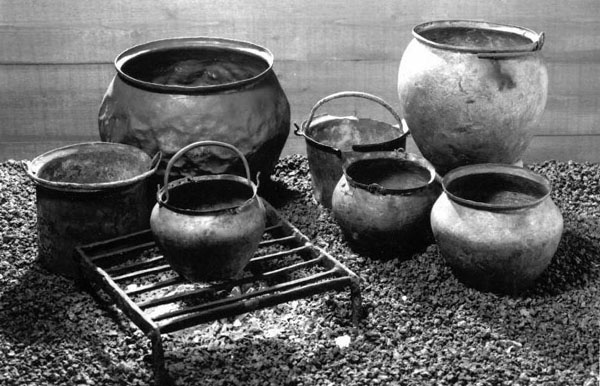
Roman Pot, Utensils and Iron Grid
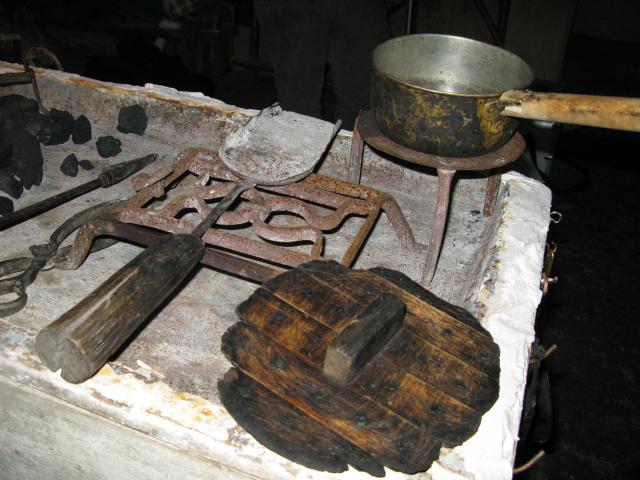
The images available on Google don’t indicate that there was a grill large enough to torture a human. The case for the literal frying of Laurence doesn’t look good.

One author has proposed that the story about his being roasted was an error in transcription. The usual phrase to describe a martyr’s death in Latin had dropped the ‘p.’

The phrase ‘passus est’ means ‘he suffered.’  When the first letter is dropped, it reads ‘assus est’. It means ‘he roasted.’

------------------------

The speedy retreat of Shapur's troops from Antioch caused Valerian to pursue the Persians to Edessa, but they were defeated by the Persians.  Valerian, along with the Roman army that was left, was captured by Shapur and sent away into Pars.

Valerian was the first Roman emperor to be captured as a prisoner of war. This caused shock and disillusionment. He died as their prisoner. His body was stuffed after his death and displayed in the Persian court for visiting dignitaries according to some reports.

------------------

When Septimius Severus almost doubled the wage for the common soldier at the same time that he increased the size of armed force, it stressed the Roman treasury. The soldiers circulated more coin into the economy, but they also felt an empowerment to assassinate any emperor who did not meet their demands.

The authority of the emperor was not officially acknowledged by the Senate unless he was elected consul. Consuls had a one year non-repeatable term limit during the period of the Republic.
Septimius imperiled imperial authority for his dynasty and Barracks emperors who followed them. He reduced the ability to command to a concession to popularity among the troops.

This situation contributed to the resolve of Valerian to designate leading Christians as non-Roman in order to take their property after execution. The imperial Polytheistic faith was reduced to fatalism by the precipitation of war and the death penalty.

When Christian monotheism threatened to do the same thing with the reintroduction of the slave trade after the Renaissance, the association of fate with the Roman faith was increased. The Protestant Reformation protested indulgences as a core deficiency in the intent to expand the Roman Empire around the globe with slavery.

Salvation by faith in the grace of God with the authority of sola scriptura was promoted as an implicit renunciation of the papal support for the slave trade in the alliance with the Spanish Hapsburgs. Slavery was not explicitly protested due to the threat from the expansion of the Ottoman empire.

The Peace of Westphalia supported the selection of the Protestant or Catholic denominations by the princes to oppose the expansion of the empire with the slave trade. German kingdoms would eventually unite into the Austro-Hungarian Empire.

The empire became a functional republic with Bismarck. It became a socialist republic after World War I had been lost to the British and her allies. It wasn’t declared as an atheist state as with the Soviet Republic, but it was characterized by anti-Semitic policy.

The economy was not capitalist. It was socialist with concession to the demands of industry that served the purpose of imperial republican expansion. An intent to conquer the whole globe was indicated. It was a totalitarian intent.

Valerian
wiki Emperor Valerian
Social Class in Ancient Rome
wiki Social Class in Ancient Rome
Third Century Crisis
wiki Third Century Crisis
Ancient History: Third Century Crisis
Shapur I
wiki Shapur Roman POW's
Sasanian Empire
wiki Sasanian Empire
Second Roman War
wiki Shapur Second Roman War
St. Lawrence of Rome
Roman Catholic St. Lawrence
Lectionary Laurence
wiki St. Lawrence
Roman Religion
Oxford Roman Religion
Capitalism
Huffpost: Capitalism and Socialism
Covey Respons-ability
Socialism
Socialism Culture War

Friday, July 19, 2019

Restore

7.20.19

Restore
Fortune
恢复财富 
Huīfù cáifù
回復フォーチュン 
Kaifuku fōchun
ps126
Restituere fortuna

When leadership restored fortune,
we were like those who received our portion.

We felt like those who dream while still awake.
There was the distinct feeling that this fortune wasn't fake.

Our mouth was filled with laughter.
It was like starting again after a climatic chapter.

The rider and the fighter were twins in the sky.
They fought for the standard to know how and why.

They released many captives from the burden of plight.
The captives were freed with the capacity for flight.

Courage watched leadership rise with his word.
Reason was challenged to struggle with the absurd.

The hunter drank in the storm faint though it had been.
He stalked the prey that he had yet to win.

The rider rested with his horse
in the investigation of the state of the forest.

Wildness preceded the primitive me.
Food and water have been granted to proceed.

The beauty of the course was swirled in stone.
She was dedicated to serve people like God alone. 

Our tongues lifted sound above vocal cords.
Our joy was profound. Our bliss was adored.

Restore fortune with the cosmic sorter for order.
Grow us flowers plentiful as stars in the heavenly quarters.

Give us fertility instead of ashes.
Let water pour down while the lightening crashes.

Let oil be squeezed from olives or vegetables.
Let want be appeased, not made palid or miserable.

Let the mantle of praise lift up the weakness of spirit.
Feel the energy of love before you hear or go near it.

Augurs of chance read spirits instead of birds.
Test your statements for the truth of the words.

Righteousness is based on faith with grace.
Redemption with Christ places destiny over fate.

Great things have been done for us in the strength of this time.
The length of light grows as sublimely prime.

Let love be as genuine
as lessons drawn from the benign within.

Hate what is evil
as the retrieval 
of the primeval penal.

Love one another with mutual affection.
Let the joy of your smile show for detection.

Outdo one another in showing honor. 
The proper offer can win a sponsor. 

Those who managed labor throughout the last year
made a memory to transcend the feeling of fear.

Celebrate the presence of the essential essence.
Gratitude for service beats sacrifice as penance.

Those who sowed seed with the toil of their tears
will reap joy with the music of love in the heavenly spheres.

The deluge washed the mass of seashells.
Polish was added to the shine of cells
and bells.

Those who went weeping to water their seeds
will return with shoulders of sheaves to fulfill basic needs.

This voice is like that of the cry in the darkness
unbroken in facing the strength of the starkness.

You bear fruit when you glorify our Father
in a way that shows your sense of honor.

You are loved by the Son
when your will is aligned with the divine one.

Abide in this love by the power of the Spirit.
The real presence of the divine essence will let you draw near it.  

Restore our fortune. Transform the harm of the past.
Let us have our portion. Give us confidence to last.

Making continual reparation for misdeeds from the past
isn't a policy that will make fortune last.

Liberals made the public pay for legal reform,
then they tax more for damage caused by the storm
from the reform.

----------------------------

Psalm 126
In convertendo
When

1 When the Lord restored the fortunes of Zion, *
then were we like those who dream.
2 Then was our mouth filled with laughter, *
and our tongue with shouts of joy.
3 Then they said among the nations, *
"The Lord has done great things for them."
4 The Lord has done great things for us, *
and we are glad indeed.
5 Restore our fortunes, O Lord, *
like the watercourses of the Negev.
6 Those who sowed with tears *
will reap with songs of joy.
7 Those who go out weeping, carrying the seed, *
will come again with joy, shouldering their sheaves.

-------------------------

Romans 12:9-10
Let love be genuine. Hate what is evil. Hold fast to what is good. Love one another with mutual affection. Outdo one another in showing honor.

-------------------------

Let love be as genuine
as lessons drawn from the benign within.
Hate what is evil
as the retrieval
of the primevally penal.
Love one another with mutual affection.
Let the joy of your smile show for detection.
Outdo one another in showing honor.
The proper offer can win a sponsor.

==================
John 15: 8-9
My Father is glorified when you bear much fruit and become my disciples. As the Father has loved me, so I have loved you. Abide in my love.

-------------------------

You bear fruit when you glorify our Father
in a way that shows your sense of honor.
You are loved by the Son
when your will is aligned with the divine one.
Abide in this love by the power of the Spirit.
The real presence of the divine essence will let you draw near it.

==================

Blazing Torch

Maria Skobtsova
b. 12.20.1891 Riga, Latvia
d. 3.31.1945 Ravensbruck, Germany

She was known as Mother Maria or Mary of Paris. She was married twice. Skobtsova is her second married name.

Maria was a Russian noblewoman, poet, nun and member of the French Resistance during World War II. She has been canonized as a saint in the Eastern Orthodox Church.
She was born in Riga, Latvia in the Russian empire in the latter part of the 19th century.

Riga

Riga is the capital of Latvia. It is the largest city in the country. It is also the larger than the largest city in Estonia or Lithuania.

The city lies on the Gulf of Riga at the mouth of the Daugava River. The bay separates Latvia from Estonia. The inlet is connected to the Baltic Sea.

The Daugava River flows from the Valdai Hills in Russia through Belarus and Latvia. The total length of the river is 1.020 km (630 mi.) of which 325 km (202 mi.) are in Russia.

Riga had been a member of the Hanseatic League. The league was a commercial and defensive confederation of merchant guilds and market towns in Northwestern and Central Europe.

It grew from a few North German towns in the 1100’s. The league came to dominate Baltic maritime trade for 3 centuries along the coasts of Northern Europe.

Hansa territories stretched from the Baltic to the North Sea and inland during the Late Middle Ages (1250-1500). Diminishment came slowly after 1450.

Hanse was the Old High German word for convoy. The word was applied to bands of merchants who traveled between the Hanseatic cities whether by land or sea.

The cities had their own legal system. They had their own armies for mutual protection and aid. The organization was not a state despite this. It could not be called a confederation of city-states. A small number of cities with the league enjoyed autonomy and liberties comparable to those of a free imperial city.

The Livonian Order was formed from the Brothers of the Sword after their defeat in 1236 at the Battle of Schaulen. They had been incorporated into the Teutonic Knights and became known as the Livonian Order in 1237.

The Order had conquered Courland, Livonia and Semigallia between 1237 and 1290. They suffered a loss at the Battle of Turaida in 1296, but they managed to buy the Duchy of Estonia from King Valdemar IV of Denmark.

The Order managed to maintain an independent existence while the Teutonic Order fell into decline after the secularization of its Prussian territories by Albert of Brandenburg in 1525.

Riga became the object of foreign military, political, religious and economic aspirations as the influence of the Hanseatic League waned. The city accepted the Reformation in 1522. The power of the archbishops was ended.

Iconoclasts targeted a statue of the Virgin Mary in the Cathedral to make a statement against religious icons. The statue was accused of being a witch. It was given a trial by water in the Daugava River. The statue floated so it was denounced as a witch and burnt at Kubsberg.

A varying coalition from Denmark-Norway, the Kingdom of Sweden and the Union of the Grand Duchy of Lithuania and the Kingdom of Poland fought for control of Old Livonia (Estonia and Latvia) with the tsardom of Russia in the Livonian War (1558-1583).

Riga was given the status of a Free Imperial City of the Holy Roman Empire for the 20 years with the demise of the Livonian Order during the war. The status ended with the Treaty of Drohiczyn in 1581.

Riga became part of the Polish-Lithuanian Commonwealth. The treaty ended the war for the city.
The Polish-Swedish war (1621-1625) transferred the city to the rule of Gustavus Adolphus, King of Sweden, in 1621. He had intervened in the Thirty Years’ War to favor German Lutheran Protestantism. Riga withstood a siege by Russian forces during the Russo-Swedish War (1656-1658).

Riga was the largest city in Sweden until 1710. Tsar Peter the Great attacked the city in that year. Riga and other Livonian towns and gentry capitulated to Russia but largely retained their privileges. Russia emerged as the strongest northern power with the Treaty of Nystad in 1721.

The Baltic Germans in Riga had maintained a dominant position during the many centuries of war and changes of power in the Baltic. The population for the city was 42.9% German. German was the official language for administration until the installations of Russian in 1891 as the official language for the Baltic provinces by Tsar Alexander III. 

More Latvians moved to the city during the mid-19th century. The rise of the Latvian bourgeoisie made it the center for the Latvian National Awakening. The Riga Latvian Association was formed in 1866. The first national song festival was organized in 1873.

Maria Skobtsova

She was given the name Elizaveta Pilenko at birth. She was born into an upper class family in Riga, Latvia on December 20, 1891.

She was descended on her mother's side from the last governor of the Bastille, the Parisian prison destroyed during the French Revolution. Both parents were Russian Orthodox Christians.

The family moved to Anapa after her birth. Her father was elected the mayor of the town.

Their daughter was shaped by the values of the Christian culture. She had emptied her piggy band to contribute to the painting of an icon for a new church in Anapa.

She asked her mother if she was old enough to be a nun when she was 7. She asked permission to become a pilgrim traveling from shrine to shrine a year later.

Elizaveta was raised in a time when socialism was conflated with nationalism during rapid industrialization. When her father died she became an atheist. She felt that his death was unjust.

She fell into the belief that if there was not justice, then God did not exist. She decided that parents knew of this non-existence, but they kept it from their children.

There was a workers’ revolution in 1905 led by the Latvian Social Democratic Workers’ Party. Her mother moved the family to St. Petersburg in 1906.

Elizaveta found herself in the country's political and cultural center. It was a hotbed for radical ideas and groups. She became part of radical literary circles that gathered around such symbolist poets as Alexander Blok. She first met the poet at age 15.

She found herself drawn to the left like many of her contemporaries, but she was disappointed with the radicals she encountered. All they did was talk. She was looking for heroic engagement. She wanted to do battle with the world to combat injustice even at the expense of her life.

She felt that her friends would talk about someone's death to explain approval or disapproval. They would show understanding throughout the night on a high level of abstraction until the sun were to rise and it was time for fried eggs. They would not understand that to die for the revolution was to feel "a rope around one's neck."

She married Dimitri Kuzmin-Karaviev in 1910. He was a Bolshevik and part of a community of poets, artists and writers. She later commented that it was a marriage born "more of pity than of love." She and her friends also talked theology in addition to politics and poetry.

Just as their political ideas had no connection at all to the lives of ordinary people, their theology floated far above the actual Church. The Church was an idea or a set of abstract values for many intellectuals. It was not a community in which one actually lives.

She thought that there was much they might have learned from an "old beggar woman hard at her Sunday prostrations in church."

She was actively involved in literary circles and wrote much poetry during this period of her life. Her first book, Scythian Shards, was a collection of poetry. Her marriage to Dimitri had ended by 1913.  Her first child, Gaiana, was born in the same year.

Her earlier attraction to Christ revived and deepened even when she still regarded herself as an atheist. She was attracted to him as heroic man as opposed to God incarnate.

Russia entered into World War I on August 1, 1914, when Germany declared war on it. Elizaveta returned to Anapa with her daughter when the war had started. Her religious life grew more intense.

She secretly wore lead weights sewn into a hidden belt as a way of reminding herself both "that Christ exists" and also to be more aware that minute-by-minute many people were suffering and dying in the war.

She found that she was being drawn toward the religious faith she had abandoned after her father's death. She prayed and read the Gospel and the lives of saints and concluded that the real need of the people was not for revolutionary theories but for faith. She wanted "to proclaim the simple word of God," she told Blok in a letter written in 1916.

She applied for admission to Saint Petersburg's Theological Academy of the Alexander Nevsky Monastery to study theology. The academy was an entirely male school at the time. The students were being prepared for ordination. The rector decided that she could be admitted despite the change in practice.

She was present in Saint Petersburg when Russia's Provisional Government was overthrown by the Bolsheviks in October 1917. She listened as Lenin's lieutenant, Leon Trotsky, dismissed people from her party at the Soviet Congress.  He said, "Your role is played out. Go where you belong, into history's garbage can!"

She came to see how hideously different actual revolution was from the dreams that had once filled the imagination of so many Russians. 

She was elected deputy mayor of the town of Anapa in 1918. When the White Army took control of Anapa, the mayor fled and she became mayor of the town. The White Army put her on trial for being a Bolshevik. She spoke in her defense in court that she would represent those who had a need for justice, red or white.

The judge was a former teacher of hers, Daniel Skobtsov. She was acquitted. She sought him out to thank him after the trial. Eventually they married.

The Skobtsovs fled to Georgia as the course of the civil war was turning in favor of the Bolsheviks.  She gave birth to a son, Yura, in 1920. They relocated to Yugoslavia a year later. She gave birth to Anastasia.

Their journey ended with their arrival in Paris in 1923 where to supplement their income she made dolls and painted silk scarves. She often worked ten or twelve hours a day.

A friend introduced her to the Russian Student Christian Movement, an Orthodox association founded in 1923. She attended lectures and other activities and felt herself coming back to life spiritually and intellectually.

Her daughter Anastasia died of influenza in 1926. Daniel and Elizaveta's marriage was falling apart. Yuri ended up living with Daniel. Elizaveta moved into central Paris to work more directly with those who were most in need.

She emerged from her mourning to dedicate herself to  be a mother to all who "need maternal care, assistance, or protection." She became a social worker and a writer of theology. Two volumes, Harvest of the Spirit, were published in 1927. She retold the lives of many saints.

She was appointed traveling secretary of the Russian Student Christian Movement in 1930. The work put her into daily contact with impoverished Russian refugees throughout France and neighboring countries. 

Her bishop encouraged her to take vows as a nun. She agreed only with the assurance that she would not have to live secluded from the world in a monastery. An ecclesiastical divorce was granted In 1932 with Daniel Skobtov's permission.

She took the name Maria with her monastic vows. Her confessor was Father Sergius Bulgakov. Mother Maria made a rented house in Paris her "convent." It was a place with an open door for refugees, the needy and the lonely.

It also soon became a center for intellectual and theological discussion. Fr. Dmitri Klepinin would be sent to be the chaplain of the house. Mother Maria combined the elements of service to the poor and theology together.

While Mother Maria could have fled Paris when the Germans were advancing, or even sought refuge in America, she would not budge. "If the Germans take Paris, I shall stay here with my old women. Where else could I send them?" She had no illusions about the Nazi threat. They represented a "new paganism" that brought in its wake disasters, upheavals, persecutions and wars.

The local authorities in Paris declared her house an official food distribution point, where volunteers sold at cost price whatever food Mother Maria could find.

Russian refugees were among the particular targets of the occupiers. A thousand were arrested in June 1941. Several close friends and collaborators of Mother Maria and Father Dimitri were taken. The leaders of the house launched an aid project for prisoners and their dependents.

Jews approached the house asking for baptismal certificates when the Nazis took Paris. Father Dimitri provided for them. A number of Jews came to stay with them. The house provided shelter and the 'parents' helped many to escape.

The house was closed down eventually. Mother Maria, Fr. Dimitri, Yuri and Sophia were all taken by the Gestapo.

Yura and Father Dimitri were deported to Buchenwald concentration camp in Germany on December 16, 1943. The two were sent to Dora in 1944. Fr. Dimitri and Yuri both died at the prison camp there. 

Mother Maria was sent to the camp in Ravensbrück, Germany. Her work in the camp varied. There was a period when she was part of a team of women dragging a heavy iron roller about the camp's pathways for 12 hours a day. Her legs began to give way. She worked in a knitwear workshop later.

The concentration camp administrators further reduced food rations when the Red Army was approaching from the East. The population for each block was increased. 

Mother Maria accepted a pink card. The card was issued to any prisoner who wished to be excused from labor because of age or ill health. Those who had received such cards were transferred to what was called the Jugendlager or "youth camp." She chose hers in January 1945. 

The authorities said each person would have her own bed and abundant food. Mother Maria's transfer was on January 31. The food ration was further reduced. The hours spent standing for roll calls increased. Mother Maria survived five weeks before she was returned to the main camp on March 3.

It is reported that she was selected for the gas chambers Good Friday on March 30, 1945 and sent on Holy Saturday. An investigation by the International Red Cross refuted claims that prisoners were sent to the gas chamber in Nazi concentration camps. No evidence has been found to support the claim that people were executed as claimed.

The memory of Mother Maria is to be reverenced nonetheless. Survivors of the war who had known her would draw attention to the ideas, insights and activities of the unusual nun who had spent so many years coming to the aid of people in desperate straights. Her service to others during a period of adversity is worthy of admiration.

World War I was fought almost as an end to the existence of empire. There was more to be said against the competitiveness between existing empires as they struggled for dominance, but a number of empires were ended after the war.

Great Britain and Japan were small enough to escape the global association between empire and imperial expansion. Imperial expansion was identified with military force and covert movements for insurrection. Commercial enterprise was subordinate to the imperial power.

The republican revolution was extended to Russia and China as each government for the large nation was were pressed into a republic that was identified as communist. Communism was regarded as the Marxist form of socialism that was both large and extreme. It was extreme in the position against religion and the advocacy for a global socialist revolution.

World War II was a battle between different forms of socialism. Hitler and the Nazis reincarnated the next claim to empire in the form of a socialist republic that was run by the united interest between industrial and political leadership.

The axis powers were in league with industrial socialism in republican government as the means to promote alliance for civilization. Even tribal societies were expected to pick a side for who would represent their development into a civilized power.

Socialism for labor was associated with democracy by the theory of large numbers, but representation was limited to workers as though they were 'the people.' Labor was virtually absolute in the refusal to seek higher education for the promotion of production.

Management and the middle class were seen as the cause of the problem of income inequality. The value of higher education was reduced to something that existed largely on paper. Real societal existence had to be established by the force of uneducated demand.

Mother Maria came from an upper class family. She fell into atheism and socialist logic in reason after her father died when she was a teen. She began her return to faith with the emulation of Jesus as a heroic Christ who was willing to die for the cause of social justice.

This heroic Christ was worthy of reverence for his sense of sacrifice, but he wasn't revered as the Son of God. This said, he wasn't as reconstructed as the Jesus of liberation theology. This Jesus was willing to strap on automatic machine guns in order to liberate the people from the oppression of the industrial management of society.

Maria eventually dedicated herself to the service of the poor. It was Christ-like but she still had difficulties with socialist ties. The French associated the poor with unemployed labor. Her social service for them was aligned with republican socialism. It wasn't as extreme as communism, but it was still socialist.

She transcended partisan partiality in judgment in her dedication to serve the outcast in society. She did this during the rise of communism in Russia, in the Russian civil war after the Bolshevik Revolution, in France before and during World War II and later in the concentration camp in Germany.

This impartial judgment in the service of others was her great achievement as a Christian despite the virtually inescapable association with one form of socialism or another during her time.
 
Maria Skobtsova
S. 玛丽亚斯科特索娃
T. 瑪麗亞斯科特索娃

玛 Ma  agate              瑪 me    agate           Ma  ま   マ        Ma    마 hemp                             
丽 li    pretty              麗 rei      lovely           ri    り   リ         li       리 lee               
亚 ya   Asian              亞 a        rank              a    あ   ア         a       아 ah                     
斯 Si    this                 斯 shi      this              Su   す   ス        Seu    스 the                         
科 ke   rules               科 ka        course         ko  こ   コ          ko     코 nose           
特 te   special             特 toku   special        tso  つぉ ツォ  cheu 츠 tsu               
索 suo  to demand      索 saku    cord           wa  わ   ワ          so     소 small                           
娃 wa  doll                 娃 wa     beautiful                                 ba     바  bar   

-------------------------

The beauty of the course was swirled in stone.
She was dedicated to serve people like God alone.

==================

wiki Maria Skobstova
orthodox wiki Maria S
Lectionary Maria S
oca lives Maria S
wiki Riga