7.20.19
Restore
Fortune
恢复财富
Huīfù cáifù
回復フォーチュン
Kaifuku fōchun
ps126
Restituere fortuna
When leadership restored fortune,
we were like those who received our portion.
We felt like those who dream while still awake.
There was the distinct feeling that this fortune wasn't fake.
Our mouth was filled with laughter.
It was like starting again after a climatic chapter.
The rider and the fighter were twins in the sky.
They fought for the standard to know how and why.
They released many captives from the burden of plight.
The captives were freed with the capacity for flight.
Courage watched leadership rise with his word.
Reason was challenged to struggle with the absurd.
The hunter drank in the storm faint though it had been.
He stalked the prey that he had yet to win.
The rider rested with his horse
in the investigation of the state of the forest.
Wildness preceded the primitive me.
Food and water have been granted to proceed.
The beauty of the course was swirled in stone.
She was dedicated to serve people like God alone.
Our tongues lifted sound above vocal cords.
Our joy was profound. Our bliss was adored.
Restore fortune with the cosmic sorter for order.
Grow us flowers plentiful as stars in the heavenly quarters.
Give us fertility instead of ashes.
Let water pour down while the lightening crashes.
Let oil be squeezed from olives or vegetables.
Let want be appeased, not made palid or miserable.
Let the mantle of praise lift up the weakness of spirit.
Feel the energy of love before you hear or go near it.
Augurs of chance read spirits instead of birds.
Test your statements for the truth of the words.
Righteousness is based on faith with grace.
Redemption with Christ places destiny over fate.
Great things have been done for us in the strength of this time.
The length of light grows as sublimely prime.
Let love be as genuine
as lessons drawn from the benign within.
Hate what is evil
as the retrieval
of the primeval penal.
Love one another with mutual affection.
Let the joy of your smile show for detection.
Outdo one another in showing honor.
The proper offer can win a sponsor.
Those who managed labor throughout the last year
made a memory to transcend the feeling of fear.
Celebrate the presence of the essential essence.
Gratitude for service beats sacrifice as penance.
Those who sowed seed with the toil of their tears
will reap joy with the music of love in the heavenly spheres.
The deluge washed the mass of seashells.
Polish was added to the shine of cells
and bells.
Those who went weeping to water their seeds
will return with shoulders of sheaves to fulfill basic needs.
This voice is like that of the cry in the darkness
unbroken in facing the strength of the starkness.
You bear fruit when you glorify our Father
in a way that shows your sense of honor.
You are loved by the Son
when your will is aligned with the divine one.
Abide in this love by the power of the Spirit.
The real presence of the divine essence will let you draw near it.
Restore our fortune. Transform the harm of the past.
Let us have our portion. Give us confidence to last.
Making continual reparation for misdeeds from the past
isn't a policy that will make fortune last.
Liberals made the public pay for legal reform,
then they tax more for damage caused by the storm
from the reform.
----------------------------
Psalm 126
In convertendo
When
1 When the Lord restored the fortunes of Zion, *
then were we like those who dream.
2 Then was our mouth filled with laughter, *
and our tongue with shouts of joy.
3 Then they said among the nations, *
"The Lord has done great things for them."
4 The Lord has done great things for us, *
and we are glad indeed.
5 Restore our fortunes, O Lord, *
like the watercourses of the Negev.
6 Those who sowed with tears *
will reap with songs of joy.
7 Those who go out weeping, carrying the seed, *
will come again with joy, shouldering their sheaves.
-------------------------
Romans 12:9-10
Let love be genuine. Hate what is evil. Hold fast to what is good. Love one another with mutual affection. Outdo one another in showing honor.
-------------------------
Let love be as genuine
as lessons drawn from the benign within.
Hate what is evil
as the retrieval
of the primevally penal.
Love one another with mutual affection.
Let the joy of your smile show for detection.
Outdo one another in showing honor.
The proper offer can win a sponsor.
==================
John 15: 8-9
My Father is glorified when you bear much fruit and become my disciples. As the Father has loved me, so I have loved you. Abide in my love.
-------------------------
You bear fruit when you glorify our Father
in a way that shows your sense of honor.
You are loved by the Son
when your will is aligned with the divine one.
Abide in this love by the power of the Spirit.
The real presence of the divine essence will let you draw near it.
==================
Blazing Torch
Maria Skobtsova
b. 12.20.1891 Riga, Latvia
d. 3.31.1945 Ravensbruck, Germany
She was known as Mother Maria or Mary of Paris. She was married twice. Skobtsova is her second married name.
Maria was a Russian noblewoman, poet, nun and member of the French Resistance during World War II. She has been canonized as a saint in the Eastern Orthodox Church.
She was born in Riga, Latvia in the Russian empire in the latter part of the 19th century.
Riga
Riga is the capital of Latvia. It is the largest city in the country. It is also the larger than the largest city in Estonia or Lithuania.
The city lies on the Gulf of Riga at the mouth of the Daugava River. The bay separates Latvia from Estonia. The inlet is connected to the Baltic Sea.
The Daugava River flows from the Valdai Hills in Russia through Belarus and Latvia. The total length of the river is 1.020 km (630 mi.) of which 325 km (202 mi.) are in Russia.
Riga had been a member of the Hanseatic League. The league was a commercial and defensive confederation of merchant guilds and market towns in Northwestern and Central Europe.
It grew from a few North German towns in the 1100’s. The league came to dominate Baltic maritime trade for 3 centuries along the coasts of Northern Europe.
Hansa territories stretched from the Baltic to the North Sea and inland during the Late Middle Ages (1250-1500). Diminishment came slowly after 1450.
Hanse was the Old High German word for convoy. The word was applied to bands of merchants who traveled between the Hanseatic cities whether by land or sea.
The cities had their own legal system. They had their own armies for mutual protection and aid. The organization was not a state despite this. It could not be called a confederation of city-states. A small number of cities with the league enjoyed autonomy and liberties comparable to those of a free imperial city.
The Livonian Order was formed from the Brothers of the Sword after their defeat in 1236 at the Battle of Schaulen. They had been incorporated into the Teutonic Knights and became known as the Livonian Order in 1237.
The Order had conquered Courland, Livonia and Semigallia between 1237 and 1290. They suffered a loss at the Battle of Turaida in 1296, but they managed to buy the Duchy of Estonia from King Valdemar IV of Denmark.
The Order managed to maintain an independent existence while the Teutonic Order fell into decline after the secularization of its Prussian territories by Albert of Brandenburg in 1525.
Riga became the object of foreign military, political, religious and economic aspirations as the influence of the Hanseatic League waned. The city accepted the Reformation in 1522. The power of the archbishops was ended.
Iconoclasts targeted a statue of the Virgin Mary in the Cathedral to make a statement against religious icons. The statue was accused of being a witch. It was given a trial by water in the Daugava River. The statue floated so it was denounced as a witch and burnt at Kubsberg.
A varying coalition from Denmark-Norway, the Kingdom of Sweden and the Union of the Grand Duchy of Lithuania and the Kingdom of Poland fought for control of Old Livonia (Estonia and Latvia) with the tsardom of Russia in the Livonian War (1558-1583).
Riga was given the status of a Free Imperial City of the Holy Roman Empire for the 20 years with the demise of the Livonian Order during the war. The status ended with the Treaty of Drohiczyn in 1581.
Riga became part of the Polish-Lithuanian Commonwealth. The treaty ended the war for the city.
The Polish-Swedish war (1621-1625) transferred the city to the rule of Gustavus Adolphus, King of Sweden, in 1621. He had intervened in the Thirty Years’ War to favor German Lutheran Protestantism. Riga withstood a siege by Russian forces during the Russo-Swedish War (1656-1658).
Riga was the largest city in Sweden until 1710. Tsar Peter the Great attacked the city in that year. Riga and other Livonian towns and gentry capitulated to Russia but largely retained their privileges. Russia emerged as the strongest northern power with the Treaty of Nystad in 1721.
The Baltic Germans in Riga had maintained a dominant position during the many centuries of war and changes of power in the Baltic. The population for the city was 42.9% German. German was the official language for administration until the installations of Russian in 1891 as the official language for the Baltic provinces by Tsar Alexander III.
More Latvians moved to the city during the mid-19th century. The rise of the Latvian bourgeoisie made it the center for the Latvian National Awakening. The Riga Latvian Association was formed in 1866. The first national song festival was organized in 1873.
Maria Skobtsova
She was given the name Elizaveta Pilenko at birth. She was born into an upper class family in Riga, Latvia on December 20, 1891.
She was descended on her mother's side from the last governor of the Bastille, the Parisian prison destroyed during the French Revolution. Both parents were Russian Orthodox Christians.
The family moved to Anapa after her birth. Her father was elected the mayor of the town.
Their daughter was shaped by the values of the Christian culture. She had emptied her piggy band to contribute to the painting of an icon for a new church in Anapa.
She asked her mother if she was old enough to be a nun when she was 7. She asked permission to become a pilgrim traveling from shrine to shrine a year later.
Elizaveta was raised in a time when socialism was conflated with nationalism during rapid industrialization. When her father died she became an atheist. She felt that his death was unjust.
She fell into the belief that if there was not justice, then God did not exist. She decided that parents knew of this non-existence, but they kept it from their children.
There was a workers’ revolution in 1905 led by the Latvian Social Democratic Workers’ Party. Her mother moved the family to St. Petersburg in 1906.
Elizaveta found herself in the country's political and cultural center. It was a hotbed for radical ideas and groups. She became part of radical literary circles that gathered around such symbolist poets as Alexander Blok. She first met the poet at age 15.
She found herself drawn to the left like many of her contemporaries, but she was disappointed with the radicals she encountered. All they did was talk. She was looking for heroic engagement. She wanted to do battle with the world to combat injustice even at the expense of her life.
She felt that her friends would talk about someone's death to explain approval or disapproval. They would show understanding throughout the night on a high level of abstraction until the sun were to rise and it was time for fried eggs. They would not understand that to die for the revolution was to feel "a rope around one's neck."
She married Dimitri Kuzmin-Karaviev in 1910. He was a Bolshevik and part of a community of poets, artists and writers. She later commented that it was a marriage born "more of pity than of love." She and her friends also talked theology in addition to politics and poetry.
Just as their political ideas had no connection at all to the lives of ordinary people, their theology floated far above the actual Church. The Church was an idea or a set of abstract values for many intellectuals. It was not a community in which one actually lives.
She thought that there was much they might have learned from an "old beggar woman hard at her Sunday prostrations in church."
She was actively involved in literary circles and wrote much poetry during this period of her life. Her first book, Scythian Shards, was a collection of poetry. Her marriage to Dimitri had ended by 1913. Her first child, Gaiana, was born in the same year.
Her earlier attraction to Christ revived and deepened even when she still regarded herself as an atheist. She was attracted to him as heroic man as opposed to God incarnate.
Russia entered into World War I on August 1, 1914, when Germany declared war on it. Elizaveta returned to Anapa with her daughter when the war had started. Her religious life grew more intense.
She secretly wore lead weights sewn into a hidden belt as a way of reminding herself both "that Christ exists" and also to be more aware that minute-by-minute many people were suffering and dying in the war.
She found that she was being drawn toward the religious faith she had abandoned after her father's death. She prayed and read the Gospel and the lives of saints and concluded that the real need of the people was not for revolutionary theories but for faith. She wanted "to proclaim the simple word of God," she told Blok in a letter written in 1916.
She applied for admission to Saint Petersburg's Theological Academy of the Alexander Nevsky Monastery to study theology. The academy was an entirely male school at the time. The students were being prepared for ordination. The rector decided that she could be admitted despite the change in practice.
She was present in Saint Petersburg when Russia's Provisional Government was overthrown by the Bolsheviks in October 1917. She listened as Lenin's lieutenant, Leon Trotsky, dismissed people from her party at the Soviet Congress. He said, "Your role is played out. Go where you belong, into history's garbage can!"
She came to see how hideously different actual revolution was from the dreams that had once filled the imagination of so many Russians.
She was elected deputy mayor of the town of Anapa in 1918. When the White Army took control of Anapa, the mayor fled and she became mayor of the town. The White Army put her on trial for being a Bolshevik. She spoke in her defense in court that she would represent those who had a need for justice, red or white.
The judge was a former teacher of hers, Daniel Skobtsov. She was acquitted. She sought him out to thank him after the trial. Eventually they married.
The Skobtsovs fled to Georgia as the course of the civil war was turning in favor of the Bolsheviks. She gave birth to a son, Yura, in 1920. They relocated to Yugoslavia a year later. She gave birth to Anastasia.
Their journey ended with their arrival in Paris in 1923 where to supplement their income she made dolls and painted silk scarves. She often worked ten or twelve hours a day.
A friend introduced her to the Russian Student Christian Movement, an Orthodox association founded in 1923. She attended lectures and other activities and felt herself coming back to life spiritually and intellectually.
Her daughter Anastasia died of influenza in 1926. Daniel and Elizaveta's marriage was falling apart. Yuri ended up living with Daniel. Elizaveta moved into central Paris to work more directly with those who were most in need.
She emerged from her mourning to dedicate herself to be a mother to all who "need maternal care, assistance, or protection." She became a social worker and a writer of theology. Two volumes, Harvest of the Spirit, were published in 1927. She retold the lives of many saints.
She was appointed traveling secretary of the Russian Student Christian Movement in 1930. The work put her into daily contact with impoverished Russian refugees throughout France and neighboring countries.
Her bishop encouraged her to take vows as a nun. She agreed only with the assurance that she would not have to live secluded from the world in a monastery. An ecclesiastical divorce was granted In 1932 with Daniel Skobtov's permission.
She took the name Maria with her monastic vows. Her confessor was Father Sergius Bulgakov. Mother Maria made a rented house in Paris her "convent." It was a place with an open door for refugees, the needy and the lonely.
It also soon became a center for intellectual and theological discussion. Fr. Dmitri Klepinin would be sent to be the chaplain of the house. Mother Maria combined the elements of service to the poor and theology together.
While Mother Maria could have fled Paris when the Germans were advancing, or even sought refuge in America, she would not budge. "If the Germans take Paris, I shall stay here with my old women. Where else could I send them?" She had no illusions about the Nazi threat. They represented a "new paganism" that brought in its wake disasters, upheavals, persecutions and wars.
The local authorities in Paris declared her house an official food distribution point, where volunteers sold at cost price whatever food Mother Maria could find.
Russian refugees were among the particular targets of the occupiers. A thousand were arrested in June 1941. Several close friends and collaborators of Mother Maria and Father Dimitri were taken. The leaders of the house launched an aid project for prisoners and their dependents.
Jews approached the house asking for baptismal certificates when the Nazis took Paris. Father Dimitri provided for them. A number of Jews came to stay with them. The house provided shelter and the 'parents' helped many to escape.
The house was closed down eventually. Mother Maria, Fr. Dimitri, Yuri and Sophia were all taken by the Gestapo.
Yura and Father Dimitri were deported to Buchenwald concentration camp in Germany on December 16, 1943. The two were sent to Dora in 1944. Fr. Dimitri and Yuri both died at the prison camp there.
Mother Maria was sent to the camp in Ravensbrück, Germany. Her work in the camp varied. There was a period when she was part of a team of women dragging a heavy iron roller about the camp's pathways for 12 hours a day. Her legs began to give way. She worked in a knitwear workshop later.
The concentration camp administrators further reduced food rations when the Red Army was approaching from the East. The population for each block was increased.
Mother Maria accepted a pink card. The card was issued to any prisoner who wished to be excused from labor because of age or ill health. Those who had received such cards were transferred to what was called the Jugendlager or "youth camp." She chose hers in January 1945.
The authorities said each person would have her own bed and abundant food. Mother Maria's transfer was on January 31. The food ration was further reduced. The hours spent standing for roll calls increased. Mother Maria survived five weeks before she was returned to the main camp on March 3.
It is reported that she was selected for the gas chambers Good Friday on March 30, 1945 and sent on Holy Saturday. An investigation by the International Red Cross refuted claims that prisoners were sent to the gas chamber in Nazi concentration camps. No evidence has been found to support the claim that people were executed as claimed.
The memory of Mother Maria is to be reverenced nonetheless. Survivors of the war who had known her would draw attention to the ideas, insights and activities of the unusual nun who had spent so many years coming to the aid of people in desperate straights. Her service to others during a period of adversity is worthy of admiration.
World War I was fought almost as an end to the existence of empire. There was more to be said against the competitiveness between existing empires as they struggled for dominance, but a number of empires were ended after the war.
Great Britain and Japan were small enough to escape the global association between empire and imperial expansion. Imperial expansion was identified with military force and covert movements for insurrection. Commercial enterprise was subordinate to the imperial power.
The republican revolution was extended to Russia and China as each government for the large nation was were pressed into a republic that was identified as communist. Communism was regarded as the Marxist form of socialism that was both large and extreme. It was extreme in the position against religion and the advocacy for a global socialist revolution.
World War II was a battle between different forms of socialism. Hitler and the Nazis reincarnated the next claim to empire in the form of a socialist republic that was run by the united interest between industrial and political leadership.
The axis powers were in league with industrial socialism in republican government as the means to promote alliance for civilization. Even tribal societies were expected to pick a side for who would represent their development into a civilized power.
Socialism for labor was associated with democracy by the theory of large numbers, but representation was limited to workers as though they were 'the people.' Labor was virtually absolute in the refusal to seek higher education for the promotion of production.
Management and the middle class were seen as the cause of the problem of income inequality. The value of higher education was reduced to something that existed largely on paper. Real societal existence had to be established by the force of uneducated demand.
Mother Maria came from an upper class family. She fell into atheism and socialist logic in reason after her father died when she was a teen. She began her return to faith with the emulation of Jesus as a heroic Christ who was willing to die for the cause of social justice.
This heroic Christ was worthy of reverence for his sense of sacrifice, but he wasn't revered as the Son of God. This said, he wasn't as reconstructed as the Jesus of liberation theology. This Jesus was willing to strap on automatic machine guns in order to liberate the people from the oppression of the industrial management of society.
Maria eventually dedicated herself to the service of the poor. It was Christ-like but she still had difficulties with socialist ties. The French associated the poor with unemployed labor. Her social service for them was aligned with republican socialism. It wasn't as extreme as communism, but it was still socialist.
She transcended partisan partiality in judgment in her dedication to serve the outcast in society. She did this during the rise of communism in Russia, in the Russian civil war after the Bolshevik Revolution, in France before and during World War II and later in the concentration camp in Germany.
This impartial judgment in the service of others was her great achievement as a Christian despite the virtually inescapable association with one form of socialism or another during her time.
Maria Skobtsova
S. 玛丽亚斯科特索娃
T. 瑪麗亞斯科特索娃
玛 Ma agate 瑪 me agate Ma ま マ Ma 마 hemp
丽 li pretty 麗 rei lovely ri り リ li 리 lee
亚 ya Asian 亞 a rank a あ ア a 아 ah
斯 Si this 斯 shi this Su す ス Seu 스 the
科 ke rules 科 ka course ko こ コ ko 코 nose
特 te special 特 toku special tso つぉ ツォ cheu 츠 tsu
索 suo to demand 索 saku cord wa わ ワ so 소 small
娃 wa doll 娃 wa beautiful ba 바 bar
-------------------------
The beauty of the course was swirled in stone.
She was dedicated to serve people like God alone.
==================
wiki Maria Skobstova
orthodox wiki Maria S
Lectionary Maria S
oca lives Maria S
wiki Riga
Showing posts with label portion. Show all posts
Friday, July 19, 2019
Sunday, March 31, 2019
Restore
4.7.19
Gabrielle Wilde
Restore
Fortune
恢复财富Huīfù cáifù
回復フォーチュン
Kaifuku fōchun
ps126
When leadership restored fortune,
we were like those who received our portion.
We felt like those who dream while still awake.
There was the distinct feeling that this fortune wasn't fake.
Our mouth was filled with laughter.
It was like starting again after a climatic chapter.
The rider and the fighter were twins in the sky.
They fought for the standard to know how and why.
They released many captives from the burden of plight.
The captives were freed with the capacity for flight.
Courage watched leadership rise with his word.
Reason was challenged to struggle with the absurd.
The hunter drank in the storm faint though it had been.
He stalked the prey that he had yet to win.
The rider rested with his horse
in the investigation of the state of the forest.
Wildness preceded the primitive me.
Food and water have been granted to proceed.
Our tongues lifted sound above vocal cords.
Our joy was profound. Our bliss was adored.
Restore fortune with the cosmic sorter for order.
Grow us flowers plentiful as stars in the heavenly quarters.
Give us fertility instead of ashes.
Let water pour down while the lightening crashes.
Let oil be squeezed from olives or vegetables.
Let want be appeased, not made miserable.
Let the mantle of praise lift up the weakness of spirit.
Feel the energy of love before you hear or go near it.
Augurs of chance read spirits instead of birds.
Test your statements for the truth of the words.
Righteousness is based on faith with grace.
Redemption with Christ places destiny over fate.
Great things have been done for us in the strength of this time.
The length of light grows as sublimely prime.
Those who managed labor throughout the last year
made a memory to transcend the feeling of fear.
Celebrate the presence of the essential essence.
Gratitude for service beats sacrifice as penance.
Those who sowed seed with the toil of their tears
will reap joy with the music of love in the heavenly spheres.
The deluge washed the mass of seashells.
Polish was added to the shine of cells
and bells.
Those who went weeping to water their seeds
will return with shoulders of sheaves to fulfill basic needs.
This voice is like that of the cry in the darkness
unbroken in facing the strength of the starkness.
Restore our fortune. Transform the harm of the past.
Let us have our portion. Give us confidence to last.
Making continual reparation for misdeeds from the past isn't a policy that will make fortune last. Liberals made the public pay for legal reform, then they make us pay for damage caused by the storm from the reform.
----------------------------
Psalm 126
In convertendo
1 When the Lord restored the fortunes of Zion, *
then were we like those who dream.
2 Then was our mouth filled with laughter, *
and our tongue with shouts of joy.
3 Then they said among the nations, *
"The Lord has done great things for them."
4 The Lord has done great things for us, *
and we are glad indeed.
5 Restore our fortunes, O Lord, *
like the watercourses of the Negev.
6 Those who sowed with tears *
will reap with songs of joy.
7 Those who go out weeping, carrying the seed, *
will come again with joy, shouldering their sheaves.
-------------------------
Isa. 43:20
The wild animals will honor me.
The jackals and ostriches will be grateful
for I give water in the wilderness;
rivers in the desert
to give drink to my chosen.
----------------------------
Wildness preceded the primitive me.
Food and water have been granted to proceed.
=====================
Phil.3:8
I have suffered the loss of things in order to gain Christ
not having a righteousness of my own, but one that comes through faith,
the righteousness from God based on faith.
----------------------------
Righteousness is based on faith with grace.
Redemption with Christ places destiny over fate.
=====================
John 12:8
'You always have the poor with you, but you do not always have me.'
----------------------------
Celebrate the presence of the essential essence.
Gratitude for service beats sacrifice as penance.
=====================
Gemini - twins
Taurus- bull
Orion - hunter
Mars - courage
Jupiter - leadership
Mercury - reason
Venus- beauty
Castor - rider
Pollux - fighter
Neptune - water, storm
Gemini is Latin for "twins," and it is associated with the twins Castor and Pollux in Greek mythology.
https://www.greekmythology.com/Myths/Zodiac/Gemini/gemini.html
The twins were Castor and Polydeuces (Pollux). They were known as the Dioscuri. Their sisters were Helen and Clytemnestra. They were the sons of Leda, Zeus and Tyndareus. Castor and Pollux were half-brothers.
Leda was married to King Tyndareus of Sparta. She was also seduced by Zeus, so the father's of both children were uncertain. The Discouri were inseperable and grew closer with age.
Castor was a famous horse tamer and Pollux, a superb boxer. When Castor was killed during a battle, Pollux was inconsolable and gave up his own life to be with his brother. Jupiter rewarded their love by placing their images among the stars. They shine side by side.
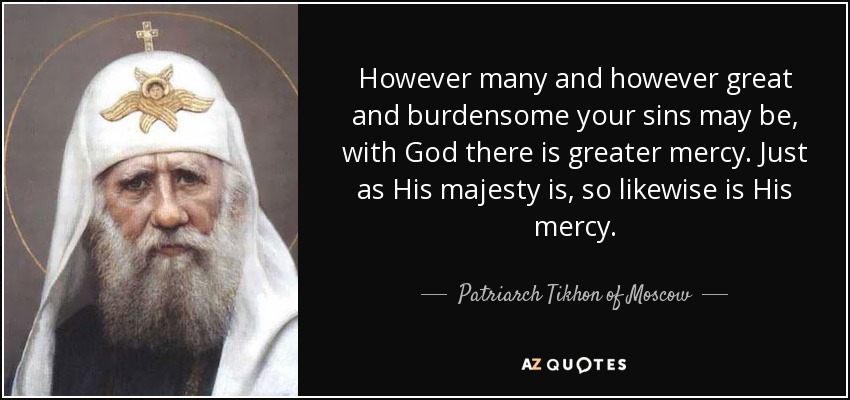
Majesty with Mercy
https://www.azquotes.com/picture-quotes/quote-however-many-and-however-great-and-burdensome-your-sins-may-be-with-god-there-is-greater-patriarch-tikhon-of-moscow-52-31-82.jpg
Tikhon of Moscow
b. January 31, 1865, Klin, Russia
d. April 7, 1925, Moscow, Russia
Klin
Russian Empire
Alexander II (1818-1881) was the Emperor of Russia from 2 March 1855 until his assassination on 13 March 1881. He was also the King of Poland and the Grand Duke of Finland. He emancipated the serfs in 1861. It was the first and most important of his reforms. The Emancipation Edict abolished serfdom throughout the Russian Empire.
There was an uprising in Poland in 1863. The land was stripped of its constitution and incorporated into Russia.
Alexander sold Alaska to the United States in 1867. He was afraid that the territory would fall into British hands in the event of another war.
Klin means 'wedge.' One of the towns by that name was located in the Toropets District of the Pskov Governate. Klin is located to the west of Moscow by about 85 km (55 mi.). It is south of St. Petersburg by about the same amount of distance. It is part of a basin that drains to the Baltic Sea.
Tikhon of Moscow
Tikhon was born as Vasily Ivanovich Bellavin in Klin, Toropets, Pskov of the Russian Empire on 31 January 1865.
Vasily studied at the Pskov Theological Seminary from 1878 to 1883. He graduated from the St. Petersburg Theological Academy as a layman at the age of 23 in 1888. He returned to the Pskov Seminary as an instructor of Moral and Dogmatic Theology.
He took monastic vows and was given the name Tikhon in honor of St. Tikhon of Zadonsk at the age of 26 in 1891. Tikhon was consecrated Bishop of Lublin on October 19, 1897. Bishop Tikhon was made Bishop of the Aleutians and Alaska on September 14, 1898. This made him the head of the Russian Orthodox Church in America.
He reorganized the diocese and changed its name from "Diocese of the Aleutians and Alaska" to "Diocese of the Aleutians and North America" in 1900. The peripatetic bishop visited emerging Orthodox emigrant communities in various American cities, including New York City, Chicago and the coal and steel-making cities in Pennsylvania and Ohio. While living in the United States Archbishop Tikhon was made a citizen.
He returned to Russia in 1907 and was appointed Bishop of Yaroslavl. He was transferred to Vilnius, Lithuania on December 22, 1913.
He was elected the ruling bishop of Moscow by the Diocesan Congress of clergy and laity on June 21, 1917. Archbishop Tikhon was raised to the dignity of Metropolitan of Moscow on August 15, 1917.
An election on November 5 of the same year named him as one of the three candidates for the Patriarchate. Metropolitan Vladimir of Kiev announced that Metropolitan Tikhon had been selected for the position after a drawing of lots as the new Patriarch of the Russian Orthodox Church.
The Patriarch was widely seen as anti-Bolshevik during the Russian Civil War. Many members of Orthodox clergy were jailed or executed by the new regime. The 'prosecution' of clergy identified the socialist republic as anti-religious. Tikhon openly condemned the killing of the tsar's family in 1918 and protested the violent attacks by the Bolsheviks on the Church.
The Patriarch was accused of being a saboteur by the Communist government after the establishment of the USSR. He was imprisoned from April 1922 until June 1923 in Donskoy Monastery.
His public protest against nationalization of the property of the Church was used to incriminate him of criminal conduct. This persecution caused international resonance and was a subject of several letters to the Soviet government.
Patriarch Tikhon issued several messages to the believers under pressure in which he stated that he is "no longer an enemy to the Soviet power." He continued to enjoy the trust of the Orthodox community in Russia despite his declaration of loyalty to the Soviets.
The Patriarch fell ill and was hospitalized in 1924. He served his last Divine Liturgy on 5 April 1925. He died two days later.
He was glorified a saint by the Russian Orthodox Church in 1989. This canonisation process is generally considered an example of the thaw in Church-Soviet relations in the Glasnost era. Tikhon's relics are kept at the Donskoy Monastery of Moscow.
https://en.wikipedia.org/wiki/Patriarch_Tikhon_of_Moscow
http://www.satucket.com/lectionary/Tikhon.htm
Tikhon Bellavin
吉洪贝拉文
吉洪貝拉文
吉 Ji lucky 吉 kichi good luck Te て テ Ti 티 tea
洪 hong deluge 洪 ko deluge -hon ぃほん ィホン hon 혼 spirit
贝 Bei sea shell 貝 bai shellfish Be べ ベ Bel 벨 bell
拉 la seize 拉 ra Latin ra ら ラ la 라 la
文 wen culture 文 bun style bin びん ヴィン bin 빈 empty
-----------------------------
The deluge washed the seashells
to add polish to the luck of cells
and bells.
=====================
Thomas Hill Green
b. April 7, 1836, Birkin, United Kingdom
d. March 1886, Oxford, UK
Birkin
Birkin is a village in the south of North Yorkshire. The population was estimated at 141 people in the 2011 census. The name was recorded in the Domesday book as 'Birchinge.' This and the present name indicate that the village was built in an area wooded with birch trees.
It is located about 290 km (180 miles) north of London. It is about 145 km (90 miles) northeast of Liverpool. It is about 48 km (30 miles) southwest of York.
A Royal Commission into the Poor Law recommended changes to the system of parish poor relief in 1832. Many of its recommendations were incorporated into the Poor Law Amendment Act of 1834. This statute maintained outdoor relief (relief given outside a workhouse), but led to more central control of the system.
St Mary's Church is located at the southern end of Birkin and dates from around 1150. Thomas Hill Green's father was the rector of St Mary's in the 1830's.
Thomas Hill Green
Thomas Hill Green was born in Birkin on 7 April 1836. Thomas was brought up by a nanny following the death of his mother when he was only a year old together with his sisters and three brothers. He was home schooled until the age of 14. He entered the Rugby School and remained for 5 years.
Green went to Balliol College, Oxford in 1855. He came under the influence of Benjamin Jowett. Jowett had been one of the first to bring a set of Hegel's writings to England. It was through him that Green became enraptured by idealism.
He found a justification for his instinctive egalitarianism in Hegel. He became firm friends with other students who were sympathetic to his political radicalism, such as AV Dicey, John Nichol and Edward Caird. Idealism led him away from the skepticism of Locke expressed by Berkeley.
He was elected fellow in 1860. He began a life of teaching in the university. First he was a college tutor. He was Whyte's Professor of Moral Philosophy from 1878 until his death.
The lectures he delivered as professor formed the substance of his two most important works. The Prolegomena to Ethics and the Lectures on the Principles of Political Obligation were published posthumously, but they serve as a basis for conjecture as to what he taught.
He criticized the limitations of natural history in empiricism of Hume with the theory of evolution in the Prolegomena to Ethics.
He wrote in the Natural Science of Morals (s.5) "It is no wonder, therefore, that the evolutionists of our day should claim to have given a wholly new character to ethical enquiries. In Hume’s time a philosopher who denied the innateness of moral sentiments, and held that they must have a natural history, had only the limits of the individual life within which to trace this history. These limits did not give room enough for even a plausible derivation of moral interests from animal wants...Thus it would seem that for the barren speculation of the old metaphysical ethics we should seek a substitute in a scientific Culturgeschichte; in a natural history of man conducted on the same method as an enquiry into any other form of life which cannot be reduced to the operation of strictly mechanical laws."
The Principles of Political Obligation was written to subordinate the citizen to the state.
He wrote, "I have entitled the subject of the course 'political obligation.' I mean that term to include both the obligation of the subject to the sovereign, of the citizen towards the state and the obligations of individuals to each other as enforced by a political superior."
Green was an advocate for temperance. He referred to the work of Spinoza, Hobbes, Locke and Rosseau, but he came down in favor of state limitation of the citizen's conscience. He held that the state should foster and protect the social, political and economic environments in which individuals will have the best chance of acting according to conscience.
He stated time and again that the state could legitimately curtail the individual's freedom to accept the slavery of alcoholism. This became a prohibitive action in the case of the Temperance movement.
This was an oppressive definition of the concept of sovereignty. No one wants to endorse alcoholism as a right, yet the prohibition of alcohol as a product for the market is preemptive in the prohibition of the disease.
Given the appointment of a special prosecutor by the House of Commons for the precipitation of profit from military action, it amounted to a perpetuation of Puritan aggression without the explicit endorsement of the Westminster Confession.
Green was involved in local politics for many years through the University, temperance societies and the local Oxford Liberal association.
He campaigned for the right to vote to be extended to all men living in boroughs even if they did not own real property during the passage of the Second Reform Act (1867). Green's position was more radical than that of most other Advanced Liberals, including William Ewart Gladstone.
The right to vote is an important civil liberty. The Public Schools Act of 1868 would remove public schools from any direct jurisdiction or responsibility of the Crown, established church, or government, establishing a board of governors for each school and granting them independence over their administration.
The Act led to development of the schools away from the traditional exclusively classics-based curriculum taught by clergymen to a somewhat broader scope of studies. This meant an opening for Hegelian idealism in evolution for Green. It was a legislative enactment that supported increased expenditure for the government to control the rights of the population. It was an endorsement to promote revolution through insurrection around the globe for liberals.
It was in the context of his Liberal Party activities that in 1881, Green gave what became one of his most famous statements of his liberal political philosophy, the "Lecture on Liberal Legislation and Freedom of Contract".
He presented an anti-capitalist perspective. He wrote, "we are right in refusing to ascribe the glory of freedom to a state in which the apparent elevation of the few is founded on the degradation of the many." He was also lecturing on religion, epistemology, ethics and political philosophy at the time.
Most of his major works were published posthumously, including his lay sermons on Faith and The Witness of God, the essay "On the Different Senses of 'Freedom' as Applied to Will and the Moral Progress of Man", Prolegomena to Ethics, Lectures on the Principles of Political Obligation and the "Lecture on Liberal Legislation and Freedom of Contract".
Green died of blood poisoning at 45. Approximately 2,000 local townspeople attended his funeral in addition to friends from his academic life.
https://en.wikipedia.org/wiki/Thomas_Hill_Green
https://plato.stanford.edu/entries/green/
https://history.hanover.edu/texts/green.html
http://fair-use.org/t-h-green/prolegomena-to-ethics/
https://web.archive.org/web/20050827091329/http://socserv2.mcmaster.ca/~econ/ugcm/3ll3/green/obligation.pdf
https://en.wikipedia.org/wiki/Public_Schools_Act_1868
Thomas Hill Green
托马斯希尔格林
托馬斯希爾格林
托 Tuo rest 托 taku requesting To と- ト- To 토 sat
马 ma horse 馬 ba horse ma ま マ ma 마 hemp
斯 si this 斯 shi this su す ス seu 스 switch
希 Xi hope 希 ki hope Hi ひ ヒ Hil 힐 heel
尔 er you 爾 ore you ru る ル Geu 그 that
格 Ge investigate 格 kaku status Gu ぐ グ lin 린 lin
林 lin forest 林 rin forest re り- リ-
n ん ン
---------------------------
The rider rested with his horse
in the investigation of the state of the forest.
===============
Gabrielle Wilde
Restore
Fortune
恢复财富Huīfù cáifù
回復フォーチュン
Kaifuku fōchun
ps126
When leadership restored fortune,
we were like those who received our portion.
We felt like those who dream while still awake.
There was the distinct feeling that this fortune wasn't fake.
Our mouth was filled with laughter.
It was like starting again after a climatic chapter.
The rider and the fighter were twins in the sky.
They fought for the standard to know how and why.
They released many captives from the burden of plight.
The captives were freed with the capacity for flight.
Courage watched leadership rise with his word.
Reason was challenged to struggle with the absurd.
The hunter drank in the storm faint though it had been.
He stalked the prey that he had yet to win.
The rider rested with his horse
in the investigation of the state of the forest.
Wildness preceded the primitive me.
Food and water have been granted to proceed.
Our tongues lifted sound above vocal cords.
Our joy was profound. Our bliss was adored.
Restore fortune with the cosmic sorter for order.
Grow us flowers plentiful as stars in the heavenly quarters.
Give us fertility instead of ashes.
Let water pour down while the lightening crashes.
Let oil be squeezed from olives or vegetables.
Let want be appeased, not made miserable.
Let the mantle of praise lift up the weakness of spirit.
Feel the energy of love before you hear or go near it.
Augurs of chance read spirits instead of birds.
Test your statements for the truth of the words.
Righteousness is based on faith with grace.
Redemption with Christ places destiny over fate.
Great things have been done for us in the strength of this time.
The length of light grows as sublimely prime.
Those who managed labor throughout the last year
made a memory to transcend the feeling of fear.
Celebrate the presence of the essential essence.
Gratitude for service beats sacrifice as penance.
Those who sowed seed with the toil of their tears
will reap joy with the music of love in the heavenly spheres.
The deluge washed the mass of seashells.
Polish was added to the shine of cells
and bells.
Those who went weeping to water their seeds
will return with shoulders of sheaves to fulfill basic needs.
This voice is like that of the cry in the darkness
unbroken in facing the strength of the starkness.
Restore our fortune. Transform the harm of the past.
Let us have our portion. Give us confidence to last.
Making continual reparation for misdeeds from the past isn't a policy that will make fortune last. Liberals made the public pay for legal reform, then they make us pay for damage caused by the storm from the reform.
----------------------------
Psalm 126
In convertendo
1 When the Lord restored the fortunes of Zion, *
then were we like those who dream.
2 Then was our mouth filled with laughter, *
and our tongue with shouts of joy.
3 Then they said among the nations, *
"The Lord has done great things for them."
4 The Lord has done great things for us, *
and we are glad indeed.
5 Restore our fortunes, O Lord, *
like the watercourses of the Negev.
6 Those who sowed with tears *
will reap with songs of joy.
7 Those who go out weeping, carrying the seed, *
will come again with joy, shouldering their sheaves.
-------------------------
Isa. 43:20
The wild animals will honor me.
The jackals and ostriches will be grateful
for I give water in the wilderness;
rivers in the desert
to give drink to my chosen.
----------------------------
Wildness preceded the primitive me.
Food and water have been granted to proceed.
=====================
Phil.3:8
I have suffered the loss of things in order to gain Christ
not having a righteousness of my own, but one that comes through faith,
the righteousness from God based on faith.
----------------------------
Righteousness is based on faith with grace.
Redemption with Christ places destiny over fate.
=====================
John 12:8
'You always have the poor with you, but you do not always have me.'
----------------------------
Celebrate the presence of the essential essence.
Gratitude for service beats sacrifice as penance.
=====================
Gemini - twins
Taurus- bull
Orion - hunter
Mars - courage
Jupiter - leadership
Mercury - reason
Venus- beauty
Castor - rider
Pollux - fighter
Neptune - water, storm
Gemini is Latin for "twins," and it is associated with the twins Castor and Pollux in Greek mythology.
https://www.greekmythology.com/Myths/Zodiac/Gemini/gemini.html
The twins were Castor and Polydeuces (Pollux). They were known as the Dioscuri. Their sisters were Helen and Clytemnestra. They were the sons of Leda, Zeus and Tyndareus. Castor and Pollux were half-brothers.
Leda was married to King Tyndareus of Sparta. She was also seduced by Zeus, so the father's of both children were uncertain. The Discouri were inseperable and grew closer with age.
Castor was a famous horse tamer and Pollux, a superb boxer. When Castor was killed during a battle, Pollux was inconsolable and gave up his own life to be with his brother. Jupiter rewarded their love by placing their images among the stars. They shine side by side.
Majesty with Mercy
https://www.azquotes.com/picture-quotes/quote-however-many-and-however-great-and-burdensome-your-sins-may-be-with-god-there-is-greater-patriarch-tikhon-of-moscow-52-31-82.jpg
Tikhon of Moscow
b. January 31, 1865, Klin, Russia
d. April 7, 1925, Moscow, Russia
Klin
Russian Empire
Alexander II (1818-1881) was the Emperor of Russia from 2 March 1855 until his assassination on 13 March 1881. He was also the King of Poland and the Grand Duke of Finland. He emancipated the serfs in 1861. It was the first and most important of his reforms. The Emancipation Edict abolished serfdom throughout the Russian Empire.
There was an uprising in Poland in 1863. The land was stripped of its constitution and incorporated into Russia.
Alexander sold Alaska to the United States in 1867. He was afraid that the territory would fall into British hands in the event of another war.
Klin means 'wedge.' One of the towns by that name was located in the Toropets District of the Pskov Governate. Klin is located to the west of Moscow by about 85 km (55 mi.). It is south of St. Petersburg by about the same amount of distance. It is part of a basin that drains to the Baltic Sea.
Tikhon of Moscow
Tikhon was born as Vasily Ivanovich Bellavin in Klin, Toropets, Pskov of the Russian Empire on 31 January 1865.
Vasily studied at the Pskov Theological Seminary from 1878 to 1883. He graduated from the St. Petersburg Theological Academy as a layman at the age of 23 in 1888. He returned to the Pskov Seminary as an instructor of Moral and Dogmatic Theology.
He took monastic vows and was given the name Tikhon in honor of St. Tikhon of Zadonsk at the age of 26 in 1891. Tikhon was consecrated Bishop of Lublin on October 19, 1897. Bishop Tikhon was made Bishop of the Aleutians and Alaska on September 14, 1898. This made him the head of the Russian Orthodox Church in America.
He reorganized the diocese and changed its name from "Diocese of the Aleutians and Alaska" to "Diocese of the Aleutians and North America" in 1900. The peripatetic bishop visited emerging Orthodox emigrant communities in various American cities, including New York City, Chicago and the coal and steel-making cities in Pennsylvania and Ohio. While living in the United States Archbishop Tikhon was made a citizen.
He returned to Russia in 1907 and was appointed Bishop of Yaroslavl. He was transferred to Vilnius, Lithuania on December 22, 1913.
He was elected the ruling bishop of Moscow by the Diocesan Congress of clergy and laity on June 21, 1917. Archbishop Tikhon was raised to the dignity of Metropolitan of Moscow on August 15, 1917.
An election on November 5 of the same year named him as one of the three candidates for the Patriarchate. Metropolitan Vladimir of Kiev announced that Metropolitan Tikhon had been selected for the position after a drawing of lots as the new Patriarch of the Russian Orthodox Church.
The Patriarch was widely seen as anti-Bolshevik during the Russian Civil War. Many members of Orthodox clergy were jailed or executed by the new regime. The 'prosecution' of clergy identified the socialist republic as anti-religious. Tikhon openly condemned the killing of the tsar's family in 1918 and protested the violent attacks by the Bolsheviks on the Church.
The Patriarch was accused of being a saboteur by the Communist government after the establishment of the USSR. He was imprisoned from April 1922 until June 1923 in Donskoy Monastery.
His public protest against nationalization of the property of the Church was used to incriminate him of criminal conduct. This persecution caused international resonance and was a subject of several letters to the Soviet government.
Patriarch Tikhon issued several messages to the believers under pressure in which he stated that he is "no longer an enemy to the Soviet power." He continued to enjoy the trust of the Orthodox community in Russia despite his declaration of loyalty to the Soviets.
The Patriarch fell ill and was hospitalized in 1924. He served his last Divine Liturgy on 5 April 1925. He died two days later.
He was glorified a saint by the Russian Orthodox Church in 1989. This canonisation process is generally considered an example of the thaw in Church-Soviet relations in the Glasnost era. Tikhon's relics are kept at the Donskoy Monastery of Moscow.
https://en.wikipedia.org/wiki/Patriarch_Tikhon_of_Moscow
http://www.satucket.com/lectionary/Tikhon.htm
Tikhon Bellavin
吉洪贝拉文
吉洪貝拉文
吉 Ji lucky 吉 kichi good luck Te て テ Ti 티 tea
洪 hong deluge 洪 ko deluge -hon ぃほん ィホン hon 혼 spirit
贝 Bei sea shell 貝 bai shellfish Be べ ベ Bel 벨 bell
拉 la seize 拉 ra Latin ra ら ラ la 라 la
文 wen culture 文 bun style bin びん ヴィン bin 빈 empty
-----------------------------
The deluge washed the seashells
to add polish to the luck of cells
and bells.
=====================
Thomas Hill Green
b. April 7, 1836, Birkin, United Kingdom
d. March 1886, Oxford, UK
Birkin
Birkin is a village in the south of North Yorkshire. The population was estimated at 141 people in the 2011 census. The name was recorded in the Domesday book as 'Birchinge.' This and the present name indicate that the village was built in an area wooded with birch trees.
It is located about 290 km (180 miles) north of London. It is about 145 km (90 miles) northeast of Liverpool. It is about 48 km (30 miles) southwest of York.
A Royal Commission into the Poor Law recommended changes to the system of parish poor relief in 1832. Many of its recommendations were incorporated into the Poor Law Amendment Act of 1834. This statute maintained outdoor relief (relief given outside a workhouse), but led to more central control of the system.
St Mary's Church is located at the southern end of Birkin and dates from around 1150. Thomas Hill Green's father was the rector of St Mary's in the 1830's.
Thomas Hill Green
Thomas Hill Green was born in Birkin on 7 April 1836. Thomas was brought up by a nanny following the death of his mother when he was only a year old together with his sisters and three brothers. He was home schooled until the age of 14. He entered the Rugby School and remained for 5 years.
Green went to Balliol College, Oxford in 1855. He came under the influence of Benjamin Jowett. Jowett had been one of the first to bring a set of Hegel's writings to England. It was through him that Green became enraptured by idealism.
He found a justification for his instinctive egalitarianism in Hegel. He became firm friends with other students who were sympathetic to his political radicalism, such as AV Dicey, John Nichol and Edward Caird. Idealism led him away from the skepticism of Locke expressed by Berkeley.
He was elected fellow in 1860. He began a life of teaching in the university. First he was a college tutor. He was Whyte's Professor of Moral Philosophy from 1878 until his death.
The lectures he delivered as professor formed the substance of his two most important works. The Prolegomena to Ethics and the Lectures on the Principles of Political Obligation were published posthumously, but they serve as a basis for conjecture as to what he taught.
He criticized the limitations of natural history in empiricism of Hume with the theory of evolution in the Prolegomena to Ethics.
He wrote in the Natural Science of Morals (s.5) "It is no wonder, therefore, that the evolutionists of our day should claim to have given a wholly new character to ethical enquiries. In Hume’s time a philosopher who denied the innateness of moral sentiments, and held that they must have a natural history, had only the limits of the individual life within which to trace this history. These limits did not give room enough for even a plausible derivation of moral interests from animal wants...Thus it would seem that for the barren speculation of the old metaphysical ethics we should seek a substitute in a scientific Culturgeschichte; in a natural history of man conducted on the same method as an enquiry into any other form of life which cannot be reduced to the operation of strictly mechanical laws."
The Principles of Political Obligation was written to subordinate the citizen to the state.
He wrote, "I have entitled the subject of the course 'political obligation.' I mean that term to include both the obligation of the subject to the sovereign, of the citizen towards the state and the obligations of individuals to each other as enforced by a political superior."
Green was an advocate for temperance. He referred to the work of Spinoza, Hobbes, Locke and Rosseau, but he came down in favor of state limitation of the citizen's conscience. He held that the state should foster and protect the social, political and economic environments in which individuals will have the best chance of acting according to conscience.
He stated time and again that the state could legitimately curtail the individual's freedom to accept the slavery of alcoholism. This became a prohibitive action in the case of the Temperance movement.
This was an oppressive definition of the concept of sovereignty. No one wants to endorse alcoholism as a right, yet the prohibition of alcohol as a product for the market is preemptive in the prohibition of the disease.
Given the appointment of a special prosecutor by the House of Commons for the precipitation of profit from military action, it amounted to a perpetuation of Puritan aggression without the explicit endorsement of the Westminster Confession.
Green was involved in local politics for many years through the University, temperance societies and the local Oxford Liberal association.
He campaigned for the right to vote to be extended to all men living in boroughs even if they did not own real property during the passage of the Second Reform Act (1867). Green's position was more radical than that of most other Advanced Liberals, including William Ewart Gladstone.
The right to vote is an important civil liberty. The Public Schools Act of 1868 would remove public schools from any direct jurisdiction or responsibility of the Crown, established church, or government, establishing a board of governors for each school and granting them independence over their administration.
The Act led to development of the schools away from the traditional exclusively classics-based curriculum taught by clergymen to a somewhat broader scope of studies. This meant an opening for Hegelian idealism in evolution for Green. It was a legislative enactment that supported increased expenditure for the government to control the rights of the population. It was an endorsement to promote revolution through insurrection around the globe for liberals.
It was in the context of his Liberal Party activities that in 1881, Green gave what became one of his most famous statements of his liberal political philosophy, the "Lecture on Liberal Legislation and Freedom of Contract".
He presented an anti-capitalist perspective. He wrote, "we are right in refusing to ascribe the glory of freedom to a state in which the apparent elevation of the few is founded on the degradation of the many." He was also lecturing on religion, epistemology, ethics and political philosophy at the time.
Most of his major works were published posthumously, including his lay sermons on Faith and The Witness of God, the essay "On the Different Senses of 'Freedom' as Applied to Will and the Moral Progress of Man", Prolegomena to Ethics, Lectures on the Principles of Political Obligation and the "Lecture on Liberal Legislation and Freedom of Contract".
Green died of blood poisoning at 45. Approximately 2,000 local townspeople attended his funeral in addition to friends from his academic life.
https://en.wikipedia.org/wiki/Thomas_Hill_Green
https://plato.stanford.edu/entries/green/
https://history.hanover.edu/texts/green.html
http://fair-use.org/t-h-green/prolegomena-to-ethics/
https://web.archive.org/web/20050827091329/http://socserv2.mcmaster.ca/~econ/ugcm/3ll3/green/obligation.pdf
https://en.wikipedia.org/wiki/Public_Schools_Act_1868
Thomas Hill Green
托马斯希尔格林
托馬斯希爾格林
托 Tuo rest 托 taku requesting To と- ト- To 토 sat
马 ma horse 馬 ba horse ma ま マ ma 마 hemp
斯 si this 斯 shi this su す ス seu 스 switch
希 Xi hope 希 ki hope Hi ひ ヒ Hil 힐 heel
尔 er you 爾 ore you ru る ル Geu 그 that
格 Ge investigate 格 kaku status Gu ぐ グ lin 린 lin
林 lin forest 林 rin forest re り- リ-
n ん ン
---------------------------
The rider rested with his horse
in the investigation of the state of the forest.
===============
Thursday, December 14, 2017
Restore
Zoe Kravitz
Family
Restore
Fortune
回復フォーチュン
Kaifuku fōchun
ps126
When leadership restored fortune,
we were like those who received our portion.
We felt like those who dream while still awake.
There was the distinct feeling that this fortune wasn't fake.
Our mouth was filled with laughter.
It was like starting again after a climatic chapter.
The rider and the fighter are twins in the sky.
They fought for the standard to know how and why.
They released many captives from the burden of plight.
The captives were freed with the capacity for flight.
Courage watched leadership rise with his word.
Reason was challenged to struggle with the absurd.
Beauty met the new moon near the end of this time.
The bull surveyed the terrain at the height of his climb.
The hunter drank in the storm faint though it had been.
He stalked the prey that he had yet to win.
Our tongues lifted sound above vocal cords.
Our joy was profound. Our bliss was adored.
Restore fortune with the cosmic sorter for order.
Grow us flowers plentiful as stars in the heavenly quarters.
Give us fertility instead of ashes.
Let water pour down while the lightening crashes.
Let oil be squeezed from olives or vegetables.
Let want be appeased, not made pallid or miserable.
Let the mantle of praise lift up the weakness of spirit.
Feel the energy of love before you hear or go near it.
Augurs of chance read spirits instead of birds.
Test your statements for the truth of the words.
Great things have been done for us in the strength of this time.
The length of darkness makes the light feel sublimely prime.
Those who managed labor throughout the last year
made a memory to transcend the feeling of fear.
Those who sowed seed with the toil of their tears
will reap joy with the music of love in the heavenly spheres.
Those who went weeping to water their seeds
will return with shoulders of sheaves to fulfill basic needs.
This voice is like that of the cry in the darkness
unbroken in facing the strength of the test.
Restore our fortune. Transform the harm of the past.
Let us have our portion. Give us confidence to last.
Psalm 126 In convertendo
1 When the Lord restored the fortunes of Zion, *
then were we like those who dream.
2 Then was our mouth filled with laughter, *
and our tongue with shouts of joy.
3 Then they said among the nations, *
"The Lord has done great things for them."
4 The Lord has done great things for us, *
and we are glad indeed.
5 Restore our fortunes, O Lord, *
like the watercourses of the Negev.
6 Those who sowed with tears *
will reap with songs of joy.
7 Those who go out weeping, carrying the seed, *
will come again with joy, shouldering their sheaves.
Isa.61:3
to provide for those who mourn in Zion—
to give them a garland instead of ashes,
the oil of gladness instead of mourning,
the mantle of praise instead of a faint spirit.
They will be called oaks of righteousness,
the planting of the Lord, to display his glory.
1 Thess. 5:20-22
Do not despise the words of prophets,* 21but test everything; hold fast to what is good; 22abstain from every form of evil.
John 1:23
He said,
‘I am the voice of one crying out in the wilderness,
“Make straight the way of the Lord” ’,
as the prophet Isaiah said.
12-17-17
Geminids, Gemini, Taurus, Orion, New Moon,
Mars, Jupiter, Mercury, Moon, Venus, Saturn
Gemini - twins
Taurus- bull
Orion - hunter
Mars - courage
Jupiter - leadership
Mercury - reason
Venus- beauty
Castor - rider
Pollux - fighter
Neptune - water, storm
Gemini is Latin for "twins," and it is associated with the twins Castor and Pollux in Greek mythology.
https://www.greekmythology.com/Myths/Zodiac/Gemini/gemini.html
The twins were Castor and Polydeuces (Pollux). Together, they were known as the Dioscuri. Their sisters were Helen and Clytemnestra. They were the sons of Leda and Zeus and Tyndareus. Castor and Pollux were half-brothers. Leda was married to King Tyndareus of Sparta. At this time, she was also seduced by Zeus, so the father's of both children were uncertain. The Discouri were inseperable and grew closer with age.
Castor was a famous horsetamer and Pollux, a superb boxer. When Castor was killed during a battle, Pollux was inconsolable and gave up his own life to be with his brother. Jupiter rewarded their love by placing their images among the stars, where they shine side by side.
Subscribe to:
Posts (Atom)