2.23.20
Dakota Fanning
Celebrate
Reverence
庆祝崇敬
Qìngzhù chóngjìng
敬意を称える
Keii o tataeru
ps92
Celebramus reverentia
It is good for the heart to give thanks
with praise for the name above all ranks.
Your steadfast love declares the dawn.
Your faithfulness at night is drawn.
The music of the instruments supports the voice
for the beauty of the divine melody in choice.
I find joy in the perception of Your employment
in the production of value with human enjoyment.
Your energy works greatness!
Your thoughts are those which make us!
The sabbath is a day to celebrate rest
and to revere natural law for what is best.
Divine energy shows mercy with grace
as we work to live for goodness in time and space.

Mt. Sinai
Moses set out with Joshua to receive the revelation to which he was called.
They left the elders with Aaron and Hur to resolve disputes that appalled.

They were drawn to commune with glory in the cloud on the mountain.
The prophet was devoured by the fire of revelation in which the law was grounded
to be counted like a fountain.
That which was wrong is left behind us
in order to find belief that binds but does not blind trust.
Though the feeling of hatred or envy has flourished,
it is doomed to failure, because It fails to nurture or nourish.
Mount Tabor
Jesus was transfigured before Peter, James and John on the height.
His face shone like the sun. His clothes became a dazzling white.
Moses and Elijah appeared before them.
They handed Jesus the prophetic diadem.
Peter said he would build three shelters, one for each.
The Father intervened to say that with his Son he was pleased.
The disciples fell to the ground overcome with fear.
Jesus told them to not be afraid. The others had disappeared.
We did not follow cleverly devised myths
to perpetuate trysts or factional conflicts.
The power of Jesus as Christ was made known by the display of his majesty.
He was the Son whom the Father had appointed to lift us out of tragedy.
We had heard his voice from heaven on the holy peak
when the prophetic message had been confirmed as the truth we seek.
The uncreated light was shone to shine
as a lamp for dark places to be divined
before the morning star aligns
with the divine heart in your mind's eye.
No prophecy of scripture is limited to individual interpretation.
The Holy Spirit who spoke from God inspires sovereignty for each nation.
The mystery about the divine essence
is a call to consider the real presence.
Substance has matter. Units are named.
Matter has patterns. Context for meaning is framed.
Ignorance about what is shown to perception
welcomes the search for what can be known to fight deception.
Facts alone don't determine value for existence.
Meaning is drawn by investigation with persistence.
Awe drawn from the wonder of deliverance
is a draw to consider the law of inference
for experience that makes a difference.
The enemies to the automation of thought for duty
will fail to see the wonders of natural beauty.
Hygiene is cleanliness for health.
It is the basis for the enjoyment of wealth.
You have exalted my love for Your energy.
You have anointed the sensory to escape from lethargy.
My eyes have seen the correction of my own error.
My ears have heard of failure for those who promoted terror.
Rightness is the essence for the goodness in order.
National sovereignty requires security for the border.

Sycamore Tree
The righteous flourish like a healthy tree
planted in the field of prosperity.
Fruit is still produced in old age.
Wisdom is the experience of the sage.
The design of nature is benign.
Faith allows for the operation of the mind.
-------------------
A Psalm.
A Song for the Sabbath Day.
1 It is good to give thanks to the Lord,
to sing praises to your name, O Most High;
2 to declare your steadfast love in the morning,
and your faithfulness by night,
3 to the music of the lute and the harp,
to the melody of the lyre.
4 For you, O Lord, have made me glad by your work;
at the works of your hands I sing for joy.
5 How great are your works, O Lord!
Your thoughts are very deep!
6 The dullard cannot know,
the stupid cannot understand this:
7 though the wicked sprout like grass
and all evildoers flourish,
they are doomed to destruction forever,
8 but you, O Lord, are on high forever.
9 For your enemies, O Lord,
for your enemies shall perish;
all evildoers shall be scattered.
10 But you have exalted my horn like that of the wild ox;
you have poured over me fresh oil.
11 My eyes have seen the downfall of my enemies;
my ears have heard the doom of my evil assailants.
12 The righteous flourish like the palm tree,
and grow like a cedar in Lebanon.
13 They are planted in the house of the Lord;
they flourish in the courts of our God.
14 In old age they still produce fruit;
they are always green and full of sap,
15 showing that the Lord is upright;
he is my rock, and there is no unrighteousness in him.
---------------------
================
--------------------
Hygiene is good for health.
Chn. 卫生有益于健康。
Wèishēng yǒuyì yú jiànkāng.
Jpn. 衛生は健康に良いです。
Eisei wa kenkō ni yoidesu.
Krn. 위생은 건강에 좋습니다.
Wisaeng-eun geongang-e johseubnida.
Ltn. Sanitatis in bonum salutem.
Itln. L'igiene fa bene alla salute.
Spn. La higiene es buena para la salud.
Frn. L'hygiène est bonne pour la santé.
Gmn. Hygiene ist gut für die Gesundheit.
Dtch. Hygiëne is goed voor de gezondheid.
Czch. Hygiena je dobrá pro zdraví.
Hgn. A higiénia egészségre jó.
Grk. Η υγιεινή είναι καλή για την υγεία.
I ygieiní eínai kalí gia tin ygeía.
Trk. Hijyen sağlık için iyidir.
Rsn. Гигиена полезна для здоровья.
Gigiyena polezna dlya zdorov'ya.
Hygiene is good for health.
It is the basis for the enjoyment of wealth.
----------------------
Psalm 92

Psalm 92 is dedicated to the Shabbat or Rest. It is recited at least twice on the day of rest.
It is included in the introduction (Pesukei Dezimra) to the Jewish morning service (Shacharit). The community offers praise as a single supplicant prior to hearing the Shema or the declaration that God is one.
A selection from the Torah is read. Requests for divine assistance are made in last part of the service (the Amidah).
Psalm 92 is the psalm for the day on Shabbat.
The psalm was first spoken by Adam according to the Midrash or the textual interpretation of the Judaic scripture.
Man was created on Friday. He sang his praise at the onset of the Shabbat.
It is not a psalm that speaks about Rest. It was said on the day to celebrate rest from work during the week. This was the first day of existence. Marvel was expressed at the work of the Creator.
The sabbath is a day for reflection on the revelation of the divine will.
Psalm 92 was set to music by Franz Schubert for Salomon Sulzer (D 953).
The Requiem Ebraico (Hebrew Requiem) was composed in 1945 by the Austrian-American composer Eric Zeisl. The psalm was set to music in dedication to the memory of his father.
wiki Psalm 92
wiki Shabbat
-------------------
The sabbath is a day to celebrate rest
and to revere natural law for what is best.
Divine energy shows mercy with grace
as we work to live for goodness in time and space.
==============
------------------
Approach Glory
Exodus is the second book of the Torah. It described the birth of the Jewish people, their enslavement in Egypt, their miraculous exodus, the climatic event at Mount Sinai and the construction of the sanctuary for the wilderness.
It is known as Sefer Shemot (Book of Names) in Hebrew. It opens with the verse, "These are the names of the children of Israel..."
It opened with the names of the sons of Israel who settled in Egypt under the protection of their brother Joseph.
The book consists of two genres mainly. There are the narrative history and laws. It was written about the time period starting from 1450-1410 BCE.
The story began more than four hundred years after Joseph, his brothers and the Pharaoh he once served had died. The new leadership in Egypt felt threatened by Jacob’s descendants. They had increased in size.
The new Pharaoh embarked on a campaign to subdue the Israelites. He forced them into slavery and eventually decreed that all Hebrew boys must be killed at birth in the Nile River.
Hebrew women resisted the decree. One woman opted to save her newborn son by setting him afloat on the river in a papyrus basket. Pharaoh’s daughter discovered the abandoned child and raised him after he had been nursed. She named him Moses. He had been 'drawn from' the reeds in the water of the river.
Chapters 1-7 introduced Moses and the Israelites in bondage in Egypt. Moses killed an Egyptian whom he had seen abusing a slave. He fled to the wilderness. God called him with a revelation through a burning bush to release His people from slavery in Egypt.
Moses obeyed and with his brother Aaron, confronted Pharaoh to let the Israelites go free, but Pharaoh ignored the warning.
Moses released 10 plagues of different sorts on the land of Egypt though the power of God in chapters 7-13. Water was turned to blood. Plagues of insects, boils and hail were released to harm the food supply and health for the people of the land.
The last plague resulted in the death of every first born son. This included the Pharaoh's son who would have inherited the kingdom of Egypt otherwise. The Israelites obeyed God, followed the ordinance of the Passover and were spared.
Chapters 14-18 described the Exodus or “Exit” from Egypt. Pharaoh allowed the Israelites to leave. Moses and his people escaped. They made it to the Red Sea. Pharaoh changed his mind and pursued them. His army was destroyed by the sea.
The Laws were presented through Moses to all the people at Mt. Sinai in chapters 19-24. The following selection describes the ascent of Moses to the glory of the Lord in the cloud on the mountain to receive the law.
Exodus 24:12-17
The LORD said to Moses, 'Come up to me on the mountain and wait there. I will give you the tablets of stone with the law and the commandment which I have written for their instruction.'
Moses set out with his assistant Joshua and went up into the mountain of God. He had said to the elders, 'Wait here for us until we come to you again. Aaron and Hur are with you. Whoever has a dispute may go to them.'
Moses went up and the cloud covered the mountain. The glory of the LORD settled on Mount Sinai. The cloud covered it for 6 days. He called to Moses out of the cloud on the 7th day.
The appearance of the glory of the LORD was like a devouring fire on the top of the mountain in the sight of the people of Israel.
---------------------
Moses set out with Joshua to receive the revelation to which he was called.
They left the elders with Aaron and Hur to resolve disputes that appalled.
They were drawn to commune with glory in the cloud on the mountain.
The prophet was devoured by the fire of revelation in which the law was grounded
to be counted.
================
Divine Power

The shorthand for the second epistle of the Apostle Peter is usually written as 2 Peter. The salutation to the letter identifies the author as Simon Peter, an apostle of Jesus Christ (2 Peter 1:1).
2 Peter 3:1 alludes to itself as the second letter to the Christian community. The various Churches in Asia Minor are the audience for the epistle according to the introduction of the first letter. (1 Peter 1:1).
It was written prior to 68 CE when Nero had Peter executed.
The text criticized "false teachers" who distorted the authentic, apostolic tradition. Judgment was predicted for them.
The author explained that the Second Coming of Christ had not yet been brought. The Christians were called to pray and study scripture to help them to wait patiently for the parousia in order that more people will have the chance to reject evil and find salvation (3:3–9).
The first chapter of the letter stated that Christians were called by power to become participants in the divine nature. Faith was to be selected by election for goodness, knowledge, self-control, endurance, godliness and mutual affection for love.
2 Peter 1:16-21
We did not follow cleverly devised myths when we made known to you the power and coming of our Lord Jesus Christ, but we had been eyewitnesses of his majesty.
He received honor and glory from God the Father when that voice was conveyed to him by the majestic glory that said, 'This is my Son, my beloved with whom I am well pleased.' We ourselves heard this voice come from heaven while we were with him on the holy mountain.
We have the prophetic message more fully confirmed. You will do well to be attentive to this as to a lamp shining in a dark place until the day dawns and the morning star rises in your hearts.
First of all you must understand this. No prophecy of scripture is a matter of one's' own interpretation. No prophecy came by human will. Men or women were moved by the Holy Spirit who spoke from God.
---------------------
We did not follow cleverly devised myths
to perpetuate trysts or factional conflicts.
The power of Jesus as Christ was made known by eyewitnesses to his majesty.
He was the Son whom the Father had appointed to lift us out of tragedy.
We had heard his voice from heaven on the holy peak
when the prophetic message had been confirmed as the truth we seek.
The uncreated light was shone to shine
as a lamp for dark places to be divined
before the morning star aligns
with the divine heart in your mind's eye.
No prophecy of scripture is limited to individual interpretation.
The Holy Spirit who spoke from God inspires sovereignty for each nation.
================
Faith

The lectionary reading for Sunday February 23d skipped from the sermon on the mount in chapters 5-7 to the transfiguration in chapter 17. Much had happened in the interim.
Jesus had worked miracles in chapters 8-9. He healed a leper, a paralytic, a hemorrhaging woman, a centurion’s servant and Peter’s mother-in-law. He calmed a storm, exorcized demons, gave eyesight to the blind and brought a dead girl back to life.
He had sent out his disciples to proclaim that gospel to the Gentiles in chapter 10.
His instruction was confronted in chapters 11-12 until he withdrew. He told parables about the kingdom in chapter 13.
He was rejected in his hometown of Nazareth. His friends and neighbors derided him. He continued to perform miracles, but the people become increasingly resistant with skepticism.
Jesus multiplied loaves and fish to feed thousands on very little food. He healed the sick and continued to preach the message of spiritual righteousness. He repeatedly found that his disciples lacked faith in him. When he walked across the water to them, they assumed he must have been a ghost.
Peter expressed faith when he testified that Jesus was the Christ, the son of the living God.
Jesus renamed Simon “Peter.” The Greek form was identical to the Greek word for “rock.” Jesus announced, “You are Peter, and on this rock I will build my church” (16:18). He then laid out the rules for communal relations among Christians. He emphasized forgiveness, humility and obedience to his teachings.
The synoptic gospels (Matthew 17:1–8, Mark 9:2–8, Luke 9:28–36) described the transfiguration and the Second Epistle of Peter also referred to it (2 Peter 1:16–18).
Thomas Aquinas considered the transfiguration "the greatest miracle" in that it complemented baptism and showed the perfection of life in heaven. The transfiguration was one of the five major milestones in the gospel narrative about the life of Jesus. The others were the baptism, crucifixion, resurrection and ascension.
Matthew 17:1-9
Jesus took with him Peter, James and his brother John and led them up a high mountain by themselves 6 days later. He was transfigured before them. His face shone like the sun. His clothes became dazzling white. There appeared to them Moses and Elijah talking with him.
Peter said to Jesus, 'Lord, it is good for us to be here. I will make 3 dwellings if you wish: one for you; one for Moses; and one for Elijah.'
A bright light overshadowed them while he was still speaking. A voice said from the cloud, 'This is my Son, the Beloved. I am well pleases with him. Listen to him!'
The disciples fell to the ground when they heard this. They were overcome with fear. Jesus came to them and said, 'Get up and do not be afraid.' They saw no one except Jesus alone when they looked up.
---------------------
Jesus was transfigured before Peter, James and John on the height.
His face shone like the sun. His clothes became a dazzling white.
Moses and Elijah appeared before them.
They handed Jesus the prophetic diadem.
Peter said he would build three shelters, one for each.
The Father intervened to say that with his Son he was pleased.
The disciples fell to the ground overcome with fear.
Jesus told them to be not afraid. The others had disappeared.
================
Philosophy
Karl Jaspers
b. 2.23.1883 Oldenburg, German Empire
d. 2.26.1969 Basel, Switzerland
Karl Theodor Jaspers was a German-Swiss psychiatrist who had a strong influence on modern theology, psychiatry and philosophy.
He had been trained in psychiatry. He turned to philosophical inquiry after he had started his practice as a psychiatrist. He came to exercise considerable influence on epistemology, the philosophy of religion and political theory.
He reconstructed Kantian transcendentalism with his reliance on the subjective-experiential transformation. He advocated for a doctrine of particular experience and spontaneous freedom that emphasized the constitutive importance of lived existence for authentic knowledge.
He was often viewed as a major exponent of existentialism in Germany, though he did not accept the label. He emerged as a powerful spokesperson for moral-democratic education and reorientation in the Federal Republic of Germany after the collapse of the National Socialist regime.
While his socialism wasn't as aggressive or militaristic as that of the Nazi party, he helped to institute what has come to be called democratic socialism.
The difficulty with any form of socialism is that it is anti-capitalist. Capitalism is still blamed for the problems in society even when the government control of private enterprise is the deterrent to the production of a service for the public.
The explicit emphasis on a socialist economy has been shifted to populist media expression for the sake of government control of the economy. National government in the US was charged with the self-limitation of political control in order to allow trade with the development of productive organization in the private sector of society.
When politicians campaign for election in a way that anticipates their role in winning to make the government a larger employer or the answer to the problems created by capitalism, they mean that they want the public to believe that they are working for national security when they are working to increase their wealth and prestige as officials.
Knowledge of what Jaspers had to say as a philosopher gives the reader some perspective on how and why disagreement with his position is beneficial.
It is also good to know something about where he was born and what the social situation was like in order to understand how he came to advocate for that which he did. The political climate informs the biographical genesis of the individual.
Oldenburg, German Empire (1833)
The Holy Roman Empire of the German Nation was a multi-ethnic complex of territories in Western and Central Europe that developed during the Early Middle Ages and continued until its dissolution in 1806 during the Napoleonic Wars.
A prospective Emperor had first to be elected King of the Romans. German kings had been elected since the 9th century.
They were chosen by the leaders of the five most important tribes at that point. The Salian Franks of Lorraine, Ripuarian Franks of Franconia, Saxons, Bavarians and Swabians were the tribes involved in the election.
The main dukes and bishops of the kingdom elected the King of the Romans in the Holy Roman Empire. It was a development of the Patrician system.
Lutheranism was officially recognized in the Peace of Augsburg of 1555. Calvinism attained recognition in the Peace of Westphalia of 1648. Those two constituted the only officially recognized Protestant denominations.
Various other Protestant confessions such as Anabaptism, Arminianism, etc. coexisted illegally within the Empire. Anabaptism was organized in a variety of denominations. Mennonites, Schwarzenau Brethren, Hutterites, the Amish and multiple other groups were included.
The official religion of a territory was determined by the principle cujus regio, ejus religio following the Peace of Augsburg. The ruler's religion determined that of his subjects.
The Peace of Westphalia abrogated that principle by stipulating that the official religion of a territory was to be what it had been on 1 January 1624. This was considered to have been a "normal year". The conversion of a ruler to another faith did not legally require the conversion of his subjects.
The concept of Germany as a distinct region in central Europe can be traced to the Roman commander Julius Caesar. He had referred to the unconquered area east of the Rhine as Germania.
This distinguished it from Gaul (France) which he had conquered.
The victory of the Germanic tribes in the Battle of the Teutoburg Forest (9 CE) prevented annexation by the Roman Empire. The Roman provinces of Germania Superior and Germania Inferior were established along the Rhine.
The Franks had conquered the other West Germanic tribes following the Fall of the Western Roman Empire. When the Frankish Empire was divided among Charles the Great's heirs in 843, the eastern part became East Francia. Otto I became the first Holy Roman Emperor in 962.
Feudalism became a thing of the past after the French Revolution and the Napoleonic Wars that lasted from 1803-1815. Liberalism and nationalism clashed within the reaction.
The Industrial Revolution modernized the German economy. This led to the rapid growth of cities and the emergence of the socialist movement in Germany. Prussia grew in power with its capital in Berlin.
Danish kings were also counts of Oldenburg in the 17th century. The town was struck by a disastrous plague epidemic and, shortly after, a fire destroyed the buildings in 1667.
The Danes had little interest in the condition of the town and it lost most of its former importance. Danish rule ended in 1773. Only then were the destroyed buildings in the city rebuilt in a neoclassicist style.
The city is situated at the Rivers Hunte and Haaren in the northwestern region between the cities of Bremen in the east and Groningen (Netherlands) in the west. It was also known as Le Vieux-Bourg during the French annexation (1811-1813) in the wake of the Napoleonic Wars.
The city is the place of origin of the House of Oldenburg. The House of Oldenburg is a European dynasty of North German origin. It is one of Europe's most influential royal houses, with branches that rule or have ruled in Denmark, Iceland, Greece, Norway, Russia, Sweden, Schleswig, Holstein and Oldenburg.
The current Queen of Denmark, King of Norway, the former King of Greece, the consort of the monarch of the United Kingdom, as well as the first fourteen persons in the line of succession to the British throne are all patrilineal members of the Glücksburg branch of this house.
The Prussians were engaged in a significant competition with the Austrians for the control of Germany during the 19th century.
Karl Jaspers
Karl Theodor Jaspers was born on 23 February 1883 in the North German town of Oldenburg near the North Sea. His ancestors had lived there for generations.
He was the son of a banker and a representative of the parliament, Carl Wilhelm Jaspers (1850–1940) and Henriette Tantzen (1862–1941), who also came from a family that was involved in local parliament.
Jaspers’s family was strongly influenced by the political culture of North German liberalism. He often referred to the climate of early liberal democratic thought as a formative aspect for his education.
His thought was also formed by the spirit of North German Protestantism although he claimed not to have been influenced by any specifically ecclesiastical faith. His philosophical outlook can in many respects be placed in the religiously inflected tradition of Kant and Kierkegaard.
He was a pupil at the Altes Gymnasium in Oldenburg. He suffered from chronic bronchiectasis from his early childhood.
The condition impaired his physical capabilities. Awareness of his physical disabilities shaped his routine throughout his adult life and formed his sensitivity to psychological issues including human suffering.
He attributed his ability to conduct a normative routine and to devote his life to his creative work to his strict discipline regarding his health.
He married Gertrud Mayer (1879–1974) in 1910. She came from a pious German-Jewish merchant family.
She was the sister of his close friends Gustav Mayer and the philosopher Ernest Mayer. She had been working as an assistant in the sanatorium of the neurologist and psychiatrist Oskar Kohnstamms (1871–1917) at the time of their marriage.
She was able to stay in Germany during the Nazi period due to her marriage.
Jaspers earned his medical doctorate from University of Heidelberg medical school in 1908 and began work at a psychiatric hospital in Heidelberg under Franz Nissl.
Jaspers became dissatisfied with the way the medical community of the time approached the study of mental illness. He gave himself the task of improving the psychiatric approach.
His dissatisfaction with the popular understanding of mental illness led him to question both the diagnostic criteria and the methods of clinical psychiatry.
He published a paper in 1910 in which he addressed the problem of whether paranoia was an aspect of personality or the result of biological changes.
His article introduced a rather unusual method of study at least according to the norms then prevalent, but it did not broach new ideas.
Jaspers studied patients in detail. He gave biographical information about the patients as well as notes on how the patients themselves felt about their symptoms like Freud. This has become known as the biographical method. It is a standard in psychiatric and psychotherapeutic practice.
The difficulty was that the method used disagreement with democratic socialism as the diagnostic criteria for mental illness.
He habilitated at the philosophical faculty of the Heidelberg University in 1913 and gained a post as a psychology teacher there in 1914.
The post later became a permanent philosophical one. He never returned to clinical practice. He was a close friend of the Weber family during this time. Max Weber had also held a professorship at Heidelberg.
Jaspers turned from psychology to philosophy at the age of 38 in 1921. He expanded on themes he had developed in his psychiatric works. He became a leading philosopher in Germany and Europe.
Commentators associate Jaspers with the philosophy of existentialism. He draws largely upon the existentialist roots of Nietzsche and Kierkegaard. The theme of individual freedom permeates his work as well.
He gave his view of the history of philosophy in Philosophy (3 vols, 1932). He argued that as we question reality, we confront borders that an empirical (or scientific) method simply cannot transcend with modern science or empiricism.
The individual faces a choice at this point. He or she can take a leap of faith toward what Jaspers calls Transcendence. Individuals confront limitless freedom which Jaspers calls Existenz.
The term "Dasein" meant existence in its most minimal sense for him. The realm of objectivity and science existed in contrast to authentic existence according to Jaspers. Heidegger had a closer relation to the Nazi ideology.
Jaspers was considered to have a "Jewish taint" (jüdische Versippung) due to his Jewish wife after the Nazi seizure of power in 1933. He was forced to retire from teaching in 1937. He fell under a publication ban as well in 1938.
Many of his long-time friends stood by him. This enabled him to continue his studies and research without being totally isolated. He and his wife were under constant threat of removal to a concentration camp until 30 March 1945 when Heidelberg was liberated by American troops.
Jaspers moved to the University of Basel in Switzerland in 1948.
He held Kierkegaard and Nietzsche to be two of the most important figures in post-Kantian philosophy. He wrote a compilation called The Great Philosophers (Die großen Philosophen). It was published in 1955.
He felt that the presentation of Kierkegaard had to be approached with some trepidation. He was the most important philosopher prior to Nietzsche in the post-Kantian age. An epoch had reached its conclusion with Goethe and Hegel.
The prevalence of the positivistic, natural-scientific way of thought had reached a conclusion. It could not really be considered to be a philosophy. This was a dismissal for the empirical view as well.
Jaspers identified with the liberal political philosophy of Max Weber, but he rejected the nationalism of the liberal view. He valued humanism and cosmopolitanism.
This philosophy was influenced by Immanuel Kant in the advocacy for an international federation of states with shared constitutions, laws and international courts.
While he strongly expressed opposition to totalitarian despotism, his liberal view was open to continual expansion by confederated agreement. This with socialist economic theory actually made the position totalitarian.
He warned about the increasing tendency towards technocracy or a regime that regards humans as mere instruments of science or of ideological goals, but this was inconsistent with socialism as well.
He was skeptical of majoritarian democracy with J.S. Mill. He supported a form of governance that guaranteed individual freedom and limited government in terms of the face for their proposal. The anti-majority position however ruled out whatever was right about the majority representation for fear of what was wrong.
He shared Weber's belief that democracy needed to be guided by an intellectual elite. This only allowed for the revival of populism under the aegis of 'democracy.'
He was awarded the honorary citizenship of the city of Oldenburg in recognition of his outstanding scientific achievements and services to the occidental culture in 1963.
He remained prominent in the philosophical community and became a naturalized citizen of Switzerland. He lived in Basel until his death on his wife's 90th birthday in 1969.
Jaspers had presented a position that was comparable to that of Spanish and French liberals.
Capitalism was defined as the cause of social inequality and injustice. Socialism did not recognize the value of competition or opposition.
The government was the major alternative to the great rebellion by the proletariat. Government control was established as the authority that had to punish the successful in order to correct errors incurred in political support for private sector organization.
Socialism has criticized capitalism as outdated, but Marx missed the main implication of the economic theory proposed by Adam Smith. The chief principle for the organization of nations was wealth, but this was with respect for national sovereignty in political organization.
Alliance for mutual benefit in trade and defense was acceptable in international relations according to the theory, Community organization for charity was an implicit part of the British political system.
This charitable organization was often coopted by Calvinist communities as a form of appeasement for the anti-monarchical political position. This has become the standard mode of community organization for charity in the US as well.
The greatest error of the socialist theory is that socialist control over 'capitalist' business organization has blamed their error on capitalism.
This has become the giant strawman argument that has allowed socialism to grow in influence in political election. The liberal media has been used to increase the resultant influence on social relations.
Socialism is dependent on the rejection of the right for capitalism or the political represenation for the same to exist. Existentialism as a philosophy was a major crutch in an economic theory that essentially has made populist demand the organizational principle for government with the system of election.
This populism is that which threatens to turn international alliance or cooperation into a totalitarian operation. Capitalism stands as the better economic mode for organization since the arguments presented by socialist theorists have proven to be weak or false.
Karl Jaspers
S. 卡尔·贾斯珀斯
T. 卡爾·賈斯珀斯
卡 Ka card 卡 ka card Ka か- カ- Kal 칼 knife
尔 er er 爾 ji you ru る ル Jae 재 ashes
贾 Jia ja 賈 ko buy Ja じゃ ジャ seu 스 s
斯 si this 斯 shi this su す ス peo 퍼 fur
珀 po amber 珀 haku amber pa ぱ- パ-
斯 si this 斯 shi this
--------------------
Facts alone don't determine value for existence.
Meaning is drawn by investigation with persistence.
================
wiki Karl Jaspers
SEP: Jaspers
--------------------
The Choice of Valentines
Thomas Nashe
Text
Dedication to the Earl of Southampton
Henry Wriothesley
Pardon me the sweet flower of matchless poetry
for the darkest hue the red rose could lay bare.
Although my Muse divorced me from deeper care
she presents you with this licentious poesy.
Don't blame the verse for terse unchastity
in the painting of the things that are hidden.
Others act in what I in speech have bidden
only induced with varied reach to apogee.
Complaints and praises every one can fight
to passion out their Pangu in stately rhyme
but of love's pleasure none did ever write
that have succeeded in these latter times.
Accept, Dear Lord, this gentle tune
and better lines before long will honor you.
-----------------
Pangu - the Creator in Chinese myth
It was the merry month of February
when young men in their happy revery
rose early in the morning before the break of day
to seek their valentines so trim and gay.
-----------------
I the poor pilgrim went to my lady's shrine
to see if she would be my valentine.
To my woe, alass, she was not to be found
for she was shifted to an upper ground.
Good Justice Dagger-handle with the crab-tree face
with bills and statutes had scared her from the place.
Now she was compelled for sanctuary
to fly to a house of vhen-ree for venery.
There went I to make bold to inquire
if they had hackneys there to hire
and what they craved by order of their trade
to let one ride a journey on a jade.
Out stepped a three chinned dame
that used to take young wenches to tame
and asked me if I meant as I professed
or only asked a question but in jest.
(Nash was bawdy.)
-------------------
Populism is not democracy.
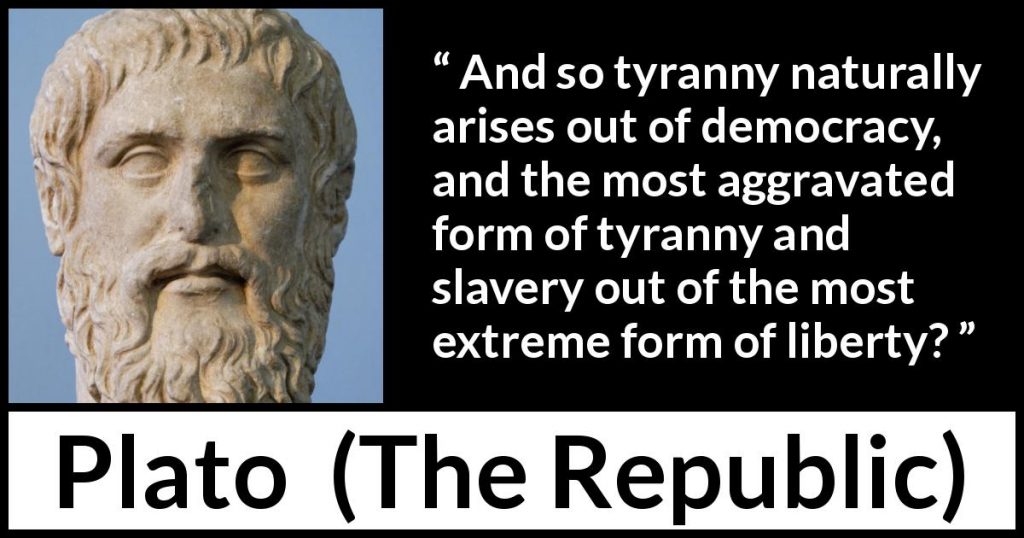
When the problem is defined as 'all the power' to the few or the many, other deviant variants are left intact.
Dictate by the party that is dedicated to taking over by the imposition of punitive measures for disagreement is a current national issue.
Populism is not political rule by one, the few or the many. The leader is designated to state the dictate for the party.
Stories of atrocity were released to the public to deter the threat of crime, terror, rebellion, revolution or war. The system of election was supposed to alleviate these threats, but the competition to win the election was influenced by the stories of the gods in polytheistic culture, then the stories of God's punishment in monotheism.
The spoils system in victory was used to punish the opposition. The judicial system was adversely influenced by voting groups.
The right of the accused "individual" to due process in law is overridden so individual rights could be used by the party for a witchhunt against opposition in the general public. Anarchy was used as a supportive subtext to justify the party line for 'taking over.'
Demagogues lead this form of populism.
Video: Athenian Populism
Demagogic populists have an anti-professional trend. They don't want to entertain professional disagreement so they offer political positions to those who agree with the 'movement.
Locke was particularly dangerous as a populist insofar as he had worked as a doctor. He used the presumption of normality to promote the consensus of the Puritan dictate in the Whig party over the government of England.
The Whigs used selective agreement with the constitutional form of monarchy that Hobbes had used in his argument against the "Leviathan" of populist democracy.
Mill disagreed with the major tenets of the utilitarian philosophy that had been developed by Bentham in order to make individual rights the hedge against unity of agreement in the majority of the population.
His argument was essentially against anything from the majority. He wanted people to believe that human nature was so subject to corruption that there was virtually nothing that government could use to represent the majority that wouldn't offend some individual.
Bentham's argument had helped to outlaw slavery. It also gained recognition for the right to vote for women and people of color.
The anti-majority position has been used to promote the witchhunts against successful Americans for the benefit of those who support populism instead of democracy.
Showing posts with label enjoyment. Show all posts
Sunday, February 16, 2020
Celebrate
Labels:
Aaron,
diadem,
Elijah,
employment,
enjoyment,
instruments,
Jesus,
Joshua,
Moses,
music,
revelation,
reverence
Wednesday, August 21, 2019
Mediate
8.22.19
Ark of the Covenant
Mediate
Profit
调解利润
Tiáojiě lìrùn
利益を仲介する
Rieki o chūkai suru
ps131, 132
Mediata prodest
The priest is not proud
when with objectivity endowed.
The cleric is a detective
when research is the objective.
Simple expression is the task that matters
to explain the elements of the pattern.
"I still my soul to make it quiet.
I release my thought for mental silence.
"My soul is made quiet with this request
like a child upon its mother's breast."
Wait upon the test of science
to show the way to self-reliance.
Remember what the priest endured
to show how hardship made the feast secure.
The horse ran to overcome the halter.
It passed the inn. It did not falter.
The elder made a promise that he vowed to keep.
He would not allow his eyes to sleep.
"I will not lay my head on my pillow to rest
until I find the place to build a temple to be divinely blessed."
We heard that the ark of the covenant was in a fruitful place.
We found it in the fields of the forest in a beautiful state.
Let us go stand near the symbol of the divine presence
that we may enjoy the feeling of the essential essence.
Arise to shine on your resting place
between the wings of the cherubim by your grace.
The wings have become an open book
where those who seek faith may come to look.
Let your pastor be clothed with the rightness of faith.
Let your faithful people sing with joy in the sacred space.
Do not turn away the face of your Anointed.
The love of the beloved uses oil as the ointment.
The beloved was true to the law insofar as he was able.
He did not punish non-lethal sin in a way that was fatal.
The humble citizen defended himself against charges that were false.
Success detained him without cruelty to check reports for embellished faults.
The Lord has sworn an oath in faith to love
for those who are true to the spirit of the dove.
Love God with your heart, understanding and strength.
Love your relations as yourself with attention to length.
You are not far from the kingdom of heaven in law.
Your faith is the leaven to overcome difficulty caused by flaws.
The fruit of your labor
will be seen with favor
as long as it serves
the network of nerves.
If your children keep my covenant
with the testimony of love in it
they will retain your power in governance
for strength in sustenance.
Zion is the sacred space between the wings of the pages.
It is the habitation for which we sing with the sages.
"I will delight in this place forever.
I will dwell in this state with pleasure."
The economy will be blessed with employment.
Earned income will be by self-appointment
in the service of public enjoyment.
Your priesthood will be clothed with salvation.
The faithful will help to build a productive nation.
The fruit of the harvest will bless the table with provision.
The light for the Anointed is prepared to share wisdom.
Those loyal to the royal priesthood will shine.
Their achievement will be a share in the divine.
--------------------------
Psalm 131
Domine, non est
Dominated, is not
1 O Lord, I am not proud;
I have no haughty looks.
2 I do not occupy myself with great matters,
or with things that are too hard for me.
3 But I still my soul and make it quiet,
like a child upon its mother's breast;
my soul is quieted within me.
4 O Israel, wait upon the Lord,
from this time forth for evermore.
132 Memento, Domine
Remember, Dominated
1 Lord, remember David,
and all the hardships he endured;
2 How he swore an oath to the Lord
and vowed a vow to the Mighty One of Jacob:
3 "I will not come under the roof of my house,
nor climb up into my bed;
4 I will not allow my eyes to sleep,
nor let my eyelids slumber;
5 Until I find a place for the Lord,
a dwelling for the Mighty One of Jacob."
6 "The ark! We heard it was in Ephratah; (fruitful)
we found it in the fields of Jearim. (forest)
7 Let us go to God's dwelling place;
let us fall upon our knees before his footstool."
8 Arise, O Lord, into your resting-place,
you and the ark of your strength.
9 Let your priests be clothed with righteousness;
let your faithful people sing with joy.
10 For your servant David's sake,
do not turn away the face of your Anointed.
11 The Lord has sworn an oath to David;
in truth, he will not break it:
12 "A son, the fruit of your body
will I set upon your throne.
13 If your children keep my covenant
and my testimonies that I shall teach them,
their children will sit upon your throne for evermore."
14 For the Lord has chosen Zion;
he has desired her for his habitation:
15 "This shall be my resting-place for ever;
here will I dwell, for I delight in her.
16 I will surely bless her provisions,
and satisfy her poor with bread.
17 I will clothe her priests with salvation,
and her faithful people will rejoice and sing.
18 There will I make the horn of David flourish;
I have prepared a lamp for my Anointed.
19 As for his enemies, I will clothe them with shame;
but as for him, his crown will shine."
-------------------------
Shimei- my reputation
Gera- dove
Abishai- father of a gift
Zeruiah- pain
2 Samuel 19:18b-23
Shimei son of Gera fell down before the king as he was about to cross he Jordan. He said, 'May my lord not hold me guilty or remember how your servant did wrong on the day my lord the king left Jerusalem. May the king not bear it in mind. Your servant knows that I have sinned. I have come this day, the first of the house of Joseph to come down to meet my lord the king.'
Abishai son of Zeruiah answered, 'Shall not Shimei be put to death for this because he cursed the LORD's anointed?' David said, 'What have I to do with you, you sons of Zeruiah, that you should today become adversary to me? Shall anyone be put to death in Israel this day? Do I not know that I am this day king over Israel?' The king said to Shimei, 'You shall not die.' He gave him his oath.
-------------------------
The beloved was true to the law insofar as he was able.
He did not punishment non-lethal sin in a way that was fatal.
===================
Felix- lucky
Lysias- destroyer
Acts 24:22-23
Felix, who was rather well informed about the Way, adjourned the hearing with the comment, 'When Lysias the tribune comes down, I will decide your case.' Then he ordered the centurion to keep him in custody, but to let him have some liberty and not to prevent any of his friends from taking care of his needs.
-------------------------
The humble citizen defended himself against the charges as false.
He was detained without cruelty to check reports for embellished faults.
===================
Mark 12:32-34
The scribe said to him, 'You are right, Teacher. You have said that "He is one. Beside him there is no other" and "love him with all the heart, the understanding and the strength" and "love one's neighbor as oneself." This is much more important than all whole burnt offerings and sacrifices.' When Jesus saw that he answered wisely, he said to him, 'You are not far from the kingdom of God.' After that no one dared to ask him any question.
-------------------------
Love God with your heart, understanding and strength.
Love your relations as your self with attention to length.
You are not far from the kingdom of heaven in this law.
Your faith is the leaven to overcome difficulty caused by flaws.
===================
German idealism lent itself to socialism. American idealism has been used for what is right about capitalism.
Devaluations
Max Scheler
b. 8.22.1874 Munich, Germany
d. 5.19.1928 Frankfurt, Germany
Max Ferdinand Scheler was a German philosopher known for his work in phenomenology, ethics and philosophical anthropology. He developed the method of the founder of phenomenology, Edmund Husserl.
Martin Heidegger praised him with Ortega y Gasset as "the strongest philosophical force in... contemporary Europe" after his death in 1928.
Karol Wojtyła, later Pope John Paul II, defended his doctoral thesis in 1954 on the evaluation of the possibility of "Constructing Christian Ethics" based on the system of Max Scheler.
Munich
Munich lies on the elevated plains of Upper Bavaria. Bavaria is in the southeastern corner of Germany. The city is about 50 km (31 mi) north of the northern edge of the Alps at an altitude of about 520 m (1,706 ft) above sea level. The local rivers are the Isar and the Würm. Munich is situated in the Northern Alpine Foreland.
It is the capital and most populous city of Bavaria, the second most populous German federal state. It is the third-largest city in Germany with a population of around 1.5 million. It comes after Berlin and Hamburg in size. It is the 12th-largest city in the European Union. The city's metropolitan region is home to 6 million people.
The name of the city is derived from the Old/Middle High German term Munichen, meaning "by the monks". The Benedictine order ran a monastery at the place that was later to become the Old Town of Munich. A monk is depicted on the city's coat of arms.
The city became the capital of the new Kingdom of Bavaria in 1806. The state's parliament (the Landtag) and the new archdiocese of Munich and Freising were located in the city.
Landshut University was moved to Munich 20 years later. Many of the city's finest buildings belong to this period. They were built under the first Bavarian kings.
Ludwig I rendered outstanding services to Munich's status as a center of the arts. He attracted numerous artists and enhanced the city's architectural substance with grand boulevards and buildings.
Ludwig II came to be known the world over as the fairytale king. He was mostly aloof from his capital and focused more on his fanciful castles in the Bavarian countryside. His patronage of Richard Wagner secured his posthumous reputation, as do his castles, which still generate significant tourist income.
Max Scheler
Max Scheler was born in Munich, Germany on 22 August 1874 to a Lutheran father and an Orthodox Jewish mother.
He was not a particularly strong student, but he showed an interest in the works of Nietzsche. He identified himself as a social democrat and an enthusiastic Marxist.
He turned to Catholicism as an adolescent. He became non-committal prior about 1921. He disassociated from Catholicism and the Judeo-Christian God in public after 1921. He chose to invest in philosophical anthropology.
He started to study medicine at the University of Munich in 1894. He enrolled at the University of Berlin in 1895 for the philosophy and sociology. He attended the lectures of Dilthey and Simmel.
Berlin is 585 km (365 mi.) north of Munich.
Dilthey’s research interests revolved around questions of scientific methodology, historical evidence and the science of history. His view contrasted with the idealism in Germany at the time by his experiential reference differed from British empiricism in basic assumptions. He drew his references from German literary and philosophical traditions.
Simmel was a first generation German sociologist. His approach was neo-Kantian. It laid the foundation for his sociological anti-positivism. He asked the question ‘What is society?’ as a reflection of Kant’s question, ‘What is nature?’ Individuality was a fragmentation of social identity.
The cultivation of individuals through the agency of external forms was conducted by the course of history. He was a forerunner to the structuralist style of reasoning in the social sciences. Urban sociology, symbolic interactionism and social network analysis contributed to the formation of the metropolis.
He transferred to Jena in 1896 to finish his studies with Eucken.
Jena is 260 km (160 mi.) southwest of Berlin.
Eucken advocated for ethical activism as the application for practical idealism. The philosophy of life is for the development of a new culture, not mere intellectualism. It is an application of vital religious inspiration to the practical problems of society.
It was Eucken’s ideas regarding the inner quest for a spiritual life of every human being that drew Scheler’s attention.
It was through this interest in practical idealism that Scheler developed a relationship with the American pragmatism of William James. The two exchanged letters in correspondence.
Scheler received his doctorate on the determination of the relations between logical and ethical principles at the University of Jena in 1897. He worked for his habilitation there as well.
He took a trip to Heidelberg in 1898 and met Max Weber. Weber had an impact on his thought.
Scheler met Husserl at a party in Jena in 1901. He read Husserl’s Logical Investigations a year later. The remainder of this life would be dedicated to the progress of phenomenology.
Scheler was reading French philosophy during this period. He was a major factor in introducing Henri Bergson’s work to German intellectual circles.
Scheler moved his family to Munich in 1906 to start his position there as Privatdozent. A number of students working with the psychologist Theodor Lipps at the University of Munich had founded the Psychologische Verein ("Psychological Association") in 1895.
Lipps was known for the theory of aesthetics that framed the concept of empathy. His work opened a new branch of interdisciplinary research in psychology and philosophy.
Psychology was a discipline on the rise at the turn of the 20th century. The relation between philosophy and psychology was intensely debated. The debate concerned whether psychology is a philosophical discipline or whether philosophy is based on psychology.
The position that logical concepts are psychological have been labeled as “psychologism.” The logical law of the excluded middle has to be interpreted in terms which state that it is impossible for a subject to judge at the same time that p and not-p are true.
Psychologism was contested by a competing approach within the “anti-psychologist” strand. There are different views as to how logical concepts and laws have to be positively defined. They agreed that logic does not depend on psychology.
Husserl's Logical Investigations (1900/01) was critical of the psychologism. A number of participants in the Psychological Association at Munich decided to align themselves with Husserl. They became the Munich Circle of phenomenologists. Scheler joined this group.
The Munich circle included students from both the Psychological Association and the phenomenological group.
A number of Lipps' students followed the lead of Daubert in 1905. They left Munich for the University of Gottingen to work with Husserl. The arrival of students from Munich eventually led to the establishment of a similar student group in Göttingen circa 1910, known as the Göttingen Circle.
Scheler taught at the University of Munich from 1907 to 1910. He lost his teaching privileges due to controversies surrounding the separation from his first wife and reported affairs with students.
He earned his living as a private scholar, lecturer and freelance writer from 1910 to 1919. He joined the circle after the invitation in 1912 to give private lectures in Göttingen.
He was forbidden to teach at a German university so his lectures would often have to be held in hotel rooms rented by his close friend Dietrich von Hildebrand.
The first volume of the Yearbook for Philosophy and Phenomenological Research appeared in 1913. Scheler was a co-editor with 3 others and Husserl.
He published major works such as Phenomenology and Theory of the Feeling of Sympathy and of Love and Hate (1913), Formalism in Ethics and Non-Formal Ethics of Value (Part 1 1913, Part 2 1916), The Genius of War and the German War (1915).
Scheler conceptualized the nation as an intellectual collective entity, which discovers and recognizes itself through war in his famous 1915 essay. The German nation, purified through the war, had the political mission of pushing Russia back into Asia and unifying Europe.
He tried to demonstrate a fundamental difference between Europe and Asia by analysing music, language, religion, gender roles and thought.
He attempted to explain this phenomenon of an all-pervading hate towards Germany in a lecture in Frankfurt in 1916. This prompted his essay “The Causes of Hatred Against Germans”, which was first published in 1917 and again in 1919.
The strongest motivation of the hate laid in the newly established unique German work ethic. The ethic was intensified by political, economic and social requirements. The ancient characteristic pursuit of the infinite which expressed itself in idealism coalesced with the work ethic.
Transcendental phenomenlogy posited a necessary correlation between reality and consciousness. A thing in itself is never one with which consciousness has nothing to do.
Edith Stein became a student of Husserl. She wrote her dissertation on the problem of empathy. It was finished in 1916. She became his teaching assistant.
Scheler had voluntarily enrolled to serve in the war for the airship battalion of the reserve in Cologne, but was not accepted due to his astigmatism. The State Department sent him to Switzerland, Austria and the Netherlands from 1917 to 1918 to influence Catholic circles. He was to give lectures to sick and wounded German soldiers, interned in the neutral Netherlands.
This phase of his war philosophy coincided with the period in which the philosopher developed his theory of value. This theory proceeds on the assumption of the existence of an objective hierarchy of values which can be accessed through intentional feeling of values.
Scheler also composed several articles next to his book on formalism. He was accepted into the Catholic Church. He worked on the prominent Catholic magazine Hochland.
He finally took a strong position against nationalism entirely and committed himself to Europeanism in his lecture “On Europe’s Cultural Reconstruction” in 1917-1918. His Europeanism primarily encompassed continental Europe, but he suggested that England should also be included. This new Europe should be open towards Asia culturally.
Europe was now a “community of intellect and love” in his definition of nation. The unity of Europe was the reference point for a post-war order. He used the term “Europeanism” in an affirmative manner to show a third possibility of forming unity beyond nationalism and internationalism.
Europe was not defined by its geography. It was a concept that connoted a unified, spiritual structure. The collective enemy was the capitalistic, liberal, bourgeois, nationalistic and imperialistic ethos. Europeanism and anti-capitalistic criticism can be identified as constants in his war philosophy.
Scheler received an invitation in 1918 to join the faculty of the newly founded research institute for the social sciences in Cologne. He became professor of philosophy and sociology at the University of Cologne.
He wrote his major work on religion, On the Eternal in Man (1921) during his time at Cologne. He stayed there until 1928. He accepted a new position at the University of Frankfurt early that year.
Scheler was the only scholar of rank of the then German intelligentsia who gave warning in public speeches delivered as early as 1927 of the dangers of the growing National Socialist movement.
'Politics and Morals' and 'The Idea of Eternal Peace and Pacifism' were subjects of talks he delivered in Berlin in 1927. He argued that capitalism was a calculating, globally growing 'mind-set', rather than an economic system in his analysis.
While economic capitalism may have had some roots in ascetic Calvinism, its very mind-set had its origin in modern, subconscious angst as expressed in increasing needs for financial and other securities for protection and personal safeguards as well as for rational manageability of all entities.
The subordination of the value of the individual person to this mind-set was sufficient reason to denounce it and to predict a whole new era of culture and values which he called 'The World-Era of Adjustment'.
Scheler advocated for an international university to be set up in Switzerland. He was at that time supportive of programs such as 'continuing education' and of what he seems to have been the first to call a 'United States of Europe'.
He deplored the gap existing in Germany between power and mind, a gap which he regarded as the very source of an impending dictatorship and the greatest obstacle to the establishment of German democracy.
He died in Frankfurt, Germany at the age of 53 on 19 May 1928. The Nazi dictatorship (1933–1945) suppressed Scheler's work 5 years after his death.
The Germans were like the French in their idealism. They were for socialism in that it was opposed to British and American capitalism. They started to criticize Marx, but they maintained his criticism against Adam Smith.
Marx had used the prediction of proletariat revolution to deflect attention from national dependence upon socialist government. Labor had made such progress in gaining benefits that they had a better quality of life than much of the middle class.
Now socialists subscribe to populist media stories in order to suggest that there is unity in opposition to economic success.
The middle class still has a presumption of professionalism with education for business enterprise. Socialist government was subverting the value of education by the implication that the applicants for higher education had to support the criticism of capitalism.
Liberals made funding for research look like it was entirely dependent upon the government as a source. This lent itself to the perception that the intellectual had to blame the success of the business world for economic inequality.
Capitalism maintains a position for the production of value for the public with products or services. Education and the limitation of political overreach contribute to the production of value.
Organization can be developed when liberals in the national government are not claiming to be the answer to things like gun violence, racism, sexism and capitalism with legislation and increased taxation.
Max Scheler
S. 马克斯舍勒
T. 馬克斯舍勒
马 Ma horse 馬 ba horse Ma まっ マッ Maeg 맥 vein
克 ke gram 克 koku overcome ku く ク seu 스 s
斯 si this 斯 shi this su す ス Chel 첼 cell
舍 She house 舍 seki inn She しぇ シェ leo 러 naughty
勒 lei to force 勒 roku halter ra ら- ラ-
-------------------------
The horse ran to overcome the halter.
It passed the inn. It did not falter.
===================
wiki Max Scheler
SEP Scheler
SEP Phenomenology
wiki Munich
Absolute Self
Kant was Prussian. His philosophy has been used to promote universal disarmament. It is too idealistic in this regard.
Berkeley used the concept of the immaterial as a contrast to material reality. His idealism was conditioned by the search to define knowledge. He was opposed to the liberal implications of Locke's empiricism.
Consider the use of the term absolute with respect to objective judgment. When judgment is restrained by reason to realistic truth, it is guided by impartial considerations. It is not subjectively for prejudice.
The sun shines and the rain falls on people irrespective of prejudiced beliefs conditioned by race, creed or color.
Ark of the Covenant
Mediate
Profit
调解利润
Tiáojiě lìrùn
利益を仲介する
Rieki o chūkai suru
ps131, 132
Mediata prodest
The priest is not proud
when with objectivity endowed.
The cleric is a detective
when research is the objective.
Simple expression is the task that matters
to explain the elements of the pattern.
"I still my soul to make it quiet.
I release my thought for mental silence.
"My soul is made quiet with this request
like a child upon its mother's breast."
Wait upon the test of science
to show the way to self-reliance.
Remember what the priest endured
to show how hardship made the feast secure.
The horse ran to overcome the halter.
It passed the inn. It did not falter.
The elder made a promise that he vowed to keep.
He would not allow his eyes to sleep.
"I will not lay my head on my pillow to rest
until I find the place to build a temple to be divinely blessed."
We heard that the ark of the covenant was in a fruitful place.
We found it in the fields of the forest in a beautiful state.
Let us go stand near the symbol of the divine presence
that we may enjoy the feeling of the essential essence.
Arise to shine on your resting place
between the wings of the cherubim by your grace.
The wings have become an open book
where those who seek faith may come to look.
Let your pastor be clothed with the rightness of faith.
Let your faithful people sing with joy in the sacred space.
Do not turn away the face of your Anointed.
The love of the beloved uses oil as the ointment.
The beloved was true to the law insofar as he was able.
He did not punish non-lethal sin in a way that was fatal.
The humble citizen defended himself against charges that were false.
Success detained him without cruelty to check reports for embellished faults.
The Lord has sworn an oath in faith to love
for those who are true to the spirit of the dove.
Love God with your heart, understanding and strength.
Love your relations as yourself with attention to length.
You are not far from the kingdom of heaven in law.
Your faith is the leaven to overcome difficulty caused by flaws.
The fruit of your labor
will be seen with favor
as long as it serves
the network of nerves.
If your children keep my covenant
with the testimony of love in it
they will retain your power in governance
for strength in sustenance.
Zion is the sacred space between the wings of the pages.
It is the habitation for which we sing with the sages.
"I will delight in this place forever.
I will dwell in this state with pleasure."
The economy will be blessed with employment.
Earned income will be by self-appointment
in the service of public enjoyment.
Your priesthood will be clothed with salvation.
The faithful will help to build a productive nation.
The fruit of the harvest will bless the table with provision.
The light for the Anointed is prepared to share wisdom.
Those loyal to the royal priesthood will shine.
Their achievement will be a share in the divine.
--------------------------
Psalm 131
Domine, non est
Dominated, is not
1 O Lord, I am not proud;
I have no haughty looks.
2 I do not occupy myself with great matters,
or with things that are too hard for me.
3 But I still my soul and make it quiet,
like a child upon its mother's breast;
my soul is quieted within me.
4 O Israel, wait upon the Lord,
from this time forth for evermore.
132 Memento, Domine
Remember, Dominated
1 Lord, remember David,
and all the hardships he endured;
2 How he swore an oath to the Lord
and vowed a vow to the Mighty One of Jacob:
3 "I will not come under the roof of my house,
nor climb up into my bed;
4 I will not allow my eyes to sleep,
nor let my eyelids slumber;
5 Until I find a place for the Lord,
a dwelling for the Mighty One of Jacob."
6 "The ark! We heard it was in Ephratah; (fruitful)
we found it in the fields of Jearim. (forest)
7 Let us go to God's dwelling place;
let us fall upon our knees before his footstool."
8 Arise, O Lord, into your resting-place,
you and the ark of your strength.
9 Let your priests be clothed with righteousness;
let your faithful people sing with joy.
10 For your servant David's sake,
do not turn away the face of your Anointed.
11 The Lord has sworn an oath to David;
in truth, he will not break it:
12 "A son, the fruit of your body
will I set upon your throne.
13 If your children keep my covenant
and my testimonies that I shall teach them,
their children will sit upon your throne for evermore."
14 For the Lord has chosen Zion;
he has desired her for his habitation:
15 "This shall be my resting-place for ever;
here will I dwell, for I delight in her.
16 I will surely bless her provisions,
and satisfy her poor with bread.
17 I will clothe her priests with salvation,
and her faithful people will rejoice and sing.
18 There will I make the horn of David flourish;
I have prepared a lamp for my Anointed.
19 As for his enemies, I will clothe them with shame;
but as for him, his crown will shine."
-------------------------
Shimei- my reputation
Gera- dove
Abishai- father of a gift
Zeruiah- pain
2 Samuel 19:18b-23
Shimei son of Gera fell down before the king as he was about to cross he Jordan. He said, 'May my lord not hold me guilty or remember how your servant did wrong on the day my lord the king left Jerusalem. May the king not bear it in mind. Your servant knows that I have sinned. I have come this day, the first of the house of Joseph to come down to meet my lord the king.'
Abishai son of Zeruiah answered, 'Shall not Shimei be put to death for this because he cursed the LORD's anointed?' David said, 'What have I to do with you, you sons of Zeruiah, that you should today become adversary to me? Shall anyone be put to death in Israel this day? Do I not know that I am this day king over Israel?' The king said to Shimei, 'You shall not die.' He gave him his oath.
-------------------------
The beloved was true to the law insofar as he was able.
He did not punishment non-lethal sin in a way that was fatal.
===================
Felix- lucky
Lysias- destroyer
Acts 24:22-23
Felix, who was rather well informed about the Way, adjourned the hearing with the comment, 'When Lysias the tribune comes down, I will decide your case.' Then he ordered the centurion to keep him in custody, but to let him have some liberty and not to prevent any of his friends from taking care of his needs.
-------------------------
The humble citizen defended himself against the charges as false.
He was detained without cruelty to check reports for embellished faults.
===================
Mark 12:32-34
The scribe said to him, 'You are right, Teacher. You have said that "He is one. Beside him there is no other" and "love him with all the heart, the understanding and the strength" and "love one's neighbor as oneself." This is much more important than all whole burnt offerings and sacrifices.' When Jesus saw that he answered wisely, he said to him, 'You are not far from the kingdom of God.' After that no one dared to ask him any question.
-------------------------
Love God with your heart, understanding and strength.
Love your relations as your self with attention to length.
You are not far from the kingdom of heaven in this law.
Your faith is the leaven to overcome difficulty caused by flaws.
===================
German idealism lent itself to socialism. American idealism has been used for what is right about capitalism.
Devaluations
Max Scheler
b. 8.22.1874 Munich, Germany
d. 5.19.1928 Frankfurt, Germany
Max Ferdinand Scheler was a German philosopher known for his work in phenomenology, ethics and philosophical anthropology. He developed the method of the founder of phenomenology, Edmund Husserl.
Martin Heidegger praised him with Ortega y Gasset as "the strongest philosophical force in... contemporary Europe" after his death in 1928.
Karol Wojtyła, later Pope John Paul II, defended his doctoral thesis in 1954 on the evaluation of the possibility of "Constructing Christian Ethics" based on the system of Max Scheler.
Munich
Munich lies on the elevated plains of Upper Bavaria. Bavaria is in the southeastern corner of Germany. The city is about 50 km (31 mi) north of the northern edge of the Alps at an altitude of about 520 m (1,706 ft) above sea level. The local rivers are the Isar and the Würm. Munich is situated in the Northern Alpine Foreland.
It is the capital and most populous city of Bavaria, the second most populous German federal state. It is the third-largest city in Germany with a population of around 1.5 million. It comes after Berlin and Hamburg in size. It is the 12th-largest city in the European Union. The city's metropolitan region is home to 6 million people.
The name of the city is derived from the Old/Middle High German term Munichen, meaning "by the monks". The Benedictine order ran a monastery at the place that was later to become the Old Town of Munich. A monk is depicted on the city's coat of arms.
The city became the capital of the new Kingdom of Bavaria in 1806. The state's parliament (the Landtag) and the new archdiocese of Munich and Freising were located in the city.
Landshut University was moved to Munich 20 years later. Many of the city's finest buildings belong to this period. They were built under the first Bavarian kings.
Ludwig I rendered outstanding services to Munich's status as a center of the arts. He attracted numerous artists and enhanced the city's architectural substance with grand boulevards and buildings.
Ludwig II came to be known the world over as the fairytale king. He was mostly aloof from his capital and focused more on his fanciful castles in the Bavarian countryside. His patronage of Richard Wagner secured his posthumous reputation, as do his castles, which still generate significant tourist income.
Max Scheler
Max Scheler was born in Munich, Germany on 22 August 1874 to a Lutheran father and an Orthodox Jewish mother.
He was not a particularly strong student, but he showed an interest in the works of Nietzsche. He identified himself as a social democrat and an enthusiastic Marxist.
He turned to Catholicism as an adolescent. He became non-committal prior about 1921. He disassociated from Catholicism and the Judeo-Christian God in public after 1921. He chose to invest in philosophical anthropology.
He started to study medicine at the University of Munich in 1894. He enrolled at the University of Berlin in 1895 for the philosophy and sociology. He attended the lectures of Dilthey and Simmel.
Berlin is 585 km (365 mi.) north of Munich.
Dilthey’s research interests revolved around questions of scientific methodology, historical evidence and the science of history. His view contrasted with the idealism in Germany at the time by his experiential reference differed from British empiricism in basic assumptions. He drew his references from German literary and philosophical traditions.
Simmel was a first generation German sociologist. His approach was neo-Kantian. It laid the foundation for his sociological anti-positivism. He asked the question ‘What is society?’ as a reflection of Kant’s question, ‘What is nature?’ Individuality was a fragmentation of social identity.
The cultivation of individuals through the agency of external forms was conducted by the course of history. He was a forerunner to the structuralist style of reasoning in the social sciences. Urban sociology, symbolic interactionism and social network analysis contributed to the formation of the metropolis.
He transferred to Jena in 1896 to finish his studies with Eucken.
Jena is 260 km (160 mi.) southwest of Berlin.
Eucken advocated for ethical activism as the application for practical idealism. The philosophy of life is for the development of a new culture, not mere intellectualism. It is an application of vital religious inspiration to the practical problems of society.
It was Eucken’s ideas regarding the inner quest for a spiritual life of every human being that drew Scheler’s attention.
It was through this interest in practical idealism that Scheler developed a relationship with the American pragmatism of William James. The two exchanged letters in correspondence.
Scheler received his doctorate on the determination of the relations between logical and ethical principles at the University of Jena in 1897. He worked for his habilitation there as well.
He took a trip to Heidelberg in 1898 and met Max Weber. Weber had an impact on his thought.
Scheler met Husserl at a party in Jena in 1901. He read Husserl’s Logical Investigations a year later. The remainder of this life would be dedicated to the progress of phenomenology.
Scheler was reading French philosophy during this period. He was a major factor in introducing Henri Bergson’s work to German intellectual circles.
Scheler moved his family to Munich in 1906 to start his position there as Privatdozent. A number of students working with the psychologist Theodor Lipps at the University of Munich had founded the Psychologische Verein ("Psychological Association") in 1895.
Lipps was known for the theory of aesthetics that framed the concept of empathy. His work opened a new branch of interdisciplinary research in psychology and philosophy.
Psychology was a discipline on the rise at the turn of the 20th century. The relation between philosophy and psychology was intensely debated. The debate concerned whether psychology is a philosophical discipline or whether philosophy is based on psychology.
The position that logical concepts are psychological have been labeled as “psychologism.” The logical law of the excluded middle has to be interpreted in terms which state that it is impossible for a subject to judge at the same time that p and not-p are true.
Psychologism was contested by a competing approach within the “anti-psychologist” strand. There are different views as to how logical concepts and laws have to be positively defined. They agreed that logic does not depend on psychology.
Husserl's Logical Investigations (1900/01) was critical of the psychologism. A number of participants in the Psychological Association at Munich decided to align themselves with Husserl. They became the Munich Circle of phenomenologists. Scheler joined this group.
The Munich circle included students from both the Psychological Association and the phenomenological group.
A number of Lipps' students followed the lead of Daubert in 1905. They left Munich for the University of Gottingen to work with Husserl. The arrival of students from Munich eventually led to the establishment of a similar student group in Göttingen circa 1910, known as the Göttingen Circle.
Scheler taught at the University of Munich from 1907 to 1910. He lost his teaching privileges due to controversies surrounding the separation from his first wife and reported affairs with students.
He earned his living as a private scholar, lecturer and freelance writer from 1910 to 1919. He joined the circle after the invitation in 1912 to give private lectures in Göttingen.
He was forbidden to teach at a German university so his lectures would often have to be held in hotel rooms rented by his close friend Dietrich von Hildebrand.
The first volume of the Yearbook for Philosophy and Phenomenological Research appeared in 1913. Scheler was a co-editor with 3 others and Husserl.
He published major works such as Phenomenology and Theory of the Feeling of Sympathy and of Love and Hate (1913), Formalism in Ethics and Non-Formal Ethics of Value (Part 1 1913, Part 2 1916), The Genius of War and the German War (1915).
Scheler conceptualized the nation as an intellectual collective entity, which discovers and recognizes itself through war in his famous 1915 essay. The German nation, purified through the war, had the political mission of pushing Russia back into Asia and unifying Europe.
He tried to demonstrate a fundamental difference between Europe and Asia by analysing music, language, religion, gender roles and thought.
He attempted to explain this phenomenon of an all-pervading hate towards Germany in a lecture in Frankfurt in 1916. This prompted his essay “The Causes of Hatred Against Germans”, which was first published in 1917 and again in 1919.
The strongest motivation of the hate laid in the newly established unique German work ethic. The ethic was intensified by political, economic and social requirements. The ancient characteristic pursuit of the infinite which expressed itself in idealism coalesced with the work ethic.
Transcendental phenomenlogy posited a necessary correlation between reality and consciousness. A thing in itself is never one with which consciousness has nothing to do.
Edith Stein became a student of Husserl. She wrote her dissertation on the problem of empathy. It was finished in 1916. She became his teaching assistant.
Scheler had voluntarily enrolled to serve in the war for the airship battalion of the reserve in Cologne, but was not accepted due to his astigmatism. The State Department sent him to Switzerland, Austria and the Netherlands from 1917 to 1918 to influence Catholic circles. He was to give lectures to sick and wounded German soldiers, interned in the neutral Netherlands.
This phase of his war philosophy coincided with the period in which the philosopher developed his theory of value. This theory proceeds on the assumption of the existence of an objective hierarchy of values which can be accessed through intentional feeling of values.
Scheler also composed several articles next to his book on formalism. He was accepted into the Catholic Church. He worked on the prominent Catholic magazine Hochland.
He finally took a strong position against nationalism entirely and committed himself to Europeanism in his lecture “On Europe’s Cultural Reconstruction” in 1917-1918. His Europeanism primarily encompassed continental Europe, but he suggested that England should also be included. This new Europe should be open towards Asia culturally.
Europe was now a “community of intellect and love” in his definition of nation. The unity of Europe was the reference point for a post-war order. He used the term “Europeanism” in an affirmative manner to show a third possibility of forming unity beyond nationalism and internationalism.
Europe was not defined by its geography. It was a concept that connoted a unified, spiritual structure. The collective enemy was the capitalistic, liberal, bourgeois, nationalistic and imperialistic ethos. Europeanism and anti-capitalistic criticism can be identified as constants in his war philosophy.
Scheler received an invitation in 1918 to join the faculty of the newly founded research institute for the social sciences in Cologne. He became professor of philosophy and sociology at the University of Cologne.
He wrote his major work on religion, On the Eternal in Man (1921) during his time at Cologne. He stayed there until 1928. He accepted a new position at the University of Frankfurt early that year.
Scheler was the only scholar of rank of the then German intelligentsia who gave warning in public speeches delivered as early as 1927 of the dangers of the growing National Socialist movement.
'Politics and Morals' and 'The Idea of Eternal Peace and Pacifism' were subjects of talks he delivered in Berlin in 1927. He argued that capitalism was a calculating, globally growing 'mind-set', rather than an economic system in his analysis.
While economic capitalism may have had some roots in ascetic Calvinism, its very mind-set had its origin in modern, subconscious angst as expressed in increasing needs for financial and other securities for protection and personal safeguards as well as for rational manageability of all entities.
The subordination of the value of the individual person to this mind-set was sufficient reason to denounce it and to predict a whole new era of culture and values which he called 'The World-Era of Adjustment'.
Scheler advocated for an international university to be set up in Switzerland. He was at that time supportive of programs such as 'continuing education' and of what he seems to have been the first to call a 'United States of Europe'.
He deplored the gap existing in Germany between power and mind, a gap which he regarded as the very source of an impending dictatorship and the greatest obstacle to the establishment of German democracy.
He died in Frankfurt, Germany at the age of 53 on 19 May 1928. The Nazi dictatorship (1933–1945) suppressed Scheler's work 5 years after his death.
The Germans were like the French in their idealism. They were for socialism in that it was opposed to British and American capitalism. They started to criticize Marx, but they maintained his criticism against Adam Smith.
Marx had used the prediction of proletariat revolution to deflect attention from national dependence upon socialist government. Labor had made such progress in gaining benefits that they had a better quality of life than much of the middle class.
Now socialists subscribe to populist media stories in order to suggest that there is unity in opposition to economic success.
The middle class still has a presumption of professionalism with education for business enterprise. Socialist government was subverting the value of education by the implication that the applicants for higher education had to support the criticism of capitalism.
Liberals made funding for research look like it was entirely dependent upon the government as a source. This lent itself to the perception that the intellectual had to blame the success of the business world for economic inequality.
Capitalism maintains a position for the production of value for the public with products or services. Education and the limitation of political overreach contribute to the production of value.
Organization can be developed when liberals in the national government are not claiming to be the answer to things like gun violence, racism, sexism and capitalism with legislation and increased taxation.
Max Scheler
S. 马克斯舍勒
T. 馬克斯舍勒
马 Ma horse 馬 ba horse Ma まっ マッ Maeg 맥 vein
克 ke gram 克 koku overcome ku く ク seu 스 s
斯 si this 斯 shi this su す ス Chel 첼 cell
舍 She house 舍 seki inn She しぇ シェ leo 러 naughty
勒 lei to force 勒 roku halter ra ら- ラ-
-------------------------
The horse ran to overcome the halter.
It passed the inn. It did not falter.
===================
wiki Max Scheler
SEP Scheler
SEP Phenomenology
wiki Munich
Absolute Self
Kant was Prussian. His philosophy has been used to promote universal disarmament. It is too idealistic in this regard.
Berkeley used the concept of the immaterial as a contrast to material reality. His idealism was conditioned by the search to define knowledge. He was opposed to the liberal implications of Locke's empiricism.
Consider the use of the term absolute with respect to objective judgment. When judgment is restrained by reason to realistic truth, it is guided by impartial considerations. It is not subjectively for prejudice.
The sun shines and the rain falls on people irrespective of prejudiced beliefs conditioned by race, creed or color.
Labels:
anointed,
cherubim,
covenant,
employment,
enjoyment,
false,
faults,
favor,
governance,
labor,
nation,
nerves,
ointment,
pleasure,
salvation,
sustenance
Subscribe to:
Posts (Atom)