Showing posts with label slavery. Show all posts

Sunday, June 23, 2019

Love

6.30.19
Monica Potter

Love
Your
Enemy
爱你的敌人
Ài nǐ de dírén
あなたの敵を愛しなさい   
Anata no teki o aishi nasai
ps77
Dilige inimicum

I will remember the lesson taught by experience.
The remembrance of wonder will deliver me from weariness.

I will meditate on the acts of the past
to ponder wealth in the truth of observed facts.

Romanticism was even the style for economics
for the Austrian bridle in psychonomics. 

My hands will stretch out at night.
I will not tire until I am blessed with insight.

I watch my will for want or need.
The design for law discourages greed.

I am troubled when I cannot speak.
My eyes won't close to allow me sleep.

I remember the years long past.
I consider the days recently cast.

I commune with my heart in thought.
I search for reason by experience bought.

Will the dominant cast me off for ever?
Is success gained only by the aggressive endeavor?

Has love with kindness come to an end?
Has the promise failed to extend? 

Providence is sanctified by benefit
when agreement is not defined as degenerate.

It is difficult to love your enemy, 
but reason finds the best remedy.

Persuade your adversary to not do damage
to allow competition to work for provident advantage.


Who is so great as our God?
Wonder lines the path on which we trod.

Faith has declared divine power
as redemption from that which made crisis flower.

We are the children for preservation in competition.
Divine will fathered our deliberation on mission.

Let the dead bury their dead.
The heart is there to lend succor to your head.

The water saw the work in the wind.
The waves were raised as akin to chagrin.

The depths were moved
to the aquatic tune.

The clouds shed massive waves of particle plunder
as the heat clashed charge flash lit the darkness before the thunder. 

The staggered path of dancing light
announced the presence of the static to sight.

The sound of your power was in the whirlwind.
Your lightning flashed remembrance of what made life begin.

The earth trembled and shook
until a path through the sea of reeds opened like a book.

You made a way through the water
for each beloved son and daughter.


A chariot of flame with horses of fire separated the one from the many.
Salvation watched the ascension by whirlwind to the promise of plenty.

Your footsteps were not seen
yet your presence was felt as serene
despite the tumult of the scene. 

The people were drawn along the way
by the exaltation of passage through the fray.

The LORD delivered you from bondage to ignorance.
The transcendence of strife saved you from belligerence.

Christ has set us free to live in liberty with bravery.
We need not ever submit again to the yoke of slavery. 

--------------------------

Psalm 77
Voce mea ad Dominum
My voice for the Dominant

1 I will cry aloud to God;
I will cry aloud, and he will hear me.
2 In the day of my trouble I sought the Lord;
my hands were stretched out by night and did not tire;
I refused to be comforted.
3 I think of God, I am restless,
I ponder, and my spirit faints.
4 You will not let my eyelids close;
I am troubled and I cannot speak.
5 I consider the days of old;
I remember the years long past;
6 I commune with my heart in the night;
I ponder and search my mind.
7 Will the Lord cast me off for ever?
will he no more show his favor?
8 Has his loving-kindness come to an end for ever?
has his promise failed for evermore?
9 Has God forgotten to be gracious?
has he, in his anger, withheld his compassion?
10 And I said, "My grief is this:
the right hand of the Most High has lost its power."
11 I will remember the works of the Lord,
and call to mind your wonders of old time.
12 I will meditate on all your acts
and ponder your mighty deeds.
13 Your way, O God, is holy;
who is so great a god as our God?
14 You are the God who works wonders
and have declared your power among the peoples.
15 By your strength you have redeemed your people,
the children of Jacob and Joseph.
16 The waters saw you, O God;
the waters saw you and trembled;
the very depths were shaken.
17 The clouds poured out water;
the skies thundered;
your arrows flashed to and fro;
18 The sound of your thunder was in the whirlwind;
your lightnings lit up the world;
the earth trembled and shook.
19 Your way was in the sea,
and your paths in the great waters,
yet your footsteps were not seen.
20 You led your people like a flock
by the hand of Moses and Aaron.

------------------------------

2 Kings 2:11

A chariot  of flame with horses of fire separated Elijah from Elisha as they were walking and talking across the Jordan. Elijah ascended in a whirlwind to heaven.

-------------------------

A chariot of flame with horses of fire separated the one from the many.
Salvation watched the ascension by whirlwind to the promise of plenty.

==================

Gal. 5:1

Christ has set us free to live in liberty. Stand firm. Do not submit again to the yoke of slavery.

-------------------------

Christ has set us free to live in liberty with bravery.
We need not ever submit again to the yoke of slavery.

==================

Luke 9:60

Jesus said to him, 'Let the dead bury their own dead. As for you, go and proclaim the kingdom of God.'

-------------------------

Let the dead bury their dead.
The heart is there to lend succor to your head.

==================

Economic Romanticism

Adam Muller
b. 6.30.1779 Berlin, Bradenburg
d. 1.17.1829 Vienna, Austria

Adam Muller  was a German publicist, literary critic, political economist, theorist of the state and forerunner of economic romanticism.

Berlin

Berlin is the capital and largest city of Germany by both area and population. The population was about 3,750,000 in 2018. It is the second most populous city  in Europe after London.

The city is influenced by a temperate seasonal climate due to its location in the European Plain. About one-third of the city's area is composed of forests, parks, gardens, rivers, canals and lakes. It straddles the banks of the River Spree. The Spree flows into the River Havel. The Havel is a tributary of the River Elbe.

Berlin is home to world-renowned universities, orchestras, museums and entertainment venues. It is host to many sporting events. Its Zoological Garden is the most visited zoo in Europe. It is one of the most popular worldwide.

It is an increasingly popular location for international film productions with the world's oldest large-scale movie studio complex. The city is well known for its festivals, diverse architecture, nightlife, contemporary arts and a very high quality of living.

The Thirty Years' War was a war fought primarily in Central Europe between 1618 and 1648. It was initially a war between various Protestant and Catholic states in the fragmented Holy Roman Empire.
The war devastated Berlin. One third of its houses were damaged or destroyed, and the city lost half of its population.

Frederick William had succeeded his father George William as ruler in 1640. He initiated a policy of promoting immigration and religious tolerance.  Frederick William offered asylum to the French Huguenots with the Edict of Potsdam in 1685.

Approximately 30 percent of Berlin's residents were French by 1700, because of the immigration. Many other immigrants came from Bohemia, Poland and Salzburg.

The Margraviate of Brandenburg had been in personal union with the Duchy of Prussia since 1618. The dual state formed the Kingdom of Prussia in 1701. Frederick III, Elector of Brandenburg, crowned himself as king Frederick I in Prussia.

Berlin replaced Konigsberg as the capital of the new Kingdom. This was a successful attempt to centralize the capital in the very far-flung state. It was the first time the city began to grow. It merged with 4 other cities in 1709.

Frederick II, known as Frederick the Great, came to power in 1740. Berlin became a center of the Enlightenment. The Enlightenment included a range of ideas centered on reason as the primary source of knowledge and advanced ideals such as liberty, progress, toleration, fraternity, constitutional government and separation of church and state.

French historians traditionally date the period from 1715 to 1789. It ran from the beginning of the reign of Louis XV until the French Revolution.

Berlin was occupied briefly occupied by Russia during the Seven Years War. The war was a global conflict fought between 1756 and 1763. It involved every European great power of the time and spanned five continents. It affected Europe, the Americas, West Africa, South Asia and the Philippines.

The conflict split Europe into two coalitions. One was led by the Kingdom of Great Britain. It  included the Kingdom of Prussia, the Kingdom of Portugal, the Electorate of Brunswick-Lüneburg and other small German states.

The other was led by the Kingdom of France and included the Austrian-led Holy Roman Empire, the Russian Empire (until 1762), the Kingdom of Spain and the Swedish Empire.

The Raid on Berlin took place in October 1760 when Austrian and Russian forces occupied the Prussian capital for several days. The occupiers withdrew after raising money from the city. Prussian reinforcements were on the way. The city had been occupied for 4 days.

The Romantik epoch of German philosophy and literature was described as a movement against classical and realistic theories of literature. It was a contrast to the rationality of the Age of Enlightenment.

It elevated medievalism and elements of art and narrative from the medieval period. It also emphasized folk art, nature and an epistemology based on nature. The epistemology included human activity conditioned by nature in the form of language, custom and usage.

Heidelberg became the center of the movement after the Jenna phase (1798-1804). The distance from Heidelberg to Berlin is about 480 km (300 miles). Jena was closer. It was about 220 km (135 miles).

The Heidelberg Romantics were a famous circle of poets.  Joseph von Eichendorff, Johann Joseph von Görres, Ludwig Achim von Arnim and Clemens Brentano are listed among them.
Notable representatives of Berlin Romanticism included Friedrich Schleiermacher, Wilhelm von Humboldt and Alexander von Humboldt.

Adam Muller

Adam Muller was born in Berlin on June 30, 1779.

It was intended that he should study Protestant theology, but from 1798 he devoted himself in Göttingen to the study of law, philosophy and natural science. He was a student of the jurist Gustav Hugo. Gottingen was about 260 km (165 miles) to the south west of Berlin.

King George II of Great Britain was also Elector of Hanover. He gave his Prime Minister in Hanover, Gerlach Münchhausen, the order to establish a university in Göttingen to propagate the ideas and values associated with the European Enlightenment in 1734.

Courses were taught in the Paulinerkirche in association with the Dominican monastery or in the homes of professors. A  riding hall and a fencing house were the only buildings added to the campus. No university auditorium was built until well into the 19th century.

Muller was persuaded by his friend Friedrich von Gentz (1764-1832) to take up political science when he returned to Berlin. He had formed intimacy with Gentz despite their difference in age. Gentz was 15 years older.

The connection exercised an important influence both on his material circumstances and his mental development throughout Muller's life. The two men differed widely in character and in their fundamental principles, but agreed in their practical political aims at least in their later period. The friendship was only terminated by death.

Müller worked for some time as referendary in the Kurmärkische Kammer in Berlin. His relations with the Junker party and his co-operation with them in their opposition to Hardenberg's reforms made any public employment in Prussia impossible for him.

Junker is a derivation from Jung (young) and Herr (heir). It means young nobleman. The Junker was originally one of the members of the higher edelfrei (immediate) nobility before recognition by accolade. Many Junker families only had prepositions such as von or zu before their family names without further ranks.

The term was also used in several countries in the title Kammerjunker, the German and Scandinavian equivalent of the French valet de chambre. This was a position usually given to young noble men in the service of a princely rank person at the court. A Kammerjunker was ranked below a chamberlain, but above a chamber page.

Hardenberg had been summoned to Berlin in 1797 for the accession of King Frederick William III of Prussia. He received an important position in the cabinet for Westphalia and Neuchatel.
He had struck up a friendship with Count Haugwitz in 1793. Haugwitz was the minister for foreign affairs. When he went away on leave (August–October) he appointed Hardenberg his locum tenens.

It was a critical period. Napoleon had just occupied Hanover. Haugwitz had urged upon the king the necessity for strong measures and the expediency of a Russian alliance. This was the reform for which Hardenberg was working at the time. The king stayed with the policy of neutrality which had so far seemed to have served Prussia so well.

Hardenberg contented himself with adapting himself to the royal will. The unyielding attitude of Napoleon had caused the king to make advances to Russia by the time Haugwitz returned, but the mutual declarations of the 3rd and 25th of May 1804 only pledged the two powers to take up arms in the event of a French attack upon Prussia or of further aggressions in North Germany.

Haugwitz finally resigned because he was unable to persuade the cabinet to take a more vigorous policy. Hardenberg succeeded him as foreign minister on April 14, 1804.

Muller had travelled to Sweden and Denmark in this period. He spent about two years in Poland, then went to Vienna where he converted to the Catholic faith on 30 April 1805. He became acquainted with Metternich through Gentz. He made himself useful in the preparation of state papers.

Metternich was an Austrian diplomat who was at the center of European affairs for four decades as the Austrian Empire's foreign minister from 1809 and Chancellor from 1821 until the liberal Revolutions of 1848 forced his resignation.

Hardenberg would later enact liberal reforms for the Prussian state. He has been reputed to have made improvements to the army system, abolished serfdom and feudal burdens, opened the civil service to all classes and reformed the educational system.

Muller lived at Dresden from 1806 to 1809. He was occupied with the political education of the Prince Bernhard of Saxe-Weimar. He was also a lecturer on German literature, dramatic art and political science. He edited the periodical Phoebus with Heinrich von Kleist in 1808.

He was distinguished as a writer not only on politics and economics, but on literature and aesthetics.  His chief work is the Elemente der Staatskunst (Elements of Statecraft).

The series originated in lectures delivered before Prince Bernhard of Saxe-Weimar and an assembly of politicians and diplomats at Dresden in the winter, 1808-09.

There were six books in the series.  The state, rights and the spirit of legislation in antiquity and in the Middle Ages were described. Money, national wealth, the economical factors of trade in the state and  the relation between the state and religion were discussed.

He endeavored to comprehend the connection between political and social science. The historical method was used to base them upon philosophy and religion.

The preface to the first volume of the Elemente treated the differences between his work and Montesquieu's De l'esprit des lois. He must be reckoned among the chief opponents to revolutionary idea in politics with Edmund Burke, Friedrich von Gentz, Joseph de Maistre and Karl Ludwig von Haller.

Müller rejected the distinction between constitutional and civil law (common law) as dependent upon the idea of the state's omnipotence. His work Von der Notwendigkeit einer theologischen Grundlage der gesamten Staatswissenschaften (On the necessity of a comprehensive theological foundation for political science, 1820) was his variation of that which had been written on constitutional monarchy by Spinoza.

He was like Haller (Restauration der Staatswissenschaften, 1816) in this regard. His ideal was based on medieval feudalism. Feudalism was the foundation for the reorganization of modern political institutions. It was also the template on which the reorganization should be modeled.

He belonged to Romanticism in the field of literature and aesthetics. He was a Romanticist even in his specialty, political economy. His theory of the state was a matter of aesthetics and style. The reconciliation of science and art with the noblest ideas in political life was his stated purpose.

His position in political economy was defined by his strong opposition to Adam Smith's system of materialistic-liberal (so-called classical) political economy. The so-called industry system was criticized. He censured Smith as presenting a one-sided material and individualistic conception of society. It was too exclusively English in his view.

Müller was an adversary of free trade. It's like he was saying that the state was not omnipotent, but it was all powerful.

He emphasized the ethical element in national economy In contrast with the economical individualism of Adam Smith. The state had a duty toward the individual. Religion was also necessary in this perspective.

Müller's importance in the history of political economy is acknowledged even by the opponents of his religious and political point of view. His reaction against Adam Smith was critical of misinterpretation. Some of his ideas, freed from much of their alloy, are reproduced in the writings of the historical school of German economists.

Muller returned to Berlin in 1809, but moved to Vienna in 1811. He lived in the house of Archduke Maximilian of Austria-Este and became the friend of Clemens Maria Hofbauer.

He entered the Austrian service in 1813 and was appointed imperial commissioner and major of the rifle corps in Tyrol. He took part in the wars for liberty. He participated in the reorganization of the country later on as counselor of the government.

He became Austrian consul-general for Saxony at Leipzig and agent for Anhalt and Schwarzburg on the conclusion of peace.

He edited the periodicals Deutscher Staatsanzeiger (German State Gazette) and Unparteiischer Literatur- und Kirchenkorrespondent (Impartial Literary and Church Correspondent) between 1816-1818.

He attended the ministerial conferences at Carlsbad and Vienna (1819–1820). He took part in framing the Carlsbad resolutions as one of the principal literary instruments of the reaction.

Prince Metternich had convened the meeting of the state's representatives in Carlsbad, Bohemia after a liberal student for republic had murdered a conservative writer. Metternich was concerned that liberal and national tendencies at German universities might conduct revolutionary activities threatening the monarchistic order in the course of the European Restoration.

The Carlsbad Decrees were a set of restrictions that banned nationalist fraternities ("Burschenschaften"), removed liberal university professors and expanded the censorship of the press. They were aimed at quelling a growing sentiment for German unification for a republic. They were passed during ongoing Hep-Hep riots. The riots ended within a month after the resolution was passed.

Muller was ennobled as Ritter von Nittersdorf at the insistence of Prince von Metternich in 1826. He was recalled to Vienna (1827), appointed imperial counselor and employed in the service of the chancellery.

He died in Vienna in 1829 at the age of 49.

The feudalistic thought in Müller's writings was regarded as reactionary. It did not agree with what was right about the spirit of the times. It prevented his political ideas from exerting a more notable and lasting influence on his age. The punitive and fictive elements of the religious character prevented them from being appreciated as applicable to civil society.

His teaching was extensive for theorists of corporatism and the corporate state, but the rejection of the free market turned his work into a prelude to socialism.

----------------------

Adam Muller
S. 亚当穆勒
T. 亞當穆勒

亚   Ya         second          亞 a          rank                  A        あ        ア              A       아   ah         
当   dang    during            當 to        accept             damu  だむ   ダム          dam  담  wall         
穆   Mu       majestic        穆 boku   respectful       Myu    みゅ    ミュ          Mwil  뮐  mul         
勒   le          to bind          勒  roku   bridle               ra        ら-      ラ-           leo      러  the   

-------------------------

Romanticism was even the style for economics
for the Austrian bridle in psychonomics.

==================

https://en.wikipedia.org/wiki/Adam_M%C3%BCller
https://www.jstor.org/stable/30053606?seq=1#page_scan_tab_contents
https://www.jstor.org/stable/2707132?seq=1#page_scan_tab_contents
https://en.wikisource.org/wiki/Catholic_Encyclopedia_(1913)/Adam_Heinrich_M%C3%BCller
https://muse.jhu.edu/article/24513/summary

Monday, June 10, 2019

Draw

6.11.19

Draw
Awe
画敬畏 
Huà jìngwèi
畏敬の念を描きます 
Ikei no nen o kakimasu
ps112
pavet trahere

Draw awe
from the beauty that you saw.

Happy are those who have the faith and awe
to take delight in the common law.

Their descendents will be healthy in the land.
The generation of the educated will be grand.

Wealth and order will be in their house.
Family trust will be their spouse.

Light shines in the darkness for those who wait.
Shape for form in substance becomes easy to appreciate.

It is good to produce something of value for surplus
to help manage affairs with reason for purpose.

The productive will not be shaken.
Service will last in remembrance. It won't be taken.

They will not be frightened by fake news.
Their heart is right. They won't lose. 

Their resolve is established. It will not shrink.
The achievement of goals will not make them blink.

Their honor will stand fast forever.
They will remember the reward for effort.

Those who sought to do damage to honor will see their error.
They will turn back from their error with terror.

I have given you as a covenant. 
You are a light for government. 

Your deliverance from captivity
showed objectivity in law with relativity.

Those who had not seen will see
that the captives were set free
from the darkness of slavery
with faith in their future delivery.

The disciples spoke the word of faith to no one except the Jews
until the Hellenists were included in the good news.

The Jews had made education 
in religion the vocation 
for any nation.

The son of encouragement held the hope
that Gentiles would also take this rope
to learn to cope.  

The kingdom of heaven has come near.
The paralyzed, possessed and blind will be delivered from their fear.

--------------------------

112 Beatus vir
Happy man

1 Hallelujah!
Happy are they who fear the Lord
and have great delight in his commandments!
2 Their descendants will be mighty in the land;
the generation of the upright will be blessed.
3 Wealth and riches will be in their house,
and their righteousness will last for ever.
4 Light shines in the darkness for the upright;
the righteous are merciful and full of compassion.
5 It is good for them to be generous in lending
and to manage their affairs with justice.
6 For they will never be shaken;
the righteous will be kept in everlasting remembrance.
7 They will not be afraid of any evil rumors;
their heart is right;
they put their trust in the Lord.
8 Their heart is established and will not shrink,
until they see their desire upon their enemies.
9 They have given freely to the poor,
and their righteousness stands fast for ever;
they will hold up their head with honor.
10 The wicked will see it and be angry;
they will gnash their teeth and pine away;
the desires of the wicked will perish.

---------------------------

====================

Isa. 42:6-7

I am the LORD, I have called you in righteousness.
I have taken you by the hand and kept you.
I have given you as a covenant to the people
as a light to the nations
to open the eyes that are blind
to bring the prisoners from the dungeon
from the prison whose who sit in darkness.

---------------------------

I have given you as a covenant.
You are a light for government.

Your deliverance from captivity
showed objectivity with relativity.

Those who had not seen will see
that the prisoners were set free
from the darkness of slavery.

====================

Acts 11:19-26

Those who were scattered because of the persecution that took place over Stephen travelled as far as Phoenicia, Cyprus and Antioch. They spoke the word to no one except the Jews. Some men of Cyprus and Cyrene spoke to the Hellenists on coming to Antioch. They proclaimed the Lord Jesus. The hand of the Lord was with them. A great number became believers. News of the conversion came to the ears of the church in Jerusalem. They sent Barnabas to Antioch. When he came and saw the grace of God, he rejoiced. He exhorted them all to remain faithful to the Lord with steadfast devotion. He was a good man, full of the Holy Spirit and faith. A great many people were brought to the Lord. Barnabas went to Tarsus to look for Saul. When he found him, he brought him to Antioch. It was there for an entire year they associated with the church and taught a great many people. It was in Antioch that the disciples were first called 'Christians.'

---------------------------

The disciples spoke the word of faith to no one except the Jews
until the Hellenists were included in the good news.

====================

Matt. 10:7-8

Proclaim the good news as you go, "The kingdom of heaven has come near." Cure the sick, raise the dead, cleanse the lepers, cast out demons."

---------------------------

The kingdom of heaven has come near.
The paralyzed, possessed and blind will be delievered from their fear.

====================

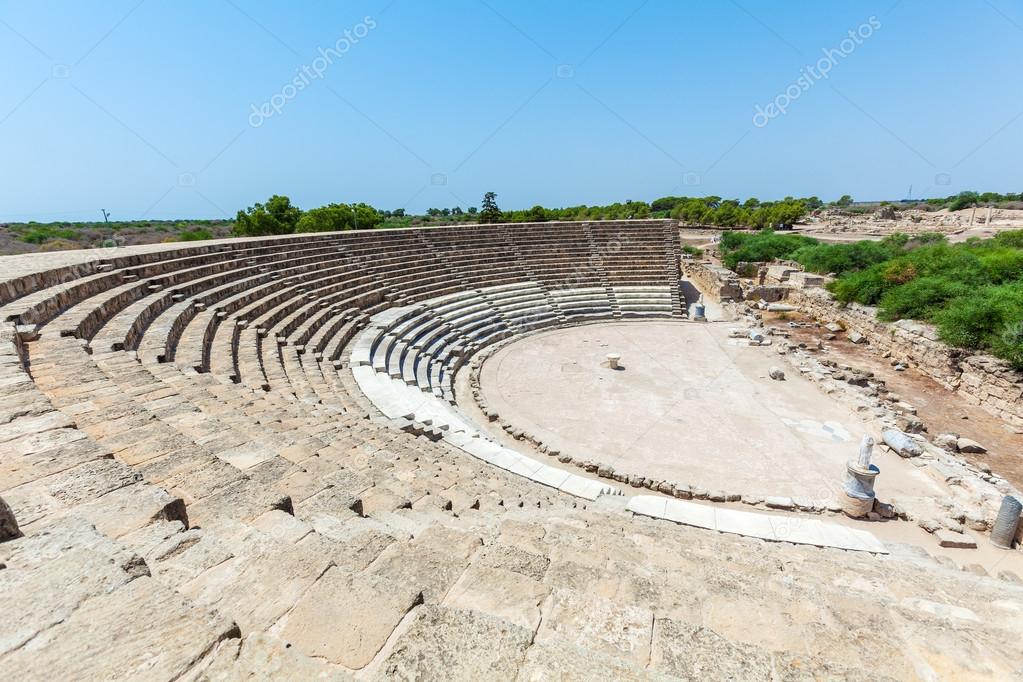
There was a classical influence on the island of Cyprus. The theater of Salamis is an example.

The Theater
Salamis, Cyprus

Salamis was an ancient Greek city-state on the east coast of Cyprus. It sits at the mouth of the river Pedieos 6 km north of modern Famagusta. The founder of Salamis was Teucer, son of Telamon, according to tradition.  Teucer could not return home after the Trojan war because he had failed to avenge his brother Ajax.

The "cultural centre" of Salamis during the Roman period was situated at the northernmost part of the city. A gymnasium, theater, amphitheater, stadium and public baths have been revealed. There are baths, public latrines (for 44 users), various little bits of mosaic, a harbor wall, a Hellenistic and Roman agora and a temple of Zeus that had the right to grant asylum.

It was the island’s most important port city. Ships stopped there from the Middle East and from Europe in antiquity. Many of the ships came from the Aegean. Salamis was the largest city on the island during the Roman period. It surpassed even Paphos, the administrative capital.

Barnabas
Son of Encouragement 

Barnabas of the Seventy was born on the island of Cyprus into the family of the tribe of Levi. He was named Joseph. He was a Cypriot Jew according to Acts 4:36.

Acts 4:36

Joseph, a Levite, born in Cyprus, whom the apostles called Barnabas (son of encouragement), sold a field he owned, brought the money, and turned it over to the apostles.

--------------------------

He received his education at Jerusalem with his friend and fellow student Saul, the future Apostle Paul, under the renowned teacher of the Law, Gamaliel.

He was one of the prominent Christian disciples in Jerusalem. He was named an apostle in Acts 14:14. His new name fits what is known of his actions. When Saul (or Paul) came to Jerusalem after his conversion, most of the Christians there wanted nothing to do with him. They had known him as a persecutor and an enemy of the Church.

Barnabas was willing to give him a second chance. He went to Tarsus, spoke with him and brought him to see the other Christians in Antioch. Later, Paul and Barnabas went on a missionary journey together. They took Mark with them. Mark turned back and went home before they had finished the mission.

Barnabas and Paul traveled together making more converts (c 45-47). They defended Gentile converts against the Judaizers.

They participated in the Council of Jerusalem (c 50). They successfully evangelized among the "God-fearing" Gentiles who attended synagogues in various Hellenized cities of Anatolia.

When they were about to set out on another such journey, Barnabas proposed to take Mark.  Paul was against it. He said that Mark had shown himself undependable.

Barnabas wanted to give Mark a second chance. He and Mark went off on one journey. Paul took Silas and went on another. Apparently Mark responded well to the trust given him by the "son of encouragement." Paul later thought of him as a valuable assistant (2 Tim 4:11; see also Col 4:10 and Phil 24).

St. Peter's Church
Ancient Roman Road
Antakya, Turkey (Antioch)

Antakya was known as Antioch in ancient times. The city has historical significance for Christianity. It was the place where the followers of Jesus Christ were called Christians for the first time. The city and its massive walls also played an important role during the Crusades.

Late Antiquity

The city had a large population of Jewish origin in a quarter called the Kerateion. It attracted the earliest missionaries. It was evangelized by Peter himself among others. The Antiochene patriarchate still rests its claim for primacy according to this tradition.

It was the starting point for Barnabas and Paul during the first missionary journey. Its converts were the first to be called Christians. This is not to be confused with Antioch in Pisidia, to which the early missionaries later travelled.

Several small Christian communities are still active in the city. The largest church is St. Peter and St. Paul on Hurriyet Caddesi. The long history of spiritual and religious movements makes Antakya a place of pilgrimage for Christians.

The city is home to a functioning synagogue serving the Jewish community. It has a reputation in Turkey as a place for spells, fortune telling, miracles and spirits.

The location near the Syrian border makes the city more cosmopolitan than many cities in Turkey. It did not attract the mass immigration of people from eastern Anatolia in the 1980's and 1990's that radically swelled the populations of Mediterranean cities such as Adana and Mersin. Both Turkish and Arabic are still widely spoken in Antakya. Written Arabic is rarely used.

A mixed community of faiths and denominations co-exist peacefully here. Most of the inhabitants are Muslim. A substantial proportion adhere to the Alevi and the Arab Alawi traditions.  There is a place to honor the Alawite saint Hızır in 'Harbiye.' Numerous tombs of saints for both the Sunni and Alawite are located throughout the city.

Barnabas
S. 巴拿巴
T. 巴拿巴

巴  Ba     to hope             巴   ha    comma design      Ba   バ   ば         Ba   바   bar             
拿  na      to hold             拿    da   catch                      ru   ル   る          na   나    I     
巴  ba      to desire          巴   ha    to hope                   na   ナ   な          na   나    I 
                                                                                     ba   バ  ば                                                                                 
---------------------------

The Jews had made education
in religion the vocation
for any nation.

The son of encouragement held the hope
that Gentiles would also take this rope
to learn to cope. 

====================

wiki Barnabas
Lectionary Barnabas
OCA Apostle Barnabas
Slideshow Antioch on the Orontes
wiki Antakya
wiki Antioch Late Antiquity
wiki Salamis, Cyprus
Bible Places Salamis

Sunday, January 6, 2019

Assign

Suzuki Airi and Yajima Maimi

Assign
Honor
分配荣誉
Fēnpèi róngyù
名誉を授ける
Meiyo o sazukeru
ps 29

Philosophy is the study of truth for wisdom with knowledge.
Knowledge is acquired for judgment in choice for the social college.

Those without wisdom regard the familiar as accountable to experience.
Skepticism for them is for those who are too skeptical or serious.

Rationalism has been viewed as too Aristotelian.
Organization was seen as too thought based to allow for feeling.

Science with induction by the Baconian method
had engendered competition for direction to where empire was headed.

Aristotle had argued that slavery was a condition for the weak.
The bold had to be strong enough to defend the claim to the freedom humans seek.

Slavery was presented as a temporary form for contractual relations
but the temporary was extended into indefinite social stations.

The indefinite was an extension of the indeterminate into the infinite.
The legislative authority became the determinate for the discriminant.

The immaterial was presented to oppose excess in mechanical determinism.
It was not intended to indefinitely pretend to the legislative prism for their decisions.

The superior principle for reason was that to which we were directed to agree.
Agreement with reason allowed for individual participation in the land for the free.

There is a place for the case of the indeterminate in the determinable.
This is the space in mind where choice is discernible.

How much force is right for success in the world?
Too much results in liability for abuse by the brutish earl.
Too little produces no benefit whether the result is a determinate or indeterminate swirl.

Goodness resides in the range of what works without damage.
Self-determination sets a course that one's self can manage.

How is freedom regulated at the individual level?
Perception looks for profit with perspective to bevel. 

Assign honor to function.
Practical worth is the social unction
with a personal conjunction.

Assign economy to authority.
Respect the public as the whole majority.

Ascribe the properties of energy to power
and the creation of power as the cause for the tower.

Energy is the ability for a system to work.
Flip a switch and the power runs through a circuit kirk.

The machine can operate in accord with design.
When the power runs the machine works fine.

A storm system crackles with stacks that the energy packs.
Lightning flashes. The flash cracks.

Energy is transferred from the cloud to the ground
with a boom that shakes all that is around.

Energy can be transferred, converted and measured.
Whether it is transferred or converted, it conserves the same treasure.

The constraints for property develop the forms for design.
Design allows for variation in expansion, form and function in time.

Growth in populations can be exponential to preserve existence.
Exponents provide proportions for this growth to preserve subsistence.

Exponents express proportion in size.
These powers also describe variance in curves as lines.

Beauty and courage create the gently curving line as twilight fades.
Time in this light plays a magical serenade.

Faith shines high and bright in the night sky.
The dog releases his breath with a mighty sigh.

The sides of the triangle are equal in length.
The hunter pursues the prey with the dog as his strength.

Being is the beginning of soul's self control.
Soul is the mirror for life that extols.

Living is the first right for all in the law.
Let wisdom reign to correct human flaw.

A person transcends personal life as an emergent thing.
Uniqueness in being makes identification ring.

Spirit is the realm for human or divine energy.
Matter is held together as a bond for material memory.

The chief rule for stately verity in variety
is a kindly profit for self and society.

The forest emerges as a sprite takes flight from the trees.
The flash of light shows the pillars for these.

The voice of the sky is gruff upon the waters
when the thunder rumbles after the lightning honors
the concert of scholars.

The sound resounds through the air.
The waves roll and echo as though they had no care.

The sound has power
that often precedes a shower.

The flash of lightning shows
wonder in darkness before thunder rolls.

Light sees instant weightless motion
as spirit with speed, the notation of notion.

Spirit sings sound
as the crack pounds the ground
to break the back of the somber stillness
behind the roaring rain for the thrill of this.

The voice of thunder rumbles
across the sky as the wind tumbles
under the clouds dark jumble.

Hills are moved by walls of water.
Shelter protects your sons and daughters.

The mountain is consumed by the creation of clouds.
That which had been seen is no longer allowed.

The voice of power is strong.
She sings loud and long
for the splendor of lightning to right her wrongs.

Her song breaks the heart
of the redwood, the end of the start
that could not be broken apart.

All are crying “Have mercy”
on this temple of soul made from trees.

The power of creation
permeates life in time until cessation.

Fresh water is supplied for storage.
Grains are grown for our porridge.

The air has been cleansed for breath in life.
The cleansing reduces the incidence of strife.

Plants grow strong for consumption.
Consumption assures us of gumption.

Love is as pleasing as warmth from the sun.
Cooking and singing are actions that are important and fun.

Life lives with gratitude for providence.
Providence preserves essence with confidence.

Courage passes confidence in the power of the storm.
Power ravished beauty as a functional norm.

Faith did not stop beauty from her own ravishment.
The ravishment did not result in her banishment.

Arigato, Momma Cat.
This was just the result of that.


29 Afferte Domino

1 Ascribe to the Lord, you gods, *
ascribe to the Lord glory and strength.
2 Ascribe to the Lord the glory due his Name; *
worship the Lord in the beauty of holiness.
3 The voice of the Lord is upon the waters;
the God of glory thunders; *
the Lord is upon the mighty waters.
4 The voice of the Lord is a powerful voice; *
the voice of the Lord is a voice of splendor.
5 The voice of the Lord breaks the cedar trees; *
the Lord breaks the cedars of Lebanon;
6 He makes Lebanon skip like a calf, *
and Mount Hermon like a young wild ox.
7 The voice of the Lord splits the flames of fire;
the voice of the Lord shakes the wilderness; *
the Lord shakes the wilderness of Kadesh.
8 The voice of the Lord makes the oak trees writhe *
and strips the forests bare.
9 And in the temple of the Lord *
all are crying, "Glory!"
10 The Lord sits enthroned above the flood; *
the Lord sits enthroned as King for evermore.
11 The Lord shall give strength to his people; *
the Lord shall give his people the blessing of peace.


1.13.19

Isa. 43:2
I will be with you when you pass through the waters.
The rivers will not overwhelm you.
You will not be burned when you walk through fire.
The flame will not consume you.

Acts 8:15-17
The Spirit had not come on any of those who had been baptized in Samaria. They had only been baptized in the name of the Lord Jesus. Peter and John went down and prayed for them that they might receive it. The two laid their hands on them and they received the Holy Spirit.

Luke 3:21-22
When all the people were baptized, Jesus had also been baptized and was praying. Heaven opened and the Holy Spirit descended in bodily form like a dove. A voice came from heaven, 'You are my Son, the Beloved. I am well pleased with you.'

Tar Water


Immaterialism was used as a counter to the materialist aspect of empiricism. It wasn't intended as a rejection, so much as a refutation of error in the theory.

When theory is accepted based on the personal or social authority of the person who proposed the theory, it hasn't got the value of critical evaluation.

Berkeley made sure that he challenged the key ideas for the philosophy in order to bring the evaluation of the system down to the perspective of individual perception.

Berkeley was categorized as an empiricist because he used disagreement as a means to analyze the understanding of the principles of human knowledge.

His argument was an exercise in sophistry insofar as his rhetoric disagreed with the most plausible parts of the theory in order to leave the direct perception that is closest to the conceptual analysis  as the derived value.

His work on Siris was an exercise in the critical evaluation of what Pliny had to say about tar water. It stands as an application of philosophy to a marketable product. He wrote another work called Further

Thoughts on Tar-water.

Tar water is not a popular medicinal product. It is used by veternarians as an anticeptic for open sores and to reduce inflammation in joint pain in the animals that are treated. The British colonies had many pine trees. Pine tar probably reduces inflammation in humans also, but it has a bad taste.

Native Americans used pine resin to treat rheumatism. It has anti-inflammatory properties. The resin acts to remove the joint inflammation caused by rheumatism. The reduction of inflammation helps to restore movement and to alleviate pain.

Pine Resin
"Physicians in colonial America also recommended tar water, or ground pine resin mixed with water, as a remedy for ulcers, smallpox, and syphilis. These are traditional holistic medicinal uses for pine resin that have not, as of yet, been confirmed by modern science as effective, but that does not mean there is no basis for some of the claims made about resin's anti-inflammatory properties."

 Pine resin has other uses. It is used as a sealant, glue and varnish. It is distilled into rosin. Rosin is used to promote a better grip between objects. It is also distilled into oil of turpentine. This is used as a solvent and as a paint thinner.

Pine tar as a history as a wood preservative. It is a wood sealant in maritime use. It is used in roof construction and maintenance, in soaps, in the treatment of carbuncles and skin diseases such as psoriasis, eczema and rosacea. Major League Baseball allows pine tar to enhance the grip of a hitter's bat.

This story describes the use of the substance as an infraction by pitchers in MLB.

Pitchers for Pine Tar
"Once again, many people don't care that Pineda was using pine tar and there is a growing movement to make the substance legal for pitchers."

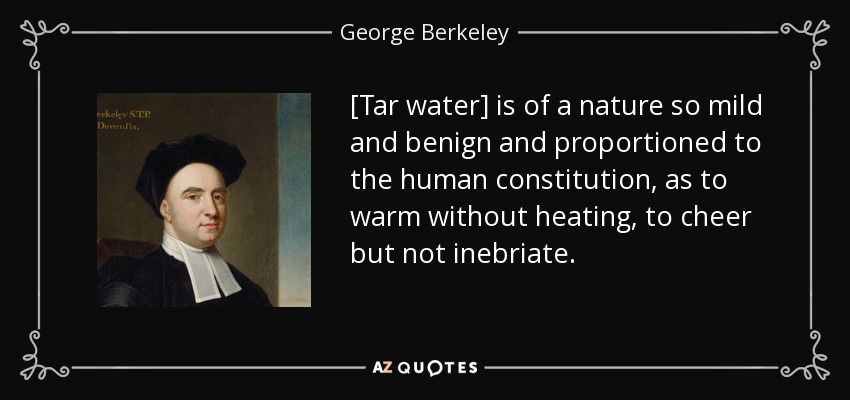
Pine tar is an effective antiseptic and disinfectant when applied to cuts on the skin.  Berkeley argued for the use of pine tar medicinally. His 1744 work on tar-water sold more copies than any of the other books that he wrote in his lifetime.

George Berkeley
born 3.12.1685, Thomastown, Ireland
died 1.14.1753

Thomastown

Thomastown is located in southern Ireland. It is about 117 km (72 miles) southwest of Dublin. Thomastown is inland, but near the east coast on which Dublin is a port.

The town is situated at a bridging point on the River Nore. The river is 140 km (87 miles) long. It is  17 kilometres (11 mi) from the city of Kilkenny. It flows southeast, then south before it empties into the Celtic Sea at Waterford Harbour on the south coast of Ireland.

Thomastown has a population of 2,273 (2011 Census). This size makes the town the biggest in the county outside of Kilkenny.

The town was founded in the 13th century on an important crossing point by an Anglo-Norman mercenary from Wales. Thomas FitzAnthony was granted a large area of land in the region by
William Earl Marshall in 1215 for John, King of England and Lord of Ireland.

FitzAnthony built the Thomastown Church and dedicated it to St. Mary. The land had been an Augustinian Priory that was established in 1210.

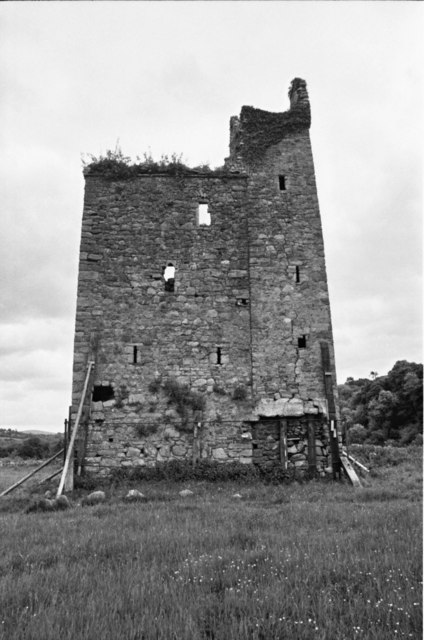
Grennan Castle


FitzAnthony built fortifications at the location. The ruins of Grennan Castle stand as a remnant of the fortifications.

Jerpoint Abbey


The castle is located near the ruins of a 12th century Cistercian Abbey which had been built by King of Osraige and dedicated to the Blessed Virgin.

Map of S.Ireland


There were 12 water powered mills for grain and cloth at one stage of development of the Milling Industry in the area. It was the principal industry for the town until the early 1960's. There was also a boat trade that carried produce to and from the port of New Ross. This went into decline in the 18th century.

Dysart Castle

George Berkeley was born at his family home in Dysart Castle near Thomastown on March 12, 1685. The castle and church property are situated low along the sharp curve of the River Nore. The structure was small and considered 'rudely built.'

He was the eldest son of William, a younger son in the noble family of Berkeley.

He was educated at Kilkenny College. He attended Trinity College in Dublin. He was elected a scholar in 1702, earned a Bachelor's degree in 1704 and a Master's degree in 1707. He stayed at the college as a tutor and Greek lecturer.

His first publication was on mathematics. An Essay Towards a New Theory of Vision was published in 1709.

Text
Optics

He wrote, "It is, I think, agreed by all that DISTANCE, of itself and immediately, cannot be seen. For DISTANCE being a Line directed end-wise to the eye, it projects only one point in the fund of the eye, which point remains invariably the same, whether the distance be longer or shorter."

He examined distance, magnitude, position and problems of sight and touch in the essay. The worked raised controversy at the time, but the conclusions are now accepted as an established part of the theory of optics.

The Treatise Concerning the Principles of Human Knowledge was published in 1710. It had great success and gave him a lasting reputation even though few accepted the proposal that nothing exists outside the mind. His Three Dialogues Between Hylas and Philonous propounded the leading principle that the world represented by the senses depends upon being perceived for its existence.

One of the main objectives in proposing the dependency of existence on perception was to combat the prevalence of the materialism that had seen success with Locke and Newton. There was an emphasis on the use of force to obtain results that lent itself to abuse in the building of empire.

He visited England between 1714 and 1720. He was received into the circle of Addison, Pope and Steele. His academic efforts wee interspersed with periods of travel in Europe.

He returned to Ireland and took Holy Orders in the Church of Ireland in 1721. He earned his doctorate in divinity. He chose to remain at Trinity College Dublin once again. He lectured in Divinity and Hebrew. He was made Dean of Dromore in 1721 and Dean of Derry in 1724.

He was granted a small inheritance from Esther Vanhomrigh as a default from her quarrel with Jonathan Swift. He began the project of found a college in Bermuda for training ministers and missionaries for the colony. He gave up his 1100 pound a year salary for the deanery to pursue the project.

The proposal for the project posited an unusual application for 'slavery.' The trainees for the college were to be natives 10 years or younger. They were to work on a plantation while they learned to work as missionaries for the Church. It wasn't so much enslavement as it was work study that paid for the education while it was being received.

The King of Spain and John Locke had argued against slavery on paper, but the practice was tolerated. Locke had the practice instituted in two southern British colonies on that part of North America that was to become the USA.

Half of the colonies in the southern half of the new nation would entertain slavery as legal until the amendments that declared it illegal after the US Civil War ended in 1865.

He was married to Anne Forster in 1728.

He traveled to America on the salary of 100 pounds per annum. He landed near Newport, Rhode Island where be bought a plantation at Middletown. The plantation was called "Whitehall."  He brought John Smibert to New England from Italy. Smibert is regarded as the founding father of American portrait painting.

Berkeley drew up plans for the ideal city that he planned to build in Bermuda. He lived at the plantation while he waited for the funds for his college. The funds were never to arrive.

He left America and returned to London in 1732. He had four children with Anne who survived infancy. The children were named Henry, George, William and Julia. Two others died in infancy. William's death in 1751 was a cause of grief.

Berkeley was listed one of the original governors for the Foundling Hospital that was founded by Royal Charter in 1739. He had taken part in the efforts to create the home for the city's abandoned children while he was living in London's Saville Street.

He was appointed the Bishop of Cloyne in Ireland in 1734. He held the position until his death.

His last two publications were about Tar-water. Siris was a critical analysis of what Pliny had to say about the matter. It was published in 1744. Further Thoughts on Tar-Water was published in 1752. His 1744 work sold more copies than any of his other books.

He remained in Cloyne until 1752. He retired and went with his wife Anne and daughter Julia to live with his son George to supervise his education.

He died on January 14, 1753 in Oxford.  He was buried in Christ Church Cathedral, Oxford.

George Berkeley
S. 乔治伯克利
T. 喬治伯克利

乔  Qiao    stately            喬  kyo        high               Geo  じょ-  ジョ-       Jo      조   article     
治  zhi       rule                  治  ji           reign              ji       じ     ジ             ji        지    G                   
伯  Bo       uncle                伯  haku    chief              Ba     ば-    バ-            Beo    버     bur 
克  ke        gram                克  koku    kindly            ku     く        ク           keul    클     big       
利  li          profit               利   ri          profit            re      れ-    レ-            li         리    lee   

----------------------------------------   

The chief rule for stately verity in variety
is a kindly profit for self and society.

==============================

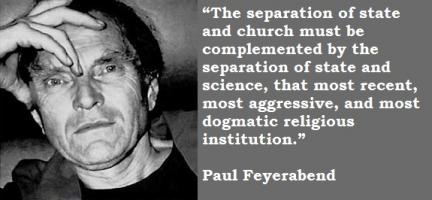
 Separation of State and Science


Paul Feyerabend

'Do No Harm' is a goal for public policy as well as social and personal relations.

Freedom finds meaning in opposition to determinism. It is the case for the indeterminate. The range for the indeterminate finds limitation in the maxim to maintain the goal to help others at least to the extent where no harm is done.

Science became a replacement for religion in communism. It was a denial of the freedom to assemble for religion.

 The socialist state in Germany became an exercise wherein religion was only a tool for political organization. Providing income was restricted largely to members of the Nazi party.

Science by the Nazis was characterized as lacking morality. There were no limits to what could be tested in Nazi experimentation according to British, French and American views of their science.
Nazi translates as German.

The Nazis sought to condition Germans to believe that a citizen had to be a Nazi to be a German. If there was a party called American, it would be the equivalent of saying you have to be an 'American' to be an American.

The efforts to build a wall and to require immigrants to register with name, residence and intended time of duration is not the equivalent of saying that you have to be a party member to be an American.

Immigrants have to enter by legal ports of entry with registration in order to qualify as legal. Laws have to be observed in order to retain legal status.

There is a political part of having faith, but 'living a good life' is the immaterial objective with the material implications.

Goodness is a transcendent function and an underlying cause.

The separation of state and science is against making atheism a condition of belief required by law. The separation of church and state doesn't require Christian theism to be a citizen.

Participation in a religion that promotes moral theism with respect for scientific investigation is regarded as beneficial to social and political relations. Religion cannot promote insurrection, subversion, terrorism or criminal behavior and maintain moral standing with respect for its role in political relations.


Aika Mitsui, 1.12.93, Hyogo, Japan
光井 愛佳
白卡米诉
Morning Musume Graduate
 MM: Renai Hunter

白  Bai      white           光  Mit    ray                 Ai    あい   アイ                   A     아    ah       
卡   ka      card              井  sui     well                ka    か       カ                       i      이     this           
米   Mi      meter          愛  Ai       love               Mi    み       ミ                       ka   카    card           
诉   su       inform         佳  ka      pleasing        tsui  つい  ツイ                      Mi  미   beauty             
                                                                                                                          sseu 쓰  writing
                                                                                                                          i       이   this 
-----------------------------------------------

Love is as pleasing as warmth from the sun.
Cooking and singing are actions that are important and fun.

============================

Hyogo is a prefecture located in the Kansai region on Honshu island in Japan. The capital is Kobe.
The prefecture has coastlines on two seas. The Sea of Japan is to the north. The Seto Inland Sea is to the south. The coastline for Awaji Island borders the Pacific Ocean. The island separates the Inland Sea and Osaka Bay. It is situated between Honshu and Shikoku.

Hyogo is not densely populated. Most of the population lives on the southern coast as part of the Osaka-Kobe-Kyoto metropolitan area.

The weather is hot and humid in the summer. The northern part of the prefecture receives abundant snow. The south only gets an occasional flurry. 

Himeji Castle is located in the city of Himeji.

Shiga Prefecture is north east of Hyogo but it is still in the Kansai region.

Mitsui Aika was born on January 12, 1993 in Hyogo. She was raised in Shiga Prefecture. Her father, Mitsui Yasuo, is a Buddhist monk.

She was chosen as the only 8th generation member of Morning Musume on December 10, 2006. She was one of five finalists. Her first appearance was in the Hello! Project Winter tour from January 27-28 at Yokohama Arena.

She was prevented from performing during the summer of 2011 due to an ankle fracture. The pain from the fracture caused her difficulty with the vigorous dance movements in 2012.

Aika graduated from Morning Musume with Niigaki Risa in May. She did not graduate from Hello! Project. She continued to perform in the unit GREEN FIELDS with Shimizu Saki and Miyazaki Yuka. GREEN FIELDS was part of the new Satoyama movement in 2012.

Mittsii announced in 2014 that she would suspend her performance activity to study English in New Zealand. She started to write English language news and event reports for UP-FRONT LINK, an international company news service. She also added English lyrics to music videos.

She traveled to Houston with Morning Musume '16 in February. She returned to New Zealand to study English in July. She enrolled in vocational school. She studied there for two years before she announced her graduation from Hello! Project. She had plans to graduate from vocational school in late November 2018. She has been working in a kitchen as cook. It is her new passion.

Wednesday, May 23, 2018

Assign


Lily-Rose Depp
Instagram
Chanel

Assign
Honor
to the Rose

名誉を授ける
Meiyo o sazukeru
ps 29

One of the seraphs flew to me.
A burning coal was held with tongs for me to see.

The future is the present towards which we move.
The move has a groove which the present behooves.

The essence of presence is where time exists now.
The past is a memory for existence to plow.

Experience is the field for our dreams.
Dreams are arranged in the streams of our themes.
The taste of fire didn't burn the dream.

Essence gave the scheme to glean 
from the gleam of the steam stream
as taste beamed belief for relief.

You were not given the spirit of slavery.
You were given courage for bravery.

The fear that rises with the strength of challenge
is there to overcome the adversity of imbalance.

Spell your words to tell the race for grace.
Mystic flashes outline your face.

The Word is heard with intrepid love.
No one knows heaven without being born from above.

One night in late spring the bridge of dreams broke
leaving lines of cloud as the memory for what she had wrote.

The heights of the city laid out the accessories to memory
for the immensity of the streaming treasury in atmospheric reverie.


No matter what storms the street had commanded
nothing could draw me to abandon the defense my homeland demanded.

Plunged ever more deeply into the night of summer
I moved through the fiery places of sublime sights as a runner.

Another sun rose in my heart to awaken the revelation
that warmed the world with the fires of imagination.

Velvet soft symbols danced and leapt
for the sight of the silvery haired adept. 

Back and forth. To and fro. 
Soul and body moved with the flow. 

Vertiginous caresses of morality
showed imponderable recesses in legality
until at last the word was woven with virility
to behold the thin silk veil as cloven for fertility. 

There was sequence, space and stress 
of the soul sick with consciousness. 

Throw your body to the beasts! 
Hand your spirit to the priests! 

Break in twain the walking rod. 
Hazel nuts lie there in the sod. 

Tear the rose colored cross asunder! 
Crack the bolt that caused the thunder!


The inky arch born above us showered star dust
with love on the darkness that had become us.

The moon waxed near the fullness of thrust
as the face of trust.


It was the dragon with just one eye, 
‘I will turn the eye to see the sky
if upon his wings we will fly.'

My heart is destroyed by emotion 
you have become an explosion
of devotion for my notion of motion

Everything was going up in smoke
Explosions boomed. The scene wrote 'hope is a joke.'

Fire was in the window of construction and sky.
The world was the word destruction written in sight.

Another sun rose in my heart to awaken the revelation
that warmed the world with the conflagration of imagination.

When he had foretold his doom
the letter caused his wife to swoon 

He penned,“If we should never meet again,
I will always be your friend." 

He was to suffer the most ignominious of fates
while holding two pair of black aces and eights.

When the urban cowboy had disappeared
the tracks of the Silverado had veered
toward the desert into the shimmering veneer
that the purple dawn had mirrored. 

So it is that legends go.
The facts are the feelings you are left to know.

They say they found the old truck's treads
had turned into a horse’s tracks instead.

Assign economy to authority.
Respect the public as the whole majority.

Ascribe the properties of energy to power
and the creation of power as the cause of the tower.

Energy is the ability for a system to work.
Flip a switch and the power runs through a circuit kirk.

The machine can operate in accord with design.
When the power runs the machine works fine.

A storm system crackles with stacks that the energy packs.
Lightning flashes. The flash cracks.


Energy is transferred from the cloud to the ground
with a boom that shakes all that is around.

Energy can be transferred, converted and measured. 
Whether it is transferred or converted, it conserves the same treasure.

The constraints for property develop the forms for design. 
Design allows for variation in expansion, form and function in time.

Growth in populations can be exponential to preserve your existence. 
Exponents provide proportions for this growth to preserve subsistence.

Exponents express proportion in size.
These powers also describe variance in curves as lines.

Beauty and courage create the gently curving line as twilight fades.
Time in this light plays a magical serenade.

Faith shines high and bright in the night sky.
The dog releases his breath with a mighty sigh. 

The sides of the triangle are equal in length.
The hunter pursues the prey with the dog as his strength.

Being is the beginning of soul's self control.
Soul is the mirror for life that extols.

Living is the first right for all in the law.
Let wisdom reign to correct human flaw.

The voice of the sky is gruff upon the waters
when the thunder rumbles after the lightning honors
the concert of scholars.

The sound resounds through the air.
The waves roll and echo as though they had no care.

The sound has power
that often precedes a shower.

The flash of lightning shows
wonder in darkness before thunder rolls.
Light sees instant weightless motion
as spirit with speed, the notation of notion.

Spirit sings sound 
as the crack pounds the ground
to break the back of the somber stillness
behind the roaring rain for the thrill of this.

The voice of thunder rumbles
across the sky as the wind tumbles
under the clouds dark jumble.

Hills are moved by walls of water.
Shelter protects your sons and daughters.

The mountain is consumed by the creation of clouds.
That which had been seen is no longer allowed.

The voice of power is strong.
She sings loud and long
for the splendor of fighting to right her wrongs.

Her song breaks the heart 
of the redwood, the end of the start 
that could not be broken apart.

All are crying “Have mercy”
on this temple of soul made from trees.

The power of creation
permeates life in time until cessation.

Fresh water is supplied for storage. 
Grains are grown for our porridge.

The air has been cleansed for breath in life.
The cleansing reduces the incidence of strife.

Plants grow strong for consumption. 
Consumption assures us of gumption.

Life lives with gratitude for providence.
Providence preserves essence with confidence.

Courage passes confidence in the power of the storm.
Power ravished beauty as a functional norm.

Faith did not stop beauty from her own ravishment.
The ravishment did not result in her banishment.

She remembered lessons the jazzman had taught her.
Cast jasmine on shadows where sunlight failed or had faltered. 

Fish dwell in darkness to avoid being detected.
When the unseen strikes, all else stands as neglected.

The rainbow of fight in the scaled light pulls down to struggle
as the color of wroth weighed in the shining scales of life and death trouble.

The invisible line pulled taut to link them to the fight for life.
The fish gave life to show that it was worth the fight to overcome strife.

Arigato, Momma Cat.
This was just the result of that.


29 Afferte Domino

1 Ascribe to the Lord, you gods, *
ascribe to the Lord glory and strength.
2 Ascribe to the Lord the glory due his Name; *
worship the Lord in the beauty of holiness.
3 The voice of the Lord is upon the waters;
the God of glory thunders; *
the Lord is upon the mighty waters.
4 The voice of the Lord is a powerful voice; *
the voice of the Lord is a voice of splendor.
5 The voice of the Lord breaks the cedar trees; *
the Lord breaks the cedars of Lebanon;
6 He makes Lebanon skip like a calf, *
and Mount Hermon like a young wild ox.
7 The voice of the Lord splits the flames of fire;
the voice of the Lord shakes the wilderness; *
the Lord shakes the wilderness of Kadesh.
8 The voice of the Lord makes the oak trees writhe *
and strips the forests bare.
9 And in the temple of the Lord *
all are crying, "Glory!"
10 The Lord sits enthroned above the flood; *
the Lord sits enthroned as King for evermore.
11 The Lord shall give strength to his people; *
the Lord shall give his people the blessing of peace.

Isa. 6:6
Then one of the seraphs flew to me, holding a live coal that had been taken from the altar with a pair of tongs.

Rom. 8:15
you did not receive a spirit of slavery to fall back into fear, but you have received a spirit of adoption. When we cry, ‘Abba! Father!’

John 3:3
Jesus answered him, ‘Very truly, I tell you, no one can see the kingdom of God without being born from above.’

5.27.18
Conjunction of Jupiter and moon; waxing gibbous; 94% full
Mars, Mercury, Venus, Jupiter, Moon, Saturn
M4 is well placed in Scorpius
Gemini birth sign

Christopher Lee 5.27.22, London, England d.6.7.15
克里斯托弗李

克 Ke able katsu overcome
里 li lining sato village
斯 si servant shi such, this
托 tuo support taku trunk
弗 fu not doru dollar
李 li judge ri plum

CL became an intelligence officer for the Long Range Desert Patrol in WWII. The LRDP was a forerunner of the SAS, Britain’s special forces.

London, England
London suffered severe damage and heavy casualties from the bombing in WWII. The worst hit part was the Docklands area. Just under 30,000 Londoners had been killed by the bombing by the war's end. Over 50,000 seriously injured. Tens of thousands of buildings were destroyed. Hundreds of thousands of people were made homeless.

Wild Bill Hickock 5.27.1837, Troy Grove, Illinois
野生比尔希克克

野 Ye wild no field
生 sheng student sei living
比  Bi ratio hi ratio
尔 er thus no kanji
希 Xi to admire mare hope
克 ke ability katsu overcome

Ottawa, Illinois
Hickok was born and raised on a farm in northern Illinois at a time when lawlessness and vigilante activity were rampant because of the influence of the "Banditti of the Prairie".

 Citizens in the city were active within the abolitionist movement. Ottawa was the site of a famous 1859 extrication of a runaway slave named Jim Gray from a courthouse by prominent civic leaders of the time.

Lily-Rose Depp 5.27.99, Paris, France
莉莉罗斯德普
Instagram
Chanel

莉 Li Jasmine ri Pear
莉 li jasmine ri pear
罗 Luo net ruox thin silk
斯 si servant shi such
德 De Kindness toku morality
普 pu popular fu universal

19th century Paris
Paris hosted two major international expositions late in the 19th century. The 1889 Universal Exposition was held to mark the centennial of the French Revolution. It featured the new Eiffel Tower. The 1900 Universal Exposition gave Paris the Pont Alexandre III, the Grand Palais, the Petit Palais and the first Paris Métro line. Paris became the laboratory for Naturalism (Émile Zola), Symbolism (Charles Baudelaire, Paul Verlaine) and of Impressionism in art (Courbet, Manet, Monet, Renoir).


Ogata Haruna 2.15.99, Osaka, Japan
Morning Musume 18
尾形春水

尾 wei   tail         O tail
形 xing   form gata   shape
春 chun  spring        Haru  spring
水  shui   water na    water

The 16th-century shogunate Osaka Castle has undergone several restorations. It is the main historical landmark. It's surrounded by a moat and park with plum, peach and cherry-blossom trees. Sumiyoshi-taisha is among Japan’s oldest Shinto shrines.

 An old couple who had no children prayed at Sumiyoshi taisha in the folktale "Issun-boshi." Their prayers were answered with a child. When their son went on a voyage, he departed at Sumiyoshi harbor, sailed down Hosoe-gawa to Osaka Bay, turned up the Yodo River and traveled to Kyoto.

Haru no yo no 張るの夜の One night in Spring
yume no ukihashi 夢の浮橋 the bridge of dreams
todaeshite とだえして broke
mine ni wakaruru 峰にわかるゝ parting the peak
yokogumo no sora. 横雲の空        leaving lines of cloud


Joseph Gordon-Levitt, 2.17.81, Los Angeles, CA
约瑟夫戈登莱维特
Networking
Instagram

约 Yue   about
瑟 se   dignified ogoto intimate
夫 fu   husband otto         husband
戈 Ge   spear hoko halberd
登 deng  to step to            ascent
莱 Lai  pigweed rai           goosefoot
维 wei dimension no kanji
特 te special toku         special

Pyrotechnic Displays
Railroads arrived with the completion of the Southern Pacific line to Los Angeles in 1876. Oil was discovered in the city and surrounding area in 1892. The discoveries had helped California become the country's largest oil producer by 1923. The production accounted for about one-quarter of the world's petroleum output


Rikako Sasaki
5.28.18, Miyagi, Japan
Hello Project: AngerMe
佐々木 莉佳子

佐 zuo to assist Sa son
々 Japnse4repeat sa every
木 mu wood ki wood
 莉 li jasmine Ri jasmine
佳 jia good ka beauty
子  zi child ko child

Kesennuma was Japan's busiest port for processing bonito and swordfish prior to the 2011 disaster. Presently, fishing and associated industries account for 85% of jobs in the town. Tourism is next to commerical fishing in importance.