Alison Brie
Define
Portion
定义部分
Dìngyì bùfèn
部分を定義
Bubun o teigi
ps119.49
Define pars
Remember your word to the child in your service.
You had given me hope in the production of surplus.
The public's ownership of private property is for the public.
Even a celestial scarecrow can dance with the muppets.
The push to make private property public
reduces the capacity to care for one's own uplift.
The defense of person or property
is a right for those who choose to see
natural design providentially.
This is my comfort in the time of hardship.
Your love gives my life of faith promise.
I have not turned from your law
though belief in cruelty has defined me as a flaw.
I take comfort in the memory of your judgment.
The influx of your uncreated energy has helped with adjustment.
I remember your Name for what you have done.
Your deliverance from darkness has been won
for life in the light of the sun.
Your statutes have been like songs
whenever I have learned to right my wrongs.
I have learned how to see what your law meant
because I dedicated my soul to your commandments.
Your word leads me to my portion of your providence
with confidence in the consciousness of consonance
with the owner's provenance.
I have promised to keep your words
to overcome hardship, adversity and the absurd.
I entreat you with my heart
to grant mercy on your part.
I have considered ideals
for pragmatic deals
and the practice of policy
that doesn't abolish me.
I do not tarry
when it comes time to carry
my weight for your love
to wait for the Spirit as a dove.
I define my purpose with logic for function
to complete my role in the conjunction
of induction with deduction.
Though the cords of insecurity seek to entangle my memory,
I won't concede conceptually to treachery
by the false perception of the sensory.

Deception is the art of magicians.
It teaches a lesson in testing the positions
of politicians for provision by the vision
of the mission.

The appearance of an event doesn't always show an agent as the cause.
Even the roll of the dice was supposed to be an accidental element to what the outcome was.
I am filled with indignant station
for the generation of invalid vexation.
How much does this cost?
Is time all that has been lost?
I will rise to give thanks at night
for righteous judgment with insight.
I am a companion to those who have the faith
to keep your commandments at length for what's great.
The earth is full of the love of creation.
Matter expresses the substance of design for elation.
You have done well in instruction for service
with the definition of purpose to be purchased.
Teach me the discernment of knowledge for wisdom
in the business of showing vision with rhythm for a system.
I had gone astray when I was afflicted
with an addiction that was predicted
as restrictive and constricted
in a way that had been depicted.
I have learned that it has been your word
that helped me infer behavior that is preferred.
You are the good that brings forth goodness
with instruction from the hoodless
in how to avoid hoodiness.
Liars have smeared me with lies
but I will keep my faith despite their tries
to force me to do otherwise.
Their heart is engrossed with flaw
but my delight is in your law.
I incurred a lesson in how not to be
from those who have afflicted me.
The words of your law are more dear
than thousands of words filled with false cheer.
Jerusalem is a jewel in the land of promise.
The bride is adorned with the sparkle of solace.
The nations see glory in the vindication of your existence.
Exculpation exonerates the confirmation of faithful persistence.
Christ came that we might be justified by faith.
The Son was born of woman under the law as great.
The Spirit of the Son has been sent into our hearts
because we are children who cry to the Father for our part.
You are no longer a slave but a child.
As a child you are an heir both reconciled and mild.
---------------------
Zayin
7th letter
Memor esto verbi tui
Remember the word you
49 Remember your word to your servant,
because you have given me hope.
50 This is my comfort in my trouble,
that your promise gives me life.
51 The proud have derided me cruelly,
but I have not turned from your law.
52 When I remember your judgments of old,
O Lord, I take great comfort.
53 I am filled with a burning rage,
because of the wicked who forsake your law.
54 Your statutes have been like songs to me
wherever I have lived as a stranger.
55 I remember your Name in the night, O Lord,
and dwell upon your law.
56 This is how it has been with me,
because I have kept your commandments.
Heth
8th letter
Portio mea, Domine
My portion, Dominated
57 You only are my portion, O Lord;
I have promised to keep your words.
58 I entreat you with all my heart,
be merciful to me according to your promise.
59 I have considered my ways
and turned my feet toward your decrees.
60 I hasten and do not tarry
to keep your commandments.
61 Though the cords of the wicked entangle me,
I do not forget your law.
62 At midnight I will rise to give you thanks,
because of your righteous judgments.
63 I am a companion of all who fear you
and of those who keep your commandments.
64 The earth, O Lord, is full of your love;
instruct me in your statutes.
Teth
9th letter
Bonitatem fecisti
You have done well
65 O Lord, you have dealt graciously with your servant,
according to your word.
66 Teach me discernment and knowledge,
for I have believed in your commandments.
67 Before I was afflicted I went astray,
but now I keep your word.
68 You are good and you bring forth good;
instruct me in your statutes.
69 The proud have smeared me with lies,
but I will keep your commandments with my whole heart.
70 Their heart is gross and fat,
but my delight is in your law.
71 It is good for me that I have been afflicted,
that I might learn your statutes.
72 The law of your mouth is dearer to me
than thousands in gold and silver.
-----------------------
=================
-----------------------
Zayin- sword; weapon (Phoenician rt.)
Heth- portion; court (Egyptian rt.)
Teth- wheel (Phoenician rt.); good
How much does this cost?
Chn. 这个多少钱?
Zhège duōshǎo qián?
Jpn. この費用はいくらですか?
Kono hiyō wa ikuradesu ka?
Krn. 이 얼마예요?
i eolmayeyo?
Ltn. Quanti hoc cost?
Itln. Quanto costa questo?
Grk. Πόσο κοστίζει αυτό?
Póso kostízei aftó?
Spn. ¿Cuánto cuesta este?
Frn. Combien ça coûte?
Gmn. Wieviel kostet das?
Hgn. Mennyibe kerül?
Trk. Ne kadar ediyor?
Rsn. Сколько это стоит?
-----------------------
Psalm 119

Psalm 119 is a hymn about the perfection that is found with the law. A hymn is a song of praise that celebrates the work of the divine energy in history.
This hymn has 176 verses. The number makes it the longest psalm. It is also the chapter with the most verses in the bible.
It is a prayer of one who delights in and lives by the moral code of the Torah as the sacred law.
The psalm is arranged in an acrostic pattern. There are 22 letters in the Hebrew alphabet. The hymn contains 22 units of 8 verses each.
Each of the 22 sections is given to a letter of the Hebrew alphabet. Each line in that section begins with that letter.
The closest parallel to this pattern in Scripture is found in Lamentations 3. This chapter is also divided into 22 sections. There are a few other passages in the Hebrew Scriptures which use an acrostic pattern.
The author is unnamed. The celebration of perfection as the aim for the law gives the style a post-exilic characteristic. Scripture is mentioned in at least 171 of the 176 verses.
Here are 8 basic words used to describe the Scriptures as the written revelation. Law or torah is used 25 times. Word or dabar is used 24 times. Judgments or mispatim is used 23 times.
Testimonies or edot is used 23 times. Commandments is used 22 times. Statutes is used 21 times. Precepts is used 21 times. Word or imrah is used 19 times.
Piety is defined as a love of God that is not desiccated by study but refreshed, informed and nourished by it.
The 57th verse uses the Hebrew letter heth. Heth is derived from the Egyptian letter for court yard. The Hebrew word for “portion” translates into “inheritance or part.”
---------------------
Zion

Third Isaiah was composed after the return from Exile. This section included chapters 56-66.
Isaiah 44:6 contains the first clear statement of monotheism: "I am the first and I am the last; beside me there is no God".
This concept was developed in contrast to the god of gods as a theological justification for the king of kings in the Middle Eastern political hierarchy.
It is worth noting that the Achaemanid, Greek and Roman empires had a single emperor that appointed governors to govern the provinces. The Achaemanids selected Nehemiah to govern.
The Greeks appointed a foreigner. The Romans allowed a Idumean to act as a client king until the monarchy was dissolved with the destruction of Jerusalem.
The model for monotheism became the defining characteristic of post-Exilic Judaism. It eventually became the basis for Christianity and Islam.
The four so-called Songs of the Suffering Servant from Isaiah 42, 49, 50 and 52 call upon the servant to lead the nations. The servant was horribly abused, sacrificed himself in accepting the punishment due others and was finally rewarded.
Some Second Temple texts including the Wisdom of Solomon and the Book of Daniel identified the Servant as a group. The "wise" would "will lead many to righteousness" (Daniel 12:3). The Similitudes of Enoch understood the oracle in messianic terms.
The earliest Christians built on this second tradition. Isaiah 52:13–53:12 presented the fourth of the songs. It was interpreted as a prophecy of the death and exaltation of Jesus. This role was accepted by Jesus according to Luke 4:17–21.
Promises made to the Jews for the return out of captivity are viewed as indicators that Trito-Isaiah wrote after the exile. Clothing in the garments of salvation was testimony that the promise would be extended to the ends of the earth.
The promises have been interpreted as from Christ to the Church. There must have been a hope that monotheism would result in one official state religion for the realm. Problems for the state did not arise until the official faith was treated as the only legal religion.
The amendment against law by Congress for the establishment of religion or against the free exercise of it was the product of the Spirit of the bible as inferred in opposition to the Inquisition, Crusades, Witch Hunts, indulgences, slavery or religious persecution by the state.
The practice of putting down protest based on disagreement may have been believed to have been directed against the spirit of rebellion, but any legislation that supported the action was viewed as sectarian insofar as it had violated the promotion of respect for the law by other legal religions.
This was not in the Spirit of the promise of salvation as offered by the sacrifice of Christ on the cross. The sacrifice was made once for all time. Scripture states that the Messiah came to set the captives free. He was to help the blind to see, the lame to walk and the poor to rejoice in the promise as a liberation in the pursuit of happiness in the struggle against hardship.
The restoration of Jerusalem in the state of Israel is seen as a sanctification of legal religion by law.
Isa. 61:10-62:3
I will greatly rejoice in the LORD,
my whole being shall exult in my God.
He has clothed me with the garments of salvation.
He has covered me with the robe of righteousness
as a bridegroom decks himself with a garland
and as a bride adorns herself with her jewels.
For Zion's sake I will not keep silent.
For Jerusalem's sake I will not rest
until her vindication shines out like the dawn
and her salvation like a burning torch.
The nations shall see your vindication
and all the kings your glory
and you shall be called by a new name
that the mouth of the LORD will give.
You shall be a crown of beauty in the hand of the LORD
and a royal diadem in the hand of your God.
----------------------------
Jerusalem is a jewel in the land of promise.
The bride is adorned with the sparkle of solace.
The nations see glory in the vindication of your existence.
Exculpation exonerates the confirmation of faithful persistence.
=================
Justified by Faith
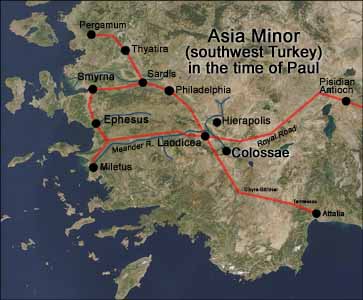
Galatia was located in Asia Minor or present day Turkey. A number of Celtic Gauls had migrated to the area.
The Galatians were a Gallic (Celtic) people of the Hellenistic period that dwelt mainly in the north central regions of Asia Minor or Anatolia in what was known as Galatia. They were a part of the great migration led by Brennus.
Brennus invaded Greece in 281 BC with a huge war band and was turned back before he could plunder the temple of Apollo at Delphi. Another group had split off from Brennus. They had migrated into Thrace under their leaders Leonnorius and Lutarius. These invaders appeared in Asia Minor in 278–277 BC
Leonnorios led the invasion into the area. The invaders had been invaded by Nicomedes I of Bithynia to help in a dynastic struggle against his brother. Three tribes crossed over from Thrace to Asia Minor.
Their skin was fair. Their hair was red. They spoke a different language. They were eventually defeated by the Seleucid King Antiochus I in a battle where the Seleucid war elephants shocked the Celts. While the momentum of the invasion was broken, the Galatians were by no means exterminated.
The migration led to the establishment of a long-lived Galatian territory in central Anatolia, which included the eastern part of ancient Phrygia that became known as Galatia.
They stayed through the Greek and Roman occupations.
The constitution of the Galatian state is described by Strabo. Each tribe was divided into cantons conformably to custom.
Each was governed by a tetrarch with a judge under him whose powers were unlimited except in cases of murder. Murders were tried before a council of 300 drawn from the twelve cantons who met at a holy place 20 miles south-west of Ancyra.
It is likely it was a sacred oak grove since the name means 'sanctuary of the oaks' in Gaulish.
The local population of Cappadocians were left in control of the towns and most of the land. They paid tithes to their new overlords who formed a military aristocracy. These nobles kept aloof in fortified farmsteads surrounded by their bands.
These Galatians were warriors. They were respected by Greeks and Romans. They were often hired as mercenaries. Sometimes they fought on both sides in the great battles of the times.
Rome sent Gnaeus Manlius Vulso on an expedition against the Galatians in 189 BCE. The Romans won the Galatian War. Galatia was dominated by Rome until it became a client state in 64.
The old constitution disappeared. Three chiefs were appointed as tetrarchs. One led each tribe. This arrangement soon gave way before the ambition of one of these tetrarchs, Deiotarus. He was the contemporary of Cicero and Julius Caesar. He made himself master of the other two tetrarchies and was finally recognized by the Romans as 'king' of Galatia.
A number of Galatians of the Roman Empire were evangelized by Paul the Apostle's missionary activities in the first century CE. The Acts of the Apostles recorded that Paul traveled to the "region of Galatia and Phrygia." Phrygia was immediately west of Galatia.
Judaizers were Christians who taught that it was necessary to adopt Jewish customs and practices found in the Law of Moses to be saved. This meant that Gentile converts had to be circumcized even as adults.
The epistle to the Galatians presents the argument against the Judaizers.
Paul's letter is addressed "to the churches of Galatia" (Gal. 1:2). The New Testament says that the churches of Galatia (Antioch of Pisidia, Iconium, Lystra and Derbe) were founded by Paul himself (Acts 16:6; Gal.1:6;4:13;4:19). They seem to have been composed mainly of gentile converts (Gal. 4:8).
The churches were led astray from Paul's faith centered teaching after his departure by individuals proposing "another gospel." The different instruction was centered on salvation through the Mosaic law. It was called legalism.
The Galatians appear to have been receptive to the teaching of these newcomers. The epistle is Paul's response to what he sees as their willingness to turn from his doctrine.
There is a political implication that the status of the emperor and the imperial succession by family inheritance or adoption represented a liberation from the law by Christ. Cyrus, an Achaemenid ruler, had been identified as the 'Messiah' by the Hebrew scriptures.
This foreign ruler was considered to be the political extension of the promise of royal succession to the house of David. Circumcision was not a religious rite that was practiced by the Greeks or the Romans.
Paul argued against circumcision as an unnecessary external rite of the religion that wasn't warranted by the promise in the vision revealed to Abraham that he would be the father of nations.
Abraham would become the father by virtue of his faith, not his observance of religious custom. Circumcision was compared to animal sacrifice as something that might have been on the way to obscurity.
Galatians 3:24-25, 4:4-7
We were imprisoned and guarded under the law until faith would be revealed. The law was our disciplinarian until Christ came that we might be justified by faith.
When the fullness of time had come, God sent his Son, born of woman, born under law in order to redeem those who were under the law that we might receive adoption as children.
God has sent the Spirit of his Son into our hearts because we are children, crying, 'Abba! Father!' You are no longer a slave but a child. If a child then an heir through God.'
-----------------------
Christ came that we might be justified by faith.
The Son was born of woman under the law as great.
The Spirit of the Son has been sent into our hearts
because we are children who cry to the Father for our part.
You are no longer a slave but a child.
As a child you are an heir reconciled.
=================

Heraclitus of Ephesus
b. 535 BCE Ephesus, Ionia, Persian Empire
d. 475 BCE Ephesus, Ionia, Delian League
Heraclitus was a Pre-Socratic philosopher from Ionia. He was a native of Ephesus when it was in the Persian Empire. Kusadasi,Turkey is located where Ephesus had been.
He is known for his doctrine of universal flux. He taught that things are in a constant state of change. Opposites are joined in unity when the abstract definition of concepts doesn't agree with physical reality. Certainty in expectation can be destroyed in the face of disaster or unexpected fortune.
Fire is the essential material element for the world. The universal flux existed in the Word or the Logos, the Reason for change.
Ephesus was a prominent city in Ionia, the Greek-inhabited coast of Asia Minor. He inherited the honorific title for the office of “king” of the Ionians according to one account. He resigned this to his brother. He is generally considered to have favored aristocratic government over democracy based on his political observations.
Ephesus was close to Miletus. This was the city where the first thinkers recognized in later tradition as philosophers lived. There is no record of his having made the acquaintance of any of the Milesian thinkers, Thales, Anaximander or Anaximenes. It is not known that he was taught by them. There is no testimony that he had traveled.
He is said to have written a single papyrus roll). The scroll was reputed to have been deposited in the great temple of Artemis at Ephesus. The story is plausible. Temples often served as depositories for money and other valuables. No libraries are known from the time of Heraclitus in the city.
The fragments that still exist indicate that his book looked more like a collection of proverbs such as were ascribed to the seven sages than like a cosmological treatise of the Milesians.
Theophrastus said that it seemed only half-finished. It was a kind of hodgepodge he attributed to the author’s melancholy. Diogenes Laertius reported that the work was divided into three sections, one on cosmology, one on politics (and ethics) and one on theology (9.5–6).
All these topics are treated in the extant fragments but it is often difficult to see what boundaries the work might have drawn between them since Heraclitus seems to have seen deep interconnections between science, human affairs and theology.
His logic denied the law of non-contradiction.
His work was structured in contrast to the Greek tradition of philosophy as influenced by the epic poets Homer and Hesiod, the poet and philosopher Xenophanes, the historian and antiquarian Hecataeus, the religious mathematician Pythagoras, the sage Bias of Priene, the poet Archilochus and the Milesian philosophers.
Heraclitus’ most fundamental departure from previous philosophy can be seen in his emphasis on human affairs. While he continued many of the physical and cosmological theories of his predecessors, he shifted his focus from the cosmic to the human realm.
Heraclitus stressed that the message of the Word was not his own invention. It was a timeless truth available to any who attended to the way the world itself is.
Blindness in comprehension was one of his main themes. While all things occurred according to Reason, humans were inexperienced in the experience of events with words. He promised to describe each thing according to its nature to show how it is, but he couldn't guarantee that the description would be understood.
He described the nature of the Word as eternal. It exists. It always existed. It will last forever, but the comprehension of it exceeds the general ability to recognize it.
Opposites are necessary for life, but they are unified in a system of balanced exchange. The world itself consists of a law-like interchange of elements symbolized by fire. The world is not to be identified with any particular substance, but rather with an ongoing process governed by a law of change.
John is the 4th of the canonical gospels. The book was completed around 90-110 CE. It is anonymous, but it is ascribed to the disciple whom Jesus loved. It shares style and content with the 3 Johannine epistles. It is included with the book of Revelations as Johannine, but not from the same author.
The discourses contained in this gospel seem to be concerned with issues of the church–synagogue debate at the time of composition. The community appears to define itself primarily in contrast to Judaism, rather than as part of a wider Christian society. It presents a perspective that is 'in the world' but not fully of it.
Religion was presented as a forum for the monotheistic form rather than for a particular body of people. It managed to suggest the capacity for the integration of the Greek, Roman, Judaic and Persian worlds.
The author knew some version of Mark and possibly Luke. He shared with them some items of vocabulary and clusters of incidents arranged in the same order.
Key terms from the synoptics are absent or nearly so. The author felt free to write independently of the synoptic texts. The wedding in Cana, the encounter of Jesus with the Samaritan woman at the well and the raising of Lazarus, are not paralleled in the other gospels.
The author drew these from an independent source called the "signs gospel". The speeches of Jesus came from a second "discourse" source. The prologue was drawn from an early hymn.
The phrase "the Word" refers to Jesus as indicated in other verses later in the same chapter. This verse and others throughout Johannine literature connect the Christian understanding of Jesus to the philosophical idea of the Logos and the Hebrew Wisdom literature.
John 1:1-6
The Word was with God in the beginning and the Word was God. He was in the beginning with God. All things came into being through him. Not one thing came into being without him. What has come into being in him was life. The life was the light for all people. The light shines in the darkness. The darkness did not overcome it.
There was a man sent from God whose name was John. He came as a witness to testify to the light so all might believe through him. He himself was not the light, but he came to testify to that which was coming into the world which enlightens everyone.
-----------------------
The Word was in the beginning with God.
All things came into being by reason with odds.
Life has come into being through chance in the law.
Action against the law is wrong
unless the expression is fatally flawed.
The light shines in darkness.
The darkness did not overcome the harness.
There was a man sent to baptize with water.
John was sent to cleanse and testify against slaughter.
He was not the life of the Light for the world
but he testified for the Word as a flag unfurled.
The Word came as Jesus to baptize with fire
to reconcile worlds as the controversial pacifier.
Logic with metaphor is a powerful tool
for the communication of ideas in the rule
of the schools for trade based on fuel and the jewel.
=================
Private Property

Plato was against an economy based on private property.
"....no one will posses any private property, except for what's entirely necessary." (Republic,416d)
This statement in Plato's Republic was a precursor to more modern ideas such as communism and socialism. "Utopian" ideas like Plato's are suspicious because they point to a totalitarian society as inevitable. What's the difference between a utopian society like the one in Plato's Republic and the dystopian model presented in, Brave New World or 1984?
Aristotle argued for the private ownership of property as the basis for economics.
Aristotle on private-property and money
Aristotle delivered a cogent attack on the communal ownership of property by the ruling class called for by Plato. Plato's goal of the perfect unity of the state through communism was denounced by pointing out that such extreme unity runs against the diversity of mankind.
It's against the reciprocal advantage that everyone reaps through market exchange.
Aristotle delivered a point-by-point contrast of private as against communal property. Private property is more productive. It will lead to progress.
Goods owned in common by a large number of people will receive little attention. People will mainly consult their own self-interest and will neglect duty when they can leave it to others. People devote the greatest interest and care to their own property by contrast.
One of Plato's arguments for communism is that it is conducive to social peace. No one will be envious. They will not try to grab the property that belongs to all.
Aristotle retorted that communal property leads to continual and intense conflict. Each will complain that he has worked harder and obtained less than others who have done little and taken more from the common store.
They took more because they didn't spend as much time working for what was held in common. They took the time to take as much as they could for as little work as possible.
Not all crimes or revolutions are powered by economic motives. Men do not become tyrants to suffer coldness and deprivation. .
------------------------
Martyrdom
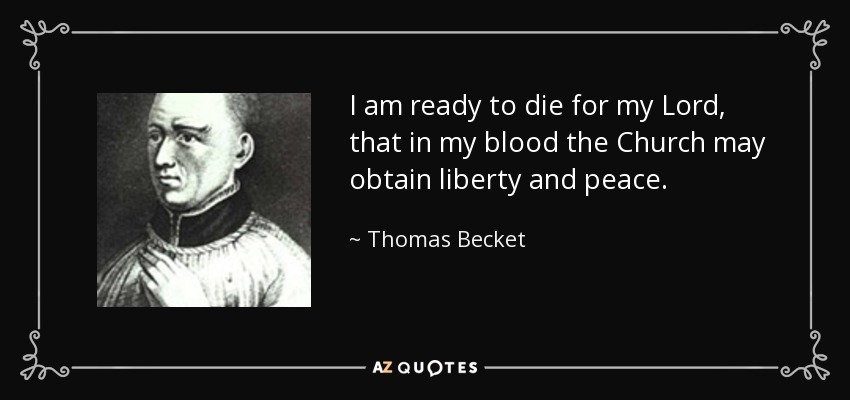
Thomas Beckett
b. 12.21.1119 Cheapside, London, England
d. 12.29.1170 Canterbury Cathedral, Kent, England
Thomas Becket was the son of a merchant who rose to power during the reign of Henry II. The two became friends before Henry was crowned king.
King Henry I had sent his son to live in Becket's household. It was the custom for noble children to be fostered out to other noble houses.
Thomas and Henry grew up in the same house. They hunted and played chess together. The two men grew to share one heart and mind.
Thomas didn't pursue higher education, so he was resigned to work as a lower order cleric. He worked for Theobald, the Archbishop of Canterbury, as a liason to Rome. He recommended that Anselm of Canterbury be canonized as a saint.
Theobald sent him to Bologna and Auxerre to study canon law. He named Becket Archdeacon of Canterbury in 1154.
Other ecclesiastical offices included a number of benefices, prebends at Lincoln Cathedral and St Paul's Cathedral and the office of Provost of Beverley.
His efficiency in those posts led Theobald to recommend him to King Henry II for the vacant post of Lord Chancellor. Becket was appointed in January 1155.
When Theobald died in 1161 Henry selected Becket to replace him as the Archbishop. He was hoping to draw a line for authority in the investiture controversy.
The argument concerned who should invest a new bishop with his staff and ring. This had been carried out by the King in a symbolic demonstration of royal power, but Pope Urban II had changed the practice in 1099. He argued that only the papacy had the authority for the task. Clergy should not pay homage to their local temporal rulers.
This judgment caused friction between Archbishop Anselm and King William when Anselm agreed with the pope. Anselm went into exile.
Henry I succeeded William. He gave up his right to invest his clergy, but retained the custom of requiring them to do homage for the temporalities, the landed properties they held in England.
Henry II held that the English custom was to allow secular courts to try lower order clerics accused of crimes. Becket took the position that all clergy, whether only in minor orders or not, were not to be dealt with by secular powers. Only the ecclesiastical hierarchy could judge the accusation of crime.
Thomas Becket was Archbishop of Canterbury from 1162 until his murder in 1170. He engaged in the controversy with King Henry II from 1163 to 1170. The report of his murder tabled the decision regarding royal authority.
BBC History: Thomas Becket
wiki Thomas Becket
--------------------

The Bible
John Jay wrote only 7 of the Federalist Papers, but he developed the case for international relations with foreign powers for national security.
The third paper was the second of four essays by Jay on the utility of the Union in protecting Americans against foreign aggression. He had earlier acted as ambassador to Spain and Secretary for Foreign Affairs. This experience contributed to his focus on international relations.
Jay was a member of the Church of England prior to the American Revolution. He joined the Protestant Episcopal Church in America after independence. He had been a warden of Trinity Church, New York since 1785.
Jay served as vice-president (1816-21) and president (1821-27) of the American Bible Society. He believed that the most effective way of ensuring world peace was through propagation of the Christian gospel.
He argued that real Christians will abstain from violating the rights of others in a letter addressed to Pennsylvania House of Representatives member John Murray dated October 12, 1816. Those who abstain from such a thing will not provoke war.
Most nations had peace or war at the will of rulers whom they did not elect. Monarchs were not always wise or virtuous. Catholics lacked respect for national security. Republic had to be defined in a way that was strong enough for the life of the nation.
Providence gave people the choice of their rulers. It is the duty, privilege and interest of a Christian nation to select and prefer Christians for their rulers. The moral precepts of Christianity were necessary for good government.
No human society had ever been able to maintain both order and freedom with cohesiveness and liberty without moral precepts. Should our Republic ever forget that the fundamental principles for law in our society were drawn from the Bible, the results would be harmful.
Text
Jay argued that the people of America had entertained the importance of one government vested with sufficient power for all general purposes for a long time in the third Federalist Paper.
Unity for royal sovereignty was a part of western history from the inception of the Christian religion in the holy Roman empire.
The pope blessed each king to select his political and religious officials until Urban II changed the policy in 1099. The change in policy adversely affected the national part of security in each kingdom.
The safety of the nation affords great significance to those who wish to define it precisely and comprehensively to meet the needs of defense from threat caused by a variety of circumstances and considerations.
Security is for the preservation of peace and tranquility against dangers from foreign arms and influence as well as from instability of like kind arising from domestic causes. A cordial union under an efficient national government affords the best security that can be devised against hostility from abroad.
The number of wars which had happened will be found to be in proportion to the number and weight of the causes which provoked or invited them whether real or pretended. What would be the number of causes for war for a united America? Would there not be more for a disunited nation?
Should it turn out that the United America will give the fewest, then it will follow that the union tends most to preserve the people in a state of peace with other nations.
The cause of war arose either from the violation of treaties or from direct violence. America had already formed treaties with no less than six foreign nations.
All of them were maritime except for the agreement with Prussia. The maritime nations were able to cause injury and harassment.
The confederation had also had extensive commerce with Portugal, Spain and Britain. The two latter kingdoms had the circumstance of neighborhood to attend as well.
Once an efficient national government was established, the best people in the country would not only consent to serve, but would also be appointed to manage it.
Although town, country or other contracted influence may have placed officials in assemblies, senates, courts of justice or executive departments, yet more general and extensive reputation for talents and other qualifications are necessary to recommend the qualified to offices in the national government.
This level has the widest field for choice and an overview with respect for law. It would not experience that want of proper persons which was evident in some of the states.
The administration, the political counsel and the judicial decisions will be more systematic and judicious than those of individual states.
Relations with other nations will be more satisfactory and safe.
Treaties, the articles for treaties and the laws of nations will be expounded in one sense and executed in the same manner.
Adjudications on the same points and questions in different states or in more than one confederation would not always be in accord or be consistent.
The wisdom of the convention in committing such questions to the jurisdiction and judgment of courts appointed by and responsible to one national government was to be commended.
The prospect of loss or advantage may tempt the governing party in one or two States to swerve from good faith and justice.
Those temptations will have little or no influence on the national government. That which swayed some states will be fruitless on the greater part of the union. Good faith and justice will be preserved. The treaty of peace with Britain added weight to this reason.
The national government would not be affected by the local circumstance even if there were to be those who should fall to such temptations that result from circumstances peculiar to the state despite the disposition to oppose the fall by the governing party.
They will neither be induced to commit the wrong themselves nor want for power or inclination to prevent or punish its commission by others.
So far as either designed or accidental violations of treaties or the laws of nations afford the cause of war, they are less to be apprehended under one general government than under several lesser ones. The larger union favors the safety of the people most.
One good government affords more security against dangers from war caused by direct and unlawful violence.
Not a single Indian war had been occasioned by aggression from the federal government. There were instances of Indian hostilities having been provoked by the improper conduct of individual states.
Spanish and British territories bordered on some states and not on others. The cause of quarrel was more immediately confined to the border states. The impulse of sudden irritation induced by a quick sense of apparent interest or injury was most likely to excite war with these nations by direct violence.
A national government is more effective in the mediation of settlement or the amicable resolution of disputes. The pride of states disposed them to justify all their actions and to oppose the acknowledgement, correction or repair of error or offense.
The national view of such cases is not affected by this pride. Moderation and candor consider the means most proper for extrication from difficulties.
The state of Genoa endeavored to appease Louis XIV in 1685. He demanded that they should send their chief magistrate with four of their senators to France to ask his pardon and receive his terms.
They were obliged to submit to his demands for the sake of peace. Would he on any occasion either have demanded or have received like humiliation from Spain, Britain or any other powerful nation?
A strong united nation is not asked to submit to the condition of humiliation.
The condition of the world has changed since the time that Jay offered his argument, but the benefit of national security is still a primary concern for the union. The borders still define the greatest area of concern for the safety of the country.
International relations are best handled at the national level. Trade can be negotiated with respect for the protection of transportation for people and products.
----------------------
Induction
Plato had described the Athenian model for democratic monarchy as insufficient for Greek security. He felt that the Spartan form was more beneficial for the perpetuation of the culture.
His description of love in the Phaedrus conveyed the impression that sexual relations for love were homosexual. The agreement in sexual congress was viewed as a political component that was added to marriage. Whether the relations were for passionate (Bacchanalian) or dispassionate (Apollonian) love the purpose was to establish dominance for dictatorship.
The military emphasis in the dual kingship of the Spartans was seen as adequate for defense against the Persian threat. The idealism of the ideal forms would allow for the development of a confederation of kingdoms for the variable consideration of custom and practice with the Greek language.
Aristotle presented a metaphysical view that was competitive with the Persian empire. His dialectical method allowed for the formation of opinion based on the consideration of various views. His unmoved Mover suggested a level of dispassion in judgment that could rule an empire.
The imperial story line regarding the solicitation of alliance with the threat of genocide or slavery presented a real world dilemma with respect for detachment from the world.
While slavery might conceivably have been used to work slaves into the status of serfs or freedmen, it might also have been used to perpetuate cruelty in punishment or violence in aggression for the sake of private property.
Alexander established a pattern of leadership that insisted on libraries for the collection of documentation of written material and administrators who would organize a system of election for political officials. His acceptance of status as a deity after he defeated the Persians may have been a concession to slavery as a part of imperial government.
If he knew about the Jewish ascription of the title of Messiah to Cyrus as the liberator of the captives, he left the decision regarding the practice open to question with the ambiguity of the definition of what was 'best.'
The Romans adapted the Greek model to an idea of republic that organized public sentiment with religious festival and a system of election. They didn't have gymnasiums for public education, but they used gladiatorial contests and enslavement as the means to reduce the savage threat from barbarian tribes.
The Greek phalanx was adopted as the standard form for military conflicts with the military force from other kingdoms or empires. The emperor was seen as a necessary evil to fight other empires. This said, a line of succession that included adoption as an option was instituted for the perpetuation of the culture.
Octavian countered the notion of homosexuality as necessary for love in political relations with the recognition of the importance of the family as the dominant social influence for political and religious organization.
Justin Martyr countered the notion that the monotheism of Christians was detrimental to the Roman empire with the proposal that homosexuality was unnatural. It encouraged an artificial consensus of women with women and men with men. Either consensus wasn't as good for the public as something that was for the benefit of both.
Monasticism was developed as a social form in religion for those who didn't feel that marriage would work. Productivity with the organized independence of the unmarried was established as beneficial for the public. The education that had been limited to the aristocracy was made available to more people of both sexes.
Monasticism was not supported by the Protestant Reformation. Marriage came to be viewed as the only acceptable order for the management of private property.
The unmarried came to be labeled as homosexual by the common judgment advocated by those with less educational requirement in government. Those who were unmarried and no longer had the option of monasticism as a social form would accept the label if they didn't feel that marriage would work for them.
C.D. Broad was unmarried. He exercised his option to get higher education. He elected to study the work of Aristotle. He chose to evaluate the problem of selection in relation to precedent. His proposal was that a precedent should be allowed to stand unless it could be replaced by something as good or better.
This presented a difficulty to the the consideration of heterosexual and homosexual relations in marriage. The issue was complicated by another degree for those who didn't find a partner who could cooperate for the successful management of the household as an element in the private ownership of property.
It would be senseless to argue that homosexual marriage has to be the dominant form for the public. Such a society would be doomed to failure by attrition. The life and work of C.D. Broad helped to develop an alternative argument.
C.D. Broad
b. 12.30.1887 Harlesdon, London, United Kingdom
d. 3.11.1971 Cambridge, United Kingdom
Unmarried

Homosexuality was declared a mental illness in the NY Times article in 1963.
NY Times Article on the growth of homosexuality in the city in 1963
NY Times Article: Homosexuality
Another article from 2018 expresses the ABC's about the Lesbian Gay Alliance.
ABC's
NY Times Article: Gender Language
"Take, for example, the addition of “Q” that became increasingly popular as the 20th century turned into the 21st. Some insisted this stood for “questioning,” representing people who were uncertain of their sexual orientations or gender identities. Others declared it was for “queer,” a catchall term that has shed its derogatory origins and is gaining acceptance."
Family organization is regarded as important in monarchy and republic. Marriage is treated as a political tool for growth in status or as a defense against attack for being unmarried.
Monasteries used to act as a haven for the unmarried. The Roman Catholic Church adopted a celibate priesthood, because the monastic community had become so powerful that they felt that more could be accomplished by a single than a married person.
The Buddhist religion has never had a married priesthood. The monks are unmarried or they cease to be monks.
The Roman Empire adopted a stance against homosexuality over a century after Octavian had sought to make marriage and family values the pillar for society.
The Republic had made politics a subordinate order to the development of business organization as a family interest. This didn't stop or decrease war, but there is always that thought that business could exist or even thrive without military conquest if the world were to value free and fair trade as the international practice.
Justin the Martyr had something to do with making homosexuality an immoral offense against society. He wrote an argument to the emperor that recommended that he persecute homosexuals instead of Christians.
C.D. Broad
Charlie Dunbar Broad was an English historian of philosophy and philosopher of moral science.
Broad's essay on "Determinism, Indeterminism, and Libertarianism" in Ethics and the History of Philosophy (1952) introduced the philosophical terms "occurrent causation" and "non-occurrent causation". These terms became the basis for the contemporary distinction between "agent-causal" and "event-causal" in debates on libertarian free will.
He was born in London in the latter part of the 19th century.
Harlesden, Middlesex
Harlesden is an area in northwest London. Its main focal point is the Jubilee Clock which commemorates Queen Victoria's Golden Jubilee.
It was a rural village in the 19th century. It began to develop some of its urban appearance with the arrival of the railways. Willesden Junction, Kensal Green and Harlesden stations all had an effect on the developing village. Cottages for railway and industrial workers were built. Housing for the local middle class was developed as well.
Harlesden lost it s rural nature as factories replaced farms and woodland.
London grew to be a global city of immense importance as the capital for the British Empire. The growth was fed by immigrants from the colonies and refugees from conflicts and famines.
It was the largest city in the world from about 1825, the world's largest port and the heart of international finance and trade.
Railways connecting London to the rest of Britain, as well as the London Underground was built. Roads, a modern sewer system and many famous sites were constructed.
CD Broad
Charlie Dunbar Broad was born in Harlesden on 30 December 1887.
He was educated at Dulwich College from 1900 until 1906. He gained a scholarship to study at Trinity College, Cambridge in 1906. He graduated with First-Class Honours in 1910.
Broad’s early interests were in science and mathematics. He came to believe that he would never be a first-rate scientist despite being successful in these. He turned to philosophy.
Broad’s interests were exceptionally wide in range. He devoted his philosophical acuity to the mind-body problem, the nature of perception, memory, introspection, the unconscious and to the nature of space, time and causation. He also wrote extensively on the philosophy of probability and induction, ethics, the history of philosophy and the philosophy of religion.
He became a Fellow of Trinity College in 1911. This was a non-residential position. The position enabled him to also accept an opening he had applied for as an assistant lecturer at St Andrews University.
He was later made a lecturer at St Andrews University. He remained there until 1920. He was appointed professor at Bristol University in 1920. He worked there until 1923 when he returned to Trinity College as a College lecturer.
He was a lecturer in 'moral science' in the Faculty of philosophy at Cambridge University from 1926 until 1931. He was appointed 'Sidgwick Lecturer' at Cambridge University in 1931. He kept this role until 1933 when he was appointed Knightbridge Professor of Moral Philosophy at Cambridge University. He held the position until 1953.
He became known for his thorough and dispassionate examinations of arguments in such works as Scientific Thought (1923), The Mind and Its Place in Nature (1925) and Examination of McTaggart's Philosophy (2 vols., 1933-1938).
----------------------
Charlie Dunbar Broad was an unmarried academic during a time when homosexual acts were designated as illegal by legislated law. He has been described as "openly gay", but this could be because he authored a letter to The Times that requested that the law against homosexual acts be rescinded.
The letter was co-signed by A.J. Ayer, Bertrand Russell and 28 others. It cited the Wolfenden's Report as a reference that recommended that homosexuality no longer be regarded as a criminal offense.
I couldn't find a quote by Broad wherein he declared himself homosexual. I recalled reading a statement by Russell that a bachelor is an unmarried man however.
Whether he was gay or not, there was the distinct possibility that an unmarried person might be accused and convicted for homosexual acts due to the false conviction that being unmarried must mean that the person is homosexual.
Gay marriage has a value to society insofar as it doesn't reproduce offspring. It is reasonable to assume that many heterosexual marriages stop reproductive action after some offspring have been produced.
The married couple then precedes to act as parents who have interdependent or independent agendas with regard to providing a service or product for the market.
There are grounds to argue that a homosexual partnership should be blessed rather than sanctified as a marriage. A blessed union wouldn't have the lifelong obligation that a marriage has.
If the partners find that they can't cooperate productively in a lifelong contract, they can seek an alternative arrangement. They don't have the responsibility to provide for offspring.
This said, divorce is an option for those who feel that marriage isn't productive. Homosexual marriage has been deemed legal by the US Supreme Court. Many states legalized the marriage immediately thanks in no small part to the LGBT alliance as a political lobby.
I have found that being single has allowed for productivity in my written work. I don't have to struggle with the obligation of making sure that my marital partner is happy before I attempt to produce a product of my own.
I have to take care of my responsibilities without the help of a marital partner, but I didn't want to make an issue out of making my partner make be happy before she or he got to do independent activities.
I don't agree that the Anglican Communion should have favored opposition to gay marriage. I know that they are a world wide organization, but Great Britain has blessed unions for homosexual couples. The Episcopal Church of America was suspended for 3 years from the AC.
They seem to be showing favor for the Ugandan contingency that wanted to legislate the death penalty as a punishment for homosexuality. Concession to legislation of that sort strikes me as church compliance with government overreach in the extension of the claim to power over people.
I am hopeful that the radical opposition to homosexuality will be regarded as that which should result in suspension. Let the matter drop otherwise. The legality of marriage is a political issue. The sanctification or blessing of the union is a religious matter. Any support for the death penalty or treating the action as criminal should be regarded as extreme.
It is not the business of the state or the church to require heterosexual marriage as the only choice for legal adults.
Charlie Broad
S. 查尔斯·布罗德
T. 查爾斯·布羅德
查 Cha to examine 查 no kanji Cha ちゃ- チャ- Chal 찰 the
尔 er you 爾 ji you ri り- リ- li 리 lee
斯 si this 斯 shi this Bu ぶ ブ Beu 브 bro
布 Bu to announce 布 fu cloth ro ろ- ロ- lo 로 in
罗 luo to catch 羅 ra gauze do ど ド deu 드 de
德 de morality 德 toku ethics
------------------------
The appearance of an event doesn't always show an agent as the cause.
Even the roll of the dice was supposed to be an accidental element to what the outcome was.
=================
-----------------------
Border Security
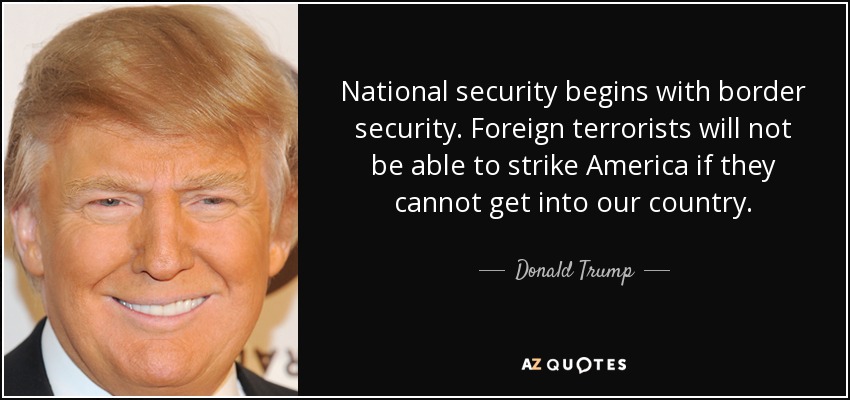
Immigrants are expected to cross into the country at established checkpoints so security personnel can check documentation regarding the citizen's records.
Those who have a criminal record are considered to be a greater security risk. Migrant workers and those with temporary visas are expected to report the address to their residency while in the country.
Liberal Dems want to allow those who didn't cross at checkpoints to be granted the rights of citizens without the path to citizenship. There is no educational requirement for that 'plan.'
The undocumented immigrant doesn't have to understand the language to vote. They don't have to understand the language find employment. They just need someone who will translate for them. They don't have to understand the language to receive services when appointed a translator.
They don't have to work to get paid in the liberal system, because the liberal politician is going to have the American taxpayer do the work and pay for the undocumented immigrant. The liberals are using this system to establish democratic dictatorship.
It's not constitutional. It's not republican. It's rule by demand from the ignorant and belligerent that weakens the constituent rights for the citizens of the country.
Do liberals blame the socialism in the US on China? Education makes the difference in the meritocracy of employment. When people with less education are hired over those with education and experience because it was unfair that the educated learned from 'books', the meritocracy is replaced with a system that meets worker demands from employees who didn't bother to get an education.
The Chinese have a civil service test that most people pass only with education. Articles about Chinese government however define the economy as socialist and the democracy as a dictatorship. Is their law too well defined? Are they too busy using the expertise of the uneducated for the authority of the government official?
Core Interests
NY Times Article: China's Core Interests
Note how the NY Times article defines the concept of "core interests."
"With the national security law, it has become even clearer that the term refers to what Chinese leaders see as three sacrosanct rights of the nation: maintaining the political system, with unquestioned rule by the Communist Party; defending sovereignty claims and territorial integrity; and economic development."
The national security law passed in 2015 had been a cause of controversy in Hong Kong and Macau. It is conceivable that Hong Kong and Macau have more democratic dictatorship than Beijing. What does that do to the NY Times definition of the problem?
Security
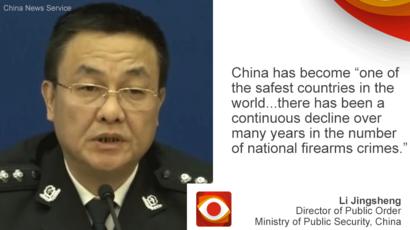
Look at the different translations of the national security law for China (2015).
China's National Defense
Text
" It is the aspiration of the Chinese government and people to lead a peaceful, stable and prosperous world into the new century...
Article 2
"The Chinese government firmly pursues a national defense policy that is defensive in nature. The Constitution of the People's Republic of China (PRC) clearly specifies the tasks of the armed forces of the PRC as being to consolidate national defense, resist aggression, defend the motherland, safeguard the people's peaceful labor, participate in national construction and strive to serve the people. China's state interests, social system, foreign policy and historical and cultural traditions postulate that China will inevitably adopt such a national defense policy."
National Security Law
Text
"Article 1 To maintain national security, safeguard the regime of people's democratic dictatorship and the socialist system with Chinese characteristics, protect the fundamental interest of the people, ensure the smooth advancement of reform, opening up, and socialist modernization, and achieve the great rejuvenation of the Chinese nation, this Law is developed in accordance with the Constitution."
The second translation is rife with catch phrases that make the western reader think that 'those Chinese are still communists.' It skipped the first article and translated the second with the terms "regime", "dictatorship" and "socialist."
The first demonstrates a concern for international relations that is consistent with the current president's proposal for international cooperation. The national law is an expression of respect for international relations.
--------------------
When the draft was removed as the justification for service in the US military, enlistment became voluntary. Recruiters used incentive to attract enlistees.
This made the use of the military for national security a matter of choice.
This has considerable impact regarding the investment in the budget for national security with respect for the military. A small increase in expenditure was warranted for college loans.
Material support for electronics, equipment and barracks improvements was added.
Legislation for the existence of the military for national security will decrease the amount of fake news used to justify the existence of the armed forces as a legal entity.
Budgetary modifications could be adjusted for real world events and conditions. The importance of fictional stories would be decreased with respect for the defense of the country.
Military leadership has a strong tradition in the quality of education established at West Point, Annapolis and Colorado Springs.
The military support for constitutional law makes the service honorable. It is not there to enforce dictatorship.
Against Torture

C.S. Lewis
Finding Shakespeare Video
Communism was a primitive economic form for republic. The concept of private property allows each a portion of providence. Unity in agreement with the objectivity of goodness provides elasticity to the portion that results from the provision of a service.
C.S. Lewis provided a modern view for the value of theism in the search for truth in God with the classical perspective. Truth is most relevant in context. The argument for monotheism moves the cultural context for the value of religion forward from that which is too restrictive about polytheism.
This produces a value when civilization doesn't act as the larger savage. Cruelty in punishment and violence in aggression cost the public too much to warrant savage policy in practice.
The state of the nation needs a well trained military for defense against hostile threats, real or pretended. Pretend threats serve a purpose when used to prepare for defense against anything real.
Those cultivated fictions which journalism has presented to the public have produced a benefit for national security with respect for the defense of trade. International trade has taken the scope for military protection outside of the designated boundaries for the country.
There is that which is right for the military acting as a police force against actions like terrorism provided that there is instruction given in the customs and language for the theater for operations.
Such instruction helps the people in the military act in a way that is well informed, so they don't create larger problems than those they help to solve.