Showing posts with label defense. Show all posts

Wednesday, August 28, 2019

Build

8.28.19
Rome, Italy

Build
Defense
建立防御 
Jiànlì fángyù
防御を構築する 
Bōgyo o kōchiku suru
ps87
Aedificare defensionis

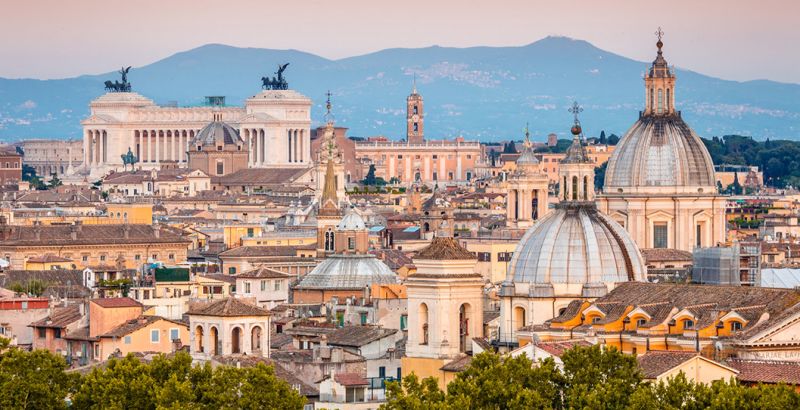
The city was built on a mountain.
The mountain grounded that which was founded.

Height held the advantage of sight for distance.
When invaders attacked the city prepared for resistance.

Traders from different directions could be seen.
Welcome was prepared by the social machine.

The gate to the city welcomed visitors, family and friends.
It wasn't closed to ministers, misters, sisters or gems.

The gate was the way through which travelers entered.
Messengers shared word as a gift from the sender. 

Egypt and Babylon were among those who knew me.
Revelation was the gate for the truth of our history.

Philistia, Tyre and Ethiopia were partners in trade.
Weapons, wheels and cattle were the offerings they made.

The ring of fellowship is that which unites.
Power is grounded in defense of alliance.

Alliance against the destructive elements 
prepares people for defense against violence.

The military is drawn from the people.
Training in strength overcomes feeling feeble.

Search for those lost while at work or at play
lends experience to training in a beneficial way.

The source of life is love.
Rescue comes from within and above.

Zion is a lion on a hill.
Orion and Kiron match the iron will.

------------------------

Psalm 87
Fundamenta ejus

1 On the holy mountain stands the city he has founded; *
the Lord loves the gates of Zion
more than all the dwellings of Jacob.
2 Glorious things are spoken of you, *
O city of our God.
3 I count Egypt and Babylon among those who know me; *
behold Philistia, Tyre, and Ethiopia:
in Zion were they born.
4 Of Zion it shall be said, "Everyone was born in her, *
and the Most High himself shall sustain her."
5 The Lord will record as he enrolls the peoples, *
"These also were born there."
6 The singers and the dancers will say, *
"All my fresh springs are in you."

--------------------------

8.28

Freedom
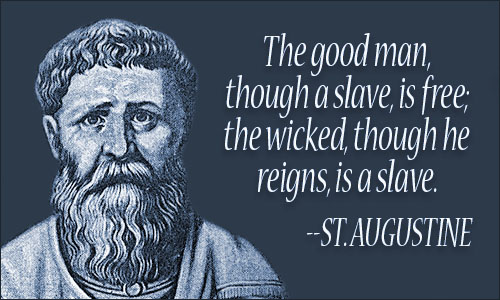
Augustine was an early Roman Christian theologian and philosopher from Africa. He was born in Thagaste. He became the bishop of Hippo Regius. Both cities are in present day Algeria.

He is viewed as one of the most important Church Fathers in western Christianity. He wrote in the Patristic era. “The City of God,” “On Christian Doctrine” and “Confessions” are among his most important works.

Augustine has been criticized as neo-Platonic in his philosophy and theology. His statement about the good man is a modification of what Plato had to say about slavery.

There isn't a king that wasn't descended from a slave. There is not a slave who did not have royal ancestors. When slavery was a spoil of war, the rulers who were not killed were enslaved to serve the conquering force.

He has been criticized for his philosophy because he defined human nature as totally corrupt. This had dark political implications in relation to Plato's definition of republic.

The Spartans were in the ascendance politically when he shifted the dialog of Socrates from the defense of democracy as practiced with Pericles to an advocacy for a form of government that was oppressively militaristic in aggression.

Athenian men were actively involved in the decisions made for the city state. The citizens were controlled by the destructive use of elements in the republic. Plato defined democracy as dictatorship when he overturned an earlier judgment.

Augustine's statement about the good man wasn't a rejection of slavery. It was a qualification of goodness in corrupted nature The statement was made in the "City of God." Given the postulation of a 'just war' this has dark implications in the context of a Constitution that ascribes the 'right' to declare war to an authority of the state.

Augustine said that John the Baptist did not bid soldiers to give up soldiering. He told them to do no violence and to be content with pay. This doesn't forbid soldiering or war.

It is a ban against invasion. The crusader popes thought that reclaiming the city of Jerusalem and the surrounding territory was a just cause for invasion. The proposal wasn't well received by those who had to pay for it.

Much of the domestic political strife in Europe resulted from immoral political proposals from the papal office. The popes had had to work their way into a position of authority with the development of monotheism as the prevailing cultural force for the European homeland.

There are grounds to argue that the crusades were conducted for a defensive purpose, but there was a significant consequence that resulted from the sectarian position that promoted the policy.

The Judean homeland was redefined as 'Christian' when it was Roman. Jews in Europe weren't the only ones who suffered from the Inquisition as the aggressive policy that sought to insure victory for Christian monotheism. Those Christians, Druids and Wiccans who did not agree strongly enough with the position of the Church militant were persecuted as well.

Augustine was on the ground floor for the development of monotheism as the dominant cultural force for Europe. What was his life like? Why did he write the "City of God"? How did his life affect the future that he envisioned for Rome?

Augustine of Hippo
b. 11.13.354 Thagaste 
d. 8.28.430 Hippo Regus, Numidia

Augustine was born on November 11 in the year 354 in the municipium of Thagaste  in the Roman province of Numidia. Thagaste is now Souk Ahras, Algeria.

Tipaza, Home of the Gods

He learned about the religious differences in the Roman empire from his parents. His father was a pagan who honored the Punic gods. His mother was a zealous Christian. Augustine was not interested in religion and education in his youth.
Pigs

The adolescent Augustine was interested in sex and mischievous living. He confessed that he had joined with friends to steal pears from a neighbor's vineyard. The purpose was "not to eat them ourselves but simply to throw them to the pigs."

Ruins in Carthage

Augustine set off to school in Carthage at age 17. The country boy was in the jewel of North Africa. There the underachiever became enraptured with his studies and started to make a name for himself.

He immersed himself in the writings of Cicero and the Manichaean philosophers. He cast off the vestiges of his mother's religion.

Amphitheater in Thagaste

Augustine returned to his home town of Thagaste to teach rhetoric when his studies were completed. He taught some Manichaeism on the side.

The philosophy was based on the teachings of a Persian named Mani. Mani believed that the teachings of the Buddha, Zoroaster and Jesus were incomplete. His revelations were for the entire world. He called his teachings the "Religion of Light." He claimed to be the Paraclete for truth as promised by Jesus.

Mani

Manichaeism purported to be the true synthesis of all the religious systems then known. It composed of Zoroastrian Dualism, Babylonian folklore, Buddhist ethics and some small and superficial additions of Christian elements. It was a dualist corruption of Christianity in the western world.

Seneca on Religion

It professed to be a religion of pure reason as opposed to Christian credulity. It professed to explain the origin, the composition and the future of the universe. It had an answer for everything and despised the mysteries of Christianity. The sacraments of Christianity were developed in relation to the mystery cults of polytheism when it was an 'underground' religious development.

Manichaeism taught that the world of light and the world of darkness constantly war with each other. War caught humanity in the struggle.

The Higher Nature

Manichaeism offered Augustine a way to accommodate his conflicts. He could pursue his career and retain his partner while purging his sins through his service to the pure Elect. He could blame his sins on his lower alien nature. The lower nature had been made by the power of evil like the material world. The doctrine taught that his true self would eventually shed this alien nature.

Quote Against Religion
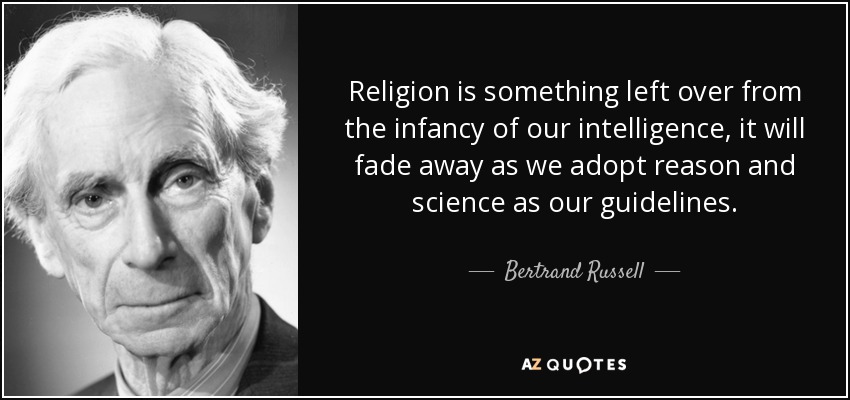
Manichaeism also modified the need to respect the name of Christ that was instilled by his childhood. His initial distaste for the Christian scriptures was gratified. He could regard the Bible as a crude and contaminated attempt at the truth. The Manichaean scriptures offered the name of Christ and what seemed to be a profound understanding of the universe and of human life.

Slave to Pleasure
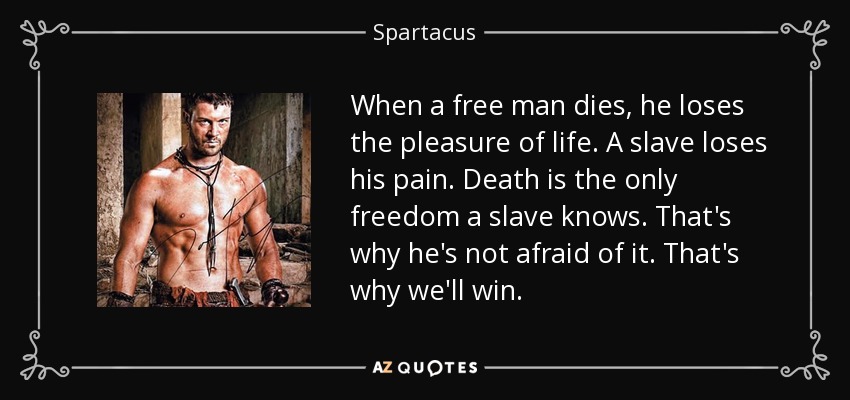
Augustine had joined the wildest young men of Carthage. They were called the "overturners" or the "destroyers." He became the delighted slave to pleasure in Carthage as a Manichee. Festivals celebrating the gods were used for drunken revelry. He took a partner. They soon were parents of a baby boy whom they named Adeodatus.

Augustine tried to hide his views from his mother, Monica. She threw him out of the house when she discovered them.

Monica had dreamed that her son would become a Christian. She continued to pray and plead for his conversion. She followed him to Carthage when he moved there to teach. She begged him not to go when Augustine was offered a professorship in Rome. He told her to go home and sleep comfortably in the knowledge that he would stay in Carthage. He boarded a ship for Rome when she left.

Rhetoric – Plato
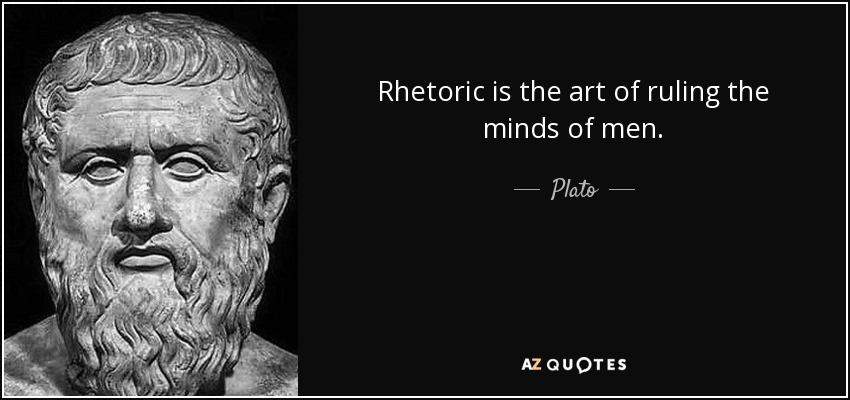
Augustine moved again after a year in Rome. He became the professor of rhetoric for the city of Milan. There he began attending the cathedral to hear the impressive oratory of Ambrose the bishop.

He kept attending because of Ambrose's power as a preacher. He soon dropped his Manichaeism in favor of Neoplatonism. This was the philosophy of both Roman pagans and Milanese Christians.

Pears

Augustine was struggling with himself. This struggle added to the emotional strain of forsaking his lover and the shift in philosophies. He had sought to overcome his fleshly passions for years. Nothing seemed to help.

It seemed to him that even his smallest transgressions were weighted with meaningful consequence. When he wrote about the pear stealing of his youth he reflected, "Our real pleasure consisted in doing something that was forbidden. The evil in me was foul, but I loved it."

“Take up and read.”
Benozzo Gozzoli

He wrestled anxiously about such matters one afternoon while walking in his garden. Suddenly he heard a child's sing-song voice repeating, "Take, read." (Tolle, legge) A collection of Paul's epistles that he'd been reading laid on a table.

He picked it up and read the first thing he saw: "Not in reveling and drunkenness, not in lust and wantonness, not in quarrels and rivalries. Rather, arm yourselves with the Lord Jesus Christ, spend no more thought on nature and nature's appetites" (Romans 13:13-14)

He later wrote, "No further would I read; nor needed I: for instantly at the end of this sentence, by a light as it were of serenity infused into my heart, all the darkness of doubt vanished away."

Cassiaco

Augustine's conversion sent shockwaves through his life. He resigned his professorship, dashed off a note to Ambrose telling of his conversion and retreated to a country villa in Cassiciacum with his friends, mother and his son, Adeodato.

There he continued discussing philosophy and churning out books in a Neoplatonist vein. He wrote the “Dialogs.”  He returned to Milan after a year to be baptized by Ambrose, then headed back to Thagaste to live as a writer and thinker.

He had lost his mother, his son and one of his closest friends by the time he reached his home town. The journey was lengthened by political turmoil.

These losses propelled Augustine into a deeper, more vigorous commitment. He established a lay ascetic community in Thagaste to spend time in prayer and the study of the Scriptures with his friends.

Church Ruins Annaba (formerly Hippo)
Augustine traveled to Hippo in 391 to see about setting up a monastery in the area. His reputation went before him. The story goes that Bishop Valerius put aside his prepared sermon and preached on the urgent need for priests in Hippo when he saw the renowned layman in church one Sunday.

The crowd stared at Augustine. They pushed him forward for ordination. Augustine was made a priest against his will. The laity thought that his tears of frustration were due to his wanting to be a bishop rather than priest. They assured him that good things come to those who wait.

Neo-Punic from Tunisia
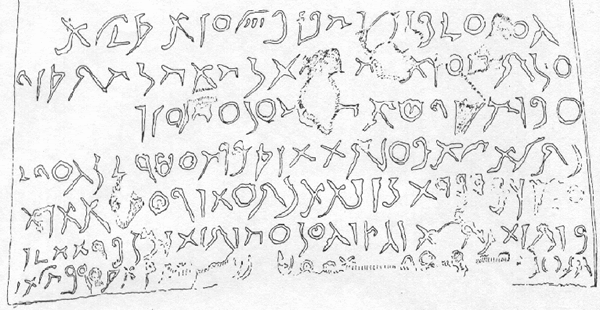
Valerius spoke no Punic. It was the local language from Phoenician sources. He quickly handed over teaching and preaching duties to his new priest. Augustine spoke the local language fluently. Augustine became bishop of Hippo within five years after Valerius died.

Dispute with Fortunatus
Church of St. Augustine
San Gimignano, Italy
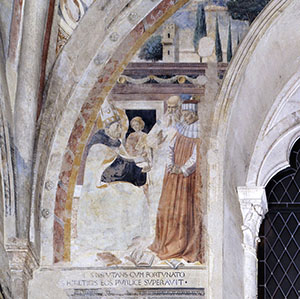
Guarding the church from internal and external challenges topped the new bishop's agenda. The church in North Africa was in turmoil. Though Manichaeism was already on its way out, it still had a sizable following.

Augustine knew its strengths and weaknesses. He debated Fortunatus, a former schoolmate from Carthage and a leading Manichaean at the public baths. The bishop argued against the errors in the doctrine. Fortunatus left town.

Dispute with the Donatists
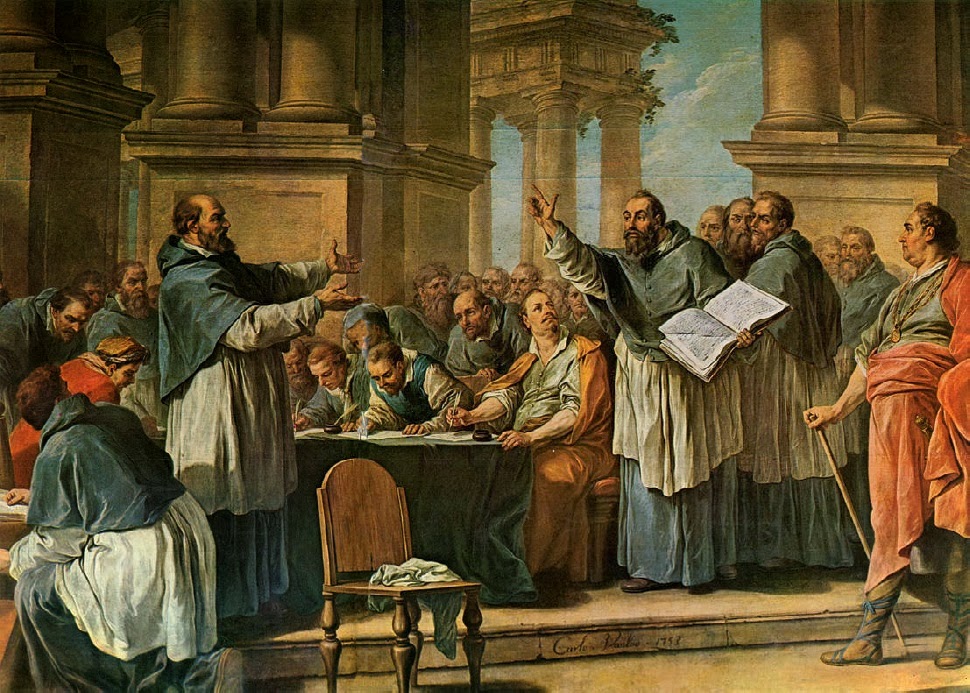
Donatism was more difficult to handle. It was a schismatic and separatist North African movement in the church. The Roman governor of North Africa had been lenient to the large Christian minority during his rule through the persecutions. 

“Traditors” is the root word for traitors.

He was satisfied when Christians handed over their scriptures as a token repudiation of their faith. Christians who did so were called traditors or “those who handed things over” by their critics. The critics were mainly from the lower class.

The Donatists were rigorists like the third century Novatianists. They held that the church must be a church of “saints”, not “sinners.” Sacraments administered by traditors were invalid.

No one without a past.


Donatists believed the Catholic Church had been compromised and that catholic leaders had betrayed the church during earlier persecutions. Augustine argued that catholicism was the valid continuation of the apostolic church.

He wrote scathingly, "The clouds roll with thunder, that the house of the Lord shall be built throughout the earth; and these frogs sit in their marsh and croak 'We are the only Christians!' "

None Righteous
Romans 3:10

The controversy came to a head as the imperial commissioner convened a debate in Carthage in 411 to decide the dispute. The commission had been appointed by Pope Militiades. Augustine's rhetoric refuted the Donatist doctrine. The commissioner pronounced against the group.

No Sin
1 John 1:8

The Donatists were repressed along with the Circumcellions. They condemned property and slavery. They advocated free love, canceling debt and freeing slaves.

The term "Circumcellions" was coined by others, based on "circum cellas euntes". They “go around units” because "they roved about among the peasants, living on those they sought to indoctrinate."

The condemnation of Donatism did not produce a time of rejoicing for the church. The year before the Carthage conference, the barbarian general Alaric and his troops sacked Rome.

Many upper-class Romans fled for their lives to North Africa. It was one of the few safe havens left in the empire. Augustine was given a new challenge. He wrote a defense for Christianity against claims that it had caused the empire's downfall by turning eyes away from Roman gods.

City of God

Augustine's response to the criticism came in “The City of God.” The work included 22 volumes. It took over 12 years to write. He argued that Rome was punished for past sins, not new faith.

His neo-Platonism provided a bridge to monotheism, but the convictions regarding the corruption of human nature and 'just war' allowed for the perpetuation of the fatalism that was so reflective of the polytheistic Roman order.

His lifelong obsession with original sin was fleshed out. His work formed the basis for the medieval mind. "Mankind is divided into two sorts," he wrote. "Such as live according to man, and such as live according to God. These we call the two cities… The Heavenly City outshines Rome. There, instead of victory, is truth."

Sin City

Pelagianism was another front Augustine had to fight to defend Christianity. Pelagius was an Irish monk. He gained popularity just as the Donatist controversy ended. He rejected the idea of original sin. He insisted instead that the tendency to sin is humankind's own free choice.

Jerome and Augustine saw Pelagianism as the ‘heresy of Pythagoras and Zeno.’ It amounted to the act of saying that slavery was not slavery. It was the ‘sin’ that had justified the overthrow of Babylon by Cyrus and the Achaemenid Persians.

Divine grace was not seen as necessary to do the will of God. The church excommunicated Pelagius in 417, but his banner was carried on by young Julian of Eclanum.

Julian took potshots at Augustine's character as well as his theology. He argued that Augustine and his other low-class African friends had taken over Roman Christianity. Augustine argued with the former bishop for the last ten years of his life.

Vandal Invasion

The Vandals invaded North Africa in the summer of 429. They met almost no resistance along the way. Hippo was one of the few fortified cities. It was overwhelmed with refugees.

The 76-year-old Augustine died in the third month of the siege. He was not killed by an arrow. He died from a fever.

His writings survived the Vandal takeover miraculously. His theology became one of the main pillars on which the church of the next 1,000 years was built.

And the Son
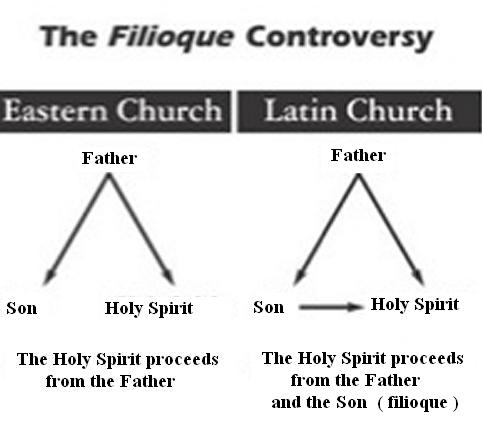
Some of his teachings have been disputed in the East. Theologians such as John Romanides have questioned his assertion regarding the degree of depravity in human nature and the Neo-Platonic argument regarding the names of God.

Theologians like Georges Florovsky in the Eastern Orthodox Church have shown significant appropriation of his writings.  The most controversial doctrine surrounding his name is the fililoque clause.

The clause regarding the procession of the Spirit added “from the Son” to the Nicene Creed. This clause has been rejected by the Orthodox Church.

Predestined to Original Sin?

Other disputed teachings include his views on original sin, the doctrine of grace and predestination.  Though considered to be mistaken on some points, he is still considered a saint.

He has even influenced Eastern Church Fathers like Gregory Palamas. Augustine "established anew the ancient Faith" according to his contemporary Jerome.


Lectionary Augustine of Hippo
wiki Augustine of Hippo
Christianity Today: Theologian Augustine
IEP Philosopher Augustine
Augustinian Augustine
Manichaeism
Persian Religion

Monday, June 24, 2019

Enjoy

6.27.19
Ava and Reese 

Enjoy
Freedom
享受自由 
Xiǎngshòu zìyóu
自由を享受する
Jiyū o kyōju suru
ps90
frui libertate

The afternoon breeze
blew through the trees
dispersing storm tossed leaves.

The place away from danger is a refuge.
Refugees flee to find safety for their use.

Like wolves we chose to move even in the night
to escape certain death as our plight.

This has been true from one generation to another.
War has been against your fellow man as brother.

It has driven non-combatants to a place that is other
than the one in which we had taken succor.

Spoils and taxes have driven war against some flutter
of threat created by news of some slaughtering snuffer.

War has to be limited to defense to be just.
The limitation will guide those who govern for us.

A thousand years in divine sight
are like one watch within the night.

We had been swept away like a dream.
Like the grass in the morning, we were green
then, we lost the moisture to feed our need.
We withered brown by the evening due to heat.

We consumed too much in displeasure.
We took beyond the seasoned measure.

We lost our faith for fear of wrath.
We lost our health upon this path.

We didn't change to meet the challenge.
Iniquity prevented the savagery to manage.

Guilt from secret sins held movement in check.
Power as a motive had become a train wreck.

Destruction makes sure the days are gone.
Years are shortened before they grow long.

The span of life is eighty years.
It's more like ninety when we shed fears with tears.

The sum of life is labor and sorrow
when we don't build law with love for tomorrow.

The power of production replaces wrath with math.
This is the power that civilization has.

Seek good, not evil, that you may live
as a model for living as one who gives.

Hate evil and love good for justice in the gate
to manage resources with patience in how to participate.

Who can be saved when judgment condemns the person?
Immortal strength selects statements that strengthen benign purpose.

Knowledge is like standing on a chair to get closer to the moon.
A step back for perspective will produce a fall with a consequential tune.

Different frames for perception produce a race
for perspective on how to rule out what is not the case.

The insect that lighted on the girl on a horse
was brushed away as the ordinary course
without remorse.

The pear blossom blooms in the early Spring.
The tree is seen as a beautiful thing.

Terrific thunder from the elder brother
produced good fortune unique to each other.

We have a high priest who has passed through the heavens.
Salvation from the Son of God lets us hold fast to our confession.

The one who serves Christ is acceptable for approval.
Slavery as protected by law has met with removal.

The Son has the power to take up life again.
The Spirit resurrects for the imminent presence to attend.

Variance in production with instruction from time
makes the value of our products seem sublime.

Learn from experience to teach yourself measure.
It is the gold which life does so highly treasure.

Replace the daze of affliction in adversity
with the ways of satisfaction in maturity.

Time turns mind back to the dust to say,
"Go back to earth like a child at play."

Who feels the power of your presence?
You are in the wonder of the divine essence.

Who loves the real feeling of true power?
You are growing in strength by the hour.

Teach us to value time for our hearts in wisdom.
We will learn to see mission with our vision.

How long will you wait?
Get this goal straight.

Be gracious with your love.
It is the message that came from above with the dove.

Satisfy us with your kindness in the morning,
so we may weather storms as life's adorning.

Make us glad by the measure of the days
in which we were afflicted in ways
that the endurance of adversity will be raised
as the emblem of virtue to be praised.

Show your work to your loved ones.
Your splendor will shine like the sun.

Productive action makes the power to alleviate distress.
The rule for production blends thought into action to eliminate mess.

May your grace be with us.
The fruit of labor will be discussed.

We see that we saw the soul as one
in the products of our love.

-----------------------

Psalm 90
Domine, refugium
Dominated, our refuge

1 Lord, you have been our refuge
from one generation to another.
2 Before the mountains were brought forth,
or the land and the earth were born,
from age to age you are God.
3 You turn us back to the dust and say,
"Go back, O child of earth."
4 For a thousand years in your sight are like yesterday when it is past
and like a watch in the night.
5 You sweep us away like a dream;
we fade away suddenly like the grass.
6 In the morning it is green and flourishes;
in the evening it is dried up and withered.
7 For we consume away in your displeasure;
we are afraid because of your wrathful indignation.
8 Our iniquities you have set before you,
and our secret sins in the light of your countenance.
9 When you are angry, all our days are gone;
we bring our years to an end like a sigh.
10 The span of our life is seventy years,
perhaps in strength even eighty;
yet the sum of them is but labor and sorrow,
for they pass away quickly and we are gone.
11 Who regards the power of your wrath?
who rightly fears your indignation?
12 So teach us to number our days
that we may apply our hearts to wisdom.
13 Return, O Lord; how long will you tarry?
be gracious to your servants.
14 Satisfy us by your loving-kindness in the morning;
so shall we rejoice and be glad all the days of our life.
15 Make us glad by the measure of the days that you afflicted us
and the years in which we suffered adversity.
16 Show your servants your works
and your splendor to their children.
17 May the graciousness of the Lord our God be upon us;
prosper the work of our hands;
prosper our handiwork.

-----------------------
Romans 14:18

The one who serves Christ is acceptable to God for human approval.

-----------------------

The one who serves Christ is acceptable for approval.
Slavery as protected by law has met with removal.

=================
John 10:18

'The Father loves me, because I lay down my life in order to take it up again. I laid it down of my own accord. I have the power to lay it down. I have the power to take it up again. I have received this command from my Father.'

-----------------------

The Son has the power to take up life again.
The Spirit resurrects for the imminent to attend.

=================
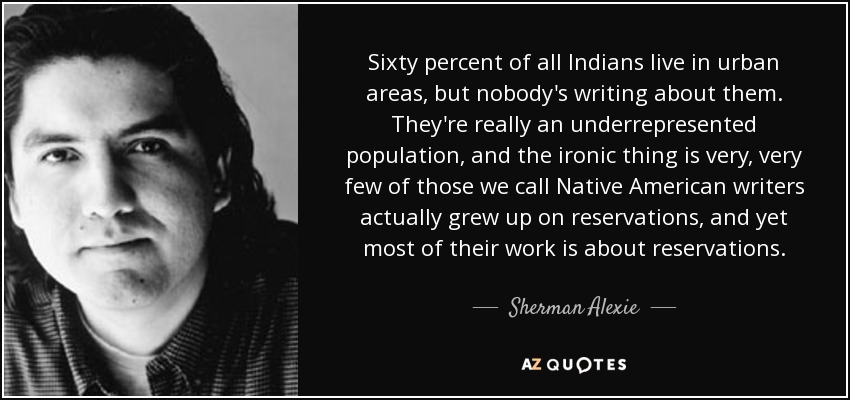
Reservations
----------------------
Ps.90:1

Lord, you have been our refuge
from one generation to another.

----------------------


Cornelius Hill
b. November 13, 1834, tribal land in Wisconsin
d. January 26, 1907, Oneida, Wisconsin

He was ordained to the diaconate on June 27, 1895.

The native name for Cornelius Hill  was Onan-gwat-go (“Big Medicine”). He was the last hereditary chief of the Oneida Nation. He also served as a priest for the Episcopal Church in the United States of America in his last years.

Cornelius was born on tribal lands in Wisconsin in 1834. His parents belonged to the Oneida tribe. The Oneida were with the Iroquois confederacy in New York state. They were known for their longhouses and communal lifestyle.

They were not opposed to settlement or agriculture. The period of time into which he was born was characterized by significant change in the relations between Native and European Americans.

About 80,000 members of the Cherokee, Creek, Chickasaw, Choctaw and Seminole Nations lived on land that many Americans felt could be more profitably farmed and settled by non-Indians by the early 1830’s.

All five nations had signed treaties with the US government guaranteeing the right to live in their ancestral lands and maintain their sovereign systems of tribal government.  These nations were unwilling to negotiate new treaties with the federal government that would give away any of their territory.

President Andrew Jackson decided that a new federal policy would be necessary in order to remove the natives from their lands.  He supported the Removal Act of 1830. This gave the President the right to make land "exchanges" by forcibly removing the five tribes from their ancestral lands against their will.

The men who created the reservation system believed that if natives could be confined to one particular geographical place reserved for them they could become 'civilized" and assimilated into American life.

They could be encouraged to stop being nomadic and to become settled like white men. The reservations were to make sure the remaining tribes were converted to Christianity, taught English, sewing and small-scale farming. The goal was to make them Americanized in the European American way.

----------------------
Amos 5:15

Hate evil and love good.
Establish justice in the gate.
It may be that the LORD, the God of hosts,
will be gracious to the remnant of Joseph

 ----------------------

An Episcopal missionary by the name of Rev. James Lloyd Breck escorted the ten year old Cornelius and two other boys to Nashotah House to learn English in 1843. The boys were to be educated by Episcopal bishop Jackson Kemper and other missionaries for five years.

Hill became a chief for the Bear clan as a teenager at a council of Oneida from New York, Canada and Wisconsin. He was given the responsibility for distributing the annuity money from previous treaties among his people at age 18.

He was later given responsibility for taking the census of tribal members. The number of members doubled in Wisconsin in the course of his office. Hill went to Albany, New York and Washington, D.C. to advocate for his people several times.

Federal Law

The Indian Trade and Intercourse Act of 1790 had placed nearly all interaction between Indians and non-Indians under federal control. A judge from a state could not arbitrate  disputes.

The jurisdiction for the US government included the buying and selling of Indian land. It also established new boundaries for Indian Country, protected Indian lands against non-Indian aggression, subjected trade with Indians to federal regulation, and stipulated that injuries against Indians by non-Indians was a federal crime.

The conduct of Indians among themselves while in their country was left to the tribal leadership.  Indian people saw their lands greatly diminished between 1763 and 1889 despite the initial attempt to respect their lands and rights.

Eastern and Plains Indian nations lost the range of their ancestral homeland. Nations on the West Coast also suffered great losses.  Oregon tribes lost the majority of their territory beginning in 1841, continuing in 1864 and ending in 1880.

California native tribes suffered a similar fate beginning with the 1848 discovery of gold. The loss of land continued with the 1850’s negotiations of eighteen treaties in northern California that were never ratified by the U.S. government. The rapid loss of land decreased as the 19th century came to a close.

The Dawes Act of 1887 divided tribal allocations into individual properties. It was a way of reducing the land protected by treaties. It was also part of the movement to assimilate native Americans in European American traditions.

The major distinction between the two cultures was that of settled versus nomadic lifestyles. The reservations and the individual land allocations were a way to insist on the right to private property.
European American Culture

Tribal land was broken up and given to individuals.  These plots could not be sold for 25 years, but reservation land left over after the distribution of allotments could be sold to outsiders. The US government sold the "excess" land to whites to help expose Indians to the civilizing effects of mainstream American society after the allotment process was completed.

[Citizens or not, the Apostles insisted on abstinence from meat sacrificed to idols. It was a more contentious issue than it may have seemed. The author of the letter to the Romans was moving Christendom away from the apostolic injunction against said sacrifice.]

---------------------
Romans 14:17

The kingdom of God is not food and drink. It is righteousness, peace and joy in the Holy Spirit.

---------------------

Cornelius used his knowledge of tribal history from New York and his communication skills to defend native allocations.

Rev. Edward A. Goodnough worked among the Oneidas as a missionary and teacher from 1853 to 1890. Hill had served with him as an organist and interpreter for Episcopal services. He thought ordination would bring additional authority among whites to help him become a bridge between the cultures.

Hill and Goodnough's successor, Rev. Solomon S. Burleson, was also a lawyer and doctor. He had negotiated with the federal government to secure a hospital for the reservation in 1893. The Sisters of the Holy Nativity for nuns were designated to work in the hospital and educate tribal members.

Agriculture

Hill also helped tribal members learn new farming techniques and secure machinery. Women made baskets and beadwork for sale. They learned to make lace to support themselves in the modernized world after 1900.

Tribal members had volunteered at a limestone quarry one day a week since 1870. They laid the cornerstone for a new gothic stone chapel in order to dress stone for a new church building in 1887.

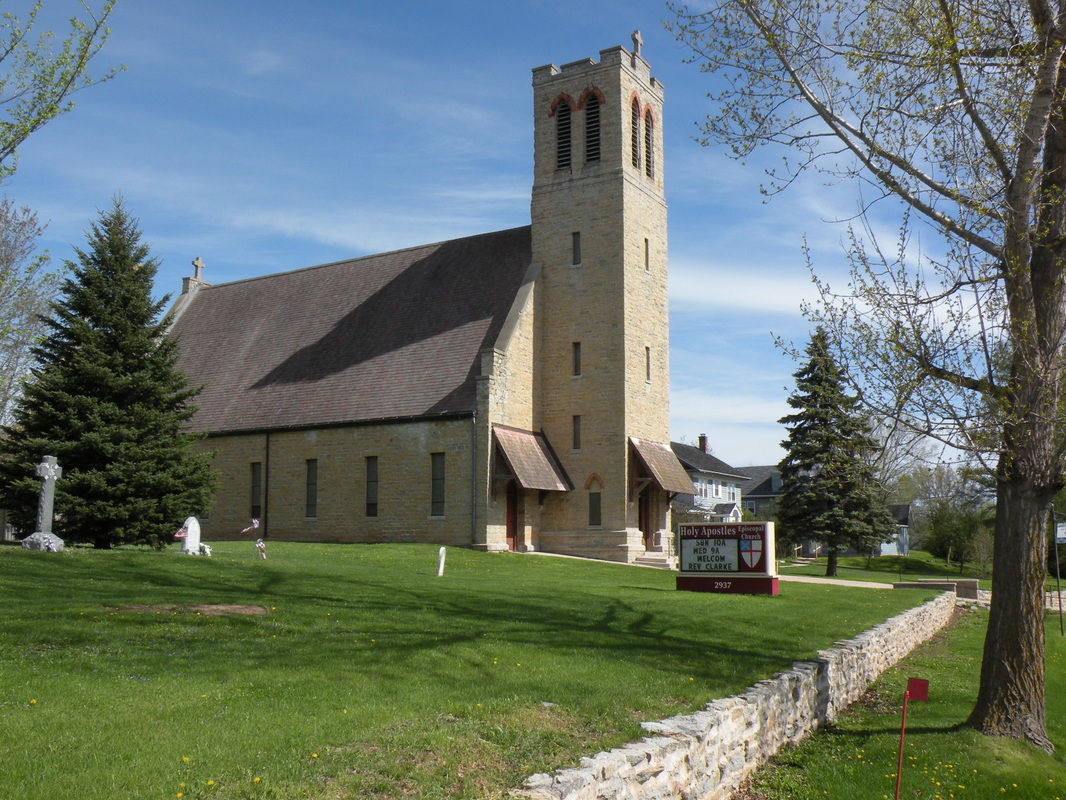
They named the building the Church of the Holy Apostles.

Church of the Holy Apostles
Oneida, Wisconsin

The Church of the Holy Apostles in NY was the oldest Indian mission of the Episcopal Church. The name traces its roots to the earliest Anglican missionaries from the Church of England and the Society for the Propagation of the Gospel.  The mission was established in the area that would later become central New York around Oneida Lake.

Bishop John Henry Hobart of New York licensed Mr. Eleazer Williams as Lay Reader, Catechist and Schoolmaster to the Oneida about 1815 at the earnest request of the Oneida chiefs.

Williams would become the first Episcopal missionary in Wisconsin. He played a major role in the removal of the Oneida from New York to Wisconsin.

The Oneida Indians settled and built a log church building in 1825 in the vicinity of Duck Creek after removing from New York in the 1820’s. Duck Creek was about 10 miles (16 km) southwest of Green Bay.

Williams also translated parts of the Prayer Book and certain hymns into the Mohawk tongue.
He wrote a letter to the Domestic and Foreign Missionary Society, the missionary arm of the Episcopal Church, on December 2, 1822.  He requested the establishment of a mission.

The Rev. Norman Nash was appointed as an official missionary on May 22, 1823 for the area around Green Bay. He did not arrive until 1825. Williams had been ordained Deacon in 1824 and undoubtedly held services at Oneida among the Indians.

A larger wood frame "Gothic" church building was built by the Oneidas after out-growing the log church.  The laying of the cornerstone on August 7, 1838 was by Bishop Jackson Kemper, the first Missionary Bishop of the Episcopal Church. It was his first official act in the territory.

The third and present stone church building was built with the support of the Rev. E. A. Goodnough.  The building plan was prepared by the Rev. Charles Babcock, who was also an architect, as a gift to the mission.

------------------------
John 10:7

Jesus said to them, ‘Very truly, I tell you, I am the gate for the sheep.’

------------------------

Bishop Charles C. Grafton ordained Hill a deacon on June 27, 1895. Hill was ordained as a priest in 1903. He was the first of his people to serve in the office. He repeated his vows in his native language.

Hill died on January 26, 1907. He was buried on the reservation in the Church of the Holy Apostles graveyard.

Fire from a lightning strike on July 17, 1920 destroyed the gothic stone church. It was rebuilt in a similar design.

The Oneida continued to revere Hill's wisdom and sanctity. They related tales about him to Works Progress Administration historians during the Great Depression.

Cornelius Hill
科尼利厄斯和力
科尼利厄斯和力

科 Ke       rules                        科  ka          course           Ko   こ-  コ-           Go  고  the         
尼  ni       nun                        尼   ni            nun                ne     ね    ネ          nel  넬  Nell                   
利  li         to benefit              利   ri            profit              ri      り    リ          lyo  료  ryo         
厄  e         distressed              厄   yaku      bad luck          a      あ    ア          Hil   힐  hill                   
斯  si         this                       斯   shi          this                 su    す    ス                             
和  He       to blend                和  wa           harmony        Hi     ひ     ヒ             
力   li         power                  力   ryoku      power            ru     る     ル                               

-----------------------

Productive action makes the power to alleviate distress.
The rule for production blends thought into action to eliminate mess.                                                   

===============

wiki Cornelius Hill
wiki Church of the Holy Apostles, Oneida, Wisconsin
Turning Points in Wisconsin History: Settlement
Turning Pts: Indians in the 20th c.
HistoryToday: Native Americans and the Federal Gvt.
http://americanindiantah.com/…/nar_19thcenturyrelations.html


Sunday, June 23, 2019

Stand

6.24.19
Jordan River

Stand
for
Faith
坚持信念 
Jiānchí xìnniàn
信仰を表す 
Shinkō o arawasu
ps82
Sta in fide

God stood in the council of the empyrean
to give judgment among the gods of the egalitarian region.

"How long will you judge unjustly
and show favor to the deceptive so bluntly?"

The remembrance of dedication to faith with worship in the temple
was the motivation to give thanks for grace as a benign example.

Let the messenger prepare the way before me. 
You are the temple of the covenant for the world to see.

The gracious baptist saw his service as a gift
that purified perception for perspective with thrift.

The soldiers demanded, 'What are we to do?'
John said, 'Be content with the wages given to you.

'Don't accuse any falsely for fun.
Do violence wrongly to no one.'  

The terms for engagement exist between combatants.
Defense from attack doesn't need a patent.

Instruct the misfit in the way of defense.
The humble remember the jumble in common sense.

Expect gratitude for charity to the poor.
Don't forget you can show the disrespectful to the door.

Discontent is used to promote rebellion.
The rebel is all too often an ungrateful hellion.

Watch for those who create facts.
They promote darkness of mind as an act.

The foundations of the earth could be shaken
and they will assure you that it was a fault of your making.

Now I say to you, 'You are gods
as children of the Most High, the Maker of odds.

'The power of deceit will end like that in mortal plans
when the hour of conceit falls to normal scans.'  

Arise God to rule the earth. 
Let your light show the measure of wonder in worth.

------------------------

82 Deus stetit
God stood

1 God takes his stand in the council of heaven;
he gives judgment in the midst of the gods:
2 "How long will you judge unjustly,
and show favor to the wicked?
3 Save the weak and the orphan;
defend the humble and needy;
4 Rescue the weak and the poor;
deliver them from the power of the wicked.
5 They do not know, neither do they understand;
they go about in darkness;
all the foundations of the earth are shaken.
6 Now I say to you, 'You are gods,
and all of you children of the Most High;
7 Nevertheless, you shall die like mortals,
and fall like any prince.'"
8 Arise, O God, and rule the earth,
for you shall take all nations for your own.

--------------------------
===================
--------------------------

Malachi 3:1

I am sending my messenger to prepare the way before me. The Lord whom you seek will suddenly come to his temple. The messenger of the covenant in whom you delight is coming, says the LORD of hosts.

--------------------------

Let the messenger prepare the way before me.
You are the temple of the covenant for the world to see.

===================

John 3:25-28

A discussion of purification arose between John's disciples and a Jew. They came to John and said to him, 'Rabbi, the one who was with you across the Jordan to whom you testified is baptizing here. All are going to him.' John answered, 'No one can receive anything except what has been given from heaven. You yourselves are my witnesses that I said, "I am not the Messiah, but I have been sent ahead of him."

--------------------------

The gracious baptist saw his service as a gift
that purified perception for perspective with thrift.

===================

Luke 1:57-63

The time came for Elizabeth to give birth. She bore a son. Her neighbors and relatives heard that the Lord had shown his great mercy to her and they rejoiced with her.

They came to circumcise the child on the eighth day. They were going to name him Zechariah after his father. His mother said, 'No. He is to be called John.' They said to her, 'None of your relatives has this name.' They began to motion to the father to find out what name he wanted to give him. He asked for a writing tablet and wrote, 'His name is John.' All of them were amazed.

--------------------------

The remembrance of dedication to faith with worship in the temple
was the motivation to give thanks for grace as a benign example.

===================

Luke 3:14

The soldiers demanded of John, saying 'What shall we do?' He said to them, 'Do violence to no man. Don't accuse any falsely. Be content with your wages.'

--------------------------

The soldiers demanded, 'What are we to do?'
John said, 'Be content with the wages given to you.

'Don't accuse any falsely for fun.
Do violence to no one.'

===================

Prayer


Nativity of John the Baptist

The Nativity of John the Baptist is a Christian feast day that celebrates the birth of the prophet who would foretell the coming of the Messiah in the person of Jesus. John would baptize Jesus later.

The biblical account for the birth of John comes from the Gospel of Luke. Zechariah and Elizabeth were to become the parents. Zechariah was a priest. Elizabeth had been barren. They were both beyond the age for bearing a child.

Zechariah was chosen by lot to offer incense at Golden Altar in the Holy Place during his rotation to serve at the temple in Jerusalem. The Archangel Gabriel appeared to him and announced that he and his wife would give birth to a child. They should name him John though the name was not familiar in their families. The child would grow to go before the Lord like "Elijah."

Zechariah was rendered speechless until the time of John's birth because he did not believe Gabriel's message.  His relatives wanted to name the child after his father at that time. Elizabeth said that he was to be named John. When the relatives appealed to Zechariah, he wrote 'His name is John.'  He recovered his ability to speak at this point. (Luke 1:5–25; 1:57–66)

When the angel Gabriel appeared to the Virgin Mary to inform her that she would conceive of the Holy Ghost at the Annunciation, he also informed her that her cousin, Elizabeth, was already 6 months pregnant.  (Luke 1:36)  Luke's Gospel recounts that the baby "leapt" in Elizabeth's womb at the greeting of Mary (Luke 1:44)

The Nativity of John the Baptist is celebrated on June 24. This is 3 months after the celebration of the Annunciation (March 25). Elizabeth had been in her 6th month of pregnancy. The nativity of John comes 6 months before the Christmas celebration for the birth of Jesus.

The liturgy has proximity to the summer solstice for the solar cycle (June 21). The Baptist is the Forerunner to the Christ. The fact of the feast falling around the time of the solstice is considered by many to be significant insofar as it recalls the Forerunner's statement for Jesus, "He must increase, but I must decrease" (John 3:30).

The Nativity of John is one of the oldest festivals of the Christian Church. It was listed by the Council of Agde in 506 as one of that region's principal festivals. It was held as a day of rest. Three masses were celebrated like Christmas. One came at the vigil. One was at dawn. The third came at mid-day.

The Nativity is not a widespread public holiday except in Quebec and Puerto Rico. It is a high ranking liturgical feast for the Roman Catholic, Anglican and Lutheran Churches. It has been celebrated since 1970 as a Solemnity in the Roman rite. It takes precedence over a Sunday on which it happens to fall.

The Baptist is usually called the Forerunner in the Eastern Orthodox Church and other Eastern Christian Churches. The  title indicates that the purpose of his ministry was to prepare the way for the coming of Jesus Christ.

The nativity is also celebrated on June 24 in the Byzantine rite. It is a major feast day celebrated with an All-Night Vigil. It has an Afterfeast of one day. The feast always falls during the Apostles' Fast.
"Saint John's fires" are lighted on mountains and hilltops on the eve of his feast all over Europe.  Saint John's Day is considered in ancient folklore one of the great "charmed" festivals of the year as the first day of summer.

Hidden treasures are said to lie open in lonely places, waiting for the lucky finder. Divining rods should be cut on this day. Herbs are given unusual powers of healing, which they retain if they are plucked during the night of the feast.

They call these herbs Johanneskraut (St. John's herbs) in Germany. People bring them to church for a special blessing.  It is an ancient superstition that on Saint John's Day witches and demons are allowed to roam the earth in Scandinavia and in the Slavic countries. Children go around and demand 'treats', straw figures are thrown in a fire and much noise is made to drive the demons away as at Halloween.

Luke said that John grew "in the wilderness until the day of his showing to Israel." The people of the Qumran settlement, which produced the Dead Sea Scrolls, sometime used the term "living in the wilderness" to refer to residing in their community at Qumran near the Dead Sea. It has been suggested that John spent some of his early years being educated at Qumran.

John the Baptist was a Jewish preacher in the time of Pontius Pilate (26-36) according to the Jewish historian Josephus.  He called the people to repentance and to a renewal of their covenant relation with God. He was imprisoned and eventually put to death by Herod Antipas. Antipas was the son of Herod the Great, the king when Jesus was born.

John was executed for denouncing Herod's marriage to Herodias, the wife of his still-living brother Philip. Herod had divorced his first wife in order to marry Herodias. His first wife was the daughter of King Aretas of Damascus. Aretas started a war with Antipas. Josephus said that this was regarded by devout Jews as a punishment for Herod's murder of the prophet John.

John was ascetic. His birth 6 months before that of Jesus represents the decrease in the light of day. His asceticism was directed by prayer and the study of scripture to inform his moral instruction to people while he offered baptism as a gift for purification in rebirth.

He was a preacher. His use of scripture in accord with the tradition of the prophetic community made him a prophet. He was the prophet that foretold the coming of Christ as Jesus.

wiki John the Baptist
wiki Nativity of John
Lectionary Nativity

Wednesday, June 5, 2019

Find

6.6.19

Crape Myrtle

Take
Refuge
避难 
Binan
避難所を取る 
Hinansho o toru
ps 31

Take refuge.
Safety is your due.

I have taken refuge in you.
You help me to find that which is true.

Don't make me regret my trust.
I feel like this will last beyond the dust.

Bring me civility.
Civility cultivates fertility.

Please listen.
My sweat glistens.

The clock is ticking.
My pulse is quickening.

Time is escaping.
Reality is quaking.

Be my defense.
Let me see what is sure about sense.

You are my rock.
You walked the walk.

My foundation is sure.
My intention is pure.

Lead me in love.
Love me until I've won.

Limit weapon use to defense.
Offense is not what's meant.
Let defense be defensive in intent.

Non-violence isn't offensive
but it doesn't rule out aggression.

Aggression isn't an excuse for violence,
cruelty in punishment or violet silence.

Deliver me from the trap they have set.
I won't enter into something I have to regret.

They have been exploiting trust.
They promised protection that would not rust.

You are my strength.
The measure extends beyond length.

I commend my spirit to your care.
Your love has led me to dare
to share.

You have redeemed me with truth.
Meaning gives trust that soothes.

My time is yours.
Design divined cures.

Inside the ah of the aha experience
lies the immense pleasure of group expedience.

I saw a man on a red horse in the night.
He sat there among the myrtle trees in the moonlight.

Different colored horses of different kinds
stood behind him as the light shone through the tree lines.

I asked what it was that they were.
I was told that 'They were sent to patrol the earth.'

Help me to find independence.
Freedom in the law is sent from heaven.

Deliver me from deception and oppression.
The state created by deceit is not worthy of leaven.

The immaterial view of matter as a word
sees the particulars of general abstraction inferred.

The Healer was asked to heal the servant of the officer.
His word was enough. Faith was the power that cured her. 

Watch yourself for the sake of your prayers.
The end is near for this state of affairs.

There was one like the Son of Man seated on the cloud.
He had a crown on his head. His hand gripped a haft like a vow. 

A tree may sprout again when it is cut down.
A mortal body does not rise after it dies with or without renown.

Joseph asked Pilate for the body of Jesus. 
Pilate gave it over to entomb to protect the public from diseases.

Mary saw the light when she went to the tomb.
The body was gone. There was nothing but room.

Jesus rose from the dead as he had said.
He left the tomb that had a slab for his bed.

Let your light shine through me.
Your joy in my face will be seen.

Your kindness will redeem me.
Your redemption will be believed.

I have taken refuge in you.
You kept me from feeling blue.

Safety is your due.
Take refuge.

------------------

Psalm 31
In te, Domine, speravi
In you, Dominated, I trust

1 In you, O Lord, have I taken refuge;
let me never be put to shame;
deliver me in your righteousness.
2 Incline your ear to me;
make haste to deliver me.
3 Be my strong rock, a castle to keep me safe,
for you are my crag and my stronghold;
for the sake of your Name, lead me and guide me.
4 Take me out of the net that they have secretly set for me,
for you are my tower of strength.
5 Into your hands I commend my spirit,
for you have redeemed me,
O Lord, O God of truth.
6 I hate those who cling to worthless idols,
and I put my trust in the Lord.
7 I will rejoice and be glad because of your mercy;
for you have seen my affliction;
you know my distress.
8 You have not shut me up in the power of the enemy;
you have set my feet in an open place.
9 Have mercy on me, O Lord, for I am in trouble;
my eye is consumed with sorrow,
and also my throat and my belly.
10 For my life is wasted with grief,
and my years with sighing;
my strength fails me because of affliction,
and my bones are consumed.
11 I have become a reproach to all my enemies and
even to my neighbors,
a dismay to those of my acquaintance;
when they see me in the street they avoid me.
12 I am forgotten like a dead man, out of mind;
I am as useless as a broken pot.
13 For I have heard the whispering of the crowd;
fear is all around;
they put their heads together against me;
they plot to take my life.
14 But as for me, I have trusted in you, O Lord.
I have said, "You are my God.
15 My times are in your hand;
rescue me from the hand of my enemies,
and from those who persecute me.
16 Make your face to shine upon your servant,
and in your loving-kindness save me."
17 Lord, let me not be ashamed for having called upon you;
rather, let the wicked be put to shame;
let them be silent in the grave.
18 Let the lying lips be silenced which speak against
the righteous,
haughtily, disdainfully, and with contempt.
19 How great is your goodness, O Lord!
which you have laid up for those who fear you;
which you have done in the sight of all
for those who put their trust in you.
20 You hide them in the covert of your presence from those
who slander them;
you keep them in your shelter from the strife of tongues.
21 Blessed be the Lord!
for he has shown me the wonders of his love in a
besieged city.
22 Yet I said in my alarm,
"I have been cut off from the sight of your eyes."
Nevertheless, you heard the sound of my entreaty
when I cried out to you.
23 Love the Lord, all you who worship him;
the Lord protects the faithful,
but repays to the full those who act haughtily.
24 Be strong and let your heart take courage,
all you who wait for the Lord.

------------------------------

Zechariah was the 11th of the 12 Minor Prophets. He was a prophet in the Kingdom of Judah. He was of priestly extraction like the prophet Ezekiel.

His career began in the 2d year of Darius, King of Persia (520 BCE). His greatest concern was with the building of the Second Temple.

The Book of Zechariah recalls the history of nation in order to present a warning to the generation of the time. A series of 8 visions followed each other in a single night. The visions presented a symbolic history of Israel. Joshua was crowned to indicate that the kingdoms of the world were sanctified by the Messiah.

The purpose for the book is theological and pastoral as well as historical. God is present in good deeds like the building of the Second Temple. The deeds are accomplished by the power of the Spirit.

The story of Zechariah's vision of horses among myrtle trees is in the first chapter of his book. The flower for the myrtle tree is red. The berry that it produces is the same color.

wiki Zechariah
wiki Book of Zechariah
Zechariah and the Myrtle Tree

Zech. 1:8-10

I saw a man riding on a red horse in the night! He was standing among the myrtle trees in the glen. Behind him were red, sorrel and white horses. Then I said, 'What are these, my lord?' The angel who talked with me said to me, 'I will show you what they are.' The man who was standing among the myrtle trees answered, ‘They are those whom the LORD has sent to patrol the earth.’

--------------------------

I saw a man on a red horse in the night.
He sat there among the myrtle trees in the moonlight.

Different colored horses of different kinds
stood behind him as the light shone through the tree lines.

I asked what it was that they were.
I was told that 'They were sent to patrol the earth.'

===================

Rev. 14:14

There was a white cloud. Seated on the cloud was one like the Son of Man with a golden crown on his head and a sharp sickle in his hand!

--------------------------

There was one like the Son of Man seated on the cloud.
He had a crown on his head. His hand gripped a haft like a vow.

===================

Matt. 8:13

Jesus said to the centurion, ‘Go. Let it be done for you according to your faith.’ The servant was healed in that hour.

--------------------------

The Healer was asked to heal the servant of the officer.
His word was enough. Faith was the power that cured her.

===================

Conversion of Self

Ps.31:21

Blessed be the Lord
for he has shown me the wonders of his love
in a besieged city.

Ini Kopuria
b. 1880 Maravovo, Guadalcanal
d. 6.6.1945 Maravovo, Guadalcanal
Lectionary

Ini Kopuria was a police officer from Guadcanal in the Soloman Islands. He formed the Melanesian Brotherhood in 1925 to declare the gospel of Jesus Christ in Melanesia.

Maravovo, Guadalcanal

Ini Kopuria was born in Maravovo on Guadalcanal. He looks like a man of at least sixty in his photo.
Maravovo is a village on the northwest tip of the island. The island is mainly covered in dense tropical rainforest and has a mountainous interior.

Guadalcanal is one of the Solomon Islands. These are located in the south-western Pacific, northeast of Australia.

Guadalcanal

Guadalcanal is the principal island in the nation of Solomon Islands.

Solomon Islands

The Solomon Islands are a sovereign state made up of 6 major islands and over 900 smaller islands in Oceania.

The first European to visit the islands was the Spanish navigator Alvaro de Mendana de Neira from Peru in 1568.

Some of the earliest and most regular foreign visitors to the islands were whaling vessels from Britain, the United States and Australia. They came for food, wood and water from late in the 18th century. They took aboard islanders to serve as crewman on their ships.

Relations between the islanders and visiting seamen were not always good. Sometimes there was violence and bloodshed.

Missionaries began visiting the Solomons in the mid-19th century. They made little progress at first. ‘Blackbirding’ was the brutal recruitment or kidnapping of laborers for the sugar plantations in Queensland and Fiji.

The cruelty of the practice led to a series of reprisals and massacres. The evils of the slave trade prompted the United Kingdom to declare a protectorate over the southern Solomons in June 1893.

More outlying islands were added to the protectorate in 1898 and 1899. The remainder of the archipelago was transferred to British administration from German jurisdiction in 1900. The islands of Buka and Bougainville remained under German administration as part of German New Guinea.

Traditional trade and social intercourse between the western Solomon Islands of Mono and Alu and the traditional societies in the south of Bougainville continued without hindrance.

Missionaries settled in the Solomons under the protectorate. Several British and Australian firms began large-scale coconut planting in the early 20th century. Economic growth was slow. Islanders benefited little.

Most planters and traders were evacuated to Australia and most cultivation ceased with the outbreak of the Second World War. Some of the most intense fighting of the war occurred in the Solomons.

The most significant of the Allied Forces' operations against the Japanese Imperial Forces was launched on 7 August 1942, with simultaneous naval bombardments and amphibious landings on the Florida Islands at Tulagi[18] and Red Beach on Guadalcanal.

Oceania

Oceania includes Australia, New Zealand, Melanesia, Micronesia and Polynesia.

Maravo, Guadalcanal

The population for Maravovo is Anglican. This status was the result of the work of Bishop Selwyn and Bishop Patteson of the Anglican Church.

Bishop Selwyn established the community in New Zealand as a means to propagate the gospel to surrounding areas. The islands of Melanesia were declared to be part of the mission in 1848. The area was declared a separate See in 1854.

History
Melasian Brotherhood

Bishop Patteson founded a school for the education of native Christian workers to answer the call to evangelize the people in the area. He was adept at language. He learned twenty-three of the languages spoken in the Polynesian and Melanesian Islands of the South Pacific. He was consecrated Bishop of Melanesia in 1861.

Charles Elliot Fox was a British missionary in Melanesia. He was educated in New Zealand and graduated from the University of New Zealand in 1901. He received a degree in theology from St. John's College in Aukland in 1902.

He joined the staff of the Anglican Melanesian Mission in 1903 and was ordained the same year. Fox lived and worked in most of the islands of the Solomon chain, on the Banks and in the New Hebrides during his more than seventy years of service as a missionary and teacher.

---------------

Zech. 1:10

So the man who was standing among the myrtle trees answered, 'They are those whom the LORD has sent to patrol the earth.'

----------------

Guadalcanal is a large island. It is more easily accessible than others. Ini Kopuria was influenced to a peculiar degree by the forces shaping Melanesian history. He was baptized at Maravovo when he was a student at a small all male school. He was a dedicated and intelligent student. He possessed depth of personality and a thoughtful disposition.

His years at school were spent in daily contact with white Christian men and women. It was a racially integrated community that proved to be formative in Ini's career and character. The details of the kind of life he led there are relative to understanding his life.

S. Barnabas' School was on Norfolk Island. It was the forerunner of the later schools in the islands themselves. It had been established by Bishop Patteson as the training-ground for Melanesians who were expected to return as teachers to their own islands.

The boys who were brought by the mission ship, the Southern Cross, from the various islands, remained at school for two years. They were allowed to return home, either permanently, or for a six months' holiday before a further period of training.

History of the Brotherhood
Anglican History

Life was disciplined with respect for an Anglo-Catholic culture. The Spanish had been to the area first. They had established a cultural integration with the natives. The Anglican tradition was adapted by Bishop Patteson. The school set the stage for the formation of the Brotherhood.

The Brotherhood was reminiscent of the Franciscan movement of thirteenth century Europe given differences in time and place. It began with the great change that dedication to God made in the life of one person.

It was followed by the gathering round of a group similarly bound. Lady Poverty was taken as a wife. They took no payment for their service except for food and a night's lodging.

The Brothers went to those whom the Church had not yet been able to reach. They preached in untouched places or among those who had grown lukewarm. They brought comfort and healing for body, mind and soul with love and joy for the ideal. They visited the lepers and tended the sick.

The power of the community worked out like that in the days of the Apostles. It has continued to do so down to our own days. "Whenever Christianity has struck out a new path in her journey it has been because the personality of Jesus has again become living and a ray from His Being has once more illuminated the world." (Bossuet.)

That is because of those who see in Christ the heart and purpose of God. They have been so filled with gratitude that they have been impelled to do what they could. They have learnt to understand "down to its very depths, the theory of thanks..."(G. K. Chesterton: S. Francis) That theory extends its depth to a bottomless abyss.

Each of the seventeen daily bells demanded some action promptly carried out. There was work in the school, garden, field, house, kitchen, workshop and dairy. Labor formed part of the teaching before time was given for the students to feel as free as if they were at home.

Saturday was a holiday. They could fish or tend their own gardens. They could occupy themselves in their own residence. They could play football or cricket.

White and brown lived and worked as a community. Meals were taken in common in the hall. Patteson's plan for the education of the native mind insisted on constant contact with his white friends at work or play. This was always carried out. The students found instructors ready to help them with any problem that might arise.

A bell called for prayers morning and evening in the beautiful Patteson Memorial Chapel daily. This was unique in its place. It was not the building one would expect in the heart of the Pacific. It was also unique for the time.

The Chapel was crafted with attention to detail at a time when architecture in England was at a very low level. The materials were rich, yet used with simplicity and restraint. There was a combination of European art with native inlay work on altar and stalls which would have inspired the heart of Bishop Patteson.

He delighted in the treasures of Europe and valued the beauty inherent in the minds of his Melanesian students. It was expected that Ini on leaving school would become a teacher among his own people. He made a different choice.

His sense of duty called him to join the native police force. His life with the police was unhappy at first. The strict discipline for secular public service irked him. The conditions were foreign to his experience.

He felt cut off from his old surroundings and heritage. He had never felt as separated at school where life was as far as possible run on native lines. Native lines were run by village custom. People acted as they were taught to act by the people of the village. Customs differed.

---------------

Rev. 14:15

Another angel came out of the temple calling with a loud voice to the one who sat on the cloud, 'Use your sickle and reap. The hour has come. The harvest of the earth is fully ripe.'

----------------

Ini met with an accident in 1924 while he was new to the service. He was ill for some time in hospital at Tulagi, the government center in the Solomons. It was then that the light to which he had been groping came to him with respect for his mission.

He had been impatient and dissatisfied. He even asked the Mission authorities to secure his release from his obligations. This they refused to do. Ini showed his solid sense by settling down to earn a reputation for smartness and efficiency.

The value attached by the Police authorities to his influence is shown by an incident which occurred after he had left the service. He was asked by the Commissioner to return to the police force In 1927 at the height of the excitement caused by the murders on Mala. He was asked to return in order to go to the island  to attempt to put matters straight.

The fact that he was asked to do this shows the esteem in which he was held. His attitude to the request throws fresh light on his character. He explained that he was no longer his own master.

He had to consult the Bishop. He explained himself more clearly to the Warden of the College at Siota, "I could not refuse outright, but it would be bad for me to go to Mala with a rifle. I shall probably want to go later with the Gospel."

-------------------

Matt. 8:9

"I also am a man under authority. I have soldiers. I say to one, "Go," and he goes; to another, "Come," and he comes...

--------------------

This was the birth of the idea for the Brotherhood. He offered himself to celibacy to "feed the flock of Christ" particularly on his own island of Guadalcanal, but he knew that he would need a band of brothers to help him with this mission.

Ini was fortunate in having a bishop who understood his dreams. He saw the great possibilities in the call to service. The bishop was convinced of Ini's sincerity. He was willing to give him that sympathy and encouragement for which someone longs when he has passed through a great spiritual experience. He was willing to help him after he had come down from the mountain-top to work out his vision in terms of ordinary everyday life.

Ini went for a time to the College at Siota in 1925 for further study and experience as a teacher. Siota was the administrative center of the Diocese. Then he returned to his native village to clear the site which he had given to the Mission as Headquarters for the Brotherhood when it should come into being.

Tools for draining and clearing were provided from the school at Maravovo. Ini made an effort to get help from all the Christian villages near. He was not as successful as he had hoped in this. The people made monetary collections, but few came to help in the actual work. He was forced to attempt the task aided only by three others.

Two of these were boys who wished to go to the school but were not considered suitable. Ini found time to teach them to read in addition to the work of clearing which they carried out together.

His plan had to be modified considerably. He had to content himself with one building for the time instead of the six houses he had hoped to build. The chapel that he had longed for had to be left for the future.

The Ship needed more workers.  Ini wrote, "As to the 'Sailors,' I have written how the Captain...wants Sailors for a voyage to Guadalcanar to bring into the fold those three or four thousand sheep in the ninety villages. The Captain longs to bring those sheep into the fold. He has said, 'They must hear My Voice and there shall be one flock and One Shepherd' . . . any of you young men who can, let him come with me."

Six other young men were found to venture forth with him during the next six months. All were Solomon Islanders. Three, Moffatt Ohigita, Dudley Bale and Cecil Logathaga came from Santa Isabel. Two, Maurice Manere and Hugo Holun came from Laube. Benjamin Boko came from Guadalcanal.

The seven met together in the middle of May 1926 with the Bishop at Siota. Rules were discussed. Several names were suggested for the band. It was agreed to adopt that which most truly described the men and their mission as "the Brothers." Such has accordingly been their title. When speaking they address one another as "Brother So and So." Their writing concludes with "So and so, a Brother."

The Brotherhood was formally constituted for work in the highlands of Guadalcanal on Whitsunday, May 23d after evensong in the College Chapel at Siota. The Bishop received the vows of dedication after the Invocation and the Lord's Prayer.

The vows were binding for one year. The laying of his hands upon each admitted him into the Brotherhood. Each Brother promised to remain unmarried to receive no payment and to obey "those set in authority over them."

The Rule of the Brothers was simple, yet far-reaching. It provided great opportunity for expansion within the original framework.  The society was organized in groups from four to eight Brothers for a house. The household was supervised and directed by an Elder Brother.

The elder was chosen by the members. Each household met four times a year for discussion of the work and of any problems which may have arisen. The frank statement of opinions or grievances was encouraged. This prevented the feeling of repressed dissatisfaction which is so often a hindrance to any corporate undertaking.

An Annual Chapter of the whole Brotherhood was held when vows were to be renewed or a Brother was to leave. Questions affecting the whole community were discussed and fresh plans made. It was only at such a Chapter acting under the Presidency of the Father that changes to the Rule were allowed.

The households were subdivided for the actual work of evangelism. The brothers journeyed two by two. None were to work alone according to the Rule. Two brothers at least are always in residence at the Brotherhood House at Tabalia.

This Rule was solemnly dedicated in 1928 in the presence of numbers of white men, native clergy and boys from Maravovo. The ceremony was completed by dancing and a feast.

Even when the site of the village was known there was always the possibility that the people may not actually be living there. The government of the Solomons insisted on a permanent village being made, but the people often preferred to live on their various garden sites in temporary houses.

The Priest-in-charge of the district had to be prepared for a similar nomadic existence to get in touch with such people. This added difficulty to his already strenuous work.

The difficulties for missionary work were intensified when they had to pursue the inhabitants to their various resting places. There were times when they arrived to find the village deserted. The inhabitants were again on the move.

Ini and the Bishop of Melanesia, the Right Reverend John Manwaring Steward, realized Ini's dream by forming a band of brothers. They were known in the Mota language as 'Ira Reta Tasiu.' The band was dedicated to take the Gospel of Jesus Christ to the non-Christian areas of Melanesia.

It was reported that 7 brothers were killed in an effort to negotiate the surrender of guns from local islanders.

The Melanesian Brotherhood is a product of the Anglo-Catholic reform. The main feature of the reform was Bishop Selwyn's incorporation of the native people into the Church. Advance into leadership positions was encouraged.

Monastic organization was also allowed. The story of the execution of the 7 brothers is the tragic result of a political dispute over the ownership of weapons.

While it may seem natural to want to outlaw guns as the cause of death, weapons play an important role in the building of nations. The police can't be there to defend the weaponless at any given random crisis event.

People have to have the opportunity to work things out without violence. The use of weapons for negotiation or defense from attack is necessary whenever it is.

Guns can be owned even by a monastic community. The potential to train a band of brothers for the well-regulated use in defense is strong.

The situation in the Solomon Islands has changed since Ini Kopuria passed away.

Allied forces landed on Guadalcanal, Tulagi and Florida in the southern Solomon Islands on 7 August 1942. These were predominantly US Marines. Their objective was to deny their use by the Japanese.

Enemy use was viewed as a threat to Allied supply and communication routes between the United States, Australia and New Zealand. American and Australian naval forces supported these landings.

The Allies also intended to use Guadalcanal and Tulagi as bases in supporting a campaign to eventually capture or neutralize the major Japanese base at Rabaul on New Britain.

The Japanese defenders had occupied those islands since May 1942. They were outnumbered and overwhelmed by the Allies. The Allies captured Tulagi and Florida as well as the airfield. The airstrip was later named Henderson Field when it was under re-construction.

The Japanese made several attempts between August and November to retake Henderson Field.  Almost daily aerial battles culminated in the decisive Naval Battle of Guadalcanal in early November.

The Japanese abandoned their efforts to retake Guadalcanal in December. They evacuated their remaining forces by 7 February 1943 in the face of an offensive by the U.S. Army's XIV Corps.

The victories at Milne Bay, Buna–Gona and Guadalcanal did mark the Allied transition from defensive operations to the strategic initiative in the theater. This led to offensive campaigns in the Solomon Islands, New Guinea and the Central Pacific.

The Brotherhood
 Melanesian Brotherhood Website


Ini Kopuria
这是伙便里啊
這是夥便裡啊

这  Zhe     this                          這  sha   crawl                   Ini   いに   イニ         Ini  이니  I   
是  shi       is                             是  shi    just so                 Ko   こ        コ            Ko    코     nose
伙  Huo     group                      夥  wa    immense             pu   ぷ       プ              pu    푸     fu           
便  bian    expedient                 便  bin    convenience       ri     り        リ            li      리     lee         
里  li          inside                      裡  ri        inside                 a     あ       ア             a       아     ah 
啊  a           ah                            啊  a        ah                                                                                     

--------------------------

Inside the ah of the aha experience
lies the immense pleasure of group expedience.

===================

Melanesian Brothers Song and Dance
Melanesian BBQ