Respect
Goodness
尊重善良
Zūnzhòng shànliáng
良さを尊重する
Yosa o sonchō suru
ps110
Quantum bonitatem
Change shows force as a cause
that moves matter with chance in law.
The rotation on its axis in the orbit around the sun
changes night to day on earth in the astral run.
The second month in winter
comes a moon before spring's first whimper.
Supplies had begun to dwindle.
Grain storage was down to the last quintal. (quintal - 100 lbs.)
The year old goat just had to go
so he didn't eat the house out of its home.

(It wasn't as though he ate the most.
Older meat was too tough for a goat 'roast.')
Prayer was offered in the fast before spring
to help to manage the conservation of things.
Purification was the object of the prayer
to watch behavior any time anywhere.

Windsor, Vermont / Cornish, New Hampshire
Connecticut River
What was the value for this part of winter?
We could watch for spring with less shiver
down by the river.
Once every four years we add a day
to measure our orbit in a better way.

This is a leap year for our calendar.
The shortest month has become a manager.
The Father said to the Son,
You will command Your authority as the one
to win the greatest majority under the sun.
Your enemies will concede to Your administration
of the forces for the resources of each nation.
The rod of Your strength will be sent out of Zion
to rule the elements for production like a lion.
Your people will be willing in the day of Your power.
Beauty will shine from the womb of the earliest hour.
The dew of Your youth will work for Your benefit
whereever or whenever You develop it.
You are a priest after the order of Melchizedek.
The knowledge of Your people will be encyclopedic.
I did not come to declare the mystery of strife in life.
My speech was for the demonstration of the Spirit to overcome strife.
Revelation comes from beyond the senses to the sensibility of perception
as a means to decipher codes that have been presented as deception.
We have not received the animosity of the world.
The standards of the Spirit have been for us unfurled.
Those who are spiritual have received the gift of discernment
for the reception of knowledge to avoid internment.
Who has known the mind of the Word
for instruction in law that is not absurd?
We have the mind of Christ for our instruction
in reason that chooses the best policy with induction or deduction.
Induction runs things as they have been run.
Deduction uses definition to adjust how things are won.
You are the light for the crowds.
You are with inner substance endowed.
No one hides their light under a basket.
Let others see your good works as grace filled, not drastic.
Christ did not come to abolish the law or the prophets.
He came to fulfill the law as promised.
Doing and teaching the commandments results in greatness.
Study of the law with prayer grants entry to the kingdom that is dateless.
Is this not the purpose for the fast?
Isn't it to see injustice broken as cast;
to undo the thongs of enslavement to the past;
to set the captives free at last;
to destroy the yoke of captivity with a blast?
Is it not good to share bread with the hungry;
to see shelter provided for the homelessly unlucky;
to donate clothing for those who can only afford the grungy?
Show charity with your contribution of a part of your station
to the organization that will distribute the donation.
Your light will break forth like the dawn.
Healing with spring forth like a fawn.
Glory will act as your security.
Natural health will answer the desire for purity.
You will pray and the Holy One will answer.
You will move through life like a graceful dancer.
The design of nature is a guide for choice.
The best decision has an economic voice.
God has been three since before time had begun.
The Father, Son and Spirit are by divine nature one.
This divine being who is both one and three
is thrice holy and almighty in infinity.
He won't change, won't sin and loves each person
with fullness of grace and love for redemptive conversion.
The Creator of all that you can and can't see
created matter, energy and time in space with light for you and me.
The Father is the source for the Son and the Spirit.
All three created universal music so we can hear it.
This being declared his existence as his name
to Moses from the burning bush and the eternal flame.
Elohim, Yahweh and Adonai are different names
for the being whose existence was proclaimed.
The Son became incarnate as Christ, the Lord, at a later date.
Divine and human natures were united to free the world from hate.
Jesus was born of the Virgin Mary in a miraculous birth
that made the only begotten Son human in worth.
He was sacrificed on the cross for the sins of the world.
He was resurrected to establish the Church as the standard unfurled.
He ascended to heaven for the glory of the name
that cannot be spoken without saying that God saves.
The Spirit proceeds from the Father for the mind of Christ
to guide the Church with reverence for the state of life.
Each person of the Godhead is co-equal in power.
Their community influences the state of affairs by the hour.
The economy will judge the nations.
Building room for growth is the objective station
for citizen participation.
Citizens have the right to vote to promote the system of election.
Participation in the system presents the case for civil selection.
The path to citizenship in the law for the nation
is the key to deter illegal immigration.
Is utopia the best state for a republic?
All your care for horses won't do the trick.
Nowhere is a good place for no man
when you agree to the flash of a pan.
The lower house for legislation in government
has to temper their inclination to use punishment
to increase their stature at every level of governance.
The unlettered nature of the reach for unfettered power
has to find restraint or they have to have it handed to their shouter.
Blessed are those who don't stray
where bad counsel leads the way.
Each will be like a tree planted by water
with fruit that looks like an emblem of honor.
It is good to drink fresh water along the way.
Rehydrated freshness becomes the order for the day.
Happy are those who revere the Spirit
and use the commandments to hear this.
Their descendants will be mighty in the land.
The generation of the upright will take their stand.
Health and wealth will be in their house.
Their uprightness will extend beyond their whereabouts.
Light shines in darkness for respectability.
The righteous are secure in mercy with intelligibility.
--------------------
Psalm 110
(KJV)
Dixit Dominus
1 The Lord said unto my Lord, Sit thou at my right hand, until I make thine enemies thy footstool.
2 The Lord shall send the rod of thy strength out of Zion: rule thou in the midst of thine enemies.
3 Thy people shall be willing in the day of thy power, in the beauties of holiness from the womb of the morning: thou hast the dew of thy youth.
4 The Lord hath sworn, and will not repent, Thou art a priest for ever after the order of Melchizedek.
5 The Lord at thy right hand shall strike through kings in the day of his wrath.
6 He shall judge among the heathen, he shall fill the places with the dead bodies; he shall wound the heads over many countries.
7 He shall drink of the brook in the way: therefore shall he lift up the head.
--------------------
112 Beatus vir
1 Hallelujah!
Happy are they who fear the Lord
and have great delight in his commandments!
2 Their descendants will be mighty in the land;
the generation of the upright will be blessed.
3 Wealth and riches will be in their house,
and their righteousness will last for ever.
4 Light shines in the darkness for the upright;
the righteous are merciful and full of compassion.
----------------------
================
----------------------
The second month in winter
comes a moon before spring's first whimper.
Supplies had begun to dwindle.
Grain storage was down to the last quintal.
The youngest goat just had to go
so he didn't eat the house as home.
Prayer was offered in the fast before spring
to help to manage the conservation of things.
Purification was the object of prayer
to watch behavior any time anywhere.
What was the value for this part of winter?
We could watch for spring with less shiver
down by the river.
Once every four years we add a day
to measure our orbit in a better way.
This is a leap year for our calendar.
The shortest month has become a manager.
---------------------------
This is the leap year for the Gregorian calendar. (2020)
Eng. February has 29 days this year.
Chn. 今年二月有29天。
Jīnnián èr yuè yǒu 29 tiān.
Jpn. 今年の2月は29日です。
Kotoshi no 2 tsuki wa 29-nichidesu.
Krn. 올해 2 월은 29 일입니다.
Olhae 2 wol-eun 29 il-ibnida.
Ltn. Habet, XXIX diebus Februarii huius anni.
Itln. Febbraio ha 29 giorni quest'anno.
Spn. Febrero tiene 29 días este año.
Frn. Février a 29 jours cette année.
Gmn. Der Februar hat 29 Tage in diesem Jahr.
Dtch. Februari heeft dit jaar 29 dagen.
Hng. Idén februárnak 29 napja van.
Trk. Şubat'ın bu yıl 29 günü var.
Grk. Ο Φεβρουάριος έχει 29 ημέρες φέτος.
O Fevrouários échei 29 iméres fétos.
Rsn. В феврале этого года 29 дней.
V fevrale etogo goda 29 dney.
-------------------
Psalm 110

The psalm is identified by the opening words "The Lord said...". It is the Dixit Dominus in Latin.
This is a royal and a messianic psalm. It is considered to be the Judaic cornerstone for Christian theology. It is cited as a declaration of the plurality of the Godhead and Jesus' supremacy as king, priest and Messiah.
The subject is either Abraham, David or the Jewish Messiah in classical Jewish sources.
The psalm is prominent in the Office of Vespers for Catholic, Anglican or Lutheran office of Vespers.
The Latin text has particular significance in music.
Well-known settings for evening prayer are Monteverdi's Vespro della Beata Vergine (1610) and Mozart's Vesperae solennes de confessore (1780). Handel composed Dixit Dominus in 1707. Vivaldi set the psalm in Latin three times.
Mozart: Vesperae Solemnes de Confessore
Solemn Vespers
Handel: Dixit Dominus
Los Angeles Chamber Choir
The Lord Said MV
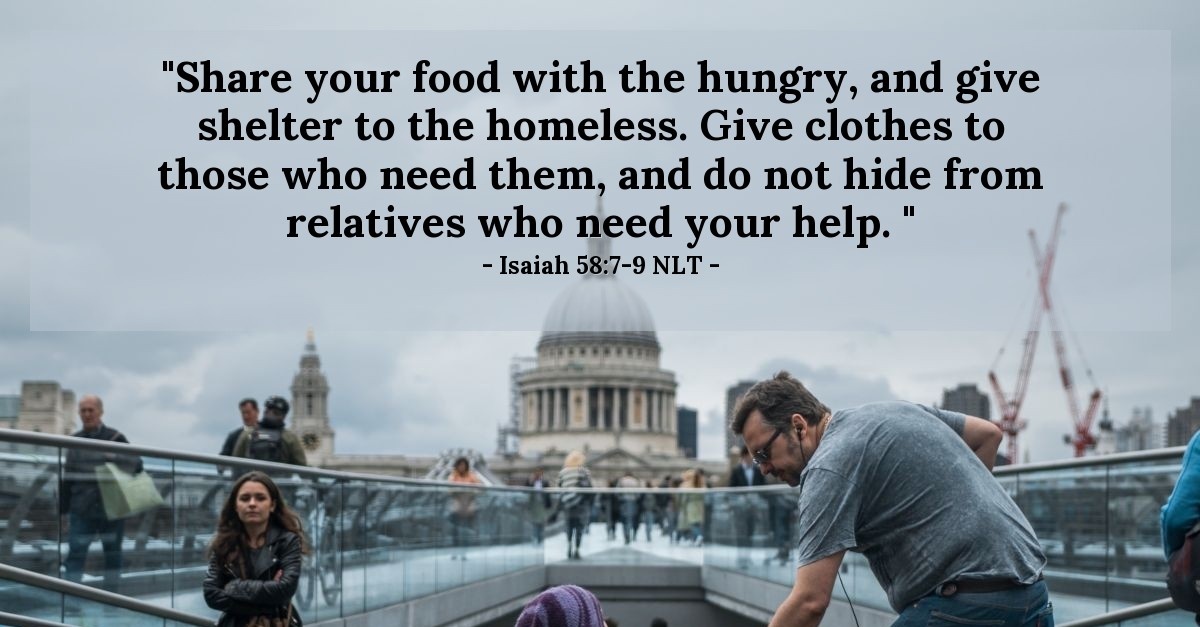
Isaiah 58:7
Chapters 56-66 are often called Third or Trito-Isaiah. These chapters introduce the reader to the Messiah’s program of peace for the world.
Cyrus had been identified as the Liberator who allowed for the return to Judah and the restoration of the temple. This prophecy was dedicated to the consideration of the next coming of the Lord as the Commander, Judge and Lawmaker for the world.
Chapter 58 identifies the purpose for a period of abstinence from a regular diet. It is an exercise in the experience of humility. The use of the exercise to make a deceptive show of piety is discouraged as hypocritical.
There are nominally religious people who are immersed in the external aspects of religion. This type of person is not easily convinced of error. There are none so deaf as those who refuse to listen. These don't desire to hear truth, yet they practice the externals religiously.
Genuine conversion, real devotion and true communion are the objectives for the religious expression of faith.
It is likely that Third Isaiah was written after the exile. Animal sacrifice had been identified as an external observance that would eventually become obsolete. Reading, prayer, temporary abstinence and the worship of God ordered in relation to reflection on the law and the prophets were being selected as the standards for monotheistic religion.
Isaiah 58:3-9
'Why do we fast, but you do not see?
Why humble ourselves, but you do not notice?'
When you serve your own interest on your fast day
and oppress all your relations,
you fast only to quarrel and fight
and to strike with a wicked fist.
Such fasting as this
will not make your voice heard on high.
Is the fast that I choose
a day to experience humility?
Is it to bow down the head like a bulrush
and to lie in sackcloth and ashes?
Will you call this fast
a day acceptable to the LORD?
Is not this the fast that I choose:
to loose the bonds of injustice;
to undo the thongs of repression;
to let the oppressed go free
and to break every yoke?
Is it not to share bread with the hungry
and provide shelter to the homeless;
When you see the naked to cover them
and not to hide yourself from your own kin?
Then your light shall break forth like the dawn.
Your healing will spring up.
Your vindicator shall go before you.
The glory of the LORD will by your rearguard.
Then you shall call and the LORD will answer.
You will cry for help and he will say, Here I am.
----------------------
Is this not the purpose for the fast?
Isn't it to see injustice broken as cast;
to undo the thongs of enslavement to the past;
to set the captives free at last;
to destroy the yoke of captivity with a blast?
Is it not good to share bread with the hungry;
to see shelter provided for the homelessly unlucky;
to donate clothing for those who can only afford the grungy?
Show charity with your contribution of a part of your station
to the organization that will distribute the donation.
Your light will break forth like the dawn.
Healing with spring forth like a fawn.
Glory will act as your security.
Natural health will answer the desire for purity.
You will pray and the Holy One will answer.
You will move through life like a graceful dancer.
================
February

The Roman month Februarius was named after the Latin term februum. Februum means purification.
The purification ritual Februa was held on February 15 (full moon) in the old lunar Roman calendar. The festival was later known as Februa. Lupercalia was added to the same time of celebration later in history.
The Latin word lupus was derived from the Greek lykos. Lykaia was a wolf festival. Faunus was the Roman equivalent to the Lycaean Pan.
The cult image for the Lycaean god Lupercus was nude except for a goatskin girdle. It stood in the Lupercal, the cave where tradition held that Romulus and Remus were suckled by the she-wolf (Lupa). The cave lay at the foot of the Palatine Hill on which Romulus was thought to have founded Rome.
The rites were confined to the Lupercal cave, the Palatine Hill and the Forum. These were central locations in Rome's foundation myth. Near the cave stood a sanctuary of Rumina, goddess of breastfeeding, and the wild fig-tree (Ficus Ruminalis) to which Romulus and Remus were brought by the divine intervention of the river-god Tiberinus.
The Lupercalia had its own priesthood, the Luperci ("brothers of the wolf"). The institution and rites were attributed either to the Arcadian culture-hero Evander or to Romulus and Remus. These shepherds had each established a group of followers.
The Luperci were young men (iuvenes) usually between the ages of 20 and 40. They formed two religious collegia (associations) based on ancestry. There were the Quinctiliani (named after gens Quinctia) and the Fabiani (named after gens Fabia).
Each college was headed by a magister. The Juliani was instituted in honor of Julius Caesar as a third college in 44 BCE. Its first magister was Mark Antony.
The college of Juliani disbanded or lapsed following Caesar's assassination. It was not re-established in the reforms of his successor, Augustus. Membership of the two traditional collegia was opened to iuvenes of equestrian status in the Imperial era.
A male goat and a dog were sacrificed by one or another of the Luperci under the supervision of the Flamen dialis, Jupiter's chief priest. An offering was also made of salted mealcakes prepared by the Vestal Virgins.
The dog represented the predatory wolf. The goat was a symbol of domestication. The human portrayal of the animal spirits was an warning against behavior that was too animistic or too civilized with abstract purity for the perpetuation of the culture in civilization.
Two Luperci approached the altar after the blood sacrifice. Their foreheads were anointed with blood from the sacrificial knife, then wiped clean with wool soaked in milk. They were expected to smile and laugh after the anointment.
The sacrificial feast followed after which the Luperci cut thongs (known as februa) from the flayed skin of the animal. They ran with these, naked or near-naked, along the old Palatine boundary in an anticlockwise direction around the hill.
Plutarch described the event. Noble youth and magistrates ran naked through the city with the thongs striking those they met with laughter for sport. Women of rank purposely got in their way and presented their hands to be struck like children at school.
The action of the fertility rite was believed to assist the barren to become pregnant and the pregnant would be helped toward delivery.
There was a distinct appreciation for the movement from animistic to polytheistic worship in the festal celebrations.
The Romans originally considered winter a monthless period. The civilized culture was converted from primitive tribalism with nomadic migrations to a fixed agrarian settlement.
The land was cultivated for wheat and animals were domesticated as livestock. Sheep and goats were herded first. Cattle for beef came later. The calendar had an agricultural emphasis that saw the winter months as barren or void of fertility for civilized settlement.
The sedentary nature of civilization was countered with the remembrance of the wild energy of primitive life.
January and February were the last two months added to the calendar. The months were added by Numa Pompilius about 713 BCE.
Numa Pompilius was the legendary second king of Rome who succeeded Romulus. He was of Sabine origin. The Sabines were from the mountains (the Apennine Mountains of central Italy). They were most likely invested in the domestication of livestock.
Some specifically Sabine deities and cults were known at Rome. Temples for Semo Sancus and Quirinus were built in the Quirinal Hills.
Sancus was considered the son of Jupiter. His heavenly light avenged dishonesty to uphold truth with good faith. He was the sanctifier of agreements.
His shrine on the Quirinal was described by classical writers as having no roof so oaths could be taken under the sky. He was easily associated with Hercules who was also regarded as a protector of oaths.
Quirinus was the oak-god (quercus). The quirites were the men of the oaken spear.
Romulus and Quirinus were associated with the grain spelt through the Fornacalia according to Ovid's Fasti. Quirinus would be considered to be the deified legendary king by the end of the 1st century BCE.
Fornacalia was celebrated in honor of the goddess Fornax, a divine personification of the oven (fornax). The festival was related to the proper baking of bread.
Ovid wrote that "the oven was made a goddess, Fornax". The farmers were pleased with her and prayed that she would regulate the grain’s heat." The celebration was held in early February on various dates in different curiae. Curiae were groups of Roman citizens.
Each family in the curia brought far (spelt, a kind of grain) to be toasted in the meeting hall and sacrificed to ensure that bread in the household ovens wouldn’t be burnt in the following year.
The fornacalia probably started on the nones (5th day) of February and the quirinalia started around the 17th.
The population of the early Roman kingdom was the result of a union of Sabines and other tribes. Some of the gentes of the Roman republic were proud of their Sabine heritage. The Claudia gens assumed Sabinus as one of their names.
The first of the Claudii to obtain the consulship was Appius Claudius Sabinus Regillensis in 495 BCE. Members frequently held the highest offices of the state both under the Republic and in imperial times from that time.
---------------------
The Mind of Christ

The first letter to the Corinthians is attributed to the apostle Paul and Sosthenes in the introduction to the epistle.
This introduction, the known dates for the magistrate Gallio, the charitable patron Erastus and the timeline in the Acts of the Apostles places the time for writing the letter between 52 and 55 CE.
The letter was written to persuade converts from the prevailing Greco-Roman culture in Corinth and the Greek part of Roman society to adopt a monotheistic view of religion with faith in Jesus as Christ.
The students or pupils of a teacher in classical culture identified the instruction provided by the teacher with his name. Loyalty was an expression of confidence in the time spent in listening to the argument provided by the instruction.
The Corinthians were converted and baptized through the ministry of different teachers. Identification with the instructor was a way to associate the teaching with the teacher, but it also contributed to disputes about the authority of the leadership for the Church.
The author of the letter expressed Christ crucified as the message for his instruction. This argument would prove to provide the higher ground for the integration of words from different worlds in a single first person perspective.
The "rulers of the age" were officially associated with polytheism. These polytheistic views had influenced the Judean and Roman authorities to sacrifice Jesus on the cross.
The task for the apostle was to persuade the members of the Church that monotheism was a development that preceded from polytheism towards the improvement of society to the end of time.
The blood of animals sacrificed for the expiation of the anger of the gods was related to the human blood spilled in sacrifice to building security for the imperial state represented by the polytheistic religion.
The celebration of Cyrus as Messiah was offered for the liberation that he provided for the Judeans. The liberation allowed them their identification as the first monotheistic kingdom in the west as a province in Achaemanid empire.
The Judeans still celebrated animal sacrifice in the temple, but the liturgical development of a prayer service that read selections from Judaic scripture to consider the value of law in civilized society held the promise of an religiously economic application to the 'ends of the earth.'
Even "official" dispersions of the Jewish people held the possibility of dispersing the elements of Judaic monotheism to cultures around the world. Judaic culture had a genetic disposition that inhibited forced conversion.
The prophesy of light for the Gentiles held the promise of adoption by adaptation. The Christian Church was a Roman invention in a real sense. It was modeled on Judaic worship. It was formulated as a Gentile version of monotheism.
It discouraged participation in polytheistic celebrations that sacrificed animals as part of a festival celebration with the prohibition of eating meat sacrificed to idols.
Greco-Roman society had developed philosophy as a way to evaluate how the forces of nature were to be interpreted in application to the government of society.
Religion was defined as a vehicle of communication with people through the various social organizations affiliated with the religious communities centered around a temple.
The worship was ordered by the calendar. The calendar was used to remind people of the special nature of time for agricultural and social events in relation to the political leadership.
Philosophers were dedicated to the consideration of how to describe the elements of nature as related to the operation of exposition as a means of persuasion for people to function as independently of government as they could.
Monotheism had developed monogamy as the marital form. Just as polytheism allowed for more than one spouse, monotheism only allowed one wife.
The one wife was for the sexual reproduction of offspring with the intent to develop the continuity of family in the community with respect for the provision of a product with the offspring. There was a tribal affiliation with the production of a service in both Judaic and Roman societies.
Inheritance was an economic method to preserve the conservative development of social norms.
The polytheistic reminder of calendar time attributed 'immoral' actions to deities as a means to maintain the attention of the largely uneducated population. Education in philosophical schools was limited to areas that would support the philosophers as teachers.
Athens had gymnasiums. Other city states that followed the Athenian custom had them as well. Public education was not supported as a legal entity or a social norm.
There was a strong association between philosophy and asceticism, because the philosophical teachers had to be able to live on what little people who attended their lectures could scrape together to provide for the service of instruction.
The apostolic author used Christ crucified as a means to criticize false beliefs associated with both polytheism and monotheism. His instruction was directed toward the economic integration of the benign design in nature as applied to social organization with respect for political leadership.
1 Corinthians 2:1-16
I did not come to proclaim mystery to you with lofty words . I decided to know nothing among you except Jesus Christ and him crucified. I came in weakness with fear in much trembling. My speech was a demonstration of the Spirit so your faith might rest on the power of the Lord.
We speak wisdom to the mature. It is not the wisdom of this age. We speak that which was decreed before the ages. The rulers of this age did not understand this. If they had they would not have crucified the Lord of glory.
It is written,
'What no eye has seen, ear has heard,
nor human heart has conceived,
what was prepared for those who love with faith'
These things have been revealed to us through the Spirit; that which searches everything, even the depths of God.
What human being knows what is truly human except the human spirit that is within? No one comprehends what is truly God's except the Holy Spirit.
Now we have received not the spirit of the world, but the Spirit that is from God, so we may understand the gifts bestowed on us. We speak of these things in words taught to interpret spiritual things for those who are spiritual.
Those who are not spiritual do not receive the gifts of the Spirit for they are foolishness to them.
They are unable to understand such things because they are discerned spiritually. Those who are spiritual discern them. They are subject to no one else's scrutiny.
'Who has known the mind of the Lord
so as to instruct him?'
We have the mind of Christ for our instruction.
----------------------
I did not come to declare the mystery of strife in life.
My speech was for the demonstration of the Spirit to overcome strife.
Revelation comes from beyond the senses to the sensibility of perception
as a means to decipher codes that have been presented as deception.
We have not received the spirit of the world.
The standards of the Spirit have been for us unfurled.
The spiritual have received the gift of discernment
for the reception of knowledge to avoid internment.
Who has known the mind of the Word
for instruction in law that is not absurd?
We have the mind of Christ for our instruction
in reason that chooses the best policy from induction or deduction.
================
Light of the World

The 1st chapter of Matthew told the story about his lineage as traced to David and Abraham, the special circumstances that preceded his birth and his nativity in Bethelehem.
The 2d chapter presented details about the wise men from the east, the threat of execution by Herod and the flight to Egypt.
The 3d chapter was about the ministry of John the Baptist and the miraculous aspect of the baptism of Jesus by John in the Jordan River.
Chapter 4 explained that Jesus went through a period of temptation in the wilderness before he returned to Galilee and called Peter, Andrew, James and John to preach and heal with him. The last 3 verses of the chapter state that crowds had gathered to follow them as he preached throughout Galilee.
Chapters 5-7 goes into detail about the Sermon on the Mount. Portions are similar to the Sermon on the Plain in Luke 6, but much of the material is found only in Matthew.
The sermon is directed primarliy to his disciples. The sight of the 'mulititude' that had followed them in Galilee was used as a justification for Jesus to take the time to instruct his disciples in the ministry of teaching, preaching and healing. He calls them the "salt of the earth" and "light of the world."
Matthew 5:14-20
You are the light of the world. A city built on a hill cannot be hidden. No one puts a lamp under the bushel basket after lighting it. It gives light to all in the house after it is put on a lampstand. Let your light shine before others in the same way, so they may see your good works and give glory to your Father in heaven.
Do not think that I have come to abolish the law or the prophets. I have not come to abolish but to fulfil. Not one letter, not one stroke of a letter will pass from the law until all is accomplished when heaven and earth have passed away.
Whoever breaks one of the least of these commandments and teaches others to do the same will be called least in the kingdom of heaven. Whoever does and teaches them will be called great. You will never enter the kingdom unless your righteousness exceeds that of the scribes and Pharisees.
----------------------
You are the light for the crowds.
You are with inner substance endowed.
No one hides their light under a basket.
Let others see your good works as grace filled, not drastic.
Christ did not come to abolish the law or the prophets.
He came to fulfill the law as promised.
Doing and teaching the commandments results in greatness.
Study of the law with prayer grants entry to the kingdom that is dateless.
================
Livy saw history as the means to evaluate action with respect for imitation or avoidance.
Tacitus
Annals
wiki Annals
Text: Annals
Seneca
Natural Questions (Naturales Quaestiones)
wiki Natural Questions
Text: Natural Questions
Thomas More
b. 2.7.1478 London, England
d. 7.6.1535 London, England
Sir Thomas More was an English lawyer, social philosopher and Renaissance humanist. He wrote Utopia about the political system of an imaginary, ideal island nation.
More had been educated at Oxford. He started his studies in classical education in 1492. He became proficient in both Latin and Greek, but left school after only two years at his father's insistence. His father wanted him to begin legal training in London at New Inn, one of the Inns of Chancery.
Thomas wrote the novel Utopia. It was a work of fiction and socio-political satire written in Latin and published in 1516. The book is a frame narrative primarily depicting a fictional island society and its religious, social and political customs. Many aspects of More's description are reminiscent of life in monasteries.
He had lived near the Carthusian monastery outside the walls of London and joined in the monks' spiritual exercises in 1503 and 1504. He married in 1505. He was elected to Parliament to represent Great Yarmouth in 1504 and in 1510 began representing London.
The title explicitly described the political state of the island as a republic. The word "Utopia" is derived from the Greek prefix "ou-" (οὐ), meaning "not", and topos (τόπος), "place", with the suffix -iā (-ία) that is typical of toponyms. The name literally means "nowhere." The selection emphasizes the fictionality of the story.
The content of the work coveys criticism of 16th-century Catholicism. The 'evils' of More's day were laid out in Book I and were apparently solved in different ways in Book II.
The novel has many of the characteristics of satire. It was to become a the model for the genre of Utopian fiction. There are jokes and satirical asides such as how 'honest' people live in Europe, but these are usually contrasted with the simple, uncomplicated society of the Utopians.
The puzzle presented by the depiction is that some of the practices and institutions of the Utopians, such as the ease of divorce and euthanasia with both married and female priests, seem to be polar opposites of his belief about the teachings of the Catholic Church of which he was a devout member.
Another often cited apparent contradiction is that of the religious tolerance of Utopia contrasted with his persecution of Protestants as Lord Chancellor.
His early actions against the Protestant Reformation included aiding Chancellor Wolsey in preventing Lutheran books from being imported into England. Suspected Protestants were spied on and investigated especially when they were publishers. Anyone holding in his possession, transporting or selling the books of the Protestant Reformation was arrested.
Tyndale's English translation of the New Testament was suppressed more vigorously.
The Tyndale Bible used controversial translations of certain words that More considered heretical and seditious. It used "senior" and "elder" rather than "priest" for the Greek "presbyteros" for example.
The term congregation was used instead of church. He also pointed out that some of the marginal glosses challenged Catholic doctrine. It was during this time that most of his literary polemics appeared.
More succeeded to the office of Lord Chancellor after Wolsey fell in 1529. He was a Chancellor to Henry VIII and Lord High Chancellor of England from October 1529 to 16 May 1532.
Rumours circulated during and after More's lifetime regarding ill-treatment of heretics during his time as Lord Chancellor. The popular sixteenth-century English Protestant historian John Foxe, who "placed Protestant sufferings against the background of... the Antichrist", was instrumental in publicising accusations of torture in his famous Book of Martyrs. Foxe claimed that More had often personally used violence or torture while interrogating heretics.
Henry VIII was King of England from 1509 until his death in 1547. He was the second Tudor monarch. He succeeded his father Henry VII.
Henry is best known for his effort to have his marriage to Catherine of Aragon annulled. His disagreement with the Pope on the question of royal succession led Henry to initiate the English Reformation.
Pope Clement VII refused to grant the annulment because a validly contracted marriage is indivisible until death according to Roman Catholic tradition. There are biblical conventions against divorce.
Clement argued that he couldn't overrule Catholic convention. He couldn't annul a marriage simply because of a canonical impediment previously dispensed.
The first Act of Supremacy was passed on 3 November 1534 by the Parliament of England. It granted King Henry VIII of England and subsequent monarchs Royal Supremacy. The monarch was declared the Supreme Head of the Church of England. The succession of Henry's daughter Elizabeth to the throne insured that the act was not limited to the male monarchy.
Royal Supremacy describes the legal sovereignty of the civil law in England. The Church of England was officially separated from the claim to papal supremacy.
The Treasons Act was passed later in the same year. It provided that to disavow the Act of Supremacy and to deprive the king of his "dignity, title, or name" was to be considered treason.
The Oath of Supremacy required any person taking public or church office in England to swear allegiance to the monarch as Supreme Governor of the Church of England. Failure to do so was to be treated as treasonable.
Sir Thomas More opposed the Protestant Reformation. He directed polemics against the theology of Martin Luther, John Calvin and William Tyndale.
More also opposed King Henry VIII's separation from the Catholic Church and the annulment of his marriage to Catherine of Aragon. He refused to acknowledge Henry as Supreme Head of the Church of England.
He was convicted of treason after refusing to take the Oath of Supremacy. The report of his execution served as notice of his retirement from public office.
Thomas More
S. 托马斯·莫尔
T. 托馬斯·莫爾
托 Tuo care 托 taku request To と- ト- To 토 sat
马 ma horses 馬 ba horse ma ま マ ma 마 hemp
斯 si span 斯 shi this su す ス seu 스 s
莫 Mo mo 莫 bo must not Mo も モ Mo 어 mother
尔 er r 爾 ji you ah あ ア
---------------------
Is utopia the best state for a republic?
All your care for horses won't do the trick.
Nowhere is a good place for no man
when you agree to the flash of a pan.
================
--------------------
Three Personed God
John Donne
https://www.poetryfoundation.org/poems/44106/holy-sonnets-batter-my-heart-three-persond-god
Sir Philip Sidney
Psalm 1
http://www.luminarium.org/renlit/sidneypsalm1.htm
Trinity Poem
https://www.gotquestions.blog/Trinity-poem.html
------------------
Testudo Formation
The Tortoise

You offered to build roads, an aqueduct, a public bath and a theater in lieu of armed conflict. You talked about a system of election that organized consensus among the people.
Your system of election had the cursus honorum or course of honor, but that was for the imperial republic. The offspring of senators could work through the course in less than a decade to attain senatorial status.
They would become part of the Patrician class that was looking to develop Roman trade around the known world.
Your administration was set up for expansion. There was the value of campaigning to win an office with proposals for administration, but you wouldn't want everyone else competing for the exact same service.
Wouldn't support for monarchy with administrative forms for election to a parliamentarian branch of government by a natural product of this policy?
Dynastic succession combined with election for parliament would organize a form that was concerned with the sovereignty of national security with an emphasis on negotiation for trade in foreign relations.
Roman propaganda had a tendency to tell horror stories about immoral and cruel leadership in practice, but this was most likely played most often for the element of surprise in negotiation.
It was their way of saying that they weren't as bad as the report of their reputation. It is easy to imagine runners were selected to tell different stories to the native population. One runner said the Romans were tyrants. The other followed to say that the previous report was wrong.
The greatest difficulty in the conception of this system is that large numbers of casualties were reported as fact for "battles" that may have never taken place in fact.
The framers for the US Constitution presented argument for national government as a republic, but times and foreign relations had changed. The Federalist Papers laid out argument in logically reasonable terms for practical application in the self-limitation of national power.
The Constitution presented a model for government at the state level of operation, but oppositional propaganda has presented the case for unreasonable governance in reaction to stories that promote the fear of tyranny from powers foreign or domestic.
It's not like there isn't a justification for the existence of an opposing party, but there are ethical limits to the tactics that can be used to win the next election.
When the opposing party works to overcome due process in law to obtain convictions and to win elections, it has resorted to an anti-Constitutional tactic in organization.
This anti-Constitutional tactic effectively presents an anti-American policy as though it were for the United States of America. This kind of policy has to be corrected legally for the public to benefit from the observation of the process.
The Republican party is in the process of providing the correction to the Democrats.