Showing posts with label nation. Show all posts

Wednesday, August 21, 2019

Mediate

8.22.19
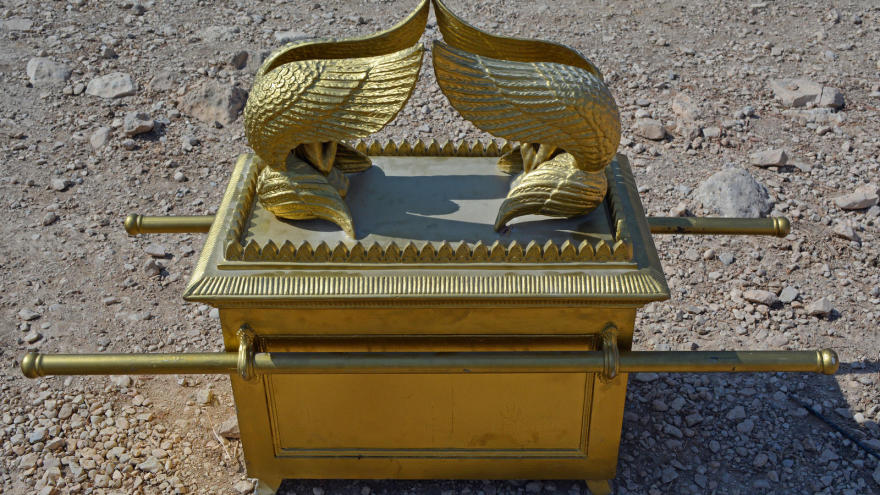
Ark of the Covenant

Mediate
Profit
调解利润 
Tiáojiě lìrùn
利益を仲介する 
Rieki o chūkai suru
ps131, 132
Mediata prodest

The priest is not proud
when with objectivity endowed.

The cleric is a detective
when research is the objective.

Simple expression is the task that matters
to explain the elements of the pattern.

"I still my soul to make it quiet.
I release my thought for mental silence.

"My soul is made quiet with this request
like a child upon its mother's breast."

Wait upon the test of science
to show the way to self-reliance.

Remember what the priest endured
to show how hardship made the feast secure. 

The horse ran to overcome the halter.
It passed the inn. It did not falter. 

The elder made a promise that he vowed to keep.
He would not allow his eyes to sleep.

"I will not lay my head on my pillow to rest
until I find the place to build a temple to be divinely blessed." 

We heard that the ark of the covenant was in a fruitful place.
We found it in the fields of the forest in a beautiful state.

Let us go stand near the symbol of the divine presence
that we may enjoy the feeling of the essential essence.

Arise to shine on your resting place
between the wings of the cherubim by your grace.

The wings have become an open book
where those who seek faith may come to look.

Let your pastor be clothed with the rightness of faith.
Let your faithful people sing with joy in the sacred space.

Do not turn away the face of your Anointed.
The love of the beloved uses oil as the ointment.

The beloved was true to the law insofar as he was able.
He did not punish non-lethal sin in a way that was fatal.

The humble citizen defended himself against charges that were false.
Success detained him without cruelty to check reports for embellished faults.

The Lord has sworn an oath in faith to love
for those who are true to the spirit of the dove.

Love God with your heart, understanding and strength.
Love your relations as yourself with attention to length.

You are not far from the kingdom of heaven in law.
Your faith is the leaven to overcome difficulty caused by flaws.

The fruit of your labor 
will be seen with favor
as long as it serves
the network of nerves.

If your children keep my covenant
with the testimony of love in it
they will retain your power in governance
for strength in sustenance.

Zion is the sacred space between the wings of the pages.
It is the habitation for which we sing with the sages.

"I will delight in this place forever.
I will dwell in this state with pleasure."

The economy will be blessed with employment.
Earned income will be by self-appointment
in the service of public enjoyment.

Your priesthood will be clothed with salvation.
The faithful will help to build a productive nation.

The fruit of the harvest will bless the table with provision.
The light for the Anointed is prepared to share wisdom.

Those loyal to the royal priesthood will shine.
Their achievement will be a share in the divine.

--------------------------

Psalm 131

Domine, non est
Dominated, is not

1 O Lord, I am not proud;
I have no haughty looks.
2 I do not occupy myself with great matters,
or with things that are too hard for me.
3 But I still my soul and make it quiet,
like a child upon its mother's breast;
my soul is quieted within me.
4 O Israel, wait upon the Lord,
from this time forth for evermore.

132 Memento, Domine
Remember, Dominated

1 Lord, remember David,
and all the hardships he endured;
2 How he swore an oath to the Lord
and vowed a vow to the Mighty One of Jacob:
3 "I will not come under the roof of my house,
nor climb up into my bed;
4 I will not allow my eyes to sleep,
nor let my eyelids slumber;
5 Until I find a place for the Lord,
a dwelling for the Mighty One of Jacob."
6 "The ark! We heard it was in Ephratah; (fruitful)
we found it in the fields of Jearim. (forest)
7 Let us go to God's dwelling place;
let us fall upon our knees before his footstool."
8 Arise, O Lord, into your resting-place,
you and the ark of your strength.
9 Let your priests be clothed with righteousness;
let your faithful people sing with joy.
10 For your servant David's sake,
do not turn away the face of your Anointed.
11 The Lord has sworn an oath to David;
in truth, he will not break it:
12 "A son, the fruit of your body
will I set upon your throne.
13 If your children keep my covenant
and my testimonies that I shall teach them,
their children will sit upon your throne for evermore."
14 For the Lord has chosen Zion;
he has desired her for his habitation:
15 "This shall be my resting-place for ever;
here will I dwell, for I delight in her.
16 I will surely bless her provisions,
and satisfy her poor with bread.
17 I will clothe her priests with salvation,
and her faithful people will rejoice and sing.
18 There will I make the horn of David flourish;
I have prepared a lamp for my Anointed.
19 As for his enemies, I will clothe them with shame;
but as for him, his crown will shine."

-------------------------

Shimei- my reputation
Gera- dove
Abishai- father of a gift
Zeruiah- pain

2 Samuel 19:18b-23

Shimei son of Gera fell down before the king as he was about to cross he Jordan. He said, 'May my lord not hold me guilty or remember how your servant did wrong on the day my lord the king left Jerusalem. May the king not bear it in mind. Your servant knows that I have sinned. I have come this day, the first of the house of Joseph to come down to meet my lord the king.'

Abishai son of Zeruiah answered, 'Shall not Shimei be put to death for this because he cursed the LORD's anointed?' David said, 'What have I to do with you, you sons of Zeruiah, that you should today become adversary to me? Shall anyone be put to death in Israel this day? Do I not know that I am this day king over Israel?' The king said to Shimei, 'You shall not die.' He gave him his oath.

-------------------------

The beloved was true to the law insofar as he was able.
He did not punishment non-lethal sin in a way that was fatal.

===================

Felix- lucky
Lysias- destroyer

Acts 24:22-23

Felix, who was rather well informed about the Way, adjourned the hearing with the comment, 'When Lysias the tribune comes down, I will decide your case.' Then he ordered the centurion to keep him in custody, but to let him have some liberty and not to prevent any of his friends from taking care of his needs.

-------------------------

The humble citizen defended himself against the charges as false.
He was detained without cruelty to check reports for embellished faults.

===================

Mark 12:32-34

The scribe said to him, 'You are right, Teacher. You have said that "He is one. Beside him there is no other" and "love him with all the heart, the understanding and the strength" and "love one's neighbor as oneself." This is much more important than all whole burnt offerings and sacrifices.' When Jesus saw that he answered wisely, he said to him, 'You are not far from the kingdom of God.' After that no one dared to ask him any question.

-------------------------

Love God with your heart, understanding and strength.
Love your relations as your self with attention to length.

You are not far from the kingdom of heaven in this law.
Your faith is the leaven to overcome difficulty caused by flaws.

===================

German idealism lent itself to socialism. American idealism has been used for what is right about capitalism.

Devaluations

Max Scheler
b. 8.22.1874 Munich, Germany
d. 5.19.1928 Frankfurt, Germany

Max Ferdinand Scheler was a German philosopher known for his work in phenomenology, ethics and philosophical anthropology. He developed the method of the founder of phenomenology, Edmund Husserl.

Martin Heidegger praised him with Ortega y Gasset as "the strongest philosophical force in... contemporary Europe" after his death in 1928.

Karol Wojtyła, later Pope John Paul II, defended his doctoral thesis in 1954 on the evaluation of the possibility of "Constructing Christian Ethics" based on the system of Max Scheler.

Munich

Munich lies on the elevated plains of Upper Bavaria. Bavaria is in the southeastern corner of Germany. The city is about 50 km (31 mi) north of the northern edge of the Alps at an altitude of about 520 m (1,706 ft) above sea level. The local rivers are the Isar and the Würm. Munich is situated in the Northern Alpine Foreland.

It is the capital and most populous city of Bavaria, the second most populous German federal state. It is the third-largest city in Germany with a population of around 1.5 million. It comes after Berlin and Hamburg in size. It is the 12th-largest city in the European Union. The city's metropolitan region is home to 6 million people.

The name of the city is derived from the Old/Middle High German term Munichen, meaning "by the monks".  The Benedictine order ran a monastery at the place that was later to become the Old Town of Munich. A monk is depicted on the city's coat of arms.

The city became the capital of the new Kingdom of Bavaria in 1806. The state's parliament (the Landtag) and the new archdiocese of Munich and Freising were located in the city.

Landshut University was moved to Munich 20 years later. Many of the city's finest buildings belong to this period. They were built under the first Bavarian kings.

Ludwig I rendered outstanding services to Munich's status as a center of the arts. He attracted numerous artists and enhanced the city's architectural substance with grand boulevards and buildings.

Ludwig II came to be known the world over as the fairytale king. He was mostly aloof from his capital and focused more on his fanciful castles in the Bavarian countryside. His patronage of Richard Wagner secured his posthumous reputation, as do his castles, which still generate significant tourist income.

Max Scheler

Max Scheler was born in Munich, Germany on 22 August 1874 to a Lutheran father and an Orthodox Jewish mother.

He was not a particularly strong student, but he showed an interest in the works of Nietzsche. He identified himself as a social democrat and an enthusiastic Marxist.

He turned to Catholicism as an adolescent. He became non-committal prior about 1921. He disassociated from Catholicism and the Judeo-Christian God in public after 1921. He chose to invest in philosophical anthropology.

He started to study medicine at the University of Munich in 1894. He enrolled at the University of Berlin in 1895 for the philosophy and sociology. He attended the lectures of Dilthey and Simmel.
Berlin is 585 km (365 mi.) north of Munich.

Dilthey’s research interests revolved around questions of scientific methodology, historical evidence and the science of history. His view contrasted with the idealism in Germany at the time by his experiential reference differed from British empiricism in basic assumptions. He drew his references from German literary and philosophical traditions.

Simmel was a first generation German sociologist. His approach was neo-Kantian. It laid the foundation for his sociological anti-positivism. He asked the question ‘What is society?’ as a reflection of Kant’s question, ‘What is nature?’ Individuality was a fragmentation of social identity.

The cultivation of individuals through the agency of external forms was conducted by the course of history. He was a forerunner to the structuralist style of reasoning in the social sciences. Urban sociology, symbolic interactionism and social network analysis contributed to the formation of the metropolis.

He transferred to Jena in 1896 to finish his studies with Eucken.

Jena is 260 km (160 mi.) southwest of Berlin.

Eucken advocated for ethical activism as the application for practical idealism. The philosophy of life is for the development of a new culture, not mere intellectualism. It is an application of vital religious inspiration to the practical problems of society.

It was Eucken’s ideas regarding the inner quest for a spiritual life of every human being that drew Scheler’s attention.

It was through this interest in practical idealism that Scheler developed a relationship with the American pragmatism of William James. The two exchanged letters in correspondence.

Scheler received his doctorate on the determination of the relations between logical and ethical principles at the University of Jena in 1897. He worked for his habilitation there as well.

He took a trip to Heidelberg in 1898 and met Max Weber. Weber had an impact on his thought.

Scheler met Husserl at a party in Jena in 1901. He read Husserl’s Logical Investigations a year later. The remainder of this life would be dedicated to the progress of phenomenology.

Scheler was reading French philosophy during this period. He was a major factor in introducing Henri Bergson’s work to German intellectual circles.

Scheler moved his family to Munich in 1906 to start his position there as Privatdozent. A number of students working with the psychologist Theodor Lipps at the University of Munich had founded the Psychologische Verein ("Psychological Association") in 1895.

Lipps was known for the theory of aesthetics that framed the concept of empathy. His work opened a new branch of interdisciplinary research in psychology and philosophy.

Psychology was a discipline on the rise at the turn of the 20th century. The relation between philosophy and psychology was intensely debated. The debate concerned whether psychology is a philosophical discipline or whether philosophy is based on psychology.

The position that logical concepts are psychological have been labeled as “psychologism.” The logical law of the excluded middle has to be interpreted in terms which state that it is impossible for a subject to judge at the same time that p and not-p are true.

Psychologism was contested by a competing approach within the “anti-psychologist” strand.  There are different views as to how logical concepts and laws have to be positively defined. They agreed that logic does not depend on psychology.

Husserl's Logical Investigations (1900/01) was critical of the psychologism. A number of participants in the Psychological Association at Munich decided to align themselves with Husserl. They became the Munich Circle of phenomenologists. Scheler joined this group.

The Munich circle included students from both the Psychological Association and the phenomenological group.

A number of Lipps' students followed the lead of Daubert in 1905. They left Munich for the University of Gottingen to work with Husserl. The arrival of students from Munich eventually led to the establishment of a similar student group in Göttingen circa 1910, known as the Göttingen Circle.

Scheler taught at the University of Munich from 1907 to 1910. He lost his teaching privileges due to controversies surrounding the separation from his first wife and reported affairs with students.

He earned his living as a private scholar, lecturer and freelance writer from 1910 to 1919. He  joined the circle after the invitation in 1912 to give private lectures in Göttingen.

He was forbidden to teach at a German university so his lectures would often have to be held in hotel rooms rented by his close friend Dietrich von Hildebrand.

The first volume of the Yearbook for Philosophy and Phenomenological Research appeared in 1913. Scheler was a co-editor with 3 others and Husserl.

He published major works such as Phenomenology and Theory of the Feeling of Sympathy and of Love and Hate (1913), Formalism in Ethics and Non-Formal Ethics of Value (Part 1 1913, Part 2 1916), The Genius of War and the German War (1915).

Scheler conceptualized the nation as an intellectual collective entity, which discovers and recognizes itself through war in his famous 1915 essay. The German nation, purified through the war, had the political mission of pushing Russia back into Asia and unifying Europe.

He tried to demonstrate a fundamental difference between Europe and Asia by analysing music, language, religion, gender roles and thought.

He attempted to explain this phenomenon of an all-pervading hate towards Germany in a lecture in Frankfurt in 1916. This prompted his essay “The Causes of Hatred Against Germans”, which was first published in 1917 and again in 1919.

The strongest motivation of the hate laid in the newly established unique German work ethic. The ethic was intensified by political, economic and social requirements. The ancient characteristic pursuit of the infinite which expressed itself in idealism coalesced with the work ethic.

Transcendental phenomenlogy posited a necessary correlation between reality and consciousness. A thing in itself is never one with which consciousness has nothing to do.

Edith Stein became a student of Husserl. She wrote her dissertation on the problem of empathy. It was finished in 1916. She became his teaching assistant.

Scheler had voluntarily enrolled to serve in the war for the airship battalion of the reserve in Cologne, but was not accepted due to his astigmatism. The State Department  sent him to Switzerland, Austria and the Netherlands from 1917 to 1918 to influence Catholic circles. He was to give lectures to sick and wounded German soldiers, interned in the neutral Netherlands.

This phase of his war philosophy coincided with the period in which the philosopher developed his theory of value. This theory proceeds on the assumption of the existence of an objective hierarchy of values which can be accessed through intentional feeling of values.

Scheler also composed several articles next to his book on formalism. He was accepted into the Catholic Church. He worked on the prominent Catholic magazine Hochland.

He finally took a strong position against nationalism entirely and committed himself to Europeanism in his lecture “On Europe’s Cultural Reconstruction” in 1917-1918. His Europeanism primarily encompassed continental Europe, but he suggested that England should also be included. This new Europe should be open towards Asia culturally.

Europe was now a “community of intellect and love” in his definition of nation. The unity of Europe was the reference point for a post-war order. He used the term “Europeanism” in an affirmative manner to show a third possibility of forming unity beyond nationalism and internationalism.

Europe was not defined by its geography. It was a concept that connoted a unified, spiritual structure. The collective enemy was the capitalistic, liberal, bourgeois, nationalistic and imperialistic ethos. Europeanism and anti-capitalistic criticism can be identified as constants in his war philosophy.

Scheler received an invitation in 1918 to join the faculty of the newly founded research institute for the social sciences in Cologne. He became professor of philosophy and sociology at the University of Cologne.

He wrote his major work on religion, On the Eternal in Man (1921) during his time at Cologne. He stayed there until 1928.  He accepted a new position at the University of Frankfurt early that year.

Scheler was the only scholar of rank of the then German intelligentsia who gave warning in public speeches delivered as early as 1927 of the dangers of the growing National Socialist movement.

'Politics and Morals' and 'The Idea of Eternal Peace and Pacifism' were subjects of talks he delivered in Berlin in 1927. He argued that capitalism was a calculating, globally growing 'mind-set', rather than an economic system in his analysis.

While economic capitalism may have had some roots in ascetic Calvinism, its very mind-set had its origin in modern, subconscious angst as expressed in increasing needs for financial and other securities for protection and personal safeguards as well as for rational manageability of all entities.

The subordination of the value of the individual person to this mind-set was sufficient reason to denounce it and to predict a whole new era of culture and values which he called 'The World-Era of Adjustment'.

Scheler advocated for an international university to be set up in Switzerland. He was at that time supportive of programs such as 'continuing education' and of what he seems to have been the first to call a 'United States of Europe'.

He deplored the gap existing in Germany between power and mind, a gap which he regarded as the very source of an impending dictatorship and the greatest obstacle to the establishment of German democracy.

He died in Frankfurt, Germany at the age of 53 on 19 May 1928. The Nazi dictatorship (1933–1945) suppressed Scheler's work 5 years after his death.

The Germans were like the French in their idealism. They were for socialism in that it was opposed to British and American capitalism. They started to criticize Marx, but they maintained his criticism against Adam Smith.

Marx had used the prediction of proletariat revolution to deflect attention from national dependence upon socialist government. Labor had made such progress in gaining benefits that they had a better quality of life than much of the middle class.

Now socialists subscribe to populist media stories in order to suggest that there is unity in opposition to economic success.

The middle class still has a presumption of professionalism with education for business enterprise. Socialist government was subverting the value of education by the implication that the applicants for higher education had to support the criticism of capitalism. 

Liberals made funding for research look like it was entirely dependent upon the government as a source. This lent itself to the perception that the intellectual had to blame the success of the business world for economic inequality.

Capitalism maintains a position for the production of value for the public with products or services. Education and the limitation of political overreach contribute to the production of value.

Organization can be developed when liberals in the national government are not claiming to be the answer to things like gun violence, racism, sexism and capitalism with legislation and increased taxation.   

Max Scheler
S. 马克斯舍勒
T. 馬克斯舍勒

马  Ma    horse                   馬 ba         horse                     Ma  まっ  マッ          Maeg  맥  vein   
克  ke      gram                   克  koku   overcome               ku    く       ク             seu     스  s         
斯  si        this                     斯 shi        this                        su     す      ス             Chel   첼  cell     
舍  She    house                 舍  seki     inn                         She  しぇ  シェ           leo     러   naughty
勒  lei      to force               勒   roku   halter                     ra     ら-   ラ-                         

-------------------------

The horse ran to overcome the halter.
It passed the inn. It did not falter.

===================

wiki Max Scheler
SEP Scheler
SEP Phenomenology
wiki Munich

Absolute Self

Kant was Prussian. His philosophy has been used to promote universal disarmament. It is too idealistic in this regard.

Berkeley used the concept of the immaterial as a contrast to material reality. His idealism was conditioned by the search to define knowledge. He was opposed to the liberal implications of Locke's empiricism.

Consider the use of the term absolute with respect to objective judgment. When judgment is restrained by reason to realistic truth, it is guided by impartial considerations. It is not subjectively for prejudice.

The sun shines and the rain falls on people irrespective of prejudiced beliefs conditioned by race, creed or color.


Friday, July 5, 2019

Hate

7.6.19
Maggie Q

Hate
Your
Iniquity
恨你的罪孽
Hèn nǐ de zuìniè
あなたの不法行為を憎む
Anata no fuhō kōi o nikumu
ps119.113+
Odite iniquitas tua!

I hate the iniquity I had or might have had.
Divine law refrains from evil and avoids the bad.

Justice is my refuge, shield and sanctity.
The Word is my hope, yield and sanity.

The Church is the body of Christ.
Incarnate leadership is the divine device.


Natural or social influence can sway one's heart.
Keeping the commandments rules my part.

Choose simplicity with respect for foreign influence
for the conservative reform of policy drawn from natural inference.

Sustain me with your promise
that I may live with hope that is honest.

Hold me up to keep me safe.
Your concern extends to redeem the dutiful waif.

Those who strayed from your joyful way
deceived themselves as to what to say.

Success with deceit is like the mineral dross
that disfigures the surface on a value embossed.

Something of worth was shaped to admire
but the intent to deceive discolored the artistic fire.

My flesh trembles with the dread of condemnation.
You are the goodness in organization for the nation.

Agree with God to define your peace.
Good will come that may never cease.

Remember what's right about what you heard and received
to avoid the consequence that strikes like a thief.

The righteous blood that was shed on earth
has to account for redemption in remembrance worked.

Choose simplicity with respect for foreign influence
for the conservative reform of policy drawn from natural inference.

-----------------------

Samekh
Samekh is the fifteenth letter of the Hebrew alphabet.

The root of the word means to "to lean upon," "to uphold" or "to support." The root is found in the concept of semikhah, the laying of the hands on the sacrificial animal in a blood ritual in the Jewish Temple. A priest is consecrated or a rabbi is ordained in a ceremony with the same name.

Iniquos odio habui
I hate iniquity had

113 I hate those who have a divided heart,
but your law do I love.
114 You are my refuge and shield;
my hope is in your word.
115 Away from me, you wicked!
I will keep the commandments of my God.
116 Sustain me according to your promise, that I may live,
and let me not be disappointed in my hope.
117 Hold me up, and I shall be safe,
and my delight shall be ever in your statutes.
118 You spurn all who stray from your statutes;
their deceitfulness is in vain.
119 In your sight all the wicked of the earth are but dross;
therefore I love your decrees.
120 My flesh trembles with dread of you;
I am afraid of your judgments.

-------------------------

==================
Job 22:21

Agree with God and be at peace.
Good will come to you in this way.

-------------------------

Agree with God to define your peace.
Good will come that may never cease.

==================
Rev. 3:3

Remember what you received and heard. Obey it and repent. If you do not wake up, I will come like a thief. You will not know at what hour I will come to you.

-------------------------

Remember what you heard and received
to avoid the consequence that strikes like a thief.

==================
Matt. 23:34-35

I send you prophets, sages and scribes. Some you will kill and crucify. Some you will flog in your synagogues and pursue from town to town. All the righteous blood shed on earth from that of the righteous Abel to that of Zechariah, son of Barachiah, whom you murdered between the sanctuary and the altar may come upon you.

-------------------------

The righteous blood that was shed on earth
has been for accountability in remembrance worked.

==================

Europe was a serf-based society through the Middle Ages. Serfdom was an Egyptian form for governance and land management. Slavery was not legal.

Most people were serfs. There was some opportunity to move up in the social hierarchy, but there was the risk that someone from the higher class would stop the climb with the imposition of consequence.

The political organization for European society was called the Holy Roman Empire. Agreement to retain all kingdoms in the empire was lost with the reintroduction of slavery as a legal institution.

Luther protested indulgences, but the implication of the protest extended further. The Lutheran and Anglican Reformation was opposed to the reintroduction of slavery to the empire for imperial expansion.

Calvinists supported slavery as a way for poor traders to move up in society by marketing people as property. The Puritans took control of Parliament before the slave trade was tolerated as legal by Great Britain for their colonies.

While the Puritans were English, they had political ties with the Dutch republic and the general movement to replace monarchy with republican government.

Spain had been instrumental in the re-introduction of slavery to Roman government. They had been invaded by Muslims. The Muslims were using slavery in their imperial expansion.

It can be observed that Cyrus, who had been named Christ by Jews and Christians for the release of the Jews from captivity in Babylon, had a strong association with opposition to slavery as supported by the cult of Sin, the moon goddess. She was replacing Marduk at the head of Middle Eastern parthenon of gods and the regents for the young king had an ambitious plan for construction.

Cyrus was the model for Mohammed's government as well. He had organized a sufficient military force at a critical time to ride into the capital of the Babylonian empire to achieve a bloodless coup.

The political association between Cyrus, Christ and Mohammed was the position against slavery. The ministry of Jesus was for the law, against rebellion, against cruelty in punishment and his title as Christ had a long standing opposition to slavery.

The Muslim and Christian empires had regressed to the tolerance of the slave trade and slavery as an institution despite these strong political associations.

The monarchy in Spain had allied with Portugal to expel the invaders. The Spanish monarchy rose in prominence to assume the authority of the emperor within the Roman empire. Spain would go on to colonize South America and parts of Africa.

They extended their trade to Asia by sea. The emperor had written against slavery in his position of king in his Spanish kingdom. His queen did as well, but both the Muslim and Christian realms had re-instated slavery as an imperial imperative against primitive society.

While opposition to slavery was not explicitly expressed as a cause of the Reformation, the issue was related to the protest against indulgences. The slave trade and slavery were a particular form of indulgence.

John Huss embodied a number of principles in events that preceded the Reformation. He was for the translation of the Bible into the language of the people. He was for leadership that promoted the good news of salvation with Jesus as Christ.  He was for worship that recognized the real presence of Christ in the Eucharist.

He was excommunicated for insubordination and executed as a heretic.

Art

John Huss
b. c.1369, Husniec, Kingdom of Bohemia, Holy Roman Empire (Czech Republic)
d. 7.6.1415, Konstanz, Bishopric of Constance, Holy Roman Empire (Germany)

John Huss is the English form for the name Jan Hus. He was about 46 years old when he was executed.

Huss was Bohemian. Bohemia was located in the land occupied by the current Czech republic. The kingdom of Bohemia had attained imperial status by the time he was ordained as a priest. It was recognized by the Holy Roman Empire as a kingdom.

Kingdom of Bohemia

The first decade of the 14th century saw the demise of two long-established indigenous dynasties in eastern Europe. The Magyar line of the Arpads flickered out after more than three centuries in Hungary with the death of Andrew III. Slav rule by the Premyslid family in Bohemia was brought to a more abrupt end by the assassination of Wenceslas III in 1306.

The event ended the ethnic link between the ruling dynasty and the people in each case. Both kingdoms now took their place in the patchwork quilt of medieval European dynasties. Hungarian and Czech nobles insisted upon the right to choose their kings. Tempting alliances were offered to support claims.

The Czechs chose wisely though force proved to be an important factor in the choice. European power had recently shifted to the house of Luxembourg. A count from the house was elected Holy Roman emperor in 1308 as Henry VII.

One of the Czech factions seized its chance. The hand of princess Elizabeth, the sister of the late Wenceslas III, was offered to Henry's son, John of Luxembourg. It was understood that a German imperial army would escort the bridal couple into Prague.

John and Elizabeth married in August 1310. They reached Prague in December. Their joint army of Germans and Bohemians captured the city and evicted a rival claimant to the throne.

The Luxembourg dynasty ruled in Prague for more than a century. Both the city and kingdom enjoyed a period of unprecedented growth under Charles IV, the son of John and Elizabeth. Growth was achieved even though the early years of his reign coincided with the horrors of the Black Death.

Charles was elected German king in 1346. He succeeded his father as king of Bohemia later in the same year. He was crowned emperor in Rome in 1355. The alliance with the Luxembourg dynasty had brought imperial power to Bohemia.

Charles made Prague his imperial city. It was already a prosperous center at the intersection of important trade routes. It benefited more from the emperor's patronage.

Many prominent historic sites in Prague date back to the Golden Age that began with the reign of Charles IV. He was a manager of building projects. He knew how to support the construction of new buildings and infrastructure especially in Prague.

The construction was meaningful and profitable for the kingdom as a whole. He often declared contests or tenders to see who was able to build something quickly. Marketplaces were actively managed. Timing was important.

He founded Charles University in 1348. He built the New Town neighborhood, the Charles Bridge, the initial stages of the St. Vitus Cathedral, the Karlštejn Castle and other things. Prague was upgraded from a diocese to an arch-episcopate.

The Papal Schism

The success of the early Crusades added prestige to the pope as the secular leader of Christendom. Monarchs like those of England, France and the Roman Empire acted as marshals for the pope by leading "their" armies.

This state of affairs culminated in the declaration of papal supremacy as a doctrine. The Unam sanctam was issued in November 1302. Pope Boniface VIII decreed that "it is necessary to salvation that every human creature be subject to the Roman pontiff" in the papal bull.

Clement V was elected Pope in 1305. He was French. Clement declined to move to Rome. He remained in France. He moved his court to the papal enclave at Avignon in 1309. The seat for the office remained there for the next 67 years.

Southern France had a culture that was independent from the north at that time. Most of the advisers to the King were based in the north. The Kingdom of Arles was still independent. It was officially a part of the Roman Empire.

The literature produced by the troubadours in the Languedoc is unique and strongly distinct from that of Royal circles in the north. The power of the French King in this region was uncontested by the time of the Avignon papacy, but it was not legally bound.

Europe 1378

A total of seven popes reigned at Avignon. All were French. They increasingly fell under the influence of the French crown. Finally, Gregory XI abandoned Avignon and moved his court to Rome on September 13, 1376. He arrived on January 17, 1377, officially ending the Avignon Papacy.

The Avignon Papacy had developed a reputation for corruption that estranged parts of Western Christendom. This reputation can be attributed to the perception of excessive favor for the predominant French influence.

The papal curia's efforts to extend its powers of patronage and increase its revenues by selling indulgences was a controversial policy. Indulgences allowed offenders to buy forgiveness from the church without affecting repairs for offenses to those who were offended. It was a way to increase revenue to build an army to compete for dominance.

The Romans rioted to ensure the election of a Roman for pope after Pope Gregory XI died in 1378. The cardinals elected a Neapolitan when no viable Roman candidates presented themselves on April 8, 1378.

Urban VI was elected. He had been born with the name Bartolomeo Prignano. He had been elevated as the Archbishop of Bari prior to his election as pope. Urban had been a respected administrator in the papal chancery at Avignon, but as pope he proved suspicious in his reform.

He was prone to violent outbursts of temper. Many of the cardinals who had elected him soon regretted their decision. The majority removed themselves from Rome to Anagni.

They elected Robert of Geneva as a rival pope on September 20 of the same year even though Urban was still reigning. Robert took the name Clement VII and reestablished a papal court in Avignon. The second election threw the Church into turmoil.

The time to question the authority of the papacy was ripe.

The papacy with the college of cardinals had been modeled on the Roman republic in terms of elected leadership. It differed from republic insofar as the leader was elected for the duration of his life. A line of succession was prevented by the requirement of celibacy in the office. The Roman republic had a one year term limit for the office of consul.

The office of the pope was dedicated to the preservation of Roman culture as a monotheistic expression with respect for Jesus as the Christ.

The papacy with the college of cardinals had been modeled on the Roman republic in terms of elected leadership. It differed from republic insofar as the leader was elected for the duration of his life. The Roman republic had a one year term limit for the office of consul.

The office of the pope was dedicated to the preservation of Roman culture as a monotheistic expression with respect for Jesus as the Christ.

Judaic culture had been characterized by respect for law. The law against murder and the liberation of slaves after 50 years of servitude distinguished Jewish law from the code of Hammurabi. Cruelty in punishment was treated as a normal form of law enforcement.

Roman law was similar insofar as they had manumission. They had liberation by success as a gladiator as a form to attain freedom from slavery as well.  Killing in war was part of the competition for leadership in the republic, but there was a law against murder. Table IX forbid putting any unconvicted man to death.

Roman culture started as a republic. Voting had been adopted from the Greeks as a way to elect leaders, but monarchy with hereditary succession was not regarded as an acceptable form of executive authority. This was where the Roman and Judaic hierarchies differed.

Debate was a method for presenting argument that represented the best interest for the people. There were two consuls who had to work out a position that represented the Patricians in the Senate. The consuls represented the end of the ascent in the line of offices for the Roman republic.

Rome had provisionally formed their alliance with the Maccabees based on the agreement between Roman and Judaic law. Eventually, the knowledge that the Maccabees had allied with Rome to overthrow Seleucid leadership was used to replace the Hasmonean dynasty with the Herodians.

The Herodian dynasty would eventually be eliminated to favor elected leadership in the newly established province of Syria Palestine. The city of Jerusalem was destroyed as the final emblem of Judean monarchy.

The republic became an empire when Julius Caesar laid claim to his property in Rome by marching his army over the Rubicon river. This act allowed him to take the title of dictator as a representative for the Populares.

Sulla was with the Optimates. He had been the first to declare himself dictator in Rome. The title had an association with the threat of execution for disagreement as a means to discourage rebellion. The story about cruelty in punishment was released to the public to frighten people into a state of submission. There was also an implication for the subversive use of tax money in the promotion of insurrection against foreign influences.

Caesar operated with respect for establishing hereditary succession as a part of his executive leadership. His assassination looked like a predicted event that would help to achieve the desired end.

The Optimates had declared him a tyrant. The institution of his hereditary succession was viewed as a violation of the Republic. Octavian became the next emperor anyway. The position for the emperor was developed from the title of dictator in Roman government.

Sicarii

The Sicarii were assassins that were used to infiltrate and undermine Jewish law by Rome. Josephus mentions the appearance of the Sicarii as a new phenomenon during the procuratorships of Felix (52–60) in The War of the Hebrews (2:254–7).

The assassins played on the desire for independence as a ploy. Their advocacy proposed that rebellion was the way to attain independence as a kingdom. Rebellion proved to be the justification for the destruction of Jerusalem by Titus, the son of Vespasian in 70 CE.

Odoacer

Rome fell to Odoacer, the leader of an east German tribe known as the Scirii in 476. Traditional Romans blamed the fall of Rome on the monotheism of the Christians.

Augustine had written the "City of God" as a defense of Christianity against the same charge after Alaric and the Visigoths had invaded in 410. Rome would have fallen to the invaders irrespective of the Christian religion. Christians were moral in the support of civil authority. The idea of a 'just war' was most likely posited to support a standing army for defense.

Scirii

The Scirii were a Germanic tribe from Eastern Europe. Their existence was affirmed in historical works between the 2nd century BCE and 5th century CE. If the Scirii were hired as Sicarii, then returned to eastern Europe after the failed rebellion, it could be argued that Rome fell victim to their own subversive design.

Gregory the Great

Gregory became the first monastic pope of Rome in 590 CE. He became the political leader of Rome with his organizational skill.

Papal supremacy was claimed to establish administrative authority over secular brutality. It was part of the transition from a polytheistic society. When the pope had appealed to the patriarch of Constantinople for help in defense against invasion, the appeal was not answered.

The pope became a secular leader over the Roman Christian state. The Vatican became a city state in its own right. Only those who agreed with the change fell under their authority at first.

The extension of the claim to supremacy in practice was limited to negotiation with princes and kings, but it came to acquire a claim over other churches, including the Byzantine Church. The pope was not first among equals as had been the precedent for ecclesiastical leadership. He became the universal ruler of Church affairs. He would come to claim power over all the churches.

This claim to authority came to gain an extension over the decisions in monarchy. The Crusades were initiated by the pope. The Inquisition was conducted for the pope. Cruelty in punishment became a device of the church. War became an instrument for claiming authority over people for the church.

The Church that Jesus had established by faith in love without the promotion of violence or cruelty had been turned upside down.

Taking money from those convicted of crime and those conquered in war was regarded as 'legal' for the formation of private armies. These were sanctioned ways of raising revenue in addition to taxation. Taxes were collected by the army for the rule of the Patrician class.

Those who conceded to the claim of supremacy agreed not to protest torture or killing in the name of the “Lord.” They were allowed to organize in order to compete for dominance. Whoever was still standing when the dust cleared was declared victor. History was being written by the victors. Papal supremacy made this a social as well as a political concession.

While Byzantium had prohibited the death penalty, the church with papal supremacy opened the door to increasing power with wealth taken by the “sacrifice” of respect for the law against murder. A bishop or a prince could find a competitor guilty of heresy if it was convenient to the accumulation of wealth or territory for power.

The death penalty was applied to condemn the error. Trial before a judge was based on witness testimony. The witness testimony was not substantiated with physical proof. It was in breach of due process. The murder by conviction of crime was convenient to the elimination of opposition.

These concerns were historical. This was the time when criticism of the office of pope itself was started as an antecedent to the Protestant Reformation in the 16th century.

John Huss

John Huss was born to peasant parents in Husinec, Bohemia, c. 1369. Husinec or "Goosetown" is in the south of today's Czech Republic. He shortened his name to Hus or "Goose" in his twenties.

His friends delighted in making puns on his name. It was a tradition that was continued even with Luther. The Protestant reformer reminded his followers of the "goose" who had been "cooked" for defying the pope.

He traveled to Prague at an early age. He supported himself by singing and serving in Churches. His conduct was positive. His commitment to his studies was remarkable.

Huss earned the degree of Bachelor of Arts at the University of Prague in 1393. He earned his master's degree in 1396. He was ordained as a priest in 1400.

He began preaching inside the city. He called for the reformation of the Church in 1402. He served as rector of the University of Prague in 1402–03. He was appointed a preacher at the newly built Bethlehem Chapel around the same time.

He was influenced by the writings of John Wycliffe. He translated Trialogus into Czech. He helped to distribute the translation even though Church authorities banned many of Wycliffe’s works in 1403. Huss is considered the first Church reformer after John Wycliffe insofar as he came before Luther, Calvin and Zwingli.

This made him a key predecessor to Protestantism. His teaching had a strong influence on the states of Western Europe. There was the approval of reform in Bohemia. There was the influence on Martin Luther more than a century later.

The University of Prague was already split between Czechs and Germans. Wycliffe's teachings only divided them more. Early debates hinged on fine points of philosophy. The Czechs were realists with Wycliffe. The Germans were nominalists.

The Czechs warmed up to the idea of reform. They had no intention of altering traditional doctrines, but they wanted to place more emphasis on the Bible, expand the authority of church councils, lessen that of the pope and promote the moral reform of clergy.

Huss was a strong advocate for the Czechs and the Realists. It is from realism that he drew his teaching on the eucharist. He taught impanation. The body and blood of Jesus Christ are embodied in the elements without change in the material substance. The elements are still bread and wine.

Impanation

It is the meaning of their consumption with the words of institution that affects communion in the celebration of thanksgiving in the eucharist. Take eat. This is my body broken for you for forgiveness. Take drink. This is my blood offered to you for redemption.

Transubstantiation

The teaching is contrasted with consubstantiation and transubstantiation. Consubstantiation was taught by Lutherans. The body and blood coexist with the bread and wine. Transubstantiation is taught by the Roman Catholic Church to promote belief in the real presence of Christ. It is believed that the elements are transformed into the body and blood.

European politics complicated the dispute between the realists and nominalists. Two popes vied to rule all of Christendom. A church council was called at Pisa in 1409 to settle the matter. It deposed both popes and elected Alexander V as the legitimate pontiff. The other popes repudiated this election and continued to rule their factions.

Alexander was soon "persuaded" or bribed to side with the Bohemian church authorities who were against Huss. He was excommunicated and forbidden to preach on paper. The local Bohemians backed him. He continued to preach and minister at Bethlehem Chapel.

The antipope John XXIII was Alexander V's successor. This John is not to be confused with the modern pope by the same name. He authorized the selling of indulgences to raise funds for his crusade against one of his rivals. Huss was scandalized.

He was horrified at the idea of selling political favor to finance a war between two claimants to the title "Servant of the Servants of God." He said so. The pope was acting in mere self-interest. The pope's moral authority could not be justified. Huss leaned even more heavily on the bible. He proclaimed the Bible as the final authority for the church.

He further argued that the Czech people were being exploited by the pope's indulgences. This was read as a not-so-veiled attack on the Bohemian king who had a stake in alliance with the papal office.

Huss lost the support of his king. His excommunication was now revived. An interdict was put upon the city of Prague. No citizen could receive Communion or be buried on church grounds as long as Huss continued his ministry with them. He withdrew to the countryside toward the end of 1412 to spare the city.

He spent the next two years in feverish literary activity. He composed a number of treatises. The most important was “The Church,” which he sent to Prague to be read publicly. He argued that Christ alone is head of the church. A pope can make many mistakes "through ignorance and love of money.” To argue against an erring pope was to obey Christ.

The custom of restricting the chalice to the celebrant alone at the celebration of the Lord's Supper had arisen. The consecrated bread was distributed to all Christians in the form of a wafer of unleavened bread. Huss denounced this restriction as contrary to Holy Scripture and the ancient tradition of the Church.

He also held that Church officials ought to exercise spiritual powers only. He opposed their claim as earthly governors. His archbishop excommunicated him in 1412 for insubordination.  Heresy was not used to justify the severance.

The Council of Constance was assembled in November 1414. Huss was urged by Holy Roman Emperor Sigismund, the son of Charles IV, to come and give an account of his doctrine. The Emperor guaranteed his personal safety even if found guilty.

The council also promised to provide significant church reforms. He was immediately arrested when he arrived, however. He remained imprisoned for months. He was eventually hauled before authorities in chains.

He was tried and ordered to recant certain heretical doctrines. He replied that he had never held or taught the doctrine in question. Grandstanding with straw man accusations was part of the appeal to the uneducated public.

Huss was willing to declare the doctrines false, but not willing to declare on oath that he had once taught them. The one point on which he could be said to have a doctrinal difference with the Council was that he taught that the office of the pope did not exist by Divine command.

He argued that the office was established by the Church that things might be done in an orderly fashion. This was a view that he shared with Thomas More. The Council had just narrowly succeeded in uniting Western Christendom under a single pope after years of chaos. They were not about to have their work undone.

When he saw that he wasn't to be given a fair hearing, he finally said, "I appeal to Jesus Christ, the only judge who is almighty and completely just. In his hands I plead my cause, not on the basis of false witnesses and erring councils, but on truth and justice."

His appeal to Jesus was significant insofar as the legal status for the church as the religion for the empire with the pope in a position of supremacy had resulted in a transformation of belief to faith in an imperial Christ who sanctified indulgences for raising armies for war and the imposition of the death penalty.

He was taken to his cell. Many pleaded with him to recant. He was taken to the cathedral, dressed in his priestly garments, then stripped of them one by one on July 6, 1415. He refused one last chance to recant.

He was burned at the stake for heresy against the doctrines of the Catholic Church, including those on ecclesiology, the Eucharist and other theological topics. He was heard reciting the psalms as he burned.

----------------------------

The followers of his religious teaching, known as Hussites, rebelled against their Roman Catholic rulers after the execution. The Hussites defeated five consecutive papal crusades between 1420 and 1431 in what became known as the Hussite Wars.

As many as 90% of inhabitants of the Czech lands were non-Catholic a century later. Some still follow the teachings of Huss and his successors. The Moravian Church claims descent from his instruction.

A pact was signed by which the Church in Bohemia was authorized to administer the Chalice as well as the Host to all communicants in 1436. The followers of John Huss and his fellow martyr Jerome of Prague became known as the Czech Brethren and later as the Moravians.

The Moravian Church survives to this day. It has had a considerable influence on the Lutheran movement. When Luther suddenly became famous after the publication of his 95 Theses, cartoons and graffiti began to appear implying that Luther was the spiritual heir of John Huss.

When Luther encountered the Pope's representative Johannes Eck, in a crucial debate, Eck sidestepped the questions of indulgences and justification by faith. He asked Luther whether the Church had been right to condemn Huss. When Luther said that he had been unjustly condemned, the whole question of the authority of Popes and Councils was raised.

Embodied

What happens in the celebration of the Eucharist?

Impanation- embodied in the bread and wine
Consubstantiation - along with the elements
Transubstantiation - into the body and blood of Jesus the Christ

---------------------------

The Moravian Church

This Church community is one of the oldest Protestant denominations in the world. The heritage dates back to the Bohemian Reformation in the fifteenth century.

The name by which the Church is commonly known comes from the original exiles who fled to Saxony in 1722 from Moravia to escape religious persecution. This region today is part of the Czech Republic.

The modern Unitas Fratrum has about 750,000 members worldwide. It continues to draw on traditions established during the eighteenth century. The success of the mission work is reflected in their broad global distribution. The Church places a high value on ecumenism, personal piety, missions and music.

The Hussite Movement

Huss had objected to a number of the practices of the Catholic Church. He wanted the liturgy to be celebrated in Czech and lay people to receive communion in both kinds (bread and wine). He insisted that priests should be allowed to marry. He wanted to eliminate indulgences and the idea of Purgatory

There was not a single town without a Protestant school in the Bohemia crown lands by the middle of the 16th century . Many had more than one, mostly with two to six teachers each. There were five major schools in Jihlava, a principal Protestant center in Moravia: two German, one Czech, one for girls and one that taught Latin.

John Huss
S. 简·胡斯
T. 簡·胡斯

简  Jian  to choose                  簡 kan    simplicity            Jon    じょん   ジョン     Jon  존   zone   
胡  Hu    why                          胡  u        foreign                Ha      は          ハ            Hu   후   after
斯  si       this                          斯  shi     this                       su      す           ス            seu   스  switch   
-------------------------

Choose simplicity with respect for foreign influence
for the conservative reform of policy drawn from natural inference.

==================

https://en.wikipedia.org/wiki/Jan_Hus
http://www.satucket.com/lectionary/jan_hus.htm

Wednesday, March 27, 2019

Grow


Grow
Your
Likeness
增长你的相似
Zēngzhǎng nǐ de xiāngsì
あなたの似姿を育てる 
Anata no ni sugata o sodateru
ps83

Our tabernacle is like those of others, but who is like our God?
We have entered the land of promise from the wilderness we had trod.

We meet to worship in a holy place
that holds that which cannot be held, the sacred space for grace.

We raise our hands in prayer
for guidance from the essential presence anywhere. 

We listen to the scripture read
to consider the dignity of law for the living and the dead.

This is the west.
Do your best.
Let God do the rest.

Our enemies have made a commotion
against the way we celebrate devotion.


They have taken crafty counsel against your faithful.
Their disruption has been disrespectful.
Their speech has not been grateful.

They said that they wanted to cut us off as a nation.
The children of the light were not to be remembered for the celebration
of salvation.

The gods who did not make heaven or earth
will perish from the heart of essential worth.

Their lot consulted together and formed consent.
They organized against your covenant. 

The tents of the red earth and the desert wanderers
teamed together with the cave space conjurers.

The cults of the strong, the moral, the reward, the hidden, 
and the valley dweller conjoined with the other bidden.

The band of the archer conspired with the rebel cause.
The conspiracy aspired to break your laws.

The elements for strife and destruction were drawn to a spring
to destroy the settlement of the faithful united by what defense would bring. 

They met their elementary end at the encampment by the water.
The outcome had been predicted by both prophet and augur.

The principle element for matter
has been identified as hydrogen for the mad hatter.

Their leaders became disciples of the wolf and raven.
The power of light had denied shade to their haven.

They were not allowed to take our houses in their possession.
We did not grant concession to their aggression.

God made them into a wheel to be rolled back.
We were allowed to continue on our projected track.

As fire burned the wood and the flame set the mountain ablaze,
they were driven back by the tempest that enveloped the terrain.

Their hearts were filled with shame.
They had not sought the wonder of your name.

Let those who reject your common law
be confounded by the absence of reverence and awe.

Let all people know that the name of the Lord for our existence
shines as the most high above the earth for consistent insistence
on the right to defense for assistance.

Many died through the one man's trespass
so the gift of grace in Christ Jesus might amass. 


You had lifted up the Son of Man. You saw that I am he.
I have spoken as the Father had instructed me.

---------------------------------

83 Deus, quis similis?

1 Keep not thou silence, O God: hold not thy peace, and be not still, O God.
2 For, lo, thine enemies make a tumult: and they that hate thee have lifted up the head.
3 They have taken crafty counsel against thy people, and consulted against thy hidden ones.
4 They have said, Come, and let us cut them off from being a nation; that the name of Israel may be no more in remembrance.
5 For they have consulted together with one consent: they are confederate against thee:
6 The tabernacles of Edom, and the Ishmaelites; of Moab, and the Hagarenes;
7 Gebal, and Ammon, and Amalek; the Philistines with the inhabitants of Tyre;
8 Assur also is joined with them: they have holpen the children of Lot. Selah.
9 Do unto them as unto the Midianites; as to Sisera, as to Jabin, at the brook of Kison:
10 Which perished at Endor: they became as dung for the earth.
11 Make their nobles like Oreb, and like Zeeb: yea, all their princes as Zebah, and as Zalmunna:
12 Who said, Let us take to ourselves the houses of God in possession.
13 O my God, make them like a wheel; as the stubble before the wind.
14 As the fire burneth a wood, and as the flame setteth the mountains on fire;
15 So persecute them with thy tempest, and make them afraid with thy storm.
16 Fill their faces with shame; that they may seek thy name, O Lord.
17 Let them be confounded and troubled for ever; yea, let them be put to shame, and perish:
18 That men may know that thou, whose name alone is Jehovah, art the most high over all the earth.

tabernacle- tent for worship
Israel- Seat/Light/god of gods - Judgement
Edom- red earth
Ishmael- desert wanderers; desolation god
Moab- from father; incest in royal line
Hagar- this reward
Gegal- strong, moral
Ammon- the hidden
Amalek- valley dweller
Philistine- tribe of hestia, the hearth
Tyre- rock
Assur- archer
Lot- envelop
Midian- strife
Sisera- servant of light
Jabin- the wise
Kison- lay bait
Endor- spring settlement
Oreb- raven
Zeeb- wolf
Zeba- power of light; beauty
Zalumna- shade denied
Jehovah- I am

The tabernacle in a church differs from the tent for worship in the wilderness, but it is a symbolic reminder of the wilderness experience.

Church Tabernacle
Text
"When I was growing up, anytime I visited a church I immediately saw the..."

Jeremiah 10:11
The gods who did not make the heavens
and the earth will perish from the earth under the heavens.

---------------------------

The gods who did not make heaven or earth
will perish from the heart of essential worth.

====================

Romans 5:15
The free gift is not like the trespass. If the many died through the one man's trespass, much more surely have the grace of God and the free gift in the grace of the one man, Jesus Christ, abounded for the many.

---------------------------

Many died through the one man's trespass
so the free gift of grace in Christ Jesus might amass.

====================

John 8:28
So Jesus said, 'When you have lifted up the Son of Man, then you will realize that I am he. I do nothing on my own. I speak these things as the Father instructed me.

---------------------------

You had lifted up the Son of Man. You saw that I am he.
I have spoken as the Father has instructed me.

====================

Pope Sixtus III
Rome, Italy
d. 28 March 440, Rome Italy

Sixtus was born in Rome in the 4th century.

The Christian religion had changed in that century. It had gone from a persecuted sect to the official state religion. Constantine had been one of those who issued the Edict of Milan in 313. The edict expressed tolerance for Christian and returned property that had been confiscated.

He had acted as a judge in the Donatist controversy in North Africa in 316. The Donatists had argued that the priests had to be faultless for the sanctity of the sacraments. They had also pressed to prevent the lapsed from reconciliation with the church. The error for their sect persisted from the 4th to the 6th century.

Constantine had moved his capital to Byzantium on the Bosphorus. He built the city from 324 to 330. It had Christian architecture. Churches were allowed in the city limits. No pagan temples were built. Rome had yet to build churches.

The capital was renamed for him. He convened the Council of Nicea in 325 to resolve the Arian controversy. The Nicene Creed was composed during this conference. The creed declared that the Church was to be one holy catholic and apostolic.

Constantine died in 337. He had 3 sons. Constantine II ruled Spain, France and Britain. He was killed when he tried to take Italy from his brother Constans. Constans added his brother's territory to his own.

He was killed in 350 when his army revolted against him with Magnentius. Constantius, the ruler for the Eastern empire, gathered his forces, defeated Magnentius and took the entire empire.

Constantius had outlawed pagan sacrifice in 341. He had all pagan temples closed in 346. He decreed the death penalty for pagan sacrifice in 356. The severity against polytheism was not his only involvement in religion.

Constantius objected to the term homoousias, meaning of the same nature, to describe Christ. He favored the term homoiousias, of a similar nature, along with the Arians. Orthdox Christians were deprived of their positions as bishops. Their churches were given to semi-Arians.

Constantius had no children from which to select a successor. He selected Julian, the husband to his sister. He made the selection even though Julian was an ardent classical scholar. Neo-Platonism was fashionable as a philosophy among both Christians and non-Christians in the 4th century. He managed to keep his passion for paganism in classical culture hidden from Constantius, his brother-in-law.

Julian did what he could to restore polytheism as a religion when he became emperor in 361. He opened the temples that had been closed. He recruited and re-organized a clergy to compete with the Christians. He restored Christians who had been categorized as heretical by the Ecumenical Council. He had Orthodox Christians removed from teaching positions.

Plato had taught reincarnation in his philosophy. Julian saw himself as a reincarnate Alexander the Great. When he received report of a threat from the border near Persia, he set off to conquer their empire. He was killed in battle at the age of 32. The year was 363.

Usurpations, rebellions and barbarian invasions threatened the stability of the empire in the years that followed the death of Julian. Jovian took over as emperor. He reversed Julian's anti-Christian edicts.

He nominated Valentinian as his heir, then died. Valentinian made his brother Valens the emperor for the east.

Ambrose was chosen as the bishop of Milan in 374. Valentinian died in 375. Gratian is elected as his successor. Valens was killed in 379. Gratian nominated Theodosius the Great as his replacement.

Theodosius took over the eastern portion of the empire in 379.  He authorized the use of the death penalty for pagan sacrifice. He declared Nicene Christianity to be the legal religion for the empire in 380. He convended the Council of Constantinople in 381.

The First Council of Constantinople was not convened until 381. It approved the current form for the Nicene Creed. It also condemned the teaching of Apollinarius as false. He had argued that there was no human mind or soul in Christ. The council awarded honorary precedence over all churches except for Rome.

Honorius was the emperor in the west in 423. His brother Arcadius was in the east.

Honorius was celebrating a victory over the Goths at the Roman Colosseum when the games were interrupted by an Egyptian monk named Telemachus. He pleaded for the games to stop. He was killed. The emperor decreed a stop to the games in 399. The Colosseum was closed in 405.

The games had been started as a pagan rite for human sacrifice to propitiate the anger of the gods for wrong associated with the death of a public official. Closing the games was an inevitable consequence for the rise of Christianity as the official religion.

John Chrysostom criticized rich nobles for their cruelty to slaves sometime around 401 when he was Patriarch of Constantinople.

Aurelius Augustine

Ambrose baptized Augustine and his son, Adeodatus, in Milan during the Easter Vigil on April 24-25, 387. He was ordained a priest in Hippo in 391. He was elevated to the rank of bishop in 395. He wrote his Confessions soon after his consecration. He remained in that position until his death in 430.

The City of God was first published in 426.

Italy

Ostrogoths invaded northern Italy in 405. The force led by Radagaisus attacked Florence. The next year Stilicho recruited soldiers from slaves by offering them freedom and two pieces of gold. He forced the Germans to retreat to Fiesole, where they were starved into surrender. The Germans who were not slaughtered were sold as slaves. Radagaisus was beheaded even though he capitulated.

Honorius learned of his brother's death in 408 while returning to Ravenna. Stilicho persuaded the western emperor to allow him to go to Constantinople to protect young Theodosius.  Alaric, leader of the Goths, was sent as a master general of imperial armies against Constantine in Gaul.

The minister Olympius made Honorius suspect that Stilicho was going to kill Theodosius II. A military revolt killed many of the top officials attending on Honorius. Stilicho marched to Ravenna, but he was executed by Heraclian.

Honorius excluded those who were not Catholic from office. The policy rejected many skilled pagans and Arian barbarians. Roman troops were accused of killing barbarian auxiliaries. A large number of foreign soldiers were stimulated to join Alaric in Noricum.

Alaric offered to withdraw into Pannonia for more money and an exchange of hostages, but Honorius, guided by his minister Olympius, declined. Alaric entered Italy for the third time and besieged Rome in 408.

The Roman empire had six emperors in 410: Honorius and his nephew Theodosius, Attalus at Rome, Constantine and Constans at Arles and Maximus at Tarragona.

The patriarch Theophilus was succeeded by his nephew Cyril of Alexandria in 412. The neo-Platonic philosopher Hypatia was in her forties. She was admired for her beauty and wisdom. She lectured to large crowds. She was the friend of the pagan prefect for Egypt Orestes.

Cyril menaced the Jews. Some Christians were killed. Cyril banished the Jewish and allowed their property to be taken. Orestes was insulted by a large crowd of monks. One who hit him with a stone was executed. He was hailed as a martyr by Cyril.

Another group of angry monks believed that Hypatia hindered reconciliation between Orestes and Cyril. They dragged her to a church, tore off her garments and it is reported that they dismembered her.

Theodosius II married Athenian-educated Eudocia in 421. Two years later she was declared Augusta. Honorius allowed Constantius to be crowned Augustus and his wife Placidia Augusta in the same year. Young Theodosius and his sister Pulcheria did not recognize the elevation in rank in Constantinople. Constantius died seven months later. Placidia took refuge with her family in Constantinople. Honorius died in 423 after a 28 year reign.

Theodosius and Pulcheria supported Placidia and her 4-year-old son Valentinian as opposed to a usurper named John.  Placidia agreed to return Dalmatia and part of Pannonia to the East. Theodosius exiled John's envoys and sent a large army commanded by Ardaburius and his son Aspar to take Ravenna. They were accompanied by Placidia and Valentinian.

The fleet that carried them was scattered in a storm. Ardaburius was captured and taken to Ravenna. Aspar attacked the city. John was captured and publicly executed before Aetius arrived with an army of Huns. Aetius as a boy had been a hostage with Alaric and with the Huns. Aetius agreed to support Placidia. The Huns were bought off with money and returned to their homes. Valentinian III was named Augustus at Rome in 425.

Sixtus III

Sixtus was a prominent priest in Rome prior to his elevation to the papal office. He corresponded extensively with Augustine of Hippo. He was chosen as the 44th pope on 31 July 432.

The Council of Ephesus was convened in 431 to settle the Christological controversy surrounding Nestorius. Nestorius was the Patriarch for Constantinople (428-431).

His teaching rejected the long-used title of Theotokos for Mary the mother of Jesus. The debate over Christ's human and divine natures turned on whether Mary could legitimately be called the "Mother of God" or only "Mother of Christ".  He had taught that Christ's divine and human nature were distinct persons. Mary was the mother of Christ but not the mother of God.

The council gave her the Greek title Theotokos (literally "God-bearer", or "Mother of God") It is regarded as an integral part of the tradition that supports Christian theology. Nestorius was deposed. The title was retained. Sixtus approved the results for the council. A large church was built in Rome and dedicated to the Mother of God as a response to the decision of that council

He fought Nestorianism and Pelagianism. Pelagius had taught that a sin-less life could achieve salvation by the work of asceticism. This salvation was attainable by free will. The Council of Carthage had condemned his teaching as heretical in 418.

Jerome identified Pelagius as Irish. Pelagius was highly educated. He spoke and wrote Latin and Greek fluently. He became better known when he moved to Rome around 380. He enjoyed a reputation for austerity.

Pelagius was concerned with the moral laxity of society. He blamed the laxity on the theology of divine grace that was preached by Augustine. He began to teach a very strict, rigid moralism that emphasized a natural, innate human ability to attain salvation

Sixtus was associated with the construction and restoration of a number of churches in Rome. He restored several Roman basilicas while he was pope. These included Saint Peter’s and Saint John Lateran.

Old St. Peter's Basilica was the 4th-century church begun by the Emperor Constantine the Great between 319 and 333. Both this church and its successor had the entrance to the east and the apse at the west end of the building like all the earliest churches in Rome.

Santa Sabina on the Aventine Hill was dedicated during his pontificate. He built the Liberian Basilica as Santa Maria Maggiore, whose dedication to Mary the Mother of God reflected his acceptance of the Ecumenical council of Ephesus which closed in 431.

He defended the supremacy of the pope over local bishops. He asserted jurisdiction in Illyria when the emperor wanted to transfer it to the control of Constantinople. He held that the position of the archbishop of Thessalonica was head of the local Illyrian church. The position was defended against the ambition of Proclus of Constantinople.

He attempted to restore peace between Cyril of Alexandria and John of Antioch.

Sixtus died in Rome on 28 March 440.

Sixtus
西斯
西斯

西     Xi      the West         西 sei       west        Shiks       しくす  シクス        Sigseu   식스  six   
斯     si       this                 斯 shi       this          tus            とぅす   トゥス       tuseu     투스   tooth 

---------------------------

This is the west.
Do your best.
Let God do the rest.

====================

https://www.unrv.com/empire/timeline-4th-century.php
http://www3.northern.edu/marmorsa/4thcentlec2004.htm
https://en.wikipedia.org/wiki/First_seven_ecumenical_councils#First_Council_of_Constantinople_(381)
https://en.wikipedia.org/wiki/Christianity_in_the_5th_century
https://en.wikipedia.org/wiki/Pelagius#Beginnings


James Solomon Russell
(December 20, 1857- March 28, 1935)

James Solomon Russell was born enslaved in Mecklenberg County Virginia shortly before the American Civil War. He became an Episcopal priest and educator. Russell founded Saint Paul Normal and Industrial School. This later became Saint Paul's College. He declined two elections to become bishop to continue the direction for that (now-closed) historically black college.

James Russell was born on the Hendrick plantation in Mecklenburg County.  His family began sharecropping in Palmer Springs, Virginia after the Civil War. James began attending a local school whose schoolmaster allowed tuition to be paid in labor and farm products. The schoolmaster and superintendent encouraged him to continue his education.

He was admitted to the Hampton Normal and Agricultural Institute in 1874. Financial constraints required that he support himself. He began to teach near home. He also worked when the college was not in session. Russell decided to become a member of the Episcopal Church around this time. He secured admission to the newly formed Bishop Payne Divinity School in 1878.

Bishop Whittle ordained Russell a deacon on March 9, 1882. He sent him as a missionary back to Mecklenburg County. He worked in Lawrenceville, Virginia. The diocese authorized funds to build a church for his parishioners as well as a horse to assist on his missionary travels. He was ordained as a priest in 1887.

Russell and his wife began teaching African Americans in a room at the tiny new church in January 1883. This expanded and eventually became Saint Paul Normal and Industrial School. It expanded its enrollment and curriculum due to his enthusiasm and aggressive fund-raising effort.

Rev. Russell was named Archdeacon of the newly formed Diocese of Southern Virginia in 1893. He was charged with working among African Americans. The number of African American churches in his diocese increased from none to 37 as a result of his ministry. The churches had more than 2000 communicants.

He later became the first African American to be named to the Board of Missions of the Episcopal Church. He served in that capacity from 1923-1931.  Russell was elected as Suffragan Bishop of Arkansas in 1917, but declined the honor in order to continue his work at the school. He also declined when notified of his election as Suffragan Bishop of North Carolina.

Russell founded an annual farmer's conference in 1904. He was inspired by Booker T. Washington. He urged African American farmers to stay out of debt and to vote despite the institution of poll taxes and Jim Crow laws by Virginia's Constitution in 1902.

Archdeacon Russell was awarded an honorary degree from the Virginia Theological Seminary in 1917. He was the first African American thus honored. He was also granted an honorary doctorate in laws from Monrovia College in 1922. He was named Knight Commander of the Humane Order of African Redemption by the President of Liberia. He won the Harmon Award in 1929.

James Solomon Russell died at the President's house in Lawrenceville on March 28, 1935 after an extended illness. He was buried at the school cemetery. Archdeacon Russell's autobiography, Adventure in Faith, was published in 1935.

The historically black college developed financial problems after the success of the American Civil Rights Movement. It closed in 2013.

James Russell
詹姆斯罗素
詹姆斯羅素

詹  Zhan     verbose            詹  sen   verbose            Jemzu  じぇ-むず     ジェ-ムズ                   
姆  mu        matron             姆  bo      wet nurse        Ru          らっ           ラッ         
斯  si            this                 斯  shi     this                  seru       せる             セル                       
罗  Luo        to catch          羅  ra       gauze                                             Jeimsu   제임스 James 
素  su           element           素  su      principle                                        Leo          러           the 
                                                                                                                   sel           셀           cell 

---------------------------

The principle element for matter
has been identified as hydrogen for the mad hatter.

====================