Build
Defense
建立防御
Jiànlì fángyù
防御を構築する
Bōgyo o kōchiku suru
ps87
Aedificare defensionis
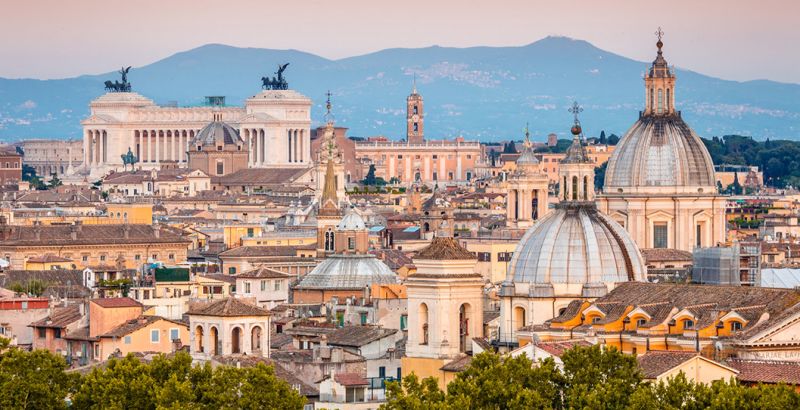
The city was built on a mountain.
The mountain grounded that which was founded.
Height held the advantage of sight for distance.
When invaders attacked the city prepared for resistance.
Traders from different directions could be seen.
Welcome was prepared by the social machine.
The gate to the city welcomed visitors, family and friends.
It wasn't closed to ministers, misters, sisters or gems.
The gate was the way through which travelers entered.
Messengers shared word as a gift from the sender.
Egypt and Babylon were among those who knew me.
Revelation was the gate for the truth of our history.
Philistia, Tyre and Ethiopia were partners in trade.
Weapons, wheels and cattle were the offerings they made.
The ring of fellowship is that which unites.
Power is grounded in defense of alliance.
Alliance against the destructive elements
prepares people for defense against violence.
The military is drawn from the people.
Training in strength overcomes feeling feeble.
Search for those lost while at work or at play
lends experience to training in a beneficial way.
The source of life is love.
Rescue comes from within and above.
Zion is a lion on a hill.
Orion and Kiron match the iron will.
------------------------
Psalm 87
Fundamenta ejus
1 On the holy mountain stands the city he has founded; *
the Lord loves the gates of Zion
more than all the dwellings of Jacob.
2 Glorious things are spoken of you, *
O city of our God.
3 I count Egypt and Babylon among those who know me; *
behold Philistia, Tyre, and Ethiopia:
in Zion were they born.
4 Of Zion it shall be said, "Everyone was born in her, *
and the Most High himself shall sustain her."
5 The Lord will record as he enrolls the peoples, *
"These also were born there."
6 The singers and the dancers will say, *
"All my fresh springs are in you."
--------------------------
8.28
Freedom
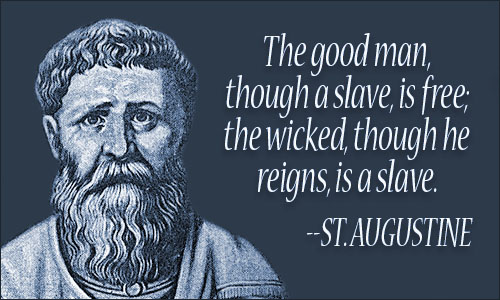
Augustine was an early Roman Christian theologian and philosopher from Africa. He was born in Thagaste. He became the bishop of Hippo Regius. Both cities are in present day Algeria.
He is viewed as one of the most important Church Fathers in western Christianity. He wrote in the Patristic era. “The City of God,” “On Christian Doctrine” and “Confessions” are among his most important works.
Augustine has been criticized as neo-Platonic in his philosophy and theology. His statement about the good man is a modification of what Plato had to say about slavery.
There isn't a king that wasn't descended from a slave. There is not a slave who did not have royal ancestors. When slavery was a spoil of war, the rulers who were not killed were enslaved to serve the conquering force.
He has been criticized for his philosophy because he defined human nature as totally corrupt. This had dark political implications in relation to Plato's definition of republic.
The Spartans were in the ascendance politically when he shifted the dialog of Socrates from the defense of democracy as practiced with Pericles to an advocacy for a form of government that was oppressively militaristic in aggression.
Athenian men were actively involved in the decisions made for the city state. The citizens were controlled by the destructive use of elements in the republic. Plato defined democracy as dictatorship when he overturned an earlier judgment.
Augustine's statement about the good man wasn't a rejection of slavery. It was a qualification of goodness in corrupted nature The statement was made in the "City of God." Given the postulation of a 'just war' this has dark implications in the context of a Constitution that ascribes the 'right' to declare war to an authority of the state.
Augustine said that John the Baptist did not bid soldiers to give up soldiering. He told them to do no violence and to be content with pay. This doesn't forbid soldiering or war.
It is a ban against invasion. The crusader popes thought that reclaiming the city of Jerusalem and the surrounding territory was a just cause for invasion. The proposal wasn't well received by those who had to pay for it.
Much of the domestic political strife in Europe resulted from immoral political proposals from the papal office. The popes had had to work their way into a position of authority with the development of monotheism as the prevailing cultural force for the European homeland.
There are grounds to argue that the crusades were conducted for a defensive purpose, but there was a significant consequence that resulted from the sectarian position that promoted the policy.
The Judean homeland was redefined as 'Christian' when it was Roman. Jews in Europe weren't the only ones who suffered from the Inquisition as the aggressive policy that sought to insure victory for Christian monotheism. Those Christians, Druids and Wiccans who did not agree strongly enough with the position of the Church militant were persecuted as well.
Augustine was on the ground floor for the development of monotheism as the dominant cultural force for Europe. What was his life like? Why did he write the "City of God"? How did his life affect the future that he envisioned for Rome?
Augustine of Hippo
b. 11.13.354 Thagaste
d. 8.28.430 Hippo Regus, Numidia
Augustine was born on November 11 in the year 354 in the municipium of Thagaste in the Roman province of Numidia. Thagaste is now Souk Ahras, Algeria.
Tipaza, Home of the Gods

He learned about the religious differences in the Roman empire from his parents. His father was a pagan who honored the Punic gods. His mother was a zealous Christian. Augustine was not interested in religion and education in his youth.
Pigs

The adolescent Augustine was interested in sex and mischievous living. He confessed that he had joined with friends to steal pears from a neighbor's vineyard. The purpose was "not to eat them ourselves but simply to throw them to the pigs."
Ruins in Carthage

Augustine set off to school in Carthage at age 17. The country boy was in the jewel of North Africa. There the underachiever became enraptured with his studies and started to make a name for himself.
He immersed himself in the writings of Cicero and the Manichaean philosophers. He cast off the vestiges of his mother's religion.
Amphitheater in Thagaste

Augustine returned to his home town of Thagaste to teach rhetoric when his studies were completed. He taught some Manichaeism on the side.
The philosophy was based on the teachings of a Persian named Mani. Mani believed that the teachings of the Buddha, Zoroaster and Jesus were incomplete. His revelations were for the entire world. He called his teachings the "Religion of Light." He claimed to be the Paraclete for truth as promised by Jesus.
Mani

Manichaeism purported to be the true synthesis of all the religious systems then known. It composed of Zoroastrian Dualism, Babylonian folklore, Buddhist ethics and some small and superficial additions of Christian elements. It was a dualist corruption of Christianity in the western world.
Seneca on Religion

It professed to be a religion of pure reason as opposed to Christian credulity. It professed to explain the origin, the composition and the future of the universe. It had an answer for everything and despised the mysteries of Christianity. The sacraments of Christianity were developed in relation to the mystery cults of polytheism when it was an 'underground' religious development.
Manichaeism taught that the world of light and the world of darkness constantly war with each other. War caught humanity in the struggle.
The Higher Nature

Manichaeism offered Augustine a way to accommodate his conflicts. He could pursue his career and retain his partner while purging his sins through his service to the pure Elect. He could blame his sins on his lower alien nature. The lower nature had been made by the power of evil like the material world. The doctrine taught that his true self would eventually shed this alien nature.
Quote Against Religion
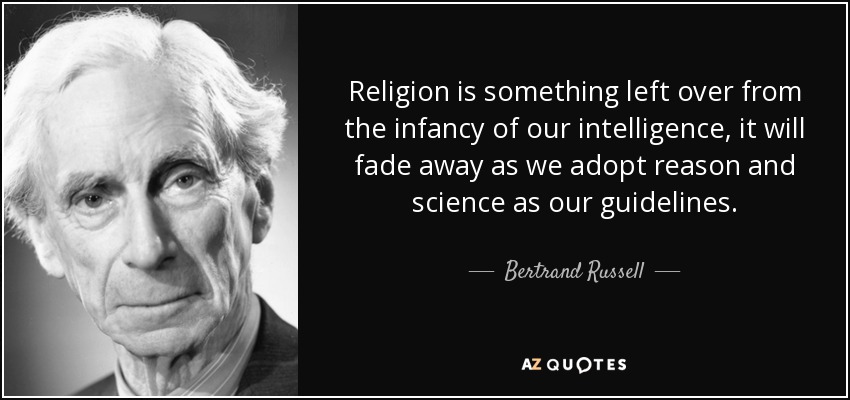
Manichaeism also modified the need to respect the name of Christ that was instilled by his childhood. His initial distaste for the Christian scriptures was gratified. He could regard the Bible as a crude and contaminated attempt at the truth. The Manichaean scriptures offered the name of Christ and what seemed to be a profound understanding of the universe and of human life.
Slave to Pleasure
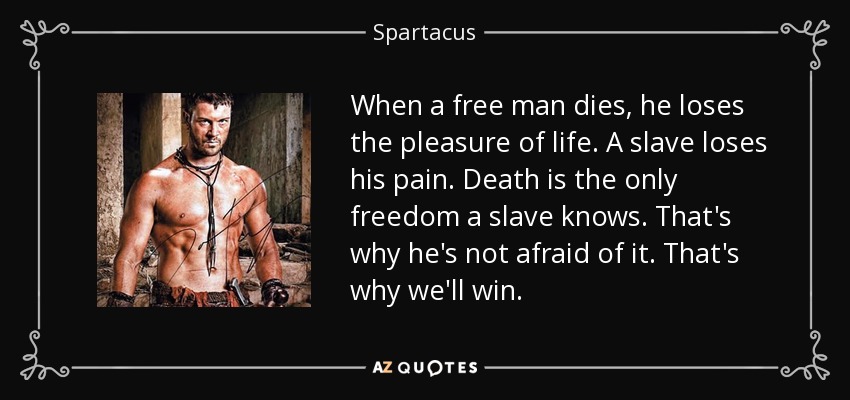
Augustine had joined the wildest young men of Carthage. They were called the "overturners" or the "destroyers." He became the delighted slave to pleasure in Carthage as a Manichee. Festivals celebrating the gods were used for drunken revelry. He took a partner. They soon were parents of a baby boy whom they named Adeodatus.
Augustine tried to hide his views from his mother, Monica. She threw him out of the house when she discovered them.
Monica had dreamed that her son would become a Christian. She continued to pray and plead for his conversion. She followed him to Carthage when he moved there to teach. She begged him not to go when Augustine was offered a professorship in Rome. He told her to go home and sleep comfortably in the knowledge that he would stay in Carthage. He boarded a ship for Rome when she left.
Rhetoric – Plato
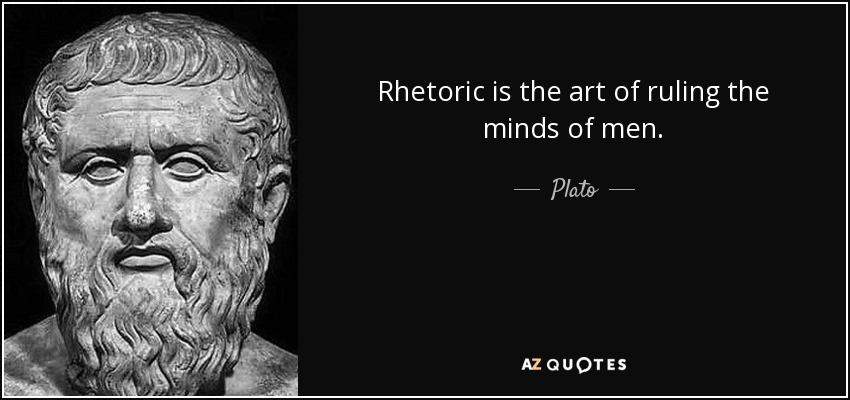
Augustine moved again after a year in Rome. He became the professor of rhetoric for the city of Milan. There he began attending the cathedral to hear the impressive oratory of Ambrose the bishop.
He kept attending because of Ambrose's power as a preacher. He soon dropped his Manichaeism in favor of Neoplatonism. This was the philosophy of both Roman pagans and Milanese Christians.
Pears

Augustine was struggling with himself. This struggle added to the emotional strain of forsaking his lover and the shift in philosophies. He had sought to overcome his fleshly passions for years. Nothing seemed to help.
It seemed to him that even his smallest transgressions were weighted with meaningful consequence. When he wrote about the pear stealing of his youth he reflected, "Our real pleasure consisted in doing something that was forbidden. The evil in me was foul, but I loved it."
“Take up and read.”
Benozzo Gozzoli

He wrestled anxiously about such matters one afternoon while walking in his garden. Suddenly he heard a child's sing-song voice repeating, "Take, read." (Tolle, legge) A collection of Paul's epistles that he'd been reading laid on a table.
He picked it up and read the first thing he saw: "Not in reveling and drunkenness, not in lust and wantonness, not in quarrels and rivalries. Rather, arm yourselves with the Lord Jesus Christ, spend no more thought on nature and nature's appetites" (Romans 13:13-14)
He later wrote, "No further would I read; nor needed I: for instantly at the end of this sentence, by a light as it were of serenity infused into my heart, all the darkness of doubt vanished away."
Cassiaco

Augustine's conversion sent shockwaves through his life. He resigned his professorship, dashed off a note to Ambrose telling of his conversion and retreated to a country villa in Cassiciacum with his friends, mother and his son, Adeodato.
There he continued discussing philosophy and churning out books in a Neoplatonist vein. He wrote the “Dialogs.” He returned to Milan after a year to be baptized by Ambrose, then headed back to Thagaste to live as a writer and thinker.
He had lost his mother, his son and one of his closest friends by the time he reached his home town. The journey was lengthened by political turmoil.
These losses propelled Augustine into a deeper, more vigorous commitment. He established a lay ascetic community in Thagaste to spend time in prayer and the study of the Scriptures with his friends.
Church Ruins Annaba (formerly Hippo)
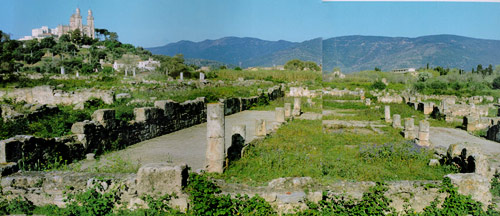
Augustine traveled to Hippo in 391 to see about setting up a monastery in the area. His reputation went before him. The story goes that Bishop Valerius put aside his prepared sermon and preached on the urgent need for priests in Hippo when he saw the renowned layman in church one Sunday.
The crowd stared at Augustine. They pushed him forward for ordination. Augustine was made a priest against his will. The laity thought that his tears of frustration were due to his wanting to be a bishop rather than priest. They assured him that good things come to those who wait.
Neo-Punic from Tunisia
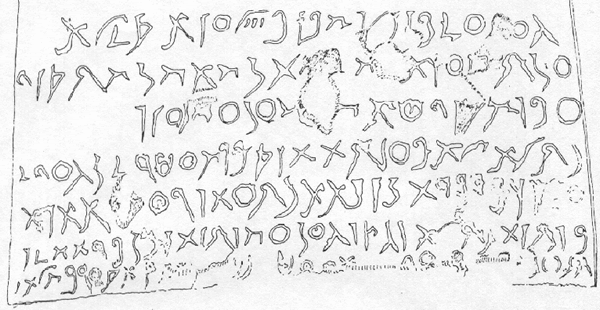
Valerius spoke no Punic. It was the local language from Phoenician sources. He quickly handed over teaching and preaching duties to his new priest. Augustine spoke the local language fluently. Augustine became bishop of Hippo within five years after Valerius died.
Dispute with Fortunatus
Church of St. Augustine
San Gimignano, Italy
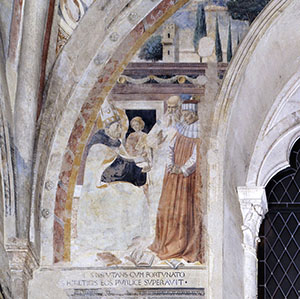
Guarding the church from internal and external challenges topped the new bishop's agenda. The church in North Africa was in turmoil. Though Manichaeism was already on its way out, it still had a sizable following.
Augustine knew its strengths and weaknesses. He debated Fortunatus, a former schoolmate from Carthage and a leading Manichaean at the public baths. The bishop argued against the errors in the doctrine. Fortunatus left town.
Dispute with the Donatists
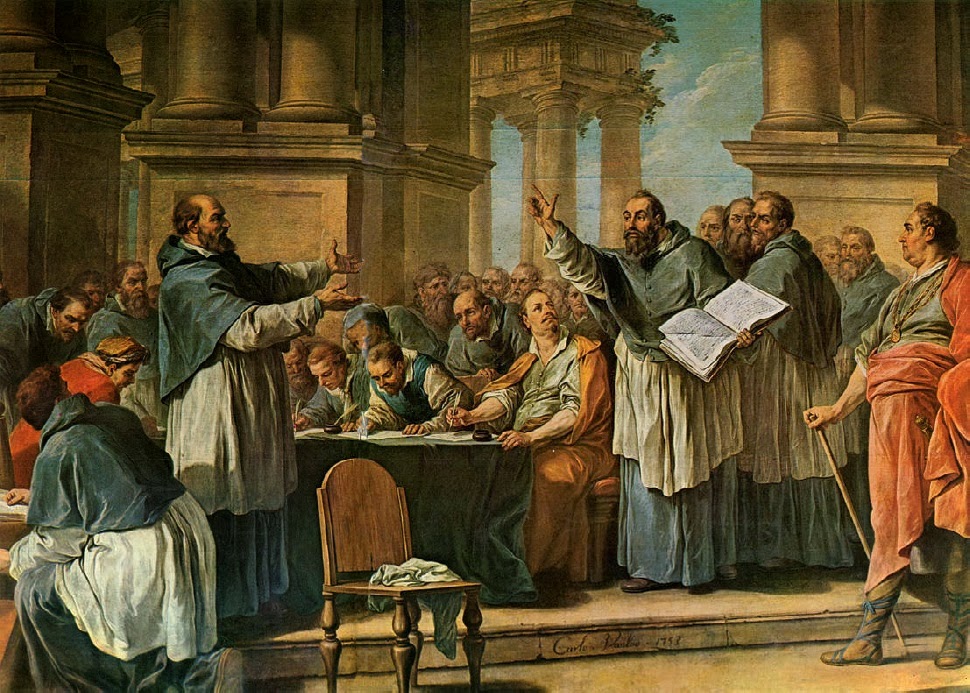
Donatism was more difficult to handle. It was a schismatic and separatist North African movement in the church. The Roman governor of North Africa had been lenient to the large Christian minority during his rule through the persecutions.
“Traditors” is the root word for traitors.

He was satisfied when Christians handed over their scriptures as a token repudiation of their faith. Christians who did so were called traditors or “those who handed things over” by their critics. The critics were mainly from the lower class.
The Donatists were rigorists like the third century Novatianists. They held that the church must be a church of “saints”, not “sinners.” Sacraments administered by traditors were invalid.
No one without a past.

Donatists believed the Catholic Church had been compromised and that catholic leaders had betrayed the church during earlier persecutions. Augustine argued that catholicism was the valid continuation of the apostolic church.
He wrote scathingly, "The clouds roll with thunder, that the house of the Lord shall be built throughout the earth; and these frogs sit in their marsh and croak 'We are the only Christians!' "
None Righteous
Romans 3:10

The controversy came to a head as the imperial commissioner convened a debate in Carthage in 411 to decide the dispute. The commission had been appointed by Pope Militiades. Augustine's rhetoric refuted the Donatist doctrine. The commissioner pronounced against the group.
No Sin
1 John 1:8

The Donatists were repressed along with the Circumcellions. They condemned property and slavery. They advocated free love, canceling debt and freeing slaves.
The term "Circumcellions" was coined by others, based on "circum cellas euntes". They “go around units” because "they roved about among the peasants, living on those they sought to indoctrinate."
The condemnation of Donatism did not produce a time of rejoicing for the church. The year before the Carthage conference, the barbarian general Alaric and his troops sacked Rome.
Many upper-class Romans fled for their lives to North Africa. It was one of the few safe havens left in the empire. Augustine was given a new challenge. He wrote a defense for Christianity against claims that it had caused the empire's downfall by turning eyes away from Roman gods.
City of God

Augustine's response to the criticism came in “The City of God.” The work included 22 volumes. It took over 12 years to write. He argued that Rome was punished for past sins, not new faith.
His neo-Platonism provided a bridge to monotheism, but the convictions regarding the corruption of human nature and 'just war' allowed for the perpetuation of the fatalism that was so reflective of the polytheistic Roman order.
His lifelong obsession with original sin was fleshed out. His work formed the basis for the medieval mind. "Mankind is divided into two sorts," he wrote. "Such as live according to man, and such as live according to God. These we call the two cities… The Heavenly City outshines Rome. There, instead of victory, is truth."
Sin City

Pelagianism was another front Augustine had to fight to defend Christianity. Pelagius was an Irish monk. He gained popularity just as the Donatist controversy ended. He rejected the idea of original sin. He insisted instead that the tendency to sin is humankind's own free choice.
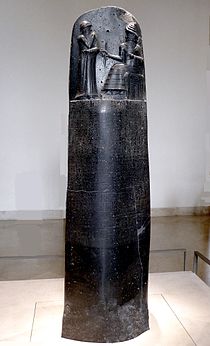
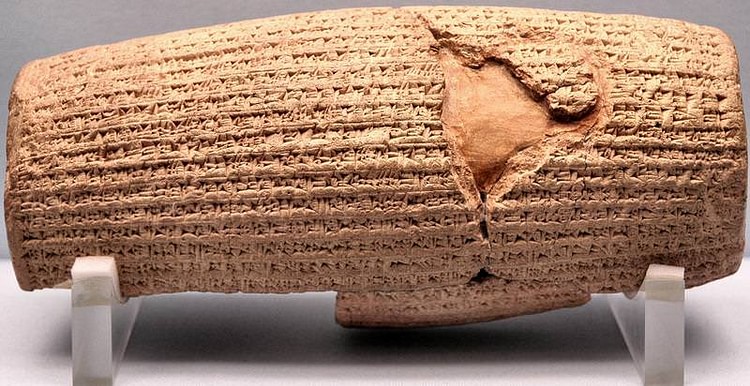
Jerome and Augustine saw Pelagianism as the ‘heresy of Pythagoras and Zeno.’ It amounted to the act of saying that slavery was not slavery. It was the ‘sin’ that had justified the overthrow of Babylon by Cyrus and the Achaemenid Persians.
Divine grace was not seen as necessary to do the will of God. The church excommunicated Pelagius in 417, but his banner was carried on by young Julian of Eclanum.
Julian took potshots at Augustine's character as well as his theology. He argued that Augustine and his other low-class African friends had taken over Roman Christianity. Augustine argued with the former bishop for the last ten years of his life.
Vandal Invasion

The Vandals invaded North Africa in the summer of 429. They met almost no resistance along the way. Hippo was one of the few fortified cities. It was overwhelmed with refugees.
The 76-year-old Augustine died in the third month of the siege. He was not killed by an arrow. He died from a fever.
His writings survived the Vandal takeover miraculously. His theology became one of the main pillars on which the church of the next 1,000 years was built.
And the Son
Some of his teachings have been disputed in the East. Theologians such as John Romanides have questioned his assertion regarding the degree of depravity in human nature and the Neo-Platonic argument regarding the names of God.
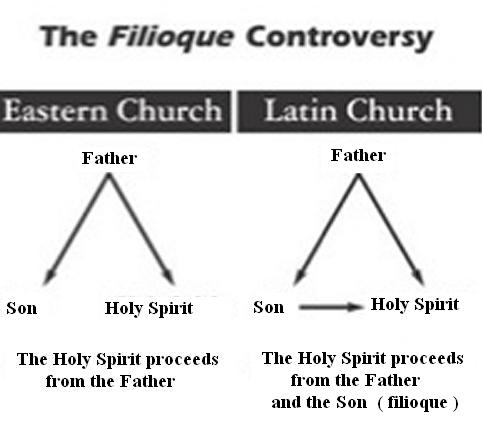
Theologians like Georges Florovsky in the Eastern Orthodox Church have shown significant appropriation of his writings. The most controversial doctrine surrounding his name is the fililoque clause.
The clause regarding the procession of the Spirit added “from the Son” to the Nicene Creed. This clause has been rejected by the Orthodox Church.
Predestined to Original Sin?

Other disputed teachings include his views on original sin, the doctrine of grace and predestination. Though considered to be mistaken on some points, he is still considered a saint.
He has even influenced Eastern Church Fathers like Gregory Palamas. Augustine "established anew the ancient Faith" according to his contemporary Jerome.
Lectionary Augustine of Hippo
wiki Augustine of Hippo
Christianity Today: Theologian Augustine
IEP Philosopher Augustine
Augustinian Augustine
Manichaeism
Persian Religion



%2C_October_2009.JPG)