Showing posts with label mercy. Show all posts

Sunday, April 7, 2019

Dare

4-14-19

Ayaka Wada

Dare
to Care
敢于关心
Gǎnyú guānxīn
大事にする
Daiji ni suru
ps118

Dare to have mercy. 
Mercy endures in memory 
with certainty.               

Remember this you nations.                                                            
This will last for generations.                                                  

That which is legal about law is regal             
from the eagle to the beetle, you people.                                     

Mercy endures in memory at length.                          
It is the foundation for love with strength.  

The ram is a lamb.                               
It will butt your bum with a bam 
to get your hand.
Time will make another lamb.

Love secures endurance.                                                             
Endurance with education and allurance                              
yields wisdom and knowledge for insurance                       
with perspective on perception that yields assurance.        
Let the vote denote the number                               
for policy that does not encumber
people as the hunter
for the state between slumber
and wonder.    

Let the vote connote opposition to policies that harm the public.      
Let freedom ring for people in kingdom or republic.         

Allow defense when police protection is not at hand;               
free trade so plutocracy does not rule the land;              
construction for protection from the elements and man;   
communications with people in foreign nations; 
travel to experience different sensations 
in various locations.                                 

Beauty is in the strength of the song.                     
Success rings long with the bong                             
of the gong.        


                                 
Smoke drifts slowly from the echo of dreams.                  
Things are not as certain as they seem.

The fragrant mist from the hyacinth                   
drifts in through the open window inch
to give a pinch of the aromatic labyrinth.

The odor of nard had filled the room 
where the bottle broke before the tomb                       
and the maiden resumed work before the loom.            

The earth's sweet being in the beginning in the garden of Eden
was not ended by sinning for eternal winning in freedom.     
The penalty of death is not meant to kill                       
those with the right intent and execution of will.                   

Palms were laid upon the road                           
in a story that was told   
to celebrate the moral code.


An Unridden Colt

Cloaks were laid under his feet 
to respect the royalty of his achievement.  

Jesus carried the beam to Golgotha's peak.
Christ died from the pain the cross had wreaked.
The Word rose again as resurrected speech.

The legal code has since been asked
to consider the role that justice has tasked
to punishment as correction cast.

Jesus was not guilty of a plan
for rebellion. He murdered no man.
Cruelty or violence do not belong in the legal span.

Mary remembered her barren womb
as she stood by the open tomb
and felt the memory of the empty room.

What were you and I until we loved?
Were we not to become products of the love
from above?

All pleasures are fancied true.
Any earthly beauty that I saw to sooth
was desired and got as the dream of you. 

The golden eagle watches noh theater.     
The lover appeals to his love as a reasoner           
in the palace yard as the fantasy sphere
below the cypress as the seat for the seer. 

Spring flows in a streaming state
while young grass grows near the gate
where there had been snow of late.  

The tea ceremony doesn't wait
for the cherry tree 桜 to blossom late.

The fate of a mate is made great
with the dish that is set upon a plate. 

Like a drifting cloud
bound by nothing loud 
I let go of feeling proud.

I allowed myself to wander around  
to hear the whim of the wind wound   
above ground with this wooshing sound.

Saki is sipped slowly by evening.
The light lets dark reveal her reason. 

She sips her cup to test
her best  
with zest
for the west
in the zodiac crest
in the quest for rest.

The east edge of the milky way
is the abode for his astral play.  

There is no partiality with justice.
Each day has a candle lit for us.

The stone stands alone unaltered thus 
as an altar for trust 
that looks beyond the dust
and the rust.

I will draw the inference 
that reason affirms with assurance.

I will live to declare the art of the seen
that the knowledge of science has drawn for me.

Open the gates of perspective on perception for consciousness.
I will see light with the sight that is given to perceive more of the less 
evident with tests.

I will rejoice in the increase of fruit on trees by the lake.         
I will sing for the quarter moon as a turn in orbit for heaven's sake.

The transcendence of excess individual or social limitation 
is more beautiful than self-degradation.

Dare to have mercy.
Mercy endures in memory 
for surety. 

Mercy endures in memory at length.
It is the foundation for love with strength.             

science 科学 kagaku
beauty 美しさ utsukushi-sa

==============

118 Confitemini Domino

1 Give thanks to the Lord, for he is good;
his mercy endures for ever.
2 Let Israel now proclaim,
"His mercy endures for ever."
3 Let the house of Aaron now proclaim,
"His mercy endures for ever."
4 Let those who fear the Lord now proclaim,
"His mercy endures for ever."
5 I called to the Lord in my distress;
the Lord answered by setting me free.
6 The Lord is at my side, therefore I will not fear;
what can anyone do to me?
7 The Lord is at my side to help me;
I will triumph over those who hate me.
8 It is better to rely on the Lord
than to put any trust in flesh.
9 It is better to rely on the Lord
than to put any trust in rulers.
10 All the ungodly encompass me;
in the name of the Lord I will repel them.
11 They hem me in, they hem me in on every side;
in the name of the Lord I will repel them.
12 They swarm about me like bees;
they blaze like a fire of thorns;
in the name of the Lord I will repel them.
13 I was pressed so hard that I almost fell,
but the Lord came to my help.
14 The Lord is my strength and my song,
and he has become my salvation.
15 There is a sound of exultation and victory
in the tents of the righteous:
16 "The right hand of the Lord has triumphed!
the right hand of the Lord is exalted!
the right hand of the Lord has triumphed!"
17 I shall not die, but live,
and declare the works of the Lord.
18 The Lord has punished me sorely,
but he did not hand me over to death.
19 Open for me the gates of righteousness;
I will enter them;
I will offer thanks to the Lord.
20 "This is the gate of the Lord;
he who is righteous may enter."
21 I will give thanks to you, for you answered me
and have become my salvation.
22 The same stone which the builders rejected
has become the chief cornerstone.
23 This is the Lord's doing,
and it is marvelous in our eyes.
24 On this day the Lord has acted;
we will rejoice and be glad in it.
25 Hosannah, Lord, hosannah!
Lord, send us now success.
26 Blessed is he who comes in the name of the Lord;
we bless you from the house of the Lord.
27 God is the Lord; he has shined upon us;
form a procession with branches up to the horns of the altar.
28 "You are my God, and I will thank you;
you are my God, and I will exalt you."
29 Give thanks to the Lord, for he is good;
his mercy endures for ever.

===================

Bethphage- House of Unripe Figs
Bethany- House of Figs

Luke 19:29-30
When he had come near Bethphage and Bethany at the place called the Mount of Olives he sent two of the disciples saying, 'Go into the village ahead of you and as you enter it you will find a colt that has never been ridden. Untie it and bring it here.'

-------------------------------

They laid cloaks and palms under his feet
to respect the royalty of his achievement.

==================

Conformity

Simone de Beauvoir
b. 1.9.1908, Paris, France
d. 4.14.86, Paris, France

Paris

The Belle Époque was a period in the history of the city between the years 1871 to 1914. It lasted from the beginning of the Third French Republic until the First World War. It saw the construction of the Eiffel Tower, the Paris Métro, the completion of the Paris Opera and the beginning of the Basilica of Sacré-Cœur on Montmartre.

Three lavish "universal expositions" in 1878, 1889 and 1900 brought millions of visitors to Paris to sample the latest innovations in commerce, art and technology. Paris was the scene of the first public projection of a motion picture, and the birthplace of the Ballets Russes, Impressionism and Modern Art.

The expression Belle Époque ("beautiful era") came into use after the First World War. It was a nostalgic term for what seemed a simpler time of optimism, elegance and progress.

Marxism had a strong effect on French scientific philosophy. It was seen as the means to push the bureaucracy of government forward and backward into some small advance. It harbored anti-religious sentiment as a necessary proponent for change. Existentialism arose as a kind of mediation between the respective forms of socialism.

Existentialism doesn't promote achievement as a philosophy. It acquired a strong association with socialism because there was no celebration of civilized development.

Revolution was miscast as the only political development for social reform. Now that it has become institutionalized the threat of revolution is used to subvert political or social achievement.

Simone de Beauvoir was an anomaly to the socialist republic. She was one of the first women awarded a doctorate in philosophy.She had associations with existentialism, socialism and feminism, but her philosophy strove to identify these associations as affiliations that didn't endorse armed rebellion as the means to attain evolutionary change in legal reform.

Her overstatement for women was to become so pronounced that it resulted in some reform. Most of her work was for her personal benefit.

France was in a period where it was virtually inconceivable that an educated person could be anything other than a Marxist of some kind. Marx had moved to Paris in 1843.

The philosophical climate for mathematics and science in rational government was exploited by the anti-capitalist and anti-religious sentiments that were associated with his economic theory. It is not as though the difficulty was unique to France. The Second World War was fought over the different kinds of socialism.

Socialism is degenerate as an economic theory because it only represents industry in government.
The middle class is ruled out as having any significant designation as anything other than the 'problem.' Management and labor are engaged in a class struggle to dominate the political leadership.

Government is indicated as the default mechanism for the correction of the problem. Independent enterprise with capitalism is regarded as the cause of the middle class and economic inequality.

Simone de Beauvoir (Boo-vwa)

Simone de Beauvoir was born on 9 January 1908 into a bourgeois Parisian family in the 6th arrondissement. Sixieme also goes by the name of Luxembourg. It is on the left bank of the Seine River.

The left bank includes world-famous educational institutions such as the École nationale supérieure des Beaux-Arts and the Académie française, the seat of the French Senate as well as a concentration of some of the most famous monuments in Paris such as Saint-Germain Abbey and square, St. Sulpice Church and square, the Pont des Arts and the Jardin du Luxembourg.

The 'left bank' is also synonymous with leftist culture. The bourgeois were the middle class. They adapted to the Marxist economic influence on French government by organizing within the social forms that featured what was best in culture. There was a conscious effort to offset the liberal competition for global commerce with conservative alliance.

Socialism didn't destroy development in Russia or China because of the long tradition of conservative policy in government.  France allied with the large nations that favored the defense of national boundaries.

When the independence movement in African colonies took place in the 1960's, the French could pull out and retain alliance with the native government that took responsibility for governance.

Simone's parents were Georges Bertrand de Beauvoir, a legal secretary who once aspired to be an actor, and Françoise de Beauvoir (née Brasseur), a wealthy banker's daughter and devout Catholic. Simone's sister, Hélène, was born two years later.

The family struggled to maintain their bourgeois status after losing much of their fortune shortly after World War I. Françoise insisted that the two daughters be sent to a prestigious convent school.
Simone herself was deeply religious as a child. She intended to become a nun at one point. She lost her faith in her early teens and remained an atheist for the rest of her life.

This was a consequence of the adaptation to Marxist science. Socialist influence would not allow religion to participate in government.  The dominant religion was associated with capitalism as the cause of the 'problem.' Economic success had to be 'managed' as a socialist product or it didn't receive recognition.

Simone studied mathematics at the Institut Catholique de Paris and literature/ languages at the Institut Sainte-Marie after passing baccalaureate exams in mathematics and philosophy in 1925.

She studied philosophy at the Sorbonne. She wrote her diplôme d'études supérieures after completing her degree in 1928. The diplome was roughly equivalent to a Master of Art thesis. Her topic was "Le concept chez Leibniz" ["The Concept in Leibniz"].

Beauvoir was only the ninth woman to have received a degree from the Sorbonne at the time. French women had only recently been allowed to join higher education. Women would not obtain the right to vote until 1944. Participation in the arts and literature allowed for a build in consensus that was acknowledged administratively in education.

She first worked with Maurice Merleau-Ponty and Claude Lévi-Strauss. All three completed their practice teaching requirements at the same secondary school. She sat in on courses at the École Normale Supérieure in preparation for the agrégation in philosophy even though she was not officially enrolled.

The agregation is a highly competitive postgraduate examination which serves as a national ranking for students. It was while studying for the agrégation that she met École Normale students Jean-Paul Sartre, Paul Nizan and René Maheu.

She wrote about her youth in Memoirs of a Dutiful Daughter. She said: "...my father's individualism and pagan ethical standards were in complete contrast to the rigidly moral conventionalism of my mother's teaching. This disequilibrium, which made my life a kind of endless disputation, is the main reason why I became an intellectual."

Her first novel was published in 1943. The title was She Came to Stay." It is a fictionalized chronicle of her relation with Sartre and their relationship with Olga and Wanda Kosakiewicz.

Olga was one of her students in the Rouen secondary school where Beauvoir taught during the early 1930s. Sartre tried to pursue Olga but she rejected him, so he began a relationship with her sister Wanda.

Sartre was still supporting Wanda upon his death. He also supported Olga for years, until she met and married Jacques-Laurent Bost, a lover of Beauvoir.

The novel is set just before the outbreak of World War II. Beauvoir creates one character from the complex relationships of Olga and Wanda. The fictionalized versions of Beauvoir and Sartre have a ménage à trois with the young woman. The novel also delves into the couple's complex relationship and how it was affected.

She Came to Stay was followed by other works. The Blood of Others explored the nature of individual responsibility. It told a love story between two young French students participating in the Resistance in World War II.

Pyrrhus and Cineas was her first philosophical essay into existential ethics. Cineas asked Pyrrhus, "Then what?" after hearing the plan to conquer his next empire. The question posed an infinite regress. When rest was offered as the answer to the goal for the final conquest, Cineas asked "Why not start now?".

Simone presented the existentialist dilemma to favor Pyrrhus. Imperial expansion was seen as a metaphor for commercial, social or personal organization.

The question posed by Cineas haunts the formation of projects. We have to account for the reason for working to achieve any goal.  The attitude of Pyrrhus was considered more authentic in that it is an attitude that directs itself forward toward goals that are not absolute.

Camus presented a similar dilemma in the story of Sisyphus. He proposed that the human condition had to resign itself to finding happiness in the accomplishment of a tedious task like pushing a boulder to the top of a hill. There is a certain protection of the right to privacy in either view, but brutishness in bureaucracy was also defended.

Personal justification does not have to be disclosed to the public when a product or service is being offered. There are times when advertising is misdirected by the intention to challenge the customer to judge the product with his or her observation of value. Their is respect for personal judgment when the advertisement is not fraudulent.

The Ethics of Ambiguity (1947) confronted the existentialist dilemma of absolute freedom vs. the constraints of circumstance. The ambiguity is that each of us is both subject and object.

Being is free and factual. We have the ability to take note of ourselves and choose what to do as free. We are constrained by physical limits, social barriers and the expectations and political power of others as fact.

Each of us is free to transcend individual limitation, yet constrained by the limitation of the transcendence.

The Second Sex was published in two volumes in 1949. It was later condensed into one text divided into two "books" in English. Very little serious philosophy on women from a feminist perspective had been done at the time that it had been written.

The main thesis revolves around the idea that woman has been held in a relationship to man through her relegation to being man's "Other." Beauvoir found that the self needs otherness in order to define itself as a subject. The self is often just as much objectified by its other as the self objectifies it. Man takes on the role of self in society. He is the subject. She is the other.

Physiological occurrences in no way directly cause woman to be man's subordinate. Biology and history are not mere "facts" of an unbiased observer. They are always incorporated into and interpreted from a situation.

She acknowledged that psychoanalysis and historical materialism contributed insight into the sexual, familial and material life of woman, but failed to account for the whole picture.

Psychoanalysis denied the reality of choice. Historical materialism neglected to take into account the existential importance of the phenomena it reduced to material conditions.

She wrote "One is not born, but rather becomes, a woman" at the start of the second book. She traced the education of woman from her childhood, through her adolescence and finally to her experiences of lesbianism and sexual initiation (if she has any).

She asserted that women are forced to relinquish their claims to transcendence and authentic subjectivity by a progressively more stringent acceptance of the "passive" and "alienated" role to man's "active" and "subjective" demands at each stage.

She presented the roles of wife, mother and prostitute to show how women, instead of transcending through work and creativity, were forced into monotonous existences of having children, tending house and being the sexual receptacles of the male libido.

She advocated such changes in social structures such as universal childcare, equal education, contraception and legal abortion for women. She proposed woman's economic freedom and independence from man.

This argument reads like Locke's position against absolute power for monarchy. It became an advocacy for his universal power for his parliamentarian authority. It worked out as something worse insofar as a number of different parliamentarians began to work to produce an inheritance for their legacy as something more important than that of the hereditary succession.

The Parliamentarian may work harder or not as hard as a monarch, but the authority works to take more from the people to establish a legacy by virtue of the legislative reform that was supposed to be enacted conservatively. Fake news became imperative in order to deceive the public into agreement to pay more in taxes.

The Mandarins won her France's highest literary prize, the Prix Goncourt, in 1954. It was translated into English in 1956 The book is set after the end of World War II and follows the personal lives of philosophers and friends among Sartre's and de Beauvoir's intimate circle. It included her relationship with American writer Nelson Algren to whom the book was dedicated.

The title refers to the scholar-bureaucrats of imperial China. The characters at times saw themselves as ineffectual "mandarins" as they attempted to discern what role, if any, intellectuals would have in influencing the political landscape of the world after World War II.

The themes of feminism, existentialism and personal morality are explored as the characters navigate not only the intellectual and political landscape but also their shifting relationships with each other. It defaults to the feminist form of socialism as a device for personal gain.

Beauvoir became active in France's women's liberation movement in the 1970's. Abortion was legalized in France in 1974. Socialism had imposed a bureaucratic stagnancy that another form had to correct for the legal reform.

Beauvoir died of pneumonia on 14 April 1986. She was 78 years old. She is buried next to Sartre at the Montparnasse Cemetery in Paris.

---------------------------

Simone de Beauvoir
西蒙娜德波伏娃
西蒙娜德波伏娃

西 Xi        the west           西  sei      west                Shi  し    シ      Si     시  city   
蒙 meng  to cover           蒙   mo     ignorance       mo  も-  モ-    mon 몬  mon     
娜 na       elegant             娜   da     graceful           nu    ぬ   ヌ      deu  드  de       
德 de       morality            德   toku  ethics               de   ど    ド       Bo   보  bo           
波 Bo      storm                 波  ha      waves              Bo  ぼ- ボ-     bu    부  part           
伏 fu        to overcome     伏  fuku    prostrated       vo  ヴぉ  ヴォ   a      아  ah   
娃 wa      doll                     娃  a        beautiful           wa わ-  ワ-     leu   르   le             
                                                                                     ru   る    ル
-------------------------------

The transcendence of excess individual or social limitation
is more beautiful than self-degradation.

====================

https://www.iep.utm.edu/beauvoir/
https://en.wikipedia.org/wiki/Simone_de_Beauvoir

Sunday, March 31, 2019

Restore

4.7.19
Gabrielle Wilde

Restore
Fortune
恢复财富Huīfù cáifù
回復フォーチュン 
Kaifuku fōchun
ps126

When leadership restored fortune,
we were like those who received our portion.

We felt like those who dream while still awake.
There was the distinct feeling that this fortune wasn't fake.

Our mouth was filled with laughter.
It was like starting again after a climatic chapter.

The rider and the fighter were twins in the sky.
They fought for the standard to know how and why.

They released many captives from the burden of plight.
The captives were freed with the capacity for flight.

Courage watched leadership rise with his word.
Reason was challenged to struggle with the absurd.

The hunter drank in the storm faint though it had been.
He stalked the prey that he had yet to win.

The rider rested with his horse
in the investigation of the state of the forest.

Wildness preceded the primitive me.
Food and water have been granted to proceed.

Our tongues lifted sound above vocal cords.
Our joy was profound. Our bliss was adored.

Restore fortune with the cosmic sorter for order.
Grow us flowers plentiful as stars in the heavenly quarters.

Give us fertility instead of ashes.
Let water pour down while the lightening crashes.

Let oil be squeezed from olives or vegetables.
Let want be appeased, not made miserable.

Let the mantle of praise lift up the weakness of spirit.
Feel the energy of love before you hear or go near it.

Augurs of chance read spirits instead of birds.
Test your statements for the truth of the words.

Righteousness is based on faith with grace.
Redemption with Christ places destiny over fate.

Great things have been done for us in the strength of this time.
The length of light grows as sublimely prime.

Those who managed labor throughout the last year
made a memory to transcend the feeling of fear.

Celebrate the presence of the essential essence.
Gratitude for service beats sacrifice as penance.

Those who sowed seed with the toil of their tears
will reap joy with the music of love in the heavenly spheres.

The deluge washed the mass of seashells.
Polish was added to the shine of cells
and bells.

Those who went weeping to water their seeds
will return with shoulders of sheaves to fulfill basic needs.

This voice is like that of the cry in the darkness
unbroken in facing the strength of the starkness. 

Restore our fortune. Transform the harm of the past.
Let us have our portion. Give us confidence to last.

Making continual reparation for misdeeds from the past isn't a policy that will make fortune last. Liberals made the public pay for legal reform, then they make us pay for damage caused by the storm from the reform.

----------------------------

Psalm 126
In convertendo

1 When the Lord restored the fortunes of Zion, *
then were we like those who dream.
2 Then was our mouth filled with laughter, *
and our tongue with shouts of joy.
3 Then they said among the nations, *
"The Lord has done great things for them."
4 The Lord has done great things for us, *
and we are glad indeed.
5 Restore our fortunes, O Lord, *
like the watercourses of the Negev.
6 Those who sowed with tears *
will reap with songs of joy.
7 Those who go out weeping, carrying the seed, *
will come again with joy, shouldering their sheaves.

-------------------------

Isa. 43:20
The wild animals will honor me.
The jackals and ostriches will be grateful
for I give water in the wilderness;
rivers in the desert
to give drink to my chosen.

----------------------------

Wildness preceded the primitive me.
Food and water have been granted to proceed.

=====================

Phil.3:8
I have suffered the loss of things in order to gain Christ
not having a righteousness of my own, but one that comes through faith,
the righteousness from God based on faith.

----------------------------

Righteousness is based on faith with grace.
Redemption with Christ places destiny over fate.

=====================

John 12:8
'You always have the poor with you, but you do not always have me.'

----------------------------

Celebrate the presence of the essential essence.
Gratitude for service beats sacrifice as penance.

=====================

Gemini - twins
Taurus- bull
Orion - hunter
Mars - courage
Jupiter - leadership
Mercury - reason
Venus- beauty
Castor - rider
Pollux - fighter
Neptune - water, storm

Gemini is Latin for "twins," and it is associated with the twins Castor and Pollux in Greek mythology.
https://www.greekmythology.com/Myths/Zodiac/Gemini/gemini.html

The twins were Castor and Polydeuces (Pollux). They were known as the Dioscuri. Their sisters were Helen and Clytemnestra. They were the sons of Leda, Zeus and Tyndareus. Castor and Pollux were half-brothers.

Leda was married to King Tyndareus of Sparta. She was also seduced by Zeus, so the father's of both children were uncertain. The Discouri were inseperable and grew closer with age.

Castor was a famous horse tamer and Pollux, a superb boxer. When Castor was killed during a battle, Pollux was inconsolable and gave up his own life to be with his brother. Jupiter rewarded their love by placing their images among the stars. They shine side by side.

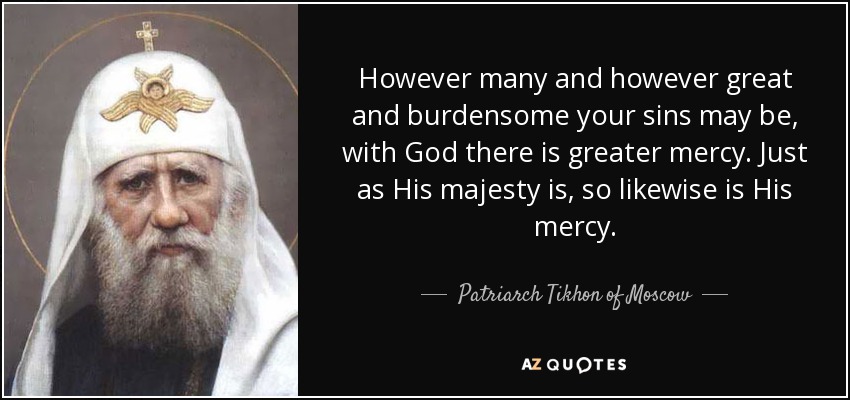
Majesty with Mercy
https://www.azquotes.com/picture-quotes/quote-however-many-and-however-great-and-burdensome-your-sins-may-be-with-god-there-is-greater-patriarch-tikhon-of-moscow-52-31-82.jpg

Tikhon of Moscow
b. January 31, 1865, Klin, Russia
d. April 7, 1925, Moscow, Russia

Klin
Russian Empire

Alexander II (1818-1881) was the Emperor of Russia from 2 March 1855 until his assassination on 13 March 1881. He was also the King of Poland and the Grand Duke of Finland. He emancipated the serfs in 1861. It was the first and most important of his reforms. The Emancipation Edict abolished serfdom throughout the Russian Empire.

There was an uprising in Poland in 1863. The land was stripped of its constitution and incorporated into Russia.

Alexander sold Alaska to the United States in 1867. He was afraid that the territory would fall into British hands in the event of another war.

Klin means 'wedge.' One of the towns by that name was located in the Toropets District of the Pskov Governate. Klin is located to the west of Moscow by about 85 km (55 mi.). It is south of St. Petersburg by about the same amount of distance. It is part of a basin that drains to the Baltic Sea.

Tikhon of Moscow

Tikhon was born as Vasily Ivanovich Bellavin in Klin, Toropets, Pskov of the Russian Empire on 31 January 1865.

Vasily studied at the Pskov Theological Seminary from 1878 to 1883. He graduated from the St. Petersburg Theological Academy as a layman at the age of 23 in 1888. He returned to the Pskov Seminary as an instructor of Moral and Dogmatic Theology.

He took monastic vows and was given the name Tikhon in honor of St. Tikhon of Zadonsk at the age of 26 in 1891. Tikhon was consecrated Bishop of Lublin on October 19, 1897.  Bishop Tikhon was made Bishop of the Aleutians and Alaska on September 14, 1898. This made him the head of the Russian Orthodox Church in America.

He reorganized the diocese and changed its name from "Diocese of the Aleutians and Alaska" to "Diocese of the Aleutians and North America" in 1900. The peripatetic bishop visited emerging Orthodox emigrant communities in various American cities, including New York City, Chicago and the coal and steel-making cities in Pennsylvania and Ohio. While living in the United States Archbishop Tikhon was made a citizen.

He returned to Russia in 1907 and was appointed Bishop of Yaroslavl. He was transferred to Vilnius, Lithuania on December 22, 1913.

He was elected the ruling bishop of Moscow by the Diocesan Congress of clergy and laity on June 21, 1917. Archbishop Tikhon was raised to the dignity of Metropolitan of Moscow on August 15, 1917.

An election on November 5 of the same year named him as one of the three candidates for the Patriarchate. Metropolitan Vladimir of Kiev announced that Metropolitan Tikhon had been selected for the position after a drawing of lots as the new Patriarch of the Russian Orthodox Church.

The Patriarch was widely seen as anti-Bolshevik during the Russian Civil War. Many members of Orthodox clergy were jailed or executed by the new regime. The 'prosecution' of clergy identified the socialist republic as anti-religious. Tikhon openly condemned the killing of the tsar's family in 1918 and protested the violent attacks by the Bolsheviks on the Church.

The Patriarch was accused of being a saboteur by the Communist government after the establishment of the USSR. He was imprisoned from April 1922 until June 1923 in Donskoy Monastery.

His public protest against nationalization of the property of the Church was used to incriminate him of criminal conduct. This persecution caused international resonance and was a subject of several letters to the Soviet government.

Patriarch Tikhon issued several messages to the believers under pressure in which he stated  that he is "no longer an enemy to the Soviet power." He continued to enjoy the trust of the Orthodox community in Russia despite his declaration of loyalty to the Soviets.

The Patriarch fell ill and was hospitalized in 1924. He served his last Divine Liturgy on 5 April 1925. He died two days later.

He was glorified a saint by the Russian Orthodox Church in 1989. This canonisation process is generally considered an example of the thaw in Church-Soviet relations in the Glasnost era. Tikhon's relics are kept at the Donskoy Monastery of Moscow.

https://en.wikipedia.org/wiki/Patriarch_Tikhon_of_Moscow
http://www.satucket.com/lectionary/Tikhon.htm

Tikhon Bellavin
吉洪贝拉文
吉洪貝拉文

吉  Ji          lucky             吉 kichi   good luck       Te        て          テ               Ti   티   tea             
洪  hong    deluge            洪 ko       deluge            -hon    ぃほん  ィホン        hon 혼  spirit           
贝  Bei       sea shell        貝 bai      shellfish           Be       べ       ベ                  Bel  벨  bell             
拉  la          seize              拉 ra        Latin                ra        ら           ラ              la    라   la                 
文  wen      culture           文 bun     style                bin      びん      ヴィン        bin 빈  empty       

-----------------------------

The deluge washed the seashells
to add polish to the luck of cells
and bells.

=====================                     


Thomas Hill Green
b. April 7, 1836, Birkin, United Kingdom
d. March 1886, Oxford, UK

Birkin

Birkin is a village in the south of North Yorkshire. The population was estimated at 141 people in the 2011 census. The name was recorded in the Domesday book as 'Birchinge.' This and the present name indicate that the village was built in an area wooded with birch trees.

It is located about 290 km (180 miles) north of London. It is about 145 km (90 miles) northeast of Liverpool. It is about 48 km (30 miles) southwest of York.

A Royal Commission into the Poor Law recommended changes to the system of parish poor relief in 1832. Many of its recommendations were incorporated into the Poor Law Amendment Act of 1834. This statute maintained outdoor relief (relief given outside a workhouse), but led to more central control of the system.

St Mary's Church is located at the southern end of Birkin and dates from around 1150. Thomas Hill Green's father was the rector of St Mary's in the 1830's.

Thomas Hill Green

Thomas Hill Green was born in Birkin on 7 April 1836. Thomas was brought up by a nanny following the death of his mother when he was only a year old together with his sisters and three brothers. He was home schooled until the age of 14. He entered the Rugby School and remained for 5 years.

Green went to Balliol College, Oxford in 1855. He came under the influence of Benjamin Jowett. Jowett had been one of the first to bring a set of Hegel's writings to England. It was through him that Green became enraptured by idealism.

He found a justification for his instinctive egalitarianism in Hegel. He became firm friends with other students who were sympathetic to his political radicalism, such as AV Dicey, John Nichol and Edward Caird. Idealism led him away from the skepticism of Locke expressed by Berkeley.
He was elected fellow in 1860. He began a life of teaching in the university. First he was a college tutor. He was Whyte's Professor of Moral Philosophy from 1878 until his death.

The lectures he delivered as professor formed the substance of his two most important works. The Prolegomena to Ethics and the Lectures on the Principles of Political Obligation were published posthumously, but they serve as a basis for conjecture as to what he taught.

He criticized the limitations of natural history in empiricism of Hume with the theory of evolution in the Prolegomena to Ethics.

He wrote in the Natural Science of Morals (s.5) "It is no wonder, therefore, that the evolutionists of our day should claim to have given a wholly new character to ethical enquiries. In Hume’s time a philosopher who denied the innateness of moral sentiments, and held that they must have a natural history, had only the limits of the individual life within which to trace this history. These limits did not give room enough for even a plausible derivation of moral interests from animal wants...Thus it would seem that for the barren speculation of the old metaphysical ethics we should seek a substitute in a scientific Culturgeschichte; in a natural history of man conducted on the same method as an enquiry into any other form of life which cannot be reduced to the operation of strictly mechanical laws."

The Principles of Political Obligation was written to subordinate the citizen to the state.
He wrote, "I have entitled the subject of the course 'political obligation.' I mean that term to include both the obligation of the subject to the sovereign, of the citizen towards the state and the obligations of individuals to each other as enforced by a political superior."

Green was an advocate for temperance. He referred to the work of Spinoza, Hobbes, Locke and Rosseau, but he came down in favor of state limitation of the citizen's conscience. He held that the state should foster and protect the social, political and economic environments in which individuals will have the best chance of acting according to conscience.

He stated time and again that the state could legitimately curtail the individual's freedom to accept the slavery of alcoholism. This became a prohibitive action in the case of the Temperance movement.

This was an oppressive definition of the concept of sovereignty. No one wants to endorse alcoholism as a right, yet the prohibition of alcohol as a product for the market is preemptive in the prohibition of the disease.

Given the appointment of a special prosecutor by the House of Commons for the precipitation of profit from military action, it amounted to a perpetuation of Puritan aggression without the explicit endorsement of the Westminster Confession.

Green was involved in local politics for many years through the University, temperance societies and the local Oxford Liberal association.

He campaigned for the right to vote to be extended to all men living in boroughs even if they did not own real property during the passage of the Second Reform Act (1867). Green's position was more radical than that of most other Advanced Liberals, including William Ewart Gladstone.

The right to vote is an important civil liberty. The Public Schools Act of 1868 would remove public schools from any direct jurisdiction or responsibility of the Crown, established church, or government, establishing a board of governors for each school and granting them independence over their administration.

The Act led to development of the schools away from the traditional exclusively classics-based curriculum taught by clergymen to a somewhat broader scope of studies.  This meant an opening for Hegelian idealism in evolution for Green. It was a legislative enactment that supported increased expenditure for the  government to control the rights of the population. It was an endorsement to promote revolution through insurrection around the globe for liberals.

It was in the context of his Liberal Party activities that in 1881, Green gave what became one of his most famous statements of his liberal political philosophy, the "Lecture on Liberal Legislation and Freedom of Contract".

He presented an anti-capitalist perspective. He wrote, "we are right in refusing to ascribe the glory of freedom to a state in which the apparent elevation of the few is founded on the degradation of the many." He was also lecturing on religion, epistemology, ethics and political philosophy at the time.

Most of his major works were published posthumously, including his lay sermons on Faith and The Witness of God, the essay "On the Different Senses of 'Freedom' as Applied to Will and the Moral Progress of Man", Prolegomena to Ethics, Lectures on the Principles of Political Obligation and the "Lecture on Liberal Legislation and Freedom of Contract".

Green died of blood poisoning at 45. Approximately 2,000 local townspeople attended his funeral in addition to friends from his academic life.

https://en.wikipedia.org/wiki/Thomas_Hill_Green
https://plato.stanford.edu/entries/green/
https://history.hanover.edu/texts/green.html
http://fair-use.org/t-h-green/prolegomena-to-ethics/
https://web.archive.org/web/20050827091329/http://socserv2.mcmaster.ca/~econ/ugcm/3ll3/green/obligation.pdf
https://en.wikipedia.org/wiki/Public_Schools_Act_1868

Thomas Hill Green
托马斯希尔格林
托馬斯希爾格林

托  Tuo     rest                       托  taku    requesting          To   と-  ト-        To   토  sat         
马  ma      horse                    馬  ba        horse                  ma  ま     マ        ma  마  hemp       
斯  si         this                      斯  shi       this                     su    す    ス         seu  스  switch           
希  Xi        hope                    希   ki         hope                  Hi     ひ    ヒ       Hil   힐   heel               
尔  er        you                       爾   ore       you                    ru    る    ル        Geu 그  that       
格  Ge       investigate           格  kaku   status                   Gu   ぐ    グ         lin    린  lin     
林  lin       forest                    林  rin        forest                  re   り-  リ-
                                                                                            n     ん   ン                           
---------------------------

The rider rested with his horse
in the investigation of the state of the forest.

===============

Sunday, March 24, 2019

Feel

3.31.19

Reese and Ava Witherspoon

Feel
Gratitude
感恩
Gǎn'ēn
感謝の気持ち
Kanshanokimochi
ps32

Those whose transgression is forgiven
are happy with the gift that has been given.

Those whose sin has been put away
are glad to have another chance to play.

Those to whom no guilt has been imputed
feel their spirit has not been executed.

My bones withered when I held my tongue.
I felt as though I did not know what it was to be young.

Aches turned to moans inside the bones of the bound judge. 
The marrow melded with so much fat it felt like sludge.

My aches entombed groans as though immured.
The heavy burden felt as though it could not be cured.

The pain became ingrained.
It threatened to drive me insane.

I felt depressed from being oppressed.
Sadness became a constant guest.

The weight of judgment weighed heavily upon me.
My head ached so hard I could barely see.

My moisture dried up as in heat.
Dehydration took a seat from head to feet.

The wetness simmered  like it was summer.
My heart pounded beats like an unskilled drummer.

Then I acknowledged my error.
Like the soul of Nineveh, I had become a bearer
of terror.

When I admit my guilt,
it felt like the only thing I had built.

I did not conceal my sin from you.
I admit to that which was not true.

I said, "I confess. I was wrong."
I had made myself a victim for much too long.

"God, I acknowledge my transgression."
My soul was freed from that which had taken possession.

You are my preservation from trouble.
The wealth of happiness will only double. 

You are my deliverance; my hiding place.
My faith in love will find no disgrace.

You surround me with shouts for relief.
Guilt doesn't haunt remorse with grief.

“Be reconciled to God in behalf of Christ
Become an ambassador for liberation from vice.

“I have rolled away the disgrace of enslavement.
From now on you will receive haven as an agent. 

"I will instruct you. You will learn.
You will be rewarded for what you earn.

"I will guide you by design.
Much is said by the circle and the line.

"Do not act as though you have no understanding.
Creation works. It is always handy.

"Use knowledge with instinct.
Avoid being driven to the brink."

To bind the mind to reasonable reason
liberates the soul from classical treason.

Slavery had been defended by Aristotle
though a slave-less society had already been modeled.

He had the law of the excluded middle.
The effect on knowledge is not as large a riddle.

He had the sun revolve around the earth
when axial rotational orbit gave light its birth.

His dialectical method paved a way around conflict.
The reconciliation didn’t always convict the script
but more than one dichotomy
led to conceptual lobotomy. 

The faithful will feel the joy of liberation
that hails the re-birth of greatness for our nation.

Prayers will be made in the time of trouble.
Deliverance will be granted. Gain may more than double.

Innocent are those to whom guilt is not imparted.
They are as happy as when they started.

This spirit does not covet guile.
It does not live to hate or revile.

Grateful are those who are forgiven.
Goodness will become the goal for which life is driven.

Fault will be put away.
Love will see the light of day. 

I no longer feel the weight of that burden.
Freedom felt free. That feeling was certain.

I feel forgiven for that which was wrong.
Liberation has become my favorite song.

Now I walk with faith in times of trouble.
I don't hide myself in my ego's bubble.

I unite with those who are right, 
but disagree with causing strife by blight. 

Great waters do not reach the faithful in a flood.
My marrow no longer feels like sludge.

Tribulations are for those who are not forgiven.
Sing a song. Grace is no longer hidden.

Mercy embraces those with trust.
It will not fade. It will not rust.

We have to celebrate and rejoice.
One of us was dead. Now, he has found his voice.

Rejoice you who are grateful.
Happiness loses that which is hateful.

Sing with joy, all you who are true of heart.
It will bless you with another start.

Justice without cruelty or violence
is in the wind like the sound of violins.

Fairness will be embraced by society.
It will be celebrated with sincere sobriety.

The path to progress is built with organization.
The economy grows providence for normalization.

Grateful are those who are forgiven.
Goodness will become the goal for which life is driven.

---------------------------------

32 Beati quorum

1 Happy are they whose transgressions are forgiven,
and whose sin is put away!
2 Happy are they to whom the Lord imputes no guilt,
and in whose spirit there is no guile!
3 While I held my tongue, my bones withered away,
because of my groaning all day long.
4 For your hand was heavy upon me day and night;
my moisture was dried up as in the heat of summer.
5 Then I acknowledged my sin to you,
and did not conceal my guilt.
6 I said, "I will confess my transgressions to the Lord."
Then you forgave me the guilt of my sin.
7 Therefore all the faithful will make their prayers to you in
time of trouble;
when the great waters overflow, they shall not reach them.
8 You are my hiding-place;
you preserve me from trouble;
you surround me with shouts of deliverance.
9 "I will instruct you and teach you in the way that you
should go;
I will guide you with my eye.
10 Do not be like horse or mule, which have no understanding;
who must be fitted with bit and bridle,
or else they will not stay near you."
11 Great are the tribulations of the wicked;
but mercy embraces those who trust in the Lord.
12 Be glad, you righteous, and rejoice in the Lord;
shout for joy, all who are true of heart.

----------------------------

Joshua- God saves
Egypt- black country
Gilgal- rolled away or circle of stones
Jericho- place of the moon

Joshua 5:9-10
The LORD said to Joshua, 'Today I have rolled away from you the disgrace of Egypt.' That place is called Gilgal to this day. While the Israelites were encamped at Gilgal they kept the Passover in the evening on the fourteenth day of the month in the plains of Jericho.

------------------------------

I have rolled away the disgrace of enslavement.
From now on you will receive haven as an agent.

==================

2 Corinth. 5:20
We are ambassadors for Christ, since God is making his appeal through us. We entreat you on behalf of Christ, be reconciled to God.

------------------------------

Be reconciled to God in behalf of Christ
Become an ambassador for liberation from vice.

==================

Luke 15:32
The father said to his oldest son, "We had to celebrate and rejoice. This brother of yours was dead and has come to life. He was lost and has been found."

------------------------------

We have to celebrate and rejoice.
One of us was dead. Now, he has found his voice.

==================


Rene Descartes
31 March 1596, Descartes, France
11 February 1650, Stockholm, Sweden

The word rational is derived from ratio. It means to compare. It includes the comparison of numbers. Fractions are basically numeric comparisons that serve to measure portions.

Rene Descartes is regarded as a key figure in rationalism. Rationalism was a system of thought that sought to promote the adoption of individual responsibility in reason.

Descartes rejected the scholastic thought that referred to authorities as the source for forming judgments. Classical thought referred to classical authors. Plato and Aristotle were treated as the primary leaders in this kind of thought. Christian scholasticism referred to the bible as well. Rene attempted to reduce reason to that which he could argue with certainty.

Descartes was a French philosopher, mathematician and scientist. He has been dubbed the father of modern western philosophy. Subsequent Western philosophy is a response to his writing. He spent about 20 years of his life in the Dutch Republic.

The Low Countries correspond roughly to the present-day Netherlands, Belgium and Luxembourg. They consisted of a number of duchies, counties and Prince-bishoprics until the 16th century. Almost all of this territory was under the supremacy of the Holy Roman Empire. The country of Flanders was the exception. It was under the Kingdom of France.

Descartes's Meditations on First Philosophy expresses skepticism for scholasticism. Scholasticism uses dialectic and cross referencing to establish a hypothesis. The system is too internal however in organization. Thoughts are compared with others for testability, but it lacks a method for testing with measurement.

Thought builds agreement in relation to hypothesis, but when a statement is taken as true without respect for alignment with reality, it creates dissonance. Reification of the cause of distortion pairs belief in truth with the misconception of perception from sensation.

Agreement makes the dissonance social as well as personal. Descartes rejected argument based on the authority of the sources. Even an assembly of sources doesn’t necessarily produce a statement that can be tested to rule out false associations. His style of writing used personal expression as a means for ruling out error. His mathematics was aimed at refining a test with measurement prior to trial.

Descartes's influence in mathematics established a measure with a field for perception for the comparison of variables as a function or a shape. The Cartesian coordinate system allows for reference to a point in space as a set of numbers. Algebraic equations are expressed as geometric shapes in two-dimension or more coordinate system.

The system was named after him. He was named the father of analytical geometry. The bridge between algebra and geometry was used in the discovery of infinitesimal calculus and analysis. Descartes was a key figures in the scientific revolution.

Descartes asserted that he will write on this philosophy "as if no one had written on these matters before" in the opening section of the Passions of the Soul. This was a treatise on the early modern version of what are now commonly called emotions. Feelings were contrasted with thought. They were defined as motivational. Thoughts were reflective. Motivations move the soul. Reflections inhibit movement. Emotions stimulate motion.

He was suspicious of his own senses. His best known philosophical statement is "Cogito ergo sum." The Latin expression “Thought thus exists” was contrasted with the French: “Je pense, donc je suis.”

This translates to English as “I think, therefore I am.” The statements can be, found in part IV of Discourse on the Method (1637; written in French but with inclusion of "Cogito ergo sum") and §7 of part I of Principles of Philosophy (1644; written in Latin).

The traditional Scholastic-Aristotelian philosophy was prevalent in his time. His break with academic tradition promoted the development of the new, mechanistic sciences. His fundamental break with Scholastic philosophy was twofold.

First, Descartes thought that the Scholastic method was prone to doubt given their reliance on consensus in agreement as the source for knowledge. Second, he wanted to replace their final causal model of scientific explanation with the more modern, mechanistic model.

Descartes attempted to address the former issue via his method of doubt. His basic strategy was to consider belief that falls prey to doubt false. This “hyperbolic doubt” then serves to clear the way for what he considers to be an unprejudiced search for the truth. This clearing of previously held beliefs puts him at an epistemological ground-zero. He sets out to find something that lies beyond  doubt from here.

He eventually discovers that “I exist” is impossible to doubt and is certain. He proceeds to demonstrate the existence of divinity from this point. Divine truth does not deceive. This serves to fix the certainty of that which is clearly and distinctly understood. It provides the epistemological foundation that he set out to find.

Descartes proceeds to rebuild his system of beliefs on this foundation once this conclusion is reached. These beliefs are re-established with certainty They include the existence of a world of bodies external to the mind. The dualistic distinction of the immaterial mind from the body is the platform for his mechanistic model of physics based on the clear and distinct ideas of geometry.

This points toward his second major break with the Scholastic Aristotelian tradition. He intended to replace final cause explanations with mechanistic principles. He applied this mechanistic framework to the operation of plant, animal and human bodies. Operations work with sensation and the passions. This understanding of motivations culminates in a moral system based on the notion of “generosity.”

He was a creative mathematician, an important scientific thinker and an original metaphysician during the course of his life. He developed the techniques that made algebraic or “analytic” geometry in math. He can be credited with several specific achievements for science.

He was co-framer of the sine law of refraction. He developed an important empirical account of the rainbow. He proposed a naturalist account of the formation of the earth and planets. It was a precursor to the nebular hypothesis.

More importantly, he offered a new vision of the natural world. The vision continues to shape our thought today. It is a world of matter that possesses a few fundamental properties that interacts according to a few universal laws. This natural world included an immaterial mind that was directly related to the brain.

He formulated the modern version of the mind–body problem in this way. He provided arguments for the existence of God in metaphysics. He sought to show that the essence of matter is extension. The essence of mind is thought. He claimed to possess a method of doubt. This method was variously exhibited in mathematics, natural philosophy and metaphysics.

---------------------------------

Rene Descartes
勒内·笛卡尔
勒內·笛卡爾

勒 Lei  to bind     勒 roku    halter and bit    Ri る  ル      Leu  르 le           
内 nei  inner        內 no kanji                        ne ね  ネ      ne   네 yeah             
笛 Di   whistle    笛 teki     flute                   De で  デ      De  데 place
卡 ka   card         卡 ka      card                     ka  か  カ      ka  카 car         
尔 er   you           爾 ore     you                     ru  る  ル      leu  르 le     
                                                                      to  と ト        teu  트 the
                 
---------------------------

To bind the mind to reasonable reason
liberates the soul from classical treason.

=================

Sexism Overstated
https://i2.wp.com/www.binghamtonreview.com/wp-content/uploads/2016/03/madeleine-albright-quote.jpg?fit=480%2C367 

The statement that there is a "special place in hell" for women who don't help other women doesn't only threaten women. There is a special degree of relativity when the statement comes from a leading advocate for the war on terror in the US. 

There have been two components to the definition for who the terrorist is in the media expression. There was the thread that identified 'expatriated' white males as terrorists. There was also the thread that said that Muslims were terrorists because the sexism of their society harbors them.

That which is false about the implications for either 'profile' effected covert operational applications of 'investigation' and 'prosecution' as related to both the Patriot Act and the NDAA.

The more recent application of special investigations by Congress has targeted the executive branch. It was taken from a long standing tradition that extends back to the House of Commons in England.
James Wilson of Pennsylvania, a future Supreme Court Justice and Convention delegate, wrote an essay in 1774. He called the investigators the "grand inquisitors" who made the "proudest monarchs" tremble at their censures.

The effort to effect the outcome of the vote regarding their investigation has jaded the objectivity of their 'prosecution.'

The "special place in hell" hasn't been reserved for women. It was used to threaten Richard Nixon into resignation from his office. It has been used by Mueller in the investigation of Donald Trump and his associates. It wasn't used in the investigation of the 'terrorist attack' on 9/11/01.

The whole notion of the special investigation unit is based on an inference of the Constitutional authority to legislate. The difficulty is that Congress and covert operations throw out objective investigation in order to obtain the objective of subordinating the authority of the executive office to that of the liberal element in Congress.

The appointment of the special investigator is so closely tied to association with the special prosecutor that the investigator is prosecuting his case during the investigation. The appointment is so lacking in a system of checks and balances that it doesn't warrant the claim to constitutional authority.

The appointment has been used to dismiss executive opposition to the use of legislative authority to precipitate profit from military action. Nixon was prosecuted for impeachment because he was pulling troops out of Vietnam.

The claim that Nixon had authorized the burglary into Democrat HQ was used as a pretense to have him punished for responding to national protests against the war. The date of the 'burglary' was dated to 1972.

Johnson had elevated troop presence in Vietnam after the Kennedy assassination. Nixon started to reduce troops in 1969, his first year in office. He announced the intent to end the war in Paris in 1973.

He was pressured to resign in the same year. It's not a logical fallacy to assert that the special prosecutor and the Washington Post worked together to control public perception regarding the outcome of the 'investigation.' The burglary claim was just a way to tag the person in the presidential office with the name 'crook.'

The special prosecutor's investigation is so laden with pre-determined liberal intent that it doesn't qualify for the standards of due process in law required by the US Constitution. It is an affront to the dignity and authority of the executive office.

Thursday, March 29, 2018

Dare


宮崎由加
Miyazuki Yuka
Hello Project: Juice = Juice
Photobook

Dare
to
Care
大事にする
Daiji ni suru
ps118

Dare to have mercy.  慈悲 jihi
Mercy endures in memory for certainty.                確実 kakujitsu.

Remember this you nations.                                   国 kuni.
This will last for generations.                                 世代 sedai.

That which is legal about law 法律 is regal            法律 horitsu
from the eagle to the beetle, you people.                    人 hito

The ram is a lamb.                                子羊 kohitsuji
It will butt your bum with a bam  バム bamu
to get your hand. ハンド hando
Time 時間will make another lamb.                       時間 jikan

Mercy endures in memory at length.                     
Gentle generation is the foundation for love with strength.

Beauty is in the strength of the song.                         歌 uta
Success 成功 rings long with the bong                     成功 seiko
of the gong.                                                             宮殿 kyuden

Smoke drifts slowly from the echo of dreams.          夢 yume
Things  are not as certain as they seem.
The fragrant mist from the hyacinth                   
drifts in through the open window inch インチ inchi
to give a pinch of the aromatic labyrinth. ラビリンス rabirinsu

The odor of nard had filled the room  ルーム rumu
where the bottle broke before the tomb                             墓 haka
and the maiden resumed work before the loom.            織機 shokki

The earth's sweet being in the beginning in the garden of Eden        
was not ended by sinning for eternal winning in freedom.       

The penalty of death is not meant to kill                       
those with the right intent and execution of will.            意志 ishi

Palms were laid upon the road                                        道路 doro
in a story that was told            言った ita
to celebrate the moral code.                                      コード codo

Jesus carried the beam to Golgotha's peak.
Christ died from the pain the cross had wreaked.
The Word rose again as resurrected speech.

The legal code has since been asked
to consider the role that justice has tasked
to punishment as correction cast.

Jesus was not guilty of a plan
for rebellion. He murdered no man.
Cruelty or violence do not belong to the legal span.

Mary remembered her barren womb
as she stood by the open tomb
and felt the memory of the empty room.


What were you and I until we loved?
Were we not to become products of the love
from above?
All pleasures are fancied true.
Any earthly beauty that I saw to sooth
was desired and got as the dream of you.

The golden eagle watches noh theater.      能楽堂 nogakudo
The lover appeals to his love as a reasoner               推論 suiron
in the palace yard as the fantasy sphere 球 kyu
below the cypress as the seat for the seer. 夜 yoru

Spring flows in a streaming state 状態 jotai
while young grass grows near the gate ゲート gato
where there had been snow of late.  遅く osoku  

The tea ceremony doesn't wait 待つ matsu
for the cherry tree 桜 to blossom late. 桜 sakura
The fate of a mate is made great
with the dish that is set upon a plate. プレートpureto

Like a drifting cloud 雲 kumo
bound by nothing loud  大声で ogoe de
I let go of feeling proud
allowing myself to wander around まわり mawari
to hear the whim of the wind wound
above ground with this whooshing sound. 音 oto

Saki is sipped slowly by evening. イブニング ibunigu
The light lets dark reveal her reason. 理由 riyu

She sips一口 her cup to test 一口 hitokuchi
her best ベスト besuto 
with zest 熱意 netsui
for the west 西 nishi
in the zodiac crest 紋章 monsho
in the quest for rest. 残り nokori 

The east edge of the milky way                        天の川 amanogawa
is the abode for his astral play.                       遊びますasobimasu

There is no partiality with justice.                        正義 masayoshi
Each day has a candle lit for us.                           米国 beikoku

The stone stands alone unaltered thus 
as an altar for trust in what's past this.

I will draw the inference  推論 suiron
that reason helps me to believe. 信じる shinjiru

I will live to declare the art of assurance
that science has drawn for me. 私 watashi

Open the gates of perspective on perception for consciousness. 
I will see light with the sight that is given to perceive more of the less 
evident with tests.

I will rejoice in the increase of fruit on trees by the lake.         
I will sing for the full moon as a turn in orbit for heaven's sake.
Dare to have mercy.                                                 慈悲
Mercy endures in memory for surety.                   保証人hoshoni

Mercy endures in memory 記憶 at length.   記憶 kioku
Gentle generation is the foundation for love with strength.             

science 科学 kagaku
beauty 美しさ utsukushi-sa


118 Confitemini Domino

1 Give thanks to the Lord, for he is good; *
his mercy endures for ever.

2 Let Israel now proclaim, *
"His mercy endures for ever." 

3 Let the house of Aaron now proclaim, *
"His mercy endures for ever."

4 Let those who fear the Lord now proclaim, *
"His mercy endures for ever."

5 I called to the Lord in my distress; *
the Lord answered by setting me free.

6 The Lord is at my side, therefore I will not fear; *
what can anyone do to me?

7 The Lord is at my side to help me; *
I will triumph over those who hate me.

8 It is better to rely on the Lord *
than to put any trust in flesh.

9 It is better to rely on the Lord *
than to put any trust in rulers.

10 All the ungodly encompass me; *
in the name of the Lord I will repel them.

11 They hem me in, they hem me in on every side; *
in the name of the Lord I will repel them.

12 They swarm about me like bees;
they blaze like a fire of thorns; *
in the name of the Lord I will repel them.

13 I was pressed so hard that I almost fell, *
but the Lord came to my help.

14 The Lord is my strength and my song, *
and he has become my salvation.

15 There is a sound of exultation and victory *
in the tents of the righteous:

16 "The right hand of the Lord has triumphed! *
the right hand of the Lord is exalted!
the right hand of the Lord has triumphed!"

17 I shall not die, but live, *
and declare the works of the Lord.

18 The Lord has punished me sorely, *
but he did not hand me over to death.

19 Open for me the gates of righteousness; *
I will enter them;
I will offer thanks to the Lord.

20 "This is the gate of the Lord; *
he who is righteous may enter."

21 I will give thanks to you, for you answered me *
and have become my salvation.

22 The same stone which the builders rejected *
has become the chief cornerstone.

23 This is the Lord's doing, *
and it is marvelous in our eyes.

24 On this day the Lord has acted; *
we will rejoice and be glad in it.

25 Hosannah, Lord, hosannah! *
Lord, send us now success.

26 Blessed is he who comes in the name of the Lord; *
we bless you from the house of the Lord.

27 God is the Lord; he has shined upon us; *
form a procession with branches up to the horns of the altar.

28 "You are my God, and I will thank you; *
you are my God, and I will exalt you."

29 Give thanks to the Lord, for he is good; *
his mercy endures for ever.

Acts 10:34
Then Peter began to speak to them: ‘I truly understand that God shows no partiality...'

John 20:1
Early on the first day of the week, while it was still dark, Mary Magdalene came to the tomb and saw that the stone had been removed from the tomb.  

宮崎由加
Miyazuki Yuka

宮 palace miya      palace
崎 saki zuki       saki
由 by  yu          reason
加 plus ka          addition