Showing posts with label nations. Show all posts

Sunday, May 19, 2019

Like

5.26.19

Helena Bonham Carter

Like
Water
像水一样 
Xiàng shuǐ yīyàng
水のような
Mizu no yōna
ps67

Space is 
gracious.

Raise praise
like a wave.

Last quarter moon. 
What's your tune?


Tides are pulled with the lunar day.
Water gives the moon a greater say.

The tidal force is strongest when the moon comes between the sun and earth.
The tide extends to the fullness of height when the moon's movement gives birth.

The ebb and flow cycles twice
though it's not that precise
it is quite nice.

Watch the tides.
Two high and low shadow the day by size
They rise by twelfths in the experience of the eyes.
One, two, three then another three twelfths by the fourth hour are spied.
Two, then one. The first and the sixth times were despised
in the size of the rise. ;)

Storms, wind and fractional moon produce a change in range.
Gravitational force made the range look strange
in the way it changed.

Energy for life, be gracious to us.
Let your face shine in space for trust.

May your way be shown upon earth.
Your saving power gave nations birth.

The water was as clear as crystal in the river that flowed from the throne of light.
The crystal flow cleansed perception to develop perspective for the bold in sight.

The tree of life was tended by the Son to produce fruit of different kinds.
Twelve kinds were produced for distinctive runs of productive fun in luminescent climes.

The leaves of the tree are for the healing of nations.
Eternity is shaped for the creation of key innovations.

The dealer in purple cloth listened to our humble speech.
She invited us to stay at her home to show respect for those who teach.

Let the people raise praise for all it's worth.
Let earned equity say "We have tidal girth."

Raise praise
like a wave.

The earth has yielded increase.
The moon displayed fractional peace.
Love will not cease.

May divine grace bless us.
The ebb makes less wetness. ;)

The Father has sent the Spirit in the name of the Son
to teach you everything to shape your point of view as one.

Contract morality is an inference from the experience of the applicability
of law for credibility.

The inference to the best explanation includes plausibility.
The report includes factual verity for accountability.

Let the ends of the earth show reverence.
for love as the evidence for divine presence.

----------------------

Psalm 67
To the leader: with stringed instruments. A Psalm. A Song.

1 May God be gracious to us and bless us
   and make his face to shine upon us,
          Selah
2 that your way may be known upon earth,
   your saving power among all nations.
3 Let the peoples praise you, O God;
   let all the peoples praise you.
4 Let the nations be glad and sing for joy,
   for you judge the peoples with equity
   and guide the nations upon earth.
          Selah
5 Let the peoples praise you, O God;
   let all the peoples praise you.
6 The earth has yielded its increase;
   God, our God, has blessed us.
7 May God continue to bless us;
   let all the ends of the earth revere him.

-----------------------

Acts 16:14-15

A certain woman named Lydia, a worshipper of God, was listening to us; she was from the city of Thyatira and a dealer in purple cloth. The Lord opened her heart to listen eagerly to what was said by Paul. When she and her household were baptized, she urged us saying, 'If you have judged me to be faithful to the Lord, come and stay at my home.' She prevailed upon us.

Lydia- Noble one
Thyatira- daughter; one of the 7 churches in Revelations
Paul- humble

------------------------

The dealer in purple cloth listened to our humble speech.
She invited us to stay at her home to show respect for those who teach.

==================

Rev. 22:1-2

Then the angel showed me the river of the water of life, bright as crystal, flowing from the throne of God and of the Lamb through the middle of the street of the city. On either side of the river is the tree of life with its twelve kinds of fruit, producing its fruit each month; and the leaves of the tree are for the healing of the nations.

------------------------

The water was as clear as crystal in the river that flowed from the throne of light.
The crystal flow cleansed perception to develop perspective for the bold in sight.
The tree of life planted by the Father is tended by the Son to produce fruit of different kinds.
Twelve kinds were produced for distinctive runs of productive fun in luminescent climes.

The leaves of the tree are for the healing of nations.
Eternity is shaped for the creation of key innovations.

==================

John 14:26

The Advocate, the Holy Spirit, whom the Father will send in my name, will teach you everything, and remind you of all that I have said to you.

------------------------

The Father has sent the Spirit in the name of the Son
to teach you everything to shape your point of view as one.

==================

Life Without Common Law

Gilbert Harman
b. 5.26.1938 East Orange, NJ

Gilbert Harman is an American philosopher. He taught at Princeton University. He has published widely in the philosophy of language, cognitive science, philosophy of mind, ethics, moral psychology, epistemology, statistical learning theory and metaphysics.

Gilbert Helms Harman was born in East Orange, New Jersey.

East Orange

East Orange is a city in Essex County New Jersey. Essex is located in the northeastern part of the state.

The city was named after William of Orange. He was the prince for the principality located north of Avignon in south-eastern France.

William was prince of Orange from birth, Stadtholder of 5 districts in the Dutch Republic from 1672 and King of England, Ireland and Scotland from 1689 until his death in 1702. He became the King of the United Kingdom after James II was removed.

William's Catholic uncle and father-in-law, James II, became king of England, Scotland and Ireland in 1685. James's reign was unpopular with the Protestant majority. William invaded England with the support of a group of influential British political and religious leaders in what became known as the Glorious Revolution.

He landed at the southern English port of Brixham on 5 November 1688. James II was deposed. William became the third ruler with his name in England. William III and his wife became joint sovereigns. William and Mary reigned together until Mary's death on 28 December 1694.

William III ruled as sole monarch. His reign in Britain marked the beginning of the transition from the House of Stuart to the Parliament-centered rule of the House of Hanover.

East Orange is most likely Protestant, but white people only make up about 4% of the population. It is nearly 90% black or African American. Democrat Barack Obama received 98.5% of the vote in the 2012 presidential election.

Gilbert Harman

Gilbert Harman was born on May 26, 1938 in East Orange. He is the son of William Henry and Marguerite Variel (Page) Harman.

Harman has a BA from Swarthmore College and a Ph.D. from Harvard University. He was supervised by Willard Van Orman Quine. He taught at Princeton from 1963 until his retirement in 2017 as the James S. McDonnell Distinguished University Professor in Philosophy.

He has been named a Fellow of the Cognitive Science Society and a Fellow of the Association for Psychological Science. He is also a Fellow of the American Academy of Arts & Sciences.

He received the Jean Nicod Prize in Paris in 2005. He received Princeton University's Behrman award for distinguished achievement in the humanities in 2009. His acceptance speech was titled "We need a linguistics department."

Some of his well-known PhD students include Graham Oppy, Stephen Stich, Joshua Greene, Joshua Knobe, David Wong, Richard Joyce, R. Jay Wallace, James Dreier and Nicholas Sturgeon.
Harman's 1965 account of the role of "inference to the best explanation" has been very influential. Inference is distinguished from causation. Causation is physical. Inference is a mental process that applies reason.

A good explanation of an event requires three conditions. The explanation has to have causation, inference and plausibility to satisfy the quality of goodness. A good explanation is not always true.

The best explanation of observable phenomena is inferred from the existence of that which we need. Inference or reasoning should be conceived as rational to "change in view".

Conservatism is balanced against coherence. Simplicity and explanatory considerations are relevant to positive coherence. Avoiding inconsistency is relevant to negative coherence.

He has expressed doubts about appeals to a priori knowledge. He has argued that logic and decision theory are for implication and consistency.

Concepts such as time, space, matter, energy, light and the like are metaphysical insofar as the ideas were drawn from experience.

Knowledge is generally defined as measurable with the formulation of an equation of variables drawn from a priori categories, but that which is known is not drawn from a mental process that preceded experience. The notion of a priori knowledge is something that warrants skepticism.

The speed of light was defined as a constant with the Michelson/ Morley experiment. This experiment broke a ray of light with a spinning mirror in order to measure the effect of the break. The speed was calculated as the ratio of distance to time with respect for the light.

This constant was used to formulate an equation that defined energy in the theory of relativity. The observation of an event is minutely effected by acceleration as an element in the conditions in which an event is observed. This special case for observation was used for consistency in general.

Albert Einstein determined that the laws of physics are the same for all non-accelerating observers in his theory of special relativity. He showed that the speed of light within a vacuum is the same no matter the speed at which an observer travels. This established the constancy of light for sight as an element in observation.

He found that space and time were interwoven into a single continuum known as space-time as a result. An event that occurs at the same time for one observer could occur at a different time for another. He was establishing the basis for objectivity in scientific observation.

Relativity was defined with respect for the special concern for the behavior of even sub-atomic particulates and the general interest in astronomical phenomena. The scientific observer seeks to understand reality as it is, but this is done with respect for the significance of how to use the knowledge for the benefit of human kind.

This presents a frame for the consideration of the production of electrical energy. Is solar energy better because it is safer, less costly and easier to manage than the nuclear form? If so, how is the production to be managed for the benefit of people in the market?

Will the state allow free market competition? Will the national government work to prevent competition for one of the major lobbies for political office? How is a transition from nuclear energy to be managed?

The method of inference to the best explanation says that you should infer the hypothesis that best explains an event. Abductive reason uses eliminative induction or theoretical inference to arrive at that which is best.

Harman argued that intuitions about knowledge are useful in thinking about inference in Thought and Change in View. He and Brett Sherman have suggested that knowledge can rest on assumptions that are not themselves known. He and Sanjeev Kulkarni have suggested that elementary statistical learning theory offers a kind of response to the philosophical problem of induction.

Harman has also argued that perceptual experience has "intentional content." It is important not to confuse qualities of the intentional object of experience with qualities of the experience.

Perceivers are only aware of qualities that are presented to them in experience. These presented qualities are distinct from properties of experience that represent what we experience as a kind of mental paint.

He has also proposed that perceptual and other psychological states are self-reflective. The content of perceptual experience might be the result of direct perception as opposed to one that is formed by description with language. The content of an intention might be to lead me to go home by six o'clock.

Harman relied on inference to the best explanation The Nature of Morality. He argued that there are no objective moral facts. We do not need such facts to explain our judgments about morality.

Moral relativism allows the individual to participate in contract morality. Choice is a key element in relativism.

Harman has rejected attempts to base moral theory on conceptions of human flourishing and character traits. He has expressed skepticism about the need for a good person to be susceptible to moral guilt or shame. Shame can be self-defeating. Guilt can be applied objectively to avoid the repetition of risky behavior that may result in damage to self or others.

Harman proposed contract morality, contractarianism, as the unifying motive force for moral relativism.

Contractarianism

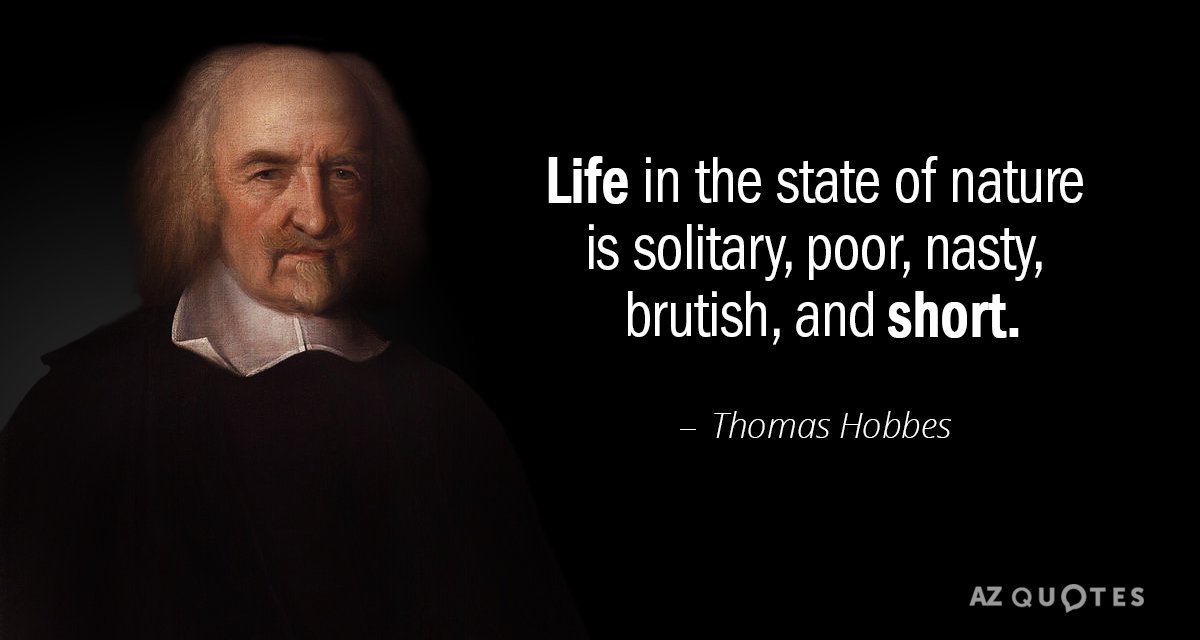
Hobbes had looked at the English Civil War in terms of the conceptual implications. Conflict is a social manifestation of disagreement regarding rights. Each was engaged in the struggle against each. Why did he define social relations in terms of conflict?

He was arguing against the state of nature as life without organized government for law. He was also attempting to draw a lesson from the civil war. Defense from attack became the elementary motivation for agreement with the the social contract for the state.

The social contract admit that the sovereign was the unity for the realm. This unity represented the manifestation of the absolute with respect for agreement with that which is right about common law.

The elementary motivation for unity implies agreement to refrain from criminal action. Criminal action was defined by the law of Moses in a manner that was not only more monotheistic, but it was less aggressive in the enforcement of punishment than the code of Hammurabi.

Punishment entertained torture and the death penalty but the punishments weren't unique to Judaism. They were standard for the time. It is plausible that they weren't enforced as aggressively in the Judaic community.

The ten commandments weren't explicitly anti-magical. The code of Hammurabi had defined necromancy and witchcraft as crimes. While magic was included in the bible as an undesirable act that could be severely punished, the references were anecdotal. The stories were included as the documentation of standards of social conventions for the Middle East. 

Hobbes didn't actually propose constitutional monarchy as explicitly as Spinoza had, but the implication was inherent to the social contract. Monarchy was organized elementally for defense from attack. Legislative authority was charged with the task of reforming the legal code with special attention to the elimination of cruelty in punishment in written law.

The global competition for colonial expansion made the reform an exercise in liberal expenditure for the establishment of legislative legacy. The more liberal members of the House of Commons acted as the aggressor in both the deportation of dissent and the taxation of citizens to the diminishment of economic power in civil rights.

The reform of legislation was the greatest need for constitutional monarchy or republic, but it was also exploited at the greatest cost to the taxpayers for the maximum benefit of aggression for state officials. Classical reconstruction had actually placed the House of Commons over that of the Lords in parliament.

It was as though the plebians were put over the patricians in the Roman Senate. The investment in the study of history as a basis for the consideration of reconstruction was inhibited by the change. The liberal use of the 'sword of Damocles' was also a deterrent to reasonable measure regarding public policy. When fake news is peddled to deceive the public on a regular basis, accountability for legislative decision making is reduced.

This degeneration in reform was assisted by Locke's claim to the supreme authority of the legislature. Locke had essentially overridden the conservatism recommended by Hobbes for the liberal benefit afforded to those who agreed with him in his liberal reform. This factionalized representation.

The English bill of rights was written with the strong indication that Puritans were the English Protestants and Presbyterians were the Scottish alliance.  It was the male members of these groups who had the civil rights.

Locke had listed the people as the greater supreme authority over the legislature, but he invited the people to overthrow the government wih the force of arms rather than to build political consensus with the use of rights. He was deceptive in his argument.

The alliance that William III had with his part of the Dutch Republic suggested a supply of arms that would work for the benefit of the parliamentarian monarchy. The House ruled in favor of Locke's gambit. The risk for his claim wasn't limited to the English speaking world.

Revolution would be used to establish republican government in France and the colonial world. Parliamentarian monarchy or republic was already designated as a part of the future for Europe, the colonies.

Contract morality addresses the voluntary cooperation of people with the common law. Socialism has been used to grant state officials an excess of favor in the competition to obtain advantage in the struggle to build prosperity for an open and just society.

The inference of the best explanation carried the value of reducing deceit in description. When an event is described in terms of causation, inference and plausibility it allows for factual explanation for the institution of public policy that is accountable to the public that pays for government with tax money.

------------------------

Gilbert Harman
S. 吉尔伯特哈曼
T. 吉爾伯特哈曼

吉 Ji         lucky                 吉  kichi    joy                        Gi    ぎ    ギ         Gil     길  way     
尔 er        you                    爾  ore      you                         ru    る     ル        beo     버  bur   
伯  bo      senior                伯  haku   official                    ba    ば-  バ-        teu      트  the             
特  te       special               特  toku    special                    to    と      ト       Ha       하  ha             
哈  Ha      ha                     哈  go       school of fish          Ha    は-   ハ-      meon  먼   distant
曼  man   handsome          曼  ban     wide                       man まん マン               

------------------------

Contract morality is an inference from the experience of the applicability
of law for credibility.
The inference to the best explanation includes plausibility.
The report includes factual verity for accountability.

==================

https://en.wikipedia.org/wiki/Gilbert_Harman
https://philpapers.org/rec/HARMRE
https://psychology.wikia.org/wiki/Gilbert_Harman
https://reasonandmeaning.com/2015/04/11/gilbert-harmans-contractarianism/ http://faculty.arts.ubc.ca/rjohns/ibe.pdf
http://www.informationphilosopher.com/knowledge/best_explanation.html


Wednesday, April 24, 2019

Make

Agate

Make
Your Name
说出你的名字 
Shuō chū nǐ de míngzì
あなたの名前を作ってください。 
Anata no namae o tsukutte kudasai
ps8

Salvation comes by faith
for those who work while they wait
for grace in redemption 
in the preservation 
of liberty in the law
as worked to reduce flaw.

Justice is the goal for the law.
The goal must be fulfilled in practice as drawn
for improvement upon precedent as the phenomenon.

Cruel punishment 
does not meet royal assent
to correct protest or petition as dissent.

Testimony about the charge of crime is by prejudice often bent.
Severity in judgment often reinforces criminal intent.

Detention provides time 
for the correction of injustice as the cause of crime
in the cognition of the conceptual mind

Belief in liberty FROM the law is flawed.
The law is for civil and human rights for all.
God has raised the Holy One from the dead.

The murderer spent life imprisoned to his dread 
of his memory about the act that had made the living dead.

The resurrected Jesus took a piece of broiled fish.
He ate it in the apostles' presence as a fulfillment of their wish.

Rights are for life, liberty and happiness.
Your name is exalted for health in consciousness.
You are the designer of paradise.

The means to surmise the device 
of this design is often achieved by surprise.

Your majesty is praised above the heavens
out of the mouths of your children assenting to your presence!

You have set up a stronghold for defense
against our adversaries aggression in dissent.

Safety and good health are protectors 
in the risks that challenge our vectors
in the sensibilities for reason's detector.

When I consider the heavens and the earth
as your creation I am filled with wondrous mirth.

The course for the planets around the sun 
has been set with gravity for the celestial run.

The projection of our solar system 
among the galaxies from a point of space in wisdom
is the container for time with the rhythm of mystic vision!

What is human being that you are mindful of our existence?
Does the authentic person express insistence on resistance
to the persistence of the vicious condition?

The Physicist uses math and a microscope to perceive
atomic structure in which you can believe what you conceive.

The Entrepreneur uses the power to deceive
so the market will think about the product to increase prestige

The performer arranges the elements for presentation
for the audience to seize as the mark of gradation
in the meaning of the contextual striation.

The field inside the sound of the musical
is not as rare as it is beautiful.

We have been made to exist only a little lower than angels. 
We are adorned with our contagious relation to changes
in statistical tables regarding the staples of stations
among nations in the international generation
of political expectation.

Right for people is a natural law.
The voluntary aspect is not a flaw.
Conservative reform is a necessary draw.

The preservation of the environment
is our responsibility as our entitlement, 
so we may cultivate food and flora for our joy, 
construct constructs, produce products to employ
and organize organizations for our security to deploy.
It is your name that is exalted among the stars.

You are the designer for the paradise that is ours.
You are the authority for your power!

Power rules power.
You are the tower.

------------------------

8 Domine, Dominus noster
Dominated, Our Dominator

1 O Lord our Governor,
how exalted is your Name in all the world!
2 Out of the mouths of infants and children
your majesty is praised above the heavens.
3 You have set up a stronghold against your adversaries,
to quell the enemy and the avenger.
4 When I consider your heavens, the work of your fingers,
the moon and the stars you have set in their courses,
5 What is man that you should be mindful of him?
the son of man that you should seek him out?
6 You have made him but little lower than the angels;
you adorn him with glory and honor;
7 You give him mastery over the works of your hands;
you put all things under his feet:
8 All sheep and oxen,
even the wild beasts of the field,
9 The birds of the air, the fish of the sea,
and whatsoever walks in the paths of the sea.
10 O Lord our Governor,
how exalted is your Name in all the world!

----------------------------

Acts 3:14-15

You rejected the Holy and Righteous One and asked to have a murderer given to you. You killed the Author of life. God has raised him from the dead. We are witnesses to this.

--------------------------------

God has raised the Holy One from the dead.
The murderer spent life imprisoned to his dread
of his memory about the act that had made the living dead.

==================

Luke 24:42

They gave him a piece of broiled fish. He took it and ate it in their presence.

--------------------------------

The resurrected Jesus took a piece of broiled fish.
He ate it in the apostles' presence as a fulfillment of their wish.

==================

The right to own property separates primitive from civilized society.

Natural Law


Emer de Vattel
b. 4.25.1714  Couvet, Val-de-Travers, Switzerland
d. 12.26.1767 Couvet, Val-de-Travers, Switzerland


Couvet


Couvet was a municipality in Val-de-Travers in the western part of Switzerland. It merged with eight other municipalities to form the administrative district of Val-de-Tavers in 2009. The region is known for its production of absinthe.


The municipality is located in a valley in the Neuchâtel Jura. The Jura Mountains are a sub-alpine
range located north of the Western Alps. The range mainly follows the course of the France–Switzerland border. The valley provides a connection between the Swiss plateau and Franche-Comte.


The river L'Areuse flows the length of the valley. Most of this river is shallow and about 10 meters wide. It narrows into a gorge near Noiraigue. This river has provided much of the water and fish for the valley.


Val-de-Travers had a population of 10,745 as of December 2017. Most of the population (as of 2000) speaks French (88.9%) as their first language.  Italian is the second most common (3.0%) and German is the third (2.7%) most common language.


Emer de Vattel


Emer de Vattel was born at Couvet, in Neuchâtel on April 25, 1714.The principality was ruled by the kings of Prussia. He was the youngest son of David Vattel and Marie de Montmollin.


His father was a Protestant clergyman ennobled in 1727 by the king of Prussia, Friedrich Wilhelm I. He was the head of the local congregation of ministers. His mother was the daughter of the principality’s ambassador to the Prussian court.


Emer was enrolled as a student of the humanities at the University of Basel from 1728 to 1730. He attended courses on Samuel Pufendorf given by the Huguenot minister Pierre Roques.


Pufendorf had developed a theory about the moral relationships of agents, the authority and duties of states and the lawful interactions among these. His chief objective was to avoid destructive social conflict and the devolution on any level into the antagonistic and self-defeating condition known as the state of nature.


Pufendorf’s approach was secular, non-metaphysical and anti-authoritarian. It eschewed religious appeals,
scholastic dogma, essentialism, teleology and the frequent mix of these that appealed to many German
thinkers, Catholic and Protestant alike.


He built on Bodin, Lipsius, Grotius, Hobbes and the Italian reason-of-state tradition. Pufendorf is known
as a voluntarist in ethics, a sovereignty theorist in politics and a realist in international relations theory.


His kind of natural law is called ‘modern' but it echoed the tradition of the Roman Republic. His law of
nature and nations was an exercise in the consideration of international relations, but it obscured respect
for boundaries.


Emer went to Geneva to pursue theological and metaphysical studies in 1733. One of his teachers was
Jean-Jacques Burlamaqui. It was under Burlamaqui’s tutelage that Vattel developed the principle of the
right of people as the law of nations.


He wrote a series of essays, several of which appeared in Switzerland’s leading literary journal, the
Neuchâtelbased Journal Helvétique in 1740 and 1741. He wrote a lengthy defense of the philosophy of
Leibniz. The Lausanne professor of philosophy and mathematics Jean-Pierre de Crousaz claimed it was
atheism.


Vattel dedicated his defense to Friedrich II. The dedication earned him an invitation from the French
ambassador in Berlin to come to the court of the prince whose subject he was by birth. He failed to
obtain a diplomatic position.


He moved to Dresden due to financial difficulties in 1743. He was promised employment by Count Brühl,
first minister of Elector Friedrich August II of Saxony. The same man that served as the Elector of Saxony
was also the elective king of Poland. His name was August III for that position.   


Vattel spent the next three years in Neuchâtel waiting for orders from Dresden. He wrote essays and
studied the works of the German philosopher Christian Wolff while he waited.


The essays were about the relation between natural and political law. The first asked the question, can
natural law bring society to perfection without the political form? The second was about the first principle
of the obligation to observe law. Both were published in 1746.


Vattel remained in Neuchâtel for much of the next ten years. He sent a stream of letters to Brühl
complaining of his ill health and dire financial circumstances. This turned out to be the most productive
period of his life despite the complaint.


He published a further collection of essays in 1757. These included dialogues between Diogenes and
Marcus Aurelius and between Henry IV of France and his adviser Sully.


He wrote his masterpiece, Les Droit des Gens (The Right of People) which appeared in Neuchâtel at the
end of 1757. The title is translated as The Law of Nations. The work established him as an authority on
natural jurisprudence. He has been identified as an international lawyer.


The work was largely influenced by a book titled Jus Gentium Methodo Scientifica Pertractum (Law of
Nations According to the Scientific Method) by Christian Wolff. Jus Gentium can be translated as the
Right of People.


Vattel's work began by translating Wolff's text from Latin and adding his own thoughts. His thought was
heavily influenced by Gottfried Leibniz and Hugo Grotius. It focused largely on the rights and obligations
of citizens and states


It also changed his personal situation. The elector of Saxony finally recalled Vattel to Dresden in 1759. He
was appointed to the Privy Council and made a chief adviser to the government of Saxony on foreign
affairs.


The Law of Nations was translated into English in 1760.  


He married Marie de Chêne, the daughter of a Huguenot noble family, in 1764. They had a son.

Charles W.F. Dumas sent Benjamin Franklin three original French copies in 1775. He said that this book
by Vattel "has been continually in the hands of the members of our Congress now sitting".


A copy owned by the New York Society Library had been borrowed by President George Washington on
8 October 1789 along with a copy of Vol. 12 of the Commons Debates containing transcripts from Great
Britain's House of Commons. The book was found to be overdue after his death.


Vattel was one of a number of 18th century European scholars who wrote on international law.


These authors were "well known in America" at the time. They included Jean-Jacques Burlamaqui,
Cornelius van Bynkershoek, Hugo Grotius, Samuel von Pufendorf, Thomas Rutherforth, Niccolo
Machiavelli and Wolff. The Law of Nations has been described as "unrivaled among such treatises in its
influence on the American founders."


The Swiss republic in which Vattel did his research was different from the Dutch version in that it was a
federation that allowed for different forms of government in different cities.


The basic reason for the republic was not unique to Rome. Commerce with other nations had been
adopted as the primary goal for the organization of the state by the Phoenicians, the Greeks and the
Carthaginians. The Chinese still use the principle. They don't have the term limits. The others had
monarchs.


The idea was that the cost for military action was to be kept at a minimum by negotiation in relation to the
protection of trade. The extreme restriction of political benefit from the one year term limit for the executive
office however made plunder the only way to accumulate enough wealth to support the military force
needed to protect trade.


The patricians held the official authority in the senate. They divided the world for their benefit. Those who
aspired to power in the Roman state went through the course of offices in order to become a patrician.


The senate made sure that media expression was directed against the enemy (monarchical or tribal
barbarians) to keep the public off balance regarding the power of the patrician.


The Romans didn't defeat the Carthaginians by the limitation of military action to defense. They
aggressively defined their competitors as enemies and promoted insurrection in their territory.


The same kind of aggressive strategy was used to help the Greek empire to fall. Domestic dissatisfaction
with the monarchy was used to divide the house against itself.


The military success of the experienced soldiers against the less organized tribal societies was used to
'defend' the republic from attack.


The republic became an empire when the emperor was accepted as a necessary evil to convert to the
conquered world into republican states. The leadership for the empire eventually divided when the military
was paid enough to determine election outcomes for state officials.


This pattern was used as an argument against the establishment of a standing military by monarchy, but
parliamentary government adopted the practice of precipitating violent conflict for the benefit of official
power.
This was the same tactic that had been used by the Patricians. The authority for the practice was shifted
to the lower house.There wasn't official sanction for the military, but the need for the protection of trade
from attack, whether staged, fictional or actual was established as perpetual.


Roman republic defined executive authority for the government as the greatest threat to the success of
commerce. They implied that the protection of the commerce was subordinate to trade, but commercial
relations were shifted to make success in trade dependent upon the military victory as orchestrated by
the patricians in their class struggle with plebians.   


The Dutch and the Swiss employed mercenaries for the protection of trade in the city and outside of it as
necessary. When mercenaries limited their role to defense, they earned their pay. When they staged events
to make their service look invaluable, they were subversive at least and international terrorists at the
worst.


Vattel claimed that this “delightful dream” for cooperation among nations based on rights in law was
derived directly from human nature. He acknowledged that “most nations aim only to strengthen and
enrich themselves at the expense of others” in the Law of Nations (bk. II, §16).


Prudence in statecraft actually prevented existing states from making mutual aid the guiding principle
of foreign politics. This suggested that states ought to content themselves with a morally less appealing,
but nevertheless workable, order based on the balance of power.


Vattel explained this acknowledgment of the realities of modern European politics on two grounds. The
first was the theoretical incoherence of previous natural law theories with regard to the duties of perfectly
independent states.


Here he turned against Wolff’s idea of a civitas maxima (largest city). He claimed that Wolff had rightly
distinguished between two forms of the law of nations. There was an immutable or necessary right of
people that signified the law of nature applied to individual states.


There was also a voluntary regulation which defined the necessary limitations of natural law within the
realm of international relations.  He argued that the voluntary had to be tolerated in order to avoid great
harm.


Natural law was used by Vattel as an olive branch in international relations. There is an implication for
conservative expenditure in government when natural law is logically associated with the rights of people.
This conservative policy is supported by the royal line of succession. The succession passes on property
and principle in economic leadership from one generation to the next. It serves as a model for household
management with respect for family values in other households.


Executive authority in republic should not have term limits. Indefinite re-election is a better policy for the
competition in conservative policy with monarchy. The Roman republic had to adopt a line of succession
in order to direct official policy.


It wasn't so much a necessary evil as it was economically efficient. It allowed business organization to
develop for the production of value with products or services in the free market.


Liberals would have us believe that government has to regulate success for those who agree with them.
Conservative policy allows for success to be achieved in the market by restricting government intervention
by regulation.   


Emer de Vattel was unable to cope with his office due to ill health and retired to his native Neuchâtel. He
died in December 1767 at the age of fifty-three.


Emer de Vattel
伊玛巴特尔
伊瑪 巴特爾


伊 Yi        he       伊 i that one                   E え エ Em 엠 m          
玛  ma    agate          瑪 me agate                   ma ま- マ- ma 마 hemp   
巴  ba     to hope        巴 ha comma-design       dei でい デイ de 데 place             
特  te      special        特 toku special                   Wa わ ワ I 이 this            
尔  er      you          爾 ore you                    to と ト Wa 와 wow
                                                                                    ru る ル teul 틀 frame


--------------------------------


The right for people is a natural law.
The voluntary aspect is not a flaw.
Conservative reform is a necessary draw.


==================


https://oll.libertyfund.org/titles/vattel-the-law-of-nations-lf-ed
https://en.wikipedia.org/wiki/Emer_de_Vattel


Goo Goo Dolls
Name

Hillsong Worship
Beautiful Name