4.7.19
Gabrielle Wilde
Restore
Fortune
恢复财富Huīfù cáifù
回復フォーチュン
Kaifuku fōchun
ps126
When leadership restored fortune,
we were like those who received our portion.
We felt like those who dream while still awake.
There was the distinct feeling that this fortune wasn't fake.
Our mouth was filled with laughter.
It was like starting again after a climatic chapter.
The rider and the fighter were twins in the sky.
They fought for the standard to know how and why.
They released many captives from the burden of plight.
The captives were freed with the capacity for flight.
Courage watched leadership rise with his word.
Reason was challenged to struggle with the absurd.
The hunter drank in the storm faint though it had been.
He stalked the prey that he had yet to win.
The rider rested with his horse
in the investigation of the state of the forest.
Wildness preceded the primitive me.
Food and water have been granted to proceed.
Our tongues lifted sound above vocal cords.
Our joy was profound. Our bliss was adored.
Restore fortune with the cosmic sorter for order.
Grow us flowers plentiful as stars in the heavenly quarters.
Give us fertility instead of ashes.
Let water pour down while the lightening crashes.
Let oil be squeezed from olives or vegetables.
Let want be appeased, not made miserable.
Let the mantle of praise lift up the weakness of spirit.
Feel the energy of love before you hear or go near it.
Augurs of chance read spirits instead of birds.
Test your statements for the truth of the words.
Righteousness is based on faith with grace.
Redemption with Christ places destiny over fate.
Great things have been done for us in the strength of this time.
The length of light grows as sublimely prime.
Those who managed labor throughout the last year
made a memory to transcend the feeling of fear.
Celebrate the presence of the essential essence.
Gratitude for service beats sacrifice as penance.
Those who sowed seed with the toil of their tears
will reap joy with the music of love in the heavenly spheres.
The deluge washed the mass of seashells.
Polish was added to the shine of cells
and bells.
Those who went weeping to water their seeds
will return with shoulders of sheaves to fulfill basic needs.
This voice is like that of the cry in the darkness
unbroken in facing the strength of the starkness.
Restore our fortune. Transform the harm of the past.
Let us have our portion. Give us confidence to last.
Making continual reparation for misdeeds from the past
isn't a policy that will make fortune last.
Liberals made the public pay for legal reform,
then they make us pay for damage caused by the storm
from the reform.
----------------------------
Psalm 126
In convertendo
1 When the Lord restored the fortunes of Zion, *
then were we like those who dream.
2 Then was our mouth filled with laughter, *
and our tongue with shouts of joy.
3 Then they said among the nations, *
"The Lord has done great things for them."
4 The Lord has done great things for us, *
and we are glad indeed.
5 Restore our fortunes, O Lord, *
like the watercourses of the Negev.
6 Those who sowed with tears *
will reap with songs of joy.
7 Those who go out weeping, carrying the seed, *
will come again with joy, shouldering their sheaves.
-------------------------
Isa. 43:20
The wild animals will honor me.
The jackals and ostriches will be grateful
for I give water in the wilderness;
rivers in the desert
to give drink to my chosen.
----------------------------
Wildness preceded the primitive me.
Food and water have been granted to proceed.
=====================
Phil.3:8
I have suffered the loss of things in order to gain Christ
not having a righteousness of my own, but one that comes through faith,
the righteousness from God based on faith.
----------------------------
Righteousness is based on faith with grace.
Redemption with Christ places destiny over fate.
=====================
John 12:8
'You always have the poor with you, but you do not always have me.'
----------------------------
Celebrate the presence of the essential essence.
Gratitude for service beats sacrifice as penance.
=====================
Gemini - twins
Taurus- bull
Orion - hunter
Mars - courage
Jupiter - leadership
Mercury - reason
Venus- beauty
Castor - rider
Pollux - fighter
Neptune - water, storm
Gemini is Latin for "twins," and it is associated with the twins Castor and Pollux in Greek mythology.
https://www.greekmythology.com/Myths/Zodiac/Gemini/gemini.html
The twins were Castor and Polydeuces (Pollux). They were known as the Dioscuri. Their sisters were Helen and Clytemnestra. They were the sons of Leda, Zeus and Tyndareus. Castor and Pollux were half-brothers.
Leda was married to King Tyndareus of Sparta. She was also seduced by Zeus, so the father's of both children were uncertain. The Discouri were inseperable and grew closer with age.
Castor was a famous horse tamer and Pollux, a superb boxer. When Castor was killed during a battle, Pollux was inconsolable and gave up his own life to be with his brother. Jupiter rewarded their love by placing their images among the stars. They shine side by side.
Majesty with Mercy
https://www.azquotes.com/picture-quotes/quote-however-many-and-however-great-and-burdensome-your-sins-may-be-with-god-there-is-greater-patriarch-tikhon-of-moscow-52-31-82.jpg
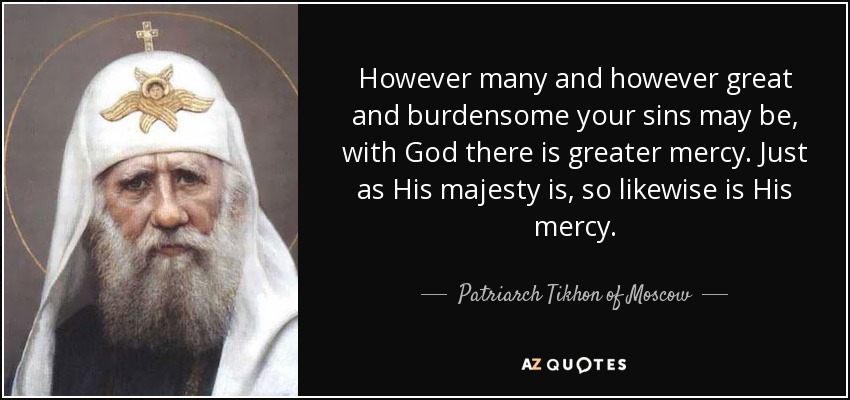
Tikhon of Moscow
b. January 31, 1865, Klin, Russia
d. April 7, 1925, Moscow, Russia
Klin
Russian Empire
Alexander II (1818-1881) was the Emperor of Russia from 2 March 1855 until his assassination on 13 March 1881. He was also the King of Poland and the Grand Duke of Finland. He emancipated the serfs in 1861. It was the first and most important of his reforms. The Emancipation Edict abolished serfdom throughout the Russian Empire.
There was an uprising in Poland in 1863. The land was stripped of its constitution and incorporated into Russia.
Alexander sold Alaska to the United States in 1867. He was afraid that the territory would fall into British hands in the event of another war.
Klin means 'wedge.' One of the towns by that name was located in the Toropets District of the Pskov Governate. Klin is located to the west of Moscow by about 85 km (55 mi.). It is south of St. Petersburg by about the same amount of distance. It is part of a basin that drains to the Baltic Sea.
Tikhon of Moscow
Tikhon was born as Vasily Ivanovich Bellavin in Klin, Toropets, Pskov of the Russian Empire on 31 January 1865.
Vasily studied at the Pskov Theological Seminary from 1878 to 1883. He graduated from the St. Petersburg Theological Academy as a layman at the age of 23 in 1888. He returned to the Pskov Seminary as an instructor of Moral and Dogmatic Theology.
He took monastic vows and was given the name Tikhon in honor of St. Tikhon of Zadonsk at the age of 26 in 1891. Tikhon was consecrated Bishop of Lublin on October 19, 1897. Bishop Tikhon was made Bishop of the Aleutians and Alaska on September 14, 1898. This made him the head of the Russian Orthodox Church in America.
He reorganized the diocese and changed its name from "Diocese of the Aleutians and Alaska" to "Diocese of the Aleutians and North America" in 1900. The peripatetic bishop visited emerging Orthodox emigrant communities in various American cities, including New York City, Chicago and the coal and steel-making cities in Pennsylvania and Ohio. While living in the United States Archbishop Tikhon was made a citizen.
He returned to Russia in 1907 and was appointed Bishop of Yaroslavl. He was transferred to Vilnius, Lithuania on December 22, 1913.
He was elected the ruling bishop of Moscow by the Diocesan Congress of clergy and laity on June 21, 1917. Archbishop Tikhon was raised to the dignity of Metropolitan of Moscow on August 15, 1917.
An election on November 5 of the same year named him as one of the three candidates for the Patriarchate. Metropolitan Vladimir of Kiev announced that Metropolitan Tikhon had been selected for the position after a drawing of lots as the new Patriarch of the Russian Orthodox Church.
The Patriarch was widely seen as anti-Bolshevik during the Russian Civil War. Many members of Orthodox clergy were jailed or executed by the new regime. The 'prosecution' of clergy identified the socialist republic as anti-religious. Tikhon openly condemned the killing of the tsar's family in 1918 and protested the violent attacks by the Bolsheviks on the Church.
The Patriarch was accused of being a saboteur by the Communist government after the establishment of the USSR. He was imprisoned from April 1922 until June 1923 in Donskoy Monastery.
His public protest against nationalization of the property of the Church was used to incriminate him of criminal conduct. This persecution caused international resonance and was a subject of several letters to the Soviet government.
Patriarch Tikhon issued several messages to the believers under pressure in which he stated that he is "no longer an enemy to the Soviet power." He continued to enjoy the trust of the Orthodox community in Russia despite his declaration of loyalty to the Soviets.
The Patriarch fell ill and was hospitalized in 1924. He served his last Divine Liturgy on 5 April 1925. He died two days later.
He was glorified a saint by the Russian Orthodox Church in 1989. This canonisation process is generally considered an example of the thaw in Church-Soviet relations in the Glasnost era. Tikhon's relics are kept at the Donskoy Monastery of Moscow.
https://en.wikipedia.org/wiki/Patriarch_Tikhon_of_Moscow
http://www.satucket.com/lectionary/Tikhon.htm
Tikhon Bellavin
吉洪贝拉文
吉洪貝拉文
吉 Ji lucky 吉 kichi good luck Te て テ Ti 티 tea
洪 hong deluge 洪 ko deluge -hon ぃほん ィホン hon 혼 spirit
贝 Bei sea shell 貝 bai shellfish Be べ ベ Bel 벨 bell
拉 la seize 拉 ra Latin ra ら ラ la 라 la
文 wen culture 文 bun style bin びん ヴィン bin 빈 empty
-----------------------------
The deluge washed the seashells
to add polish to the luck of cells
and bells.
=====================
Thomas Hill Green
b. April 7, 1836, Birkin, United Kingdom
d. March 1886, Oxford, UK
Birkin
Birkin is a village in the south of North Yorkshire. The population was estimated at 141 people in the 2011 census. The name was recorded in the Domesday book as 'Birchinge.' This and the present name indicate that the village was built in an area wooded with birch trees.
It is located about 290 km (180 miles) north of London. It is about 145 km (90 miles) northeast of Liverpool. It is about 48 km (30 miles) southwest of York.
A Royal Commission into the Poor Law recommended changes to the system of parish poor relief in 1832. Many of its recommendations were incorporated into the Poor Law Amendment Act of 1834. This statute maintained outdoor relief (relief given outside a workhouse), but led to more central control of the system.
St Mary's Church is located at the southern end of Birkin and dates from around 1150. Thomas Hill Green's father was the rector of St Mary's in the 1830's.
Thomas Hill Green
Thomas Hill Green was born in Birkin on 7 April 1836. Thomas was brought up by a nanny following the death of his mother when he was only a year old together with his sisters and three brothers. He was home schooled until the age of 14. He entered the Rugby School and remained for 5 years.
Green went to Balliol College, Oxford in 1855. He came under the influence of Benjamin Jowett. Jowett had been one of the first to bring a set of Hegel's writings to England. It was through him that Green became enraptured by idealism.
He found a justification for his instinctive egalitarianism in Hegel. He became firm friends with other students who were sympathetic to his political radicalism, such as AV Dicey, John Nichol and Edward Caird. Idealism led him away from the skepticism of Locke expressed by Berkeley.
He was elected fellow in 1860. He began a life of teaching in the university. First he was a college tutor. He was Whyte's Professor of Moral Philosophy from 1878 until his death.
The lectures he delivered as professor formed the substance of his two most important works. The Prolegomena to Ethics and the Lectures on the Principles of Political Obligation were published posthumously, but they serve as a basis for conjecture as to what he taught.
He criticized the limitations of natural history in empiricism of Hume with the theory of evolution in the Prolegomena to Ethics.
He wrote in the Natural Science of Morals (s.5) "It is no wonder, therefore, that the evolutionists of our day should claim to have given a wholly new character to ethical enquiries. In Hume’s time a philosopher who denied the innateness of moral sentiments, and held that they must have a natural history, had only the limits of the individual life within which to trace this history. These limits did not give room enough for even a plausible derivation of moral interests from animal wants...Thus it would seem that for the barren speculation of the old metaphysical ethics we should seek a substitute in a scientific Culturgeschichte; in a natural history of man conducted on the same method as an enquiry into any other form of life which cannot be reduced to the operation of strictly mechanical laws."
The Principles of Political Obligation was written to subordinate the citizen to the state.
He wrote, "I have entitled the subject of the course 'political obligation.' I mean that term to include both the obligation of the subject to the sovereign, of the citizen towards the state and the obligations of individuals to each other as enforced by a political superior."
Green was an advocate for temperance. He referred to the work of Spinoza, Hobbes, Locke and Rosseau, but he came down in favor of state limitation of the citizen's conscience. He held that the state should foster and protect the social, political and economic environments in which individuals will have the best chance of acting according to conscience.
He stated time and again that the state could legitimately curtail the individual's freedom to accept the slavery of alcoholism. This became a prohibitive action in the case of the Temperance movement.
This was an oppressive definition of the concept of sovereignty. No one wants to endorse alcoholism as a right, yet the prohibition of alcohol as a product for the market is preemptive in the prohibition of the disease.
Given the appointment of a special prosecutor by the House of Commons for the precipitation of profit from military action, it amounted to a perpetuation of Puritan aggression without the explicit endorsement of the Westminster Confession.
Green was involved in local politics for many years through the University, temperance societies and the local Oxford Liberal association.
He campaigned for the right to vote to be extended to all men living in boroughs even if they did not own real property during the passage of the Second Reform Act (1867). Green's position was more radical than that of most other Advanced Liberals, including William Ewart Gladstone.
The right to vote is an important civil liberty. The Public Schools Act of 1868 would remove public schools from any direct jurisdiction or responsibility of the Crown, established church, or government, establishing a board of governors for each school and granting them independence over their administration.
The Act led to development of the schools away from the traditional exclusively classics-based curriculum taught by clergymen to a somewhat broader scope of studies. This meant an opening for Hegelian idealism in evolution for Green. It was a legislative enactment that supported increased expenditure for the government to control the rights of the population. It was an endorsement to promote revolution through insurrection around the globe for liberals.
It was in the context of his Liberal Party activities that in 1881, Green gave what became one of his most famous statements of his liberal political philosophy, the "Lecture on Liberal Legislation and Freedom of Contract".
He presented an anti-capitalist perspective. He wrote, "we are right in refusing to ascribe the glory of freedom to a state in which the apparent elevation of the few is founded on the degradation of the many." He was also lecturing on religion, epistemology, ethics and political philosophy at the time.
Most of his major works were published posthumously, including his lay sermons on Faith and The Witness of God, the essay "On the Different Senses of 'Freedom' as Applied to Will and the Moral Progress of Man", Prolegomena to Ethics, Lectures on the Principles of Political Obligation and the "Lecture on Liberal Legislation and Freedom of Contract".
Green died of blood poisoning at 45. Approximately 2,000 local townspeople attended his funeral in addition to friends from his academic life.
https://en.wikipedia.org/wiki/Thomas_Hill_Green
https://plato.stanford.edu/entries/green/
https://history.hanover.edu/texts/green.html
http://fair-use.org/t-h-green/prolegomena-to-ethics/
https://web.archive.org/web/20050827091329/http://socserv2.mcmaster.ca/~econ/ugcm/3ll3/green/obligation.pdf
https://en.wikipedia.org/wiki/Public_Schools_Act_1868
Thomas Hill Green
托马斯希尔格林
托馬斯希爾格林
托 Tuo rest 托 taku requesting To と- ト- To 토 sat
马 ma horse 馬 ba horse ma ま マ ma 마 hemp
斯 si this 斯 shi this su す ス seu 스 switch
希 Xi hope 希 ki hope Hi ひ ヒ Hil 힐 heel
尔 er you 爾 ore you ru る ル Geu 그 that
格 Ge investigate 格 kaku status Gu ぐ グ lin 린 lin
林 lin forest 林 rin forest re り- リ-
n ん ン
---------------------------
The rider rested with his horse
in the investigation of the state of the forest.
===============
Showing posts with label laughter. Show all posts
Sunday, March 31, 2019
Sunday, October 21, 2018
Restore Fortune
Lauren Holly
Restore
Fortune
回復フォーチュン
Kaifuku fōchun
ps126
When fortune was restored
we were like those who had scored.
We felt like those who dream while awake.
There was the distinct feeling that this fortune was great.
Our mouths were filled with laughter.
We began a new chapter.
The rider and the fighter were twins in the sky.
They fought for the standard to know how and why.
They released many captives from the burden of plight.
The captives were freed so they could find freedom in flight.
Courage watched leadership rise with his word.
Reason was challenged to overcome the absurd.
Beauty met moon near the end of her time.
The bull surveyed the terrain at the height of his climb.
The hunter drank the storm as it had been.
He stalked the prey that he had yet to win.
Our tongues lifted sound above vocal cords.
Our joy was profound. Our bliss was adored.
Restore our borders with the cosmic sorter for order.
Reap the harvest of stars in the heavenly quarters.
Give us virility as the light in the day time declines.
Let the leaves fall as the autumn wind unwinds time.
The start of the storm is born from the misery of earth.
Mason bees cut live leaves for the mystery of worth.
The shadow of darkness rumbles under the thunder.
The blind eye of the sky can turn a tree into lumber.
The order of forest sings the wind like a chorus.
The starred flower of jasmine doesn't fail to adore us.
The music of hope is the will for the village.
The virtue of luck is the note for our privilege.
Let oil be squeezed from olives or corn.
Let want be pleased, not lawless or torn.
Let the mantle of praise lift up the weakness of spirit.
Feel the energy of love before you hear or go near it.
Augurs of chance read spirits as birds
to test public statements for the truth of the words.
The red of the cinnabar is vermilion from mercury.
The mummies of Chile were colored red for eternity.
Great things have been done in the strength of this time.
The length of our darkness makes the light feel primely sublime.
Those who managed to work throughout the past year
made a memory to transcend the feeling of fear.
Those who sowed seed with the toil of tears in arrears
will reap joy with music in the heavenly spheres.
Those who went weeping to water seeds for the future
have returned with wheat to fulfill needs as your nurture.
This voice is like that of the cry in the darkness
unbroken in facing the strength of the hard test.
Restore our good fortune. Transform the harm from the past.
Let us win the bid for our portion. Give us confidence to last.
Psalm 126 In convertendo
1 When the Lord restored the fortunes of Zion,
then were we like those who dream.
2 Then was our mouth filled with laughter,
and our tongue with shouts of joy.
3 Then they said among the nations,
"The Lord has done great things for them."
4 The Lord has done great things for us,
and we are glad indeed.
5 Restore our fortunes, O Lord,
like the watercourses of the Negev.
6 Those who sowed with tears
will reap with songs of joy.
7 Those who go out weeping, carrying the seed,
will come again with joy, shouldering their sheaves.
10-28-18
Uranus reaches opposition on Oct. 23. It lies opposite to our Sun in our sky, so rises at sunset, stays up all night and sets at sunrise.
The Moon and the Beehive Cluster will make a close approach. The Beehive is in Cancer.
Birthdays
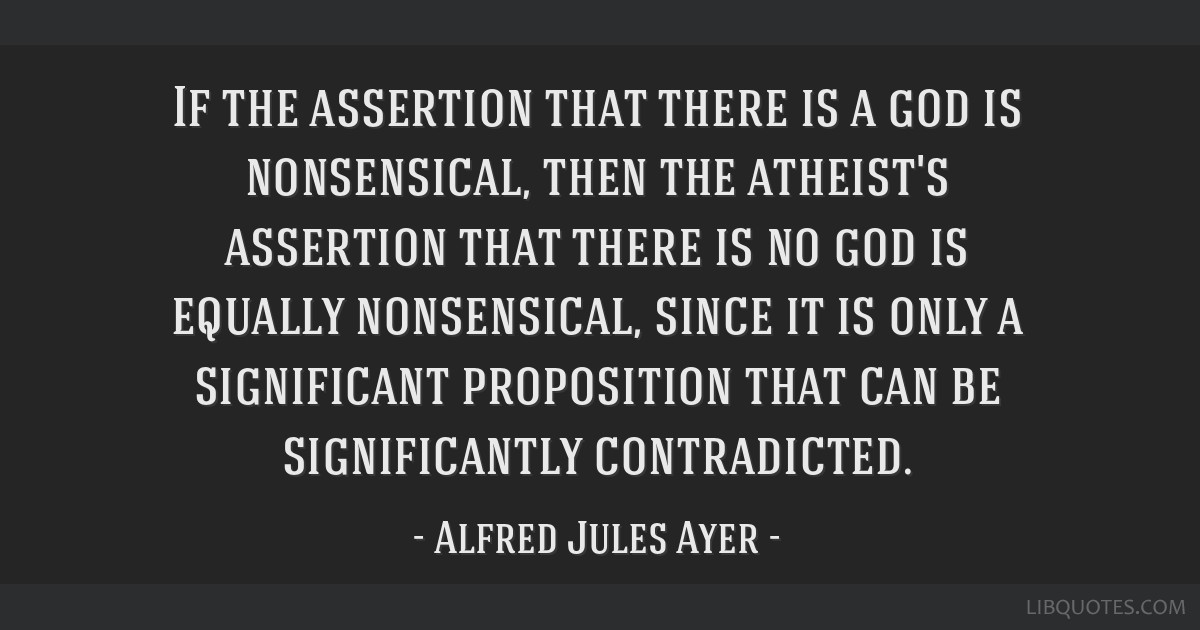
Sensical Significance
Alfred J. Ayer 10.29.10 London, England
阿爾弗雷德艾爾
阿尔弗雷德艾尔
阿 A also 阿 kuma shadow A あ ア Al 알 egg
尔 er you 爾 ore you ru る ル peu 프 the
弗 fu not 弗 fu fluor- fu ふ フ le 레 re
雷 lei terrific 雷 rai thunder re れ レ Ah 아 a
德 de favor no kanji ddo っど ッド i 이 this
艾 Ai to cut 艾 mogusa moxa A あ ア eo 어 uh
尔 er you 爾 ore you e え エ
The years between Queen Victoria's death in 1901 and the start of the First World War in 1914 were years of growth and general prosperity. The inequalities which had characterized Victorian London continued.
One out of five Britons lived in London by 1900. The population of roughly 5 million in 1900 rose to over 7 million by 1911.
Representatives of various trade unions and of the Independent Labour Party, Fabian Society and Social Democratic Federation agreed to form a Labour Party backed by the unions and with its own whips in 1900.
The Labour Representation Committee was founded with Keir Hardie as its leader. The LRC won only two seats at the 1900 general election. The SDF disaffiliated, but more unions signed up.
The LRC affiliated to the Socialist International. The name was changed to the Labour Party in 1906. It formed an electoral pact with the Liberals. The intent was to cause maximum damage to the Unionist government at the forthcoming election. Twenty nine Labour MPs were elected to the House of Commons.
Edwardian London was characterized principally by the burgeoning Women's Suffrage movement. The nationwide movement was spearheaded by Emmeline Pankhurst and her Women's Social and Political Union. Protests and demonstrations intensified during these years. Tension reached a peak between 1912 and 1914 as the movement militarized.
The introduction of the new 'Dreadnought' class battleship and the subsequent naval arms race with Germany prompted David Lloyd George, the chancellor of the exchequer, to introduce a tax on land, to increase income tax and to propose a 'super-tax' on incomes over £5,000 per annum in 1909. He presented these increases as designed to fund social reforms.
The Conservative-dominated House of Lords broke the parliamentary convention that the upper house should not overturn a financial bill when Chancellor David Lloyd George's budget was rejected in 1909. This ensured that House of Lords reform was one of the issues at stake in the next general election.
The election precipitated by the Lords' rejection of the 'People's Budget' resulted in 275 seats for the Liberals, 273 for the Conservatives and 40 for Labour. The budget was then passed. The Irish Nationalists were now in a position to force Irish 'Home Rule' back up the agenda with 82 seats.
Edward VII died in 1910. His son, George V, ensured that the monarchy was more active than it had been in the latter years of Victoria's reign. Edward's funeral brought the royalty of Europe for the last time before war broke out in 1914. Many of the European royals were family relations.
Alfred Jules Ayer was born in St John's Wood in north west London on 29 October 1910. His family was wealthy. They were from continental Europe. His mother, Reine Citroën, was from the Dutch-Jewish family who founded the Citroën car company in France. His father, Jules Ayer, was a Swiss Calvinist financier who worked for the Rothschild family.
Ayer was educated at Ascham St Vincent's School. St. Vincent's was a former boarding preparatory school for boys in the seaside town of Eastbourne in Sussex. He started boarding at the comparatively early age of seven due to the First World War. He won a scholarship to Eaton College when he was 13.
It was at Eton that Ayer became known for his characteristic bravado and precocity. He was keen on sports, particularly rugby. He reputedly played the Eton Wall Game very well.
Ayer was ranked second in his year in the final examinations at Eton. He was first in classics. He unsuccessfully campaigned for the abolition of corporal punishment at the school as a member of Eton's senior council in his final year.
He won a classics scholarship to Christ Church College of Oxford University in 1929. There he studied Greek and philosophy. One of his tutors was Gilbert Ryle. He suggested that Ayer read Ludwig Wittgenstein’s Tractatus Logico-Philosophicus.
He traveled to Vienna in 1933 to meet with Moritz Schlick and other members of the Vienna Circle of logical positivists. He was one of only two English-speaking people to meet and study with the Vienna Circle. W. V. O. Quine was the other.
Ayer was elected to a five-year research fellowship at Christ Church in 1935. He finished writing Language, Truth and Logic in that year. The book brought some of the ideas of the Vienna Circle and the logical empiricists to the attention of the English-speaking world.
He argues for the verification principle of logical positivism. This principle is referred to as the criterion of significance or criterion for meaning. Ayer explains how the principle of verifiability may be applied to the problems of philosophy.
The metaphysical thesis that philosophy affords us knowledge of a transcendent reality was rejected. Assertions are meaningless unless logical or empirical verification is possible. Statements like "God exists" or "charity is good" are not true or untrue but meaningless.
Ayer became strongly involved in politics in the pre-WWII years. He supported the Republican side in the Spanish Civil War. He considered joining the Communist Party, but became instead an active member of the British Labour party. He joined the Welsh Guards when WWII broke out and worked for a time interrogating prisoners.
He was Grote Professor of the Philosophy of Mind and Logic at University College London from 1946 until 1959. He returned to Oxford to become Wykeham Professor of Logic at New College. He was president of the Aristotelian Society from 1951 to 1952 and knighted in 1970. He was known for his advocacy of humanism, and was the first executive director of the British Humanist Association (now known as Humanists UK).
Ayer wrote an article entitled, "What I saw when I was dead" in 1988 shortly before his death. He described an unusual near-death experience. The attending physician claimed in 2001 that Ayer had confided to him: "I saw a Divine Being. I'm afraid I'm going to have to revise all my books and opinions." His son Nick, however, said that he had never mentioned this to him. He found his father's words to be extraordinary though.
Lauren Holly 10.28.63 Bristol, Pennsylvania
T. 勞倫霍莉
S. 劳伦霍莉
Dr. Betty Rogers in 'Motive'
Tweet
劳 Lao labor 勞 rou trouble Ro ろ- ロ- Lo 로 in
伦 lun order 倫 rin relation ren れん レン len 렌 wren
霍 Huo quickly 霍 kaku stroke Ho ほ ホ Hol 홀 hall
莉 li jasmine 莉 matsu jasmine ri り- リ- li 리 lee
Bristol Borough was settled in 1681. It was named after Bristol, England. It was originally used as a port and dock because it was located on the Delaware River. It was also next to the mainland route to New York City, Trenton and New England.
Samuel Clift received a land grant from Edmund Andros, Governor of New York. The grant became effective on March 14, 1681. William Penn's Charter from Charles II became effective at the same time. Clift was required by the grant to maintain ferry service across the Delaware River to Burlington, New Jersey. He also had to run a public house or inn. The inn later became known as the George II.
The land for the town became the center for textile mills, foundries, milling and miscellaneous manufacturing in the 18th century. It became a shipping gateway with the building of the 60 mile (96.6 km) long, forty foot wide and five foot deep Delaware Canal. Anthracite coal barges flowed from the Lehigh Canal's end terminal at Easton to Philadelphia.
Bristol Borough was chosen as the end for the Delaware Canal because it already had regular shipping connections to Philadelphia and Delaware River ports. Ships included the era's typical animal powered barges and inland shipping vessels.
Its docks also had regular ferry services to New Jersey and other points east from as early as 1681. The town would receive steamboat service when that technology came to be.
The Pennsylvania Railroad served to connect anthracite to the riverine barge and boat traffic on the canals. The railroad connection provided depot service for the manufacturers. The area was a transportation hub. This made it more attractive for industry.
Bristol Borough included companies manufacturing wall paper and carpet by the 1880's. The docks had sufficient space for a shipyard to construct twelve building slips for the construction of merchant vessels in World War I.
Averell Harriman organized the Bristol Borough shipyards in 1917. He founded the Merchant Shipbuilding Corporation. The name was changed later to Merchant-Sterling. The company would land a contract to build 40 identical cargo ships for the war given the U-boat menace.
The residential area that developed around the shipyards was soon named Harriman, Pennsylvania. Most of the housing built therein is still in use today. Harriman was annexed by Bristol Borough in 1922. Most of the shipping was finished too late to enter World War I, but some of the shipyard's output was used in post-war relief and troop support missions.
The majority of the contracts were canceled in 1919. The ship yards rapidly became excess real estate. The eighty-acres of the shipyard were let out to various concerns between the world wars. One area converted to building amphibious planes.
The flying boat technology was the heart and soul of long distance air travel until the technological advances in the middle years of World War II.
The old shipyards were used to build amphibious and other aircraft during World War II. Most of the manufacturing was not directly war related.
Bristol Borough gained national attention when the song "Bristol Stomp" by The Dovells hit #2 on the Billboard pop chart in 1961. The song remains a local favorite. It is often played at ceremonies, parades and sporting events.
Lauren Holly was born in Bristol, Pennsylvania on October 28, 1963. Her mother, Michael Ann Holly, is the art historian at the Sterling and Francine Clark Art Institute in Williamstown, MA. Her father, Grant Holly, is a screenwriter and professor of literature at Hobart and William Smith Colleges in Geneva, NY.
She has two younger brothers: Nick and Alexander Innes Holly (1977–92). Holly was raised in Geneva, New York. She is a 1981 graduate of Geneva High School. She earned an undergraduate degree in English from Sarah Lawrence College in New York in 1985.
Lauren Michael Holly is a Canadian-American actress. She is known for her roles as Deputy Sheriff Maxine Stewart in the television series Picket Fences, Director Jenny Shepard in the series NCIS and Dr. Betty Rogers on Canadian series Motive.
She played Mary Swanson in Dumb and Dumber, Linda Lee in Dragon: The Bruce Lee Story, Darian Smalls in Beautiful Girls, Cindy Rooney in Any Given Sunday and Gigi in What Women Want.
Julia Roberts 10.28.67 Smyrna, Georgia
T. 朱莉婭羅伯茨
S. 朱莉娅罗伯茨
FB Community
'Homecoming' Trailer
朱 Zhu cinnabar 朱 shu cinnabar Ju じ ジ Jul 줄 line
莉 li jasmine 莉 ri jasmine ri ゅり ュリ li 리 lee
娅 ya brother in law 婭 not kanji a あ ア a 아 ah
罗 Luo to catch 羅 ra la Ro ろ ロ Lo 로 in
伯 bo senior 伯 haku duke ba ば- バ- beo 버 bur
茨 ci to thatch 茨 ibaru thorn tsu つ ツ cheu 츠 tsu
Smyrna is located northwest of Atlanta in the inner ring of the metropolitan area.
All of the land that today comprises Smyrna and Cobb County was part of the Cherokee Nation up until 1832. The state of Georgia surveyed the Cherokee Nation and divided it into land lots of 160 acres and gold lots of 40 acres.
Gold lots were believed to possibly contain gold. The initial expectation was that a treaty would be negotiated and finalized between the Cherokee Nation and the US Government to open the land to white settlement.
White settlers first arrived in the Smyrna area to claim the land they won in the lottery in the fall of 1832. Tensions were high since the original Cherokee landowners were still living in the area. It is believed that the Cherokee left the Smyrna area by 1835.
The area began to grow after the completion of the Western and Atlantic Railroad in 1842. It was known by several names. It was called Varner's Station, Ruff's Siding, Neal Dow and Ruff's Station. The city was incorporated with the name Smyrna in 1872.
It was named by Greeks for the Biblical city of Smyrna, modern day Izmir in Turkey. It was the home of the famous Christian martyr Polycarp.
Georgia Governor Joseph E. Brown established an officer's training camp at Smyrna Camp Ground on April 23, 1861. It was selected because of its easy rail access. The training camp was named Camp Brown. The nearby Smyrna Academy was also designated as a training facility for Confederate soldiers. Volunteers quickly signed up after the Governor's request.
Two Civil War battles occurred in the area. The Battle of Smyrna Camp Ground and the Battle of Ruff's Mill were both fought on July 4, 1864. The area's businesses, homes and 1849 covered bridge were burned by Sherman's troops.
The 1890 census recorded 280 residents for the village. New technologies of the time, such as electricity, telephones and motor vehicles, were quickly adopted by the local citizenry as the town grew during the first part of the 20th century.
The Atlanta Northern Railway established trolley service to Marietta and Atlanta in 1905. AT&T opened a phone office in 1905 to serve 21 customers. The first bank was chartered in 1911. The local academy became Smyrna High School sometime on or before 1915.
Smyrna remained an agricultural area for the most part until the 1940's. The economic profile changed when construction began on the Bell Bomber aircraft plant a few miles north in Marietta in 1942. New jobs were created. Production began in the spring of 1943. Employees produced 663 B-29's for the Army Air Corps. The plant closed immediately after the war.
The 1950's were a period of rapid growth for Smyrna. The population mushroomed from 2005 residents in 1950 to more than 10,000 at the decade's end. The Bell Bomber plant was reopened as Lockheed Georgia in 1951. The resumption of aircraft production created new jobs and a demand for new housing.
Smyrna nearly doubled in size during the 1960's when the population grew to 19,157. A new 4,000 square foot public library opened in 1961. It was built at a cost of $54,000. It was later expanded in 1969 and 1973. Cobb Center Mall featured the first suburban Rich's department store. It opened on South Cobb Drive in 1963.
Julia Roberts was born on October 28, 1967, in Smyrna, Georgia. Betty Lou Bredemus (1934–2015) and Walter Grady Roberts (1933–1977) were her parents. She is of English, Scottish, Irish, Welsh, German and Swedish descent. Her father was a Baptist. Her mother was a Roman Catholic. She was raised Catholic.
Her older brother Eric Roberts (b. 1956), older sister Lisa Roberts Gillan (b. 1965) and niece, Emma Roberts, are also actors. She also had a younger half-sister named Nancy Motes (1976–2014).
Roberts' parents were one-time actors and playwrights. They met while performing in theatrical productions for the armed forces. They later co-founded the Atlanta Actors and Writers Workshop in Atlanta.
They ran a children's acting school in Decatur while they were expecting Julia. The children of Martin Luther King, Jr. and Coretta Scott King attended the school. Walter Roberts was their daughter Yolanda Denise King's acting coach. Mrs. King paid Mrs. Roberts's hospital bill when Julia was born as a thank-you for his service.
Julia is an American actress and producer. She became a Hollywood star after headlining the romantic comedy Pretty Woman (1990). She has won three Golden Globe Awards out of eight nominations. She has been nominated for four Academy Awards for her performance in films. She won the Academy Award for Best Actress for her performance in Erin Brockovich (2000).
Her most successful films include Mystic Pizza (1988), Steel Magnolias (1989), Pretty Woman (1990), Sleeping with the Enemy (1991), The Pelican Brief (1993), My Best Friend's Wedding (1997), Notting Hill (1999), Runaway Bride (1999), Ocean's Eleven (2001), Ocean's Twelve (2004), Charlie Wilson's War (2007), Valentine's Day (2010), Eat Pray Love (2010), Money Monster (2016) and Wonder (2017).
Mizuki Fukumura, 10.30.96 Tokyo, Japan
譜久村聖
米祖き福區畝啦
Morning Musume
R u happy?
米 Mi rice 譜 Fu music Fu ふ フ Hu 후 after
祖 zu ancestor 久 ku hope ku く ク ku 쿠 ku
志 zhi will 村 mura village mu む ム mu 무 radish
福 Fu luck 聖 Mizuki virtue ra ら ラ l a 라 la
區 qu area Mi み ミ Mi 미 beauty
畝 mu field zu ず ズ jeu 즈 the
啦 la musical note k i き キ ki 키 key
Joshi kosei (high school girls) became a leading influence with the loose socks boom in 1996. The development of products such as fashion and makeup items, snacks and services was directed toward the joshi kosei market.
Songs by Tetsuya Komuro became big hits. Komuro was an early pioneer of dance music in Japan. He rose to stardom in the 1990's as a producer with a long string of hits.
Artists such as TRF (TK Rave Factory), Tomomi Kahala, Namie Amuro, Ami Suzuki, hitomi, Ryoko Shinohara and H Jungle with t became popular. He composed the musical score to the Japanese anime film Street Fighter II: The Animated Movie. The movie was based on the Capcom video game.
Namie Amuro’s fashion style was imitated by girls who were given the name Amurer. They wore miniskirts, thick-soled boots and long cardigans. The trend shifted from Chanelers (dressed with Chanel items) to Amurers.
Fukumura Mizuki was born on October 30, 1996 in Tokyo, Japan. She is the current leader of Morning Musume in Hello! Project. She joined Morning Musume as a 9th generation member along with Ikuta Erina, Sayashi Riho and Suzuki Kanon on January 2, 2011.
She was appointed as the new leader of Morning Musume by Michishige Sayumi in 2014. Mizu-chan's leadership has been characterized by her appreciation of artistry in different styles.
She has loved Morning Musume since she was a 1 year old.
Gemini - twins
Taurus- bull
Orion - hunter
Mars - courage
Jupiter - leadership
Mercury - reason
Venus- beauty
Castor - rider
Pollux - fighter
Uranus- rain storm
Neptune- calm sea
Thursday, December 14, 2017
Restore
Zoe Kravitz
Family
Restore
Fortune
回復フォーチュン
Kaifuku fōchun
ps126
When leadership restored fortune,
we were like those who received our portion.
We felt like those who dream while still awake.
There was the distinct feeling that this fortune wasn't fake.
Our mouth was filled with laughter.
It was like starting again after a climatic chapter.
The rider and the fighter are twins in the sky.
They fought for the standard to know how and why.
They released many captives from the burden of plight.
The captives were freed with the capacity for flight.
Courage watched leadership rise with his word.
Reason was challenged to struggle with the absurd.
Beauty met the new moon near the end of this time.
The bull surveyed the terrain at the height of his climb.
The hunter drank in the storm faint though it had been.
He stalked the prey that he had yet to win.
Our tongues lifted sound above vocal cords.
Our joy was profound. Our bliss was adored.
Restore fortune with the cosmic sorter for order.
Grow us flowers plentiful as stars in the heavenly quarters.
Give us fertility instead of ashes.
Let water pour down while the lightening crashes.
Let oil be squeezed from olives or vegetables.
Let want be appeased, not made pallid or miserable.
Let the mantle of praise lift up the weakness of spirit.
Feel the energy of love before you hear or go near it.
Augurs of chance read spirits instead of birds.
Test your statements for the truth of the words.
Great things have been done for us in the strength of this time.
The length of darkness makes the light feel sublimely prime.
Those who managed labor throughout the last year
made a memory to transcend the feeling of fear.
Those who sowed seed with the toil of their tears
will reap joy with the music of love in the heavenly spheres.
Those who went weeping to water their seeds
will return with shoulders of sheaves to fulfill basic needs.
This voice is like that of the cry in the darkness
unbroken in facing the strength of the test.
Restore our fortune. Transform the harm of the past.
Let us have our portion. Give us confidence to last.
Psalm 126 In convertendo
1 When the Lord restored the fortunes of Zion, *
then were we like those who dream.
2 Then was our mouth filled with laughter, *
and our tongue with shouts of joy.
3 Then they said among the nations, *
"The Lord has done great things for them."
4 The Lord has done great things for us, *
and we are glad indeed.
5 Restore our fortunes, O Lord, *
like the watercourses of the Negev.
6 Those who sowed with tears *
will reap with songs of joy.
7 Those who go out weeping, carrying the seed, *
will come again with joy, shouldering their sheaves.
Isa.61:3
to provide for those who mourn in Zion—
to give them a garland instead of ashes,
the oil of gladness instead of mourning,
the mantle of praise instead of a faint spirit.
They will be called oaks of righteousness,
the planting of the Lord, to display his glory.
1 Thess. 5:20-22
Do not despise the words of prophets,* 21but test everything; hold fast to what is good; 22abstain from every form of evil.
John 1:23
He said,
‘I am the voice of one crying out in the wilderness,
“Make straight the way of the Lord” ’,
as the prophet Isaiah said.
12-17-17
Geminids, Gemini, Taurus, Orion, New Moon,
Mars, Jupiter, Mercury, Moon, Venus, Saturn
Gemini - twins
Taurus- bull
Orion - hunter
Mars - courage
Jupiter - leadership
Mercury - reason
Venus- beauty
Castor - rider
Pollux - fighter
Neptune - water, storm
Gemini is Latin for "twins," and it is associated with the twins Castor and Pollux in Greek mythology.
https://www.greekmythology.com/Myths/Zodiac/Gemini/gemini.html
The twins were Castor and Polydeuces (Pollux). Together, they were known as the Dioscuri. Their sisters were Helen and Clytemnestra. They were the sons of Leda and Zeus and Tyndareus. Castor and Pollux were half-brothers. Leda was married to King Tyndareus of Sparta. At this time, she was also seduced by Zeus, so the father's of both children were uncertain. The Discouri were inseperable and grew closer with age.
Castor was a famous horsetamer and Pollux, a superb boxer. When Castor was killed during a battle, Pollux was inconsolable and gave up his own life to be with his brother. Jupiter rewarded their love by placing their images among the stars, where they shine side by side.
Saturday, November 25, 2017
Talk
Cote de Pablo
NCIS
Talk
Time
連続通話時間
Renzoku tsūwa jikan
ps95
Saturn was seen before we could dream
of counting his moons as a part of his team.
The seventh of heavenly objects that shine in the night
is the planet that is known as the symbol of time.
The oldest known of celestial spheres
adheres to the path to travel with tears
that veers from that of which the stars steer.
The Lord of the rings
has exchanged meaningful things.
He gathered together the fauns and the nymphs
and gave them a glimpse of life without pimps.
Saturn has many moons.
Their orbits play different tunes.
Titan is larger than Mercury.
His lineage precedes that of Hercules.
Rhea is plenty smaller than our moon
but she is the wife to Saturn's swoon.
Many others are smaller still.
They don't comply with the equatorial will.
Crashes do occur.
Space debris does recur.
A co-orbit exists where the rocks change place
The inside track is replaced.
Janus and Epimetheus make the change.
Transitions are the name of their game.
Mercury is closest to the sun
but without a partner, he makes his run.
When Saturn meets Mercury in the night sky
the communication of time celebrates the harvest with wine.
Time tells the word to feel fine.
When our moon is half of full
the 'quarter' is named with less of a pull.
Low tides are inferred.
The lesser pull is conferred.
When the salt of sea is increased wind sheer is lost.
Temperatures rise. Stars become crossed.
A monster is made by regularity's loss.
Beauty and love are threatened with deadly awe.
Only fish are not tossed.
The wish for their safety is embossed
on mind's that have not been lost.
After the storm, we must count the cost.
Bow down. Bend the knee. Repair things with the management of labor.
Destruction shows the weakness that had stricken you or your neighbor.
Rock holds the joy for our salvation.
The height of mountain celebrates elation.
The depth of cavern shields us from harm.
Rubble tells the standing stone that it is lacking charm.
The sheep have been scattered on a day of darkness.
The wilderness can seem so harsh that it is heartless.
Care seeks out the flock as they drift like clouds.
The shepherd calls each by name with a voice that is loud.
The sheep have been found.
The shepherd feels the profound sound
of joy echo from the ground.
Don't harden your heart for adversity.
Knowledge is found at the edge of uncertainty.
Quarreling in hardship was pronounced.
The counting of faults was announced.
Testing without rest was a mess.
Survival was for the fittest when it was best.
The wilderness was a maze in the mind.
The consequence for error was that which confined.
Where was there water
for your son or your daughter?
Where was the food
that would lighten your mood?
Where was the danger
that crept up like a stranger?
Where was the pasture
that would result in your laughter?
Where was the power for those who believe?
Where was the knowledge that would provide your relief?
When the Son of man and his angels appear,
will you be ready for the heavenly here?
Survival for fitness was for the best.
Learn from the experience expressed in the test.
Come let us sing the song of salvation.
It will be good for us, the world and our nation.
Psalm 95 Venite, exultemus
1 Come, let us sing to the Lord; *
let us shout for joy to the Rock of our salvation.
2 Let us come before his presence with thanksgiving *
and raise a loud shout to him with psalms.
3 For the Lord is a great God, *
and a great King above all gods.
4 In his hand are the caverns of the earth, *
and the heights of the hills are his also.
5 The sea is his, for he made it, *
and his hands have molded the dry land.
6 Come, let us bow down, and bend the knee, *
and kneel before the Lord our Maker.
7 For he is our God,
and we are the people of his pasture and the sheep of his hand. *
Oh, that today you would hearken to his voice!
8 Harden not your hearts,
as your forebears did in the wilderness, *
at Meribah, and on that day at Massah,
when they tempted me.
9 They put me to the test, *
though they had seen my works.
10 Forty years long I detested that generation and said, *
"This people are wayward in their hearts;
they do not know my ways."
11 So I swore in my wrath, *
"They shall not enter into my rest."
Ezekiel 34:12
As shepherds seek out their flocks when they are among their scattered sheep, so I will seek out my sheep. I will rescue them from all the places to which they have been scattered on a day of clouds and thick darkness.
Ephesians 1:19-20
what is the immeasurable greatness of his power for us who believe, according to the working of his great power. God* put this power to work in Christ when he raised him from the dead and seated him at his right hand in the heavenly places...
Matt.25:31-46
‘When the Son of Man comes in his glory, and all the angels with him, then he will sit on the throne of his glory. All the nations will be gathered before him, and he will separate people one from another as a shepherd separates the sheep from the goats...
11-26-17
Aquarius, Pices, Mercury, Saturn
Subscribe to:
Posts (Atom)