Showing posts with label tears. Show all posts

Friday, August 9, 2019

Restore

8.20


Restore
Fortune
恢复财富 
Huīfù cáifù
回復フォーチュン 
Kaifuku fōchun
ps126
Restituere fortuna

When leadership restored fortune,
we were like those who received our portion.

We felt like those who dream while still awake.
There was the distinct feeling that this fortune wasn't fake.

Our mouth was filled with laughter.
It was like starting again after a climatic chapter.

The rider and the fighter were twins in the sky.
They fought for the standard to know how and why.

They released many captives from the burden of plight.
The captives were freed with the capacity for flight.

Courage watched leadership rise with his word.
Reason was challenged to struggle with the absurd.

The hunter drank in the storm faint though it had been.
He stalked the prey that he had yet to win.

The rider rested with his horse
in the investigation of the state of the forest.

Wildness preceded the primitive me.
Food and water have been granted to proceed.

Our tongues lifted sound above vocal cords.
Our joy was profound. Our bliss was adored.

Restore fortune with the cosmic sorter for order.
Grow us flowers plentiful as stars in the heavenly quarters.

Give us fertility instead of ashes.
Let water pour down while the lightening crashes.

Let oil be squeezed from olives or vegetables.
Let want be appeased, not made palid or miserable.

Let the mantle of praise lift up the weakness of spirit.
Feel the energy of love before you hear or go near it.

Augurs of chance read spirits instead of birds.
Test your statements for the truth of the words.

Righteousness is based on faith with grace.
Redemption with Christ places destiny over fate.

Great things have been done for us in the strength of this time.
The length of light grows as sublimely prime.

Let love be as genuine
as lessons drawn from the benign within.

Hate what is evil
as the retrieval 
of the primevally penal.

Love one another with mutual affection.
Let the joy of your smile show for detection.

Outdo one another in showing honor. 
The proper offer can win a sponsor. 

Those who managed labor throughout the last year
made a memory to transcend the feeling of fear.

Celebrate the presence of the essential essence.
Gratitude for service beats sacrifice as penance.

Those who sowed seed with the toil of their tears
will reap joy with the music of love in the heavenly spheres.

The deluge washed the mass of seashells.
Polish was added to the shine of cells
and bells.

Those who went weeping to water their seeds
will return with shoulders of sheaves to fulfill basic needs.

This voice is like that of the cry in the darkness
unbroken in facing the strength of the starkness.

You bear fruit when you glorify our Father
in a way that shows your sense of honor.

Give as you have made up your mind to afford.
Cheerful giving is benefit that you define for accord.

God provides blessing in cheerfulness.
The feeling reproduces peer coolness. 

You are loved by the Son
when your will is aligned with the divine one.

The Father will honor the production of value
in accord with benefit for the public cachou.

Abide in this love by the power of the Spirit.
The real presence of the divine essence will let you draw near it.  

Restore our fortune. Transform the harm of the past.
Let us have our portion. Give us confidence to last.

Making continual reparation for misdeeds from the past
isn't a policy that will make fortune last.

Liberals made the public pay for legal reform,
then they make us pay for damage caused by the storm
from the reform.

----------------------------

Psalm 126
In convertendo
When

1 When the Lord restored the fortunes of Zion,
then were we like those who dream.
2 Then was our mouth filled with laughter,
and our tongue with shouts of joy.
3 Then they said among the nations,
"The Lord has done great things for them."
4 The Lord has done great things for us,
and we are glad indeed.
5 Restore our fortunes, O Lord,
like the watercourses of the Negev.
6 Those who sowed with tears
will reap with songs of joy.
7 Those who go out weeping, carrying the seed,
will come again with joy, shouldering their sheaves.

-------------------------

2 Corinth. 9:7-8

Each of you must give as you have made up your mind, not reluctantly or under compulsion for God loves a cheerful giver.  He is able to provide you with every blessing in abundance that by always having enough of everything you may share abundantly in every good work.

-------------------------

Give as you have made up your mind to afford.
Cheerful giving is benefit that you define for accord.

God provides blessing in cheerfulness.
The feeling reproduces peer coolness.

==================

John 12:26

Whoever serves me must follow me. Where I am, there will my servant be. Whoever serves me, the Father will honor.

-------------------------

The Father will honor the production of value
in accord with benefit for the public cachou.

==================

Accountability

The second letter of Valerian to Rome in 258 CE allows for the execution of Laurence to be dated.

The events that preceded the report of the persecution shed light on the historical situation. There was a crisis in leadership in the third century that contributed to the persecution of Christians as an anti-Roman sect in Rome.

Septimus Severus
(193-211 CE)

The Severan Dynasty ruled the Roman Empire between 193 and 235. The dynasty was founded by the general, Septimus Severus. He rose to power as the victor of the 193-7 Civil War.

Severus increased the pay and benefits for the military. A soldier’s pay was raised from 300 to 500 denarii annually. The increase in pay was overdue, but the size of the armed force was increased to meet the challenges from beyond the borders of the empire.

The value of the currency was debased by adding less precious metal to the coinage to pay for the change. This was an initial debasement. It set a precedent for later emperors.

Roman forts were primarily military bases, but they were also home to the troops who garrisoned them. The forts also housed a retinue of dependents and camp-followers.

All had to be fed and clothed. Since the soldiers’ relatively high rates of pay gave them considerable purchasing power, the forts were provided with a wide range of goods and services.

Severus weakened the role of the emperor by playing to the military. He had almost doubled the pay. The position increased dependence on the loyalty of the army.

The emperor had always relied on the support of the military to one degree or another, but courting the military became more pronounced.

The right of succession would be replaced by a competition among military leaders after the end of the Severan Dynasty. The danger didn’t become apparent until  after the death of the last emperor of the dynasty, Alexander.

The Severan dynasty was disturbed by unstable family relations and constant political turmoil. Each of the Severan emperors was killed during a campaign or was assassinated.

Septimius Severus had his Praetorian Prefect executed in 205. He was killed in a campaign in Britain in 211. He was succeeded by his sons Caracalla and Geta.

They had been appointed as Caesars when Septimius was Augustus. His sons reigned under the influence of their mother, Julia Domna.

Geta was assassinated by order of Caracalla in 211. Caracalla became the Augustus. He was assassinated by a Praetorian Guard while enroute to campaign against the Parthians in 217. 

Macrinus was the Prefect of the Guard who conspired to assassinate Caracalla. He was not Severan. He was declared Augustus after the assassination. His reign was short. He was executed after he lost a battle with Elagabalus in 218.

Elagabalus was persuaded to accept his young cousin Severus as Caesar. Alexander was popular with the troops.

Elagabalus behaved as a transgender. Objections to his behavior increased. Elagabalus removed the title of Caesar from his cousin. The Praetorian Guard staged a mutiny to assassinate him in 222.

Severus Alexander
(207-235 CE)

When Alexander had just turned thirteen on March 6, 222, a rumor went around the city among the troops that he had been killed.

The eighteen year old Elagabalus and his mother were both taken from the palace, dragged through the streets, killed and thrown in the Tiber river by the Praetorian Guard. Alexander Severus was proclaimed the Augustus.

He ruled from the age of fourteen under the influence of his mother, Julia Avita Mamaea. Alexander restored the moderation that characterized the rule of Septimius Severus to an extent.

The rising strength of the Sasanian Empire (226-651) heralded the greatest challenge that Rome faced in the 3d century, but German tribes invaded Gaul. This created a different front to fight.
Alexander had lost the respect of his troops at twenty seven years of age. He was overthrown during the war in 235.

The troubles of the Severan Dynasty foreshadowed the Crisis of the Third Century. It was one of the last lineages of the Principate founded by Augustus. The death of Alexander was the epochal event that started the crisis.

A number of rebellious generals and counter-claimants created a succession of short reigns by military emperors who presided over governmental chaos, civil war, general instability and economic disruption. Maximiunus Thrax was the first of a series of emperors who ruled on average only 2 to 3 years.

The “Barracks Emperors” is a term coined by later historians referring to the Roman emperors who came from and were raised to power by the army.

The system of hereditary succession was displaced by the choice of an emperor by the military based on his popularity with the troops, generosity toward the military and his ability to produce immediate and discernible results. When any of these criteria were not met, especially the last, he was assassinated and replaced by another.

Between the reign of Alexander Severus and that of Diocletian, there were over 20 emperors who rose and fell in fairly swift succession. This type of rule ended fifty years later when the Emperor Diocletian split the Eastern and Western Empires.

Valerian
(253-260)

Valerian had a longer than average rule. His lasted about seven years. He made his son Gallienus Caesar and co-emperor.  Fighting on northern and eastern fronts generated internal strife. Affairs in Europe went from bad to worse early in his reign. The whole west fell into disorder.

Relations with the northern tribesmen had never been stable enough to remove their being called barbari. The relations weren’t always violent either.

Rome maintained the upper hand over hostility by a combination of diplomacy and warfare. They promoted leadership among the various tribes by means of gifts and subsidies. Sometimes food supplies and military aid were offered.

Climate changes and a rise in sea levels ruined the agriculture of what is now the Low Countries. Tribes were forced to relocate to find food.

Archaeological evidence shows that vigorous, warlike tribesmen moved into the more peaceful lands to the north-west of the empire at about the same time. The abandonment of a wide area that was previously settled and agricultural wealth was precipitated.

Antioch had fallen into the hands of a Sassanid vassal in the east. Armenia was occupied by Shapur I. Valerian and Gallienus split the problems of the empire between them. The son took the northwest. The father went east to face the Persian threat.

Valerian was elected Consul Ordinarius in 254, 255 and 257. He had recovered Antioch and returned the province of Syria to Roman control. The following year the Goths ravaged Asia Minor.

Shapur I
(240-270)

Ardashir was an Iranian prince descended from Sasan. It is from Sasan that the Sassanids took their name. He had established himself as Shahanshah, 'king of kings' by 226 CE

His declared intention was to restore the ancient Persian empire to its former glory. He was willing to push his borders westwards into Roman-controlled territories.  His son and successor, Shapur, followed these aggressive expansionist policies. This meant trouble for Rome.

Shapur was the second Shanhanshah of the Sasanian Empire. His rule was marked by successful military and political struggles in the northeastern regions and the Caucasus.

Monotheism grew in popularity during his reign. His support for Zoroastrianism caused a rise in the position of the clergy. His religious tolerance accelerated the spread of Manichaeanism and Christianity in Persia. He is also noted in Jewish tradition.

Persecution of Christians under Valerian
(257-260)

Valerian sent two letters to the Senate while fighting the Persians. The letters ordered that firm steps be taken against Christians. The first was sent in 257. It commanded that Christian clergy perform sacrifices to the Roman gods or face banishment.

The second was sent the following year. It ordered that all senators and equites perform acts of worship to the Roman gods. The penalty for failure to do so was the loss of title and property. The letter stipulated that any who refused would be executed.

Matrons would also lose property and suffer banishment. Civil servants and members of the Imperial household who would not burn incense to worship the gods would be reduced to slavery and sent to work on the Imperial estates. The letter indicates that Christians were well established at the time. Some held high positions.

Prudent was executed at Narbonne in 257. Others were executed in Rome in 258. These included Pope Sixtus II (Aug 6), Romanus Ostiarius (Aug 9), Lawrence (Aug 10) and Eugenia (Dec 25).

Others were executed in different locations. Denis was killed in Paris.  Pontius was killed in Cimiez (near Nice, France). Patroclus was executed at Troyes. Fructuosus was martyred at Tarragona. The decree was rescinded in 260 when Valerian’s son, Gallienus became Emperor in 260. 

The life of Deacon Lawrence claims that he was tortured on an iron grid in the third century. Was he tortured in an effort to force capitulation to the emperor’s decree? The answer depends upon whether he was a Roman citizen or not.

Social Class in Ancient Rome

Status was hierarchical. There were multiple social hierarchies that overlapped. An individual’s position was relative. One might be higher or lower than others.

The status of freeborn Romans during the Republic was established by ancestry.

A citizen was born a plebian or a patrician. The Optimates wanted to retain status according to birth. The Populares wanted to allow plebians to move up. Julius Caesar came from a family that had been plebian.

Census counted rank (ordo) based on wealth and political privilege. The senatorial and equestrian ranks were elevated above the ordinary citizen.  Honor was ascribed for effort. A self-made man established his family as nobilis (noble). There were noble plebians.

The different grades of citizenship had varying rights and privileges. Men who lived in towns outside of Rome in municipia or colonies might hold citizenship, but lack the right to vote. Free born Roman women were citizens, but could not vote or hold political office.

Peregini were distinguished from barbari (the barbarians) and slaves. Slaves were often enslaved as a spoil of war. They were taken from a conquered tribe and put in a position of servitude. They were legally defined as property.

Peregrinus was the term used during the early Roman empire from 30 BCE to 212 CE. The subject was free and provincial insofar as he was not regarded as a hostile non-citizen. These were the largest number in the census of the Empire’s inhabitants in the 1st and 2d centuries CE.

Slaves were considered property and had no rights under Roman law. There were rights that offered slaves more protection than an animal. Slaves who had been manumitted were freedmen (liberti). They enjoyed the same legal rights and protections as free born citizens.

Roman society was patriarchal. The male head of the household (paterfamilias) held legal power and privilege. He was given jurisdiction (patria potestas) over all the members of his familia. His wife, adult sons, married daughters, dependent relatives and slaves were regarded as family.

The word patronus is derived from pater (father). It was another way in which Roman society was organized into hierarchical groups.

Clientela also functioned in the system of overlapping social networks. A patron could be the client of a socially superior or more powerful patron. A client could have multiple patrons. 

Laurence

The name Laurence is derived from the Latin Laurentius. This literally means laurelled. The name suggests a type of person who excelled in competition. He could have been one of any number who were executed for refusal to worship Roman gods.

Laurence (or Lawrence) was chief of the seven deacons of the congregation at Rome. These seven men were like Stephen and his companions (Acts 6:1-6). They were put in charge of administering the church budget, particularly with regard to the care of the poor.

The emperor Valerian began a persecution aimed chiefly at the clergy and the laity of the upper classes in 257. Church property was confiscated and meetings of Christians were forbidden.

The bishop of Rome, Sixtus II, and most of his clergy were executed on 7 August 258. There is early testimony that Bishop Sixtus and his deacons were not led away to execution, but were summarily beheaded on the scene of their arrest.

Laurence was the archdeacon of Rome. He was the distributor of alms and the “keeper of the treasuries of the church.”  When Pope Sixtus II and four deacons were beheaded on August 6, Laurence was left as the ranking Church official in Rome.

When he was summoned to bring the treasure of the Church to the tribunal, he placed all the money at his disposal in the hands of trustworthy stewards.

He assembled the sick, the aged, the poor, the widows and orphans of the congregation. He presented them to the prefect and said, "These are the treasures of the Church." The enraged prefect ordered him to be roasted alive on a gridiron.

The detail is significant with respect for authenticity. Stories of martyrdom were circulated to celebrate the bravery of Christians who refused to worship the gods of antiquity. Certain details were included in order to question the literal truth.

If it was generally known that that were no iron grids in Rome large enough for the task of torturing a person by placing him on it, the message was intended to suggest that non-citizens could be tortured for failing to comply with an imperial edict to worship the gods in a public ceremony.

The story about Pope Sixtus was an indication that the letter from Valerian stated that the Senate could execute anyone and to take the property of those who failed to offer sacrifice in accordance with the edict.

The execution of Laurence is commemorated on the 10th of August.

The meteor shower that follows the passage of the Swift-Tuttle comet was known in the middle ages as the ‘burning tears of St. Lawrence’ because they appear at the same time as his feast.

Was the deacon Laurence tortured on a grid of iron prior to his execution?

Modern Iron Grid for Bar-B-Que Cooking
 
Roman Pots and Iron Grid 1st c. CE Scotland
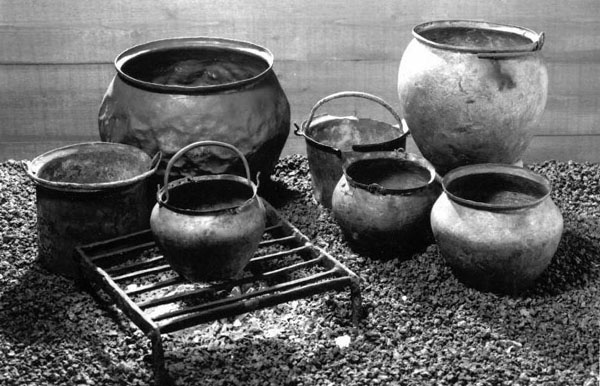
Roman Pot, Utensils and Iron Grid
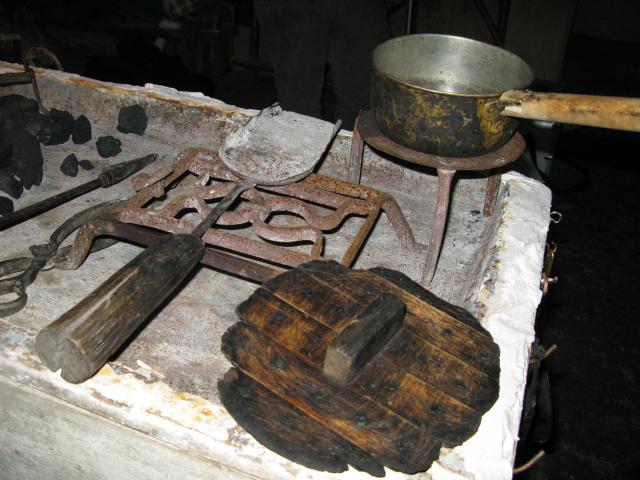
The images available on Google don’t indicate that there was a grill large enough to torture a human. The case for the literal frying of Laurence doesn’t look good.

One author has proposed that the story about his being roasted was an error in transcription. The usual phrase to describe a martyr’s death in Latin had dropped the ‘p.’

The phrase ‘passus est’ means ‘he suffered.’  When the first letter is dropped, it reads ‘assus est’. It means ‘he roasted.’

------------------------

The speedy retreat of Shapur's troops from Antioch caused Valerian to pursue the Persians to Edessa, but they were defeated by the Persians.  Valerian, along with the Roman army that was left, was captured by Shapur and sent away into Pars.

Valerian was the first Roman emperor to be captured as a prisoner of war. This caused shock and disillusionment. He died as their prisoner. His body was stuffed after his death and displayed in the Persian court for visiting dignitaries according to some reports.

------------------

When Septimius Severus almost doubled the wage for the common soldier at the same time that he increased the size of armed force, it stressed the Roman treasury. The soldiers circulated more coin into the economy, but they also felt an empowerment to assassinate any emperor who did not meet their demands.

The authority of the emperor was not officially acknowledged by the Senate unless he was elected consul. Consuls had a one year non-repeatable term limit during the period of the Republic.
Septimius imperiled imperial authority for his dynasty and Barracks emperors who followed them. He reduced the ability to command to a concession to popularity among the troops.

This situation contributed to the resolve of Valerian to designate leading Christians as non-Roman in order to take their property after execution. The imperial Polytheistic faith was reduced to fatalism by the precipitation of war and the death penalty.

When Christian monotheism threatened to do the same thing with the reintroduction of the slave trade after the Renaissance, the association of fate with the Roman faith was increased. The Protestant Reformation protested indulgences as a core deficiency in the intent to expand the Roman Empire around the globe with slavery.

Salvation by faith in the grace of God with the authority of sola scriptura was promoted as an implicit renunciation of the papal support for the slave trade in the alliance with the Spanish Hapsburgs. Slavery was not explicitly protested due to the threat from the expansion of the Ottoman empire.

The Peace of Westphalia supported the selection of the Protestant or Catholic denominations by the princes to oppose the expansion of the empire with the slave trade. German kingdoms would eventually unite into the Austro-Hungarian Empire.

The empire became a functional republic with Bismarck. It became a socialist republic after World War I had been lost to the British and her allies. It wasn’t declared as an atheist state as with the Soviet Republic, but it was characterized by anti-Semitic policy.

The economy was not capitalist. It was socialist with concession to the demands of industry that served the purpose of imperial republican expansion. An intent to conquer the whole globe was indicated. It was a totalitarian intent.

Valerian
wiki Emperor Valerian
Social Class in Ancient Rome
wiki Social Class in Ancient Rome
Third Century Crisis
wiki Third Century Crisis
Ancient History: Third Century Crisis
Shapur I
wiki Shapur Roman POW's
Sasanian Empire
wiki Sasanian Empire
Second Roman War
wiki Shapur Second Roman War
St. Lawrence of Rome
Roman Catholic St. Lawrence
Lectionary Laurence
wiki St. Lawrence
Roman Religion
Oxford Roman Religion
Capitalism
Huffpost: Capitalism and Socialism
Covey Respons-ability
Socialism
Socialism Culture War

Friday, April 12, 2019

Flood

4.13.19
Kristen Stewart

Flood
Babylon
洪水巴比伦 
Hóngshuǐ bābǐlún
洪水バビロン
Kōzui babiron
ps137

Our tears flooded Babylon
as we wept for the waters to feed upon.

A flood of tears swept the gate of the gods. 
The ascent to heaven was blocked. What were the odds?

We hung our harps on the tamarisk's trident
when we remembered Zion.

Those who led us captive asked for a song
as though the singing would help us to feel strong.

"Sing us one of the songs from your land.
It will help you to feel better about where you stand."

How can we sing of triumph on alien soil?
The Lord's song is not about enslavement to toil.

Let my right hand forget the skill to play with ease
should I ever forget the city of peace.

Let my tongue cleave to the roof of my mouth
should I ever disrespect the knowledge of our house.

The capital city was not our highest joy.
Our faith is in the love that cannot be destroyed.

We had been attacked by the kingdom of the red earth.
They had cursed us as though that would take our worth.

The pride of the gate to the gods was doomed to destruction.
Pride is blind to obsession with construction limited to official unction.

Happy is the one who will help you to feel the sorrow of defeat.
Your blindness will be removed. You will see what caused the deceit.

How are we to look at the value of money?
Doesn't national security without respect for boundaries sound funny? 

Happy is the one who will set us free from captivity.
Success is the ascendance of love to perceptivity.

I want you to understand this mystery of history.
Hardness of heart will soften as mercy overcomes misery.

Our brother called for  you when he felt weak.
The presence of your power was that which he did seek.

Now that he lies still as death in his body,
you can raise him from the fear of the ungodly.

I will write my law within our hearts.
We will learn the art of love with all love's loving parts.

------------------------------

137 Super flumina
flood of tears

1 By the waters of Babylon we sat down and wept,
when we remembered you, O Zion.
2 As for our harps, we hung them up
on the trees in the midst of that land.
3 For those who led us away captive asked us for a song,
and our oppressors called for mirth:
"Sing us one of the songs of Zion."
4 How shall we sing the Lord's song
upon an alien soil?
5 If I forget you, O Jerusalem,
let my right hand forget its skill.
6 Let my tongue cleave to the roof of my mouth
if I do not remember you,
if I do not set Jerusalem above my highest joy.
(7 Remember the day of Jerusalem, O Lord,
against the people of Edom,
who said, "Down with it! down with it!
even to the ground!"
8 O Daughter of Babylon, doomed to destruction,
happy the one who pays you back
for what you have done to us!
9 Happy shall he be who takes your little ones,
and dashes them against the rock!)

------------------------------

Jeremiah 31:28,33

Just as I have watched them pluck up, break down. overthrow, destroy and bring evil, so I will watch over them to build and to plant, says the LORD.

I will put my law within them and write it upon their hearts. I will be their God. They will be my people.

------------------------------

I will write my law within their hearts.
They will learn the art of love with all love's loving parts.

======================

Romans 11:25, 30-31

So you may not claim to be wiser than you are, brothers and sisters, I want you to understand this mystery: a hardening has come upon part of Israel until the full number of the Gentiles has been saved.

Just as you had been disobedient to God but have now received mercy, so they not have been disobedient in that by the mercy shown to you, they too may now receive mercy.

------------------------------

I want you to understand this mystery of history,
hardness of heart will soften as mercy overcomes misery.

======================

John 11: 32

When Mary came where Jesus was and saw him, she knelt at his feet and said, 'Lord, if you had been here, my brother would not have died.'

------------------------------

Our brother called for  you when he felt weak.
The presence of your power was that which he did seek.

Now that he lies still as death in his body,
you can raise him from the fear of the ungodly.

======================

The Razor

Christopher Hitchens
b. 4.13.1949 Portsmouth, England, UK
d. 12.15.2011, Houston, Texas

Portsmouth

Portsmouth is located 110 km (70 miles) south-west of London. It is mainly built on Portsea Island, a flat, low-lying island measuring 24 square kilometers (9 sq mi) in area, just off the south-east coast of Hampshire. It  is the only island city in England. The population density exceeds that of London.

Portsmouth's history can be traced back to Roman times. The Romans built Portus Adurni, a fort, at nearby Portchester in the late third century. It was a significant naval port for centuries. It has the world's oldest dry dock.

The port was England's first line of defence during the French invasion of 1545. Henry VIII built Southsea Castle, financed by the Dissolution of the Monasteries, in anticipation of a French invasion in 1539.

He also invested large sums of money into the town's dockyard, and expanded its boundaries to 8 acres (3.2 ha). Henry witnessed his flagship Mary Rose sink with the loss of about 500 lives from Southsea Castle. The ship was going into action against the French fleet in the Battle of the Solent.

The mayor and most residents supported the parliamentarians during the English Civil War. The military governor, Colonel Goring, supported the royalists. The town became a major base for the parliamentarian navy. It was blockaded from the sea.

Parliamentarian troops were sent to raid it by land in the Siege of Portsmouth. The guns of Southsea Castle were fired at the royalist garrison in the town. Parliamentarians in Gosport joined in the assault across the harbor. Their guns damaged St Thomas's Church.

The remaining royalists in the garrison at the Square Tower were forced to surrender on 5 September 1642. Goring threatened to blow it up with gunpowder. He and his garrison were allowed safe passage in return.

Robert Blake used the harbor as his base during the First Anglo-Dutch War in 1652 and the Anglo Spanish War of 1654 during the Commonwealth. He died within sight of the town in his return from Cádiz.

The Protectorate might have continued if Oliver Cromwell's son Richard, who was made Lord Protector on his father's death, had been capable of carrying on his father's policies. Richard Cromwell did not have the confidence of the New Model Army.

The New Model Army differed from other armies in that it was intended as liable for service anywhere in the country including in Scotland and Ireland. It was not tied to a single area or garrison. Its soldiers became full-time professionals, rather than part-time militia. The army's leaders were prohibited from having seats in either the House of Lords or House of Commons to establish a professional officer corps.

This new model was raised partly from among veteran soldiers who already had deeply held Puritan religious beliefs and partly from conscripts who brought with them many commonly held beliefs about religion or society.

Many of the soldiers held dissenting or radical views. This was unique among English armies. Although the Army's senior officers did not share many of their soldiers' political opinions, their independence from Parliament led to the Army's willingness to contribute to the overthrow of both the Crown and Parliament's authority.

The Grandees in the New Model Army removed Richard Cromwell after 7 months.  They reinstalled the Rump Parliament on 6 May 1659. General George Monck entered London in February 1660 and restored the Parliament that had rebelled against the monarchy under the condition that it would dissolve itself after elections were held.

King Charles II was invited to be the English monarch in what has become known as the Restoration of the House of Stuart. He ruled until his death in 1685.

The world's first mass production line was set up in Portsmouth Dockyard's Block Mills by the early 19th century. The mills mass produced block pulleys with a mechanized production process.  This made Portsmouth the most industrialized site in the world. It was the birthplace for the Industrial Revolution.

The area was also the most heavily fortified town in the world. It was considered "the world's greatest naval port" at the height of the British Empire throughout Pax Britannica. The city gained its first railway link in 1847 with a direct route to London arriving in 1859.

Defenses known as the Palmerston Forts were built around Portsmouth in 1859 in anticipation of another invasion from continental Europe.

The Evening News began publication in 1877 and came under common ownership with the Hampshire Telegraph in 1883. The Portsmouth Times gained a sister paper called the Evening Mail in 1884. It was later renamed to the Southern Daily Mail.

The city was considered "the world's greatest naval port" when the British Empire was at its height of power at the turn of the 20th century.

The city purchased the private horse-drawn tram lines in 1901.

The boundaries of Portsmouth were extended to finally include the whole of Portsea Island in 1904. The boundaries were further extended in 1920 and 1932 to take in areas of the mainland.

The city experience its first aerial bombardment when a Zeppelin airship bombed it during the First World War.

The city was bombed as a major naval base and dockyard during the Second World War. Nazi German Luftwaffe night-time air raids began on 24 August 1940. The city was hit by 67 air raids. The bombardments destroyed 6625 houses and severely damaged 6549 of them.

The Guildhall, 30 churches, 8 schools, and 1 hospital were damaged. 930 people were killed and 1,216 people were injured. While most of the city has since been rebuilt, to this day developers still occasionally find unexploded bombs.
Southsea beach and Portsmouth Harbour were military embarkation points for the D-Day landings on 6 June 1944.

Much of the city's housing stock was damaged during the war. The wreckage was cleared in an attempt to improve the quality of dwellings after the war. Portsmouth City Council built prefabs for those who had lost their homes before permanent accommodation could be built. More than 700 prefab houses were constructed between 1945 and 1947.

Portsmouth was affected by the British Empire's decline in the latter half of the 20th century. Shipbuilding jobs fell from 46% of workforce in 1951 to 14% in 1966. The manpower in the dockyard was drastically reduced.

Christopher Hitchens

Christopher Hitchens was born on 13 April 1949 in Portsmouth, Hampshire. He was the elder of two boys. His brother Peter was a Christian and socially conservative journalist. Christopher did not get along well with Peter.

His parents, Eric Ernest Hitchens (1909–1987) and Yvonne Jean née Hickman (1921–1973), met in Scotland when both were serving in the Royal Navy during World War II.  Eric became an accountant for boatbuilders, speedboat-manufacturers and a prep school after the war.

His mother had been a Wren, a member of the Women's Royal Naval Service. She was a Jew. Christopher would come to identify himself as an anti-theist Jew, later in life.

Hitchens attended Mount House School (now absorbed into Mount Kelly) in Tavistock, Devon from the age of 8. This was followed by instruction at the independent Leys School in Cambridge.

He enrolled at Balliol College, Oxford, where he was tutored by Steven Lukes and Anthony Kenny.  He read for the Philosophy, Politics and Economics degree. He graduated in 1970 with a third-class degree.

Hitchens joined the political left, drawn by disagreement over the Vietnam War, nuclear weapons, racism and oligarchy in the 1960's. The argument against oligarchy included that of "the unaccountable corporation."

He expressed affinity with the politically charged counter-cultural and protest movements of the 1960's and 1970's. He avoided the recreational drug use of the time. He said "in my cohort we were slightly anti-hedonistic...it made it very much easier for police provocation to occur, because the planting of drugs was something that happened to almost everyone one knew."

Hitchens joined the Labour Party in 1965. He was expelled in 1967 along with the majority of the Labour students' organisation, because of what Hitchens called "Prime Minister Harold Wilson's contemptible support for the war in Vietnam."

He forged an ideological interest in Trotskyism and anti-Stalinist socialism under the influence of Peter Sedgewick. Sedgewick translated the writings of Russian revolutionary and Soviet dissident Victor Serge. Hitchens joined "a small but growing post-Trotskyist Luxemburgist sect."

He began working as a correspondent for the magazine International Socialism early in his career.  The journal was published by the International Socialists, the forerunners of today's British Socialist Workers Party.

This group was broadly Trotskyist, but differed from more orthodox Trotskyist groups in its refusal to defend communist states as "workers' states". Their slogan was "Neither Washington nor Moscow but International Socialism".

Hitchens went to work at the Times Higher Education Supplement where he served as a social science correspondent in 1971. He admitted that he hated the position. He was fired after six months in the job.

He was a researcher for ITV's Weekend World next. He went to work for the New Statesman in 1973. He acquired a reputation as a left-winger. He reported internationally from areas of conflict such as Northern Ireland, Libya and Iraq.

He reported on the constitutional crisis of the military junta while in Greece in November 1973. It became his first leading article for the New Statesman.

He interviewed Argentine dictator Jorge Rafael Videla in December 1977. He later described the conversation as "horrifying." He became unhappy at the New Statesman after the interview, so he defected to the Daily Express. He became a foreign correspondent there. He returned to the New Statesman to become the foreign editor in 1979.

Hitchens moved to the United States in 1981 as part of an editor exchange programme between the New Statesman and The Nation. He wrote vociferous critiques of Ronald Reagan, George H. W. Bush and American foreign policy in South and Central America after joining The Nation.

The American author and polemicist Gore Vidal was apt to speak of Hitchens as his "dauphin" or "heir." Hitchens attacked Vidal in a Vanity Fair piece headlined "Vidal Loco" calling him a "crackpot" for his adoption of 9/11 conspiracy theories in 2010. Vidal's endorsement of Hitchens as his successor on the back of the memoir Hitch-22 is crossed out in red and annotated "NO, C.H."

Hitchens's strong advocacy of the war in Iraq gained him a wider readership. He was named as fifth on the list of the "Top 100 Public Intellectuals" by Foreign Policy and Prospect magazines in September 2005 in an on-line poll.  The article noted that the rankings of Hitchens, Noam Chomsky and Abdolkarim Soroush were partly due to their respective supporters' publicising the vote. Hitchens later responded to his ranking with a few articles about his status as such.

Hitchens did not leave his position writing for The Nation until after the September 11 attacks. He stated that he felt the magazine had arrived at a position "that John Ashcroft is a greater menace than Osama bin Laden."

The 11 September attacks "exhilarated" him, bringing into focus "a battle between everything I love and everything I hate" and strengthening his embrace of an interventionist foreign policy that challenged "fascism with an Islamic face."

His numerous editorials in support of the Iraq War caused some to label him a neoconservative. He insisted he was not "a conservative of any kind." His friend Ian McEwan described him as representing the anti-totalitarian left.

His memoir stated that he had been  "invited by Bernard-Henri Levy to write an essay on political reconsiderations for his magazine La Regle du Jeu." He gave the piece a partly ironic title: 'Can One Be a Neoconservative?' Some copy editor became impatient with this and put the title the cover as 'How I Became a Neoconservative' on the cover.

Hitchens quipped that  this was an instance of the Cartesian principle as opposed to the English empiricist one. He wrote, "It was decided that I evidently was what I apparently only thought." Indeed, in a 2010 BBC interview, He later stated in a BBC interview in 2010 that he "still [thought] like a Marxist" and considered himself "a leftist."

Hitchens wrote a monthly essay in The Atlantic. He occasionally contributed to other literary journals. One of his books, Unacknowledged Legislation: Writers in the Public Sphere, collected these works.

He defended Orwell's writings In Why Orwell Matters as relevant today and progressive for his time. Many literary critiques are included of essays and other books of writers, such as David Horowitz and Edward Said in the 2008 book Christopher Hitchens and His Critics: Terror, Iraq, and the Left.

Hitchens was listed by Forbes magazine as one of the '25 most influential liberals in the U.S. media' in 2009. The same article noted that he would "likely be aghast to find himself on this list." It reduced his self-styled radicalism to mere liberalism.

He said of libertarianism and objectivism, "I have always found it quaint, and rather touching, that there is a movement in the US that thinks Americans are not yet selfish enough."

Hitchens supported Israel's right to exist, but he was critical of the Israeli government's handling of the Israeli–Palestinian conflict.

He began his break from the established political left after what he called the "tepid reaction" of the Western left to the controversy over The Satanic Verses, followed by the left's embrace of Bill Clinton and the antiwar movement's opposition to NATO intervention in Bosnia and Herzegovina in the 1990's.

He later became a liberal hawk and supported the War on Terror. He expressed some reservation over waterboarding as torture after voluntarily undergoing the procedure. He joined with four other individuals and four organizations including the ACLU and Greenpeace, as plaintiffs in a lawsuit in January 2006.  The ACLU v. NSA, challenged the Bush administration's NSA warrantless surveillance. The lawsuit was filed by the ACLU.

Hitchens wrote book-length biographical essays on Thomas Jefferson (Thomas Jefferson: Author of America), Thomas Paine (Thomas Paine's "Rights of Man": A Biography) and George Orwell (Why Orwell Matters).

He also became known for his excoriating critiques of public contemporary figures including Mother Teresa, Bill Clinton and Henry Kissinger. They became the subjects of three full-length texts: The Missionary Position: Mother Teresa in Theory and Practice, No One Left to Lie To: The Triangulations of William Jefferson Clinton and The Trial of Henry Kissinger respectively.

He described the Christian evangelist Billy Graham as "a self-conscious fraud" and "a disgustingly evil man" in 2007 while promoting his book God Is Not Great: How Religion Poisons Everything. He claimed that the evangelist who had recently been hospitalized for intestinal bleeding made a living by "going around spouting lies to young people. What a horrible career. I gather it's soon to be over. I certainly hope so."

Hitchens was an anti-theist. He said that a person "could be an atheist and wish that belief in God were correct", but "an antitheist, a term I'm trying to get into circulation, is someone who is relieved that there's no evidence for such an assertion."

He often spoke against the Abrahamic religions. He stated that he was against infant circumcision in a 2010 interview at New York Public Library. When asked by readers of The Independent (London) what he considered to be the "axis of evil," he replied "Christianity, Judaism, Islam—the three leading monotheisms."

He regarded concepts of a god or supreme being as a totalitarian belief that impedes individual freedom. He argued in favor of free expression. He argued that scientific discovery was superior to religion as an ethical code of conduct for human civilization. He also advocated for the separation of church and state.

He was diagnosed with esophageal cancer in 2010. He was a heavy smoker and drinker since his teenage years. He acknowledged that these habits likely contributed to his illness.

He died of hospital-acquired pneumonia on 15 December 2011 in the University of Texas MD Anderson Cancer Center, Houston. He was 62 years of age.  His body was donated to medical research in accordance with his wishes. Mortality, a collection of seven of Hitchens's Vanity Fair essays about his illness, was published posthumously in September 2012.

His position against theism was dismissive. He wouldn't admit that there was any evidence to support belief in the existence of God.

Traditional theists have admit that the divine nature is undefinable. It isn't to say that there isn't any reason to deny that God exists. There is only so much time to spend on any given debate. There is the tacit admission that evidence can be interpreted to affirm or deny the existence of deity.

While Hitchens wrote about things in places that many others would not dare to travel, he eventually adopted a position that played on his interpretation of the data that he observed.

He employed Locke's claim to universal authority for destruction as a basis for his justification that the terrorist is most likely a Muslim. Any amount of money spent on the war on terror would benefit his writing in support of the position.

He wanted to believe that the public would find it easier to condemn the foreign monotheism as the cause of terrorism.  The practical value for the position is dubious. It is used to increase taxation for the precipitation of profit by military action.

Some journalists profit from the precipitation. The media industry risks increased liability for the aggressive promotion of a politically prejudiced opinion.

It seemed that he ditched his razor to favor the story about the war on terror because it sold his articles in magazines. He was a socialist who had been derived from the parliamentarian tradition, but he added an anti-theist position to emphasize his belief in the power of prejudice as the criteria of judgment for the public. He ultimately misdirected himself.

Christopher Hitchens
克里斯托弗希钦斯
克里斯托弗希欽斯

克   Ke   gram                克  koku  overcome            Ku       く           ク            Keu  크 big     
里   li      inside             里   ri         village                 ri        り           リ             li      리 lee   
斯   si     this                   斯  shi       this                     su       す          ス             seu   스 switch   
托   tuo  support             托   taku   pretend                to       と            ト            to     토 sat   
弗   fu     not                   弗   futsu  dollar                  fa      ふぁ-     ファ-         peo   퍼 fur           
希   Xi     hope                希   ki         hope                  He     ひっ       ヒッ        Hi     히 hi     
钦   qin   royal                欽   kin      respect                chen ちぇん  チェン      chin  친 chin   
斯    si      this                  斯   shi       this                       su       す          ス          seu   스 switch       

-----------------------------

How are we to look at the value of money?
Doesn't national security without respect for boundaries sound funny?

==================                                      

Saturday, November 25, 2017

Talk


Cote de Pablo
NCIS

Talk
Time
連続通話時間
Renzoku tsūwa jikan
ps95

Saturn was seen before we could dream
of counting his moons as a part of his team.

The seventh of heavenly objects that shine in the night
is the planet that is known as the symbol of time.

The oldest known of celestial spheres
adheres to the path to travel with tears
that veers from that of which the stars steer.

The Lord of the rings 
has exchanged meaningful things.

He gathered together the fauns and the nymphs
and gave them a glimpse of life without pimps.

Saturn has many moons.
Their orbits play different tunes.

Titan is larger than Mercury.
His lineage precedes that of Hercules.

Rhea is plenty smaller than our moon
but she is the wife to Saturn's swoon.

Many others are smaller still.
They don't comply with the equatorial will.
Crashes do occur.
Space debris does recur.

A co-orbit exists where the rocks change place
The inside track is replaced.
Janus and Epimetheus make the change.
Transitions are the name of their game.

Mercury is closest to the sun
but without a partner, he makes his run.

When Saturn meets Mercury in the night sky
the communication of time celebrates the harvest with wine.
Time tells the word to feel fine.

When our moon is half of full
the 'quarter' is named with less of a pull.

Low tides are inferred.
The lesser pull is conferred.

When the salt of sea is increased wind sheer is lost.
Temperatures rise. Stars become crossed.
A monster is made by regularity's loss.
Beauty and love are threatened with deadly awe.
Only fish are not tossed.
The wish for their safety is embossed
on mind's that have not been lost.
After the storm, we must count the cost.

Bow down. Bend the knee. Repair things with the management of labor.
Destruction shows the weakness that had stricken you or your neighbor.

Rock holds the joy for our salvation.
The height of mountain celebrates elation.

The depth of cavern shields us from harm.
Rubble tells the standing stone that it is lacking charm.

The sheep have been scattered on a day of darkness.
The wilderness can seem so harsh that it is heartless.

Care seeks out the flock as they drift like clouds.
The shepherd calls each by name with a voice that is loud.
The sheep have been found.

The shepherd feels the profound sound 
of joy echo from the ground.

Don't harden your heart for adversity.
Knowledge is found at the edge of uncertainty.

Quarreling in hardship was pronounced.
The counting of faults was announced.

Testing without rest was a mess.
Survival was for the fittest when it was best.

The wilderness was a maze in the mind.
The consequence for error was that which confined.

Where was there water
for your son or your daughter?

Where was the food
that would lighten your mood?

Where was the danger
that crept up like a stranger?

Where was the pasture
that would result in your laughter?

Where was the power for those who believe?
Where was the knowledge that would provide your relief?

When the Son of man and his angels appear,
will you be ready for the heavenly here?

Survival for fitness was for the best.
Learn from the experience expressed in the test.

Come let us sing the song of salvation.
It will be good for us, the world and our nation.


Psalm 95 Venite, exultemus

1 Come, let us sing to the Lord; *
let us shout for joy to the Rock of our salvation.
2 Let us come before his presence with thanksgiving *
and raise a loud shout to him with psalms.
3 For the Lord is a great God, *
and a great King above all gods.
4 In his hand are the caverns of the earth, *
and the heights of the hills are his also.
5 The sea is his, for he made it, *
and his hands have molded the dry land.
6 Come, let us bow down, and bend the knee, *
and kneel before the Lord our Maker.
7 For he is our God,
and we are the people of his pasture and the sheep of his hand. *
Oh, that today you would hearken to his voice!
8 Harden not your hearts,
as your forebears did in the wilderness, *
at Meribah, and on that day at Massah,
when they tempted me.
9 They put me to the test, *
though they had seen my works.
10 Forty years long I detested that generation and said, *
"This people are wayward in their hearts;
they do not know my ways."
11 So I swore in my wrath, *
"They shall not enter into my rest."

Ezekiel 34:12
As shepherds seek out their flocks when they are among their scattered sheep, so I will seek out my sheep. I will rescue them from all the places to which they have been scattered on a day of clouds and thick darkness.

Ephesians 1:19-20
what is the immeasurable greatness of his power for us who believe, according to the working of his great power. God* put this power to work in Christ when he raised him from the dead and seated him at his right hand in the heavenly places...

Matt.25:31-46
 ‘When the Son of Man comes in his glory, and all the angels with him, then he will sit on the throne of his glory. All the nations will be gathered before him, and he will separate people one from another as a shepherd separates the sheep from the goats...
11-26-17

Aquarius, Pices, Mercury, Saturn

Thursday, October 26, 2017

Enjoy


Selena Gomez
"Wolves"
MV: Wolves

Enjoy
Freedom
自由を享受する
Jiyū o kyōju suru
ps90

The afternoon breeze
blew through the trees
dispersing brown leaves.

The place away from danger is a refuge.
Refugees flee to find safety for their use.
Like wolves we chose to move even in the night
to escape certain death as our plight.

This has been true from one generation to another.
War has been against your fellow man as brother.
It has driven non-combatants to a place that is other
than the one in which we had taken succor.

Spoils and taxes have driven war against some  flutter
of threat created by news of some slaughtering snuffer.
War has to be limited to defense to be just.
The limitation will guide those who govern for us.

A thousand years in divine sight 
are like one watch within the night.
We had been swept away like a dream.
Like the grass in the morning, we were green
then, we lost the moisture to feed our need.
We withered brown by the evening due to heat.
We consumed too much in displeasure.
We took beyond the seasoned measure.

We lost our faith for fear of wrath.
We lost our health upon this path.

We didn't change to meet the challenge.
Iniquity prevented the savagery to manage.
Guilt from secret sins held movement in check.
Profit as a motive had become a train wreck.

Destruction makes sure the days are gone.
Years are shortened before they grow long.

The span of life is eighty years.
It's more like ninety when we shed fears with tears.

The sum of life is labor and sorrow
when we don't build law with love for tomorrow.

The power of production replaces wrath with math.
This is the power that civilization has.

Learn from experience to teach yourself measure.
It is the gold which life does highly treasure.

Replace the daze of affliction in adversity
with the ways of satisfaction in maturity.

Time turns mind back to the dust to say,
"Go back to earth like a child at play."

Who feels the power of your presence?
You are in the wonder of the divine essence. 

Who loves the real feeling of your power?
You are growing in strength by the hour.

Teach us to value time for our hearts in wisdom.
We will learn to see mission with our vision.

How long will you wait?
Get this goal straight.

Be gracious with your love.
It is the message that came from above with the dove.

Satisfy us with your kindness in the morning,
so we may weather storms as life's adorning.

Make us glad by the measure of the days 
in which we were afflicted in ways
those years of adversity will be raised
as the emblem of virtue to be praised.

Show your work to your loved ones.
Your splendor will shine like the sun.

May your grace be with us.
The fruit of labor will be discussed.
We see we saw the soul as one
in the products of our love.


Psalm 90 Domine, refugium

1 Lord, you have been our refuge *
from one generation to another.
2 Before the mountains were brought forth,
or the land and the earth were born, *
from age to age you are God.
3 You turn us back to the dust and say, *
"Go back, O child of earth."
4 For a thousand years in your sight are like yesterday when it is past *
and like a watch in the night.
5 You sweep us away like a dream; *
we fade away suddenly like the grass.
6 In the morning it is green and flourishes; *
in the evening it is dried up and withered.
7 For we consume away in your displeasure; *
we are afraid because of your wrathful indignation.
8 Our iniquities you have set before you, *
and our secret sins in the light of your countenance.
9 When you are angry, all our days are gone; *
we bring our years to an end like a sigh.
10 The span of our life is seventy years,
perhaps in strength even eighty; *
yet the sum of them is but labor and sorrow,
for they pass away quickly and we are gone.
11 Who regards the power of your wrath? *
who rightly fears your indignation?
12 So teach us to number our days *
that we may apply our hearts to wisdom.
13 Return, O Lord; how long will you tarry? *
be gracious to your servants.
14 Satisfy us by your loving-kindness in the morning; *
so shall we rejoice and be glad all the days of our life.
15 Make us glad by the measure of the days that you afflicted us *
and the years in which we suffered adversity.
16 Show your servants your works *
and your splendor to their children.
17 May the graciousness of the Lord our God be upon us; *
prosper the work of our hands;
prosper our handiwork.