Katie Holmes
Reach
Higher
达到更高
Dádào gèng gāo
より高く到達する
Yori takaku tōtatsu suru
ps61
Altius semoto
I have hiked into the highlands through rocky terrain.
I saw from a height that gave me a vision of the plains.

I had been lowered into the mud at the bottom of the cistern.
Deliverance from hunger was not a liberation that I could discern.

I felt my feet slip into the deep dark waters from the mire
but I was saved with help that made me feel honored with desire.

I had called for help and was delivered.
I stood on rock with a gratitude that shivered.
Listen to my prayer for salvation with insight, benign Divine Light.
I request your help as darkness increases the length of night.
I will call to you from the heaviness of my heart
from the ends of the earth with a chart for the path of my part.
You set me on a rock that was higher than me
after I cried to you whom I could not see.
You have been a strong tower against the enemy.
You have provided the remedies for adversity to my destiny.
The flag for the settlement was raised above the dust
to announce the measure of grain for exchange against the rush
for going bust.
I will dwell in your house forever.
Your help makes my burden feel as light as a feather.
I will hide beneath the cover of your wings
to rejoice in the blessed favor that sings.
How do I get there from here
if I don't offer holiday cheer?
Goodness in life has been an answer to my prayers.
The preservation of your promise has strengthened my care.
The heritage of those who revere your Name
has granted me the capacity to tame ridicule and shame.
You will be given a sign to see the word as witness.
A young woman will bear a son and call him 'God with us.'
The birth of Jesus as the Messiah took place in the conception.
Mary was found to be with child by the Holy Spirit in the creative inception.
The gospel was promised through the prophets in the scriptures done.
Grace to you and peace from the Father and Jesus Christ, the Son.
The gospel needs the Church to nurture growth.
The Church needs the gospel to grow in significance and size to show.
Science holds an elegant place in faith.
It is like a spear thrust that defines a point in space.
Add length of days to life in the line of political succession
that public policy may become an expression of progression.
Let the leadership sit enthroned by grace
to be mindful of kindness for the human race.
Bid love to watch decision with faithfulness
that others may decide to work with gratefulness.
I will sing praise with respect for your Name
that my vows may be fulfilled for success in fair games.
-------------------------
61 Exaudi, Deus
Answer, Light
1 Hear my cry, O God,
and listen to my prayer.
2 I call upon you from the ends of the earth
with heaviness in my heart;
set me upon the rock that is higher than I.
3 For you have been my refuge,
a strong tower against the enemy.
4 I will dwell in your house for ever;
I will take refuge under the cover of your wings.
5 For you, O God, have heard my vows;
you have granted me the heritage of those who fear your Name.
6 Add length of days to the king's life;
let his years extend over many generations.
7 Let him sit enthroned before God for ever;
bid love and faithfulness watch over him.
8 So will I always sing the praise of your Name,
and day by day I will fulfill my vows.
----------------------
=============
----------------------
How do I get there?
Chn. 我如何到达那里?
Wǒ rúhé dàodá nàlǐ?
Jpn. どうやってそこまで行くの?
Dō yatte soko made iku no?
Krn. 내가 거기 어떻게?
Naega geogi eotteohge?
Ltn. Quomodo illuc?
Itn. Come ci arrivo?
Grk. Πως πάω εκεί?
Pos páo ekeí?
Spn. ¿Como llego hasta ahí?
Frn. Comment puis-je y arriver?
Gmn. Wie komme ich dort hin?
Hng. Hogyan jutok oda?
Trk. Oraya nasıl giderim?
Rsn. Как туда попасть?
Kak tuda popast'?
How do I get there from here
if I don't offer holiday cheer?
-------------------------
Abridged Individual Lament of Jeremiah
Higher Ground

Psalm 61
The psalm is in the second of the three sections for the book.
It is addressed to the musical director of the temple. It specifies the use of a stringed instrument (Neginah). It is identified as a psalm of David, but it shares a similarity with the individual lament attributed to Jeremiah when he was thrown into the empty well.
Psalm 40:2
He lifted me up from the pit of destruction, my feet from the miry clay. He set my feet on a rock and made my footsteps firm.
-------------------------
The rock was higher than the depth of the cistern. It was higher than him.
Does the designation psalm of David indicate that there were times when the monarch participated in singing the song in religious devotion in the house dedicated to worship?
There is the distinct possibility that the designation was the reminder of the king's existence, even if he was not physically present. He was present in his absence by virtue of the reference to the name for the first in the line of royal succession.
All the kings in the line were loved by God with respect for the promise of the inheritance.
The prophet Jeremiah had predicted the destruction of Jerusalem. A number of officials were offended by the prediction. They wanted to have him put to death. The king allowed him to be punished by the officials according to their choice. They cast him into an empty well. It was probably no more than 12 feet in depth, but it was higher than his ability to climb out of it.
Jeremiah 38:6
They took Jeremiah and put him into the cistern of Malkijah, the king's son. It was in the courtyard of the guard. They lowered him into the empty well by ropes. There was only mud at the bottom. Jeremiah sank into the mire.
----------------------
The king was Zedekiah. He had said, "Here he is. He is in your hands since the king can do nothing to stop you." (Jer. 38:5)
Zedekiah had been made the king of Judah by Nebuschnezzar, king of Babylon (Jer.37:1). The Babylonians were attacking Jerusalem even though their king of kings had appointed the monarch for Judah.
Their army withdrew when they heard the Pharaoh's army had set out from Egypt. Jeremiah warned that the Babylonians would return. They would not stop the attack until they had destroyed the city and taken the leadership captive. (Jer.37:10)
Jeremiah went to the land of Benjamin to tend to the collection of his inheritance. He was charged with desertion to the Babylonians and detained in a house as a prison. He was taken to the king after some time.
He asked the king what his crime was. How was it that the prediction that the Babylonians would not attack was acceptable?
He asked that he not be returned to the location where he had been detained. He felt that he would be allowed to die. The king had him kept in the courtyard of the guard with orders that he be fed. (Jer.37:21)
The officials argued that Jeremiah should be put to death for his prophesy. They said it discouraged the soldiers and the people with his predicition that Jerusalem would be destroyed. He had also predicted that those who stayed would die by the sword, famine or plague (Jer.38:2). They said that he was not for the people. He was for their ruin.
Jeremiah was put in the muddy cistern indefinitely. Ebed-Melek, an official of the palace, heard of what happened. He petitioned the king for Jeremiah's release. He argued that the prophet would be left to starve. The king sent him with 30 men to pull him out of the cistern before he died. (Jer.38:10)
The king had an honest discussion with the prophet about the predicted outcomes. Jeremiah told him that he would be spared if he surrendered. The women and children would be taken captive, but he would be killed or captured, if not. (Jer.38:23)
Jeremiah was detained in the courtyard of the guard until Jerusalem was taken. (Jer.38:28)
There are a number of references in the psalms regarding the struggle with mire. This verse appears to be a direct reference to the experience of Jeremiah as the prophet. He saw his predicament as a portend of what was to happen to Judah.
The time in captivity would be followed by deliverance. Unsure footing would be replaced with rock as the terra firma.
It was not explicitly predicted that the appointed king would be replaced by a govenor or that the kingdom would become a province in the empire.
Psalm 40:2
He lifted me up from the pit of destruction, my feet from the miry clay. He set my feet on a rock and made my footsteps firm.
----------------------
This statement was modified in another psalm to allude to the sense that the experience of the mire felt like it was coming before something even worse. The reader is asked to imagine the sensation of sinking from mud into deep water where there is no sensation of firmness beneath his feet.
Psalm 69:2
I have sunk into the miry depths where there is no footing. I have drifted into deep waters where the floods have engulfed me.
----------------------
If you can swim, the experience isn't as frightening as it would be for someone who hasn't been taught. Being able to swim could make the difference between making it to safety and drowning in the depth of water. Fear is a determinant factor.
Psalm 69:14
Rescue me from the mire and do not let me sink. Deliver me from my foes and from deep waters.
----------------------
Knowledge of how to swim allows for the confidence that solid ground will be found. Fear contributes to panic. Panic is likely to result in unconsciousness or death due to water being taken into the lungs.
The lungs aren't able to extract oxygen from the water. They can take it from the air.
Psalm 61 is short. It is not as descriptive as other laments. It anticipates deliverance efficiently. It anticipates it anywhere in the world.
The suggestion offered by the statement that he will cry from the end of the earth suggests that prayer for salvation can be offered from any location at any time that the heart feels overwhelmed.
The request to be led to the rock that is higher than I is based on the experience of standing on solid ground.
Anyone who has hiked to higher terrain can tell you that height gives you the ability to see the surrounding area. The sight of that which exists below gives perspective, provided that there is enough light to see.
The higher rock became a metaphor for defense. Build a castle on the highest ground in the area and you can visually anticipate the movement of an army.
This metaphor represented the vision of that which could be constructed, but it was based on the relation of the thought of the brain as higher than the feelings of the heart.
--------------------
Ask for a sign

The Assyrians invaded the Northern Kingdom in 737 BCE. King Menahem of Israel (743-738) became a vassal of the Assyrians.
He made two tribute payments to Assyrian King Tiglath-Pileser III according to Assyrian annals. He paid the tribute for the political support of Assyria to continue to rule with "a thousand talents of silver" (2 Kgs. 15:19-20).
Menahem was succeeded by his son Pekahiah (2 Kgs. 15:23-26). He was assassinated by Pekah son of Remaliah (737).
Pekah decided to resist the Assyrians. He made an alliance with Razon, the king of Damascus. When King Ahaz refused to join the alliance they joined forces to attack Judah. Modern historians call attack the Syro-Ephraimite War (735-734).
Judah was faced with invasion by its northern neighbors, Israel (Ephraim) and Aram-Damascus (Syria).
Isaiah took his young son with him to meet King Ahaz. Isaiah's son's name was Shear-Jashub. It meant "a remnant will return." The boy was a visual reminder of God's mercy in His promise of the preservation of a faithful remnant.
The destruction of Judah's enemies was prophesied by Isaiah prior to the conquest of Syria by Assyria in 733 BCE. (Isa. 7:1-10)
Isaiah delivered a message to Ahaz that invited him to ask for a sign to test the truth of the prophesy. (Isa. 7:11) Ahaz refused. He said that he would not test God. Isaiah replied that his sign would be the birth of a child.
The mother would call the child Immanuel, meaning "God with us." (Isa. 7:13-14) It was predicted that by the time he was eating curds with honey with the knowledge to reject the bad, Ephraim and Syria would be destroyed.
The word almah in the original Hebrew of Isaiah 7:14 meant a young woman of childbearing age who had not yet given birth, however the Greek translation in the Septuagint rendered it as parthenos.
The word means 'virgin.' Jesus was interpreted as the fulfillment of the Immanuel prophesy in the gospel of Matthew. (Matt.1:23)
Isaiah 7:14
Therefore the Lord himself will give you a sign. Look, the young woman is with child and shall bear a son. She will name him Immanuel.
-----------------------
You will be given a sign to see the word as witness.
A young woman will bear a son and call him 'God with us.'
=================
Grace to you
The expression "son of man" (ben-'adam) appears 107 times in the Hebrew Bible. This is the most common construction for the singular reference to human nature. It appears 93 times in the Book of Ezekiel alone. It is used only 14 times elsewhere.
The phrase appears in intermediate plural form "sons of men" in 32 cases. As generally interpreted by Jews, The title "son of man" denotes humanity in contrast to deity or godhead. There is special reference to weakness and frailty by contrast.
The title is used by "God" in reference to Ezekiel in the book that goes by the name of the prophet. Ezekiel was the prophet in the sense that he was the representative of being human.
The title takes on greater significance in the Book of Daniel. One like the son of man came to the Ancient of Days and was presented before him. He was given dominion, glory and a kingdom that the people of all nations and languages were to serve. His kingdom was indestructible.
The imperial title "son of god" wasn't regarded as acceptable to Judaic monotheism. Opposition to the concept of the god-man marks the distinction between the Judaic and Islamic religions with Christianity.
It is conceivable that the notion of the emperor as the son of heaven started with the Chinese, moved to the Middle East and was adopted by the Romans by way of the Greeks.
The expression "son of man" occurs 81 times in the Greek text of the four Canonical gospels. The Son of Man had the power to heal with the forgiveness of sin. He came to serve and to give his life as a ransom for many.
Jesus came from humble circumstance. He was like Gautama Siddhartha after he left his royal station.
The use of the definite article for the Son of man in the Koine Greeek of the Christian gospels is original. There are not records of its use in any of the surviving documents of antiquity.
The title was shortened to the Son during the time of the apostles. The development of the theology for the Son of God would not be officially developed and accepted as Christian until the Council of Nicea in 324 CE.
When Jesus used a title to describe himself, he spoke of the Son of Man. When he was called the Son of God it was ascribed to him by others. He simply said that you had so stated it.
The profession of Jesus as the Son of God has been an essential element of Christian creeds since the end of the Apostolic age when Constantine embraced the Christian faith as the official religion for the empire.
Such professions were not applied to the acceptance of Jesus as the Son of Man. The expression was taken as Jesus self-designation as a continuation of the revelation of the truth of the law and the prophets.
It is likely that the preamble to the greeting to "all God's beloved in Rome" was added after Christian scripture was officially designated as the text for the imperial religion. Religion did not present as a problem in society until the official form was treated as the only legal kind.
Such treatment was sectarian. It suggested that other forms were officially interpreted as an indication of rebellion or treason. The emphasis of the reformed epistemology is such that Christianity can be favored in debate, but the free will defense allows for other forms as legal provided they don't organize for riot, rebellion, revolution, world war or terrorism.
Romans 1:1-7
Paul, a servant of Jesus Christ, called to be an apostle, set apart for the gospel of God, which was promised beforehand through his prophets in the holy scriptures, the gospel concerning his Son, who was descended from David according to the flesh and was declared to be Son of God with power according to the spirit of holiness by resurrection from the dead, Jesus Christ our Lord, through whom we have received grace and apostleship to bring about the obedience of faith among all the Gentiles for the sake of his name, including yourselves who are called to belong to Jesus Christ,
To all God's beloved in Rome, who are called to be saints:
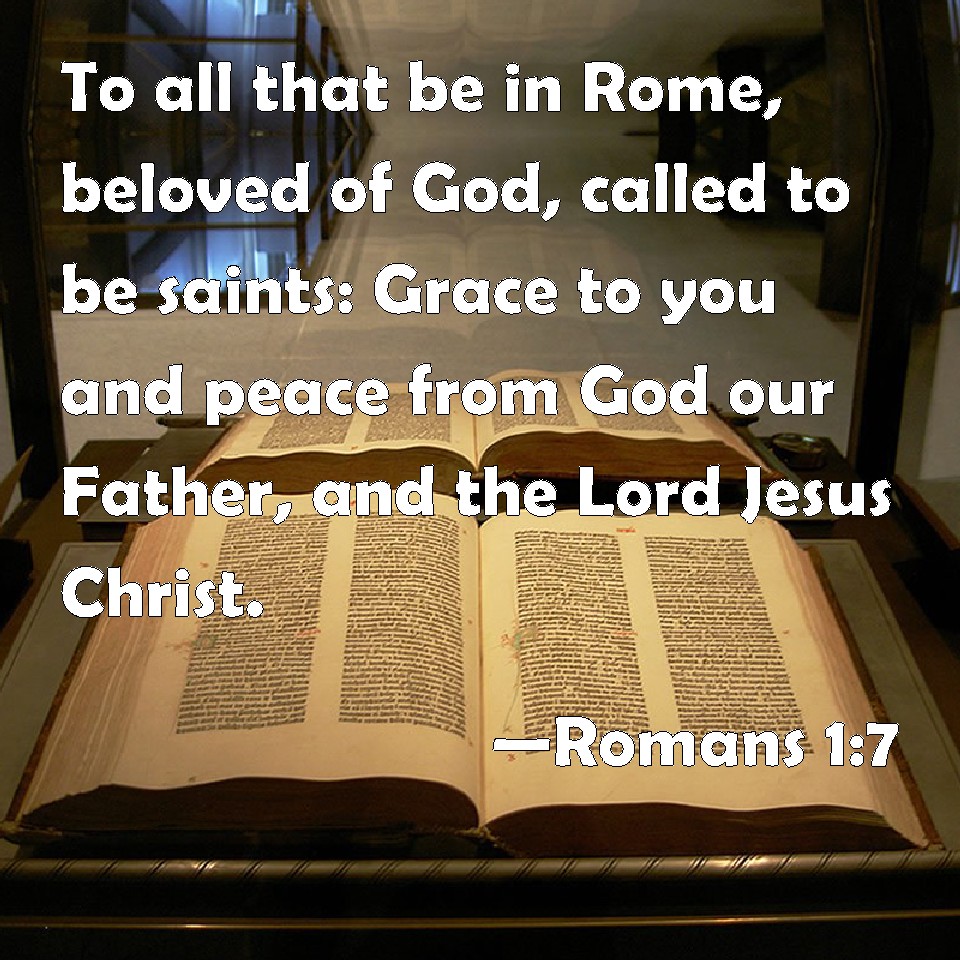
Grace to you and peace from God our Father and the Lord Jesus Christ.
-----------------------
The gospel was promised through the prophets in the scriptures done.
Grace to you and peace from the Father and Jesus Christ, the Son.
==============
God Saves

The word almah occurs 9 times in the Hebrew Bible.
The prophesy in Isaiah 7:14 is one of those. The examples that precede that period of the timeline give an indication of the role of women in the society. They also lend meaning to the definition for almah.
Abraham had sent a servant to seek a wife in his former homeland. The servant told his master how he had prayed that should an almah provide his camel and him with water from the well, he would take that as a sign that she was to be the wife of Isaac. Rebecca was the young unmarried woman. (Gen.24:14)
The heading for Psalm 46 notes that the song is to be played on alamot. It could have been a reference to a special selection of women's voices or an instrument made in the city of "Alameth". It is likely that women in Hebrew culture celebrated life with music.
The alamot are listed in Psalm 68:25 as participants in a victory parade. They are listed after the singers and musicians. They were designated as the players with cymbals or tambourines.
A man with a young woman was described as something difficult to understand in Proverbs 30:19. The Septuagint translated the text to the way of a man in his youth. Proverbs was probably written after the time of Ahaz, but the sense of unpredictability was associated with youth and the future.
Isaiah 7:14 tells how the pregnancy of an almah will be the sign that the enemies of Judah will be destroyed before the son of the virgin grows much in age. Israel and Syria fell to Assyria within a few years.
Aram-Damascus, under Rezin, and Israel, under Pekah, attempted to depose Ahaz through an invasion in 735.
Judah was being defeated according to 2 Chronicles. Officials were killed including the king's son. Others were taken away as slaves. The Second Book of Kings states that Rezin and Pekah besieged Jerusalem but failed to capture it. (2 Kgs.16:5 )
The Assyrians defended Judah. Israel, Aram-Damascus and the Philistines were defeated in a number of years after the start of the assault (736-732). The post-war alliance brought trouble to the king of Judah.
Ahaz had to pay tribute to Tiglath-Pileser III with treasures from the Temple in Jerusalem and the royal treasury. He also built idols of Assyrian gods in Judah to find favor with his new ally.
The Northern Kingdom of Israel was conquered by the Neo-Assyrian monarchs, Tiglath-Pileser III (Pul) and Shalmaneser V. The later Assyrian rulers Sargon II and his son, Sennacherib, were responsible for finishing the 20 year demise of Israel's northern ten-tribe kingdom. These would come to be known as the Ten Lost Tribes.
Forced relocation for captivity began about 740 BCE. The ruling city of the Northern Kingdom, Samaria, was finally taken in 722 by Sargon II after a three-year siege started by Shalmaneser V.
The Fall of Assyria is conventionally dated between 613 and 611. The year in between is the most supported date. An allied army that combined the forces of Medes and the Babylonians with Scythians and Cimmerians besieged Nineveh in 612.
The fall of Nineveh led to the destruction of the Neo-Assyrian Empire over the next three years as the dominant state in the Ancient Near East.
Babylon became the imperial center of Mesopotamia for the first time in over a 1000 years. The Neo-Babylonian Empire claimed imperial continuity as a new dynasty.
The prediction that Assyria would fall as one of the enemies took place over a longer period in time. It took over a century for fulfillment. Babylon would fall to the Achaemenid empire in 539 well after the destruction of Jerusalem in 587 BCE.
The prophesy of Isaiah had relied on the predictability of success in forming alliance with the dominant power for the time.
The image of the almah had acquired a great deal of power in the time between the Assyrian and Roman dominance.
If Isaiah had meant that the young woman had not had sexual relations, the word betulah was more common. There here are two types of betulot in the Hebrew scriptures. The true virgin and the “betrothed virgin” (betulah m’orashah) are both cited.
The state of betrothal was as serious as the married state. The difference between the two in certain cases was treated as a formality.
The Greek translation of the Jewish text made in pre-Christian Alexandria took almah to mean “virgin”.
The author for the gospel of Matthew carefully explains that Mary had been engaged to Joseph before they lived together. The conception of Jesus as Christ was described as from the Holy Spirit.
This was to become the Roman theological preservation of respect for the psychological and social values associated with polytheistic mythology. Faith in one God preserves retentiveness about the historical development of society from the primitive to the civilized state.
Matt. 1:18
Now the birth of Jesus the Messiah took place in this way. When his mother Mary had been engaged to Joseph, but before they lived together, she was found to be with child from the Holy Spirit.
-----------------------
The birth of Jesus as the Messiah took place in the conception.
Mary was found to be with child by the Holy Spirit in the creative inception.
===============
Science and Religion

Ruth Elaine Younger
b. 10.1.1897 New York City, New York
d. 12.22.1986 New York, NY
Ruth Elaine Younger was an Anglican nun, organizer and educator. Her dedication to the faith was an example to others. She searched for knowledge to overcome adversity with pleasantness. She provided instruction for the good life justified by faith with grace.
The book of Ruth provided her with a model for choice. Ruth chose to work with pleasantness despite the adversity that she experienced.
It was in the time when her life was unorganized in a society that had replaced tribalism with ethnic nationalism. She traveled to a different country to learn to cope with the life in which she had been raised.
People organized in relation to the political leader who had a plan to respond to the reported crisis.
Life in New York was ordered by ethnic dominance.
The ethnicity of the predominant political leader determined a hierarchy of favor in relation to the appearance of likeness in the social structure.
Sister Ruth used her religious discipline to consider what was best for education in religious values for the public. This was her emphasis on community organization for the benefit of the state.
She founded a school in New York before she organized a religious community. Her name was changed from Sister to Mother Ruth after she was made the Reverend Mother for the community.
Her life was dedicated to instruction in the faith with pleasantness.
New York City
When New York was named New Amsterdam it was a test case for a colony of the Dutch Republic in the new world. The monarchy had been defined as corrupt in imitation of what the Romans had done in order to promote their republic.
The 'Dutch bet' was based on the control of political administration by an organization that was designated for business.
The consequence was that the business administrator was the state official who made public decisions for the benefit of his trade. The "official" wore hats for the control of trade and municipality in the competition for dominance in the world.
The British eventually purchased the city as it was surrounded by a number of their larger territorial claims.
The British had retained a monarch, but the government decisions regarding the people were largely determined by the House of Commons and the liberal power of the Whig alliance with French and Dutch Protestants for Republic.
The population for the Protestant Republic was more largely uneducated than the Roman kind had been.
Bible study was supposed to be informed by the logic of Aristotle, but most Calvinists were not well educated. They held little interest in the cultural wealth of knowledge or higher knowledge. They had the distinct sense that Calvinism put the control of government in the hands of the local council.
Stories about witch hunts were replaced by those of the threat of savagery from the natives or a foreign power. The competition between kingdoms and republics made the threat more real than it had been. Dictatorship by the barely literate prevailed as democracy.
Politics in New York City in the 19th century was controlled by the Tammany Society. This group wasn't limited to NYC.
The defining purpose of the Tammany Societies was to delight in all things Native American. Titles, seasons, rituals, language, costumes and so forth were viewed as tribal and democratic. Those who joined the society were self-identified as pure Americans.
Fernando Wood was the son of Quakers. Quakers were usually of German descent. His father failed at business. Fernando attempted to establish a number of businesses from 13 years of age.
He became a member of the Tammany Society at the age of 24. He won an election to the US House of Representatives in 1841, but lost the next one 2 years later. He won the election for mayor in 1854.
This instituted the Hall as a dominant social force in the political order. The new mayor declared that his goal was the same as his predecessor. He wanted to fight the corruption of the police force.
Many Irish families were forced to emigrate from the country as a result of the Great Famine in Ireland (1845-1849). The famine was caused by a potato blight. Between 1.5 and 2 million Irish had left their country by 1854.
Most became city dwellers. They had little money so they often settled where the ships landed.
The Irish came to make up about a quarter of the population for the major port cities of Boston, New York, Philadelphia and Baltimore.
Boston currently has the largest percentage of Irish Americans whereas New York City has the most in raw numbers.
The popular vote in elections doesn't have a way to correct for error when it comes to lack of qualifications for office.
Tammany Hall celebrated tribal organization, but there wasn't anything to speak of with respect for educational attainment in law, political science or history.
Employment experience in relation to political office was not a consideration. Partisan party politics became the name of the game. The best candidates could be defeated by bad press, stage events and claims of corruption.
William Boss Tweed was of Scottish descent. He was most likely a Presbyterian, but he didn't have the education to prepare him to serve as a political leader. He had his participation in the Odd Fellows, the Masons and Tammany Hall and his efforts at establishing a business.
He won a 2 year term of office for the US House of Representatives in 1852. He was declared an attorney by a judge despite his lack of training in law.
He became a member of the New York State Senate (4th D.) from 1868 to 1873.
He became very wealthy after he was elected mayor for the city in 1869. He sold favor for his office while in power. Tweed's downfall became after riots broke out between Irish Catholics and Protestants over a parade that celebrated a historical victory against Catholicism.
The Irish became a dominant ethnic group in the city through the political machinery of the Democratic Party in Tammany Hall.
Two Irish born men were elected as mayor before the turn of the century. William Russell Grace was elected from 1885-1886. Thomas F. Gilroy served for a year from 1895-1894.
The Democratic machinery hired a number of Irish to work as police by way of participation in Tammany Hall.
The Irish Democrats were mainly Catholics.
Life

Ruth Elaine Younger was born on October 1, 1897 as the third child of an interracial marriage in New York City.
The influx of Irish Catholics after the potato blight may have influenced her decision to seek a life of religious devotion. She moved from New York to Canada to join a monastic order. She entered the Canadian Sisterhood of St. John the Divine in Toronto and was Life Professed on Dec. 29, 1922.
The Sisterhood was founded in Toronto on September 8th, 1884. They have been a prayer and gospel-centered monastic community that answered the call to live their baptismal covenant with the vows of poverty, chastity and obedience.
Her discipline with prayer and the life of devotion helped her to develop the discipline to enter higher education.
She chose to study science as an undergraduate in Canada. She was a graduate of St. Hilda's College, University of Toronto. She received her B.A. degree with honors in natural science.
She obtained her teaching degree at the Ontario College of Education and taught for several years at the Qu'Appelle Diocesan College of Education and at the Bishop Bethune College in Oshawa. She returned to Toronto upon her appointment as treasurer of St. John's Surgical Hospital, she returned to Toronto.
It was prior to her selection of a statement by which she could investigate relevant documents on research for her graduate investigation.
Sister Ruth and Sister Edith Margaret were granted a leave of absence by their Community to begin new work in New York in 1949. They opened St. Hilda's School on Morningside Heights with a class of eight preschool children on February 2, 1950.
The school encouraged and maintained a fully integrated faculty and student body. Sister Ruth was the Headmistress.
The school expanded grade by grade. Co-educational academic training was eventually offered from nursery through grade 12 under the name St. Hilda's and St. Hugh's School.
The Community of the Holy Spirit was formally instituted on Aug. 27, 1952, when their vows were transferred from the Sisterhood of St. John the Divine. Sister Ruth was elected the Reverend Mother of the new Community. She held the office until 1976.
The Community of the Holy Spirit also founded the Melrose School, a country-day school near Brewster, N.Y. and St. Cuthbert's Retreat House also in Brewster. Mother Ruth's direction was necessary for the foundation.
Mother Ruth pursued a course of studies in education at the graduate level at Columbia University in New York. She was awarded Masters and Doctorate degrees.
A life dedicated to investigation is characterized by vision and revision. Assimilation and accommodation to new information contributes to the modification of acquired knowledge.
Mother Ruth applied her knowledge to the administration of her organizational duties. She served as Headmistress of St. Hilda's and St. Hugh's School until her retirement in 1985.
A critical question in the application of scientific inquiry to a life of faith includes the limitation of the investigation to the search for material cause as an expression of the Creator. Theism allows for the contrast of the immaterial with the material universe.
Prayer and faith factor into the search for truth, but it is not generally regarded as an area for evangelical expression.
It is taken as a matter of faith that the investigator is dedicated to finding the truth as an expression of the divine will for how things work in the natural world. Practical value in social or personal dimensions was treated as a goal for the search for objectivity in judgement.
The language used in science is dedicated to the exposition of the state of nature. What is true irrespective of the social or political conditions in the world?
A hypothesis is formed to test the general state of things for a specific outcome. The explanation of determination from the study can be so technical that the meaning defies ordinary levels of comprehension.
A more practical level of application may require tests for personal cognition in an ordinary place like a household.
There is an advantage to the scientific method in the step that is taken outside of partial judgment, but there is a consequence in the level of abstraction for practical benefit.
The study of education includes a survey of literature. The assessment of what others have found with respect for research is helpful in the determination of practical value.
An individual's quest for knowledge can serve as a source of information that can be shared in the context of community life.
Ruth Elaine Younger was dedicated to helping her students grow into responsible adults as faithful citizens in Christ.
Mother Ruth died on Dec. 22, 1986, after a two-month illness.
----------------------
Ruth Younger
S. 露丝·雅戈尔
T. 露絲·雅戈爾
露 Lu expose 露 ro dew Ru る- ル- Lu 루 sack
丝 si thread 絲 shi thread su す ス seu 스 s
雅 Ya elegant 雅 ga gracious Yan やん ヤン Yeong 영 spirit
戈 ge spear 戈 ka battleaxe w spear gu ぐ グ
尔 er you 爾 ji you
----------------------
Science holds an elegant place in faith.
It is like a spear thrust that defines a point in space.
================
Lectionary: Ruth Younger
Episcopal Archives
NY Times Obit.: Mother Ruth
Cliff Notes: Raisin in the Sun, Ruth Younger?
Schmoop: Raisin in the Sun: Ruth Younger
-----------------------
The debate between Brunner and Barth defined the direction for the Church in the 20th century.
Brunner was neo-orthodox. Barth was liberal. They both had a strong influence on German theology.
Barth was more popular. Brunner was better for the Church with respect for participation in the nation state.
The Gospel needs the Church to nurture growth.
The Church needs the Gospel to grow in enough significance to show.
Inspiration
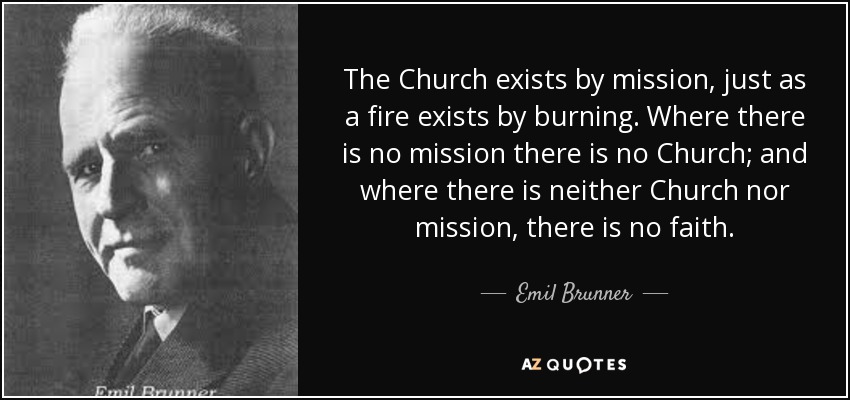
Brunner is significant as a Reform theologian because his neo-Orthodoxy was drawn from the gospel. It was presented with respect for the return of Republic as a form for government.
He wasn't just concerned with the authority of local councils. His respect for statecraft and citizenship extended into international relations through the federal level.
The Protestant Reformation had suggested a movement towards science as the means to clarify reconstruction for public benefit.
Calvin's reform movement was bible-based in science for democracy in local councils, but it was antiquated with respect for the political norms documented by the bible. It entertained sectarian and partisan superstition as a means to make decisions.
Brunner was part of the Swiss Reformed Church started by Zwingli. Zwingli allowed for federation in his political organization. His reform was republican as well as democratic in this sense. It also allowed for monarchy as a form.
The movement towards science as a means for making decisions in the public realm became so pronounced that it facilitated the growth of socialism towards communism.
Science-speak used Greek levels of specificity for the public. Scientific communication could become too obscure for general comprehension or retention.
Government officials came to develop a method of communication that suggested that their responsibilities were too complicated for the public to understand.
Expertise in knowledge of the language regarding particulars was so pronounced that the general public was used to reject concern for the religious population of the nation state.
Political causes were used to divide the general public into factions that could not lay claim to the representation of the constituency.
The extent of the extension of science in the Church denied Christ as God. This was true with respect for Counter-Reformation politics in society as well. The concern for the population outside the Church became so pronounced that the title Son of God was just used to promote secular socialism or populism. Jesus was defined as just a man.
The theology that supported this movement toward communism came to be called liberal by leading Lutherans.
Reason and Revelation
Ch.VII Gifford Lectures Reason and Belief
"Brunner was more interested than Barth in ethics and social movements. Brunner was a steadfast opponent of communism, while Barth, to the indignation of political thinkers like Reinhold Niebuhr, was strangely complaisant toward it."
The debate presented a strange contrast in neo-Lutheran Orthodoxy.
Communism was an atheist state. It was the Marxist extension of liberal Protestant or Counter Reformation theology. The communists sought to replace religion with science. There was an unexpected benefit in the application of dialectic in a scientific and conservative way in order to promote responsible statecraft and citizenship with reasonable political theory.
Winterthur
Winterthur reached 100,000 residents in 2008. It is located near Zurich. It is considered to be a satellite within the municipality. It is about 20 kilometres (12 mi) to northeast of downtown Zürich. It is the sixth largest population in the country.
The population is currently estimated to be over 108,000. The economy is oriented to service and high tech industrial products.
The official language is the Swiss variety of standard German. The main spoken language is a variant of the Alemannic Swiss German dialect.
Napoleonic troops liberated the city from the control of Zurich in 1798. Winterthur lies at the junction of seven cross-roads near Zürich. The army that held the town held the access to most of Switzerland and points crossing the Rhine into southern Germany.
The forces involved were small, but the ability of the Austrians to sustain an 11-hour assault against the French line on the plateau north of Zürich resulted in the consolidation of three Austrian forces. This led to the French defeat a few days later.
The area became an industrial town when companies like Sulzer, Rieter and SLM built large industrial plants in the 19th century.
The town suffered from investments and loans to the National Railway as a private enterprise. A guarantee for the loan of nine million francs was made in 1874 with three other towns. The co-guarantor towns were unable to pay their share.
The entire burden fell on Winterthur. It had to sell its shares in the line in 1878. There were difficulties from 1881 to 1885 as the town struggled to meet its liabilities. It was helped by loans from the cantonal and federal governments.
The City Council (Stadtrat) constitutes the executive government of the City of Winterthur and operates as a collegiate authority. It is composed of seven councilors. Each presides over a department.
Emil Brunner
Emil Brunner was born in Winterthur in 1889.
He studied at the universities of Zurich and Berlin. He received his doctorate in theology from Zurich in 1913. His dissertation was on The Symbolic Element in Religious Knowledge.
Brunner served as pastor from 1916 to 1924 in the mountain village of Obstalden in the Swiss Canton of Glarus. In 1919–1920 he spent a year in the United States studying at Union Theological Seminary in New York.
He studied at the universities of Zurich and Berlin, receiving his doctorate in theology from Zurich in 1913, with a dissertation on The Symbolic Element in Religious Knowledge.
He served as pastor from 1916 to 1924 in the mountain village of Obstalden in the Swiss Canton of Glarus. He spent a year in the United States studying at Union Theological Seminary in New York in 1919–1920.
Brunner published his Habilitationsschrift in 1921. This was a post-doctoral dissertation traditionally required in many countries in order to attain the position of a fully tenured professor. His paper was on Experience, Knowledge and Faith. He was appointed a Privatdozent at the University of Zurich in 1922.
Another book followed soon after. Mysticism and the Word (1924) was a critique of the liberal theology of Friedrich Schleiermacher. Brunner was appointed Professor of Systematic and Practical Theology at the University of Zurich in 1924.
He held the post until his retirement in 1953. He published The Philosophy of Religion from the Standpoint of Protestant Theology and The Mediator in 1927.
Brunner published God and Man in 1930 after accepting various invitations to deliver lectures across Europe and the United States. The Divine Imperative was published in 1932. Brunner continued his theological output with Man in Revolt and Truth as Encounter in 1937.
He was a substantial contributor to the World Conference on Church, Community, and State in Oxford in the same year. This position reflected his continued involvement in the ecumenical movement. He returned to the United States for a year as a visiting professor at Princeton Theological Seminary in 1937–1938.
Brunner's ecclesiastical positions varied at differing points in his career. He returned to Europe before the outbreak of the war with the young Scottish theologian Thomas F. Torrance. Torrance had studied under Karl Barth in Basel. He had been teaching at Auburn Theological Seminary, New York.
He would subsequently go on to distinguish himself as a professor at the University of Edinburgh.
Brunner delivered the prestigious Gifford Lectures at the University of St Andrews, Scotland in 1946–1947 on Christianity and Civilisation following the war.
He retired from his post at the University of Zurich in 1953. He was invited to take a position as a Visiting Professor at the recently founded International Christian University in Tokyo, Japan (1953–1955).
The first two of his three volume magnum opus Dogmatics were published before he accepted the position. Volume one was The Christian Doctrine of God (1946). Volume two was The Christian Doctrine of Creation and Redemption (1950). Volume three was published in 1960 as The Christian Doctrine of the Church, Faith, and Consummation.
Brunner suffered a cerebral hemorrhage and was physically impaired while returning to Europe. It weakened his ability to work. There were times when his condition would improve, but he suffered further strokes. He finally died in 1966.
Heinrich Emil Brunner was a Swiss Protestant (Reformed) theologian. He is commonly associated with neo-orthodoxy or the dialectical theology movement with Karl Barth.
Brunner holds a place of prominence in Protestant theology in the 20th century. He was one of the four or five leading systematicians. He rejected liberal theology's portrait of Jesus as merely a highly respected human being. He insisted that Jesus was God incarnate and central to salvation.
Brunner and his compatriots in the neo-orthodox movement rejected in toto Pelagian concepts of human cooperation with God in the act of salvation. Pelagian concepts had an association with slavery in republic.
These kind of concepts were prominent in other humanist conceptions of Christianity in the late 19th century. Brunner and associates embraced Augustine's views, especially as refracted through Martin Luther.
Brunner re-emphasized the centrality of Christ. Evangelical and fundamentalist theologians mainly from America and Great Britain have usually rejected Brunner's dismissal of certain miraculous elements within the Scriptures.
Arch-conservatives afforded others in the neo-orthodox movement such as Barth and Paul Tillich a similar treatment. Some conservatives have viewed neo-orthodox theology as simply a more moderate form of liberalism. They rejected its claims as a legitimate expression of the Protestant tradition.
---------------------
Emil Brunner
S. 埃米尔·布鲁纳
T. 埃米爾·布魯納
埃 Ai dust 埃 ai dust E エ え E 에 on
米 mi rice 米 bei meter mi ミ み mil 밀 wheat
尔 er you 爾 ji you ru ル る Beu 브 bro
布 Bu to announce 布 fu cloth Bu ブ ぶ lu 루 sack
鲁 lu stupid 魯 ro foolish ru ル る neo 너 you
纳 na admit 納 no settlement na ナ- な-
-----------------------
The flag for the settlement was raised above the dust
to announce the measure of grain for exchange against the rush
for going bust.
================
Josiah Royce
Idealistic Pragmatism
for
Conservative Policy
Josiah Royce was the only major American philosopher who spent a significant period of his life studying and writing history. He taught a course on the history of German thought at John Hopkins after he had studied with Herman Lotze in Germany.
The concept of God lends itself to the interpretation of meaning in time. The analysis of this concept allows for credence in the value of the consideration of the reality of the divine existence.
He offered a lecture on The Conception of God to the Philosophical Union at Berkeley in 1897. He chose to define the concept with respect to the attribute of omniscience. It was knowledge that was presented as a derivative of the predication.
He said, "An Omniscient Being would be one who simply found presented to him, not by virtue of fragmentary and gradually completed processes of inquiry, but by virtue of an all-embracing, direct, and transparent insight into his own truth, — who found thus presented to him, I say, the complete, the fulfilled answer to every genuinely rational question."
(wiki: The Conception of God, Ch.1 text)
-----------------------
Omniscience is not the knowledge of all that will happen before it does.
Free will allows for change in the variable range with respect for what was.
=================
This provides a Being who can answer any question offered for investigation. This was not only Aristotle's favorite attribute. It lent itself to consideration of Christ as the Logos or more abstractly, reason. This was the basis for what Royce called the "religion of loyalty" and any individual's search for knowledge with wisdom.
The will for this paradigm was the inner dynamism that reached beyond itself into a possible future and acted upon an acknowledged past. Space and the abstract descriptions that are appropriate to it are a falsification of the materialistic description of the universe proposed by the Stoics.
Metaphysical error proceeded from taking the abstraction of the material universe literally. The Stoic realism that was later adopted by Locke and the liberal Whigs who represented the Puritans in particular and Calvinists in general served as the motive force for the deception of the public into the support of excessive force in colonialism for slavery with the threat of genocide.
Idealism without the criticism of this deceptive or fictional story line for dominance held a supporting role in the perpetuation.
The will to act for a practically realistic and possible future based on the acknowledge past was compromised in the process. The demotic populism promoted by liberal power was the greater tyrant who blamed some foreign agent as the greater threat.
The Democrats demonstrated that their majority rule of both the executive branch and Congress defined success in terms of opposition of conservative management policy. Overtures were made toward the elimination of opposition via association with socialist principles derived from the Marxist economic position.
Oops!
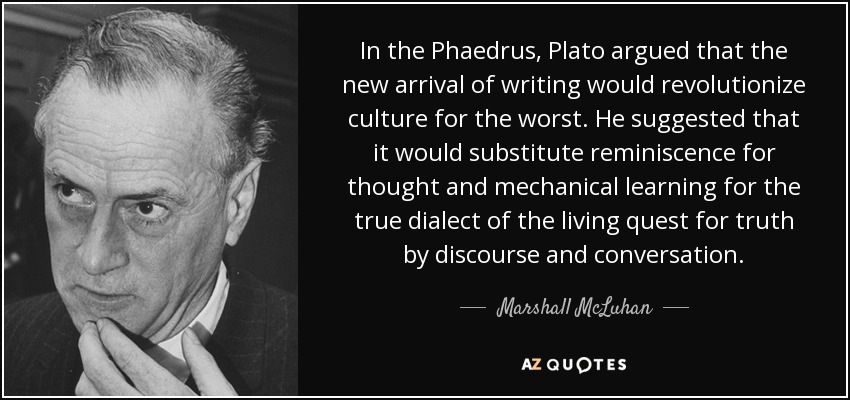
The criticism of writing wasn't the only gaffe in the Phaedrus. Plato set up a false dichotomy behind the main topic of the discourse.
Socrates and Phaedrus spoke about whether or not passionate love was best, but the subtext was about democracy.
Pericles and Protagoras had increased the emphasis on the vote in Athenian society. This was countered by the Spartans with the emphasis on the Persian threat. This was the position that Plato supported.
His argument set up the reader to think that the choice of passion or dispassion in individual feeling regarding partnership defaulted to the choice of dictatorship.
Passionate love supported hormonal consent whereas dispassion resulted in cognitive concession to dependency on the economic providence of the dominant partner.
All men had the right to vote. That which was presented for the measure of the will of the constituency by election was chosen by the leadership.
The leadership had the advantage of experience in administration, military organization and education.
The problem with this paradigm as Plato described it was that the women chose to associate and agree with women, because they weren't given authority in the decision making process. Men chose to get intimate with other men in order to defend their power.
Octavian chose to place an emphasis on the family when he attained to the august position as the Caesar. This position was added to the republic. The republic was more developed in terms of how citizens could rise to the power of a patrician in Roman society. .
Monarchy had been demonized in the process of making the republic look more desirable than monarchical democracy. Even the executive leadership of the emperor was highly conditioned upon the will of the patricians with significant concession to the demands of the plebians.
The emperor had to rise through the ranks of the patricians, the military or the plebians in the effort to satisfy the public as a constituent body.
One was drawn to lead out of the many. That one had the power to promote a line of succession by adoption as Julius Caesar had done or by family succession. This was the case after Octavian.
While the emperor wasn't elected by the vote of the Senate, he still had to represent the interests of the patricians and plebians or he would suffer assassination or defeat in battle with organizational support from other patricians.
\
There was high risk in volatility that duty tempered by religious devotion to the gods helped to manage.
The Pax Romana offered to assimilate the worship of other gods, but the volatility of the system led to reports of sectarian judgment against monotheistic religion.
The power of the emperor was already thought to be an offense to the authority of the Senate by traditional republicans, but the position was tolerated insofar as it was necessary for competition.
Empire in the Middle East had made more progress in the movement towards adopting monotheism as the form for the official religion. It was the form for the official religion that didn't outlaw other legal types.
Progress in this development could not be successfully dictated by imperial or legislative decree. The primitive tribes in Europe were polytheistic. They were developed into monarchies, because it was regarded as the next stage in organizational development.
This political evolution managed to be successful in the prevention of legislation for the slave trade or slavery. The institution was regarded as an offense to the liberation of the captives as a political achievement by Cyrus as the Christ or Messiah.
Rebellion and revolution were used to re-institute slavery and republic. This was a major regression for European society, but the greatest happiness for the greatest number of people principle for legislation or judgment helped to outlaw slavery and legislate the right to vote for people of color and women.
Constitutional monarchy still represents a more conservative form in terms of cost for executive leadership to the public. Republican leadership has to keep an eye on this form of government in order to stay competitive in the world.
Democrats are currently stuck in Plato's Athenian model for democracy as dictatorship. Organization for the winning the vote is constrained to setting different factions of the public against each other. The only way that they felt that they could win public support was to agree to impeach the president.
They have been operating under the delusion that this action will help them to win executive authority based on concession to the House of Representatives. It has been a developmental delay in the evolution of republic.
The Democrats need to admit that the public is the constituent body for national security. Their staged events for media attacks for the impeachment of the president only factionalizes representation.