Find
Benefit
找到好处
Zhǎodào hǎochù
メリットを見つける
Meritto o mitsukeru
ps52
Reperio bonum
What is the error when pride becomes a sin?
It is the will to destroy as though destruction had yet to begin.
There is a place that is against God in mind
that plans to ruin the bonds of belief that believers find.
The tongue is sharpened like a razor
to work deception for brutal behavior.
Evil is esteemed more powerful than good.
Lying is tried for denying truth as understood.
Speech that hurts is thrown
when words are not owned as known.
What is the divine will
for the correction of the ill?
Conscience looks to earned reward.
until the sense of honor is ordered.
Alliance or cooperation makes a difference
in international relations as an inference.
Pride drove this one from the refuge of faith.
Deceit was that which refused to stay straight.
Truth stumbled in the public square
until honor used a measure for what's fair.
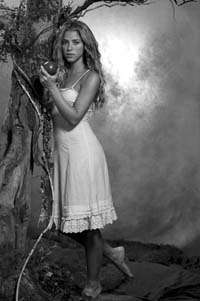
I was shown a basket of summer fruit.
Fruition was known as a metaphorical suit.
Humility is the parent to utility.
The humble mind shapes ability
to achieve productivity
where joy is a result of the activity.
Christ is the precedent for our place in everything.
The fullness of God is held like an anchor ring.
Jesus praised Mary for the gift of her attention.
Martha was urged to consider her connection to this affection.
Your Father loves you more than words can say.
You are worth more than the beauty of birds at play.
The image of the invisible deity
is the firstborn form for faith in verity.
I am like an olive tree in the house of the Word.
Divine mercy will help me to overcome the adversity of the absurd.
I will give thanks for the grace of blissful providence
to declare goodness in the presence of moral intelligence.
--------------------------
52 Quid gloriaris?
What is pride?
1 You tyrant, why do you boast of wickedness
against the godly all day long?
2 You plot ruin;
your tongue is like a sharpened razor,
O worker of deception.
3 You love evil more than good
and lying more than speaking the truth.
4 You love all words that hurt,
O you deceitful tongue.
5 Oh, that God would demolish you utterly,
topple you, and snatch you from your dwelling,
and root you out of the land of the living!
6 The righteous shall see and tremble,
and they shall laugh at him, saying,
7 "This is the one who did not take God for a refuge,
but trusted in great wealth
and relied upon wickedness."
8 But I am like a green olive tree in the house of God;
I trust in the mercy of God for ever and ever.
9 I will give you thanks for what you have done
and declare the goodness of your Name in the presence
of the godly.
---------------------------
Isa. 59:14-15
Justice was turned back.
Righteousness stood at a distance.
Truth stumbled in the public square.
Uprightness could not enter.
The LORD saw it. It displeased him
that there was no justice.
---------------------------
Truth stumbled in the public square
until honor used a measure for what's fair.
===================
Philemon 8-11
I would rather appeal to you on the basis of love though I am bold enough in Christ to command you to do your duty. I, Paul, do this as an old man and a prisoner of Christ Jesus. I am appealing to you for my child, Onesimus, whose father I have become during my imprisonment. He was useless to you formerly, but now he is useful to both you and me.
Paul - humble
Onesimus- useful
---------------------------
Humility is the parent to utility.
The humble mind shapes ability
to achieve productivity
where happiness is a result of the activity.
===================
Matt. 10:29-30
Are not two sparrows sold for a small price? Yet not one of them will fall to the ground unperceived by your Father. Even the hairs on your head are counted. Do not be afraid. You are of more worth than many sparrows.
---------------------------
Your Father loves you more than words can say.
You are worth more than the beauty of birds at play.
================
Offense Against Natives
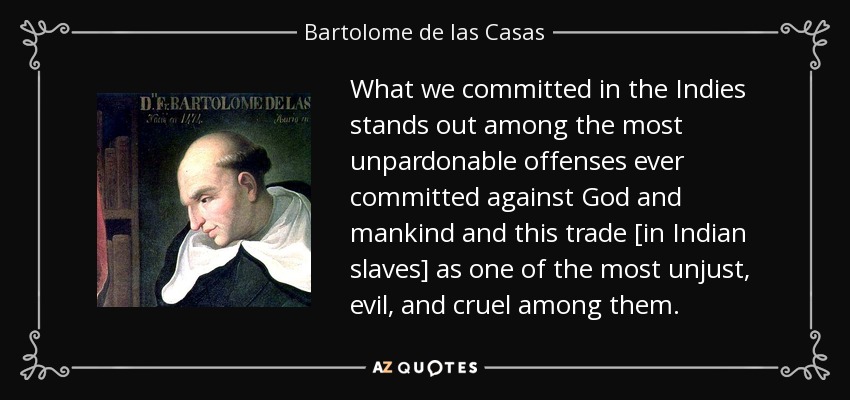
Bartolome de las Casas
b. c. 11.11.1484 Seville, Crown of Castille
d. 7.18.1566 Madrid, Crown of Castille, Spain
Las Casas was a 16th-century Spanish colonist who acted as a historian and social reformer before becoming a Dominican friar. He was appointed as the first resident Bishop of Chiapas. He was the first officially appointed "Protector of the Indians".
He wrote A Short Account of the Destruction of the Indies and Historia de Las Indias (1543) as a chronicle for the first decades of colonization of the West Indies. He described the atrocities committed by the colonizers against the indigenous peoples.
Bartolomé de las Casas spent 50 years of his life actively fighting slavery and the colonial abuse of indigenous peoples, especially by trying to convince the Spanish court to adopt a more humane policy of colonization. Unlike some other priests who sought to destroy the indigenous peoples' native books and writings, he strictly opposed this action
He was born in Seville when it was a kingdom in Castille, Spain in the 15th century.
Seville
Seville is the capital for the province of Seville in Andalusia. Andalusia is the most southern autonomous community in Spain. It is the only European region with both Mediterranean and Atlantic coastlines.
Seville is situated on the plain of the river Guadalquivir. The Guadlquivir is the second longest river with its entire length in Spain. The Guadalquivir valley has experienced some of the highest temperatures recorded in Europe, with a maximum of 46.6 °C (115.9 °F) recorded at Córdoba and Seville.
Seville was incorporated into the Christian Kingdom of Castile under Ferdinand III in 1248. Castile's name is generally thought to derive from "land of castles." Castle in Spanish is castillo. Castles were built in the area to consolidate the Christian Reconquest from the Moors.
The city's development continued after the Castilian conquest. Public buildings were constructed including churches. Many of the buildings were built in the Mudéjar and Gothic styles. The Seville Cathedral was built during the 15th century with Gothic architecture.
Other Moorish buildings were converted into Catholic edifices. Such conversion was customary for the Catholic Church during the Reconquista.The Torre del Oro was once an important Moorish naval watchtower along the Guadalquivir for example. It was converted into a cathedral by 1271.
The Moors' Palace became the Castilian royal residence. It was replaced by the Alcázar during Pedro I's rule. The upper levels are still used by the Spanish royal family as the official Seville residence.
All the synagogues in Seville were converted to churches after the 1391 pogrom. The Jewish quarter's land and shops (located in modern-day Barrio Santa Cruz) were appropriated by the church. Many were killed during the pogrom. Most were forced to convert. Converts were called converso.
The first tribunal of the Spanish Inquisition was instituted in Seville in 1478. The activity of the Inquisition was limited to the dioceses of Seville and Córdoba at first. Alonso de Ojeda had detected converso activity.
The first Auto de Fé took place in Seville on 6 February 1481 when 6 people were burned alive. An Auto de Fe was a public rite for penance for heretics and apostates. The convicted were burned at the stake, exiled or forced to become Catholic.
The Inquisition grew rapidly. The Plaza de San Francisco was the site of the 'autos de fé'.
Tribunals existed in eight Castilian cities by 1492. Ávila, Córdoba, Jaén, Medina del Campo, Segovia, Sigüenza, Toledo and Valladolid had tribunals. All Jews were forced to convert to Catholicism or be ejected from Spain by the Alhambra Decree.
Seville became one of the economic centers of the Spanish Empire after the discovery of the Americas in the late 15th century. All goods imported from the New World had to pass through the Casa de Contratación in the city before being distributed throughout the rest of Spain.
The port of Seville was unlike other harbors. Reaching the port required sailing about 80 km (50 miles) up the river Guadalquivir. The river was heavily defended with fortifications from the Middle Ages.
This made Seville the best defended port to bring the riches from the Americas. A 'golden age of development' commenced due to its being the only port awarded the royal monopoly for trade.
Bartolome de las Casas
Bartolome de las Casas was born in Seville on November 11, 1484. It was 8 years before Columbus would cross the Atlantic Ocean to discover the Americas.
His father was Pedro de las Casas. He was a merchant from one of the families that had migrated from France to found the town of Seville. His family spelled the name Casaus.
Bartolome studied for a licentiate (professional license) at Salamanca. The University of Salamanca was founded in 1218. It is the oldest university in Spain. Salmanca is about 465 km (290 miles) north of Seville.
Las Casas immigrated with his father to the island of Hispanola in the Caribbean in 1502 on the expedition of Nicolás de Ovando. Bartolome became a hacendado and slave owner. He received a piece of land in the province of Cibao in what is now known as the Dominican Republic. He participated in slave raids and military expeditions against the native Taíno population of Hispaniola.
He journeyed to Rome in 1507 as a young man to observe the Festival of Flutes. Festivals in Rome were an important part of religious life during both the Republican and Imperial eras. Festivals were one of the primary features of the Roman calendar.
Feriae were "holidays." These were holy days in the sense that some deity was celebrated. Pagan festivals were often converted to something associated with the Church after the conversion to Christianity.
Faunus was a horned god of the forest, plains and fields. He came to be equated in literature with the Greek god Pan. Either represented fertility for cattle.
Faunus is identified with Lupercus ("he who wards off the wolf"). The wolf was warded off with a flute or a staff. It is likely that the festival of flutes was a monotheistic form for the celebration that took place on 5 December. Peasants brought rustic offerings and amused themselves with flute music for dance.
He was ordained a priest in 1510. He was one of the first to be ordained in the new world.
A group of Dominican friars arrived in Santo Domingo led by Pedro de Córdoba in September 1510.
The friars were appalled by the injustices they saw committed by the slave owners against the Indians. They decided to deny slave owners the right to confession. Las Casas was among those denied confession for this reason.
A Dominican preacher Fray Antonio de Montesinos preached a fiery sermon that implicated the colonists in the genocide of the native peoples in December 1511.
He is said to have preached, "Tell me by what right of justice do you hold these Indians in such a cruel and horrible servitude? On what authority have you waged such detestable wars against these people who dealt quietly and peacefully on their own lands?"
Las Casas himself argued against the Dominicans in favor of the justice of the encomienda. The colonists dispatched a complaint against the Dominicans to the King. The Dominicans were recalled from Hispaniola.
Las Casas participated in the conquest of Cuba as a chaplain in 1513. He was involved in some of the major campaigns on the island. He witnessed the massacre of the Hatuey. He saw many atrocities committed by Spaniards against the native people.
He later wrote: "I saw here cruelty on a scale no living being has ever seen or expects to see."
He was awarded a joint encomienda with a friend which was rich in gold and slaves on the Arimao River close to Cienfuegos. He divided his time between being a colonist and his duties as an ordained priest during the next years.
Las Casas was studying a passage in the book of Sirach for a Pentecost sermon in 1514.
From something false what will be made true?
Divinations, omens and dreams are folly.
They are like the fancies of a woman in travail.
The law will be fulfilled without such deceptions.
Wisdom is made perfect in truthful lips.
(Sirach 34:4-5,8)
He was finally convinced that all the actions of the Spanish in the New World had been illegal. They constituted a great injustice. He made up his mind to give up his slaves and encomienda.
He started to preach that other colonists should do the same. When his preaching met with resistance, he realized that he would have to go to Spain to fight there against the enslavement and abuse of the native people.
He gave up his Indian slaves and encomienda in 1515. He advocated for the rights of natives before King Charles V, the Holy Roman Emperor. He advocated the use of African slaves instead of Natives in the West Indian colonies in his early written work.
He has been criticized for his role among the founders of the Atlantic slave trade in the 20th century. He retracted this position later in life. He regarded both forms of slavery as equally wrong.
He left for Spain in September 1515. He arrived in Seville in November with a plan to convince the king to end the encomienda system. This was not an easy task. Most of the people who were in positions of power were themselves either encomenderos or otherwise profiting from the influx of wealth from the Indies.
King Ferdinand was ill in Plasencia in the winter of 1515. Las Casas was able to get a letter of introduction to the king from the Archbishop of Seville, Diego de Deza. Las Casas met the monarch on Christmas Eve and discussed the situation in the Indies with him. The king agreed to hear him out in more detail at a later date.
Las Casas produced the report that he presented to the Bishop of Burgos and a secretary. These were functionaries in charge of the royal policies regarding the Indies. Both were encomenderos. They were not impressed by his account. Las Casas had to find a different avenue of change. He put his faith in his coming audience with the king, but it never came. King Ferdinand died on January 25, 1516.
The regency of Castile passed on to Ximenez Cisneros and Adrian of Utrecht. They were the guardians for the under-age Prince Charles. Las Casas was resolved to see Prince Charles who resided in Flanders. He passed Madrid and delivered to the regents a written account of the situation in the Indies and his proposed remedies on his way there.
This was his "Memorial de Remedios para Las Indias" of 1516. Las Casas advocated importing Black slaves from Africa to relieve the suffering Indians in this early work. He later retracted the stance. He became an advocate for the Africans in the colonies as well.
His first concern was not to end slavery as an institution, but to end the physical abuse of the Indians. Las Casas believed that slavery could be justified if it was the result of Just War. This was in accord with the legal and moral doctrine of the time. He assumed that the enslavement of Africans was justified. This position presumed that primitive civilization was a cause for Just War.
Cardinal Cisneros was worried by the visions that Las Casas had drawn up of the situation in the Indies. He sent a group of Hieronymite monks to take over the government of the islands. Las Casas played a role in the selection of the three monks. He also wrote the instructions by which the new government was to be run.
Las Casas himself was granted the official title of Protector of the Indians. He was given a yearly salary of one hundred pesos. He was expected to serve as an advisor to the new governors with regard to Indian issues in the new office. He was to speak the case of the Indians in court and send reports back to Spain.
Las Casas and the commissioners traveled to Santo Domingo on separate ships. The Protector arrived two weeks later than the Hieronimytes. The Hieronimytes had time to form a more pragmatic view of the situation than the one advocated by Las Casas during this time.
Their position was precarious. There were encomenderos on the Islands who were fiercely against any attempt to curtail their use of native labor. The commissioners were unable to take any radical steps towards improving the situation with the natives.
They revoked some encomiendas from the Spaniards who were living in Spain and not on the islands themselves. They even repossessed the encomienda of Fonseca, the Bishop of Burgos. They also carried out an inquiry into the Indian question. The encomenderos asserted that the Indians were quite incapable of living freely without their supervision.
Las Casas was disappointed and infuriated. When he accused the Hieronymites of being complicit in kidnapping Indians the relationship broke down. Las Casas had become a hated figure by Spaniards in the islands. He had to seek refuge in the Dominican monastery.
The Dominicans had been the first to indict the encomenderos. They continued to chastise them. The absolution of confession was refused to slave owners. They even stated that priests who took their confession were committing a mortal sin.
Las Casas was forced to travel back to Spain in May 1517 to denounce to the regent the failure of the Hieronymite reforms. The Hieronymites began to congregate Indians into towns similar to what Las Casas had wanted only after he had left.
His former protector, the regent Cardinal Ximenez Cisneros, was ill when he arrived in Spain. He had grown tired of the political tenacity. Las Casas resolved to meet instead with the young king Charles I. Ximenez died on November 8. The young King arrived in Valladolid on November 25, 1517. Las Casas managed to secure the support of the king's Flemish courtiers.
Chief among them was the powerful Chancellor Jean de la Sauvage. Las Casas's influence turned the favor of the court against Secretary Conchillos and Bishop Fonseca. Sauvage spoke highly of Las Casas to the king. The king appointed Las Casas and Sauvage to write a new plan for reforming the governmental system of the Indies.
Las Casas suggested a plan where the encomienda would be abolished. The Indians would be congregated into self-governing townships to become tribute-paying vassals of the king. He still suggested that the loss of Indian labor for the colonists could be replaced by allowing the importation of African slaves.
Another important part of the plan was to introduce a new kind of sustainable colonization. Las Casas advocated for the migration of Spanish peasants to the Indies where they would introduce small-scale farming and agriculture. It was a kind of colonization that didn't rely on resource depletion and Indian labor.
Las Casas worked to recruit a large number of peasants who would want to travel to the islands. They would be given land to farm, cash advances and the resources they needed to establish themselves there. The recruitment drive was difficult. The power relation shifted at court when Chancellor Sauvage unexpectedly died.
A much smaller number of peasant families were sent than originally planned. They were supplied with insufficient provisions. No support was secured for their arrival. Those who survived the journey were ill-received.
They had to work hard even to survive in the hostile colonies. Las Casas was devastated by the tragic result of his peasant migration scheme. He felt that it had been thwarted by his enemies.
He tried to launch a new kind of peaceful colonialism on the coast of Venezuela in 1522, but this venture failed. Las Casas entered the Dominican Order and became a friar. He left public life for a decade.
He traveled to Central America to act as a missionary among the Maya of Guatemala. He participated in debates among colonial churchmen about how best to bring the natives to the Christian faith.
He traveled back to Spain to recruit more missionaries and to lobby for the abolition of the encomienda. He gained an important victory by the passage of the New Laws in 1542. He was appointed Bishop of Chiapas.
De las Cases served only a short time as a bishop before he was forced to return to Spain. There was resistance to the New Laws by the encomenderos. There were also conflicts with Spanish settlers due to his activist religious stance with the pro-Indian policies.
He wrote a Brief Report On the Destruction of the Indies (or Tears of the Indians). It was written in 1542 and sent to Prince Philip II of Spain. It wasn't published until 1552 when he was 67 years old.
He argued that the atrocities were a display of Popery in its bloody colors. His narrative described the events as horrid and unexampled massacres, butcheries and all manner of cruelties that hell and malice could invent.
These events had been committed by the Popish Spanish party on the inhabitants of West India. Several "Kingdoms in America" had been devastated by fire and sword for the space of 42 years from the time of their discovery.
It was a fervid and exaggerated account of the atrocities of the Spanish conquerors against the Indians. It was written to persuade the Spanish king to act in response to the conquistadors' abuse of the indigenous population. Critics argue that facts and figures about the mistreatment and death toll were exaggerated for persuasion.
The book was widely translated and read. The English version was used to stir up English feeling against the Spanish as a cruel race.
Las Casas served in the Spanish court for the remainder of his life. He held great influence over Indies-related issues there. He participated in the Valladolid debate in 1550.
King Charles V called for a junta (or jury) to discuss the contrasting rights of slaves and their colonial masters. What started as a plea for mercy turned into a debate on the fundamental question of human existence. Are men created equal? Should they all be treated with equal respect and dignity? If so, what could justify the economic exploitation of a whole people by an invading force?
Juan Ginés de Sepúlveda argued that the Indians were less than human. They required Spanish masters in order to become civilized. Las Casas maintained that they were fully human. Forceful subjugation was unjustifiable.
Bartolomé de las Casas spent 50 years of his life actively fighting slavery and the colonial abuse of indigenous peoples. He did what he could to convince the Spanish court to adopt a more humane policy of colonization.
He was not like the priests who sought to destroy the indigenous peoples' native written work. He strictly opposed this action. His efforts resulted in the improvement of the legal status of the natives. There was an increased colonial focus on the ethics of colonialism.
The difference between the serf and slave based economies was the issue that ran under the debate about equality. Serfdom had been instituted as a land management practice by the Egyptians. It treated labor as part of that property that was being managed. Serfs were not legally designated as property. It was possible to obtain employment with another owner.
Slavery had a disturbing association with the rise of monotheism as an agency for political expansion even in Egypt. It became a legal norm with the Babylonian dominance in Sumerian culture. The operational principle was that the empire could take more land by conquest from those who refused to join the alliance of kingdoms.
The Persians adopted the system from the Babylonians despite the celebration of Cyrus as the Christ who had liberated the captives. The Greeks took it over after the triumph of Alexander. The Romans adapted the system to their republican variation.
Europe was largely monarchical in the 16th century. Serfdom was the operant condition for feudal society. Charles V was challenged by the success of the Ottomans in the Middle East. The Muslims had extended their reach into Spanish territory on the Iberian peninsula.
Charles wrote against slavery as the king of Castille, but allowed for the trade and the practice in the ecomenida in the imperial expansion in colonialism. It was a precedent that had preceded his ascension.
Martin Luther argued against indulgences as a practice for the Catholic Church. It is likely that slavery was implicitly regarded as an indulgence. King Henry the VIII of Great Britain opposed the religious control of his kingdom with his petition for divorce. His difficulties with marriage were at least potentially orchestrated to defend the royal line of succession.
The English and German reformation defended monarchy as the chief political form. It was known that classical literature supported republican government. The Roman classics were included in educational instruction as a standard where education was supported by monarchical, aristocratic or monastic forms in organization.
The Renaissance represented a shift from grammar and logic to rhetoric in the emphasis posited through the trivium.
Las Casas was a representative in the shift to rhetoric with his advocacy against slavery. He started out in opposition to the abuse of natives. He ended up with an advocacy for a variant on serf based society that allowed for colonization in foreign territory.
His basic defense for the advocacy was that it would cost the crown and the taxpayer less for police action, but this position was masked by the overstatement of atrocity on the part of the conquistadors.
Las Casas (1484-1566) preceded William Wilberforce (1759-1833) in the position against slavery by more than 2 centuries, but Wilberforce was able to persuade the British Parliament to outlaw the trade and the institution.
This law against slavery was used in negotiation with other foreign powers until it came to be accepted as the standard legal position in international relations.
Bartoleme de las Casas
S. 巴特德拉斯卡萨斯
T. 巴特德拉斯卡薩斯
巴 Ba to hope 巴 tomoe comma design Ba ば- バ- Ba 바 bar
特 te special 特 toku special to と ト teu 트 the
德 de favor 德 no kanji de で デ de 데 place
拉 la hold 拉 da Latin ra ら ラ la 라 la
斯 si this 斯 shi this su す ス seu 스 switch
卡 Ka card 卡 no kanji Ka か カ Ka 카 car
萨 sa sat 薩 katsu sweet potato sa さ サ sa 사 four
斯 si this 斯 shi this su す ス seu 스 the
---------------------------
Alliance or cooperation makes a difference
in international relations as an inference.
===================
Lectionary Bartolome de las Casas
wiki Bartolome de las Casas
Brief Account
wiki Seville