Elizabeth Olsen
Test
Thought
测试思想
Cèshì sīxiǎng
テスト思考
Tesuto shikō
ps94
Test thought
Creator of the forces of the universe
You have organized the elements against curse
to affirm the units that concur with what's incurred
with that which is benign in design as deserved
when by the management of labor it is earned
as a value for others discerned.
Help us to live in Your image
to perceive the wonders of Your visage.
Bless us with growth in Your likeness
for the discovery of that which is righteous.
Rise to shine for judgement with reason
to grant just deserts for good decisions in due season.
The third week for the second month is here.
Help us with resolutions made for the new year.
Help to correct errors incurred in opposition
to develop the resolution for a productive position.
When their charge of corruption was turned back on them
they told a story of greater corruption as though it were a diadem.
Their tale of great destruction
was followed by the threat of more of that induction.
They said, "The God of Jacob took no notice"
when it was against his votive.
Did you form a question in response to a crisis?
Submit it to prayer to see if align an answer to this.
Does the One who shaped the ear
not listen to hear?
Does he who formed the eye
not see what is or is not a lie?
Will he who admonishes the nations
not punish those of criminal or terrorist station?
Organize your thought to form a test for truth.
A good theory of nature will make you a sleuth.
Put your question in the form of a statement.
Test for credibility among those who will rate it.
Does he who teaches with the divine word
have no knowledge of how the human in nature is cured?
Human thought is tested for theory
that will bear weight as a mode of inquiry.
Happy are those who receive instruction from the Word.
The mystery of law in nature doesn't seem to be absurd.
They can find rest in the day of crisis.
They will make decisions that are incisive
to avoid policy that reaches for the heights of the divisive.
The goodness of the descendants
is a tower for ethical amendment.
The Maker will not forsake the promise.
He will not abandon those who are honest
in making a profit.
The true of heart will stand for justice
in judgment that doesn't bust us.
Who had the military trained for defense?
Who organized perspective for the perception of sense?
I would have dwelt in the land of silence
had I not spoken against the threat of violence.
As often as my foot had slipped
I found myself with natural balance equipped.
When many cares fill my mind
the consolation of relaxation I seek to find.
Is greater corruption the platform for the populist position?
Haven't they used corruption as the tomb for the vision
of their mission?
Existential facts alone won't determine worth for youth.
Thought in theory can form tests of value for truth.
Good judgment
provides defense
against bad sense.
Good judgment won't condemn the innocent to death.
The Holy Spirit provides the breath for rest
in experience.
The Father is the source of my strength.
The Son is the rock for truth at length.
Wickedness
produces sickness
as consequence.
Truth destroys falsehood in conception.
Without malice it exposes deception.
The Christ of Jesus gives perspective in perception.
We were like infants to Christ.
You were taught to live as victims to the poltergeist.
You were immature with respect for the Spirit.
You so feared the One that you refused to draw near it.
Was there not quarrelling due to jealousy among you?
Were you not divided by the causes that you knew?
One planted. Another watered for growth in the field.
Your community was cultivated for the spiritual yield.
Murder is a capital crime.
Punishment for it is defined for the rest of time.
A capital offense is not the only concern for law.
Were that the case any other degree would not be flaw.
Avoid causing offense as much as possible
so the definition of you as the cause stands as improbable.
Anger is not wrong in itself,
but physical harm leaves a welt.
Hatred of sin is only honorable
when anger is managed for the functionally operable.
The act of expiation with a gift at the altar
needs to reform the will that causes behavior to faulter.
A priest can only receive the gift and pray for the reception.
It is not a promise to show indulgence to honor deception.
Each worked together for our beneficial yield
to build the temple for the word that we wield.
You can keep the commandments of the law if you choose.
When you don't choose to act faithfully you choose to lose.
Fire and water have been placed before you.
Stretch out your hand to one of the two.
Life and death are set before each person.
Whichever is chosen will make better or worsen.
Wisdom from the Source is great.
He is mighty in power for the weight of the state.
His eyes are on those who fear him.
He knows the actions that will draw near his win.
He has not commanded anyone to be wicked.
No one was given permission to thicken sin for the afflicted.
-------------------
94 Deus ultionum
Light avenge
1 O Lord God of vengeance,
O God of vengeance, show yourself.
2 Rise up, O Judge of the world;
give the arrogant their just deserts.
3 How long shall the wicked, O Lord,
how long shall the wicked triumph?
4 They bluster in their insolence;
all evildoers are full of boasting.
5 They crush your people, O Lord,
and afflict your chosen nation.
6 They murder the widow and the stranger
and put the orphans to death.
7 Yet they say, "The Lord does not see,
the God of Jacob takes no notice."
8 Consider well, you dullards among the people;
when will you fools understand?
9 He that planted the ear, does he not hear?
he that formed the eye, does he not see?
10 He who admonishes the nations, will he not punish?
he who teaches all the world, has he no knowledge?
11 The Lord knows our human thoughts;
how like a puff of wind they are.
12 Happy are they whom you instruct, O Lord!
whom you teach out of your law;
13 To give them rest in evil days,
until a pit is dug for the wicked.
14 For the Lord will not abandon his people,
nor will he forsake his own.
15 For judgment will again be just,
and all the true of heart will follow it.
16 Who rose up for me against the wicked?
who took my part against the evildoers?
17 If the Lord had not come to my help,
I should soon have dwelt in the land of silence.
18 As often as I said, "My foot has slipped,"
your love, O Lord, upheld me.
19 When many cares fill my mind,
your consolations cheer my soul.
20 Can a corrupt tribunal have any part with you,
one which frames evil into law?
21 They conspire against the life of the just
and condemn the innocent to death.
22 But the Lord has become my stronghold,
and my God the rock of my trust.
23 He will turn their wickedness back upon them
and destroy them in their own malice;
the Lord our God will destroy them.
---------------------
================
---------------------
ps115
1 Not to us, O Lord, not to us, but to your name give glory,
for the sake of your steadfast love and your faithfulness.
2 Why should the nations say,
“Where is their God?”
3 Our God is in the heavens;
he does whatever he pleases.
4 Their idols are silver and gold,
the work of human hands.
5 They have mouths, but do not speak;
eyes, but do not see.
6 They have ears, but do not hear;
noses, but do not smell.
7 They have hands, but do not feel;
feet, but do not walk;
they make no sound in their throats.
8 Those who make them are like them;
so are all who trust in them.
9 O Israel, trust in the Lord!
He is their help and their shield.
10 O house of Aaron, trust in the Lord!
He is their help and their shield.
11 You who fear the Lord, trust in the Lord!
He is their help and their shield.
12 The Lord has been mindful of us; he will bless us;
he will bless the house of Israel;
he will bless the house of Aaron;
13 he will bless those who fear the Lord,
both small and great.
14 May the Lord give you increase,
both you and your children.
15 May you be blessed by the Lord,
who made heaven and earth.
16 The heavens are the Lord’s heavens,
but the earth he has given to human beings.
17 The dead do not praise the Lord,
nor do any that go down into silence.
18 But we will bless the Lord
from this time on and forevermore.
Praise the Lord!
--------------------
Psalm 94
Consolation

The first verse for psalm 94 in the New Revised Standard Version says:
O Lord, you God of vengeance,
you God of vengeance, shine forth!
---------------------
The attribution of vengeance to deity or populism as an agency of natural selection is implied by the expression.
The first verse for the same selection in the King James Version reads:
O Lord God, to whom vengeance belongeth;
O God, to whom vengeance belongeth, shew thyself.
------------------------
Vengeance is attributed to deity or royalty by the translation.
The complications involved in this can be summarized. King James was from the House of Stuart in Scotland. He inherited the Acts of Royal Supremacy. One included Ireland.
Scotland and England had yet to be united in Great Britain. That wouldn't happen until the reign of Queen Anne in the early 18th century. Ireland had yet to be united with England and Scotland in the United Kingdom.
John Locke would open the door to the local institution of liberal power with his argument to civil government, but his argument contained partiality for Puritans as the non-professional representation of the Whig party. The implication was that Puritans could take the law into their own hands, but Anglicans and others could not.
The European struggle for imperial power was led by the King of Spain and the Pope. Spain had risen to the task of driving the Muslims out of their European territory, but they had agreed to host the Inquisition, indulgences for Spanish Catholicism and slavery in their colonization.
The attritubtion of vengeance to deity in this context was a request to reduce vigilante justice and the threat of rebellion to institute a different monarch for the throne of national sovereignty.
Administration for justice was royal and legislatively administrative. Magistrates had to answer disputes in the context of different loyalties. While the question of whether the complaint came from a Protestant or a Catholic had sectarian overtones even the higher loyaty according the sovereignty of the state was to the security of the land.
The Latin vulgate attributes the psalm to David. The attribution makes it royal or imperial. Royalty or the leadership of the Republic were allowed to report acts of vengeance as agents of divine justice in the context of the Christianity in Europe.
The Spanish had a claim to the defense of Europe insofar as the kingdom had been invaded by Muslims from North Africa. The Pope was concerned with the defense of Vatican city in terms of the new threat that Islam presented to Italy.
The polytheists had impugned papal authority until the office organized the college of cardinals and started to bless tribal chiefs as kings. A king of kings was the imperial authority based on the biblical record.
Charlemagne was the first polytheist king to convert to Christianity with the papal blessing. He became the king of kings for Europe implicitly by virtue of being first.
Vengeance is defined as punishment inflicted for a wrong. Retribution for damage caused by the wrong has monetary or physical dimensions in the form of reparation for correction.
The spoils of war or spoils gained by indulgences created problems with respect for liability in overcorrection. National sovereignty evolved as the adminstrative standard for justice in the system of election that was developed with respect for opposing loyalties.
The US Constitution was one of the first political expressions for constitutional law in the world. Cicero had spoken of a constitution written on the hearts of Romans. There was a polytheistic system of festivals that helped households to adjust to adversity that was adapted by Christian monotheism.
The competiton between the Protestant and Roman Catholic sects contributed to the provision for freedom of religion in the US. The first Chief Justice for the US, John Jay, proposed that Christianity was for the security of national sovereignty. It wasn't as though he was against Roman Catholics. He was for Christians that were for national security.
The fledgling nation turned to alliance with Great Britain to help with the issue of establishing a navy to protect trade routes and an army for land based operations. Explicit legislation for the standing military has yet to be enacted.
The Smith–Mundt Act of 1948 is the basic legislative authorization for propaganda activities conducted by the U.S. Department of State. This was implicitly for the maintenance of armed forces in the world after the second world war. There is difficulty with this implication.
Illegal immigration had been one problem that was left poorly defined. The war on terror however offered an opportunity to defend a professionally trained fighting force as a deterrant to terrorism foreign or domestic.
While illegal immigration stands as a criminal threat to the domestic population, it hasn't been defined as terrorist problem by the US State Department as yet.
The official title for Smith-Mundt was the US Information and Educational Exchange Act. The long title declared that the purpose for the act was to promote the better understanding of the United States among the peoples of the world and to strengthen cooperative international relations.
The Act was modernized in 2012 with the Foreign Relations Authorization Act of 1987 in the National Defense Authorization Act for fiscal year 2013. A leading implication of this legislation is that a professionally trained fighting force is a deterrent to terrorism.
This was the legislature's effort to legitimize propaganda or the 'official story' as told by the US State Department.
Interpretation becomes an act in avoiding national level deception. There is the one distinct sense that the War Power article for Congress in the Constitution and the role of the President as the Commander in Chief have the task to justify the standing military as a representative force for national security.
The NDAA has become the legislative tool that has ascribed authority for telling a story to justify military action as the basis for having a military force.
Psalm 94 is not used in the regular Christian liturgy. This was taken from the reading for Charles Todd Quintard, a doctor who converted to the chaplaincy for the South during the Civil War.
The concept of vengeance as an agency for correction has to be qualifed with respect for physical damage to the health of the body in the medical profession. An 'eye for an eye' was a metaphorical allusion to restitution at best.
Damage to someone's private property is another element of the same issue, but claims to restitution are worked through the civil court system.
-------------------
Choice

The Wisdom of Sirach is also known as the Book of Ecclesiasticus or Ben Sira.
It is a work of ethical teachings from approximately 200 to 175 BCE. It was written by the Jewish scribe Ben Sira of Jerusalem with inspiration from his father, Joshua.
The author was a Hellenistic Jewish scribe, sage and allegorist from Seleucid-controlled Jerusalem of the Second Temple period. The work was written in Hebrew.
The Seleucid Empire was established following the division of the Macedonian Empire that had been vastly expanded by Alexander the Great (d.323).
Seleucus I Nicator received Babylonia (321 BC) and from there expanded his dominions to include much of Alexander's near-eastern territories. The Empire included central Anatolia, Persia, the Levant, Mesopotamia and what is now Kuwait and Afghanistan with parts of Pakistan and Turkmenistan at the height of its power.
The Seleucid Empire became a major center of Hellenistic culture. It maintained the preeminence of Hellenist customs where a Greek political elite dominated, mostly in the urban areas. The Greek population of the cities who formed the dominant elite were reinforced by immigration from Greece.
The Macedonians most likely operated differently from the Athenians or Spartans. They were probably 'federal' in the sense that the leadership was allowed to chose something in between the democratically artistic culture of Athens and the militarily economic order of Sparta. Both cultures entertained the instruction of youth in gymnasiums.
Antiochus III ruled over the region of Syria and large parts of the rest of western Asia towards the end of the 3rd century BCE. He rose to the throne at the age of eighteen in 222 BCE. His early campaigns against the Ptolemaic Kingdom were unsuccessful, but in the following years Antiochus gained several military victories and substantially expanded the empire's territory.
The Selucid king wrested Palestine away from Ptolemaic control in 198 BCE.
Antiochus declared himself the champion of Greek freedom against Roman domination. He waged a four-year war against the Roman Republic beginning in mainland Greece in the autumn of 192 BCE.
His force was decisively defeated at the Battle of Magnesia on the plains of Lydia in Asia Minor. He died 3 years later on a campaign in the east.
The Second Temple was originally a rather modest structure constructed by a number of Jewish exile groups returning to the Levant from Babylon under the Achaemenid-appointed governor Zerubbabel.
The structure was the religious identification of Jerusalem as the capital for Judea as a province in the Persian empire.
Language was the most prominent difference between the eastern and western forms of empire as different gods were often renamed to tell the story about their place in the calendar in the host language. Astrology told the story of the gods with respect for the implication of the science of astronomy as it related to the expression of time in the calendar.
The clash between eastern and western polytheistic cultures was summarized as the 'fear of God' in the wisdom of Sirach. The author was looking to move Judaic culture forward in a transcendent view of polytheistic structures. The first two chapters share reflections on wisdom and the fear of God to provide the theological framework for the integration of 10 different themes.
He wrote about Simon the High Priest (reigned 219-196 BCE) in the past tense. He didn't mention anything about the insurrection of the high priesthood orchestrated by Jason, the youngest son of Simon.
This was a time of prosperity in Jerusalem. The world was changing. There were Jews who supported more Hellenization by the adoption of the Greek way of life insofar as it would bring more opportunities for trade and political interaction.
Simon was succeeded by his son, Onias, who reigned from 196-175 BCE. Onias was renowned for being observant of the Torah. Obedience to it was the priority of Jewish life.
When Antiochus IV took the throne in 175 BCE, he immediately replaced Onias with his brother, Jason. He had promised to promote more Hellenization. Jason had obtained his position by offering Antiochus a high price for the priesthood.
This was different from the normal course of succession. The difference was significant in that it increased the fissure among those Jews who believed in the sanctity of succession and those who wanted a more Hellenized city.
Ben Sira wrote his book of wisdom to encouage the Jewish youth to retain the study of the Torah in the face of the pressure to adopt Greek customs.
He was concerned with guiding the youth in how to make their way in the world with a happy and honorable life both domestically and professionally. He maintained that this could only happen if one adhered to the covenant with the God of Israel.
The stories of the gods in polytheism were characterized by violence in conflict and the destruction of opposition to control the government for the land. The threat of death was used as a tool to threaten compliance from the general population.
Sirach 14:20-15:10 expressed concern with the pursuit of wisdom and the blessings that accrue to those do so. The end of this section emphasized that wisdom is withheld from sinners (15:7-9).
The search for wisdom or the concession to sin involve free will, so Sirach began to focus on this in part 2 (Sir 15:11-20). This section began by rejecting the idea that sin was caused by the Creator. It emphasized the power to choose good rather than evil.
The commandments in the Torah were presented as the way to life by contrast to the threat of death.
Sirach 15:15-20
You can keep the commandments if you choose
to act faithfully as a matter of your own choice.
He has placed before you fire and water.
Stretch out your hand for whichever.
Life and death are before each person.
Whichever is chosen will be given.
The wisdom of the Lord is great.
He is mighty in power and sees everything.
His eyes are on those who fear him.
He knows every human action.
He has not commanded anyone to be wicked.
He has not given anyone permission to sin.
-------------------
You can keep the commandments of the law if you choose.
When you don't choose to act faithfully you choose to lose.
Fire and water have been placed before you.
Stretch out your hand to one of the two.
Life and death are set before each person.
Whichever is chosen will make better or worsen.
Wisdom from the Source is great.
He is mighty in power for the weight of the state.
His eyes are on those who fear him.
He knows the actions that will draw near his win.
He has not commanded anyone to be wicked.
No one was given permission to thicken sin for the afflicted.
==============
The book of Sirach is part of what is considered the Apocrypha/Deuterocanonical scripture and appears in the Old Testament of Catholic Bible.
Sirach and other books of the Apocrypha do not appear in Protestant Bibles except in Anglican, Episcopalian and Lutheran bibles. Apocrypha means “hidden” and deuterocanonical means “second-listed.”
Books of the Apocrypha were generally written in the intertestimental period. This period was roughly 400 years between the composition of the books in the Old and New Testaments.
----------------------
Cultivating the Field of God

Paul addressed the challenge to his apostleship in the salutation to the letter. He had received his authority by a revelation from Christ.
His agreement with the apostolic community was qualified by his call to evangelize for the gospel by the message of the cross to the Gentiles.
The emphasis of this letter differs from that offered to the expostion against circumcison as a requirement in Galatians. He speaks against the excess of indulgence to the impulse to sin as presented in the stories about the gods in polytheistic culture.
He offered a thanksgiving after the salutation that was typical of Hellenistic letters, but he thanked the one God for good health, a safe journey and deliverance from danger in his petition for good fortune.
Charismata (personal giftedness) and gnosis (knowledge) were introduced as topics for development later in the letter.
The second chapter explains division based on agreement with the sinfulness of human nature as the cause for error.
The third chapter started with a discription of the causes of divisions and includes the theological remedy for the division.
The temple to Aprhodite on the Acrocorinth was characterized by temple prostitution. Temple prostitution was defined as a form for fornication as a means to promote division from communion with the one God.
The initial argument against the causes for division was offered to suggest that unity was to be found in the community as the temple for the Spirit of God. The author compares the community of faith to a field, then a structure to prepare them for identification as the temple.
1 Corinthians 3:1-9
I could not speak to you as spiritual people brothers and sisters, but rather as people of the flesh who are infants in Christ. I fed you with milk, not solid food. You were not ready for anything solid. Even now you are still not ready. You are still of the flesh. Are you not immature as long as there is jealousy and quarrelling among you?
Are you not behaving with human inclinations? When one says, "I belong to Paul" and another, "I belong to Apollos" are you not merely human?
What is Apollos? What is Paul? We are servants through whom you came to believe as the Lord assigned to each. I planted. Apollos watered, but God gave the growth. Neither the one who plants nor the one who waters is as important as the God who gives the growth.
The one who plants and the one who waters have a common purpose. Each will receive wages according to the labor of each. We are God's servants working together. You are God's field, God's building.
-------------------
We were like infants to Christ.
You were taught to live as victims to the poltergeist.
You were immature with respect for the Spirit.
You so feared the One that you refused to draw near it.
Was there not quarrelling due to jealousy among you?
Were you not divided by the causes that you knew?
One planted. Another watered for growth in the field.
Your community was cultivated for the spiritual yield.
Each worked together for our beneficial yield
to build the temple for the word that we wield.
==============
Gehenna

Jesus spoke to his disciples on the mountain about the commandments according to the gospel of Matthew. Much of the material is unique to Matthew. Rhetoric is used to warn against overconfidence in agreement.
The commandments warn against breaking the law. The author of the gospel is interested in deterring offense prior to the law being broken. The intent of the argument is justifiable in this sense. There are details in the expression however that are prone to error in the overstatement.
The argument is too concessionary to those who take offense at anything in order to coerce compliance from those who desire to keep the peace.
There is something to be said for apology when you have offended someone in a significant way. When you know in your heart that you did something that would have offended you had it been done to you by another in similar circumstances, there is cause to petition for reconciliation.
The rhetoric in Matthew's argument conveys the impression that you have to seek reconciliation with those who would have you apologize for your existence or if you felt angered by an offense that was done to you.
The larger sense of the truth for the gospel speaks against the will to cause harm or to do damage to another in an emotional state that precedes an offense that may qualify as a crime.
Were you angry enough with someone for a petty misdeed to falsely accuse him of a capital crime? That kind of anger would require redirection with respect for the law.
It seems that the expression in the passage needs to have some qualification added. If you find yourself to be angry without due cause, then let go of your anger before you cause offense. The association of anger with sin however is not the basis for the conviction of crime.
When you insult someone to defend an offensive action, it compounds the error.
When an insult is expressed in defense against a barrage of insults, it isn't something that requires apology.
If the standards of this passage were applied to the Senate for not calling more witnesses, apology would be expressed for not conducting a fair trial when the trial itself was not fair in the first place.
There wasn't probable cause for investigation. There wasn't an impeachable offense.
Impeachment was won in the House based on partisan prejudice for the unfettered expression of unlettered power.
The majority in the house wanted to win the next election or obtain convictions in court based on opposition to the theoretical abuse of power by the president, his party or the majority of the general public.
If the traditional appeal to the authority figure to apologize for a theoretical offense were to have resulted in an apology, then the authority for the office would have been undermined for the sake of partiality to the partisan majority in the House of Representatives.
Matthew 5:21-26
Jesus said, "You have heard that it was said to those of ancient times, 'You shall not murder' and 'Whoever murders will be liable for judgment.' I say to you that if you are angry with a brother or sister you will be liable to judgment. If you insult a brother or a sister you will be liable to the council.
If you remember that you have offended a brother or a sister when you are offering a gift at the altar, seek reconciliation first. Then offer your gift.
Come to terms with your accuser before you get to court when you are at fault. If you are wrong your accuser may hand you over to the judge, the judge to the guard and you will be thrown in jail. You will never get out of debt until you have paid the last penny.
-------------------
Murder is a capital crime.
Punishment is defined for the rest of time.
A capital offense is not the only concern for law.
Were that the case any other degree would not be flaw.
Avoid causing offense as much as possible
so the definition of you as the cause stands as improbable.
Anger is not wrong in itself,
but physical harm leaves a welt.
Hatred of sin is only honorable
when anger is managed for the functionally operable.
The act of expiation with a gift at the altar
needs to reform the will that causes behavior to faulter.
A priest can only receive the gift and pray for the reception.
It is not a promise to show indulgence to honor deception.
==============
Oxford Movement
Make a Difference

Charles Todd Quintard
b. 12.22.1824 Stamford, CT.
d. 2.15.1898 Darien, GA
Charles Todd Quintard was an American physician and clergyman.
He became the second bishop of the Episcopal Diocese of Tennessee even though he wasn't born as an Episcopalian. He was first Vice-Chancellor of the University of the South at Sewanee.
He was a religious leader who used his influence to build community in his area and the broader region with relations for alliance with the Church in the United Kingdom and France.
Charles was born to a family descended from the Huguenots in Stamford, Connecticut.
He was probably tutored in his youth. The Quintard line was wealthy and extended back in history to before the birth of the nation. Isaac was a soldier in the Revolutionary War. He was the son of a wealthy and respected citizen in Stamford (also named Isaac).
Congregationalism was the predominant religious trend in Connecticut.
The war veteran was the father to 3 sons, George William, Charles Todd and Edward Augustus. He often traveled abroad. His sons were home-schooled by tutors to avoid the conflicts in a public education.
Charles Todd attended school in New York City to become a physician. His medical studies were conducted at University Medical College, New York University and Bellevue Hospital. He graduated in 1847.
He moved south to Athens, Georgia to take up a medical practice in 1848. He relocated to Memphis in 1851 to teach physiology and pathological anatomy at Memphis Medical College.
Dr. Quintard's 1854 report on Memphis mortality statistics was covered in The New York Times. It included his assessment of the city as being the first considerable place to be outside the range of yellow fever.
The condition of the city had changed by the 1870's when Memphis experienced several yellow fever epidemics.
Medical training allowed for the observation of the number of incidents of a particular disease. It didn't direct observation to the conditions that allowed for pathogens to reproduce.
Historical study suggests that the incidence for the fever is increased with poor sanitation. Even now there the evidence is epidemeological. Does the place where the epidemic occurs have sufficient sanitation treatment to eliminate the reproduction of the viral agent?
The incidence of the diseases has been eliminated in locations where human waste is treated in order to convert the waste to fertilizer for soil.
Quintard became friends with James Hervey Otey when he was in Memphis. Otey was the first bishop of the Episcopal Diocese of Tennessee.
He gave up the medical profession for the priesthood. He studied for holy orders in 1854, was ordained in 1856 and subsequently served as the rector of Calvary Church in Memphis and at the Church of the Advent in Nashville.
Quintard described himself as a "high churchman" and a "ritualist". This made him an adherent of the Oxford Movement (1833-1845). He was one of those Anglicans who were reviving ritual practices associated with Roman Catholicism in popular perception.
The ritualists were theoretical at the time. The Tractarians were engaged in an effort to revive practices that were reported as having existed in England prior to the Calvinist reformation.
Some liturgical practices associated with the Roman rite had been identified as based in superstition regarding the priesthood as a holy order. A procession with a cross with clerics dressed in liturgical garments was regarded as Roman.
The consumption of the bread with wine in the Eucharist each Sunday wasn't Roman, but it was something that had been advocated by John Huss in terms of his agreement with John Wycliffe. This suggested that the celebration of the Eucharist was regular in England by the time of Wycliffe.
The Roman rite had reduced the consumption of the wine to the priest. The people were allowed to consume wafers of bread as the body of Christ.
The translation of the Bible into the venacular language was the major proposal in this effort to give the religion a meaning that people could understand. Prayer, bible study and fasting were encouraged to promote the personal dimension of religious convention.
Anglican practice after the Calvinist reform had stopped the celebration of the Eucharist for each Sunday. Some places celebrated on Christmas and Easter. Others were each month. It had also reduced the time spent on sermons about the readings from the Bible.
The reform had reduced symbolic expressions to contemporary conventions with respect for clothing, art and song.
Priests were renamed ministers, but they were directed by convention to act as though they were not ministers to the community in the celebration of the liturgy.
The political reform of the Church of England was accomplished by rebellion against the king as the corrupt representative of absolute authority, but the investment of historical investigation was limited by Locke's agreement with Aristotle.
Monarchy was ruled out from the rule of the state as a corruption. The rule of the state was subordinated to the dictate determined by consensus in the House of Commons in the British Parliament or the House of Representatives in the US Congress.
Sermons came to be characterized by the personal experience of biblical precepts as seen in family, but not extended to community participation in national politics.
The seperation of Church and State as a principle of freedom of religion was used to exclude the Christian religion, Protestants included, from explicit participation in national, state or local level debate.
Quintard joined the Southern branch of the old High Church. These were the Hobartian group of Episcopalians that were like Bishop Otey for the Tractarian view.
The leaders of the Oxford Movement were also called "Tractarians." They had published ninety Tracts for the Times. They rediscovered the Church of the Creed as more than an institution or an arm of civil power.
Quintard and his generation were deeply moved by the writings of faithful and brilliant Christian intellectuals. John Keble (d. 1866), Edward Pusey (d. 1882) and John Henry Newman (d. 1890) guided many Anglicans into a deeper appreciation of the Church as a God-made phenomenon. The Church was the Body mystical of Christ in this world.
Quintard's religion was "Catholic and Reformed" for the most solid of Anglicans. He assumed a manner which did not transcend his culture, but the Church of England and her offspring were in fact the historic Catholic Church for English-speaking peoples.
He joined the Rock City Guards militia for Nashville as the chaplain after the outbreak of the American Civil War.
He was subsequently nominated by soldiers in the Confederate 1st Tennessee Infantry Regiment to serve as their chaplain. He accepted this invitation despite his initial pro-Union stance. He also served as a regimental surgeon.
He came to be known as the Chaplain for the Confederacy informally. He was the compiler of the Confederate Soldiers' Pocket Manual of Devotions (Charleston, 1863).
Bishop Otey died in 1863, but the Diocese of Tennessee was unable to elect a new leader until after the war. Quintard was selected as the second bishop on September 7, 1865. The bishops and lay leaders of the national Episcopal Church confirmed his election the next month at the General Convention in Philadelphia.
The subsequent consecration of the South's first post-war bishop was viewed as a sign of healing within the church. The service of consecration marked the first step toward that reunion in the Church that was consequent upon the rapid march of events.
It was hoped that the occasion would strengthen that harmony which prevailed in the convention for the production of beneficial results.
He received honorary doctorates from Columbia College (Doctor of Divinity, 1866) and Cambridge (Doctor of Laws, 1867).
He launched rebuilding efforts in his diocese. The area had suffered physical and emotional distress during the war. He also led the efforts to ensure the post-war survival of the fledgling University of the South at Sewanee, Tennessee.
The university is commonly known as Sewanee. It is a private Episcopal liberal arts college that is owned by 28 southern dioceses of the Episcopal Church. The School of Theology is an official seminary of the church.
Delegates from ten dioceses of the Episcopal Church in the United States were led up Monteagle Mountain by Bishop Leonidas Polk for the founding of their denominational college for the region on July 4, 1857. Alabama, Arkansas, Florida, Georgia, Louisiana, Mississippi, North Carolina, South Carolina, Tennessee and Texas sent the delegates for the event.
Quintard's friend, Bishop James Otey of Tennessee, was one of the founders. He had stated that the new university would materially aid the South to resist and repel the "fanatical domination" that sought to rule over the region.
The university's first convocation was held on September 18, 1868, with nine students and four faculty members present. The Rt. Rev. Charles Todd Quintard, Vice Chancellor (chief academic officer) of the University, presided.
Quintard sponsored the establishment of a training school for clergy there in 1866. He laid the cornerstone for St. Augustine's Chapel in 1867. He traveled to northern U.S. dioceses to raise funds for the university.
He attended the first Lambeth Conference in England in 1868. He went to England three times to request funds. He received financial support from clergy and laity of the Church of England to rebuild the school. He returned with a large sum of money to purchase many books for the school's library. Quintard came to be known as the "Re-Founder" for the University of the South.
The bishop was presented with the first Episcopal cathedral in the South at the beginning of 1871. The parish of St. Mary in Memphis symbolically presented him with keys to the Church.
He continued to live in Sewanee with his family while he retained his ecclesiastical seat in Memphis.
He ceded the "Bishop's House" on the close of the cathedral to the sisters of the Community of St. Mary for their educational and humanitarian missions.
Quintard believed that his mission was to make the Episcopal Church in Tennessee a refuge for all. The lame, halt and blind were offered social help in the hope to win converts. He opposed parish pew rents and fostered a ministry on behalf of the disadvantaged.
He established a refuge for the poor in Memphis in 1869 to help with the industrialization of workers. He advocated for a plan to assist people lacking food, housing and education in 1873.
He started missions for the laborers at foundries in South Pittsburg (1876) and in Chattanooga (1880).
He opposed plans to segregate the black congregations of the denomination and assisted in the founding of Hoffman Hall, a seminary for African Americans adjacent to Fisk University in Nashville to expand evangelistic work among African Americans.
He got involved in the Gallican movement in France. This started with an 1875 trip. The trip was a gift of his friend Sam Noble to enroll his son George at a private school in Paris. The bishop was also commissioned to lead Sam's children Ned and Addie around England, France, Switzerland and Germany.
The Gallican Church had been the eccesiastical authority from the time of the Declaration of the Clergy of France in 1682 to that of the Civil Constitution of the Clergy (1790) during the French Revolution.
It held the belief that national sovereignty was more important than Roman Catholic regulation. National customs were given preference in ecclesiastical authority. The doctrine spread to the Low Countries, especially the Netherlands, in the 18th century.
Gallicanism favored the authority of the monarch, the bishops and the people's representatives in the state over the Pope's claim to supremacy. The application to republic favored the authority of the chief elected official and the others.
The French influence on the Irish is evident in the republic's independence from legislative dictates from the cardinals in the country.
That Bishop Quintard had gotten involved in the movement in the 19th century meant that there was still a French form even after the Revolution.
Quintard had died in February 1898 in Meridian, Georgia. He had traveled to stay there in an effort to improve his health.
He had done what he could to develop the Episcopalian community as a paricipant in the Anglican communion. He developed social supports for the poor in the industiraliztion of labor for the benefit of his state, the region and the country.
Charles Quintard
S. 查尔斯·昆塔德
T. 查爾斯·昆塔德
查 Cha check 查 No Kanji Cha ちゃ- チャ- Chal 찰 the
尔 er you 爾 ji you ru る ル seu 스 s
斯 si this 斯 shi this zu ず ズ Kwin 퀸 queen
昆 Kun Quinn 昆 kon descendants Kin きん キン ta 타 ta
塔 ta tower 塔 to tower ta た- タ- deu 드 de
德 de goodness 德 toku ethics do ど ド
--------------------
The goodness of the descendants
was a tower for ethical amendment.
===============
wiki Charle Todd Quintard bio
Episcopal Church of America: CTQ bio
Text: Balm for the Wounded and Weary, Chaplain Quintard
Anglican History: Charles Todd Quintard
Anglican History: Memphis, TN
----------------------
Why does the US have a Constitution? Why is there a national government?
Federalist Paper #6 argued that dissension between the states would be dangerous to the security that could be formed by their union.
Dangers of Dissension
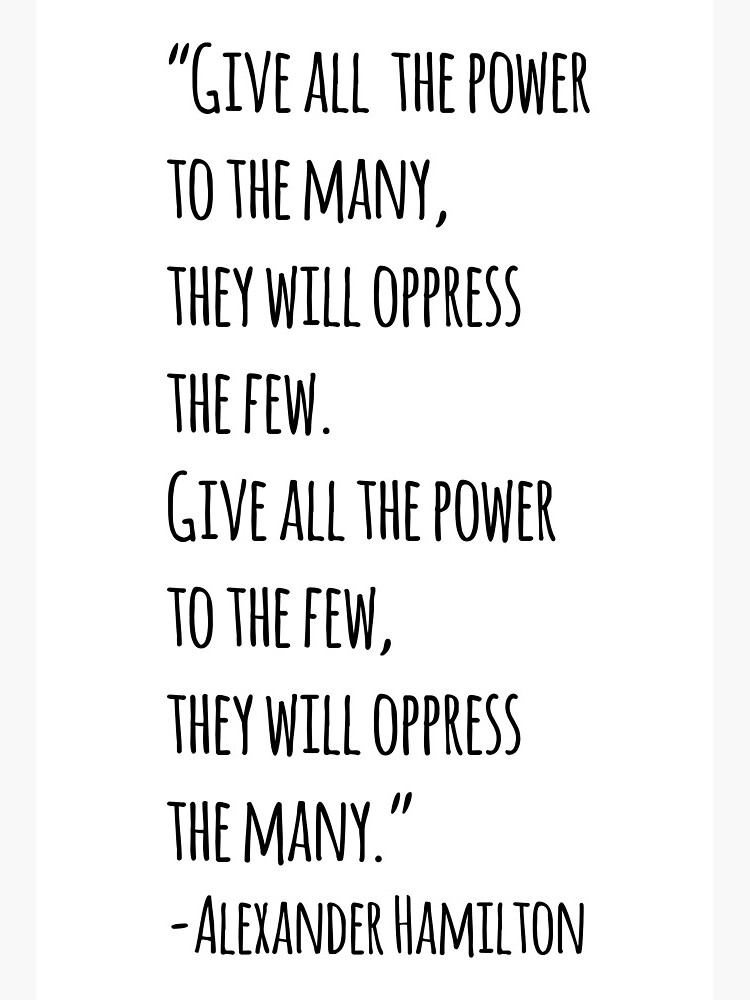
Alexander Hamilton suggested that the foremost danger of the dissension between the states was the division that would inhibit the security inherent in national unity in Federalist Paper # 6.
He supported a general criticism of utopian views with historical examples of cause for dissension. Duty compels disagreement with that which is wrong with dissent, but the security of the union insists on functional agreement.
Hamilton defined the Utopian speculation as that which believed that the states should either be wholly disunited or only united in partial confederacies.
Whether it was better that the subdivisions should have frequent and violent contests with each other or a continuation of the 'rapacious' harmony between a number of independent, unconnected sovereignties in the same neighborhood was left as a matter for speculation.
The causes of hostility among nations were used to advocate for the unified effort to look for the mutual benefit through alliance for trade and security.
Hamilton's reference to Plutarch's Pericles was the most problematic of his examples. It admit that the declaration of Independence had identified the corruption of authority by the crown was the basis for declaing independence from Great Britain.
The taxation that was not sufficiently beneficial for the alliance of the American colonists in the British colonies had come from parliament. It was a case wherein the stories about the corruption of Pericles' duty as the king were used to institute the system of election in republic without a monarch.
The argument reduced to the claim that the greater corruption was better than the incumbent. The authors of the Federalist Papers judiciously sidestepped the argument in the declaration in order to favor trade and national security as the basis for re-establishing the alliance with the British government.
The implication of Thomas More's Utopia lent itself to disagreement with Cardinal Wosley's effort to claim what Hamilton called the Triple Crown, authority over the monarchy, the Church and the legislature for England.
Belief in the principle of freedom of religion had been advocated by Roger Williams in Rhode Island. This principle was intended to deny any religious claim to authority over national sovereignty.
It wasn't just a question of the Roman Catholic claim to papal supremacy and the Anglican counter of royal supremacy over the Church of England, there was the issue of bigotry as an even greater corruption.
Hamilton added the question of debt as a means to subordinate the petition for benefit by disagreement with error for the functional agreement for trade and security.
He said that Shays would not have had reason to rebel had he not been put in the position of a desperate debtor by the government in Massachusetts. Hamilton argued for the means to remedy debt as the basis for reasonable financial policy in a different text.
He didn't rule out the use of debt to discourage pride for the expansion of power by the claims to supremacy.
He asked if it was not well known that determinations were often governed by a few individuals in whom confidence was placed. Wasn't the claim to power liable to be tinctured by the passions and views of those individuals? He expressed his disagreement with giving all the power to either a few people or to the many.
Had commerce done anything more than change the objects of war in commercial republics? Was the love of wealth the domineering and enterprising passion for power or glory?
Had there not been many wars founded upon commercial motives since that had become the prevailing system for nations? Were there more than when war was occasioned by the cupidity of territory or dominion over the land?
The Jeffersonian Republic view established a line of dissent as the basis for forming 'American' policy. It was an antecedent to socialist economics as the basis for populist political policy.
The dangers of dissension between the states particularly in the US House of Representatives is found in the division inhibits agreement for the security inherent in national unity.
The Utopian view, the cardinal claim to authority over national sovereignty, the claim that the greater corruption would be better and no mutual benefit represented disagreement with functional unity for security.
Disagreement with what is wrong is necessary, but dissent is not the purpose for government. There has to be agreement with commerical trade for mutual benefit but there also has to be a default to the need for professional military and law enforcement agency to represent the force against criminal or terrorist infraction.
He questioned the motives for the republics known to history with respect for the cause of war. Was it commerical enterprise or opposition to the expansion of power by virtue of the competition for imperial alliance?
The ambition of Venice was defeated by a league organized by Pope Julius II. The provinces of Holland had taken a leading role in the wars of Europe until they were overwhelmed with debts and taxes.
The representatives of the people composed one branch of the national legislature in the government of Britain. Commerce was the chief goal for the nation, but this didn't stop the country from participation in many wars. The wars in which that kingdom had engaged had in numerous instances proceeded from the government that claimed to represent the people.
The rival houses of Austria and Bourbon had long kept Europe in flame with royal wars that laid claim to the cries of the nation and the importunities of their representatives.
The antipathies of the English, the French and the Germans had in great measure grown out of commercial considerations that countered the desire of supplanting against the fear of being supplanted either in particular branches of traffic or in the general advantages of trade and navigation.
Did the Utopian view of confederacies not present inducement to greater dangers of dissension among the smaller states with the conflicts of larger nations, than the proposal for union with a Constitution? Revolt had already transpired in North Carolina and Massachusetts. Menacing disturbances had occurred in Pennsylvania.
Neighboring nations were naturally enemies to each other unless the recognition of common weakness induced a league in a confederate Republic. The constitution of the union would prevent the differences that neighborhood occasioned and extinguish that secret jealousy which disposed all states to aggrandize themselves at the expense of their neighbors.
Unity against the threat of evil provided the recommendation for remedy.
The Utopian view, the cardinal claim to authority over national sovereignty, the claim that the greater story about corruption is better than the incumbent authority and opposition to mutual benefit represented dangers that would disagree with functional unity for security.
Disagreement with what is wrong is necessary, but dissent is not the purpose for government. There has to be agreement with commerical trade for mutual benefit but there also has to be a default to the need for professional military and law enforcement agency to represent the force against criminal or terrorist infraction.
-------------------
Value

William James
The Varieties of Religious Experience 5
Text: Varieties
When James looked at religious experience he asked two key questions. 'What are the propensities of religion?' and 'What is the significance for the variability for the propensities?'
There is a logical distinction between the two questions that warrants recognition. The logic for his time had arrived at the primary principles for the inquiry into anything. The first principle asks, 'What is the nature of the thing?' The second inquires, 'What is the meaning of the nature in terms of significance?'
The answer to the first question results in an existential judgment regarding the object being evaluated. A chief characteristic of the thing is drawn regarding its existence.
The answer to the other is a propostion of value. James called it a spiritual judgment, but the mental component of spirit is the cognitive element that is concerned with communication.
It is cognition that sells or persuades the audience that the value of the object is worthy of consideration, if not agreement. The word existential can be contrasted with mental. The judgment is less suspect for being thrown of court.
Neither judgment is immediately deduced from the other. The mental operations used in the formulation are different. The mind combines them only by making them first separately, then by adding them together.
The religion being considered is defined by contrast or comparison with other religions. Distinction is easily formed in the two orders of question in the matter of religions.
Christianity is the most prominent religion derived from the Roman tradition. Judaism was used by the Romans as a template of the first monotheistic form in order to convert the culture from polytheism to monotheism.
A chief characteristic of this shift was to stop the use of animal sacrifice for expiation in the temple at the capital city. Scripture was instituted for the consideration of religious experience in a parish community associated with the Church as documented in the Judaic then the Christian traditions.
The Tanakh was the main collection of written works for Judaism. The Bible became the Book of books for Christianity. The Synagogue was the name for the community temple for Jewish people. The church became the constructed symbol for the body of Christ in any community.
The assembled body has been dedicated to finding the definition of goodness in relations.
The higher criticism of the Bible is the study of the scripture from an existential point of view. The literary parts which aren't exactly optimal in terms of narrative flow are identified according to probable sources.
The two names for the One deity made for two different sources. Elohim, the God of gods, was most likely first in terms of general application with cultural acceptance. Yahweh, of the Great I am whose true name can never be spoken, was a distinctively monotheistic entity.
This name suggested the next stage in organizational development for the official religion of the culture.
The consideration of the influence of worship in the course of political events was documented by the Deuteronomic historian. Deuteronomy stands for the second law or the next stage in the movement to monotheistic organization in the society for the culture.
The Priestly source was concerned with the customs and practices of worship in the temple. The first two sources are abbreviated as E for Elohim and J for Jehovah or Yahweh. These names pointed to God as the object for worship. The other two sources are abbreviated as D for Deuteronomic and P for Priestly.
The 4 sources represent perspectives that documented the experience of existence with faith in the historical frame for the documentation. These sources are used in literary analysis to draw out the meaning of the text with respect for repetition with variance.
Biblical criticism is usually reserved for seminary instruction to prepare students for ministry in the priesthood, but it can be applied to bible study for personal edification.
The analysis of the text asks the question regarding the biographic conditions for the writers of the written works. The biographic conditions were defined in terms of political, social and personal roles as elements in human nature.
How was the faith of the writer shaped by the purpose for documentation with respect for the different social perspective?
While the E source was drawing out the importance of the One as drawn from the relative significance of the others, the J source made statements that indicated that the other gods were false.
The combined value of the two was to recommend a conversion of the calendar value for each god into some aspect of time and practice related to the worship of the One.
The consideration of the value for the worship of the Word was illustrated with reference to historical fact rather than the mythologically astrological reflections of astronomy in the formation of the calendar.
Detachment from human relations to determine scientific objectivity was modified to include the significance of human relations with faith in the context of reality.
What use should such a volume with its manner of coming into existence defined in historical fact be to us as a guide to revelation with respect for life? There must be some sort of a general theory as to what the peculiarities in a thing should be which give it value for the purpose of revelation.
This theory itself would be what was called a judgment. Combining it with our existential evaluation, we might indeed deduce another judgment as to the Bible's worth.
If the theory of revelation-value were to affirm that any book must have been composed automatically without the will of the writer in such a way that it must exhibit no scientific or historic error with regard for local or personal passion, the Bible would probably fare ill.
If our theory should allow that a book may well be a revelation despite the error and passion characteristic of deliberate human composition insofar as it is the record of the inner experience of the struggle with the crises of the call to destiny, then the verdict will be more favorable.
James wrote,
Those adept with higher criticism accordingly don't confound the existential with the mental problem.
Some take one view and some another of the Bible's value as a revelation according to their judgment as to the foundation of values differs. There is allowance for varity in non-essential considerations particularly with regard to certain customs.
The official religion for a state should allow variance for different faith traditions. It is conceivable that the Church of England allows official recognition for Judaism, Islam or other religions as legal.
Even though the Islam of Iran is younger with respect for the state as a republic, it can develop standards for the official recognition of Christianity, Judaism or other religions.
Republics that have freedom of religion listed as a civil right have to have legislation that rules out crime, riot, terrorism, rebellion, revolution or war for religious as well as political causes.
---------------------
Existential facts alone don't determine worth.
Thought in theory can form tests of value for truth.
================