Organize
for
Freedom
为自由而组织
Wei ziyou er zuzhi
自由に整理
Jiyū ni seiri
ps111
Libertatem paresque
Hooray for Yah!
You rock the heat of Rah!
Love is a process of heart
in the search for your soul to find
your self in the weather of the mind
from the start.
Love lives in the unmarried too.
The single seek communion with the community queue.
If you need a hand
I will deliver mine as though planned.
I will do that which I can.
The light of the evening star shines bright
at the end of evening's entry into night.
Rebellion has strengthened many in their error.
Those unprepared to govern have been known to resort to terror.
The function of rebellion to overthrow incumbency was such
that the people didn't prosper at all much less much.
The special interest of each radical faction
is a weed to the work of personal action.
The wet damp cloud in the sea is lost to sight
in the brightness of the morning light.
Every horse inside the range of the cultivated belt
ran at the strange sight of the agitated Celt.
The wren sought treasure through the eye of the needle.
She eluded evil with the power of the creedal.
The uniqueness of the lightning bolt makes thunder
that rolls from the height of sky to the ground down under.

Congratulations increased
when the maple tree caprice
pleased the bucket with ease
in the sap for syrup release.
I will give thanks for freedom
from the hate that killed Deacon Stephen.
I will raise my praise
in the congregation that prays.
The works of providence are great for people!
These are the acts that overcome evil.
They are studied by all who delight in them.
Imagination is guided by the sight of the gems in the diadem.
Assembly has to be democratic, republican and majestic
for fairness to endure as justice in a society for testament.
The greatness of the organization will be remembered
for the grace that makes justice temperate.
Money for food is given out of respect for needs.
This covenant remembers that ability heeds
the functional capacity for deeds.
Asceticism is adverse to pleasure for happiness.
It promotes austerity as a product of legislative craftiness.
People have been shown the power of work
for those who build structures that don't hurt.
Organization for the management of resources bound
defines government anywhere in the world that it is found.
Faithfulness with freedom and justice
are the products of moral law that builds trust for us
in a society where science is the thrust for trust.
The commandment against murder
is the foundation for morality for the learner.
Truth is built with equity in sound
for those who dwell on this ground.
Redemption was granted to those who saw
that this was the observation for the rule of law.
Hygiene is when the body has been washed until clean.
Strategy to preserve the state as great needed to be seen.
It was not just a matter of victory with weapons.
It was the practice of hygiene along with lessons
in the language for security with defense for pleasant
presence in the present relevance.
The will to be cleansed led the lepers to listen
to the Savior as high priest that gratitude might glisten.
I endure everything for the sake of the elect
to obtain salvation as our divine intersect
with Christ Jesus as the body resurrect
in the eternal glory we accept.
This administration leads to bravery in time.
Reason loves enlightenment that transcends sight
and underlies what's right in the sublime climb
to the conceptually tight.
Courage enters the car armed with respect for life.
The full moon doesn't stop action for what is right.
Reason without definition is not knowledge of anything.
It lacks the corroboration the key items of calculation bring.
Respect for knowledge is the beginning of wisdom.
Those who act with love understand the thrum of the kid's drum.
The guiding principle of inference
is for logic in natural currents.
The mind removes 'weeds' from thought like a gardener
to will to work for bodily wellness as naturally sought armature.
The house of praise is built with gratitude
for the sun’s rays as the source for a strong attitude.
Raise praise for Yah!
You made the heat for the hot rock that the people saw.
--------------------

Horeb- Hot Rock
--------------------
111 Confitebor tibi
They wandered
1 Hallelujah!
I will give thanks to the Lord with my whole heart,
in the assembly of the upright, in the congregation.
2 Great are the deeds of the Lord!
they are studied by all who delight in them.
3 His work is full of majesty and splendor,
and his righteousness endures forever.
4 He makes his marvelous works to be remembered;
the Lord is gracious and full of compassion.
5 He gives food to those who fear him;
he is ever mindful of his covenant.
6 He has shown his people the power of his works
in giving them the lands of the nations.
7 The works of his hands are faithfulness and justice;
all his commandments are sure.
8 They stand fast for ever and ever,
because they are done in truth and equity.
9 He sent redemption to his people;
he commanded his covenant forever;
holy and awesome is his Name.
10 The fear of the Lord is the beginning of wisdom;
those who act accordingly have a good understanding;
his praise endures forever.
---------------------
2 Kings 5:13-14
Naaman's servants approached him and said, 'Father, if the prophet had commanded you to do something difficult, would you not have done it? How much more, when all he said to you was, "Wash and be clean"? So he went down and immersed himself seven times in the Jordan according to the word of the man of God. His flesh was restored like the flesh of a young boy and he was clean.
Naaman-pleasant
---------------------
Hygiene is when the body has been washed until clean.
Strategy to preserve the state as great needed to be seen.
It was not just a matter of victory with weapons.
It was the practice of hygiene along with lessons
in the language for security with defense for pleasant
presence in the present relevance.
==============
2 Timothy 2:10
I endure everything for the sake of the elect so they may also obtain the salvation that is in Christ Jesus with eternal glory.
---------------------
I endure everything for the sake of the elect
to obtain salvation as our divine intersect
with Christ Jesus as the body resurrect
in the eternal glory we accept.
==============
Luke 17: 11-14
Jesus was going through the region between Samaria and Galilee on the way to Jerusalem. Ten lepers approached him as he entered a village. They called out keeping their distance, 'Jesus, Master, have mercy on us!' When he saw them, he said to them, 'Go and show yourselves to the priests.' They were made clean as they went.
---------------------
The will to be cleansed led the lepers to listen
to the Savior as high priest that gratitude might glisten.
==============
Rebellion

James VI of Scotland wrote The True Law of Free Monarchies. It was published in 1589. He did not argue that monarchy is the absolute power. He did not assert that it is free from responsibility.
National security is grounded in the right knowledge of "alleagence." The key feature of this allegiance was the agreement to not rebel against the true law of a free monarchy.
He presented his argument in agreement with the biblical view that held that monarchy is the best form of government. He wrote this prior to being crowned the King of England in 1603. He was named James I for England and Ireland when he was crowned.
The Renaissance and the Reformation had reintroduced the contractarian view that Republic was better. Written law holds an advantage in terms of letting an educated public know what the law is prior to any charge of infraction.
The public was not as educated at the time. Christianity was the largest social force that promoted education, but the texts used for instruction had largely been written in Latin. They were classical. They had come from the Roman adoption and reconstruction of Greek culture.
The bible was in Latin also. Knowledge of the contents of the classical or biblical texts was restricted to those who were granted instruction in the language.
A number of "flourishing Common-wealths" had already been overthrown in Italy and other locations. Other commonwealths were threatened with destruction.
The educated aristocracy knew that there was a great struggle between the different forms of government. It was the "seduced opinion" of the uneducated that could result in the defeat of the kingdom for the people of a land.
Monarchy has always been a model for conservative reform. The line of succession inherits responsibility for property. Most of the property is for the public. There has to be enough that is for the privacy of the royal family to warrant their service to the country.
The conservation of that which is preserved by inheritance is the primary area for concern. Conservation for national security is the major responsibility. Reform is necessary for progress in competition between nations.
Education in responsibility requires knowledge of the language. This is the medium by which the knowledge of allegiance is acquired. It has been the will of the people to purchase published materials for instruction and to pay for the instruction that has granted access to this knowledge of allegiance as true law of free monarchy or republic.
It was rebellion, revolution or war that inhibited progress in the attainment of rights for the citizens and legal residents of the nation.
James I (1566-1625)
The True Law of Free Monarchies (1598)
Text
"And the smiling successe, that vnlawfull rebellions haue oftentimes had against Princes in aages past (such hath bene the misery, and iniquitie of the time) hath by way of practise strengthned many in their errour: albeit there cannot be a more deceiueable argument; then to iudge ay the iustnesse of the cause by the euent thereof; as hereafter shall be proued more at length."
---------------------
"The smiling success that unlawful rebellions have oftentimes had against Princes in ages past (such has been the misery and the iniquity of the time) has by way of practice strengthened many in their error. There cannot be a more deceptive argument than to judge the justness of the cause by the event thereof as hereafter shall be proved more at length."
---------------------
Rebellion had strengthened many in their error.
Those unprepared to govern have been known to resort to terror.
==============
Leviathan (1651) was written during the English Civil War (1642-1651). The civil war was fought between the Parliamentarians and the Royalists. The Parliamentarians supported republican government. The Royalists were for the preservation of the monarchy.
King Charles I was the son and heir to James I. The outcome of the war resulted in the trial and execution of Charles I, the exile of his son, Charles II, and the replacement of English monarchy with a republic.
There was the Commonwealth of England from 1649–1653. Then there was the Protectorate under the personal rule of Oliver Cromwell (1653–1658). The Protectorate lasted for a year under his son Richard (1658–1659).
The Commonwealth ended in 1653 after the dissolution of the Rump then the Barebone's Parliament. Oliver Cromwell was appointed Lord Protector of the Commonwealth under the terms of the Instrument of Government. The Instrument was the first sovereign codified and written constitution in England.

Leviathan stands as a successful persuasion for the reinstatement of monarchy during a republican rule. Leviathan argues for a social contract and rule by a sovereign. The sovereign is a symbol for the organization of the parliament and society.
The organization of society with written law by parliament is supposed to be met with skepticism until it represents national security for citizens and legal residents as the "subjects" of the monarch.
Reform is necessary to reject laws that have been poorly formulated, to write laws that have been in need of documentation and to adjust to world standards regarding justice.
Hobbes argued that reason can't reduce the consideration of addition or subtraction to the sum alone. Judgment has to consider the means by which a sum was derived in order to correct error.
The monarch has to have reliable officials and accountants to assess the sum for certainty in the fair use of reason. The monarch is like the head of a household in this regard.
Parliament has to organize an observable system of reports for the administration of action. These reports have to use words that have designated definitions for the organization of the report.
Law has to account for defense as well as for the providence of opportunity. The written law has to state those things that are regarded as necessary for observance while less essential things are left for local judgment. The right to defense extends from the sovereignty of the land to each household.
Whoever draws conclusions based on trust in reports alone however works with belief, not knowledge. The first items of any reckoning are the signification of names settled by definition.
Judges were appointed for a system of appeals when judgment in administration caused conflict.
His exposition was a reasonable extension of the Elizabethan settlement that had been made prior to civil war. Parliament had to govern its own behavior to represent citizens and legal residents.
Thomas Hobbes (1588-1679)
Leviathan (1651)
The Use of Reason
Text
"...there can be no certainty of the last Conclusion, without a certainty of all those Affirmations and Negations, on which it was grounded, and inferred. As when a master of a family, in taking an account, casteth up the summs of all the bills of expence, into one sum; and not regarding how each bill is summed up, by those that give them in account; nor what it is he payes for; he advantages himselfe no more, than if he allowed the account in grosse, trusting to every of the accountants skill and honesty; so also in Reasoning of all other things, he that takes up conclusions on the trust of Authors, and doth not fetch them from the first Items in every Reckoning, (which are the significations of names settled by definitions), loses his labour; and does not know any thing; but onely beleeveth."
---------------------
"There can be no certainty of the last conclusion without a certainty of all the affirmations and negations on which it is grounded by inference. When the master of a family takes into account the sums of the bills of expense into one sum not regarding how each bill is summed by those that give them in account for what he paid, he advantages himself no more than if he allowed the account in gross with trust for every accountant's skill and honesty. He that takes up conclusions on the trust of authors loses his labor. The first items in every calculation have to include the signification of names settled by definition. He that reasons without definitions does not know anything, but only believes."
---------------------
Reason without definition is not knowledge of anything.
It lacks the corroboration the key items of calculation bring.
==============
Charles I was the heir to James I.
Charles II was the eldest surviving child of Charles I of England, Scotland and Ireland and Henrietta Maria of France. The Parliament of Scotland proclaimed Charles II king on 5 February 1649 after Charles I's execution at Whitehall on 30 January.
England entered the period known as the Interregnum or the Commonwealth. The country was a de facto republic led by Oliver Cromwell. Cromwell defeated Charles II at the Battle of Worcester on 3 September 1651. He fled to mainland Europe. Cromwell became virtual dictator of England, Scotland and Ireland.
Charles spent the next 9 years in exile in France, the Dutch Republic and the Spanish Netherlands. The political crisis that followed the death of Cromwell in 1658 resulted in the restoration of the monarchy.
Charles was invited to return to Britain. He was received in London on his 30th birthday on 29 May 1660. Legal documents after 1660 were dated as if he had succeeded his father as king in 1649.
James II inherited the thrones of England, Ireland and Scotland from his elder brother Charles II with support in all three countries. He was the last Roman Catholic monarch of England, Scotland and Ireland.
Two events turned the dissent against his toleration for Catholicism into a crisis. The birth of James's son and heir James Francis Edward, threatened to create a Catholic dynasty. His Protestant daughter Mary and her husband William of Orange feared that they would be excluded.
The prosecution of the Seven Bishops for seditious libel was viewed as an assault on the Church of England. James II dismissed the English Parliament for refusing to pass measures removing legal restrictions on Catholics and Protestant Nonconformists in November 1685.
The Scottish Parliament suffered the same fate in August 1686. Neither body met again until 1689. A Declaration of Indulgence was issued in both countries in April 1687. Few clergy in the Church of England or Church of Scotland actively promoted it. Some Nonconformists also opposed it. They were more anti-Catholic than their colleagues in the national churches.
The Declaration was reissued in April 1688. James ordered the bishops to have it read in every church in England. Seven bishops 'petitioned' to be excused. They argued that it relied on an interpretation of Royal authority declared illegal by Parliament.
The bishops were charged with seditious libel and held in the Tower of London. They were tried and found not guilty on 30 June. The trial had resulted in anti-Catholic riots throughout England and Scotland. The birth of James Francis on 10 June raised the prospect of a Catholic dynasty. James II was deposed in the Glorious Rebellion in November 1688.
The right to petition that had been used by the bishops was drawn from the 1215 Magna Carta. It was re-confirmed in the 1689 Bill of Rights. It would be included in the First Amendment to the United States Constitution (1791).
Representatives of the English political elite invited William to assume the English throne. He landed in Brixham on 5 November 1688. James's army deserted. He went into exile in France on 23 December.
Parliament held he had 'vacated' the English throne in February 1689. William and Mary were installed as joint monarchs. The Parliament proposed that sovereignty derived from Parliament. The act struck a blow to the claim of the divine right of kings. Inheritance by birth was the operational principle for the claim.

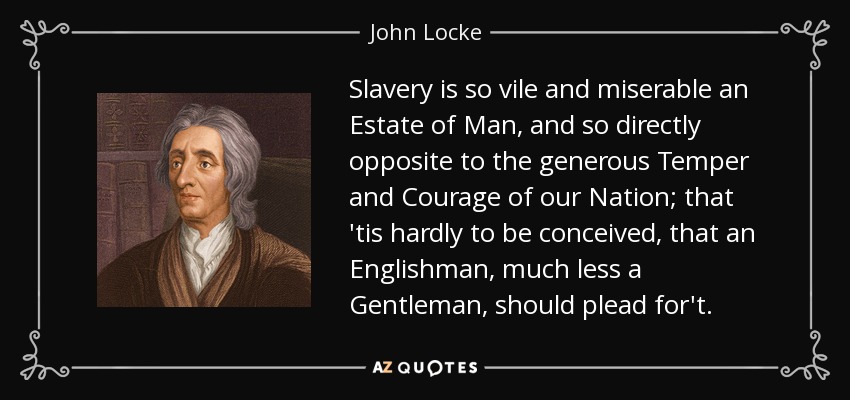
Locke claimed in the "Preface" to the Two Treatises that its purpose is to justify William III's ascension to the throne. Locke may have actually written the treatises during the Exclusion Crisis which attempted to prevent James II from ever taking the throne in the first place.
Parliament was seeking to establish parliamentarian election as the way to select a monarch. They wanted to limit the selection to Protestants. Lord Melville, Lord Leven and Lord Shaftesbury, leader of the opposition to Charles's rule. Anthony Ashley-Cooper, 1st Earl of Shaftesbury, was Locke's mentor, patron and friend. He had introduced the bill, but it was unsuccessful.
The "Rye House plotters" were an extremist Whig group. Rye House was a fortified mediaeval mansion surrounded by a moat. It was leased by a republican and Civil War veteran.
The plan was to conceal a force of men in the grounds of the house and ambush the King and the Duke as they passed by on their way back to London from the horse races at Newmarket. The location had a tactical advantage. The plan could be carried out with a relatively small force operating with guns from good cover.
The royal party were expected to make the journey on 1 April 1683, but there was a major fire in Newmarket on 22 March. The fire destroyed half of the town. The races were cancelled. The King and the Duke returned to London early. The planned attack never took place as a result.
Conspirators of this period were numerous. Some sort of armed resistance was debated from the early 1680's on what was becoming the Whig side of the factional division of British politics.
The assassination plot centered on a group that was convened in 1682–1683 by Robert West. John Locke had arranged accommodation for West in Oxford at that time. He had other associations in the group of revolutionary activists.
Locke, Shaftesbury and others were forced into exile after the plot was discovered. Some were executed for treason. Locke knew his work was dangerous. He never acknowledged his authorship within his lifetime. Two Treatises was first published, anonymously, in December 1689.
Locke defined power as something that was held over another. A magistrate had power over a subject. A master had power over his servant. A husband had power over his wife.
John Locke (1632-1704)
Two Treatises on Civil Government (1689)
Text
Ch.1, S.3
"Political power, then, I take to be a right of making laws with penalties of death, and consequently all less penalties, for the regulating and preserving of property, and of employing the force of the community, in the execution of such laws, and in the defence of the common-wealth from foreign injury; and all this only for the public good."
---------------------
The function of rebellion to overthrow incumbency was such
that the people didn't prosper at all much less much.
==============
If you thought that the Whig argument against absolute power was against the death penalty, you would be mistaken. The death penalty was the key component in this definition. It also needs to be noted that while the English Bill of Rights provided for the ownership of private property, Locke's definition of private property included the ownership of slaves.
His proposal of the right to destroy those who would destroy him was extended into the threat of genocide for colonization. That people were living in primitive or tribal states of existence was used as a claim to the desire to destroy civilized men.
This shifted the practice of enslavement from the consequence for resistance to imperial expansion to resistance to colonial expansion by parliament. It suggests that even the emperor's drive to conquer was driven by the Patrician class and their desire to draw wealth from success in expansion.
------------------------
William and Mary ruled together until Mary died in 1694. William governed the throne until 1702.
Mary had a younger sister named Anne. Both were daughters of James II. She was born during the reign of Charles II. Anne and Mary were raised as Anglicans. Anne married Prince George of Denmark in 1683.
William and Mary had no children. Anne succeeded to the throne after William died.
The kingdoms of England and Scotland were united into a sovereign state known as Great Britain by the Acts of Union in 1707. The divisions of the island were united for the first time with a single parliament.
She died without having generated children. She was the last monarch from the House of Stuart. She was succeeded by her second cousin George I of the House of Hanover.
Hanover was the capital and largest city in Lower Saxony in Germany. The house ruled Hanover, Great Britain and Ireland at various times during the 17th through 20th centuries.
George I and George II were not born in Great Britain. Great Britain and Ireland were joined in the United Kingdom in 1800 during the reign of George III. He was born in London.

Jeremy Bentham was born in London in 1747 during the rule of George II. He lived during the time of George II (1727-1760), George III (1760-1820), George IV (1820-1830) and William IV (1830-1837). George III was the king during the American revolution.
He was a utilitarian. The utilitarians were a modern variant of the Epicurean philosophy from Ancient Greece. Epicurus taught that pleasure and pain were operations that guided judgment toward happiness as a sustainable condition.
The Romans had associated the teaching with Hedonism, irresponsible behavior and rebellion against the republic. They rejected the philosophical view.
Bentham saw happiness in social as well as individual terms. It held a utility for the state of political affairs with morals and legislation. He restated the utilitarian maxim as that which sought the greatest happiness for the greatest number.
It was a parliamentarian reconfiguration with respect for legislation that considered benefit for the people, not just the state officials. It held promise for the law against slavery insofar as slavery was the cause of misery to the slaves and the owners alike.
Slavery renounced the role of reason in the will in making decisions for happiness. The social role of ownership determined outcomes. Cruelty in punishment was a standard device in the trade and ownership of slaves.
While Bentham was a known associate of revolutionary leaders, it was a time that was wrought with the consequence of revolution. The American and French revolutions had established republic with slavery as the primary forms of government.
He defined asceticism as a voluntary form of self-affliction. While this was granted as a choice for an individual, it wasn't a valid means for enacting legislation. Bentham was not an advocate for something like the prohibition of alcohol.
---------------------
Jeremy Bentham (1748-1832)
Principles of Morals and Legislation (1823)
Text
"The principle of asceticism, however, with whatever warmth it may have been embraced by its partizans as a rule of private conduct, seems not to have been carried to any considerable length, when applied to the business of government. In a few instances it has been carried a little way by the philosophical party: witness the Spartan regimen. Though then, perhaps, it maybe considered as having been a measure of security: and an application, though a precipitate and perverse application, of the principle of utility. Scarcely in any instances, to any considerable length, by the religious: for the various monastic orders, and the societies of the Quakers, Dumplers, Moravians, and other religionists, have been free societies, whose regimen no man has been astricted to without the intervention of his own consent."
---------------------
Asceticism is adverse to pleasure for happiness.
It promotes austerity as a product of legislative craftiness.
==============
Utilitarianism holds promise as a means to outlaw war. An international treaty that advocates for legislation against invasion, rebellion, revolution and terrorism will reduce the incidence of violent aggression among nations and open the door to trade with instruction in foreign languages.
----------------------
Pragmatism began in the early 1870's in the US with discussion between Charles Sanders Peirce, William James and others in the Metaphysical Club. James regarded the articles "The Fixation of Belief" and "How to Make our Ideas Clear" by Peirce as the foundation for pragmatism.
James would define pragmatism as radical empiricism.
Peirce differed from James and Dewey in their tangential enthusiasm. He held that truth was immutable and infinity is real. Statistical inferences were measured as principles for reason in the logic of science.
The aim of inquiry is the fixation of belief. The scientific method is most effective way to fix a belief as a functional principle.
The Romans and the medieval scholars took knowledge to rest on the authority of reason. Roger Bacon proposed the knowledge was derived from subjective experience in the 13th century. Francis Bacon argued in the Novum Organum (1620) that experience must be understood as open to verification.
Lavoisier shifted from the reconstruction of words to substances in his chemistry in the latter part of the 18th century. Darwin employed the basis for a statistical approach to explain the movements of molecules in biological variation in the 19th century.
Humans are not perfectly logical animals. We seem to find happiness in the absence of facts. The effect of this approach to experience continually contracts hope with aspiration. When hope is unchecked by experience optimism tends towards extravagance.
Logic in a practical sense is the blend of the wise union of security with fruitfulness. Natural selection finds practical expression in pragmatism. The practical is complemented by the fanciful, but the unpractical application of fantasy results in fallacious tendency in thought.
------------------
C.S. Peirce (1839-1914)
The Fixation of Belief (1877)
wiki Text
"The particular habit of mind which governs this or that inference may be formulated in a proposition whose truth depends on the validity of the inferences which the habit determines; and such a formula is called a guiding principle of inference. Suppose, for example, that we observe that a rotating disk of copper quickly comes to rest when placed between the poles of a magnet, and we infer that this will happen with every disk of copper. The guiding principle is, that what is true of one piece of copper is true of another. Such a guiding principle with regard to copper would be much safer than with regard to many other substances -- brass, for example."
---------------------
The guiding principle of inference
is for logical reason in natural currents.
==============

Gilbert Ryle
b. 8.19.1900 Brighton, England
d. 10.6.1976 Whitby, England
Gilbert Ryle was a representative of the generation of British ordinary language philosophers who share Ludwig Wittgenstein's approach to philosophy. He is principally known for his critique of Cartesian dualism. The dualistic separation of mind and body created that which he called the "ghost in the machine."
The Concept of Mind (1949) remains his best known work. He recommended that analytical behaviorism replace Cartesian dualism.
He was born in Brighton, England in the first year of the 20th century.
Brighton
A large number of churches were built in Brighton in the latter half of the 19th century. This was due to the efforts of Reverend Arthur Douglas Wagner, a prominent figure in the Anglo-Catholic movement of the time.
He is thought to have spent his entire fortune on building a number of churches. This included St. Bartholomew's, an imposing red brick building, built to the size and proportions of the biblical ark.
Another notable Victorian church that was built is the Parish Church of St. Michael and All Angels. The building has stained glass windows by the pre-Raphaelites, William Morris, Edward Burne-Jones, Ford Madox Brown and Philip Webb.
Otto Pfenninger developed a method of color photography in Brighton in the early 20th century.
Gilbert Ryle
Ryle was born in Brighton, England in 1900. He grew up in an environment of learning. His father was a doctor, a generalist who had interests in philosophy and astronomy. He passed an impressive library on to his children.
Gilbert was educated at Brighton College. He went up to Queen's College at Oxford to study Classics in 1919 but was quickly drawn to Philosophy.
He graduated with a "triple first." He was awarded first-class honors in classical honor moderations (1921), literae humaniores (1923) and politics, philosophy and economics (1924). He was appointed as lecturer in philosophy at Christ Church, Oxford in 1925. A year later, he became a Student (Fellow) and tutor at Christ Church, where he remained until 1940.
He was commissioned in the Welsh Guards in World War II. He was a capable linguist who was recruited into intelligence work. He had been promoted to the rank of Major by the end of the war. He returned to Oxford and was elected Waynflete Professor of Metaphysical Philosophy and Fellow of Magdalen College, Oxford.
He published his principal work, The Concept of Mind in 1949. He was President of the Aristotelian Society from 1945 to 1946 and editor of the philosophical journal Mind from 1947 to 1971.
He was a representative of the generation of British ordinary language philosophers who shared Wittgenstein's approach to philosophical problems. He is principally known for his critique of Cartesian dualism for which he coined the phrase "the ghost in the machine." Some of his ideas in the philosophy of mind have been referred to as "behaviourist."
---------------------
Gilbert Ryle
The Concept of Mind (1949)
Text
The mind in Cartesian dualism was viewed as something abstract and distinct from the body. The body exists in space. It is subject to mechanical or physical restriction in operation. The mind is not in space. It is not subject to natural law.
Ryle made his argument after WWII. Continental philosophy was viewed as the cause of Nazi socialism. The morality was seen as something that was abstracted from application to the leadership for the nation.
He argued that the mind and body are interrelated.
"What the mind wills, the legs, arms and the tongue execute; what affects the ear and the eye has something to do with what the mind perceives; grimaces and smiles betray the mind's moods and bodily castigations lead, it is hoped, to moral improvement."
Gilbert Ryle
吉尔伯特莱尔
吉 Ji lucky kichi good fortune Gi ぎ ギ Gil 길 way
尔 er you no kanji ru る ル beo 버 bur
伯 bo senior haku elder ba- ば- バ- teu 트 the
特 te special toku particular to と ト La 라 la
莱 lai weed rai weed Ra ら ラ il 일 work
尔 er Seoul no kanji i い イ
ru る ル
---------------------
The mind removes 'weeds' from thought
to will to work for bodily wellness as naturally sought.
==============

Hubert Dreyfus
b. 10.15.1929 Terre Haute, Indiana
d. 4.22.2017 Berkeley, California
Hubert Dreyfus was an American professor of philosophy. He was considered a leading interpreter of the work of Maurice Merleau-Ponty and Martin Heidegger.
His phenomenological existentialism placed him in proximity to the neo-pragmatism of Richard Rorty. Rorty was on the left side of the political spectrum. He criticized communism and the left, but maintained an association with socialism.
His main interests included phenomenology, existentialism and the philosophy of both psychology and literature. His 1972 book “What Computers Can’t Do” made him a scourge and eventually an inspiration to researchers in artificial intelligence.
He argued that the dream of artificial intelligence rested on several flawed assumptions. Chief among them was the idea that the brain is analogous to computer hardware and the mind to computer software.
The implication was that all human tasks could be replaced with computer programs. The consequences could be devastating to labor and management.
The connection to natural selection would be damaged by the dependency upon electronic machinery. What is to be done when the machinery fails to function? Will the dependent user be able to function without the automated device?
There is no objective set of facts outside the human mind. Human beings experience education as a partly physical interaction with their surroundings. The interpretation of the world is in a process of continual revision through a socially determined filter.
Artificial intelligence runs up against something called the common-knowledge problem. Ordinary people possess a vast repository of facts and information as though by inheritance. They can draw on the repository to make inferences and navigate their way through the world in a way that computers cannot.
Dreyfus believed that to teach is to learn. He refused to teach any text that he felt he already understood sufficiently well. Much of his time in the classroom involved not only getting the students to the edge of his understanding but, crucially, soliciting from them and discussing with them their suggestions for ways forward.
Terre Haute
Terre Haute is a city in Vigo county Indiana. It is located along the Wabash River near the states western border with Illinois.
The name "Terre Haute" is a French phrase meaning “highland." The name was coined by French explorers of the mid 18th century. They found a plateau-like area that adjoined the Wabash River.
These highlands were considered the border between Canada and Louisiana at the time the area was claimed by the French and British.
Early Terre Haute was a center of farming, milling and pork processing. The business and industrial expansion of the city prior to 1860 developed largely thanks to transportation. The Wabash River, the building of the National Road (now US 40) and the Wabash and Erie Canal linked Terre Haute to the world.
The city's range of influence was broad. Pork processing was previously a major industry of Terre Haute. It greatly declined following the Civil War.
Iron furnaces, foundries and rolling mills started up in and around the town with the discovery of coal in neighboring Clay County in 1867. These iron works were set up to meet the rising demands of the railroad companies.
Vigo County became the third largest coal producer and the fifth largest iron manufacturer in the state by 1870.
The economy was based on iron and steel mills, hominy plants and, late in the 19th century, distilleries, breweries and bottle makers.
Railroads supported the coal mines and coal operating companies, yet agriculture remained predominant, largely due to the role of corn in making alcoholic beverages and food items. The city was called the "Crossroads of America" due to the extensive rail and road network.
The increased labor population brought about by the factories introduced a tradition of strong union activity. The union activity caused many strikes, lockouts and bad relations between workers and employers.
Eugene V. Debs ran many times for president as the candidate of the Socialist Party. He was born in Terre Haute in 1871. He returned in 1921 and spent the last years of his life in that city.
The largest Ku Klux Klan rally ever held in Indiana took place in Forest Park on Saturday June 16, 1923 and through to the following dawn, five miles (8 km) north of Terre Haute. It was reported that Klansmen came from throughout Indiana and surrounding states.
Five thousand robed Klansmen paraded through the city at 9:00 pm. Tall crosses were burned on their return to the park six 30-foot (9.1 m). Fifteen hundred candidates were initiated into the Klan and 500 women joined the auxiliary.
Coca-Cola introduced its iconic green bottle in 1915. It was designed and manufactured locally at Root Glass Company. Authorities seized the largest moonshine still ever discovered in Vigo County on July 15, 1929 giving credit to the town's “Sin City” moniker.
Biography
Hubert Dreyfus was born on Oct. 15, 1929, in Terre Haute, Indiana. His father was Stanley Dreyfus, a businessman in the poultry industry. His mother was Irene Lederer Dreyfus, a homemaker. He was the older of two sons. His nickname was Bert.
Bert attended Wiley High School in Terre Haute. His success on the debate team paved his way to Harvard University. He majored in physics before switching to philosophy after hearing a lecture by American philosopher C.I. Lewis.
He earned three degrees at Harvard University. There was a BA summa cum laude in 1951, an MA in 1952 and a PhD in 1964. He is considered a leading interpreter of the work of Edmund Husserl, Michel Foucault, Maurice Merleau-Ponty and Martin Heidegger.
He was an American philosopher and professor of philosophy at MIT and the University of California, Berkeley. He is known for his work on the philosophical implications of artificial intelligence.
Dreyfus published "Alchemy and Artificial Intelligence" while teaching at Massachusetts Institute of Technology in 1965. It was an attack on the work of Allen Newell and Herbert A. Simon, two of the leading researchers in AI.
Dreyfus not only questioned the results they had so far obtained, but he also criticized their basic presupposition that intelligence consists of the manipulation of physical symbols according to formal rules.
He spent time at the Rand Corporation while work on artificial intelligence was in progress in 1965. The first edition of What Computers Can’t Do would follow in 1972.
This critique of AI has been translated into at least ten languages. It would establish Dreyfus’s public reputation. It maintained the study and interpretation of “continental” philosophers as first in the order of his philosophical interests and influences.
He left MIT and became an associate professor of philosophy at the University of California, Berkeley in 1968.
All Things Shining was published in 2011. It was one year before he would be awarded full professorship. The book posited that human excellence is the best way to live life. It begins with those happy polytheists, the Greeks, who were less reflective than we are.
They were also less convinced that they were in control of the world. This left them open to experience things shine as works of art, to feel gratitude not only for the bounties of nature but for human excellence in all its forms, itself regarded as a gift.
It sought to revivify an experience of the sacred that is fitting for our “secular age.” The basic premise criticizes the modern view that the individual agent’s free choice alone determines what matters.
The polytheism of Homer and Melville is used to anchor the project. The observation that polytheism multiplies entities is a warning against letting the socialists and leftists run with the multiplication.
The story runs through Augustine and Dante to one of the multiple meanings entertained by the Greeks. The Incarnation unifies organization for benefit as a key feature of salvation.
Descartes moved the unified theme toward nihilism by making the will the basic aspect of human existence. The statement, "I think, therefore I am" indicated that thought was the operation of the will in the world. Kant amplified the error by making us the source of order.
That our autonomy was the highest good was criticized by Milton. The autonomy of will made the step from Kant to the misguided monotheism of Captain Ahab short.
Dreyfus retired from his chair in 1994, but continued as professor of philosophy in the Graduate School. He continued to teach philosophy at UC Berkeley until his last class in December 2016.
He was elected a Fellow of the American Academy of Arts and Sciences in 2001 and is a recipient of the Harbison Prize for Outstanding Teaching at UC Berkeley.
He died on April 22, 2017.
Phenomenology and existentialism are flawed. Phenomenlogy may appreciate the role that experiment has played in the formulations in social science, but it is similar to empiricism in that it reduces thought to a sub-conscious level of operation.
Experiments were something that were done in the past. The investment in learning from conducting an experiment as an investigation was reduced to learning by dogmatic science.
Existentialism applauds existence with a survivalist mentality. To survive is to be alive. To be alive is to have avoided deadly consequence of the random variety.
Argument is directed at the government to take money from the successful in the private sector as having been too successful. Business is a form of workaholism or exploitation.
Government officials are celebrated for their bureaucratic organization in the repression of achievement. Socialism is indicated as the economic order.
Dreyfus was critically reflective of the past in a way that suggested that culture can move forward in the appreciation of excellence.
His revival of the theme of greatness helped to move his use of the respective philosophies into something classically relevant and valuable.
Were it not for his personal integration for the broadest reach in expression, greatness according to phenomenlogy and existentialism would reduce to the condition of being alive.
His criticism of Artificial Intelligence was not expressed to destroy the computer industry. It was presented to keep human being directed toward the production of practical applications for the market.
He used philosophies that have been associated with socialism, leftism and nihilism in a way that didn't endorse them. He talked about them as social trends that indicate a general concern for society.
The trouble with socialism is grounded in the prejudice against success in the competition for power.
Leftists argue that the corruption of capitalism gives an unfair advantage to those with wealth, while they play for advantage by making their appeal to the body that makes demands without having taken the risk to organize capital for the means of production.
Hubert Dreyfus
S. 休伯特·德雷福斯
T. 休伯特·德雷福斯
休 Xiu don't 休 kyu rest Hu ひゅ- ヒュ- Heo 허 huh 伯 bo senior 伯 haku chief ba ば- バ- beo 버 burr
特 te unique 特 toku special to と ト teu 트 T
德 De goodness 德 toku ethics Do ど ド Deu 드 de
雷 lei terrific 雷 rai thunder rei れい レイ le 레 re
福 fu happiness 福 fuku blessing fa ふぁ ファ pwi 퓌 P
斯 si this 斯 shi this su す ス seu 스 S
-----------------------
The specialness of the lightning bolt makes thunder
that rolls from the height of sky to the ground down under.
==============
wiki Hubert Dreyfus
UC Berkeley H Dreyfus
NY Times Obit: Dreyfus and AI
Daily Nous: Dreyfus
Artificial Intelligence and Alchemy Text
wiki Artificial Intelligence and Alchemy
Artificial_Intelligence
What Computers Can't Do

The implication made by Dreyfus when he said that a god is a mood of power is that human being depends upon automated behavior even without computer technology. Success in the world relies on automated reactions with minimal thought. Difficulty arises when there isn't enough automated reason in the thought.
Even automated reactions require thought in order to make sense. The current campaign to investigate the president for impeachment has been based on prior success in forcing Nixon's resignation for his reduction of the troops in Vietnam and Clinton's increased involvement in Yugoslavia.
The Democrats didn't so much as take the time to think about how important probable cause is to conduct an investigation of any citizen, much less the leading citizen for the country.
They had established a pattern of accusation followed by defamation that depended on the charge that Nixon had ordered the break in to DNC HQ.
This charge was followed by the assertion that his destruction of the tape recordings made in his office was proof that he had ordered the break-in. It was never proved that he ordered a break-in at all. It was a strong indication that one of his advisers was acting as a mole.
The implication that he was a crook that had stolen the election with the theft of DNC information was used to defame his character in order to press him into resignation. This was done to insure a Democrat victory in the next election.
The Democrats in the House found it all too easy to make impeachment the news that the people had to consider with respect for the authority of the presidential office. They want to make the chief executive subordinate to their demands to increase expenditure for their benefit.
This isn't an issue of what the problem with capitalism is. It is the bureaucracy of socialism that is trying to control decisions for government on the hill. The Democrat effort to force election results for their majority wants to reduce government action to their on-going benefit.
This policy for prejudice was established by the Whigs for the Puritans after the English Civil War. They didn't represent the broadest interests of the people in the country. They represented the particular interests of the Puritans as though it were necessary for Protestants.
The Democrats don't represent democracy for the people. They use factionalist media expression to make it look like a faction's interest is more important than representation for the whole body.
They tell themselves that people will believe that their interests are being represented if they attack the chief executive and the largest social group with the charge of racism.
The process is too automated. It doesn't respect national security. It tests the public for belief in the Democrat investment in prejudice against conservative success in executive leadership.