Showing posts with label affliction. Show all posts

Sunday, June 9, 2019

Have

6.16.19
Stana Katic

Have
Patience 
有耐心 
Yǒu nàixīn
忍耐力がある 
Nintai-ryoku ga aru
c2
in patientia

The Lord God of our fathers is benign.
The love of the Father transcends time.

Wisdom was created at the beginning of creation.
It was the first act in the communication of information.

The Word came before the beginning in the Son.
Divine will existed in eternal nature as one.

The name of your majesty is praised
to overcome the corruption that was raised. 

Your temple is the hold for your holiness.
Your holiness lifts us above our lowliness.

You behold the depths of design.
You help us to see that which is benign.


Cherubim

You dwell between the Cherubim.
The fire of desire sings from the Seraphim.

Seraphim

Your faithfulness extends from one generation to another.
The earth abides in constancy despite the quakes that cause such clutter.

Your direction is embodied in executive authority.
The coherency of currency is an emblem of productive uniformity.

Your word has everlasting radiance in hope.
It stands firm in trial to help us cope.

Natural law has decreed that variance finds contrast in constancy.
All things work for the benefit of the broadcast of accountable autonomy.

Conscience is a place for choice with hope in thought.
Probability is the prediction of variance based on experience taught.

I should have perished in my affliction 
had my delight not been in your law's legal diction.

I seek wisdom in the study of your law.
Please save me from the fatal flaw. 

The beauty of your love shines from the firmament of heaven.
Your constancy abides despite the confession of concession
to the expression of progression.

Tampa Sunrise

You gave me life with your commandments.
Civilization will become an advancement.

I will apply my mind to the application of knowledge
though the misguided lie in wait to demolish the fallen.

All things will eventually come to an end
but the love of your word is an eternal friend.


Crown of Thorns

We stand in the hope of sharing the divine glory
through the ascension of Jesus Christ above the transitory. 

When the Spirit comes, you will be guided to truth.
The things declared will be for the maturity of our youth.

Blessed are the Father, Son and Holy Spirit.
The Trinity is exalted in the lyric.

-------------------------

Canticle 2
Ecclesiasticus 15
Song of the Three Young Men

Blessed art thou, O Lord God of our fathers;
praised and exalted above all for ever.
Blessed are thou for the name of thy Majesty;
praised and exalted above all for ever.
Blessed are thou in the temple of thy holiness;
praised and exalted above all for ever.
Blessed are thou that beholdest the depths, and dwellest between the Cherubim;
praised and exalted above all for ever.
Blessed art thou on the glorious throne of thy kingdom;
praised and exalted above all for ever.
Blessed are thou in the firmament of heaven;
praised and exalted above all for ever.
Blessed are thou, O Father, Son, and Holy Spirit;
praised and exalted above all for ever.

------------------------

==================

Proverbs 8:22

The LORD created wisdom at the beginning of his work;
the first of his acts of long ago

------------------------

Wisdom was created at the beginning of creation.
It was the first act in the communication of information.

==================

Romans 5:1-2

We are justified by faith. We have peace with God through our Lord Jesus Christ through whom we have attained access to this grace in which we stand.  We boast in the hope of sharing the glory of God.

------------------------

We stand in the hope of sharing the divine glory
through the ascension of Jesus Christ above the transitory.

==================

John 16:13

When the spirit of truth comes, he will guide you into all the truth. He will not speak of his own, but will speak whatever he hears. He will declare the things that are to come.

------------------------

When the Spirit comes, you will be guided to truth.
The things declared will be for the maturity of our youth.

==================

ps119.89+
Lamedh
In Æternum, Domine
In eternal, Dominated

89 O Lord, your word is everlasting;
it stands firm in the heavens.
90 Your faithfulness remains from one generation to another;
you established the earth, and it abides.
91 By your decree these continue to this day,
for all things are your servants.
92 If my delight had not been in your law,
I should have perished in my affliction.
93 I will never forget your commandments,
because by them you give me life.
94 I am yours; oh, that you would save me!
for I study your commandments.
95 Though the wicked lie in wait for me to destroy me,
I will apply my mind to your decrees.
96 I see that all things come to an end,
but your commandment has no bounds.

------------------------
==================
--------------------------

6.16.19

Probability


Joseph Butler
b. 5.18.1692 Wantage, Berkshire, England
d. 6.16.1752 Bath, Somerset, Great Britain

Butler was an English bishop, theologian, apologist and philosopher. He was born in Wantage in the English county of Berkshire (now Oxfordshire). He is known for his critique of Deism, Thomas Hobbes's egoism and John Locke's theory of personal identity.

Butler influenced many philosophers and religious thinkers. David Hume, Thomas Reid, Adam Smith, Henry Sidgwick, John Henry Newman and C. D. Broad were among them.

He is widely considered "as one of the preeminent English moralists. The introduction of probability to morality was novel. It reduced excesses associated with absolutism or universalism in metaphysics. It established the significance of conscience.

Wantage

Wantage is centrally located as a market town in the south of England. It was a small Roman settlement. The name may have been drawn from an Old English phrase meaning "decreasing river."

It was the birthplace of King Alfred in 849. It was in the king's ownership until Richard I (r.1189-1199) passed it to the Earl of Albemarle in 1190. Weekly trading rights were first granted to the town by Henry III (r.1216-1272) in 1246. Markets are now held twice weekly on Wednesdays and Saturdays.

Windsor Castle is located in the same county.

Royalist troops were stationed in Wantage during the English Civil War.

Joseph Butler

Joseph Butler was born in Wantage on May 18, 1692. He was the son of a Presbyterian linen draper. He was destined for the ministry in that church. He entered Samuel Jones's dissenting academy at Gloucester (later Tewkesbury) along with the future archbishop Thomas Secker for that purpose.

He entered into a secret correspondence with the distinguished Anglican theologian and philosopher Samuel Clarke while he was there. He decided to enter the Church of England in 1714 and went to Oriel College, Oxford. He received his Bachelor of Arts in 1718 and later proceeded to Doctor of Civil Law on 8 December 1733.

Butler was ordained a deacon on 26 October 1718 by William Talbot, Bishop of Salisbury, in his palace chapel. He was ordained as a priest on 21 December 1718 by Talbot at St James's Church, Piccadilly. He became rector of the rich living of Stanhope, County Durham after holding various other high positions.

He was made the head chaplain of George II's wife Caroline on the advice of Lancelot Blackburne in 1736. He was nominated Bishop of Bristol on 19 October 1738 and consecrated on 3 December 1738 at Lambeth Palace chapel.

Against Egoism

Conscience is the guard against egoism. Probability is the guide to best choice.

Conscience has a unique authority among the principles belonging to human nature according to Butler. It should direct other principles. This is evident in the analogy with the civil constitution. Authority is proper to conscience and no other principle. Any ordinary reasonable person has a conscience and ought to obey it.

The term “conscience” was commonly employed in both theological and philosophical contexts. Shaftesbury identified it with reflective reason. It was also a legal term of art among the equity lawyers to whom Butler preached his sermons. It had the sense of acting minimally as an ordinary reasonable person would and maximally as a fully informed, ideal reasoner would in the legal context.

Butler makes an association between civil constitution and conscience. Constitutional expression was constructed in relation and in opposition to opinions about principles expressed in the bible. This was an indirect reference for him. When he was arguing against the deists he casually stated that nature is full of mysteries and cruelties.

Against Deism

Butler's Analogy was one of many book-length replies to the deists. It was long widely believed to be the most effective. He argued that nature itself was full of mysteries and shared the same alleged defects as the Bible. This was an argument for the use of reason with conscience. It did not throw the question of morality out of consideration.

He argued that all knowledge of nature and human conduct is merely probable on empiricist grounds. He then appealed to a series of patterns ("analogies") observable in nature and human affairs that make the chief teachings of Christianity “likely” as true in his judgment.

Were it not for the history of cruelty in punishment as affiliated with the doctrine for destruction, the statement regarding the cruelty of nature could pass as non-offensive. The legislature  however has documented statements that affiliate civil authority with cruelty and violence. Said statements are rife with an egoism or deism that contradicts conscience.

Conscience for the group should not be confused with anything discriminatory, but there are those in social positions of responsibility who reduce professional judgment about policy to personal opinion devoid of concern for the welfare of the whole group, i.e. the public.

Butler died in 1752 at Rosewell House, Kingsmead Square in Bath, Somerset. His admirers praise him as a diligent and conscientious churchman who sought the best for his country.

Joseph Butler
S. 约瑟夫巴特勒
T. 約瑟夫巴特勒

约  Yue      treaty                          約   yaku    promise                 Jo  じょ  ジョ    Jo   조 article 
瑟   se        sound of wind           瑟   shitsu  large koto               se  せ    セ          se   세  three       
夫   fu         husband                    夫   fu         man                       fu   ふ     フ        peu 프  the     
巴   Ba        to hope                     巴    ha        comma-design      Ba  ば     バ       Beo  버  bur           
特   te         special                       特    toku    special                   to  と      ト       teul  틀  frame 
勒   lei        to compel                  勒    roku    bridle                     ra  ら-  ラ-        leo  러   the                                 
------------------------

Conscience is a place for choice with hope in thought.
Probability is the prediction of variance based on experience taught.

==================

wiki Joseph Butler
Lectionary Joseph Butler
Stanford Encyclopedia of Philosophy Butler morality
wiki JB Against Deism


Friday, June 7, 2019

Do

6.8.19


Do
Well
做得好
Zuò dé hǎo
うまくやる
Umaku yaru
ps.119.65

Do well 
even in hell. 

You have done well according to your word.
Don't discard the affirmative as absurd.

I have believed in the common law
for discernment in knowledge for all. 

I went astray before I was afflicted.
I keep faith with reason to untangle the twisted.

Wisdom said, 
'Come. Eat some bread.
I had risen as I had said.
Take. Drink some wine. 
It will taste fine. 
I had ascended the frame as a vine.'    

You bring forth good from your goodness
to instruct me in your fullness.

The proud have smeared me with lies
but I will stay true to our benign ties.

Their will is twisted in heart
but my delight is in your law for my part.

The wealthy studious woman was married to her faith.
She was ranked next to the plum in the dark color for her face.

I have used affliction to learn your statutes.
The variants in nature establish pass routes.

Jesus said, 'Come to me uncertain person.
Draw near you  weary from the heavy burden. 
Learn from me and I will give you rest.
My burden will help you to pass the test.' 

The commandment to love is most dear to me.
I use the order in the command for the ability to see
beyond the corruption that seeks to control me.

---------------------------


Please
Answer
请回答 
Qǐng huídá
お答えください 
Okotae kudasai
ps119.145
Die obsecro

I cried to you with my whole heart.
Answer me that I may make my part in law my art. 

I call to you that you may save me.
I will keep your decrees to help save all of these. 

I rise early to honor you
in the search for what your word will prove.

My eyes seek movement in the night watch
that I may meditate on the strength of your promised notch.

Hear my voice according to your kindness.
Give me life. Deliver me from blindness.

Those who are far from your law persecute me.
They drawn near with malice to induce flaw with deceit.

Your presence, Lord, is near in your commandment.
Your existence is an advance in companionship. 

I would that all would will to divide the word of truth rightly.
The history of love is salvation achieved dimly or brightly.

It has been given for you to know the secrets of parables
so the figure of an image and reason may become comparable.

The orchid is cut for beauty in aesthetics.
Gauze is applied to cover a wound for medical ethics. 

God provides blessing in abundance for enough of anything
that you may share good work to engulf the best that you can bring.

-----------------------

The Phoenician letter name ṭēth means "wheel."

Tet represents the number nine in Hebrew.
Jewish scripture books about the "holy letters" from the 10th century and on discuss the connection or origin of the letter Teth with the word Tov. Tov means 'good.'

Teth
Bonitatem fecisti
You have done well

65 O Lord, you have dealt graciously with your servant,
according to your word.
66 Teach me discernment and knowledge,
for I have believed in your commandments.
67 Before I was afflicted I went astray,
but now I keep your word.
68 You are good and you bring forth good;
instruct me in your statutes.
69 The proud have smeared me with lies,
but I will keep your commandments with my whole heart.
70 Their heart is gross and fat,
but my delight is in your law.
71 It is good for me that I have been afflicted,
that I might learn your statutes.
72 The law of your mouth is dearer to me
than thousands in gold and silver.

----------------------

Qoph


Qoph is the nineteenth letter of the Semitic abjads. It has the numerical value of 100 in Hebrew gamatria.

The origin of the glyph shape of qōp is uncertain. It originally depicted either a sewing needle, specifically the eye of a needle, or the back of a head and neck.  Hebrew קוף and Aramaic קופא both refer to the eye of a needle.  Qāf in Arabic meant "nape".  It may also have been a picture of a monkey and its tail. The Hebrew קוף means "monkey."

The Aramaic Qop gave rise to the letter in the Semitic abjads used in classical antiquity. Phoenician qōp is also the origin of the Latin letter Q and Greek ײ (phi).

Qoph 
Clamavi in toto corde meo
I cried with my whole heart

145 I call with my whole heart; 
answer me, O Lord, that I may keep your statutes.
146 I call to you;
oh, that you would save me! 
I will keep your decrees.
147 Early in the morning I cry out to you, 
for in your word is my trust.
148 My eyes are open in the night watches, 
that I may meditate upon your promise.
149 Hear my voice, O Lord, according to your loving-kindness; 
according to your judgments, give me life.
150 They draw near who in malice persecute me; 
they are very far from your law.
151 You, O Lord, are near at hand, 
and all your commandments are true.
152 Long have I known from your decrees 
that you have established them for ever.

-----------------------

Proverbs 9:5-6

Wisdom said, 'Come. Eat bread
and drink the wine I have mixed.
Lay aside immaturity and live
and walk in the way of insight. 

----------------------

Wisdom said, 
'Come. Eat some bread.
I had risen as I had said.
Drink some wine. It will taste fine. 
I had ascended the frame as a vine.'   

================

Matt. 11:28-29

Jesus said, 'Come to me, all you that are weary and carry heavy burdens. I will give you rest. Take my yoke upon you. Learn from me. I am gentle and humble in heart. You will find rest for your souls. My yoke is easy. My burden is light. 

----------------------

Jesus said, 'Come to me uncertain person.
Any may come that are weary from heavy burden. 
Learn from me and I will give you rest.
The lightness of my burden will help you to pass the test.' 

================

Asceticism
https://img.libquotes.com/pic-quotes/v4/karl-marx-quote-lbn2y2g.jpg 

"Has not Christianity declaimed against private property, against marriage, against the State? Has it not preached in the place of these, charity and poverty, celibacy and mortification of the flesh, monastic life and Mother Church? Christian Socialism is but the holy water with which the priest consecrates the heart-burnings of the aristocrat." 

Karl Marx, Communist Manifesto (1848)
https://www.marxists.org/archive/marx/works/1848/communist-manifesto/ch03.htm

Melania the Elder
b. c.350 Spain
d. 6.8.410  Jerusalem

Melania the Elder was a Desert Mother who was an influential figure in the Christian ascetic movement. The Desert Fathers and Mothers sprang up in the generation after the Emperor Constantine made Christianity a legal religion of the Roman Empire.

Spain

Hispania was part of the Roman empire in the 4th century.

Roman armies invaded the Iberian peninsula in 218 BCE. The land was used as a training ground for officers. Tactics were tested during campaigns against the Carthaginians, the Iberians, the Lusitanians, the Gallaecians and other Celts. 

It was not until 19 BCE that the Roman emperor Augustus (r. 27 BC–AD 14) was able to complete the conquest. Much of Hispania remained autonomous until then.

Romanization proceeded quickly in some regions after the time of Augustus. There are references to the togati. The process was very slowly in others. Hispania was divided into three separately governed provinces. 

There were nine provinces by the 4th century. More importantly, Hispania was for 500 years part of a cosmopolitan world empire bound together by law, language and Roman roads. The impact of Hispania on the newcomers was also big. Caesar wrote on the Civil Wars that the soldiers from the Second Legion had become Hispanicized and regarded themselves as hispanici.

Some of the peninsula's population were admitted into the Roman aristocratic class. They participated in governing Hispania and the Roman empire. There was a native aristocratic class who ruled each local tribe. 

The latifundia (sing., latifundium) were large estates controlled by the aristocracy. These estates were superimposed on the existing Iberian landholding system.

The Romans improved existing cities such as Lisbon (Olissipo) and Tarragona (Tarraco), established Zaragoza (Caesaraugusta), Mérida (Augusta Emerita) and Valencia (Valentia), and reduced other native cities to mere villages. 

The peninsula's economy expanded under Roman tutelage. Hispania served as a granary and a major source of metals for the Roman market. Its harbors exported gold, tin, silver, lead, wool, wheat, olive oil, wine, fish and garum. 

Agricultural production increased with the introduction of irrigation projects. Some of the constructs remain in use today. The Romanized Iberian populations and the Iberian-born descendants of Roman soldiers and colonists had all achieved the status of full Roman citizenship by the end of the 1st century. 

The emperors Trajan (r. 98–117) and Hadrian (r. 117–138) were of Hispanic origin.

------------------

Proverbs 9:5-6

Wisdom said, 'Come. Eat bread
and drink the wine I have mixed.
Lay aside immaturity and live
and walk in the way of insight.

------------------- 

Melania

Melania was one of the wealthiest citizens of the empire. She was married at 14 and moved from Spain with her husband to the suburbs of Rome. Her husband and two out of three sons had died by the time she was 22. 

----------------------

Matt. 11:28-29

Jesus said, 'Come to me, all you that are weary and carry heavy burdens. I will give you rest. Take my yoke upon you. Learn from me. I am gentle and humble in heart. You will find rest for your souls. My yoke is easy. My burden is light. 

----------------------

She became a Christian in Rome. She left her son with a guardian and set off to Alexandria, accompanied by her servants to join other Christian ascetics to visit the monks at the mountain of Nitria. 

She came into contact with holy men such as Pambo, Arsisius, Sarapion the Great, Paphnutius of Scete, Isidore the bishop of Hermopolis and Dioscorus. She stayed there for six months.

When persecution broke out after the death of Bishop Athanasius in 373 many of the monks were exiled to Diocaesaraea in Palestine. 

Isidore, Pisinius, Adelphius Paphnutius and Pambo were exiled. Melania followed and supported them financially. She would cover herself in a slave's cloak and bring them goods in the evenings. 

When the governor of Palestine discovered this, he attempted to blackmail her and threw her into prison. When the judge realized her social status, he let her go. Palladius attributes this release to her Christian works.

She built a convent for about 50 nuns in Jerusalem and a monastery on the Mount of Olives for the monk and theologian Rufinus of Aquileia.

Melania was known to Abba Macarius and other Desert Fathers in Egypt.  She was a contemporary of Jerome, Augustine of Hippo, Paulinus of Nola (her cousin or cousin-in-law), and Evagrius of Pontus. She was a follower of Origen. She practiced asceticism in accord with his instruction. 

She was a spiritual mentor to Evagrius of Pontus, later author of the Eastern Orthodox Philokalia. She persuaded him to go to Egypt to join the desert ascetics and carried on a correspondence with him while he was there.

She left for Rome to see her son around the year 400. Her granddaughter, known as Melania the Younger, would later take up the religious life due to her influence. 

When the Visigoths marched on Rome in 410, Melania, her daughter-in law Albina, granddaughter Melania and her husband fled to Sicily. 

They then went to Jerusalem. Melania remained in the city when the exiled ascetics were allowed to return to Egypt. 

She energetically practiced hospitality and funded churches and monasteries in the Roman and Persian Empires. She constantly read and re-read the works of Origen, Basil the Great and Gregory of Nazianzus. 

Melania died in Jerusalem around 417.

Her social network was one of the most important in the fourth and early fifth century Christianity. She was fluent and well read in both Latin and Greek. Her geographical connections reached from Spain to Persia. 

She grew as a member of the first generation in which members of the nobility and social elites were expected to take Christianity seriously. She lived to see it become the official religion of the Empire.

The ascetic lifestyle was semi-communal. Ownership for the property was signed to the abbot or the abbess. The monks lived in cells. They prayed and studied individually until the community gathered together.  

The determination of policy in the political empire was subject to the competition for authority. Arguments about what was wanted probably defaulted to who wanted it often enough. 

The struggle with asceticism directed attention away from the want of the will in the gratification of desire, but it threw the question of happiness out of court as well.

The perception of goodness lent itself to market conditions. If fish could be eaten and tasted satisfactory, it was good. If it could be eaten, but wasn't satisfactory, it wasn't.  Good fish were taken to market. Bad fish were thrown back.   

Policy decisions for the public have to rule out that which is not good for people. Legislation is the documentation of policy. It can't be too ambiguous or too particular.  

Melania 
S. 梅拉尼亚
T. 梅拉尼亞

梅  Mei     plum            梅   bai       plum          Me  め    メ          Mel   멜   Mell                                   
拉  la         pull               拉   ratsu   Latin           la      ら   ラ           la       라   la         
尼  ni         nun               尼   ni         nun             ni      に   ニ         ni       니   ni                 
亚  ya        next to         亞   a           rank            a       あ   ア          a        아    ah             

----------------------

The wealthy studious woman was married to her faith.
She was ranked next to the plum in the dark color for her face.

================


=================

Numbers 11:27-29

A young man ran and told Moses, 'Eldad and Medad are prophesying in the camp.' Joshua son of Nun, assistant to Moses, said, 'My lord Moses, stop them!' Moses said to him, 'Are you jealous for my sake? Would that all the LORD's people were prophets that the LORD would put his spirit on them!'
Eldad- God has loved.
Medad- Love.
Moses- Drawn.
Joshua- Yhwh is salvation

-----------------------

I would that all would will to divide the word of truth rightly.
The history of love is salvation achieved dimly or brightly.

=================

2 Corinthians 9:8

God is able to provide you with every blessing in abundance that by always having enough of everything, you may share abundantly in every good work.

-----------------------

God provides blessing in abundance for enough of anything
that you may share good work to engulf the best that you can bring.

=================

Luke 8:9-10

His disciples asked him what the parable meant. He said, 'To you it has been given to know the secrets of the kingdom of God, but to others I speak in parables, so
"Looking, they may not perceive
and listening, they may not understand."

-----------------------

It has been given for you to know the secrets of parables
so the figure of an image and reason may become comparable. 

=================

Recognition

Roland Allen 
b. 12.29.1868 Bristol, United Kingdom
d. 6.9.1947 Nairobi, Kenya

Roland Allen was an English missionary sent by the Society for the Propagation of the Gospel to China. His views on missionary strategy have been influential.

Bristol 

Bristol is a port city on the west coast in the southern part of England.

Iron Age hill forts and Roman villas were built near the confluence of the rivers Frome and Avon.  The settlement was known as Brycgstow (Old English "the place at the bridge") around the beginning of the 11th century. 

Bristol received a royal charter in 1155. It was historically divided between Gloucestershire and Somerset until 1373. It became a county of itself. It was among the top three English cities after London in tax receipts from the 13th to the 18th century.

The port was a starting place for early voyages of exploration to the New World.  John Cabot, a Venetian, became the first European since the Vikings to land on mainland North America on a ship out of Bristol in 1497. 

William Weston, a Bristol merchant, was the first Englishman to lead an exploration to North America in 1499. More than 2,000 slave ships carried an estimated 500,000 people from Africa to slavery in the Americas at the height of the Bristol slave trade from 1700 to 1807. 

The Port of Bristol has since moved from Bristol Harbour in the city center to the Severn Estuary at Avonmouth and Royal Portbury Dock. It was surpassed by the rapid rise of Birmingham, Manchester and Liverpool in the Industrial Revolution.

Roland Allen

Roland Allen was born in Bristol, England on December 19, 1868.  He was the son of an Anglican priest but was orphaned early in life. 

He trained for ministry at Oxford and became a priest in 1893. 

He spent two periods in Northern China working for the Society for the Propagation of the Gospel. The first from 1895 to 1900 ended due to the Boxer Rebellion.  

Boxer Rebellion

The rebellion was an anti-imperialist, anti-foreign, and anti-Christian uprising that took place in China between 1899 and 1901 toward the end of the Qing dynasty. It was initiated by the Militia United in Righteousness (Yihetuan), known in English as the Boxers. Many of their members had been practitioners of Chinese martial arts.

The secret organization led an uprising in northern China against the spread of Western and Japanese influence there. The rebels performed physical exercises they believed would make them able to withstand bullets. They  killed foreigners, Chinese Christians and destroyed foreign property.

Western powers and Japan had forced China’s ruling Qing dynasty to accept wide foreign control over the country’s economic affairs by the end of the 19th century. China had fought to resist the foreigners with popular rebellions in the Opium Wars (1839-42, 1856-60) and the Sino-Japanese War (1894-95), but it lacked a modernized military and suffered many casualties.

The uprising took place against a background that included severe drought. Disruption to established administration was caused by the growth of foreign spheres of influence.

Allen was forced to flee to the British Legation in Beijing during this time. He was chaplain to the community throughout much of the siege.

Diplomats, foreign civilians and soldiers as well as Chinese Christians in the Legation Quarter were besieged for 55 days by the Imperial Army of China and the Boxers. Chinese officialdom was split between those supporting the Boxers and those favoring conciliation, led by Prince Qing.  

The Eight-Nation Alliance was made up of American, Austro-Hungarian, British, French, German, Italian, Japanese and Russian forces. The alliance was initially turned back. They brought 20,000 armed troops to China, defeated the Imperial Army and arrived at Peking on August 14, to relieve the siege of the Legations. 

Plunder of the capital and the surrounding countryside ensued along with the summary execution of those suspected of being Boxers. The Boxer Protocol of 7 September 1901 provided for the execution of government officials who had supported the Boxers. 

A large indemnity was charged to China to pay the 8 nations over the course of the next 39 years. The indemnity was 450 million units of silver. Each unit (tael) was about 40 grams.

Allen returned to North China after a period back in England in 1902, but was forced home due to illness. These ‘early experiences led him to a radical reassessment of his own vocation and the theology and missionary methods of the Western churches’.

Allen became an early advocate of establishing Churches which from the beginning would be self-supporting, self-propagating and self-governing. Each church would adapt to local conditions. The community would not merely imitate Western Christianity. The Church would preserve Chinese culture within the framework of Christian monotheism.

Allen's views were confirmed by a trip to India in 1910 and by later research in Canada and East Africa. It is with this background that Allen wrote his book Missionary Methods which was first published in 1912.

Allen’s approach to Mission strategy for indigenous Churches is based on the study of Saint Paul’s missionary methods as he is convinced that in them can be found the solution to most of the difficulties of the day. 

He believed it was the recognition of the church as a local entity and trust in the Holy Spirit’s indwelling within the converts and churches which was the mark of Paul’s success. 

Paul was a representative of the apostolic community in Jerusalem in a way that was comparable to how Augustine was related to the ecumenical Church at a later time. Disputes over doctrine were referred to the statements of the larger body. 

Allen believed in contrast that the people of his day were unable to entrust their converts to the Holy Spirit and instead relied in His work through them. His views became increasingly influential. 

There was room for development from the local level of authority, but the assumption of benefit in Diocesan organization was not as clear as it was with Selwyn (1809-1878). 

Allen himself became disillusioned with the established churches. It is likely that socialism was an inhibitor to Church growth.

He spent the last years of his life in Kenya. He established a reclusive church of his own design centered on an idiosyncratic family rite. 

Allen died in Nairobi on June 9, 1947.

Roland Allen
S. 罗兰艾伦
T. 羅蘭艾倫

罗  Luo      to catch              羅  ra     gauze              Ro      ろ-          ロ-         Lol   롤  role           
兰  lan       orchid                 蘭  ran   orchid            ran      らん       ラン       laen  랜   LAN      
艾  Ai         to cut                 艾  kai    moxa             do       ど            ド          deu   드   de                 
伦  lun       order                  倫  rin    ethics              Aren  あれん アレン     Al     알   egg      
                                                                                                                           laen  렌   LAN                                             
-----------------------

The orchid is cut for beauty in aesthetics.
Gauze is applied to cover a wound for medical ethics.

=================


Indentured Servitude

Education is not slavery. It is no longer a form of indentured service. 

Education had an affiliation with slavery in classical culture. The Greeks provided the teachers for the Roman Patricians from the population of slaves.

Experience with education is such that it can be imagined that the standard for judgment could be raised in a way that indicated that nothing from the student could result in a good report. 

Objective testing requires vocabulary. A definition goes with a word. The definition can be matched or included in a set of choices. The word can be used to fill in a blank or used in a sentence. There are a variety of game formats available in cognitive strategies that help teachers to build student memory about the meaning of words.

When vocabulary building is included in the course of instruction, tests can be written that qualify as fair for student perception. 

Student memory can be built from identification of the correctly spelled word to association with the definition and the correct use in a sentence. Reading comprehension is complimented by application with grammar. 

The modern art of instruction is not limited to making the student 'jump through hoops' to demonstrate a desire to perform. The testing has to present a fair assessment of student achievement in the acquisition of knowledge. 

Indentured Servants 
http://www.virtualjamestown.org/indentures/about_indentures.html  

This database of indenture contracts includes over 15,000 indentured servants contracts from the London, Middlesex and Bristol Registers. 

The contracts list the servant's name and length of indenture. The name of the servant's parents and owner, their home province and city, occupation, destination, and ship of embarkation are noted as well. 

These records provide a detailed composition of indentured servants in the Atlantic World of the 17th century. 


Friday, March 22, 2019

Know

3.23.19
St. Gregory the Illuminator Armenian Orthodox Church
Yerevan City, Armenia
(consecrated 2001)

Know
Goodness
知道善良
Zhīdào shànliáng
長所を知る
Chōsho o shiru
ps119.153+

Deliver me from my affliction.
I don't treat your law as a fiction.

Give me life in accord with your promise.
My hope is that redemption comes when I'm honest.

When I allow myself to admit to error in historical perspective
I can change my path as the standard bearer in the detection for the corrective.

Those who study nature for natural selection
make aggression the focus for their detection.

When aggression is seen as the cause of evolution
the political consequence is the threat of revolution.

Revolution has resulted in something worse rather than better.
It is time to give thought to the merit of the constitutional letter.

Self-government is the purpose for parliament with a monarch.
The republic might as well deny government overreach as the trademark.

The enlargement of abstraction is connected to the power of authority.
Relative being is related to the absolute, but the relation doesn't justify conformity
to liberal expenditure for atrocity in violent or cruel deformity. 

Those who study your statutes in history and nature
find deliverance from regression to mystery and usurpature.

Love is written into the natural design.
Mercy in judgment is the signature for the divine.


Knowledge of the consequence of good or evil 
was the first test of faith for faithful people.

Punishment for crime was not seen in terms of correction.
It was the vehicle for the perpetuation of mass deception.

When there was no proportion used to stop damage
or when nothing was seen as a significant infraction
criminal behavior was allowed to gain traction.

Pleasure and pain are the principles for utility.
Reason inferred from experience is for the future of civility.

Death is only imposable with proof of murder.
Life in prison is the case when conviction is less certain as determined.
Monetary recompense is in order when less damage than murder is the subverter.
Confinement is indicated when compensation is not affordable as the converter.

You are the salt of the earth.
If the salt has lost its taste, it has lost its worth.

The fortunes for Job were restored when he prayed for his friends.
He was given more than enough to meet his ends.

I have not turned from faith in your word.
Reason rejects persecution as absurd.

Thought is the bolt that leads speech for good news.
Speech thunders with status for each rank to choose.

The faithless have not kept your decree.
Those eyes that refuse to believe or concede
fail to see with measured degrees.

The mercy of your commandment preserves me.
Love is the master key to the highest degree of your devotee.

The heart of your word is truth.
Righteous judgment reflects this forsooth.

---------------------------

Resh Vide humilitatem

Resh is the 20th letter of the Semitic abjads. The word is assumed to have come from a pictogram of a head.

It can stand for Rabbi as an abbreviation.

153 Behold my affliction and deliver me,
for I do not forget your law.

154 Plead my cause and redeem me;
according to your promise, give me life.

155 Deliverance is far from the wicked,
for they do not study your statutes.

156 Great is your compassion, O Lord;
preserve my life, according to your judgments.

157 There are many who persecute and oppress me,
yet I have not swerved from your decrees.

158 I look with loathing at the faithless,
for they have not kept your word.

159 See how I love your commandments!
O Lord, in your mercy, preserve me.

160 The heart of your word is truth;
all your righteous judgments endure for evermore.

Shin Principes persecuti sunt
21st abjad
Shin/ sin - that

It represents the word Shaddai, a name for God.

The letter Shin is often inscribed on the case containing a mezuzah. The text contained in the mezuzah is the Shema Yisrael prayer. The prayer calls the faithful to love their God with all their heart, soul and strength. The mezuzah is placed on all the doorframes in a home or establishment.

161 Rulers have persecuted me without a cause,
but my heart stands in awe of your word.

162 I am as glad because of your promise
as one who finds great spoils.

163 As for lies, I hate and abhor them,
but your law is my love.

164 Seven times a day do I praise you,
because of your righteous judgments.

165 Great peace have they who love your law;
for them there is no stumbling block.

166 I have hoped for your salvation, O Lord,
and have fulfilled your commandments.

167 I have kept your decrees
and I have loved them deeply.

168 I have kept your commandments and decrees,
for all my ways are before you.

Taw Appropinquet deprecatio

169 Let my cry come before you, O Lord;
give me understanding, according to your word.

170 Let my supplication come before you;
deliver me, according to your promise.

171 My lips shall pour forth your praise,
when you teach me your statutes.

172 My tongue shall sing of your promise,
for all your commandments are righteous.

173 Let your hand be ready to help me,
for I have chosen your commandments.

174 I long for your salvation, O Lord,
and your law is my delight.

175 Let me live, and I will praise you,
and let your judgments help me.

176 I have gone astray like a sheep that is lost;
search for your servant,
for I do not forget your commandments.

---------------------------

Job 42:10
The LORD restored the fortunes of Job when he had prayed for his friends. Job was given twice as much as he had before.

----------------------------

The fortunes for Job were restored when he prayed for his friends.
He was given more than enough to meet his ends.

=====================

Acts 17:26
He made all nations to inhabit the whole earth from one ancestor. He allotted the times of their existence and the boundaries of the places where they would live. They would search for God and perhaps grope to find him, though he is not far from any one of us.

----------------------------

Knowledge of the consequence of good or evil
was the first test of faith for faithful people.

Punishment for crime was not seen in terms of correction.
It was the vehicle for the perpetuation of mass deception.

When there was no proportion used to stop damage
or when nothing was seen as a significant infraction
criminal behavior was allowed to gain traction.

Death is only imposable with proof of murder.
Life in prison is the case when conviction is less certain as determined.

Monetary recompense is in order when less damage than murder is the subverter.
Confinement is indicated when compensation is not affordable as the converter.

=====================

Matt. 5:13
You are the salt of the earth. If salt has lost its taste, how can its saltiness be restored? It is no longer good for anything. It is thrown out and trampled underfoot.

----------------------------

You are the salt of the earth.
If the salt has lost its taste, it has lost its worth.

=====================

The objections expressed by Berkeley to Locke's proposal for empiricism in philosophy indicate an opposition to unregulated global expansion by the government for officials and their supporters. The lack of regulation in the extension of abstract geneal ideas suggested the enslavement of primitive people. There was also the threat that natives would be viewed as hostile to those 'civilized' by the Puritan parliamentarian dictum with the anti-monarchical and anti-aristocratic definitions for democracy.

There was also a concern about mono-lingualism in the presumption of communication or enlargement in the abstraction of general ideas. Someone who couldn't explain the properties of a triangle in English could be assumed to be hostile or a threat. This kind of thing undergirded colonialism and enslavement as policy in global expansion within the competition of kingdoms to control the Roman empire of the time.

Berkeley's criticism did not invalidate the value of knowledge regarding triangles in the art of construction, scientific measure or education.  The objection was against the use of violent aggression or cruelty in punishment in the expansion of 'protection' for trade.

He expressed indirect support for the "absolute, POSITIVE nature or conception of anything" as a characteristic of leadership in monarchy, republic, social or personal relations. Anglicans were regarded as corrupt by Puritans because of the corporate identification with monarchy or responsible leadership in republican government.

Concern for conservative policy was intended to oppose and restrict increase in taxation for the expansion of protection for the extension of trade around the globe. The concern was necessary to deter reckless self-destruction as state officials sought to award themselves excessively for the authority of their 'democracy.'

----------------------------------

George Berkeley
Principles of Human Knowledge
1710
Text for Principles

Abstract general ideas are necessary according to Locke, but they are not necessary for communication or for the enlargement of knowledge.

Enlargement of Knowledge

"Nor do I think them a whit more needful for the ENLARGEMENT OF KNOWLEDGE than for COMMUNICATION. It is, I know, a point much insisted on, that all knowledge and demonstration are about universal notions, to which I fully agree: but then it doth not appear to me that those notions are formed by ABSTRACTION in the manner PREMISED--UNIVERSALITY, so far as I can comprehend, not consisting in the absolute, POSITIVE nature or conception of anything, but in the RELATION it bears to the particulars signified or represented by it; by virtue whereof it is that things, names, or notions, being in their own nature PARTICULAR, are rendered UNIVERSAL. Thus, when I demonstrate any proposition concerning triangles, it is to be supposed that I have in view the universal idea of a triangle; which ought not to be understood as if I could frame an idea of a triangle which was neither equilateral, nor scalenon, nor equicrural; but only that the particular triangle I consider, whether of this or that sort it matters not, doth equally stand for and represent all rectilinear triangles whatsoever, and is in that sense UNIVERSAL. All which seems very plain and not to include any difficulty in it."

----------------------------

The enlargement of abstraction is connected to the power of authority.
Relative being is related to the absolute, but the relation doesn't justify conformity
to liberal expenditure for atrocity in violent or cruel deformity.

======================

Jeremy Bentham
Principles of Morals and Legislation
1789

"Nature has placed mankind under the governance of two sovereign masters, pain and pleasure. It is for them alone to point out what we ought to do, as well as to determine what we shall do. On the one hand the standard of right and wrong, on the other the chain of causes and effects, are fastened to their throne. They govern us in all we do, in all we say, in all we think: every effort we can make to throw off our subjection, will serve but to demonstrate and confirm it. In words a man may pretend to abjure their empire: but in reality he will remain subject to it all the while. The principle of utility recognizes this subjection, and assumes it for the foundation of that system, the object of which is to rear the fabric of felicity by the hands of reason and of law. Systems which attempt to question it, deal in sounds instead of sense, in caprice instead of reason, in darkness instead of light."

----------------------------

Pleasure and pain are the principles for utility.
Reason inferred from experience is for the future of civility.

======================

Gregory the Illuminator
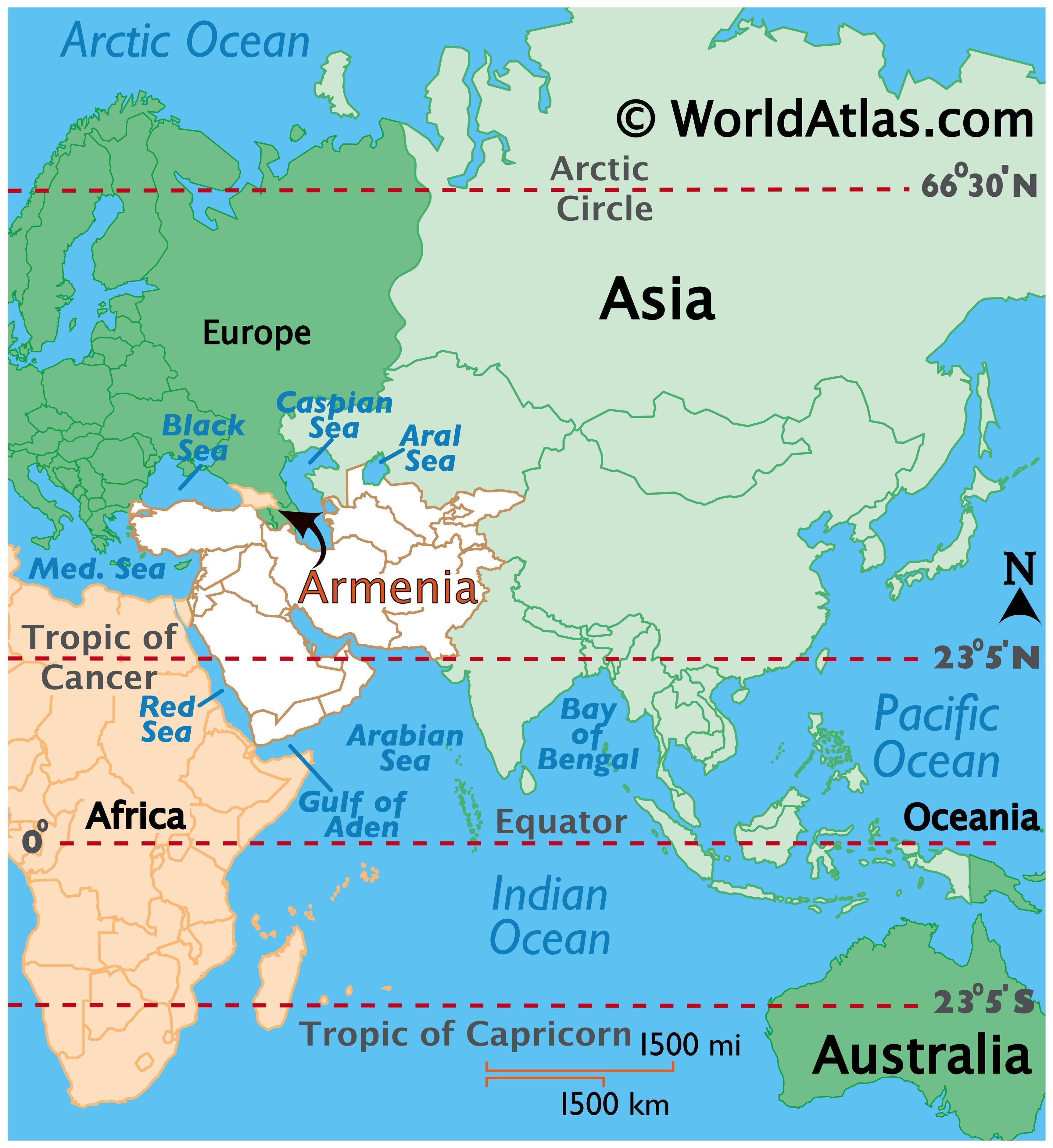
Armenia
https://www.worldatlas.com/img/areamap/ab07b95e9d65e9eb074f6efde7963bf2.gif


Armenia is a landlocked country. It is situated between the Black and Caspian Seas. Turkey lies to the west. Georgia is north. Azerbaijan is to the east. Iran and Nakhchivan are to the south.

The terrain has highlands in the South Caucasus region of Eurasia.

Armenia was the first country to become Christian. Gregory is identified as its apostle.

The ancient kingdom was a buffer state between the powerful empires of Rome and Parthia (Persia). Both of them sought to control it.

Gregory was born about 257. His parents were Parthian nobles of Armenian descent. His father assassinated the King of Parthia when he was still an infant. Friends of the family carried Gregory away for protection to Caesarea in Cappadocia. He was reared as a Christian.

Gregory had been married. He had two children with his wife, Miriam. They separated at some point so he could lead a monastic life. He left Cappadocia to return to the land of his birth in about 280. He hoped to atone for his father's crime by evangelizing his homeland.

Tiridates III was the son of King Khosrov II. He had Gregory imprisoned because he was the son of his father's enemy.  He was imprisoned for twelve to fourteen years in a pit on the Ararat plain. Diocletian, the Roman emperor, invaded the territory in 297. Gregory was called from the pit to restore Tiridates to explain the gospel. He was consecrated as bishop in 300.

Tiridates was baptized along with members of the royal court and the upper class in 301. Gregory was given approval by royal decree to evangelize and baptize the entire nation. Christianity became the state religion for the kingdom.

The official date for the conversion of Armenia is 301. This was prior to the conversion experience of Constantine in 312. Constantine wasn't baptized until 337. It was just prior to his death.

Gregory organized and controlled the church for a quarter of a century. Priests were converted from paganism as titular leaders. He established 12 episcopal sees with 400 urban and rural dioceses. Preachers were sent to neighboring nations. His younger son took part in the Council of Nicea in 325.

Gregory died about 332. Armenian Christians remember him with gratitude to this day.

Armenians were the first people to adopt Christianity as the state religion.  The Armenian Church has claimed that the Apostles Thaddeus and Bartholomew had evangelized the territory.

The mission of Thaddeus is said to have extended through the years 35 to 43. Bartholomew preached from 44 to 60. The ancient churches of Artaz (Maku) and Aghpak (Bashkalé) in southeastern Armenia contain their graves according to tradition.

The historian Eusebius mentions a letter dated 254 from the Patriarch Dionysius of Alexandria to Bishop Mehrouzhan (Mitrozanes) about the brethren in Armenia.

Armenian was one of the languages that was heard on the day of Pentecost according to Tertullian (155-222). The text of the Acts the Apostles mentions Judea as situated between Mesopotamia and Cappadocia.

How is it we hear we every man in the tongue from the land wherein we were born? Parthians, Medes, Elamites, the dwellers in Mesopotamia, in Judea and Cappadocia, in Pontus and Asia. . . ." (Acts 2:8-9)

The name Judea was erroneously inserted by some copyist.  Judea was not a foreign country. It was the place in which they were situated at the time. To hear its language spoken would be naturally expected.

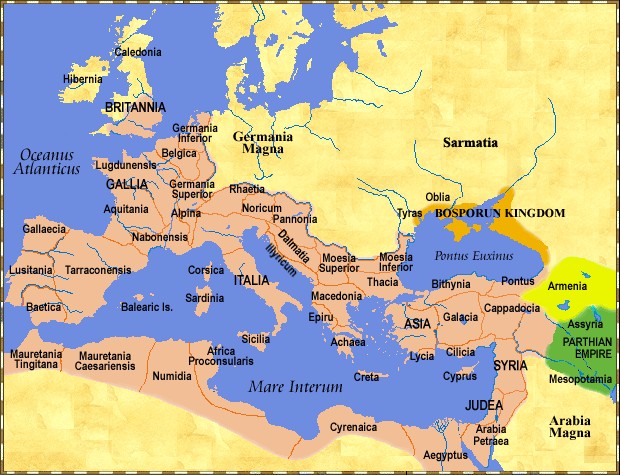
Map of First Century Roman Empire CE
http://www.centuryone.com/images/rmmp47.gif

Tertullian asserted that the passage was about the "Christ of the nations." The revelation was directed to those countries that were known to exist outside of Judea.

Armenia was known to be prominent as a buffer state between the Romans and the Parthians. Armenia extended to the Black Sea at the time. It was geographically situated between Mesopotamia and Cappadocia. It must have been one of the nations whose language was heard on the Day of Pentecost.

Gregory was ordained bishop in 302. He founded the Cathedral of Etchmiadzin near Mount Ararat in 303. The cathedral is the seat of the supreme patriarch or catholicos, the head of the Armenian Church to this day.

Gregory
格雷戈里
格雷戈里

格  Ge     grid                  格  go     status; rank        Gu    ぐ     グ          Geu    그  that   
雷   lei    thunder            雷  rai     thunder               re    れ   レ              le       레   re             
戈   ge    spear                戈  ka     arms                    go    ご   ゴ             go      고   the     
里   li       inside              里 ri       village                 ri      り-  リ-           li        리   Lee           

----------------------------

Thought is the arrow that leads speech for good news.
Speech thunders with status for each rank to choose.

====================


http://satucket.com/lectionary/Gregory_Illuminator.htm
https://en.wikipedia.org/wiki/Gregory_the_Illuminator
http://penelope.uchicago.edu/Thayer/E/Gazetteer/Places/Asia/Armenia/_Texts/KURARM/36*.html