3.22.20
Keri Russell
Feel
Real
真实感
Zhēnshí gǎn
リアルに感じる
Riaru ni kanjiru
ps132
Realis sentiunt
Remember what your leadership endured.
Those more skilled, trained the will to ensure.
A goal had been set with the mind
that an ability might be refined.
You decided that it was what you wanted
if it made you feel like you would be counted.
"I will not return to my home
nor continue to roam.
"I will not let my eyelids close
nor my eyes let sleep dispose
until I make this skill my will
in the energy of gratitude distilled."
Ark of the Covenant
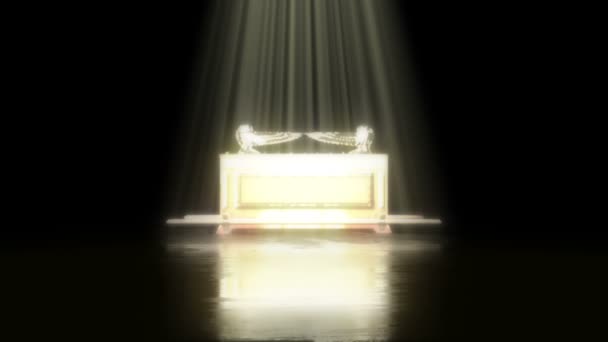
The presence of divine essence
was fruitful in the precious pleasance
beyond the extended luminescence
reaching for the message of heaven
and left in the gladed nescience.
The ark of the convenant
became the law of governance.
The sacrifice of animals
became the animus of annals.
The assembly that preceded the temple
became the template for the vessel.
Animals had been shaped as gods
until faith overcame superhuman odds.
A tribal leader was made a king
to protect his nation's productive ring.
The tribe of Benjamin was chosen first.
Judah rose when Saul by his actions was cursed.
David became the first of the royal dynasty
whose line sought to govern righteously.
Faith in the One replaced the trifles of many.
Essential government stood against the frenzy.
Let us experience the dwelling place
for the Word where the promise is the case.
Let your light shine on your Book
that those may see who care to look.
Let your priests be robed for celebration
that your people may sing with joy and elation.
Do not turn the face of your Anointed
from the mission that has been appointed.
The line of succession is for reform.
Manageability is the sovereign norm.
The fruit of your body is a standard set
in the continuum policy must get.
The covenant of promise must be respected
or the progress sought will be deflected.
The command of law will testify to public benefit.
Youth will learn with words recommended.
Verbal and written speech show thought
for communication that has been taught.
Communication points to policy
for the public in the historic odyssey
Speech is important for instruction
but induction must suffer correction from deduction.
Instruction is aimed at dutiful action
so thought can be reduced for automated satisfaction.
The one who had heard from the gift asked if he had seen all the sons.
He was told that the youngest was keeping the sheep for the other ones.
The beloved was called to present himself to the priest as prophet.
The beauty of duty was seen in the image that his appearance promised
for the monarch's office.
The prophet who heard the call anointed him in the presence of the others.
The beloved was blessed with the spirit of love and courage before his brothers.
The priest as prophet withdrew from the family home
to retreat to a height from which he could roam.
Youth will rejuvenate life in age
as the fountain that befits the sage.
Elders will assimilate new knowledge
to fit patterns defined by accredited college.
Live as children of the light.
Fruit is found in what is good and right.
Take no part in the works of darkness.
Expose them as acts that harm us.
Everything exposed by the light becomes visible.
The visible becomes evident as no longer not seen or invisible.
The new self calls the old to awake from the dead
that Christ may shine as the life that lives for faith instead.
Was being born blind because he or his parents had sinned?
He was born blind so the miracle of healing could be worked in him.
I am the light while I am in the world.
Sight by faith is the standard unfurled
in the wind to whirl.
The man washed in the pool to which he had been sent.
His sight was found in his consent.
Communion celebrates real presence in Church.
It is the essence of the sentence that works in the search
for goodness for the body that works.
The host assumed the real presence of Christ with the tincture of wine.
It became the body and blood of the Word made flesh.
The taste of it was relished. The consumption of divine energy was mine.
The knowledge of his Word in action relieved my distress.
Zion is the lion for life that searches for truth.
Habitation builds protection against strife for you.
'My resting place will be the heart
that has been circumcised as the ark for art.'
Need will be blessed with provision.
The poor will not be divided more with the derision
of the division.
The promise of good faith has become the mission.
Priests will be clothed with the joy of salvation.
The faithful will sing to bless the sovereign nation.
The horn of beloved duty will flourish.
A lamp has been prepared for those anointed with courage.
Our enemies will feel the shame of their blame.
Government will allow industry for product names.
----------------------
132 Memento, Domine
Remember, Dominated
1 Lord, remember David,
and all the hardships he endured;
2 How he swore an oath to the Lord
and vowed a vow to the Mighty One of Jacob:
3 "I will not come under the roof of my house,
nor climb up into my bed;
4 I will not allow my eyes to sleep,
nor let my eyelids slumber;
5 Until I find a place for the Lord,
a dwelling for the Mighty One of Jacob."
6 "The ark! We heard it was in Ephratah;
we found it in the fields of Jearim.
7 Let us go to God's dwelling place;
let us fall upon our knees before his footstool."
8 Arise, O Lord, into your resting-place,
you and the ark of your strength.
9 Let your priests be clothed with righteousness;
let your faithful people sing with joy.
10 For your servant David's sake,
do not turn away the face of your Anointed.
11 The Lord has sworn an oath to David;
in truth, he will not break it:
12 "A son, the fruit of your body
will I set upon your throne.
13 If your children keep my covenant
and my testimonies that I shall teach them,
their children will sit upon your throne for evermore."
14 For the Lord has chosen Zion;
he has desired her for his habitation:
15 "This shall be my resting-place for ever;
here will I dwell, for I delight in her.
16 I will surely bless her provisions,
and satisfy her poor with bread.
17 I will clothe her priests with salvation,
and her faithful people will rejoice and sing.
18 There will I make the horn of David flourish;
I have prepared a lamp for my Anointed.
19 As for his enemies, I will clothe them with shame;
but as for him, his crown will shine."
----------------------
================
----------------------
The host assumed the real presence of Christ with the tincture of wine.
It became the body and blood of the Word made flesh.
Chn. 主人用酒tin假装了基督的真实存在。
Zhǔrén yòng jiǔ tin jiǎzhuāngle jīdū de zhēnshí cúnzài.
它成为了圣言造血的肉身。
Tā chéngwéile shèng yán zàoxiě de ròushēn.
Jpn. ホストはワインのチンキでキリストの真の存在を仮定しました。
Hosuto wa wain no chinki de Kirisuto no shin no sonzai o katei shimashita.
それはみことばの体となり、血は肉となりました。
Sore wa mi kotoba no karada to nari, chi wa niku to narimashita.
Krn. 주인은 포도주의 팅크로 그리스도의 실제 현존을 가정했다.
ju-in-eun podojuui tingkeulo geuliseudoui silje hyeonjon-eul gajeonghaessda.
말씀의 몸과 피가 살이되었습니다.
malsseum-ui momgwa piga sal-idoeeossseubnida.
Ltn. Et exercitum accepit reali praesentia Christi, cum iam imbutus vinum.
Verbum caro factum est corporis et sanguinis Domini.
Itln. L'ospite assunse la vera presenza di Cristo con la tintura del vino.
È diventato il corpo e il sangue della Parola fatti carne.
Spn. El anfitrión asumió la presencia real de Cristo con la tintura del vino.
Se convirtió en el cuerpo y la sangre de la Palabra hecha carne.
Frn. L'hôte a assumé la présence réelle du Christ avec la teinture de vin.
Il est devenu le corps et le sang du Verbe fait chair.
Gmn. Der Wirt nahm die wahre Gegenwart Christi mit der Tinktur des Weins an.
Es wurde der Körper und das Blut des fleischgewordenen Wortes.
Dtch. De gastheer nam de werkelijke aanwezigheid van Christus aan met de tinctuur van wijn.
Het werd het lichaam en bloed van het vleesgemaakte Woord.
Czch. Hostitel převzal skutečnou přítomnost Krista s tinkturou vína.
Stalo se to tělem a krev Slova udělala tělo.
Hng. A házigazda a borkészítéssel feltételezte Krisztus valódi jelenlétét.
Ez lett az Ige testének és vérének testévé.
Trk. Ev sahibi, şarap tentürü ile Mesih'in gerçek varlığını üstlendi.
Sözün bedeni ve kanı eti oldu.
Grk. Ο οικοδεσπότης ανέλαβε την πραγματική παρουσία του Χριστού με το βάμμα του
κρασιού.
O oikodespótis anélave tin pragmatikí parousía tou Christoú me to vámma tou krasioú.
Έγινε το σώμα και το αίμα του Λόγου που έγινε σάρκα.
Égine to sóma kai to aíma tou Lógou pou égine sárka.
Rsn. Хозяин предполагал настоящее присутствие Христа с настойкой вина.
Khozyain predpolagal nastoyashcheye prisutstviye Khrista s nastoykoy vina.
Oно стало телом и кровью Слова, ставшим плотью.
но стало телом и кровью Слова, ставшим плотью.
The host assumed the real presence of Christ with the tincture of wine.
It became the body and blood of the Word made flesh.
The taste of it was relished as the consumption of the energy as mine.
The knowledge of his action relieved my distress.
-----------------------
Ephratah- fruitful
Jearim- wood
Psalm 132:3-5
Song of Ascents
Psalms 120-134 are known as the Songs of Ascent. Each starts with the superscription Shir Hama'aloth (Song of Ascents).
Four of them (Psalms 122, 124, 131 and 133) are linked in their ascriptions to David. One (127) is ascribed to Solomon. Three of them (Psalms 131, 133 and 134) have only three verses. The longest is psalm 132.
There are two references to the Songs of Ascents in the Mishnah (the oral Torah). These note the correspondence between the 15 songs and the temple's 15 steps between the Israelite's court and the women's court.
The title indicates that these psalms were sung by worshippers as they ascended the road to Jerusalem to attend the three pilgrim festivals.
The ancient Israelites living in the Kingdom of Judah would make a pilgrimage to the Temple in Jerusalem as commanded by the Torah to celebrate Pesach (Passover), Shavuot (Weeks or Pentecost) and Sukkot (Tabernacles, Tents or Booths).
They would participate in festivities and ritual worship in conjunction with the services of the kohanim ("priests").
One view says the Levites first sang the Songs at the dedication of Solomon's temple during the night of the fifteenth of Tishri 959 BCE. Another suggests that they were composed for a celebration after Nehemiah's rebuilding of Jerusalem's walls in 445 BCE.
Others think that individual poems were collected and given the title linking them to pilgrimage after the Babylonian captivity.
Actual pilgrimages were no longer obligatory and stopped taking place on a national scale after the destruction of the second Temple.
Related passages describing the holiday are read from the Torah on the 'bimah' (platform) in synagogue services in contemporary worship.
Many Jews living in or near Jerusalem make an effort to attend prayer services at the Western Wall emulating the ancient pilgrimages in some small fashion.
Samaritans make pilgrimages to Mount Gerizim three times a year to this day.
Psalm 132 has 19 verses. It was recited near the top of the steps.
It recalls the discovery and translation of the Ark of the Covenant as described in 1 Samuel 6 and 2 Samuel 6 in the Tanakh. David is remembered for his dedication to build a place of rest for the presence of the divine essence as represented by the ark.
The Ark of the Covenant holds symbolic meaning in terms of that which is learned about the Torah in the memory of the heart. This is used by some to learn scripture by memorization.
The more significant political meaning is contained in the recognition of the restoration of Israel as a state with respect for Judah as a kingdom.
---------------------
1 Samuel 16:12
The Books of Samuel form part of the narrative history of Israel in the Nevi'im or "prophets" section of the Tanakh.
Joshua, Judges, Samuel and Kings constitute a theological history of the Israelites that explain law for Israel under the guidance of the prophets.
It is known as the Deuteronomic history. The second law is concerned with history of the kingdoms of Judah and Israel.
Samuel
Samuel was called from before birth to serve as a propeht. Elkanah was an Ephraimite (1 Sam. 1:1) from the tribe of Levi (1 Chron. 6:16ff.). He was the husband of Hannah and Peninnah. Peninnah was able to have several children while Hannah was childless.
When Hannah went to the Temple to pray for a son, Eli, the high priest, saw her. He thought she was drunk. He approached her and tried to get her to leave. She said that she was not drunk and explained her predicament.
Hannah vowed that if she were to give birth to a son, she would devote him to service with Eli. She went home, bore a son by her husband who was named Samuel.
She followed through on her promise. Hannah dedicated Samuel after he was weaned at Shiloh where Eli was priest.
Samuel lived in the temple at Shiloh with Eli. Eli acted as Samuel's mentor. Then Samuel heard his call.
He was still a young boy when he heard a voice speak in the night. He thought that it was Eli. He awakened the old man to ask what it was he wanted. Eli told him that he had not called.
Samuel heard the voice again. Once more went to Eli and got the same answer. The third time he was told by Eli that it must have been the LORD. When Samuel answered with prayer, he intuited that he eventually would replace Eli.
Eli's family was headed for disaster (3:2-14). When Eli's health and power declined, Samuel was elevated to a position of moral leadership.
The rituals that were centered on the Ark of the Covenant would be properly observed. Samuel became a priest, prophet and the last of the judges.
The Philistine Crisis
The first seven chapters of 1 Samuel described Samuel's career. These chapters also painted a bleak picture of Israel's political and religious situation. It was even more desperate than that portrayed in Judges.
Eli was feeble. His sons were corrupt. The sons were named Hophni and Phineas. It was their idea to take the Ark of the Covenant into battle with the Philistines.
The Philistines defeated the Israelites, killed the two sons and took the Ark of the Covenant.
Eli died upon hearing this news. Israel's loss of its most sacred possession was a terrible blow to national prestige, but its captors receive no benefits. The Philistines were afflicted with a strange plague of tumors which they attributed to the Ark's presence among them.
A 20 year peace ensued following the Ark's return to Israel. Continued Philistine hostility denied the Israelites any real security.
Samuel and Saul
The Philistines and other aggressors pressured the Israelites to doubt their nation's continued existence.
Pragmatic tribal leaders seemed to have decided that with this uncertain future national survival required the political unity that only a king could give. (1 Sam. 8:10-20.)
Samuel warned the people that a monarchy would exploit the people. The confiscation of their best property was predicted as a consequence (1 Sam. 8:10-22).
Samuel invited Saul to eat with him. When the people insisted, Samuel privately anointed Saul from the tribe of Benjamin (1 Sam. 9:14-10:8). Saul prophesied.
When the Ammonites attacked Jabesh-gilead Saul gathered the Israelites to defeat the Ammonites. The people elected him as king at Gilgal.
This was approximately 1020 BCE. Samuel's choice of Saul was logical. He was tall, handsome and brave. He belonged to a tribe so small that his election did not arouse tribal jealousies.
Samuel told the people that they had been delivered from Egypt. They had been given the king for whom they had asked. They were told to fear the LORD and serve him.
Saul's Disfavor
The incidents over which Samuel withdrew his support illustrated the difficulty in the relationship.
When the Philistines had encamped at Michmash, Saul made offerings by himself. It appeared that Samuel would not arrive. He feared that his army would start to desert.
Just as Saul was finishing the ritual Samuel arrived and denounced Saul for usurping the priestly duty (1 Sam. 13:8-15). Samuel told Saul that his kingdom would not last.
Saul spared King Agag after he had defeated Amalek. Samuel told Saul that he had been rejected and executed Agag.
Samuel was moved to anoint a son of Jesse as king. Jesse was from the tribe of Judah.
1 Sam 16:11-13
Samuel said to Jesse, 'Are all your sons here?' He said, 'There remains yet the youngest, but he is keeping the sheep.' Samuel said, 'Send and bring him. We will not sit down until he comes here.'
He was brought to him. He was ruddy, had beautiful eyes and was handsome.
The LORD said, 'Rise and anoint him. This is the one.'
Then Samuel took the horn of oil and anointed him in the presence of his brothers. The spirit of the LORD came mightily upon David from that day forward. Samuel set out and went to Ramah.
Eli- my God; higher power
Ramah- height
Samuel- heard
Jesse- gift
David- beloved
Amalek- who lick
malek- chop off
Agag- high
----------------------
The one who had heard from the gift asked if he had seen all the sons.
He was told that the youngest was keeping the sheep for the other ones.
The beloved was called to present himself to the priest as prophet.
The beauty of duty was seen in the promise that his appearance promised
for the monarch's office.
The prophet who heard anointed him in the presence of the others.
The beloved was anointed with the spirit of love and courage before his brothers.
The priest as prophet withdrew from the family home
to retreat to a height from which he could roam.
================
Eph. 5:2
The purpose of the book of Ephesians was to warn the church elders about the teachers that were teaching a false gospel.
The Father was identified as blessed for the blessings that he bestowed on the faithful. The strength of this blessedness was traced back to before the foundation of the world.
The faithful were celebrated as predestined for adoption as children with love by Jesus Christ according to the good pleasure of the divine will.
Redemption was granted through his blood for the forgiveness of sins according to the riches of his grace.
It was trust in Christ that gave access to the dispensation of the fullness of time as the inheritance that was predestined by the purpose of the Father who had worked things for the counsel for his will.
The faithful had heard the gospel of salvation as the word of truth to open the eyes of understanding in the hope of the call to the riches of glory in the inheritance of the saints by the seal of the Holy Spirit.
Christ was raised from the dead and set at the right hand of the Father in power. He was the head of the Church. His body was the fullness of that which fills all that believe in him.
When the faithful had been dead in sin, they were brought to life in Christ. Gentiles were included as fellow citizens of the promise. The community was being built together as a temple.
One Church was formed out of those who had the covenant (Jews) and those who were hopeless (Gentiles). Both were reconciled through the work of the cross.
Salvation was given by grace, not by works. The mystery of Christ was made known through revelation by the Spirit. Wisdom was made known through the Church.
The believer was reborn into the faith by the cleansing of baptism. Circumcision of the flesh was to open the heart to the strength of the promise by the Spirit.
Whereas there was one body, one faith and one baptism by the power of the Spirit, the heart had to remain open to guidance to keep the unity of the faith in the bond of the gift given according to the measure of Christ.
The faithful were called to live a life worthy of the calling received in Christ Jesus. The body was reminded to put off the old self and to put on the new in the likeness of God for the good life in the rightness of faith.
Jesus had not called for rebellion against the crown or the republic. He had not organized the population to take over the government by a popular revolution against the established authority.
He had instructed his disciples to live in accord with the commandments for the benefit of the public in the transformation of the world.
He had discouraged the belief that the law was for the punishment or destruction of those who would believe but had not found their way. This was participation in the redemption of the world by faith in the one God.
Ephesians 5:8-14
Once you were darkness. Now you are light. Live as children of the light. The fruit of the light is found in all that is good, right and true. Try to find what is pleasing to the Lord. Take no part in the unfruitful works of darkness. Expose them instead. It is shameful even to mention what such people do secretly. Everything exposed by the light becomes visible. Everything that becomes visible is evident in the light.
Therefore it says,
'Sleeper awake!
Rise from the dead
and Christ will shine on you.'
----------------------
Live as children of the light.
Fruit is found in what is good and right.
Take no part in the works of darkness.
Expose them as acts that harm us.
Everything exposed by the light becomes visible.
The visible becomes evident as no longer not seen or invisible.
The new self calls the old to awake from the dead
that Christ may shine as the life that lives for faith instead.
================
The Light of Faith
Jesus had told the Samaritan woman at Jacob's well in Sychar that he was living water in the 4th chapter of the gospel of John. Faith in him would give her a source of eternal life within her.
He told the man paralyzed with impotence at the feast in Jerusalem to pick up his mat and walk on the sabbath in chapter 5.
The Son of man had been given the power to judge the world by the Father. The man should sin no more or a worse fate would fall on him. The Pharisees heard what he had said from the man. They judged him guilty of blasphemy and conspired to have him killed.
He fed 5,000 people with 5 barley loaves and 2 fish that he had blessed with prayer on a mountain side near the Sea of Galilee at the passover feast. The fragments of the barley loaves filled 12 baskets after the people had been fed.
He was seen as a prophet. He withdrew from the disciples and the others to the mountain to avoid being declared king. The disciples set sail on the sea without him. A storm rose.
They saw him walk to them on the sea. They were afraid. He told them to not fear. It was him. They took him in the ship and found themselves at the land to which they had traveled.
People saw that Jesus was no longer where he had been. They got in their boats and traveled to Capernaum to find him.
They addressed him as Rabbi and asked him why he had traveled there. He told them that they sought him not because they had witnessed a miracle, but because they had eaten and were filled.
They should not labor for that which perishes, but for that which endures for everlasting life.
They asked him how they should work the works of God. He told them that they should believe in whom he had sent. They said that there fathers had eaten bread in the wilderness. It was written that he had sent bread from heaven to eat.
Jesus said that it wasn't Moses who gave the bread. It was the Father who gives bread from heaven.
He was the bread of life. Those who turn to him will not hunger. Those who believe in him will not thirst. He came from heaven not to do his own will, but the will of him who had sent him.
Any who eat of the living bread of heaven will live forever. His flesh was the bread that he would give for the life of the world. Whosover would eat his flesh and drink his blood would have eternal life and be raised on the last day.
He taught these things at the synagogue in Capernaum. Many chose not to believe him. They stopped following him from that time. The 12 whom had chosen remained with him, but one of them would betray him.
When the feast of the Tabernacles had arised, he told the brethren to go to Judea to celebrate without him. His time had not yet come. They went as they were told. He followed in secret.
He went into the temple and taught. His listeners marveled at his instruction. He said that it was not his. It came from the one who had sent him.
Moses had given them circumcision to perform on the sabbath that the law should not be broken. Why were they angry that he had healed a man on the sabbath?
The chief priests and Pharisees sent out officers to have him arrested. The officers said that none had spoken like him.
Nicodemus asked if the law judged any without having heard him speak? They told him to search the scriptures. No prophet was predicted to come from Galilee.
Chapter 8 continued the debate with the Pharisees that had been started at the feast of the Tabernacles in the preceding chapter.
He was asked by them on the mount of Olives to judge the woman who had been found guilty of adultery. He challenged any among them to cast the first stone if he could find himself to be without sin.
He described himself as the 'light of the world.' (v.12) He made the well known statement, 'You will know the truth and the truth will set you free.' He claimed to have come from before Abraham. He said 'Before Abraham was, I am.'
John 9:1-7
He saw a man blind from birth as he walked along. His disciples asked him, 'Rabbi, who sinned that he was born blind? Was it this man or his parents?' Jesus answered, 'Neither this man nor his parents sinned. He was born blind so God's works might be revealed in him. We must work the works of him who sent me while it is day. Night is coming when no one can work. I am the light of the world while I am in the world.'
When he had said this, he spat on the ground and made mud with saliva and spread the mud on the man's eyes. He said to him, 'Go, wash in the pool of Siloam' (which means Sent). Then he went and washed. He came back able to see.
----------------------
Was being born blind because he or his parents had sinned?
He was born blind so the miracle of healing could be worked in him.
I am the light while I am in the world.
Sight by faith is the standard whirled.
The man washed in the pool to which he had been sent.
His sight was found in his consent.
================
Ps.132:7
Let us go to God's dwelling place.
Let us bow our heads to the heart for grace
to lift our prayer to seek his face
Church Tabernacles
James DeKoven was a priest and an educator with the Episcopal Church of America. He used his instruction in Church history to issue a call for ritualism at national conventions.
James DeKoven
b. 9.19.1831 Middletown, Connecticut
d. 3.19.1879 Racine, Wisconsin
James DeKoven was born in Middletown, Connecticut on September 19, 1831.
Middletown is a little south from the middle of the state in Middlesex County on the western bank of the Connecticut River. It is 16 miles (26 kilometers) south of Hartford.
The General Court for the colony had established the town of "Mattabesett" on September 11, 1651.
Map for Middletown, CT

The settlement was renamed Middletown a couple of years later in November of 1653. It was chosen because the site was approximate halfway between Windsor and Saybrook on the Great River.
Life was not easy among the early colonial Puritans. Clearing the land, building homes and tending farms in the rocky soil of New England was a labor-intensive ordeal.
Law was often harsh among the Puritans too. Offenses legally punishable by death in the Connecticut colonies included, "witchcraft, blasphemy, cursing or smiting of parents" and the "incorrigible stubbornness of children."
Middletown became the largest and most prosperous settlement in the state during the 18th century. It was a thriving port with one-third of its citizens involved in merchant and maritime activities by the time of the American Revolution.
Slavery was part of the early economy. African slaves were brought to the town in 1661 from Barbados. Middletown had the third largest African slave population in the state by 1756. There were 218 slaves to 5,446 whites.
Exo. 24:7
Then he took the book of the covenant and read it in the hearing of the people. They said, 'All that the LORD has spoken we will do. We will be obedient.'
-----------------------
Congregational Churches had replaced the Puritan movement by the Revolutionary War.
Other denominations had set up churches for the parish. Baptist, Methodist and Presbyterian were more common than Episcopalian communities. It was common for a settlement to have more than one denomination.
The town government was supposed to be the leadership for the one parish.
Merchant traders pushed for the clearance of the Saybrook Bar at the mouth of the Connecticut River. They later sought the creation of Middlesex County in 1785.
The name 'Middlesex' was chosen because the intention was to make Middletown the head of a long river port much as London was at the head of its long river port in Middlesex County, England.
The port's decline began in the early 19th century with strained American-British relations. Trade restrictions led to the War of 1812.
The port never recovered but, the city had distinguished itself in the war effort. Middletown's Commodore Thomas Macdonough led American forces to the victory on Lake Champlain in 1814. This ended British hopes for an invasion of New York.
Middletown became a major center for firearms manufacturing during this period. Numerous gun manufacturers in the area supplied the majority of pistols to the United States government during the war.
The center for this business passed to Springfield, Massachusetts, Hartford and New Haven, Connecticut after the war had ended.
1831 saw the establishment of Wesleyan University. This was a Methodist established institution that was to become one of the United States' leading liberal arts centers.
The institution replaced Partridge's American Literary, Scientific and Military Academy. The academy had moved to Norwich, Vermont and later became Norwich University.
The two main buildings for the original campus were built by the people of Middletown with the intent of attracting academic organization to the city.
Middletown established the state's first public high school in 1841. It enrolled all students from age 9 through age 16 who had previously attended district schools at first.
It is not too difficult to imagine that some students were not admitted until their town agreed to establish an elementary school.
James DeKoven was educated at Columbia College in New York City. It was prior to the time of its incorporation as a university.
He was admitted to General Theological Seminary in 1851. He was ordained a deacon in 1854 in Middletown.
He was offered a position as a professor of Church history at Nashotah House, a seminary of the Episcopal Church in Wisconsin.
Wisconsin had been made a territorial possession of the United States in 1783 after the American Revolutionary War, but the British retained control until after the War of 1812.
The economy for the territory shifted from fur trading to mining for lead as an American possession. The prospect of easy mineral wealth drew immigrants from throughout the U.S. and Europe to the lead deposits located at a number of areas in the territory.
Some miners found shelter in the holes they had dug, and earned the nickname "badgers", leading to Wisconsin's identity as the "Badger State".
The influx of white miners prompted tension with the local Native American population. The Winnebago War of 1827 and the Black Hawk War of 1832 culminated in the forced removal of Native Americans from most parts of the state.
Wisconsin Territory was created by an act of the United States Congress on April 20, 1836 after these conflicts. The best prairie groves of the counties surrounding what is now Milwaukee were occupied by farmers from the New England states by the autumn for that year.
The Erie Canal had facilitated the travel of both Yankee settlers and European immigrants to Wisconsin Territory. Yankees from New England and upstate New York seized a dominant position in law and politics. They enacted policies that marginalized the region's earlier Native American and French-Canadian residents.
Yankees also speculated in real estate, plotted towns such as Racine, Beloit, Burlington and Janesville. Schools, civic institutions and Congregationalist churches were established. Germans, Irish, Norwegians and other immigrants also settled in towns and farms across the territory to establish Catholic and Lutheran institutions.
The growing population allowed Wisconsin to gain statehood on May 29, 1848 as the 30th state. The non-Indian population had swollen from 31,000 to 305,000 between 1840 and 1850.
More than a third of residents (110,500) were foreign born. These included 38,000 Germans, 28,000 British immigrants from England, Scotland and Wales and 21,000 Irish. Another third (103,000) were Yankees from New England and western New York state. Only about 63,000 residents in 1850 had been born in Wisconsin.
Nelson Dewey was the first governor of Wisconsin. He oversaw the transition from the territorial to the new state government.
He encouraged the development of the state's infrastructure with the construction of new roads, railroads, canals and harbors. The Fox and Wisconsin Rivers were improved to ship goods for trade.
Dewey was an abolitionist. He was the first of many Wisconsin governors to advocate against the spread of slavery into new states and territories. Politics in early Wisconsin were defined by the greater national debate over slavery. It was to become a leading center for northern abolitionism.
The debate became especially intense in 1854 after Joshua Glover, a runaway slave from Missouri, was captured in Racine. Glover was taken into custody under the Federal Fugitive Slave Law, but a mob of abolitionists stormed the prison where Glover was held and helped him escape to Canada.
Fr. DeKoven accepted the teaching position at Nashotah House in Wisconsin and became rector of the nearby St. John Chrysostom parish in Delafield. It was there that he was ordained as a priest by Bishop Jackson Kemper in 1855.
Nashotah House was from its inception dedicated to an increased emphasis on the real presence of Christ in the Sacrament of the Lord's Supper. This emphasis included the use of ritual practices that recognized and honored that presence.
This met opposition from other Christians who were suspicious (1) of anything that suggested Roman Catholicism, (2) of anything that seemed fancy and pretentious as opposed to the plain, blunt, simplicity that was considered to be an American virtue of the New Testament Church and (3) of anything that varied from the practices they had become used to as children.
The Calvinist influence on Anglican worship had predominated to a large extent prior to the Oxford movement in the United Kingdom. Robes, processions, incense, the liturgical celebration of the sacraments and sermons were viewed as Roman pretensions.
Map of Racine, WI
https://www.cityofracine.org/Source/imgs/map.png
Nashotah House Seminary is near Racine
Fr. DeKoven established a school called St. John's Hall while in Delafield. He became the warden of Racine College in 1859. He continued to be at the center of that school for the rest of his life.
The school was an Episcopal preparatory school and college that operated between 1852 and 1933. The campus was located south of the city along Lake Michigan. It has become a conference center operated by the Community of St. Mary via the DeKoven foundation.
The historic buildings that make up the campus are among the few collegiate neo-Gothic buildings that survive in the Midwest. They are considered part of the East Coast College architectural tradition despite their location.
The campus has remained relatively intact since the period of its construction between 1852 and 1876. The Racine College buildings are largely composed of Cream City brick like many historic buildings in southeastern Wisconsin.
DeKoven became Racine College's most notable warden. He was a major exponent of High Church and Anglo-Catholic views in the Episcopal Church. He was one of the best-known preachers and orators of his day.
DeKoven's work at Racine was directly influenced by the Grammar School and College of Saint James in Maryland. This was in turn was part of the "church school" movement inaugurated by William Augustus Muhlenberg and his proteges in 1828.
When DeKoven began to raise money for new buildings at Racine College, he looked to England for his inspiration. Most of the campus buildings were inspired by the architecture of St. Peter's College, a high-church public school founded at Radley in 1847.
2 Timothy 2:10
I endure everything for the sake of the elect so they may obtain salvation that is in Christ Jesus with eternal glory.
--------------------
Fr. DeKoven spoke in support of the cause for ritualism at the National Conventions in 1871 and 1874. He was nominated several times and even elected as a bishop, but was never ordained to the episcopate.
He was nominated or elected as bishop of Massachusetts (1873), Wisconsin (1874), Fond du Lac (1875) and Illinois (1875). He was chosen by the clergy and the laity in the Illinois election, but a majority of the standing committee refused to endorse his election. The reason given by the standing committee was his ‘doctrine on the Holy Eucharist.’
An open letter published in the Milwaukee paper on January 14, 1874 questioned his doctrine regarding the Eucharist. The signers of this letter included three faculty members from Nashotah House.
Matt. 13:47-48
The kingdom of heaven is like a net that was thrown into the sea and caught fish of every kind. When it was full, they drew it ashore, sat down and put the good into baskets, but threw out the bad.
-----------------------
A collection of nine Episcopal bishops held a meeting in 1876 where they declared Racine College a "Church University for the West and Northwest" with the encouragement of Fr. DeKoven.
They stated that it was the only church college in actual operation between Kenyon College in Ohio and the Pacific Ocean. They agreed to support the college's mission by helping it open grammar schools across the Midwest to carry on its educational philosophy.
Fr. DeKoven turned down offers to serve at some of the nation's largest and wealthiest parish churches. These included Trinity Church in New York City, Church of the Advent in Boston, and St. Mark's Church in Philadelphia.
He died on March 19, 1879 after suffering a fall on the ice. He is buried on the grounds of Racine College which is now known as the DeKoven Center.
-------------------
Tincture is recommended as safe for the liturgical celebration of communion during times when epidemic disease is reported.
Tincture is the form of reception where the body (host) is dipped in the blood (wine) and placed on the tongue of the faithful while kneeling at the altar.
Sipping from the cup with the wine blessed by prayer is not offered as an option.
--------------------
James DeKoven
S. 詹姆斯·德科文
T. 詹姆斯·德科文
詹 Zhan Jen or zhan 詹 sen verbose Je じぇ- ジェ- Je 제 my
姆 mu ummm 姆 bo wet nurse mu む ム im 임 being
斯 si this 斯 shi this su す ス seu 스 s
德 De goodness 德 toku ethics De で デ De 데 de
科 Ke branch 科 ka course Ko こ- コ- ko 코 nose
文 wen text 文 bun sentence ben べん ベン ben 벤 ben
----------------------
Communion celebrates the real presence in Church.
It is the essence of the sentence that works in the search
for goodness that works.
================
Lectionary James DeKoven
wiki J DK
wiki Middletown, Connecticut
DeKoven Archives
Links to Archives
Unspoken - Call It Grace
Music Video
-------------------------
Public Credit
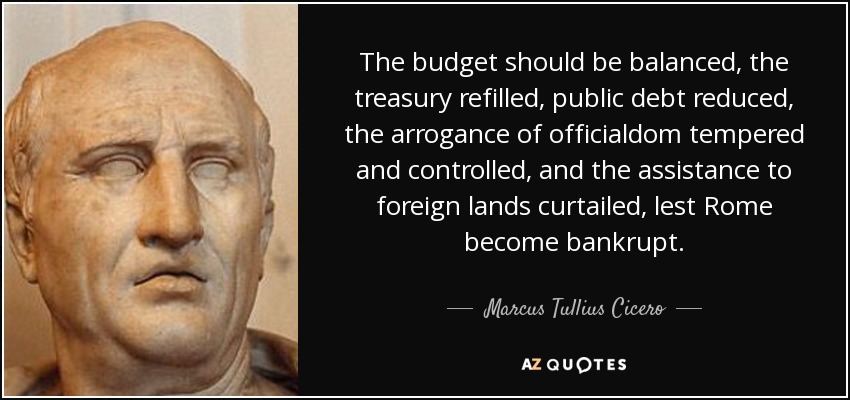
The correctness of the statement regarding the value of public credit suggests that Cicero repeated what he had heard from someone more credible than himself.
He was too self serving as an official to be credited with an optimal implementation of the precept.
He provided the motive force for the liberal invocation of the war on terror with his breach of due process when he had some rebels executed for treason without a trial when he was consul.
The Serbian president Milosevic was tried for genocide against Muslims in the 'court of public opinion' with media expression.
This set a precedent for the State department with HC and BO. Regime change was forced on nations without term limits for their chief elected officials with air strikes and ISIS.
Charges of sexual assault were leveled against "inactive" Americans under the presumption of sexism or racism under the direction of James Comey in the FBI.
Federalist Paper #7
Text
The seventh of The Federalist Papers was published on November 15, 1787 by Alexander Hamilton under the pseudonym Publius.
He addressed the theme begun in Federalist # 6. The danger of dissension among the states would remain intact without a strong federal government.
He supported his argument by creating a series of hypothetical situations that approximated the situation in which competing interests between the states could lead to war.
The hypotheticals were based on the political condition of the state in which he argued for the union with the US Constitution.
He introduced the idea that the defense of the confederacy as a state of union with the articles of confederation would be strengthened with a better plan for sustenance and development.
The divisions of Europe had been used in the previous paper as an example of how easily neighboring nations could be drawn into war. This paper situated the relevance of the proposal in the context of the current events for the American society of the time.
He noted that there were those who asked what inducements the states would have to go to war if disunited. The question was asked with the air of seeming triumph.
He answered that the same incitements would be in place that had been used by those nations that have gone to war with each other.
Territorial disputes have been found to have been one of the most fertile sources of hostility. It is conceivable that the greatest proportion of conflicts between nations has risen from the motivation to take disputed territory.
This cause would have existed among the disunited states in full force. There were vast tracts of unsettled territory within the boundaries of the United States. There were several unsettled disputes that existed among a number of the states.
The dissolution of the union would have laid the foundation for similar conflicting claims among them. It was well known there had been animated discussions concerning the rights to land which was ungranted prior to the time of the Revolution. These usually went under the name of crown lands.
The states within the limits of whose colonial governments they were comprised had claimed them as their property. Others contended that the rights of the crown had devolved at the union.
The western territory was of particular interest. Contractual possession by crown charters or the submission of Native American proprietors was subjected to the jurisdiction of the king of Great Britain until it was relinquished in the treaty of peace (1783).
Congress sought to appease controversy by prevailing upon the states to make cessions to the Unites States over disputed claims for the benefit of the whole.
The continuation of the union had afforded the decided prospect of an amicable termination of dispute. The states could either settle the disputes without federal mediation or the disputed territory could be ceded to the United States government.
The dismemberment of the confederacy however would have resulted in the revival of the conflicts and added others as well.
A large part of the western territory was by cession, if not by anterior right, the property of the union.
The end of the union would result in states reclaiming the lands as a reversion. Other states would insist on a portion by right of representation.
Their argument would have been that a grant once made, could not be revoked. The justice of participating in territory acquired or secured by the joint efforts of the Confederacy would remain undiminished.
If the states had admitted that each had the right to share common stock, the difficulty of the proper rule of apportionment would have remained unresolved.
Different principles would have been set up by various states for this purpose. They would have affected the divergent interests of the opposing parties. Pacific adjustment would have been unlikely.
The wide field of the western territory presented an ample theater for hostile pretension without an umpire to interpose between the contending parties. It was not difficult to infer from the past that military conflict would act as the arbiter in their differences.
Connecticut and Pennsylvania had a dispute over land in Wyoming. The articles of confederation had obliged the parties to submit the matter to the decision of a federal court.
The court decided in favor of Pennsylvania, but Connecticut indicated dissatisfaction with the determination. Something like an equivalent was obtained through negotiation and management for the loss that she had supposed that she had sustained.
States, like individuals, acquiesce with reluctance to decisions to that are not for their advantage. The court helped the state to decide on negotiation to manage the development of their future interest in accord with Pennsylvania.
There was also a controversy between New York and Vermont. New Hampshire, Massachusetts and Connecticut supported the dismemberment of Green Mountain State.
New Jersey and Rhode Island nurtured a warm zeal for her independence. Maryland entered deeply into the same views after the appearance of a connection between Canada looked beneficial.
These were smaller in size than New York. They viewed the growth of the state's greatness with an unfriendly eye. The same interactions would most likely have been embroiled in an unpropitious destiny if the states were to become disunited.
The competition of commerce would be another source of contention. Those states with less favor in circumstance would desire to escape from the disadvantage of the local situation to share in the advantage of their more fortunate neighbors.
Each separate confederacy would pursue a system of commercial policy peculiar to itself. This would incur distinctions, preferences and exclusions that would cause discontent.
The habit of intercourse on the basis of equal privilege to which the colonists had been accustomed since the earliest settlement of the country would have given a keener edge to those causes of discontent than would have occured independently of the circumstance.
Those things which were in reality the justifiable acts of independent sovereignties consulting a distinct interest would denominate injury. The spirit of enterprise that had characterized the commercial part of America had left no occasion to display itself as unimproved.
It was not probable that the unbridled spirit would pay much respect to those regulations of trade by which particular states might have endeavored to secure exclusive benefit for their own citizens.
Infractions of those regulations on one side and the efforts to prevent or repel them on the other, would lead to outrage or reprisal as the motivation for war.
The opportunity which some states would have had to render others tributary to them by commericial regulation would have only been impatiently rendered by the tributary states.
The relative situation in New York, Connecticut and New Jersey afforded an example. New York laid duties on her imports from the necessity of revenue. A great part of that duty to revenue was paid by the inhabitants of the other two states.
New York was not able or willing to forego that advantage. Her citizens would not consent that a duty paid by them should be remitted in favor of the citizens of her neighbors. It would not have been practicable to distinguish the customers in their own markets if that impediment were not in the way.
Would Connecticut and New Jersey have submit long to be taxed by New York for her exclusive benefit? Should the state have been permitted to remain in the possession of an advantage so odius and oppressive to her neighbors?
Should they have been able to have preserved it against the incumbent weight of Connecticut on the one side and the cooperating pressure of New Jersey on the other?
There would not have been a legally recognized calculation of the public debt for the disunited collection of states without the union. This would have been further cause for collision between the separate states or confederacies.
The apportionment of public debt without agreement and the progressive extinguishment afterward would only have produced ill-humor and animosity. How would it be possible to agree to a rule of apportionment satisfactory to all?
There was scarcely any that could have been proposed wich would be free from objections. These objections would have been exaggerated by the adverse interests of opposing parties.
There were even dissimilar views among the states as to the general principle of discharging the debt.
Some were so unimpressed by the importance of national credit or their citizens had so little interest in the question that there was only indifference, if not repugnance, to the payment of the domestic due at any rate.
The difficulties for a distribution would be magnified by these. Those whose were creditors to the national debt beyond state proportion would call for an 'equitable' provision for resolution. The procrastination of the former would incite the resentments of the latter.
The settlement of a rule would by postponed by real differences of opinion and affected delays in the meantime. Foreign powers would urge for the satisfaction of just demands, the citizens of the states would clamor and the peace of the states would be hazarded to the double contingency of external invasion against internal contention.
Suppose that the difficulties of agreement to a rule had been surmounted and the apportionment were made. There would still be room to suppose that the rule agreed upon would be found to bear harder upon some states than on others in the experiment.
Those who suffered by it would seek mitigation for the burden. The others would by disinclined to a revision to the increase of their own incumbrance.
The refusal to revise the rule would be a plausible pretext to withhold contribution. The non-compliance of these states with engagement would serve as the ground for altercation.
Even if the rule should justify the equality of its principle in practice, delinquencies in payments on the part of some of the states would result from a diversity of other causes.
The real deficiency of resources, the mismanagement of finances, accidental disorders in the management of government and the reluctance to part with money for purposes that have outlived the exigencies which produced them, interfere with the supply of immediate wants.
Delinquencies would produce complaint, recrimination and quarrel from whatever inducement.
There is nothing more likely to disturb the tranquility of natons than their being bound to mutual contributions for any common object that does not yield an equal and coincident benefit.
It is as true as it is trite that there is nothing so easily lent to disagreement as the payment of money.
Laws in violation of private contracts amounted to aggression against the rights of those states whose citizens were injured by them. This was another source of hostility.
The disposition to retaliation was excited in Connecticut in consequence to the enormities perpetuated by the legislature of Rhode Island. It was reasonable to infer that a war of military conflict would chastise such atrocious breaches of moral obligation and social justice.
The probability of incompatible alliances between different confederacies with foreign nations had been presented in preceding papers. The conclusion was drawn that the peace of the whole would be adversely impacted by foreign influence.
This paper argued that the peace of the union would be harmed by domestic contentions as well.
If America were only connected by the feeble tie of a simple league, offensive or defensive alliances would be so jarring that the separate confederacies would gradually become entangled in all the pernicious labyrinths of European politics by the destructive contentions of the parts into which she would be divided that she would likely become prey to the artifices of powers that made themselves the enemies of all.
Aggression in disagreement would be pushed or held as better than functional agreement.
Divide and command would become the motto of every nation that hates or fears the US.
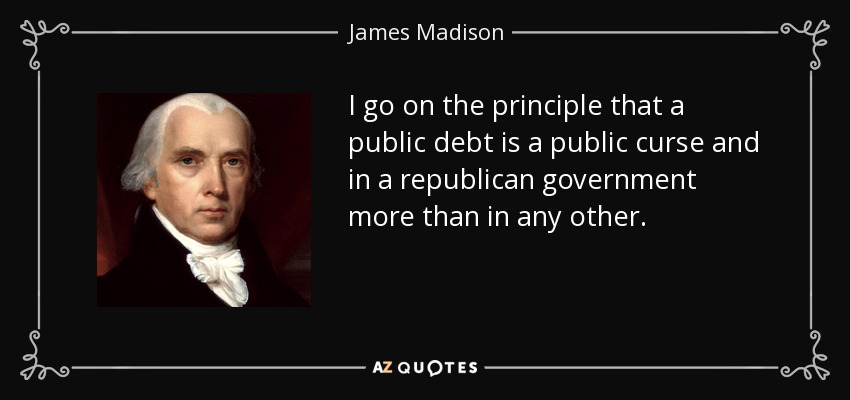
Public Debt
Showing posts with label precious. Show all posts
Sunday, March 15, 2020
Sunday, August 25, 2019
See
9.1.19
Zendaya
See
Energy
看能量
Kàn néngliàng
エネルギーを見て
Enerugī o mite
ps81
Vide industria
When September observes the death of August
the heat of day starts to diminish for us.
Nature remembers the value of labor.
Vegetable harvest is sold to savor.
Summer has moved closer to Fall.
Light has decreased some from the solstice call.
The wind blows cool to calm the heat.
People find ways to stay off the street.
The bee still dances from flower to flower
to drink the golden glow of particulate power.
The comb is a home
to many a drone.
This model of society is a recognized monarchy.
The natural government has a strong hierarchy.
The hierarchy frames the strength for society.
There is order, stability and interest for production.
The utility of purpose acts as a reduction.
The reduction of wasted time and effort is the result.
The production of a tasteful product reduces tumult.
I am the sole unbusy thing.
My watching doesn't make honey, build or sing.
The hive is the superorganism.
The community is a form of swarming formalism
Observers open the chambers hunting for the queen.
Is she eating honey, laying eggs or avoiding being seen?
Love fulfilled is chance imbibed.
The dance circumscribed
is the eternal flow of time in the hive.
Darkness is welcome even without rain.
The clouds spell relief from the heat as pain.
The earth waits with patience for the golden guest of ray.
The brilliance is released to sing of angelic play.
This voice of gold has called me out there,
outside the window to receive the soft stare.
The uncontested summer played plainly in the air.
Your love looked as simple as that purest of pears
that you picked for me with the greatest of care.
The pearskin’s fleck and trace
was as smooth as any human grace.
It gave the power to break the attack
that held us back from what we lack.
You were brought into a plentiful land
to enjoy its fruit and to make it grand.
The prophets prophesied by the official deposit
then went after things that do not profit.
People changed their glory
for the deception of the liberal media story.
The fountain of living water has been forsaken.
Faith in God has been given away or taken.
That barrier that held us back
was best known to our zodiac
as the curse of the megalomaniac.
The “fear” most of us defined
was a product of the mind.
Those who conquered this great foe
weren't called heroes.
The feeling was brave
for it seemed unafraid.
The fear was not ejected.
It was actually extended
that courage could be defended.
Corporations probed households to increase their prices.
The prices shrieked MORE despite the height of their highness.
The veil of light in day hid the sky seen at night.
The memory of the hive was inscribed in the light
of mind's sight.
Industry sat in the shell of defense.
We built benefit to protect ourselves from menace.
The world was all that was the case.
The Dutch republic decided to give monarchy chase.
The seventeenth century was the frame.
The slave trade became the insane part of the game.
Otherwise, Dutch art became world reknowned.
It celebrated life as it was found.
Sea travel became more frequent.
The ships increased risk with the increase in sequence.
Large waves due to storms had a regularity in their swell.
The up and down was large, but it was manageable.
The rogue wave that was thought to have been a fiction
was met more often in the sailor predeliction for prediction.
The ocean south of Africa's Cape of Good Hope
was likely to make the seasoned sailor feel like a dope.
The monster wave was formed by different factors.
They came together when it was wished that it hadn't mattered.
Crosswinds can push the water waves into a higher swell
when they converge in diagonals in the currents that propel.
Ocean currents also created a rogue.
The water conjoined as the waves arose.
The result was a monster twice the size of normal.
This wave could break your boat as if it were paranormal.
I heard the unfamiliar voice say,
"I eased his burden along the way."
I answered you from the secret place of thunder.
You were rescued when you thought you had made a fatal blunder.
The bitter bite of storm
had threatened to take you from your normal forms.
The calm waters appeared to be made from luck
after the storm had tossed the ship around like a rubber duck
in a tub of foamy bubbles to remove your nasty funk.
Moxibusted mugwort was worth more than gold
when the sailor felt that his body had been told
that it had been mugged, drugged, thugged and rolled.
We confront death while we live
that salvation may be that which gives
us life as the win.
It is energy for the body
that makes it feel alive or godly.
Time for rest is given as a form of freedom
that the body may be forgiven for being driven as needed
in season with or without reason.
Beauty is a state of mind in elegance
that is refined with the practice of intelligence.
Let love be mutual.
Functional relationship has to be usual.
Do not neglect to show kindness to the stranger.
Some have entertained angels that delivered them from danger.
Cool black night had crept in through the forest.
The shadows shrunk as the darkness became enormous.
L'Auberge (The Inn) de Sedona, AZ
The shy moon cast little light between the stones upon the river.
The river of stars reached across forever to cause a shiver.
Milky Way
The artist pulled back to look at the canvas.
Certain strokes needed more art as exacted by practice.
The musician cast a wary eye out the window.
The rest was a pest that wanted to be known as wind blown.
The ravine was parched by the heat of the day.
The porch held some souls without much to say.
The black leather jackets were open all the way.
Whatever the color, the wooden house looked grey.
The hi-fi made "Angels Never Die" echo through the trees.
The memory of the highway played along with the breeze.
The Harley hog road by fields, gardens and towns.
Nomadic soul drowned amidst the domestic sounds.
The starving black angel hid in human disguise
with dimensionless being by American design.
A solemn charge was laid upon our gift
as we had come from the land of misery for this.
We are born to suffer
the power of the other.
Sit down and breathe
the breath that you need.
The breath relaxes tension
with attention for descension.
Aim high and plan low.
Constant effort will help you grow.
A mockingbird chased a squirrel with the confidence of flight.
The squirrel had to scramble as the bird left sight.
Choice in chance is a social gambit
but there are times when things work as you plan it.
Work like the sun
to see what you've done.
Don't take poison to see if the antidote works.
If it doesn't, your body will suffer pain or worse.
Realize birth in the boundless moment.
The light is delight in what power has chosen.
The celestial entourage shines in paradise.
The divine device resides inside your surprise.
Shine in your heaven.
The news is on at seven.
Give the past its place.
The present shapes your face.
The future will meet you further in space
with a place for you in grace.
Forget the flash in which you exist.
The world is your map should you persist.
If there was a time when you had to resist,
it went by like a gift without a twist.
This level of gambling is high stakes.
Preserve your benefit with what is right about what it takes.
The logic of reason in constitutional life
is a measure that proves progression against strife.
You are the other already.
You took the Chevy to the levy.
It may sound heavy,
but eternity is steady.
It's a lasting paradigm.
You are the heavy in eternal time.
Become one with your story. Revel with your rhyme.
Tell us who you are with every step.
We vanish inevitably, only when inept.
You remain in the experience you have kept.
You were hewn in dreams as you slept.
The shadow of the dome of pleasure
drifts past with the mingled measure.
I don't know how to pray to make pain pass.
I know how to fall down on my knees in the soft grass
to press the earth with my temple sideways cast.
It is a miracle of rare device.
My heart becomes warm where there had been ice.
What do you plan to do with your wild and precious life?
Sing with joy as your strength.
Let the divine experience of being human guide you at length.
-------------------
81 Exultate Deo
Exult in God
1 Sing with joy to God our strength
and raise a loud shout to the God of Jacob.
2 Raise a song and sound the timbrel,
the merry harp, and the lyre.
3 Blow the ram's-horn at the new moon,
and at the full moon, the day of our feast.
4 For this is a statute for Israel,
a law of the God of Jacob.
5 He laid it as a solemn charge upon Joseph,
when he came out of the land of Egypt.
6 I heard an unfamiliar voice saying,
"I eased his shoulder from the burden;
his hands were set free from bearing the load."
7 You called on me in trouble, and I saved you;
I answered you from the secret place of thunder
and tested you at the waters of Meribah.
8 Hear, O my people, and I will admonish you:
O Israel, if you would but listen to me!
9 There shall be no strange god among you;
you shall not worship a foreign god.
10 I am the Lord your God,
who brought you out of the land of Egypt and said,
"Open your mouth wide, and I will fill it."
11 And yet my people did not hear my voice,
and Israel would not obey me.
12 So I gave them over to the stubbornness of their hearts,
to follow their own devices.
13 Oh, that my people would listen to me!
that Israel would walk in my ways!
14 I should soon subdue their enemies
and turn my hand against their foes.
15 Those who hate the Lord would cringe before him,
and their punishment would last for ever.
16 But Israel would I feed with the finest wheat
and satisfy him with honey from the rock.
----------------------
Jeremiah 2:7-13
I brought you into a plentiful land
to eat its fruits and its good things.
When you entered you defiled the country
and made my heritage an abomination.
The priest did not say, 'Where is the LORD?'
Those who handle the law did not know me.
The rulers transgressed against me.
The prophets prophesied by Baal
and went after things that do not profit.
Once more I accuse you, says the LORD.
I accuse your children's children.
Cross to the coasts of Cyprus and look.
Send to Kedar and examine with care.
See if there has ever been such a thing.
Has a nation changed its gods
even though they are no gods?
My people have changed their glory
for something that does not profit.
My people have forsaken me,
the fountain of living water.
They dug out cisterns that cracked
and can hold no water.
----------------------
You were brought into a plentiful land
to enjoy its fruit and to make it grand.
The prophets prophesied by the official deposit
then went after things that do not profit.
People changed their glory
for the deception of the liberal media story.
The fountain of living water has been forsaken.
Faith in God has been given away or taken.
================
Hebrews 13:1-2
Let love be mutual. Do not neglect to show hospitality to strangers. Some have entertained angels without knowing it.
----------------------
Let love be mutual.
Functional relationship has to be usual.
Do not neglect to show kindness to the stranger.
Some have entertained angels that delivered them from danger.
================
Luke 14:10-11
Jesus said, 'When you are invited to a banquet, go and sit at the lowest place. When your host comes, he may say to you, "Friend, move up higher." Then you will be honored in the presence of all who sit at the table with you.
'Those who exalt themselves will be humbled. Those who humble themselves will be exalted.'
----------------------
Aim high and plan low.
Constant effort will help you grow.
Choice in chance is a social gambit
but there are times when things work as you plan it.
================
Stanley Cavell was subtle in the way he addressed the idea of eternal return in the re-construction of classical consciousness.
If the Greek thought was tainted with obsession for technical brilliance in individual exposition and the Roman polytheistic variant was more concerned with the public proof of personal expertise, then what is the goal for philosophy in monotheistic culture?
Where does personal perspective fit into the grand scheme of cultural development? How does the comedy of re-marriage influence the view of how things change with a different partner? Is it possible to achieve progress in the recurrence of cyclical events?
Are we condemned with Nietzsche to rant at the errors of the Christian religion as the weakness of western society? The logical positivists attempted to rule out metaphysical thought as an absurdity for public discourse.
The broad reach of the philosophy of language has sought to limit debate to areas of concern that can be resolved in the course of human knowledge. It is a reasonable limitation when socialist or populist economic theory isn’t seeking to destroy opposition to the demands of the liberal political position.
Liberals want government to create problems that only their political position can refuse to resolve in order to elevate their own benefit to a superior place in society.
Cavell turned to the aesthetics of film with ordinary language philosophy to look for ways to deal with the problem of recurrence.
Re-marriage and Change
http://img.picturequotes.com/2/314/313360/can-human-beings-change-the-humor-and-the-sadness-of-remarriage-comedies-can-be-said-to-result-from-quote-1.jpg
Stanley Cavell
b. 9.1.1926 Atlanta, Georgia
d. 6.19.2018 Boston, Massachusetts
Stanley Louis Cavell was an American philosopher who taught at Harvard University for much of his life. He made statements in the fields of ethics, aesthetics and ordinary language philosophy.
He produced influential works on Wittgenstein, Austin, Emerson, Thoreau and Heidegger. Much of his expression was published as an interpreter. His work is characterized by its conversational tone and frequent literary references. He is noted for having included film and literary study in philosophical inquiry.
I remember Stanley Cavell for his recommendation to use ordinary language in philosophy, but his use of film for commentary set him apart from the philosophers who preceded him.
Atlanta
Atlanta is situated among the foothills of the Appalachian Mountains. It straddles the Eastern Continental Divide. The rainwater that falls on the south and east side of the divide flows into the Atlantic Ocean. The rainwater on the north and west side flows into the Gulf of Mexico. It has one of the highest elevations among major cities east of the Mississippi River.
It is the capital and most populous city in the U.S. state of Georgia. The estimated population in 2018 was under 500,000. The larger metropolitan area holds 5.9 million people. It is the ninth-largest metropolitan area in the nation.
Atlanta was originally founded as the end of the line for a major state-sponsored railroad. It soon became the convergence point between multiple railroads with rapid expansion. Further growth was spurred. The city's name was derived from that of the Western and Atlantic Railroad's local depot.
The city was almost entirely burned to the ground during the American Civil War in General William T. Sherman's famous March to the Sea. The city rose from its ashes and quickly became a national center of commerce and the unofficial capital of the "New South".
It experienced a period of unprecedented growth during the first decades of the 20th century. The population tripled as the city limits expanded to include nearby streetcar suburbs in three decades.
The city's skyline emerged with the construction of the Equitable, Flatiron, Empire and Candler buildings. Sweet Auburn emerged as a center of black commerce.
The period was also marked by strife and tragedy. Increased racial tensions led to the Atlanta Race Riot of 1906. The violence left at least 27 people dead and over 70 injured.
Leo Frank, a Jewish-American factory superintendent, was convicted of the murder of a 13-year-old girl in a highly publicized trial in 1913. He was hanged in Marietta by a lynch mob after having his death sentence commuted in 1915. The event deeply impacted the Jewish community in Atlanta and across the country.
The city became a major organizing center of the civil rights movement with Dr. Martin Luther King Jr. and Ralph David Abernathy during the 1950's and 60's.
Stanley Cavell
Stanley Louis Goldstein was born to Jewish immigrants in Atlanta on September 1, 1926. His mother, Fannie (nee Segal) was a locally renowned pianist. She trained him in music from his early years. His father, Irving, had a series of jewelry and other small shops.
The family moved from Atlanta to Sacramento, California and back again several times when he was young. His father was chasing economic stability during the Depression.
Stanley was a gifted student. He played lead alto saxophone as the youngest member of a black jazz band in Sacramento when he was an adolescent. He graduated from high school in Sacramento in 1943.
He changed his name to Cavell. “Goldstein” had been assigned to his father, an immigrant from Poland, when he arrived in the United States. “Cavell” was a variant on the family’s original Polish name.
He attempted to enlist in the military. He was rejected because of ear damage he had suffered when he was struck by a car at age 6. He tried to bluff his way through. He was eager to serve due to his family roots. He lied about his age and forged a doctor's note about his ear. The entry physician took a look at his ear and sent him home.
He enrolled at the University of California, Berkeley and studied music with his friend, Bob Thompson. He graduated in 1947. He studied composition at the Juilliard School of Music in New York City for a short time. He discovered that it wasn't his vocation.
He entered graduate school at UCLA to study philosophy, then transferred to Harvard. The influence of J.L. Austin "knocked him off his horse" as a student. Austin was a British philosopher of language and leading proponent of ordinary language philosophy. He is perhaps best known for developing the theory of speech acts.
Austin pointed out that we use language to do things as well as to assert things. The utterance of a statement like "I promise to do so-and-so" is best understood as doing something. It is the act of making a promise. This speech is more significant as an act than making an assertion about anything.
He made a significant challenge to the philosophy of language with his theory of speech acts. It went beyond the analysis of morphological sentence forms that function to do what they name.
Utterance is the doing of something with words and signs. It challenges the metaphysics that would posit denotative, propositional assertion as the essence of language.
Cavell was awarded a Junior Fellowship at the Harvard Society of Fellows in 1954. He became an Assistant Professor of Philosophy at the University of California, Berkeley, in 1956 before the completion of his Ph.D.
Cavell's daughter by his first wife (Marcia), Rachel Lee Cavell, was born in 1957. His marriage to Marcia ended in divorce in 1961.
He was a Fellow at the Institute for Advanced Study in Princeton, New Jersey from 1962-63. He befriended the British philosopher Bernard Williams there.
Williams was a visiting professor at Princeton University in 1963. He was an English moral philosopher. He is known for his efforts to reorient the study of moral philosophy to psychology, history and in particular to the Greeks.
Cavell returned to the Harvard Philosophy Department where he became the Walter M. Cabot Professor of Aesthetics and the General Theory of Value in 1963.
He joined a group of graduate students who taught at Tougaloo College in the summer of 1964. Tougaloo was a historically black college in Mississippi. The group organized a volunteer drive to register as many African American voters as possible in Mississippi.
This was part of the Civil Rights movement in the 1960's. The claim that white racism divided and oppressed black people was used as the organizational motivation.
He and Cathleen (Cohen) were married in 1967.
Cavell was helped by his colleague John Rawls to draft language with a group of African American students for a vote by the faculty that established the Department of African and African-American Studies at Harvard.
Rawls is known for his moral position against ultilitarian political philosophy. He argued that the 'veil of ignorance' kept people from fairness in the theory of justice. He basically asserted that there is no such thing as institutional racism from the minority group.
White racism is defined as a mechanism of the majority group. This is the political mechanism that has to be countered socially for justice. The theory institutes racism against the majority group with stories about it in the liberal media.
Cavell's first son Benjamin was born in 1976.
Prof. Cavell interacted with the continental group even though he was trained in the Anglo-American analytic tradition. He wrote about Ludwig Wittgenstein, J. L. Austin and Martin Heidegger, as well as on the American transcendentalists Henry Thoreau and Ralph Waldo Emerson. He interpreted Wittgenstein in a fashion known as the New Wittgenstein.
The New Wittgenstein interpretation is a view that the earlier Tractatus Logico-Philosophicus and the later Investigations are actually in less opposition to each other than usually understood. This view is in conflict with the interpretation of the Tractatus Logico-Philosophicus advocated by the logical positivists associated with the Vienna Circle.
A prominent view set out in the Tractatus is the picture theory of language. The picture theory is an explanation of the capacity of language and thought to represent the world. Wittgenstein was largely concerned with the way propositions function as representations although something need not be a proposition to represent something in the world.
Propositions can "picture" the world as being a certain way. The picture can accurately represent it either truly or falsely. Pictures have what Wittgenstein calls Form der Abbildung or pictorial form which they share with what they depict. This means that all the logically possible arrangements of the pictorial elements in the picture correspond to the possibilities of arranging the things which they depict in reality.
Pictures cannot represent their own logical form. They cannot say what they have in common with reality. They can only show it.
This conception of representation as picturing also allows him to derive two striking claims. No proposition can be known a priori. There is only logical necessity. If a proposition pictures a state of affairs in virtue of being a picture in logical space, then a non-logical or metaphysical "necessary truth" would be a state of affairs which is satisfied by any possible arrangement of objects.
This means that the would-be necessary proposition would not depict anything as being so. It will be true no matter what the world is actually like. If that's the case, then the proposition cannot say anything about the world or describe any fact in it. It would not be correlated with any particular state of affairs. It is like a tautology insofar as it lacks sense.
When a proposition is thought or expressed according to the logical positivists, the proposition represents reality (truly or falsely) by virtue of sharing some features with that reality in common.
Those features themselves are something Wittgenstein claimed we could not say anything about.
We cannot describe the relationship that pictures bear to what they depict, but only show it via fact stating propositions.
We cannot say that there is a correspondence between language and reality. The correspondence itself can only be shown since our language is not capable of describing its own logical structure. You can lead a horse to water, but you can't make him drink.
The Tractatus caught the attention of the philosophers of the Vienna Circle (1921–1933). The interest of Rudolf Carnap and Moritz Schlick was especially piqued. Schlick eventually convinced Wittgenstein to meet with members of the circle to discuss the Tractatus when he returned to Vienna.
The positivists argued that the last few passages, including Proposition 7, are confused. Carnap hailed the book as containing important insights, but encouraged people to ignore the concluding sentences.
Proposition 7 ends the book with the statement "Whereof one cannot speak, thereof one must be silent." Wittgenstein told Schlick that he couldn't imagine how Carnap had missed the point of the work.
The New Wittgenstein argues that he did not provide a theoretical account of language that relegates ethics and philosophy to a mystical realm of the unsayable. The purpose for the Tractatus is to make the reader aware of the logic of our language. The reader is presented with a model for reason.
Cavell's writing incorporates autobiographical elements concerning how his movement within the ideas of Wittgenstein, Austin, Heidigger, Thoreau and Emerson influenced his own thought in that it impacted spheres in the arts and humanities beyond the technical study of philosophy.
Cavell established his distinct philosophical identity with Must We Mean What We Say? (1969). It addresses topics such as language use, metaphor, skepticism, tragedy and literary interpretation from the point of view of ordinary language philosophy.
One of the essays discusses Søren Kierkegaard's work on revelation and authority. The Book on Adler was written by Kierkegaard about pastor Adolph Peter Adler. He had claimed to have received a revelation.
Adler was subsequently dismissed from his pastor duties after some questionable acts. He later restated that his was the work of genius as opposed to revelation. The rest of the work focuses on the concept of authority and how it relates to Adler's situation.
Kierkegaard was against claims of received revelation without due consideration. Cavell described the situation is an effort to help re-introduce the book to modern philosophical readers.
Modern Media
Cavell looks at photography and film in The World Viewed (1971). He also covers modernism in art and the nature of media. He mentions the influence of art critic Michael Fried's writing on his work. The philosophy of film is now a firmly established sub-field of contemporary in aesthetics.
Aesthetics has always had a concern not just with art in general but with specific art forms. Aristotle's Poetics was devoted to explaining the nature of Greek tragedy.
Philosophers have sought to explain the specific characteristics of each significant art form of their culture since controversy in the culture has stimulated a reason to understand the conflict.
Plato had banished poets from his ideal city in The Republic. There has been a thread of hostility towards the arts that has been endemic to anti-aesthetic thought.
Philosophy and the various art forms were perceived to be competing sources of knowledge and belief. Those who sought to maintain the exclusivity of their claim to truth have dismissed the arts as poor pretenders to the title of purveyors of truth.
Philosophers of film have generally opposed this view. Film is a source of knowledge. The media is a potential contributor to philosophy itself. This view was forcefully articulated by Cavell. His interest in the philosophy of film helped spark the field's development.
The meaning of film is inherently concerned with skepticism and the different ways that it can be overcome. He has argued that film shares this concern with philosophy and can even provide philosophic insights of its own in a number of his books and articles.
Cavell described his experience of seven prominent Hollywood comedies: The Lady Eve, It Happened One Night, Bringing Up Baby, The Philadelphia Story, His Girl Friday, Adam’s Rib and The Awful Truth in Pursuits of Happiness (1981).
He argued that these films from the years 1934–1949 formed a part of what he called the genre of "The Comedy of Remarriage." He found in them great philosophical, moral and indeed political significance.
He traced the history of moral perfectionism in the Cities of Words (2004). This was a mode of moral thinking that spanned the history of Western philosophy and literature. He used Emerson to outline the concept. The book suggested a way we might want to understand philosophy, literature and film as preoccupied with features of perfectionism.
He helped found the Harvard Film Archive along with the documentary filmmaker Robert Gardner to preserve and present the history of film.
Cavell is perhaps best known for his book, The Claim of Reason: Wittgenstein, Skepticism, Morality, and Tragedy (1979). It formed the centerpiece of his work. Its origins were investigated in his doctoral dissertation.
His second son David was born in 1984.
He remained on the Harvard faculty until his retirement in 1997. He taught courses at Yale University and the University of Chicago after he retired. He also held the Spinoza Chair of Philosophy at the University of Amsterdam in 1998.
Cavell died in Boston, Massachusetts of heart failure on June 19, 2018 at the age of 91. He was buried at Mount Auburn Cemetery among other Boston brahmins.
Stanley Cavell
S. 斯坦利卡维尔
T. 斯坦利卡維爾
斯 Si this 斯 shi this Su す ス Seu 스 s
坦 tan level 坦 tan level tan たん タン taen 탠 tan
利 li to benefit 利 ri profit ri り- リ- li 리 lee
卡 Ka card 卡 ka card Ka か カ Ka 카 car
维 wei to preserve 維 i tie be べ ベ bel 벨 bell
尔 er you 爾 ji you ru る ル
------------------------
This level of gambling is high stakes.
Preserve your benefit with what is right about what it takes.
The logic of reason in constitutional life
is a measure that proves progression against strife.
==================
wiki Stanley Cavell
wiki Atlanta
wiki Tractatus Logico-Philosophicus
Obituary NYT
Obituary WP
IEP Ordinary Language Philosophy
wiki New Wittgenstein
SEP Philosophy of Film
Abstract for 'Film Philosophy' Ednbrgh Prss
Zendaya
See
Energy
看能量
Kàn néngliàng
エネルギーを見て
Enerugī o mite
ps81
Vide industria
When September observes the death of August
the heat of day starts to diminish for us.
Nature remembers the value of labor.
Vegetable harvest is sold to savor.
Summer has moved closer to Fall.
Light has decreased some from the solstice call.
The wind blows cool to calm the heat.
People find ways to stay off the street.
The bee still dances from flower to flower
to drink the golden glow of particulate power.
The comb is a home
to many a drone.
This model of society is a recognized monarchy.
The natural government has a strong hierarchy.
The hierarchy frames the strength for society.
There is order, stability and interest for production.
The utility of purpose acts as a reduction.
The reduction of wasted time and effort is the result.
The production of a tasteful product reduces tumult.
I am the sole unbusy thing.
My watching doesn't make honey, build or sing.
The hive is the superorganism.
The community is a form of swarming formalism
Observers open the chambers hunting for the queen.
Is she eating honey, laying eggs or avoiding being seen?
Love fulfilled is chance imbibed.
The dance circumscribed
is the eternal flow of time in the hive.
Darkness is welcome even without rain.
The clouds spell relief from the heat as pain.
The earth waits with patience for the golden guest of ray.
The brilliance is released to sing of angelic play.
This voice of gold has called me out there,
outside the window to receive the soft stare.
The uncontested summer played plainly in the air.
Your love looked as simple as that purest of pears
that you picked for me with the greatest of care.
The pearskin’s fleck and trace
was as smooth as any human grace.
It gave the power to break the attack
that held us back from what we lack.
You were brought into a plentiful land
to enjoy its fruit and to make it grand.
The prophets prophesied by the official deposit
then went after things that do not profit.
People changed their glory
for the deception of the liberal media story.
The fountain of living water has been forsaken.
Faith in God has been given away or taken.
That barrier that held us back
was best known to our zodiac
as the curse of the megalomaniac.
The “fear” most of us defined
was a product of the mind.
Those who conquered this great foe
weren't called heroes.
The feeling was brave
for it seemed unafraid.
The fear was not ejected.
It was actually extended
that courage could be defended.
Corporations probed households to increase their prices.
The prices shrieked MORE despite the height of their highness.
The veil of light in day hid the sky seen at night.
The memory of the hive was inscribed in the light
of mind's sight.
Industry sat in the shell of defense.
We built benefit to protect ourselves from menace.
The world was all that was the case.
The Dutch republic decided to give monarchy chase.
The seventeenth century was the frame.
The slave trade became the insane part of the game.
Otherwise, Dutch art became world reknowned.
It celebrated life as it was found.
Sea travel became more frequent.
The ships increased risk with the increase in sequence.
Large waves due to storms had a regularity in their swell.
The up and down was large, but it was manageable.
The rogue wave that was thought to have been a fiction
was met more often in the sailor predeliction for prediction.
The ocean south of Africa's Cape of Good Hope
was likely to make the seasoned sailor feel like a dope.
The monster wave was formed by different factors.
They came together when it was wished that it hadn't mattered.
Crosswinds can push the water waves into a higher swell
when they converge in diagonals in the currents that propel.
Ocean currents also created a rogue.
The water conjoined as the waves arose.
The result was a monster twice the size of normal.
This wave could break your boat as if it were paranormal.
I heard the unfamiliar voice say,
"I eased his burden along the way."
I answered you from the secret place of thunder.
You were rescued when you thought you had made a fatal blunder.
The bitter bite of storm
had threatened to take you from your normal forms.
The calm waters appeared to be made from luck
after the storm had tossed the ship around like a rubber duck
in a tub of foamy bubbles to remove your nasty funk.
Moxibusted mugwort was worth more than gold
when the sailor felt that his body had been told
that it had been mugged, drugged, thugged and rolled.
We confront death while we live
that salvation may be that which gives
us life as the win.
It is energy for the body
that makes it feel alive or godly.
Time for rest is given as a form of freedom
that the body may be forgiven for being driven as needed
in season with or without reason.
Beauty is a state of mind in elegance
that is refined with the practice of intelligence.
Let love be mutual.
Functional relationship has to be usual.
Do not neglect to show kindness to the stranger.
Some have entertained angels that delivered them from danger.
Cool black night had crept in through the forest.
The shadows shrunk as the darkness became enormous.
L'Auberge (The Inn) de Sedona, AZ
The shy moon cast little light between the stones upon the river.
The river of stars reached across forever to cause a shiver.
Milky Way
The artist pulled back to look at the canvas.
Certain strokes needed more art as exacted by practice.
The musician cast a wary eye out the window.
The rest was a pest that wanted to be known as wind blown.
The ravine was parched by the heat of the day.
The porch held some souls without much to say.
The black leather jackets were open all the way.
Whatever the color, the wooden house looked grey.
The hi-fi made "Angels Never Die" echo through the trees.
The memory of the highway played along with the breeze.
The Harley hog road by fields, gardens and towns.
Nomadic soul drowned amidst the domestic sounds.
The starving black angel hid in human disguise
with dimensionless being by American design.
A solemn charge was laid upon our gift
as we had come from the land of misery for this.
We are born to suffer
the power of the other.
Sit down and breathe
the breath that you need.
The breath relaxes tension
with attention for descension.
Aim high and plan low.
Constant effort will help you grow.
A mockingbird chased a squirrel with the confidence of flight.
The squirrel had to scramble as the bird left sight.
but there are times when things work as you plan it.
Work like the sun
to see what you've done.
Don't take poison to see if the antidote works.
If it doesn't, your body will suffer pain or worse.
Realize birth in the boundless moment.
The light is delight in what power has chosen.
The celestial entourage shines in paradise.
The divine device resides inside your surprise.
Shine in your heaven.
The news is on at seven.
Give the past its place.
The present shapes your face.
The future will meet you further in space
with a place for you in grace.
Forget the flash in which you exist.
The world is your map should you persist.
If there was a time when you had to resist,
it went by like a gift without a twist.
This level of gambling is high stakes.
Preserve your benefit with what is right about what it takes.
The logic of reason in constitutional life
is a measure that proves progression against strife.
You are the other already.
You took the Chevy to the levy.
It may sound heavy,
but eternity is steady.
It's a lasting paradigm.
You are the heavy in eternal time.
Become one with your story. Revel with your rhyme.
Tell us who you are with every step.
We vanish inevitably, only when inept.
You remain in the experience you have kept.
You were hewn in dreams as you slept.
The shadow of the dome of pleasure
drifts past with the mingled measure.
I don't know how to pray to make pain pass.
I know how to fall down on my knees in the soft grass
to press the earth with my temple sideways cast.
It is a miracle of rare device.
My heart becomes warm where there had been ice.
What do you plan to do with your wild and precious life?
Sing with joy as your strength.
Let the divine experience of being human guide you at length.
-------------------
81 Exultate Deo
Exult in God
1 Sing with joy to God our strength
and raise a loud shout to the God of Jacob.
2 Raise a song and sound the timbrel,
the merry harp, and the lyre.
3 Blow the ram's-horn at the new moon,
and at the full moon, the day of our feast.
4 For this is a statute for Israel,
a law of the God of Jacob.
5 He laid it as a solemn charge upon Joseph,
when he came out of the land of Egypt.
6 I heard an unfamiliar voice saying,
"I eased his shoulder from the burden;
his hands were set free from bearing the load."
7 You called on me in trouble, and I saved you;
I answered you from the secret place of thunder
and tested you at the waters of Meribah.
8 Hear, O my people, and I will admonish you:
O Israel, if you would but listen to me!
9 There shall be no strange god among you;
you shall not worship a foreign god.
10 I am the Lord your God,
who brought you out of the land of Egypt and said,
"Open your mouth wide, and I will fill it."
11 And yet my people did not hear my voice,
and Israel would not obey me.
12 So I gave them over to the stubbornness of their hearts,
to follow their own devices.
13 Oh, that my people would listen to me!
that Israel would walk in my ways!
14 I should soon subdue their enemies
and turn my hand against their foes.
15 Those who hate the Lord would cringe before him,
and their punishment would last for ever.
16 But Israel would I feed with the finest wheat
and satisfy him with honey from the rock.
----------------------
Jeremiah 2:7-13
I brought you into a plentiful land
to eat its fruits and its good things.
When you entered you defiled the country
and made my heritage an abomination.
The priest did not say, 'Where is the LORD?'
Those who handle the law did not know me.
The rulers transgressed against me.
The prophets prophesied by Baal
and went after things that do not profit.
Once more I accuse you, says the LORD.
I accuse your children's children.
Cross to the coasts of Cyprus and look.
Send to Kedar and examine with care.
See if there has ever been such a thing.
Has a nation changed its gods
even though they are no gods?
My people have changed their glory
for something that does not profit.
My people have forsaken me,
the fountain of living water.
They dug out cisterns that cracked
and can hold no water.
----------------------
You were brought into a plentiful land
to enjoy its fruit and to make it grand.
The prophets prophesied by the official deposit
then went after things that do not profit.
People changed their glory
for the deception of the liberal media story.
The fountain of living water has been forsaken.
Faith in God has been given away or taken.
================
Hebrews 13:1-2
Let love be mutual. Do not neglect to show hospitality to strangers. Some have entertained angels without knowing it.
----------------------
Let love be mutual.
Functional relationship has to be usual.
Do not neglect to show kindness to the stranger.
Some have entertained angels that delivered them from danger.
================
Luke 14:10-11
Jesus said, 'When you are invited to a banquet, go and sit at the lowest place. When your host comes, he may say to you, "Friend, move up higher." Then you will be honored in the presence of all who sit at the table with you.
'Those who exalt themselves will be humbled. Those who humble themselves will be exalted.'
----------------------
Aim high and plan low.
Constant effort will help you grow.
Choice in chance is a social gambit
but there are times when things work as you plan it.
================
Stanley Cavell was subtle in the way he addressed the idea of eternal return in the re-construction of classical consciousness.
If the Greek thought was tainted with obsession for technical brilliance in individual exposition and the Roman polytheistic variant was more concerned with the public proof of personal expertise, then what is the goal for philosophy in monotheistic culture?
Where does personal perspective fit into the grand scheme of cultural development? How does the comedy of re-marriage influence the view of how things change with a different partner? Is it possible to achieve progress in the recurrence of cyclical events?
Are we condemned with Nietzsche to rant at the errors of the Christian religion as the weakness of western society? The logical positivists attempted to rule out metaphysical thought as an absurdity for public discourse.
The broad reach of the philosophy of language has sought to limit debate to areas of concern that can be resolved in the course of human knowledge. It is a reasonable limitation when socialist or populist economic theory isn’t seeking to destroy opposition to the demands of the liberal political position.
Liberals want government to create problems that only their political position can refuse to resolve in order to elevate their own benefit to a superior place in society.
Cavell turned to the aesthetics of film with ordinary language philosophy to look for ways to deal with the problem of recurrence.
Re-marriage and Change
http://img.picturequotes.com/2/314/313360/can-human-beings-change-the-humor-and-the-sadness-of-remarriage-comedies-can-be-said-to-result-from-quote-1.jpg
Stanley Cavell
b. 9.1.1926 Atlanta, Georgia
d. 6.19.2018 Boston, Massachusetts
Stanley Louis Cavell was an American philosopher who taught at Harvard University for much of his life. He made statements in the fields of ethics, aesthetics and ordinary language philosophy.
He produced influential works on Wittgenstein, Austin, Emerson, Thoreau and Heidegger. Much of his expression was published as an interpreter. His work is characterized by its conversational tone and frequent literary references. He is noted for having included film and literary study in philosophical inquiry.
I remember Stanley Cavell for his recommendation to use ordinary language in philosophy, but his use of film for commentary set him apart from the philosophers who preceded him.
Atlanta
Atlanta is situated among the foothills of the Appalachian Mountains. It straddles the Eastern Continental Divide. The rainwater that falls on the south and east side of the divide flows into the Atlantic Ocean. The rainwater on the north and west side flows into the Gulf of Mexico. It has one of the highest elevations among major cities east of the Mississippi River.
It is the capital and most populous city in the U.S. state of Georgia. The estimated population in 2018 was under 500,000. The larger metropolitan area holds 5.9 million people. It is the ninth-largest metropolitan area in the nation.
Atlanta was originally founded as the end of the line for a major state-sponsored railroad. It soon became the convergence point between multiple railroads with rapid expansion. Further growth was spurred. The city's name was derived from that of the Western and Atlantic Railroad's local depot.
The city was almost entirely burned to the ground during the American Civil War in General William T. Sherman's famous March to the Sea. The city rose from its ashes and quickly became a national center of commerce and the unofficial capital of the "New South".
It experienced a period of unprecedented growth during the first decades of the 20th century. The population tripled as the city limits expanded to include nearby streetcar suburbs in three decades.
The city's skyline emerged with the construction of the Equitable, Flatiron, Empire and Candler buildings. Sweet Auburn emerged as a center of black commerce.
The period was also marked by strife and tragedy. Increased racial tensions led to the Atlanta Race Riot of 1906. The violence left at least 27 people dead and over 70 injured.
Leo Frank, a Jewish-American factory superintendent, was convicted of the murder of a 13-year-old girl in a highly publicized trial in 1913. He was hanged in Marietta by a lynch mob after having his death sentence commuted in 1915. The event deeply impacted the Jewish community in Atlanta and across the country.
The city became a major organizing center of the civil rights movement with Dr. Martin Luther King Jr. and Ralph David Abernathy during the 1950's and 60's.
Stanley Cavell
Stanley Louis Goldstein was born to Jewish immigrants in Atlanta on September 1, 1926. His mother, Fannie (nee Segal) was a locally renowned pianist. She trained him in music from his early years. His father, Irving, had a series of jewelry and other small shops.
The family moved from Atlanta to Sacramento, California and back again several times when he was young. His father was chasing economic stability during the Depression.
Stanley was a gifted student. He played lead alto saxophone as the youngest member of a black jazz band in Sacramento when he was an adolescent. He graduated from high school in Sacramento in 1943.
He changed his name to Cavell. “Goldstein” had been assigned to his father, an immigrant from Poland, when he arrived in the United States. “Cavell” was a variant on the family’s original Polish name.
He attempted to enlist in the military. He was rejected because of ear damage he had suffered when he was struck by a car at age 6. He tried to bluff his way through. He was eager to serve due to his family roots. He lied about his age and forged a doctor's note about his ear. The entry physician took a look at his ear and sent him home.
He enrolled at the University of California, Berkeley and studied music with his friend, Bob Thompson. He graduated in 1947. He studied composition at the Juilliard School of Music in New York City for a short time. He discovered that it wasn't his vocation.
He entered graduate school at UCLA to study philosophy, then transferred to Harvard. The influence of J.L. Austin "knocked him off his horse" as a student. Austin was a British philosopher of language and leading proponent of ordinary language philosophy. He is perhaps best known for developing the theory of speech acts.
Austin pointed out that we use language to do things as well as to assert things. The utterance of a statement like "I promise to do so-and-so" is best understood as doing something. It is the act of making a promise. This speech is more significant as an act than making an assertion about anything.
He made a significant challenge to the philosophy of language with his theory of speech acts. It went beyond the analysis of morphological sentence forms that function to do what they name.
Utterance is the doing of something with words and signs. It challenges the metaphysics that would posit denotative, propositional assertion as the essence of language.
Cavell was awarded a Junior Fellowship at the Harvard Society of Fellows in 1954. He became an Assistant Professor of Philosophy at the University of California, Berkeley, in 1956 before the completion of his Ph.D.
Cavell's daughter by his first wife (Marcia), Rachel Lee Cavell, was born in 1957. His marriage to Marcia ended in divorce in 1961.
He was a Fellow at the Institute for Advanced Study in Princeton, New Jersey from 1962-63. He befriended the British philosopher Bernard Williams there.
Williams was a visiting professor at Princeton University in 1963. He was an English moral philosopher. He is known for his efforts to reorient the study of moral philosophy to psychology, history and in particular to the Greeks.
Cavell returned to the Harvard Philosophy Department where he became the Walter M. Cabot Professor of Aesthetics and the General Theory of Value in 1963.
He joined a group of graduate students who taught at Tougaloo College in the summer of 1964. Tougaloo was a historically black college in Mississippi. The group organized a volunteer drive to register as many African American voters as possible in Mississippi.
This was part of the Civil Rights movement in the 1960's. The claim that white racism divided and oppressed black people was used as the organizational motivation.
He and Cathleen (Cohen) were married in 1967.
Cavell was helped by his colleague John Rawls to draft language with a group of African American students for a vote by the faculty that established the Department of African and African-American Studies at Harvard.
Rawls is known for his moral position against ultilitarian political philosophy. He argued that the 'veil of ignorance' kept people from fairness in the theory of justice. He basically asserted that there is no such thing as institutional racism from the minority group.
White racism is defined as a mechanism of the majority group. This is the political mechanism that has to be countered socially for justice. The theory institutes racism against the majority group with stories about it in the liberal media.
Cavell's first son Benjamin was born in 1976.
Prof. Cavell interacted with the continental group even though he was trained in the Anglo-American analytic tradition. He wrote about Ludwig Wittgenstein, J. L. Austin and Martin Heidegger, as well as on the American transcendentalists Henry Thoreau and Ralph Waldo Emerson. He interpreted Wittgenstein in a fashion known as the New Wittgenstein.
The New Wittgenstein interpretation is a view that the earlier Tractatus Logico-Philosophicus and the later Investigations are actually in less opposition to each other than usually understood. This view is in conflict with the interpretation of the Tractatus Logico-Philosophicus advocated by the logical positivists associated with the Vienna Circle.
A prominent view set out in the Tractatus is the picture theory of language. The picture theory is an explanation of the capacity of language and thought to represent the world. Wittgenstein was largely concerned with the way propositions function as representations although something need not be a proposition to represent something in the world.
Propositions can "picture" the world as being a certain way. The picture can accurately represent it either truly or falsely. Pictures have what Wittgenstein calls Form der Abbildung or pictorial form which they share with what they depict. This means that all the logically possible arrangements of the pictorial elements in the picture correspond to the possibilities of arranging the things which they depict in reality.
Pictures cannot represent their own logical form. They cannot say what they have in common with reality. They can only show it.
This conception of representation as picturing also allows him to derive two striking claims. No proposition can be known a priori. There is only logical necessity. If a proposition pictures a state of affairs in virtue of being a picture in logical space, then a non-logical or metaphysical "necessary truth" would be a state of affairs which is satisfied by any possible arrangement of objects.
This means that the would-be necessary proposition would not depict anything as being so. It will be true no matter what the world is actually like. If that's the case, then the proposition cannot say anything about the world or describe any fact in it. It would not be correlated with any particular state of affairs. It is like a tautology insofar as it lacks sense.
When a proposition is thought or expressed according to the logical positivists, the proposition represents reality (truly or falsely) by virtue of sharing some features with that reality in common.
Those features themselves are something Wittgenstein claimed we could not say anything about.
We cannot describe the relationship that pictures bear to what they depict, but only show it via fact stating propositions.
We cannot say that there is a correspondence between language and reality. The correspondence itself can only be shown since our language is not capable of describing its own logical structure. You can lead a horse to water, but you can't make him drink.
The Tractatus caught the attention of the philosophers of the Vienna Circle (1921–1933). The interest of Rudolf Carnap and Moritz Schlick was especially piqued. Schlick eventually convinced Wittgenstein to meet with members of the circle to discuss the Tractatus when he returned to Vienna.
The positivists argued that the last few passages, including Proposition 7, are confused. Carnap hailed the book as containing important insights, but encouraged people to ignore the concluding sentences.
Proposition 7 ends the book with the statement "Whereof one cannot speak, thereof one must be silent." Wittgenstein told Schlick that he couldn't imagine how Carnap had missed the point of the work.
The New Wittgenstein argues that he did not provide a theoretical account of language that relegates ethics and philosophy to a mystical realm of the unsayable. The purpose for the Tractatus is to make the reader aware of the logic of our language. The reader is presented with a model for reason.
Cavell's writing incorporates autobiographical elements concerning how his movement within the ideas of Wittgenstein, Austin, Heidigger, Thoreau and Emerson influenced his own thought in that it impacted spheres in the arts and humanities beyond the technical study of philosophy.
Cavell established his distinct philosophical identity with Must We Mean What We Say? (1969). It addresses topics such as language use, metaphor, skepticism, tragedy and literary interpretation from the point of view of ordinary language philosophy.
One of the essays discusses Søren Kierkegaard's work on revelation and authority. The Book on Adler was written by Kierkegaard about pastor Adolph Peter Adler. He had claimed to have received a revelation.
Adler was subsequently dismissed from his pastor duties after some questionable acts. He later restated that his was the work of genius as opposed to revelation. The rest of the work focuses on the concept of authority and how it relates to Adler's situation.
Kierkegaard was against claims of received revelation without due consideration. Cavell described the situation is an effort to help re-introduce the book to modern philosophical readers.
Modern Media
Cavell looks at photography and film in The World Viewed (1971). He also covers modernism in art and the nature of media. He mentions the influence of art critic Michael Fried's writing on his work. The philosophy of film is now a firmly established sub-field of contemporary in aesthetics.
Aesthetics has always had a concern not just with art in general but with specific art forms. Aristotle's Poetics was devoted to explaining the nature of Greek tragedy.
Philosophers have sought to explain the specific characteristics of each significant art form of their culture since controversy in the culture has stimulated a reason to understand the conflict.
Plato had banished poets from his ideal city in The Republic. There has been a thread of hostility towards the arts that has been endemic to anti-aesthetic thought.
Philosophy and the various art forms were perceived to be competing sources of knowledge and belief. Those who sought to maintain the exclusivity of their claim to truth have dismissed the arts as poor pretenders to the title of purveyors of truth.
Philosophers of film have generally opposed this view. Film is a source of knowledge. The media is a potential contributor to philosophy itself. This view was forcefully articulated by Cavell. His interest in the philosophy of film helped spark the field's development.
The meaning of film is inherently concerned with skepticism and the different ways that it can be overcome. He has argued that film shares this concern with philosophy and can even provide philosophic insights of its own in a number of his books and articles.
Cavell described his experience of seven prominent Hollywood comedies: The Lady Eve, It Happened One Night, Bringing Up Baby, The Philadelphia Story, His Girl Friday, Adam’s Rib and The Awful Truth in Pursuits of Happiness (1981).
He argued that these films from the years 1934–1949 formed a part of what he called the genre of "The Comedy of Remarriage." He found in them great philosophical, moral and indeed political significance.
He traced the history of moral perfectionism in the Cities of Words (2004). This was a mode of moral thinking that spanned the history of Western philosophy and literature. He used Emerson to outline the concept. The book suggested a way we might want to understand philosophy, literature and film as preoccupied with features of perfectionism.
He helped found the Harvard Film Archive along with the documentary filmmaker Robert Gardner to preserve and present the history of film.
Cavell is perhaps best known for his book, The Claim of Reason: Wittgenstein, Skepticism, Morality, and Tragedy (1979). It formed the centerpiece of his work. Its origins were investigated in his doctoral dissertation.
His second son David was born in 1984.
He remained on the Harvard faculty until his retirement in 1997. He taught courses at Yale University and the University of Chicago after he retired. He also held the Spinoza Chair of Philosophy at the University of Amsterdam in 1998.
Cavell died in Boston, Massachusetts of heart failure on June 19, 2018 at the age of 91. He was buried at Mount Auburn Cemetery among other Boston brahmins.
Stanley Cavell
S. 斯坦利卡维尔
T. 斯坦利卡維爾
斯 Si this 斯 shi this Su す ス Seu 스 s
坦 tan level 坦 tan level tan たん タン taen 탠 tan
利 li to benefit 利 ri profit ri り- リ- li 리 lee
卡 Ka card 卡 ka card Ka か カ Ka 카 car
维 wei to preserve 維 i tie be べ ベ bel 벨 bell
尔 er you 爾 ji you ru る ル
------------------------
This level of gambling is high stakes.
Preserve your benefit with what is right about what it takes.
The logic of reason in constitutional life
is a measure that proves progression against strife.
==================
wiki Stanley Cavell
wiki Atlanta
wiki Tractatus Logico-Philosophicus
Obituary NYT
Obituary WP
IEP Ordinary Language Philosophy
wiki New Wittgenstein
SEP Philosophy of Film
Abstract for 'Film Philosophy' Ednbrgh Prss
Labels:
antidote,
danger,
descension,
enormous,
experience,
miracle,
mockingbird,
mutual,
precious,
rare,
relationship,
rogue,
stranger,
strength,
temple,
tension
Subscribe to:
Posts (Atom)


