Showing posts with label consecration. Show all posts

Tuesday, June 25, 2019

Shape

6.26.19
Victoria Justice

Shape
Yourself
塑造自己 
Sùzào zìjǐ
あなた自身を形作る
Anata jishin o katachidzukuru
ps 24
figura te

Why shape anything?
Isn't natural development amazing?

The world is created from the earth.
A person starts to live with birth.

The world is everything that is the case.
It is something that we make as a place.

What is that which always is and has no becoming?
Space is the place for the race of galactic running.

What is that which is always becoming and never is? 
Lightning is the track for a crack through the subatomic. 
The ground for it is chronically chthonic.

That which is apprehended is in the same state.
Apprehension exists, but it evaluates. 

It does not generate or abate
reality as the state for the slate.

That which is conceived by opinion without reason 
is always in disagreement with the season.

It is becoming or perishing and never has agreement
with that which really exists in material completion. 

Everything that becomes or is created 
must be caused by something that can be dated. 

Nothing material can be created without a cause.
The immaterial is that which gives us pause. 

The immaterial cause that came before creation
is a wonder that contributes to our fascination.

The work of the creator who creates something to last
shapes form as an unchangeable pattern to cast.

Was the world always in existence and without a start?
It was created as tangible; as sensible as your heart.

All sensible things are apprehended by sense 
to inform opinion as the seat for judgment.

Sensibility is created by sense with the meaning lent.
Facts are not to be by ambition bent.

The Maker of the universe is beyond determination as a fact.
Belief in said existence is an opinion which finds substance in act.

How someone acts has an impact on tact
in the relational track.

The angels burned with reverence and awe
as they celebrated the majesty of Yah.

As the Son is in the Father and the Father in the Son,
we are called to exist as united in being as though we were one.

We are not the same in particular though we are common in nature.
Individuation requires perspective on perception for judgment regarding behavior.

Love built a house and added a garden
Fortune made the home in the frame that had been started.

Adversity tried to sweep the home away.
The family had to overcome the melee
to defend their say.

Leaves from the tree of immortality
provided shade from heat as a probability.

The roof was held by walls of wood and stone
but time worked to wear the house as home.

Heat and pressure worked steadily and more
to fell the walls. Winter and summer cleft and tore
at the doors and everything else above the floor.

Grace shored the structure to cut adversity as it grew
until decay combined with the force of death in a firm bond renewed
to raze the building to the floor's mildew. 

Love and grace took glory by the hand
and built a braver palace than the one that did not stand. 

The builder had to look at what did and didn't work
in order to build a stronger place above the earth.

The sculptor learned to look into the future with his craft.
He worked with bronze to shape birds and bats.

The flight of his imagination based on the past
shaped the prediction for the event as it had been cast.

When pain had asked what brought this plan,
the decision to act in anger against the device of man
kept the moths from death in the flame that spans
the length of time in the view that scans
the pattern in the alluvial fan.

The strength to work beyond what was learned from pain
prayed for judgment from the experience of agriculture with the angular vein
to right the wrong from righting wrong for dwelling long in too much or little gain.

The battle between the fort and the phalanx forge was on.
Siege machines would reach beyond the wall as the protective phenomenon.

The world is the totality of facts.
Apprehension includes the interpretation of acts.

Many years were tossed by storms
in the journey from the fortification of forms
to the state of law with procedural norms.

Time, toil and length of labor
were required to construct forts to savor.

Such length of labor for so vast a frame
earned leadership and labor a place in lasting fame. 

Ships from the fallen fort were now a scarce affair.
Lack in foreign language made finding direction rare.

They rarely landed in a place where
they had been before for trade that was fair.

The praiseworthy had to show his care
by learning to navigate by the stars way up there.

Her youth moved angrily in the night
when she appeared between war and leadership's might.

She was a product of destruction in her own right.
She labored with endless discontent as her targeted plight.

This heart of hearth and heaven was hell bent in sight
to let her fury vent for blight. 

Worthiness moved past the anger
to live in the peace of an objective manner.

Spring stopped at the start of summer.
The beauty of the season still lives in wonder
like the joy of the newcomer.

The world is determined by the facts
and all the acts for different tracks.

The totality determines that which is and is not the case
for the face of the human race.

The world that in my thinking lies
is the home for truth in paradise.

My life’s fair visions are unfurled
within the shell in which I rest or labor still.

You can drive my car on the road
that holds the fold in the leveled low
to the sand on the beach you know.

Mindful of the outer skies
this darkness of the mind
finds sunrise with its spokes of light to shine.

The 'rude' pattern of the quiet mind
gave restraint a luxuriant black shine to find. 

The glittering arrows shine dispersed
nature's aspect and the design that works.

Nothing from nothing has not been born,
yet this appearance has been worn and torn. 

When once we know from nothing still 
we will divine design with human will.

Those elements from which things are created
increase the bonds to that which had been stated
as weighted. 

The increase will conserve its kind
in the law that conserves and binds
until from it release unwinds. 

All begotten things abide in change
in the changeless stuff that defines our range
in the begotten name.

There are more abounding crops indeed
to provide food as the substance that we need. 


The earth bears the primordial germ of things
which the ploughshare turns in fruitful rings
as clods make room that seeds may sing.

She kneads the mold
that quickens life's hold. 

Since all must have their seeds wherefrom to grow
to reach the gentle fields of air to sow more to know
it also comes that nature dissolves the sown
into primal bodies again unknown. 

The facts in logical space are the world.
Creation was formed above the shiny sphere of the pearl.

A thing is called finite after its kind
when it finds a place in your mind.

A body is not limited by thought,
not the thought by  the body wrought.

That which is in itself is a substance.
A change in electric current is inductance.

An attribute constitutes the essence of substance.
The ratio of the current to resistance is conductance.

That which exists in something other than itself is a mode.
The essence of existence is an absolutely infinite node.

The world divides into facts
with the mental force of an axe.

Desire does not always attain the perception for which it strives.
It gets what it can and reaches for different drives.

The cause of perception is the external body
that presses the organ to each sense as haji.

That which touch, smell, taste, sight or hearing has discerned
is a pressure for the mediation of nerve.

The impulse that is sent meets reception in the head.
The brain and heart read the signals that the senses sent to be read.

The eye sees light or color.
The ear hears sound bounce from another.

The nostrils smell the unseen odor.
The tongue tastes flavor to savor. 
The body feels the sense that substance tailors.

All the qualities known as sensible
come from objects as detectable.

The object sensed is one thing.
The impression left brings an experiential ring.

Sense is subject to the fancy
of the vigilante chimpanzee.

Aristotle taught that the cause of vision
is sent from the object as a signaled provision.

Light does bounce from thing to sight, 
but the thought that the thing sent a signal is not right.

A sound is sent by waves from a source.
A smell is an admission of emission that floats through air of course.

Sense is essential to safety.
Awareness smells the flower and dodges the crazy.

Experience plays a part in what an individual thinks to say.
The fancy chimpanzee has a role to play.

Education lends perspective to perception.
Learning from others can avoid deception.

The cognition of culture is a corporate experience.
This is something an individual should take as serious.

The natural and moral have an empirical course.
The laws of nature concern the experience of force.

Redemption is a course of will that overcomes remorse.
The rule of law is in accord with what ought to occur.

When what ought to happen does not, it is a metaphysical spur
to which the thought of justice must refer.

Experience is the ground for the empirical.
Faith is the substance for the miracle.

If you won't see beyond the past
expectation remains downcast.

Logic must reason to shape the frame for mind.
Nature and morality have a metaphysic drawn from design.

Physics has a rational part.
Morality has a sensible ground in the heart.

Translation is friendly to conservative reform.
Comparison to a foreign culture considers significant norms.

Who can ascend the height of the hill?
Who can stand in the essence of our existential thrill?
Who is there who has the will?

Whosoever has clean hands and an honest mind,
they may ascend to the height of the climb.

They will receive the blessing of leadership.
They may join the consecration of fellowship.

They carried the ark of the covenant with a new heart.
They came to the house of will on the hill for their start.

Such is the generation of those who seek love,
of those who seek peace from the eternal dove.
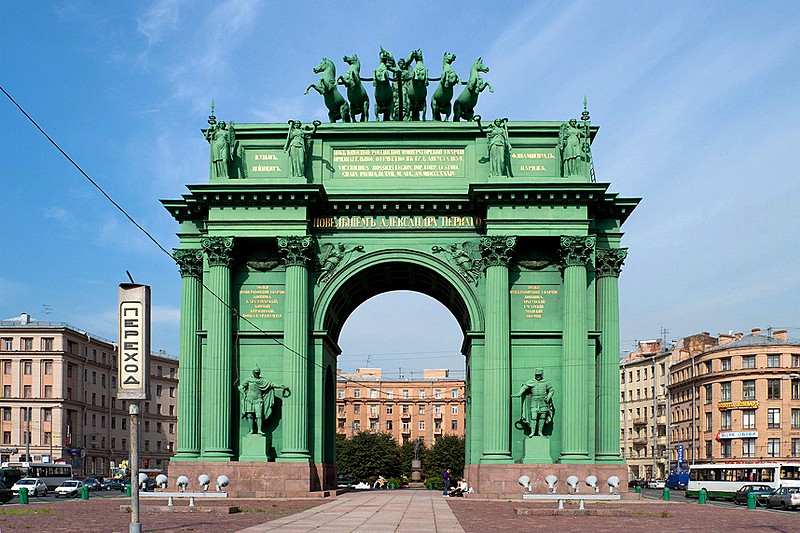
Narva Gate, St. Petersburg, Russia

Lift your eyes to the arch of the gate.
Open the doors of perception to investigate.

Let the ring of glory into your story.
What is this ring of glory?

The essence of our existence
overcomes all resistance
to subsistence.

This is the ring of glory.
Our existence is our story.


You are the one for me.
Your love helps me to see
how to be.
You are my moral philosophy.

You received spiritual blessing from this heavenly place.
You have drawn love from the empirical base.

This unique blessing shows special favor.
Restraint became the savior to savor flavor.

Shape yourself as a duty.
It's your part in nature's beauty.

---------------------

24 Domini est terra
Dominated is earth

1 The earth is the Lord's and all that is in it,
the world and all who dwell therein.
2 For it is he who founded it upon the seas
and made it firm upon the rivers of the deep.
3 "Who can ascend the hill of the Lord?
and who can stand in his holy place?"
4 "Those who have clean hands and a pure heart,
who have not pledged themselves to falsehood,
nor sworn by what is a fraud.
5 They shall receive a blessing from the Lord *
and a just reward from the God of their salvation."
6 Such is the generation of those who seek him, *
of those who seek your face, O God of Jacob.
7 Lift up your heads, O gates;
lift them high, O everlasting doors; *
and the King of glory shall come in.
8 "Who is this King of glory?" *
"The Lord, strong and mighty,
the Lord, mighty in battle."
9 Lift up your heads, O gates;
lift them high, O everlasting doors; *
and the King of glory shall come in.
10 "Who is he, this King of glory?" *
"The Lord of hosts,
he is the King of glory."

-----------------------

Isa. 6:1-2

I saw the Lord sitting on a throne, high and lofty, in the year that King Uzziah died. The hem of his robe filled the temple. Seraphim were in attendance above him. Each had six wings. With two they covered their faces, with two they covered their feet and with two they flew.

Uzziah- Power of Yah
Isaiah- Salvation is in Yah
seraphim- Burners

-----------------------

The angels burned with reverence and awe
as they celebrated the majesty of Yah.

=================

John 17:20-21

'I ask not only on behalf of these, but also on behalf of those who will believe in me through their word that they may all be one. As you are in me, Father, and I am in you, may they also be in us, so the world may believe that you have sent me.'

-----------------------

As the Son is in the Father and the Father in the Son,
we are called to exist as united in being as though we were one.

We are not the same in particular though we are common in nature.
Individuation requires perspective on perception for judgment regarding behavior.

=================

Thomas Sowell
Socialism

------------------------------

Ps. 24:1

The earth is the Lord's and all that is in it,
the world and all who dwell therein.

-------------------------------

The rise of communism in Russia had an association with Marxist socialism and the Boleshevik revolution. Socialism was critical of capitalism, but the predicition of the violent overthrow of government gave it a hostile intent toward executive authority and the middle class.

Russian culture had started with polytheistic roots, but had moved through the Byzantine and Latin influences in a way that essentially preserved serfdom based on the Egyptian model. There was a strong support for executive authority in this kind of society.

Cruelty in punishment was a characteristic of any legal code prior to Constitutionally legislative reform. Profit from war was as well, but the Russians were dedicated to independence and autonomy. They didn't have slavery.

This served as the basis for alliance with British royalty. The Russians used western standards to develop, but economic growth was slower. The Marxist political leadership used this slowness as the justification for violent revolution.

Socialism was Calvinism without religion. This made the democracy a form of dictatorship that was more obsessed with the achievement of goals with violent aggression. There was the pretense of objective scientific analysis in economics, but the incentive for development that characterizes effective executive leadership was removed.

Cultural development was inhibited when that was removed from leadership. Education, art and cultural development were suppressed for the proletariat. The only development that was achieved was contrived by the competition with capitalist enterprise. Labor had less motivation to construct or produce anything that wasn't dictated by socialist convention.

---------------------------

Isa. 6:2

Seraphs were in attendance above the Lord. Each had six wings: with two they covered their faces; with two they covered their feet and with two they flew.

-----------------------------

Isabel Florence Hapgood was a writer who translated Russian texts into English. Her work established a basis for understanding Russian culture.

She was one of the major figures in the dialogue between Western Christianity and Orthodoxy. She traveled through Russia between 1887 and 1889. She met with the celebrated author, Leo Tolstoy.

Isabel Florence Hapgood
b. 11.21.1851, Boston, Massachusetts
d. 6.26.1928, New York, New York

Hapgood was born in Boston on November 21, 1851.

Boston

Boston had the status of a town until it was chartered as a city in 1822. The second mayor was Josiah Quincy III. He undertook infrastructure improvements in roads and sewers. He organized the city's dock area around the newly erected Faneuil Hall Marketplace, popularly known as Quincy Market.

Boston was one of the largest manufacturing centers in the nation by the mid-19th century. The city was noted for its garment production, leather goods and machinery industries. Manufacturing overtook international trade to dominate the local economy.

A network of small rivers bordering the city and connecting it to the surrounding region made for easy shipment of goods and allowed for a proliferation of mills and factories. The building of the Middlesex Canal extended this small river network to the larger Merrimack River and its mills. These included the Lowell mills along with those on the Nashua River in New Hampshire.

An even denser network of railroads facilitated the region's industry and commerce by the 1850's. Eben Jordan and Benjamin L. Marsh opened the Jordan Marsh Department store in downtown Boston in 1851. William Filene opened his own department store across the street 30 years later. The store was called Filene's.

Brahmin Elite

The term "Brahmin elite" was coined in 1861 by Dr. Oliver Wendell Holmes, Sr.

Boston's Brahmin developed a particular semi-aristocratic value system by the 1840's. They were cultivated, urbane and dignified. The ideal elitist was the very essence of enlightened aristocracy.

He was not only wealthy, but displayed suitable personal virtues and character traits.  The Brahmin had high expectations to meet. He was to cultivate the arts. Charities such as hospitals and colleges were to be supported. The role of community leader was to be assumed.

The ideal called on him to transcend commonplace business values. Many found the thrill of economic success quite attractive in practice. The Brahmins warned each other against "avarice" and insisted upon "personal responsibility." Scandal and divorce were unacceptable.

The total system was buttressed by the strong extended family ties present in Boston society. Young men attended the same prep schools and colleges. They had their own way of talking.

Heirs married heiresses. Family not only served as an economic asset, but also as a means of moral restraint.

Most belonged to the Unitarian or Episcopal churches. Some were Congregationalists or Methodists. They were successively Federalists, Whigs and Republicans in political association.

Boston was also composed of Irish immigrants. Many of these were Catholic. They had to hide their religious affiliation because it was banned when the city was part of the Bay Colony.

Congregations of Presbyterians from Ulster in the north of Ireland had immigrated near the start of the 18th century. They were called Ulster Irish but later were referred to as Scots-Irish because many of them had roots in Scotland.

Isabel Hapgood

Isabel Hapgood was the descendant of a long-established New England family. She studied Germanic and Slavic languages with a special interest in Orthodox liturgical texts.

She wrote for the New York Evening Post and the Nation as a journalist, foreign correspondent and editorial writer for 22 years.

The Nation

The Nation is the oldest continuously published weekly magazine in the United States. It was the successor to William Lloyd Garrison's The Liberator. The periodical is devoted to politics and culture. It was founded on July 6, 1865.

New York Evening Post

The New York Post is the fourth-largest newspaper in the United States. It is a leading digital media publisher. It reached more than 57 million unique visitors in the U.S. in January 2017.

The New York Post also operates the celebrity gossip site PageSix.com, the entertainment site Decider.com and co-produces the television show Page Six TV. This show garnered the highest ratings of a nationally syndicated entertainment news magazine in a decade when it debuted in 2017.

The Post was established by federalist and founding father Alexander Hamilton in 1801. It became a broadsheet in the 19th century as the New York Evening Post. The modern version of the paper is published in tabloid format. Rupert Murdoch bought the Post for US $30.5 million in 1976.

Russian Empire 1881+

The Russia to which Hapgood traveled was different than the socialist government that had been there from the start of the revolution that she witnessed until the fall of the Soviet Republic. It was also different from the current Federal Republic.

Alexander III was a Slavophile. He believed that Russia could be saved from turmoil by shutting itself off from subversive influences from Western Europe.

Russia declared alliance with republican France to contain the growing power of Germany during his reign.  The empire completed the conquest of Central Asia. It demanded important territorial and commercial concessions from China.

Alexander III was succeeded by his son, Nicholas II, in 1894. He was committed to retaining the autocracy that his father had left him. The Industrial Revolution began to show significant influence in Russia.

There were industrial capitalists and nobility who claimed to believe in peaceful social reform and a constitutional monarchy. They formed the Constitutional Democrats, or Kadets.

The Socialist-Revolutionaries (SRs) incorporated the Narodnik tradition. They advocated for the distribution of land among the peasants. This was a radical egalitarian reform.

The Social Democrats were another radical group. They were exponents of Marxism in Russia. The Social Democrats differed from the SRs in that they believed a revolution must rely on urban workers, not the peasantry.

-----------------------

John 17:17

Sanctify them in the truth. Your word is truth.

-----------------------

Hapgood was a major translator of French and Russian literature. She was an ecumenist who served as a key figure in the dialogue between Western Christianity and Orthodoxy.

Many of the writers Hapgood translated were people of strong religious convictions. She was a lifelong and devout Episcopalian.

She helped Harvard professor Francis James Child with his Book of Ballads. These were English and Scottish folk ballads that were published in 1882. Hapgood published her own Epic Songs of Russia in 1885. Child supplied a preface. The publication received several good reviews.

The next year Hapgood published translations of Leo Tolstoy’s "Childhood," "Boyhood" and "Youth." Nikolay Gogol’s "Taras Bulba" and "Dead Souls" were also published. Her translations of the major works of Victor Hugo began publication in 1887. The American public found that Hugo was brutally honest about the French Republic.

Hapgood was particularly impressed by the Russian Orthodox liturgy and choral singing. She wanted to translate them for the American audience.

Tikhon was the Archbishop of Alaska and the Aleutian Islands at the time. He supported her efforts and became her friend. She helped organized the choir for his consecration of St. Nicholas Cathedral in New York City in 1903.

Tikhon's successor after his promotion and return to Russia was Archbishop Nicholas. He gave Hapgood a complete set of Church Slavonic texts. The first edition of her translation appeared in 1906.

Hapgood visited Tikhon in 1916-17. He had been consecrated as the Patriarch of Moscow. She was editing a second edition of the work during her trip to Moscow when the Russian Revolution broke out. She became one of the first to report on the execution of the Romanov family.

Hapgood escaped with the assistance of the American Consul and returned to the United States. The second edition was not published until 1922 by the Young Men's Christian Association. Patriarch Tikhon was under house arrest. The publication contained Tikhon's endorsement dated November 3, 1921.

Hapgood accepted a $500 honorarium for those eleven years of work. The book received favorable reviews by Orthodox and Anglican reviewers. Several editions were also published by other Orthodox denominations, including the Syrian Orthodox, after her death.

-----------------------

Rev. 5:11

Then I looked. I heard the voices of many angels surrounding the throne, the living creatures and the elders. They numbered myriads of myriads and thousands of thousands. They sang with full voice.

--------------------------

Hapgood continued to admire Orthodox church music. She helped orthodox choirs in the United States. Their work included performances at the Cathedral of St. John the Divine in New York City and before President Woodrow Wilson at the White House. She also compiled a history of Russian Church music, but the manuscript was never published. It has been lost.

Hapgood never married despite Count Tolstoy's admonition that she should. She had no children. She died in New York.

Isabel Hapgood
S. 伊莎贝尔哈普古德
T. 伊莎貝爾哈普古德

伊  Yi      she                         伊  i         that one             Iza   いざ   イザ                               
莎  sha   insect                      莎 sa       sedge                  be    べ       ベ         I      이   this     
贝  bei   shellfish                  貝 bai      shellfish              ru     る       ル        sa    사   four
尔  er      you                        爾  ji          you                   Ha    は      ハ         bel   벨   bell           
哈  Ha     yawn                     哈  go     school of fish       pu   ぷ       プ         Hib  힙   heap       
普  pu     everywhere            普  fu        universal           gu   ぐっ    グッ     gus   굿  good           
古  gu     classic                    古  ko        old                    do   ど         ド               
德  de     morality                 德  toku   ethics                         

------------------------------

Translation is friendly to conservative reform.
Comparison to a foreign culture considers significant norms.

======================

http://satucket.com/lectionary/isabel_florence_hapgood.htm
https://en.wikipedia.org/wiki/Isabel_Florence_Hapgood#Career
https://en.wikipedia.org/wiki/The_Nation
https://en.wikipedia.org/wiki/New_York_Post
https://en.wikipedia.org/wiki/Russian_Empire…

Tuesday, February 5, 2019

Seek


Seek
Value
寻求价值
Xúnqiú jiàzhí
値を探す
Atai o sagasu
ps96

Agreement in essential things
is a blessing that constancy sings.

Sing a song for the nation.
Sing thanks for the gift of salvation.

Sing to celebrate the whole earth.
Sing to conserve things of essential worth.

Sing to the Creator to consecrate and refine
knowledge incarnate of the design which is divine.

Sing a new song for consecration.
That which is incarnate is great for the celebration of station.

The search for worth in old or new things
increases the value for seeking knowledge with a clarity that rings.

Declare divine glory to all the people.
Let your glory shine to avoid that which is evil.

Even the wealth of the labor for all the nations
does not shine as bright as the sun in the heavenly oblation.

The majesty of the divine presence is magnificent.
It enhances your ability to work as a participant.

The splendor of the sanctified sanctuary emits power.
Eternity honors the intricate division of each hour.

Ascribe honor and power to the sacred Name.
Offer your products to show reverence as a claim.

Worship divine essence in the beauty of holiness.
Association will rejoice in each melodious associate.

Revolution will not rock the reign of deity.
Insurrection will not rule the faithful society.
Plots of murder will not be seen as acts of piety.

Ascribe to Leadership responsibility for due diligence in representation.
The management of government is for social gestation.

Let the heavens rejoice. Let the sea be glad.
Let the earth be the third part of the joyous triad.


Let the rain fall on all the earth
that plant and animal life may grow and flourish.

Then will the trees of the wood sing with joy
before the Leader comes to see what resources can be employed.

Letters form sound for words. Words make sentences.
The enlightened crow only reads threat in that which menaces.


The legal code is the measure for knowledge of law.
Let your vision penetrate beyond the edge of greatness to avoid tragic flaw.

When the Judge comes to review the earth,
the world will be evaluated for worth.


96 Cantate Domino
1 Sing to the Lord a new song; *
sing to the Lord, all the whole earth.
2 Sing to the Lord and bless his Name; *
proclaim the good news of his salvation from day to day.
3 Declare his glory among the nations *
and his wonders among all peoples.
4 For great is the Lord and greatly to be praised; *
he is more to be feared than all gods.
5 As for all the gods of the nations, they are but idols; *
but it is the Lord who made the heavens.
6 Oh, the majesty and magnificence of his presence! *
Oh, the power and the splendor of his sanctuary!
7 Ascribe to the Lord, you families of the peoples; *
ascribe to the Lord honor and power.
8 Ascribe to the Lord the honor due his Name; *
bring offerings and come into his courts.
9 Worship the Lord in the beauty of holiness; *
let the whole earth tremble before him.
10 Tell it out among the nations: "The Lord is King! *
he has made the world so firm that it cannot be moved;
he will judge the peoples with equity."
11 Let the heavens rejoice, and let the earth be glad;
let the sea thunder and all that is in it; *
let the field be joyful and all that is therein.
12 Then shall all the trees of the wood shout for joy
before the Lord when he comes, *
when he comes to judge the earth.
13 He will judge the world with righteousness *
and the peoples with his truth.

Eph.3:7
I have become a servant of this gospel according to the gift of God's grace that was given to me by the working of his power.

------------------------------------

I have become the servant of the gospel by grace.
Good news will influence how you choose the method for your pace
in the human race.

==========================

Mark 16:15
Jesus said to them, 'Go into the world and proclaim the good news to the whole creation.'

------------------------------------

The Savior said, 'Go into the world to proclaim the word for creation.'
The gospel will generate significant sensation.

==========================

Cyril and Methodius

Cyril was born as Constantine in about 826 CE. Methodius was given the name Michael. He was born about 828 CE.

The ethnic origins of the brothers are unknown. There is controversy as to whether they were of Slavic, Byzantine Greek or both. Their mission suggests that they were born in the Thessalonica of Slavic descent.

Their father, Leo, was an officer of the Byzantine theme in Thessalonica. Their mother was named Maria.

Their uncle was a powerful minister. Theoktistos became their protector after their father died. He was responsible for postal services and diplomatic relations in the empire. He started the educational program along with Bardas that culminated in the establishment of the College of Magnaura in the Imperial University of Constantinople.

The University had been founded in 425 by Theodosius II. It lasted until the 15th century.

The Magnaura was a large building that housed the Senate. This was located near Hagia Sophia, the Augustaion and the Chalke gate of the Great Palace. The school associated with the building did not last long, but it was instrumental in outreach through missionary work.

Theoktistos invited Constantine to Constantinople to continue his studies at the university. Constantine was ordained as a deacon while he was in the city. He was knowledgeable in theology and had a good command of the Arabic and Hebrew languages. He adopted the name Cyril when he was ordained as a priest.

His first state mission was in the Abbasid Caliphate. He was sent to discuss the principle of the Holy Trinity with Arab theologians selected by Al-Mutawakkil. The mission was intended to improve diplomatic relations with the Abbasid Caliphate.

Theoktistos also arranged a position as an official for Michael in the Slavic administration of the empire. He soon traveled to the monastery at Mount Olympus where he was tonsured with the name Methodius. He later became the governor for Macedonia and the abbot for the monastery.

Cyril was sent on a missionary expedition to the Khagan of the Khazars by Emperor Michael III and Patriarch Photius in 860. He was given the task to use his knowledge of foreign languages to forestall the Khagan from embracing Judaism.

The Latin “Legenda” states that he learned the Khazar language while he stayed in Cherson on the Crimean peninsula. The mission was unsuccessful. The Khagan chose Judaism for his people. There were those who welcomed Christianity though.

Cyril was appointed as the professor of philosophy in the university upon his return.

The Moravian Prince Ratislav requested that Michael III send missionaries to Moravia to explain Christianity in “their own language.” Cyril and Methodius were sent. The two had developed a reputation as thinkers and administrators.

The people of Moravia had already accepted the Christian religion with the Roman Church with the influence of the Frankish King Louis the Pious. Ratislav was seeking to assert independence by what amounted to a request for translators from the Byzantine Empire.

The Glagolithic alphabet was devised to be used for translation into the Slavic language. The descendant script is called Cyrillic. It is used by a number of languages today.
The brothers started by training assistants. They started to translate the Bible into what is now known as Old Church Slavonic. Then they traveled to Great Moravia to promote the translation of the liturgy into Slavonic. The brothers wrote the Civil Code in Slavic for use in Great Moravia.
They ran into trouble with German missionaries who opposed their efforts to create a specifically Slavic liturgy.

The missionaries to the East and South Slavs had success in part because they used the people’s native language rather than Latin or Greek. Cyril and Methodius encountered Frankish missionaries from Germany who represented the Latin branch of the Church.

The western church represented the Holy Roman Empire as founded by Charlemagne. These Franks were committed to linguistic and cultural uniformity. They insisted on the use of the Latin liturgy. They regarded Moravia and the Slavic people as part of their missionary jurisdiction.

When friction developed, the brothers were invited to Rome to see Pope Nicholas in 867. They were not willing to be the cause of dissention among Christians. They sought to make an agreement that would avoid quarreling between the missionaries in the field. Pope Nicholas died before the issue was resolved.

Pope Adrian II gave Methodius the title of Archbishop of Sirmium in 868. Sirmium is now Sremska Mitrovica in Serbia. Cyril died in Rome. Methodius was given jurisdiction over Moravia and Pannonia. He was authorized to use the Slavonic liturgy.

He continued the work among the Slavs alone in Pannonia. Great Moravia was in a state of transition. Ratislav was taken captive by his nephew Syatopluk. He was delivered to Carloman and condemned in a diet of the empire at the end of 870.

The activity in Pannonia made a conflict with the German episcopate and especially the bishop of Salzburg inevitable. Pannonia had been in the jurisdiction of Salzburg for 75 years.

Bishop Adalwin was found exercising rights there in 865. The administration under him was in the hands of the archpriest Riehbald. The archpriest was obliged to retire to Salzburg, but his superior was naturally not inclined to abandon his claims.

Methodius sought support from Rome. Friendly relations had been established with Kocef on the journey to Rome. Kocef sent him back with an escort to receive Episcopal consecration.

When
Pope Adrian named Methodius archbishop of Sirmium with jurisdiction over Great Moravia and Pannonia, the older title superseded the claims of Salzburg. Adrian had consecrated him as archbishop with jurisdiction not only in Great Moravia and Pannonia, but Serbia as well.

When Ratislav died in 870, his successor did not support Methodius. The Frankish king Louis and his bishops convened a synod at Ratisbon that deposed Methodius. He was imprisoned for a little over two years.

Methodius was summoned to Rome on charges of heresy and for using Slavonic in 878. Pope John VIII secured his release with permission to use the Slavonic liturgy. He was sent back cleared of the charges.

Pope Stephen V reversed John VIII’s ruling and forbade the use of the Slavonic liturgy after Methodius’ death. Wiching, Methodius’ successor, drove the disciples of Cyril and Methodius into exile. Many found refuge with Boris of Bulgaria under whom they re-organized a Slavic speaking Church.

Pope John’s successors adopted a Latin-only policy that lasted for centuries. 

------------------------

Cyril and Methodius
S.
西里尔和的迪
T.西里爾的迪烏斯

西 Xi  west              西 nishi        west         Ki            Si    city   
li   inside            ri              village      ri            lil    reel       
er  you           ore             you           ru           gwa and        
he  and               wa              and         to          Me  me           
De  truly             teki           target       Me         de   place          
di   enlighten    susumu       edify       to           ti     tea               
wu  crow            karasu       crow       di            u     right     
si   Slovakia         shi            this          i              seu switch           
                                                                       u 
 
                                                                      su 
------------------------------------

Letters form sound for words. Words make sentences.
The enlightened crow only reads threat in that which menaces.

==========================

Max Horkheimer
2.14.1895, Stuttgart, Germany
7.7.1973, Nuremberg, Germany

Stuttgart-Zuffenhausen

Stuttgart went by the name of Zuffenhausen. The name was changed when Zuffenhausen incorporated with Zazenhausen in 1931. The towns were united due to the depression.

The etymological roots for "Zuffenhausen" are traced to the name used for an Alemanni settler, "uffo" or "offo."  It translates as the 'house of settlement' in the upper Rhine dialect.

The Alemanni were a confederation of tribes located near the upper Rhine River in southern Germany.  The confederation was first mentioned by Cassius Dio in the context of the campaign of Caracalla of 213. Caracalla was a Roman emperor also known as Antoninus. He ruled from 198 to 217 CE. He was a member of the Severan dynasty.

The Alemanni captured the Agri Decumates in 260. The Agri Decumates included the Black Forest and the areas between the Rhine, Main and Danube rivers in southwestern Germany.

They later expanded to present-day Alsace and northern Switzerland. The Old High German language was used in the expanded territory. The region was named Alammania by the 8th century.

The Alemanni were conquered by Frankish leader Clovis in 496. They were incorporated into his dominions. They retained their status as pagan allies until the 7th century. They were gradually Christianized over this one hundred year period of time.

The Lex Alamannorum recorded the customary law for the Alemanni. Frankish suzerainty over Alamannia was mostly nominal until the 8th century. Carloman, aka Charlemagne, executed the Alamannic nobility and installed Frankish dukes after an uprising by Theudebald, Duke of Alamannia. 

The Alemannic counts became almost independent during the later and weaker years of the Carolingian Empire. A struggle for supremacy took place between them and the religious leadership that would later become the Bishopric of Constance. This was an imperial state in the Holy Roman Empire from the mid-12th century until its secularization in 1802-3.

The oldest official denotation of Zuffenhausen was when it was documented as a property of Bebenhausen Abbey by Pope Innocent III on May 18, 1204.

The city is located in a river valley that was carved into existence by the Feuerbach River. There are two distinct elevations with a difference of 3 m (10 ft.). There is the level at 255 m (837 ft.). There is the other level at 252 m (827 ft.).

A vast stretch of rolling hills extends to the north and northwest on a height of over 300 m (980 ft.). The hills rise to a peak of 327 m (1,073 ft.) near Neuwirthshaus. The Stuttgart mountains rise in the south. The Nekar valley is situated to the east.


People have considerably changed the geographical features of Zuffenhausen since the 19th century. The development of railway lines and roads have altered the landscape. The excavated material was used to fill depressions and drained ponds.

There was an expansion of the settlement beyond the Feuerback valley to the west and to the east during the second half of the 19th century.

The flora and fauna are diverse. Animal life has decreased in number since the introduction of sealed roads after World War II. Birds were less affected by the loss of habitat. Generously sized home gardens and the preservation of primoridal forest in the Hofkammer Wald.

Larger forests and different types of semi-arid grassland are located west of Zuffenhausen. Fields are increasingly marginal. Pastures and orchards are almost totally absent. Agriculture was the most important part of the economy until 1907.

Zuffenhausen is the headquarters for the Porsche car manufacturing company.

Max Horkheimer

Max was born in Zuffenhausen on February 14, 1895. He was the only son of Moriz and Babetta Horkheimer.  Moritz was a successful businessman who owned several textile factories. He expected his son to follow in his footsteps. He wanted him to own the family business.

Max was taken out of school to work in the family business in 1910. He eventually became a junior manager. He started two relationships during this period that would last for the rest of his life.

He met Friedrich Pollock. He would later become a close academic colleague. He also met Rose Riekher. She was his father's personal secretary. She was eight years older than Max, a gentile and from an economically lower class.

Max called her Maidon. She was not considered to be a suitable match by Moritz. Max and Maidon married in 1926. They remained together until her death in 1969.

His manufacturing career ended when he was drafted for World War I. His chances for taking over the family business were interrupted. He was denied enlistment on medical grounds. He failed the army physical in the spring of 1919.

He enrolled at Munich University. He was mistaken for the revolutionary playwright Ernst Toller while living in Munich. He was arrested and imprisoned. He moved to Frankfurt am Main after his release.

He studied philosophy and psychology under the respectable Hans Cornelius. He met Theodor Adorno. Theodor was his junior by several years, but the two formed a lasting friendship and a collaborative relationship.

Max completed his dissertation The Antinomy of Teleological Judgment with Cornelius's direction. He was habilitated for professorship with Kant's Critique of Judgement as Mediation between Practical and Theoretical Philosophy in 1925.

The Institute for Social Research was founded by Felix Weil in 1923. It was intended to be an independent academy for Marxism to rival any University in the standards of scholarship.

The institute carried out important research on the history and condition of the German workers' movement. It was possibly the first body to use opinion polls as a research tool.

Max Horkheimer, Theodor Adorno, Leo Lowenthal, Raymond Aron, Erich Fromm, Herbert Marcuse, Walter Benjamin and Ernst Krenek were associated with the Institute.

The German Revolution was defeated in 1923. Horkheimer and other members of the Institute drew the conclusion that the working class could never be the vehicle for social change as a result of participation in the production process. The development of theory itself could be the cause of liberation.

Horkheimer co-authored the Dialectic of Enlightenment with Odorno in the the 1940's while they were in the US. 

The Power of Society
"Enlightenment as Mass Deception"


Horkheimer defined the power of society as irrational in "Enlightenment as Mass Deception" (1944): 

"While the mechanism [of intuition] is to all appearances planned by those who serve up the data of experience, that is, by the culture industry, it is in fact forced upon the latter by the power of society, which remains irrational, however we may try to rationalize it; and this inescapable force is processed by commercial agencies so that they give an artificial impression of being in command."
It would be more optimistic to define knowledge of custom, language and people as the power of society. The definition of the power as irrational is the logical consequence of pulling back from Marxism into Hegelian dialectic.

Horkheimer wrote the Critique of Instrumental Reason in 1949.

He returned to Frankfurt to re-establish the Institute for Social Research in the same year.

He retired to Switzerland in 1958.


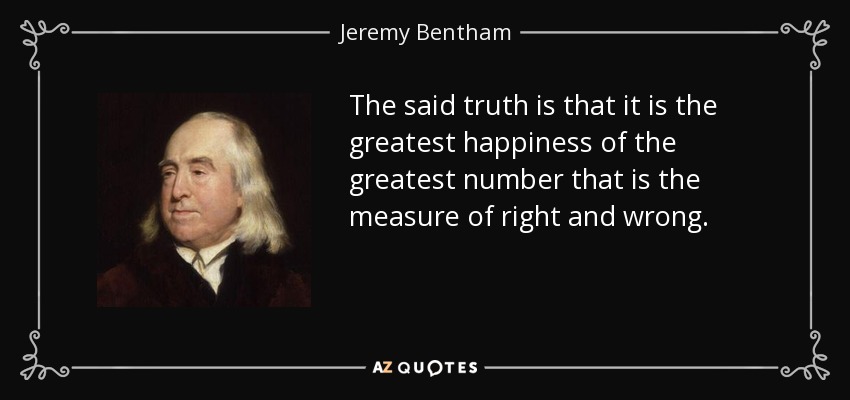
Jeremy Bentham
2.15.1748 London, England
6.6.1832 London, England

London
Early 18th Century

Parliament

The Parliament of Great Britain was formed in 1707. The ratification of the Acts of Union by both the Parliaments of England and Scotland created a new government called the Kingdom of Great Britain. The English and Scottish parliaments were dissolved. 

The government was housed in the former home for the English parliament in the Palace of Westminster near the city of London.

The union lasted nearly a century. The Act of Union in 1800 merged the separate British and Irish Parliaments into a single body for the United Kingdom.

George II
(1683-1760)

George II was the King of Great Britain and Ireland, Duke of Brunswick-Lunesberg (Hanover) and prince-elector for the Holy Roman Empire from 11 June 1727 until his death in 1760.

George was the last British monarch born outside of Great Britain. He was born and raised in northern Germany. His grandmother, Sophia of Hanover, became second in line to the British throne after about 50 Catholics higher in line were excluded by the Act of Settlement 1701 and the Acts of Union 1707. The royal line of succession was limited to Protestants.

His father George I, Elector of Hanover, inherited the British throne after the deaths of Sophia and Anne, Queen of Great Britain, in 1714. George II was associated with opposition politicians in the first years of his father’s reign as king. The opposition rejoined the governing party in 1720.

George II exercised little control over British domestic policy after he became king in 1727. The policy was largely controlled by the Parliament of Great Britain. He spent 12 summers in Hanover. 

He had more influence over government policy as elector there. He also had a difficult relationship with his eldest son. Frederick supported the parliamentary opposition.

Henry Pelham
(1694-1754)

Henry Pelham served as Prime Minister of Great Britain from 27 August 1743 until his death in 1754. He was the younger brother of Thomas Pelham-Holles, 1st Duke of Newcastle. Thomas served in Henry’s government and succeeded him as Prime Minister.

Henry is generally considered to have been Britain’s third Prime Minister after Sir Robert Walpole and the Earl of Wilmington.

Henry Pelham’s premiership was relatively uneventful in domestic affairs except for the tumult of the Jacobite uprising in 1745. The Jacobite Rebellion was an attempt by Charles Edward Stuart to regain the British throne for his father, James Francis Edward Stuart.

It took place during the War of the Austrian Succession. The bulk of the British Army was fighting in mainland Europe. It proved to be the last in a series of revolts that began in 1689. There were major outbreaks in 1708, 1715 and 1719.

Jacobus was the Latin form for James. James Stuart was known as the second for the throne of England and Ireland. He was known as the seventh for the kingdom of Scotland. He went into exile after the Revolution in 1688.

The Jacobites supported the restoration of James as the monarch from the House of Stuart to the thrones of England, Scotland and Ireland. They supported the divine right of kings and tolerance for Catholics.

Charles had launched the rebellion on 19 August 1745 at Glenfinnan in the Scottish Highlands. Edinburgh was captured. The Battle of Prestonpans was won in September. The Scots agreed to invade England after Charles assured them of substantial support from English Jacobites with a simultaneous French landing in southern England. The Jacobite army entered England in early November. They reached Derby on 4 December, but decided to turn back.


The promised English support failed to materialize. The Scottish Jacobites were in danger of having their retreat cut off. Another victory was won at Falkirk Muir in January 1746, but the Battle of Culloden ended the rebellion in April.  Backing for the Stuart cause was lost. Charles escaped to France. He failed to win support for another attempt. He died in Rome in 1788.

1748

A fire in the city caused over a million pounds of damage on 28 March.

The Bow Street Runners were established by Henry Fielding in 1748. Fielding is known as the author of the novel Tom Jones.  Law enforcement was in the hands of private citizens and single individuals prior to the founding of the force.

Henry Fielding was the Bow Street magistrate. Six men were selected by him for law enforcement. The judge decided to legalize their activity due to high rates of mistaken arrests based on malicious reports. The men represented a formalization of existing police methods.

The men were paid by the magistrate's office with funds from the central government. They did not patrol the streets. They served writs of notice from the magistrates. They would travel nationwide to apprehend those charged with criminal acts.

The George and Vulture pub was built in London in 1748. The pub was mentioned at least 20 times in The Pickwick Papers (1836-7) by Charles Dickens. He was a patron there.

It was reputed to be the meeting place for the notorius Hellfire Club. The members of the club often dressed up like characters from the bible to offer satirical commentary on the Puritan influence over society.

The pub was the headquarters for the city chapter of the Pickwick Club from its foundation. 

Realism in Dickens questioned the justice of the legal system. The full title for the Pickwick Papers is The Posthumous Papers of the Pickwick Club.

The club was an actual social organization that met in the George and Vulture pub. The leader for the club was the central character, Samuel Pickwick. He led the organization in the consideration of social injustice in their time.

There was always something to discuss, but the focus on injustice in society can have a detrimental affect. When it is used to challenge Parliament or Congress to promote conservative measures for progress in reconstruction it is a good thing. When it is used to reject those who promote conservative progression, it is counter-productive.

The reinstatement of slavery as an institution was actually a liberal policy when it was first introduced to imperial government. It allowed merchants in the slave trade to move up the social ladder while it prohibited advance by those who were enslaved.

Once it was reinstated as a legal institution however, the defense for the same may have been adopted by 'conservatives.'

It was a liberal policy nevertheless. The government used tax money as the resource to defend the institution for those who profited from the trade. Government officials participated in the trade in order to increase their power. Such was the case with John Locke.

Locke had argued against absolute power for the monarch as though it were the cause for all crime by officials, but his doctrine for destruction was used to support war and enslavement. He was largely responsible for 'legally' establishing the slave trade in the southern British colonies in that which is now the US.

The overall effect for the trade was detrimental to the representation of liberty in the law for people.
The proposal for a constitutional monarchy promotes the policy for entertaining democracy within the monarchy.

People simply vote for the leaders who serve in the Parliament that was established by the monarchy so the people could govern themselves. This was accepted by the European world as the first step in the reconstruction of classical consciousness.

The opposition of democracy and monarchy was not the case  when Pericles and Protagoras introduced the form to Athens. Votes reduced the guesswork regarding what people supported.

Pickwick Papers

Jeremy Bentham was an advocate for utilitarianism. Pain and pleasure were presented as the primary principles for the regulation of utility. It was an alignment of natural with legislated law in terms of the principles.

He had agreement with Locke and Hume. This had good and bad consequences. He stated opposition against legislation against slavery as an institution, but he did so with respect for decrease in cruelty in punishment.

Legislated law had a heavy reliance on reports to the public about torture and the death penalty as punitive measures for infraction in the law. The English bill of rights had stated opposition to cruelty in punishment, but Locke had made his statement for the right to destroy those who intended to destroy him. His argument was also presented in the context of opposition to the divine right of kings as an expression of absolute power.

The divine right was intended to defend the existence of monarchy in the multi-lingual Roman Empire. It was paired with the ‘sword of Damocles’ as a template for public communications. 

The ‘sword’ essentially allowed for fictional descriptions of events with the intent of deterring insurrection, subversion, terrorism or assassination. The trouble with the ‘sword’ as a basis for deterrence was the confusion that was caused with the public record.

When the sword was attached to precipitation for profit from war by contract with the government and forced emigration, the result was a cause of international mayhem.

Bentham repeats the word “sanctions” as a political tool repeatedly. 

This strikes contemporary relevance as a kind of excess. When constitutional governments that differ from that of the US with respect for term limits are defined as authoritarian regimes, the liberal element for spending tax dollars has used the sword with fake news or extreme prejudice for invasion, occupation, air strikes or economic sanction to express opposition.

The context for the repetition however was to decrease dependency upon telling the public that opposition to precipitation or the sword in government policy would result in being defined as an ‘enemy to the state.’ Enemies were deposed, deported or actually executed. 

Sanction by fine or imprisonment represented a lesser form of punishment. It was actually a step in the direction of decreasing cruelty in punishment. The value of the step was obscured by Bentham's support for revolution.

Bentham expressed distaste for slavery, but he didn't argue to have it outlawed.  He proposed the confidence that the greatest happiness principle would build consensus against it to eliminate it by statistical inference. If the institution were seen as the establishment of misery, it would not be recognized as having a social value for happiness.

Slavery was not an effective deterrent to rebellion.


The threat of abuse to the enslaved was not an effective tool for voluntary persuasion. Thus, it was not good for voluntary participation in government. This made it bad for the state.

William Wilberforce had lobbied parliament for 18 years to have the trade, then the institution abolished. He finally saw his proposal enacted in 1833, the year of his death. The organization established by him would direct parliament to abolish slavery for the British empire. They proceeded to negotiate treaties with foreign powers to have the trade, then the institute outlawed. It was an impressive accomplishment as a political action that started with the conviction of one man.

Locke, Hume and Bentham were models for modern liberalism in terms of their policy. The goal of reducing cruelty in punishment or deceptive news reports was relatively reasonable in terms of increasing education for the public for building consensus in agreement in self-government.

The re-institution of slavery however did not present a reasonable model for democracy in political reason. It made the advocacy for private property look like a promotion of slavery through tyranny in the republican form for government.

Locke and Bentham increased their wealth and power by not arguing for legislation against slavery in the British colonies. Hume opened the door for prejudice with his declaration of support for passion.

Jeremy Bentham
(1748-1832)

Jeremy Bentham was born in Houndsditch, London. His parents supported the Tory party. Samuel Bentham was his one surviving sibling.

He attended Westminster School. He was sent by his father to Queen's College, Oxford at age 12 in 1760. He completed his bachelor's degree in 1763. He was awarded his master's degree in 1766.
He was trained as a lawyer. He was called to the bar in 1769, but declined the association. He had become frustrated with the complexity of the English legal code. He called it the "Demon of Chicane."

When the American colonial government published the Declaration of Independence in July 1776, the British parliament did not issue an official response. They secretly commissioned London pamphleteer John Lind to publish a rebuttal.

His 130 page tract was distributed in the colonies. It contained an essay entitled "Short Review of the Declaration" by Bentham, a friend of Lind. The essay mocked American political philosophy and attacked the ideas expressed in the document.

He proposed the Panopticon as the basis for the design of building prisons. He spent 16 years developing the design in the hope that he would be appointed as contractor-governor for a national penitentiary. The concept had an influence on later generations of thinkers. The 20th century French philosopher, Michel Foucault, argued that the Panopticon was paradigmatic for several 19th century "disciplinary" institutions.

While detention in prison is oppressive when sentencing is severe, it is not as cruel as the use of the death penalty for crimes lesser in severity than murder. Bentham argued that his plan for Panopticon was thwarted by the King and the aristocratic elite. He developed a position against the "sinister interest" of those who opposed his broader arguments for reform.

 He was more successful in his cooperation with Patrick Colquhoun in tackling the corruption in the Pool of London. The Pool was the stretch of the River Thames on the south side of London. It was vitally important to the city for centuries.

Bede called it the reason for the existence of the port in the 7th century. The quays for the area had extended into the wharves along both banks by the time that it reached the peak of importance in the 18th century. Hundreds of ships moored in the rivers or along side quays.
Smuggling, theft and vandalism of cargoes were rife on both the busy open wharves and in the crowded warehouses. Bentham and Colquhoun sponsored the Thames Police Bill of 1798. The bill was passed in 1800. It created the Thames River Police. It was the first preventive police force in the country. It was a precedent for Robert Peel's reforms 30 years later.
Bentham corresponded with a number of influential people. He shared correspondence with the aging Adam Smith in the 1780's. He was unsuccessful in the attempt to convince Smith that interest rates should be allowed to float freely.
His correspondence with Mirabeau and other leaders of the French Revolution resulted in his declaration as an honorary citizen of France. This was the case even though he was an outspoken critic of the revolutionary discourse on natural rights and of the violence that arose after the Jacobins took power (1792).
Bentham held a personal friendship with the precursor to Latin American independence Francisco de Miranda between 1808 and 1810. He paid visits to Miranda's house  on Grafton Street.
Miranda was a Venezuelan who lived in London from 1803 until 1810. His family had been banished during the Spanish Inquisition at the end of the 15th century. He had taken part in the Spanish involvement in the American Revolution (1776-81).
Miranda was actively involved with the French revolution (1791-98). He led an expedition to liberate Venezuela (1806-1808). He had been a subject of the Inquisition throughout. He was imprisoned after Bolivar handed him over to the Spanish Royal Army in 1812. He died in prison before any trial.
Bentham co-founded The Westminster Review with James Mill as a journal for "Philosophical Radicals" in 1823. John Bowring was appointed the political editor and eventually the literary executor.  Edwin Chadwick wrote about hygiene, sanitation and police work. He was a major contributor to the Poor Law Amendment Act.
The Poor Law Amendment Act was passed by the Whig government of Earl Grey in 1834. It replaced earlier legislation based on the Poor Law of 1601. It attempted to fundamentally change the poverty relief system in England and Wales. Similar changes were made to the poor law for Scotland in 1845. The system essentially required that the poor vote for Whigs and support Whig initiatives in order to get benefits.
Chadwick was also employed as a secretary. He was left a substantial legacy.
Bentham died on 6 June 1832 at the age of 84 in his residence at Queen Square Place in Westminster, London, England. 
He had continued to write up to a month before his death. He had made careful preparations for the dissection of his body and its preservation as an auto-icon after his death. A paper dated 30 May 1832 instructing Thomas Southwood Smith to create the auto-icon was attached to his last will.

Jeremy Bentham
杰里米边沁
傑里米邊沁
  Jie     heroic              ketsu   greatness       Ji~e    じぇ    ジェ      je    my                     
  li        internal           ri           village         re                       le    re        
  mi     meter              mai      meter             mi-      み-    ミ-       mi   beauty         
  Bian  edge                hen      edge              Ben     べん   ベン    Ben Ben   
  qin     percolate         shin     penetrate       samu   さむ  haem  ham                                         

------------------------------

The legal code is the measure for knowledge of law.
Let your vision penetrate beyond the edge of greatness to avoid tragic flaw.

======================