9.8.19
Alecia Beth Moore aka Pink
Do
Your
Best
尽你所能
Jǐn nǐ suǒ néng
がんばってね
Ganbatte ne
ps139
Festina
Listen to hear.
Hear to steer clear
of too much fear.
Your body is a temple.
It helps you to build upon the level.
You have been separated to be crowned.
The savior will add to your health, wealth and renown.
Reason requires context in time for meaning.
Meaning is the gleaning of conceptual healing.
Higher powers are competing for control.
They rig each poll to tax the whole.
It feels right to appeal to the highest power.
The flower for the hour looks above the tower.
Legolas Figure
This invokes transcendent self.
The twelfth elf stands on the shelf.
Transcendence can detach from the will to work.
Ego can't shirk the will to exact an act or the clerk will irk the kirk.
Perspective on perception works an immediate bent
to accomplish what is necessary in the present
or the descent of dissent will be lent to ill intent.
The sense of imminent presence
provides comfort with confidence.
Presence, intelligence and creativity
are enhanced with faith in ingenuity
to avoid superfluity.
You have heard my plea.
You have searched me.
You know when I sit or stand.
I don't let things get out of hand.
You discerned my thought.
I have not been taught to damage the tot.
You observe my work and rest.
I do my best to bless those who need to be blessed.
You are acquainted with my ways.
I raise praise to avoid the dazed haze of brazen plays.
There was not a word on my lips as a token
that you did not know before it was spoken.
That which was spoken is a token of the unbroken.
Your presence guides me to the future
to avoid the shot from the shooter
to block the boot from the booter
or to lock the lock against the looter.
This is the rule of protection from the fool as ruler.
Your reach is felt into the past.
I was urged to learn from what crashed,
smashed, trashed or was slashed.
This is the craft
from the ark of the past.
He who was formerly useless
has become useful to those who knew this.
Your transcendence is heaven sent.
It lies beyond the wonderment of the thunderous.
It is so high that I feel overwhelmed.
That which was overwhelmed is compelled
to excel.
Can I escape Spirit?
The farthest reach doesn't steer it,
but the will to reach is always near it.
Can I run from presence?
It is the essence of the present.
If I climb to heaven, you are there.
This leaven shows you care.
If I make my bed a grave, you are there also.
No hollow follows the bravo of Apollo.
If I were to take a flight
in the morning light
and stop
the hop
at the farthest reaches of the sea
even there, the essence of your presence will be with me.
Your security will hold me fast.
Your courage will make me last.
If I say, "The darkness will cover me."
I will not be seen by those not near enough to see.
The light around me will turn to night.
I will be kept out of sight.
The darkness is not dark to you.
The queue is not too new to be true.
The night is as bright as day.
Even the fray has something to say.
Darkness and light are both alike in a way.
The fringe of the fray shows the rate of decay.
Search me.
I am free.
Know my heart.
It provides a recurring start.
Settle my restless thoughts.
I only need that which keeps my mind taut.
Look for wrong.
It won't stay long.
Lead me in the way that is true.
It will keep me from feeling blue.
Who does not estimate the cost for a project
to see if he has enough to afford the concept?
The shape of the clay was destroyed in the potter's hands.
The clay was reshaped into a vessel that would hold water or grain from the land.
The reduction of the group to the individual body
is the same as the elevation of the mythical to the godly.
There is a distortion of proportion in the elevation
that loses ethical verity in the moral revelation.
While neither the slave nor serf is free,
there is a right to serve to earn a fee.
-----------------------
Psalm 139
Domine, probasti
The Latent probe
To the leader. Of David. A Psalm.
1 O Lord, you have searched me and known me.
2 You know when I sit down and when I rise up;
you discern my thoughts from far away.
3 You search out my path and my lying down,
and are acquainted with all my ways.
4 Even before a word is on my tongue,
O Lord, you know it completely.
5 You hem me in, behind and before,
and lay your hand upon me.
6 Such knowledge is too wonderful for me;
it is so high that I cannot attain it.
7 Where can I go from your spirit?
Or where can I flee from your presence?
8 If I ascend to heaven, you are there;
if I make my bed in Sheol, you are there.
9 If I take the wings of the morning
and settle at the farthest limits of the sea,
10 even there your hand shall lead me,
and your right hand shall hold me fast.
11 If I say, ‘Surely the darkness shall cover me,
and the light around me become night’,
23 Search me, O God, and know my heart;
test me and know my thoughts.
24 See if there is any wicked* way in me,
and lead me in the way everlasting.
---------------------
Jeremiah 18:4
The vessel the potter was making of clay was spoiled in his hands. He reworked it into another vessel as seemed good to him.
---------------------
The shape of the clay was destroyed in the potter's hands.
He reshaped a vessel that would hold water or grain from the land.
================
Onesimus- useful
Philemon 1:11
He was useless to you formerly. Now he is useful to both you and me.
---------------------
He who was formerly useless
has become useful to those who knew this.
================
Luke 14:27
Which of you intending to build a tower does not sit down and estimate the cost to see whether or not he has enough to complete it?
---------------------
Who does not estimate the cost for a project
to see if he has enough to afford the concept?
================
There are passages in the bible that warn against favor for the rich or the poor.
Some would say that capitalism favors the rich and socialism the poor.
Kierkegaard is an example of someone who was rich who favored the poor. He displayed a remarkable capacity for empathy in his writing, but he struggled with depression. His writing was existentialist and Christian, but the end result was an advocacy for Christian socialism.
I don't agree that capitalism favors the rich. It uses incentive to organize the production of a product or service.
Socialism uses the threat of violence or the constant criticism of capitalism to push for the increase in government spending.
Fooled
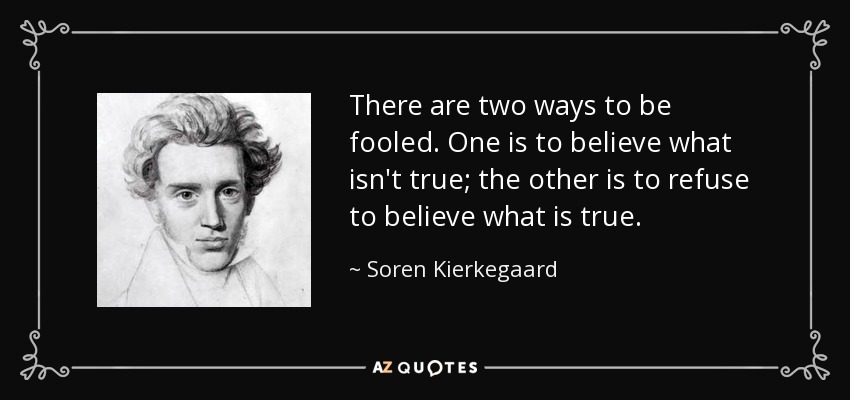
Soren Kierkegaard
b. 5.5.1813 Copenhagen, Denmark
d. 11.11.1855 Copenhagen, Denmark
Soren Kierkegaard was a Danish philosopher, theologian, poet, social critic and religious author. He wrote in the Danish “golden age” of intellectual and artistic activity. He is considered to be the first existentialist.
He wrote critical texts on organized religion, Christendom, morality, ethics, psychology and the philosophy of religion. He displayed a fondness for metaphor, irony and parables. Much of his philosophical work dealt with the issue of how one lives as a "single individual." He highlighted the importance of personal choice and commitment in giving priority to human reality over abstract thought.
He was a Lutheran Protestant. He decided not to become a pastor or a professor because if he had he would have had to write under the authority of the State or the Church. He wrote on Christian ethics, the institution of the Church, the differences between purely objective proofs of Christianity, the infinite qualitative distinction between man and God and the individual's subjective relationship to the God-Man Jesus the Christ which came through faith.
He was critical of the practice of Christianity as a state religion primarily in the Church of Denmark. His psychological work explored the emotions and feelings of individuals when faced with life choices.
He wrote that science and scholarship want to teach that objectivity is the way to live life. He argued that Christianity teaches that the way is to become subjective to become a subject. Scientists learn from the world by observation, but observation could not reveal the inner workings of the world of the spirit.
His key ideas included the concept of "subjective and objective truths", the knight of faith, the recollection and repetition dichotomy, angst, the infinite qualitative distinction, faith as a passion and the three stages on life's way.
His core goal in social criticism was to renew faith within Christendom.
He wrote in Danish. The reception of his work was initially limited to Scandinavia, but by the turn of the 20th century his writings were translated into French, German and other major European languages. His thought exerted a substantial influence on philosophy, theology and Western culture.
He was born in Denmark in the 19th century.
Copenhagen
Copenhagen is located mostly on the eastern shore of the island of Zealand and partly on the island of Amager. The Oresund or the Sound lies to the east. It is the strait of water that separates Denmark from Sweden and connects the North Sea with the Baltic Sea. The Oresund Bridge connects the city to Malmo, Sweden.
Copenhagen is the capital and most populous city of Denmark. It was originally a Viking fishing village established in the 10th century in the vicinity of what is now Gammel Strand in the center of the city. It became the capital of Denmark in the early 15th century. It consolidated its position as a regional center of power with its institutions, defenses and armed forces beginning in the 17th century.
The city underwent a period of redevelopment after the outbreak of a plague and a fire in the 18th century. This included the construction of the prestigious district of Frederiksstaden under Frederick V. The district is regarded as one of the most important Rococo districts in Europe. Cultural institutions as the Royal Theatre and the Royal Academy of Fine Arts were founded during this period.
The British naval officer, Horatio Nelson, attacked the Dano-Norwegian fleet and bombarded the city in the early 19th century. Rebuilding during the Danish Golden Age brought a Neoclassical look to Copenhagen's architecture. Hans Christian Andersen was a leader of the literary movement with his rendition of the modern fairy tale.
Soren Kierkegaard
Kierkegaard was born to an affluent family in Copenhagen. His mother, Ane Sørensdatter Lund, had served as a maid in the household before marrying his father, Michael Pedersen Kierkegaard.
She was quiet, plain and not formally educated, but she protected her sons, Soren and Peter. Peter later said that his brother preserved many of their mother's words in his written work.
His father was a well-to-do wool merchant from Jutland. He was stern, dry and prosaic in appearance, but he concealed an active imagination which he held into his old age. He was interested in philosophy and often hosted intellectuals at his home.
The young Kierkegaard read the philosophy of Christian Wolff. Wolff was the most eminent German philosopher between Leibniz and Kant. His main achievement was a complete commentary on almost every scholarly subject of his time. He displayed and unfolded knowledge according to his demonstrative-deductive, mathematical method. He represented the peak of Enlightenment rationality in Germany.
Kierkegaard led a somewhat uneventful life. He rarely left his hometown of Copenhagen. He traveled abroad only five times. He went to Berlin four times and once to Sweden.
His prime recreational activities were attending the theater, walking the streets to chat with ordinary people and taking brief carriage jaunts into the surrounding countryside.
He was educated at a prestigious boys’ school (Borgerdydskolen), then attended Copenhagen University where he studied philosophy and theology. He refused to define himself as a philosopher.
He felt that he would constrain himself to speculative knowledge. He wanted to live his life by doing something. He declined to become a Lutheran minister. The Church of Denmark was the official state religion. He was critical of official religion.
Church of Denmark
Lutheran Christianity was established as the state religion with the Reformation in Denmark in 1536. When religious wars swept Europe the harsh persecution of other faiths followed for the next century. Exceptions were granted only to foreign diplomats.
Small circles of clandestine Catholicism prevailed for at least a period in the 16th century. Roman Catholic, Reformed and Jewish congregations were allowed in the new town of Fredericia in Denmark from 1683.
Reformed and Jewish congregations were also allowed in Copenhagen. Non-Lutherans were also allowed in Friedrichstadt and on Nordstrand in Slesvig and in Glückstadt in Holstein. Freedom of religion was introduced in Denmark, but Lutheranism remained the state church with the constitution of 1849.
The Church of Denmark recognizes only two sacraments as in other Lutheran churches. Baptism and the Lord's Supper are the sacraments. These are usually included in the Communion Service. Formerly, individual or shared confession was a condition to receive the Lord's Supper. An official confession ritual still exists, but is now used very rarely.
The reigning monarch is the supreme secular authority in the church.
A religious community does not need any state approval in order to enjoy the freedom of religion granted by the constitution. State-approved congregations (godkendte trossamfund) enjoy several privileges.
They may conduct legal weddings, establish cemeteries and get residence permits for foreign priests. They are exempt from corporate and property tax, may apply for means from the state lottery fund and members may tax-deduct membership fees and presents to the congregation.
Career
Kierkegaard became a writer. He published some of his works using pseudonyms. He signed his own name as author for others. Whether being published under pseudonym or not, Kierkegaard's central writings on religion have included Fear and Trembling and Either/Or, the latter of which is considered to be his magnum opus.
Either/Or was published 20 February 1843. It was mostly written during Kierkegaard's stay in Berlin where he took notes on Schelling's Philosophy of Revelation.
Schelling's Natural Philosophy
Schelling had been the roomate to Hegel during their time of instruction at the university at Tubinger Stift. They later became rivals.
Schelling had been a Lutheran, but he shifted to philosophy to address the larger issue of faith as a perspective on the Absolute. He sought to develop the axioms of Spinoza in a manner meaningful to his society. He had written the Philosophy of Mythology prior to that of revelation. It was part of his thought about how the ideal sprang from the real.
He defined nature as visible Spirit and Spirit as invisible nature. History was a progressive gradually self disclosing revelation of the Absolute. Freedom is in the revelation of evolution as a process.
The Absolute separates itself into conscious and unconscious for the sake of appearance in consciousness. It dwells in the inaccessible light as Eternal Identity for the harmony between the states of mind.
It is interesting speculatively, but there is an aversion to the application of the thought to reality.
Reality is simply the ground for the revelation of the ideal. The power of the individual could be placed over the state or religion for immoral ends. Schelling wasn't as bad as Hegel, but there was at least an indirect connection to the promotion of revolution to obtain political change.
Kierkegaard's Either/Or includes essays of literary and music criticism. There is a set of romantic-like-aphorisms as part of his larger theme of examining the reflective and philosophical structure of faith.
The book was edited by "Victor Eremita." It contained the papers of an unknown "A" and "B" which the pseudonymous author claimed to have discovered in a secret drawer of his secretary.
Eremita had a hard time putting the papers of "A" in order because they were not straightforward. "B"'s papers were arranged in an orderly fashion. Both of these characters were trying to become religious individuals.
Each approached the idea of first love from an esthetic and an ethical point of view. The book is basically an argument about faith and marriage with a short discourse at the end telling them they should stop the argument.
Eremita thinks "B", a judge, makes the most sense. Was "A" code for Schelling and "B" for Fichte? Fichte was the more abstract and intellectual of the two.
The inner and the outer work at odds to conceal the secret joy of why things make sense in the consideration of what the purpose for life is.
Kierkegaard stressed the "how" of Christianity as well as the "how" of book reading in his works rather than the "what". He sought to make philosophy a practical application for the perspective of the individual.
He published three more books about love and faith and several more discourses on 16 October 1843. Fear and Trembling was published under the pseudonym Johannes de Silentio. It was an examination of the anxiety of Abraham with respect for the sacrifice of Isaac.
Repetition is about a Young Man (Søren Kierkegaard) who has anxiety and depression because he feels he has to sacrifice his love for a girl (Regine Olsen) to God. He tries to see if the new science of psychology can help him understand himself. Constantin Constantius, who is the pseudonymous author of that book, is the psychologist.
He published Three Upbuilding Discourses, 1843 under his own name. This dealt specifically with how love can be used to hide things from yourself or others. His writing was an expression of his method for indirect communication.
He questioned whether an individual can know if something is a good gift from God or not. It does not depend upon what one sees, but what one sees depends upon how one sees it. Observation is not just a receiving, a discovering, but also a bringing forth. How the observer is constituted is decisive. God's love is imparted indirectly just as our own.
Finding faith in Christ and putting the understanding to use stops speculation. It is then that one begins to exist in an ethical way that can be defined as religious. The Church should not try to prove Christianity or even defend it. It should help the individual to make a leap of faith. Faith has a place for the person in the love of God.
Kierkegaard's final years were taken up with a sustained attack on the Church of Denmark by means of newspaper articles published in The Fatherland (Fædrelandet) and a series of self-published pamphlets called The Moment (Øjeblikket).
These were also translated as "The Instant". These pamphlets are now included in Kierkegaard's Attack Upon Christendom. The Instant, was translated into German as well as other European languages in 1861 and again in 1896.
He collapsed on the street before the 10th issue ofhis periodical The Moment could be published. He stayed in the hospital for over a month and refused communion. He regarded pastors as mere political officials at the time. They were a niche in society who were clearly not representative of the divine.
He died in Copenhagen in 1855 at 42 years of age. He had been in Frederik's Hospital for over a month. It was thought that complications from a fall he had taken from a tree in his youth may have manifested in illness. It has been suggested by some professors that he died from Pott disease, a form of tuberculosis.
He had thought that the congregation kept the individual from taking responsibility for his or her own relation to God. He defined Christianity as the individual. He felt that the state's control of the Church gave it the mission to increase membership with more power for clergy. This he believed was a corruption of the ideal.
He had felt that Christianity's true purpose was to stress the importance of the individual, not the whole group. The state-church political structure was offensive and detrimental to individuals. Anyone could become a Christian without knowing the meaning of what it was to be Christian.
Unbelieving believers formed a herd mentality in the population without respect for conscience.
His existentialism served as a basis in the formation of Chrisitan socialism. It's a degenerative societal position.
Soren Kierkegaard
S. 索伦柯克亚尔
T. 索倫柯克亞爾
索 Suo cable 索 saku cord So そ ソ So 소 small
伦 lun order 倫 rin ethics ren れん レン len 렌 wren
柯 Ke stem 柯 ka handle Ki き キ Ki 키 key
克 ke to restrain 克 koku overcome ru る ル eo 어 uh
亚 qu send away 亞 a rank ke け ケ ke 케 ke
尔 er you 爾 ji you go ご- ゴ- ga 가 end
ru る ル deu 드 de
--------------------------
The reduction of the group to the individual body
is the same as the elevation of the mythical to the godly.
There is a distortion of proportion in the elevation
that loses ethical verity in the moral revelation.
===================
Lectionary: Soren Kierkegaard
wiki Soren Kierkegaard
IEP SK
SEP SK
Theology of SK
wiki Copenhagen
Text for Either/Or
Showing posts with label confidence. Show all posts
Sunday, September 1, 2019
Sunday, February 17, 2019
Don't
2.24.19
Paris Hilton
Don't
Worry
别担心
Bié dānxīn
心配しないで
shinpaishinaide
ps37
Don't fret.
You'll teach yourself to regret.
Do not worry when you lose.
The loss is a marker for how to choose.
The confidence that you can win is important to begin.
Adjustment to conditions is a variant form to avoid loss to sin.
Remember the skill that was used to beat what you had.
See capacity as the benefit in relation to other contests in the dyad.
Build your skill with drills that aspire to better performance.
Develop what you can. The results will be enormous.
The memory of the opposition will wither like grass.
Like the green of the plant, the sense of loss will fade and pass.
Trust in your Leadership and do your best.
Enjoy the privilege of reasonable tests.
Own your responsibility.
It will enhance your ability.
Delight in what was given by Providence.
You are a valued member in the larger populace.
Establish a goal that you can achieve.
Challenge yourself to actually believe.
Commit to your goal to make it succeed.
Goshen, Egypt
Cultivated land produces a surplus of grain.
Storage makes the product last beyond drought or hunger pain.
Substance defines a unit as unique as a grain of wheat.
Quantity allows equitability to repeat.
Your honor in nobility will be made as clear as light.
Loyalty to royalty is a state that exists in your insight.
Be still.
Watch your will.
Listen for the power of faith.
Wait for the feeling that you can be great.
Watch to see what moves your body.
Move with that which seeks to embody
goodness as a vocation, not just a hobby.
Don't measure yourself against those who prosper.
The prosperous have moved into what they have to offer.
Don't feel jealous of those who profit from fraud.
They did not prosper in a way you should applaud.
They are liable for the harm caused by their theft.
Liability hinders the ability to achieve that which is best.
The detriment will consume the place where they dwell.
Their will to succeed will suffer more as well.
Pray for the abused and the abuser.
Redemption for prevention is the prime mover.
Refrain from anger aimed at destruction.
Keep your eye on the prize to build your production.
Organize for economy as the efficiency clause.
There is so much to manage. Don't damage your cause.
Enslavement to success is a loss in itself.
Your achievement must be governed by self-regulation to excel or do well.
Those who own responsibility with action will manage their land.
Violent aggression will be transcended with a productive hand.
The energy of anger will be redirected to reconstructing yourself.
Shaping the body anticipates action for improving where you dwell.
Nature has a law to govern it.
Speech is allowed to utter this.
The physical comes first.
Then the spiritual is nursed.
The gospel has a beautiful reach into history.
Good news has become less of a mystery.\
Wisteria above a stream on Mt. Fuji
aka Fuji on Fujiyama
The mystery of beauty was hidden in the bells of wisteria.
Happiness bloomed with unusual radiance and no hysteria.
No one ought to cause damage to the health or property of another.
Wishing harm precedes damage unless the wish is replaced by something other.
The management of labor for production from private property
employs those who might otherwise have been unemployed and living in poverty.
Management is a principle of knowledge
that can be applied for organization after college.
Principle can be applied in organization
for government, business, society or household station.
The market is the measure for service to the public.
Supply is built for sales to meet the convenience need has structured.
The market is a measure
for pleasure to treasure.
The ownership of responsibility
is applicable to each at any level of ability.
Logic and metaphysics suppose existence for abstraction.
Abstraction is framed as a quality for attention's attraction.
Psalm 37
Part I Noli æmulari
1 Do not fret yourself because of evildoers;
do not be jealous of those who do wrong.
2 For they shall soon wither like the grass,
and like the green grass fade away.
3 Put your trust in the Lord and do good;
dwell in the land and feed on its riches.
4 Take delight in the Lord,
and he shall give you your heart's desire.
5 Commit your way to the Lord and put your trust in him,
and he will bring it to pass.
6 He will make your righteousness as clear as the light
and your just dealing as the noonday.
7 Be still before the Lord
and wait patiently for him.
8 Do not fret yourself over the one who prospers,
the one who succeeds in evil schemes.
9 Refrain from anger, leave rage alone;
do not fret yourself; it leads only to evil.
10 For evildoers shall be cut off,
but those who wait upon the Lord shall possess the land.
11 In a little while the wicked shall be no more;
you shall search out their place, but they will not be there.
12 But the lowly shall possess the land;
they will delight in abundance of peace.
13 The wicked plot against the righteous
and gnash at them with their teeth.
14 The Lord laughs at the wicked,
because he sees that their day will come.
15 The wicked draw their sword and bend their bow
to strike down the poor and needy,
to slaughter those who are upright in their ways.
16 Their sword shall go through their own heart,
and their bow shall be broken.
17 The little that the righteous has
is better than great riches of the wicked.
18 For the power of the wicked shall be broken,
but the Lord upholds the righteous.
Goshen
Goshen is located in the northeastern region of Egypt on the eastern side of the Nile delta. The sons of Jacob traveled from Hebron in the second of a seven year drought to ask for food from Joseph in the land of Goshen.
Gen. 45:9
Hurry to my father. Say to him, "Thus says your son Joseph, 'God has made me lord of all Egypt. Come down to me. Do not delay.'
---------------------------------
Joseph- increase
Goshen- Gosem- cultivated
Cultivated land produces a surplus of grain.
Storage makes the product last beyond drought or hunger pain.
==================
1 Corinth. 15:46
It is not the spiritual that is first. The physical comes, then the spiritual.
---------------------------------
The physical comes first.
Then the spiritual is nursed.
==================
Luke 6:27
"I say to you that listen, 'Love your enemies. Do good to those who hate you. Bless those who curse you. Pray for those who abuse you.'"
---------------------------------
Pray for the abused and the abuser.
Redemption for prevention is the prime mover.
========================
John Locke
Two Treatises of Civil Government
1689
"The state of nature has a law of nature to govern it, which obliges every one: and reason, which is that law, teaches all mankind, who will but consult it, that being all equal and independent, no one ought to harm another in his life, health, liberty, or possessions… (and) when his own preservation comes not in competition, ought he, as much as he can, to preserve the rest of mankind, and may not, unless it be to do justice on an offender, take away, or impair the life, or what tends to the preservation of the life, the liberty, health, limb, or goods of another."
Naturalization
Nature has a law to govern it. No one ought to cause damage to the life, health or property of another. Causing damage is a criminal act. Wishing harm is immoral.
The management of labor for production from private property is a principle of knowledge. The principle can be applied to government, business, social or household organization.
There are ways in which organization works the same. There are also ways in which there is significant difference. The ownership of responsibility helps to determine that which is manageable in any case.
---------------------------------
Nature has a law to govern it.
Speech is allowed to utter this.
No one ought to cause damage to the health or property of another.
Wishing harm precedes damage unless the wish is replaced by something other.
The management of labor for production from private property
employs those who might otherwise have been unemployed and living in poverty.
Management is a principle of knowledge
that can be applied for organization after college.
Principle can be applied in organization
for government, business, society or household station.
The ownership of responsibility
is applicable to each of any ability.
========================
George Berkeley
The Principles of Human Knowledge
1710
"...the mind has a power of framing ABSTRACT IDEAS or notions of things. He who is not a perfect stranger to the writings and disputes of philosophers must needs acknowledge that no small part of them are spent about abstract ideas. These are in a more especial manner thought to be the object of those sciences which go by the name of LOGIC and METAPHYSICS, and of all that which passes under the notion of the most abstracted and sublime learning, in all which one shall scarce find any question handled in such a manner as does not suppose their existence in the mind, and that it is well acquainted with them."
---------------------------------
The mind has the power to frame ABSTRACT IDEAS. Logic and metaphysics suppose the existence of abstract ideas. A mind is able to consider each quality for an object singly as abstracted from those other qualities with which it is united. This is how abstraction is framed.
Abstraction is used to discourage investment in the Platonic “world of forms” as having an existence independent from human thought. The primal existence of a chair as a form in the mind of God is regarded as an unlikely thing.
---------------------------------
Logic and metaphysics suppose existence for abstraction.
Abstraction is framed as a quality for attention's attraction.
========================
Adam Smith
Wealth of Nations
1776
The Product of Labor
"...this produce, or what is purchased with it, bears a greater or smaller proportion to the number of those who are to consume it, the nation will be better or worse supplied with all the necessaries and conveniencies for which it has occasion.
"But this proportion must in every nation be regulated by two different circumstances: first, by the skill, dexterity, and judgment with which its labour is generally applied; and, secondly, by the proportion between the number of those who are employed in useful labour, and that of those who are not so employed. Whatever be the soil, climate, or extent of territory of any particular nation, the abundance or scantiness of its annual supply must, in that particular situation, depend upon those two circumstances."
----------------------------------
The nation will be supplied with all the necessities and conveniences with the product of labor in proportion to those who consume it. This proportion must be regulated by two different circumstances. The skill, dexterity and judgment with which its labor is generally applied is first. The proportion between the number of those who are employed in useful labor and those who are not is second. The abundance of the annual supply depends upon those two circumstances whatever the soil, climate or extent of territory of any particular nation.
---------------------------------
The market is the measure for service to the public.
Supply is built for sales to meet the convenience need has structured.
The market is a measure
for pleasure to treasure.
========================
2.24.19
Amanda Berry Smith
b. Jan. 23, 1837, Long Green, Maryland
d. Feb. 24, 1915, Sebring, Florida
Mason-Dixon Line
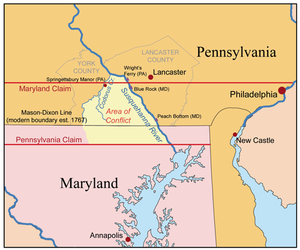
The Mason-Dixon line was surveyed between 1763 and 1767 by Charles Mason and Jeremiah Dixon. The line was demarcated to resolve a border dispute between Maryland, Pennsylvania and Delaware in Colonial America.
The Penn's of Pennsylvania and the Calvert's of Maryland disagreed about the boundary. Charles II granted a charter for Pennsylvania in 1681. Charles and William Penn though the that 40th parallel would intersect with the 12 mile circle around New Castle, Delaware. The 40th parallel actually runs north of Philadelphia.
New Castle
https://upload.wikimedia.org/wikipedia/commons/thumb/e/e1/Cresapwarmap.png/300px-Cresapwarmap.png
The difference in interpretation was significant for the claim to the resources of the land. An agreement in 1732 settled for something in between the two claims. Delaware was seded as a satellite to Pennsylvania. Cresap's war was fought between settlers on the respective sides starting in the mid-1730's.
The English surveyers, Charles Mason and Jeremiah Dixon, were commissioned by the Penns and Calverts to survey a line 15 miles south of the southernmost house in Philadelphia. The line was extended due west 5 degrees of longitude from the Delaware River for the southern border of Pennsylvania in 1779.
The border became a line of demarcation between slave and free states after Pennsylvania abolished slavery in 1781.
It is still used to mark the border for 4 of the United States. West Virginia and Maryland are distinguished from Pennsylvania. Delaware is designated as east of Maryland.
It became known as the border between the northern and southern U.S. It was used to draw the northern limit for slavery before the Missouri Compromise.
Long Green
Long Green was once home to an Amish community. The community was founded in 1833. It lasted for 120 years.
The community was established by Amish from Lancaster County, but few settlers moved to the area. Maryland was a slave state at the time. Few Amish crossed the Mason-Dixon line due to their opposition to slavery.
Amanda Berry Smith
(1837-1915)
Amanda was born to slaves in Long Green, Maryland. Her father's name was Samuel. Her mother's name was Mariam Matthews. The Smiths had 13 children. Her father was a well-trusted man. His master's widow trusted him enough to place him in charge of her farm.
Mr. Berry was allowed to earn extra money for himself and his family after his duties for the day were done. He would go without sleep many nights because he was busy making brooms and husk mats for the Baltimore market. He made the money to buy freedom for himself and his family. The Smiths move to Pennsylvania after their freedom was secured.
Amanda was taught by her parents to read and write. Her father read to his family from the Bible on Sunday mornings. Her mother helped her to learn reading before whe was 8. She was sent to school after she turned this age.
The Smith children were privileged to learn in their early youth. The school only held summer sessions. It was forced to close after Amanda and her brother had attended for 6 weeks.
They were given the option of attending another school 5 years later at the age of 13. The school was 5 miles from their home. They were only taught if there was time after the teachers gave the white kids their lesson. The siblings felt that it was not worth traveling in the cold to receive lessons only if time was permitted. They dropped out after attending for two weeks. They were taught at home by their parents. Sometimes they taught themselves.
Amanda went to work in York, PA after only three and a half months of formal education. She worked as the servant for a widow with 5 children. She attended a revival service for the Methodist Episcopal Church while there.
Her husband was killed in the American Civil War. She had lost two husbands and four of her five children by the time she was thirty two.
She worked hard as a cook and a washerwoman to provide for herself and her daughter She worked through her grief by attending religious camp meetings and revivals. She immersed herself in the African Methodist Episcopal (AME) Church.
Prayer became a way of life for her. She trusted in God for shoes, the money to buy her sister's freedom and food for her family. She became well known for her beautiful voice and inspired instruction. Opportunities to evangelize in the South and West opened up for her.
She wore a plain poke bonnet and a brown or black Quaker wrapper wherever she went. She carried her belongings in her own carpetbag suitcase.
The appearance of women in the 19th century was described as fraught with volatile meaning. African American women struggled to receive respect even when they dressed the part of a lady. The shadowed stereotypes bred by slavery pressed for division between wanton Jezebels and pious Mammies. If free women dressed out of their respective class, judgments were made against them.
Amanda arranged for her daughter, Mazie, to study in England in 1878. They traveled overseas and stayed in England for two years. The captain invited her to conduct a religious service on board on the journey over. She was so modest that the other passengers spread word for her.
She traveled to India alone next. She ministered there for 18 months.
She spent 8 years in Africa evangelizing in churches. She went to Liberia and West Africa. She expanded her family by adopting two African boys. She suffered from repeated attacks of "African fever" but persisted in her work.
She was a strong advocate for the Temperance Movement in Africa and the US. She was invited by the noted temperance promoter, Rev. Dr. Theodore Ledyard Cuyler to preach at his Lafayette Avenue Presbyterian Church in Brooklyn, NY upon her return to the USA. It was the largest church for the denomination.
Temperance turned out to be an over-extension of religion into public policy. It was too close to establishment to allow it to stand as an amendment.
Smith pursued her long-time dream of educating African American children by founding the Amanda Smith Orphanage and Industrial Home for Abandoned and Destitute Colored Children in Harvey, Illinois in 1899. She couldn’t support the school sufficiently despite her relentless fundraising efforts.
She left the school at the age of 75 and moved to a home in Sebring, Florida. She passed away on February 24, 1915.
Amanda Berry Smith
S. 阿曼达史密斯
T. 阿曼達史密斯
阿 Ah ah 阿 a flatter A あ ア A 아 a
曼 man beautiful 曼 man wide man まん マン man 만 just
达 da reach 達 da accomplished da だ ダ da 다 all
史 Shi history 史 shi history Su す ス Seu 스 switch
密 mi thick 密 mitsu secrecy mi み ミ mi 미 beauty
斯 si this 斯 shi this su す ス seu 스 switch
---------------------------------
The gospel has a beautiful reach into history.
Good news has become less of a mystery.
========================
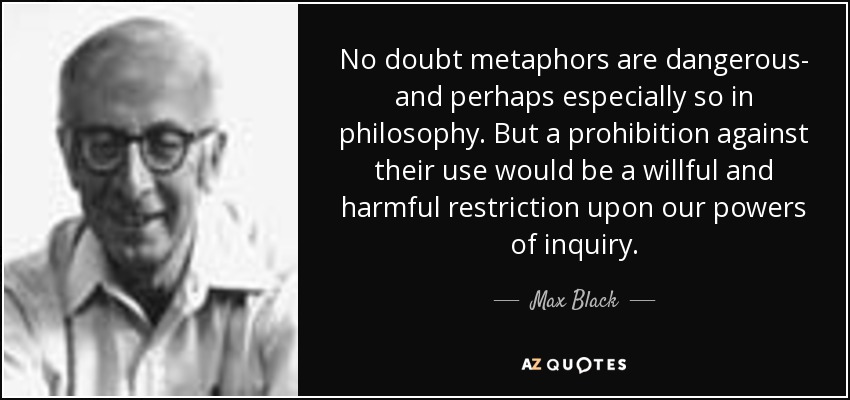
Max Black
b. 2.24.1909 Baku, Russian Empire
d. 8.27.1988 Ithaca, New York
Philosophy of Mathematics
Max Black
Max Black was born in Baku, Azerbaijan of Jewish descent.
His family moved to London in 1912. He grew up there.
He studied mathematics at Queens’ College, Cambridge where he developed an interest in the philosophy of mathematics.
Bertrand Russell, Wittgenstein, G.E. Moore and Ramsey were all at Cambridge at the time. Their influence on Black was considerable.
He graduated in 1930 and was awarded a fellowship to study at Gottingen for a year.
He was the mathematics master at the Royal Grammar School in Newcastle, England. The school had received royal foundation by Queen Elizabeth II.
His first book was The Nature of Mathematics (1933). It was an exposition of Principia Mathematica and the current developments in the philosophy of mathematics.
Black made notable contributions to the metaphysics of Identity. He presented an objection to Leibniz’ Law in “The Identity of Indiscernibles.”
He conceived of two distinct spheres having exactly the same properties in a hypothetical scenario.
The scenario contradicted Leibniz second principle in his formulation of identity. The existence of two objects even in a void with identical properties denies their identicality.
Identity
Max Black worked with Peter Geach to translate the philosophical writings of Gottlob Frege. Both Black and Geach were interested in the question of what constitutes identity.
A always has the property of being A itself. This can never be true of B insofar as it is B. The objects can be identical with respect to the intrinsic internal information when the extrinsic properties are ignored.
The object’s position in space and time remains the only distinction between the two spheres in the otherwise empty space.
Black lectured in mathematics at the Institute of Education in London from 1936 to 1940. He moved to the United States. He joined the Philosophy Department at the University of Illinois at Urbana-Champaign in 1940.
He accepted a professorship in philosophy at Cornell University in 1946. He became a naturalized citizen of the U.S. in 1948.
He was elected a Fellow of the American Academy of Arts and Sciences in 1963.
Black died in Ithaca, New York at the age of 79.
Metaphors
Max Black
S. 嘛佳卜啦赫
T. 嘛佳卜啦赫
嘛 Ma well 嘛 ma wheat Maku まっく マック Mae 매 every
佳 jia good 佳 ka excellent su す ス keu 크 big
卜 Bo to divine 卜 boku divining Bu ぶ ブ seu 스 switch
啦 la la 啦 ro assertion ra ら ラ Bol 볼 ball
赫 he awe-inspiring 赫 kaku illuminate kku っく ック lag 락 rock
---------------------------------
Substance defines a unit as unique as a grain of wheat.
Quantity allows equitability to repeat.
========================
Miki Fujimoto 2.26.1985 Takikawa, Hokaiddo, Japan
藤本美貴
米奇福即墨拖
UPFRONT
Morning Musume- Sexy Boy
米 Mi meter 藤 Fuji wisteria Fu ふ フ Hu 후 after
奇 qi unusual 本 moto book ji じ ジ ji 지 G
福 Fu happiness 美 Mi beauty mo も モ mo 모 mother
即 ji immediately 貴 ki value to と ト to 토 sat
墨 mo ink Mi み ミ Mi 미 beauty
拖 tuo to mop ki き キ ki 키 key
--------------------------------
The mystery of beauty was hidden in the bells of wisteria.
Happiness bloomed with unusual radiance and no hysteria.
=======================
Takikawa
Takikawa is located in the west central part of the island of Hokkaido. The name comes from the Ainu language, 'Sorapuchi.' It means 'under the river.' The city is south and west of a waterall in the Sorachi River. The Ishikari splits from the the Sorachi just west of the city.
Takikawa
https://upload.wikimedia.org/wikipedia/commons/thumb/c/c0/Takikawa_view_from_glider.jpg/800px-Takikawa_view_from_glider.jpg
Takikawa is surrounded by nature. About 60 percent of the metropolitan area is covered in greenery by either forest or farmland. The population is estimated at 41,300.
It is the transportation hub for surrounding towns.
The average temperature in summer is 19 degrees Celsius (66 F). The winter temperature is about --5.9 C (21 F). It is the snowiest location in Hokkaido. It gets about 0.8 meter (31 in.) of snow per year.
A lantern festival is held each year in late February. The event was organized by an artist named Igarashi Takenobu. He was born in the city. People are encouraged to craft their own lanterns. The festival lights the streets at night with over 10,000 hand crafted lamps.
Fujimoto Miki
Fujimoto Miki was born on February 26, 1985 in Takikawa. She wanted to become an enka singer when she was young due to her grandmother. Enka is sentimental Japanese ballad music.
Hello! Project offered Miki training lessons when she didn't pass the third audition to become a 4th generation member in 2000. She worded as a receptionist for UP-FRONT Agency during her training period.
It was announced in October 2001 that she would perform as a soloist. She started as a solo singer in 2002. Her first album was released on her 18th birthday in 2003. She was added to Morning Musume as a 6th generation member by Tsunku after the release of the solo album.
Miki became the sub-leader for Morning Musume in April 2005 when Mari Yaguchi resigned. When Yoshizawa Hitomi graduated in 2007 Miki took over as the leader. She was the fifth leader for the group.
She resigned as the leader of Morning Musume after she admit to dating someone in 2007. She remained a soloist with UP-FRONT.
She was married to Shouji Tomoharu in 2009. She had a baby boy in 2012. She had a girl in 2015. She appeared in a Kamen Rider film in 2017.
Paris Hilton
Don't
Worry
别担心
Bié dānxīn
心配しないで
shinpaishinaide
ps37
Don't fret.
You'll teach yourself to regret.
Do not worry when you lose.
The loss is a marker for how to choose.
The confidence that you can win is important to begin.
Adjustment to conditions is a variant form to avoid loss to sin.
Remember the skill that was used to beat what you had.
See capacity as the benefit in relation to other contests in the dyad.
Build your skill with drills that aspire to better performance.
Develop what you can. The results will be enormous.
The memory of the opposition will wither like grass.
Like the green of the plant, the sense of loss will fade and pass.
Trust in your Leadership and do your best.
Enjoy the privilege of reasonable tests.
Own your responsibility.
It will enhance your ability.
Delight in what was given by Providence.
You are a valued member in the larger populace.
Establish a goal that you can achieve.
Challenge yourself to actually believe.
Commit to your goal to make it succeed.
Goshen, Egypt
Cultivated land produces a surplus of grain.
Storage makes the product last beyond drought or hunger pain.
Substance defines a unit as unique as a grain of wheat.
Quantity allows equitability to repeat.
Your honor in nobility will be made as clear as light.
Loyalty to royalty is a state that exists in your insight.
Be still.
Watch your will.
Listen for the power of faith.
Wait for the feeling that you can be great.
Watch to see what moves your body.
Move with that which seeks to embody
goodness as a vocation, not just a hobby.
Don't measure yourself against those who prosper.
The prosperous have moved into what they have to offer.
Don't feel jealous of those who profit from fraud.
They did not prosper in a way you should applaud.
They are liable for the harm caused by their theft.
Liability hinders the ability to achieve that which is best.
The detriment will consume the place where they dwell.
Their will to succeed will suffer more as well.
Pray for the abused and the abuser.
Redemption for prevention is the prime mover.
Refrain from anger aimed at destruction.
Keep your eye on the prize to build your production.
Organize for economy as the efficiency clause.
There is so much to manage. Don't damage your cause.
Enslavement to success is a loss in itself.
Your achievement must be governed by self-regulation to excel or do well.
Those who own responsibility with action will manage their land.
Violent aggression will be transcended with a productive hand.
The energy of anger will be redirected to reconstructing yourself.
Shaping the body anticipates action for improving where you dwell.
Nature has a law to govern it.
Speech is allowed to utter this.
The physical comes first.
Then the spiritual is nursed.
The gospel has a beautiful reach into history.
Good news has become less of a mystery.\
Wisteria above a stream on Mt. Fuji
aka Fuji on Fujiyama
The mystery of beauty was hidden in the bells of wisteria.
Happiness bloomed with unusual radiance and no hysteria.
No one ought to cause damage to the health or property of another.
Wishing harm precedes damage unless the wish is replaced by something other.
The management of labor for production from private property
employs those who might otherwise have been unemployed and living in poverty.
Management is a principle of knowledge
that can be applied for organization after college.
Principle can be applied in organization
for government, business, society or household station.
The market is the measure for service to the public.
Supply is built for sales to meet the convenience need has structured.
The market is a measure
for pleasure to treasure.
The ownership of responsibility
is applicable to each at any level of ability.
Logic and metaphysics suppose existence for abstraction.
Abstraction is framed as a quality for attention's attraction.
Psalm 37
Part I Noli æmulari
1 Do not fret yourself because of evildoers;
do not be jealous of those who do wrong.
2 For they shall soon wither like the grass,
and like the green grass fade away.
3 Put your trust in the Lord and do good;
dwell in the land and feed on its riches.
4 Take delight in the Lord,
and he shall give you your heart's desire.
5 Commit your way to the Lord and put your trust in him,
and he will bring it to pass.
6 He will make your righteousness as clear as the light
and your just dealing as the noonday.
7 Be still before the Lord
and wait patiently for him.
8 Do not fret yourself over the one who prospers,
the one who succeeds in evil schemes.
9 Refrain from anger, leave rage alone;
do not fret yourself; it leads only to evil.
10 For evildoers shall be cut off,
but those who wait upon the Lord shall possess the land.
11 In a little while the wicked shall be no more;
you shall search out their place, but they will not be there.
12 But the lowly shall possess the land;
they will delight in abundance of peace.
13 The wicked plot against the righteous
and gnash at them with their teeth.
14 The Lord laughs at the wicked,
because he sees that their day will come.
15 The wicked draw their sword and bend their bow
to strike down the poor and needy,
to slaughter those who are upright in their ways.
16 Their sword shall go through their own heart,
and their bow shall be broken.
17 The little that the righteous has
is better than great riches of the wicked.
18 For the power of the wicked shall be broken,
but the Lord upholds the righteous.
Goshen
Goshen is located in the northeastern region of Egypt on the eastern side of the Nile delta. The sons of Jacob traveled from Hebron in the second of a seven year drought to ask for food from Joseph in the land of Goshen.
Gen. 45:9
Hurry to my father. Say to him, "Thus says your son Joseph, 'God has made me lord of all Egypt. Come down to me. Do not delay.'
---------------------------------
Joseph- increase
Goshen- Gosem- cultivated
Cultivated land produces a surplus of grain.
Storage makes the product last beyond drought or hunger pain.
==================
1 Corinth. 15:46
It is not the spiritual that is first. The physical comes, then the spiritual.
---------------------------------
The physical comes first.
Then the spiritual is nursed.
==================
Luke 6:27
"I say to you that listen, 'Love your enemies. Do good to those who hate you. Bless those who curse you. Pray for those who abuse you.'"
---------------------------------
Pray for the abused and the abuser.
Redemption for prevention is the prime mover.
========================
John Locke
Two Treatises of Civil Government
1689
"The state of nature has a law of nature to govern it, which obliges every one: and reason, which is that law, teaches all mankind, who will but consult it, that being all equal and independent, no one ought to harm another in his life, health, liberty, or possessions… (and) when his own preservation comes not in competition, ought he, as much as he can, to preserve the rest of mankind, and may not, unless it be to do justice on an offender, take away, or impair the life, or what tends to the preservation of the life, the liberty, health, limb, or goods of another."
Naturalization
Nature has a law to govern it. No one ought to cause damage to the life, health or property of another. Causing damage is a criminal act. Wishing harm is immoral.
The management of labor for production from private property is a principle of knowledge. The principle can be applied to government, business, social or household organization.
There are ways in which organization works the same. There are also ways in which there is significant difference. The ownership of responsibility helps to determine that which is manageable in any case.
---------------------------------
Nature has a law to govern it.
Speech is allowed to utter this.
No one ought to cause damage to the health or property of another.
Wishing harm precedes damage unless the wish is replaced by something other.
The management of labor for production from private property
employs those who might otherwise have been unemployed and living in poverty.
Management is a principle of knowledge
that can be applied for organization after college.
Principle can be applied in organization
for government, business, society or household station.
The ownership of responsibility
is applicable to each of any ability.
========================
George Berkeley
The Principles of Human Knowledge
1710
"...the mind has a power of framing ABSTRACT IDEAS or notions of things. He who is not a perfect stranger to the writings and disputes of philosophers must needs acknowledge that no small part of them are spent about abstract ideas. These are in a more especial manner thought to be the object of those sciences which go by the name of LOGIC and METAPHYSICS, and of all that which passes under the notion of the most abstracted and sublime learning, in all which one shall scarce find any question handled in such a manner as does not suppose their existence in the mind, and that it is well acquainted with them."
---------------------------------
The mind has the power to frame ABSTRACT IDEAS. Logic and metaphysics suppose the existence of abstract ideas. A mind is able to consider each quality for an object singly as abstracted from those other qualities with which it is united. This is how abstraction is framed.
Abstraction is used to discourage investment in the Platonic “world of forms” as having an existence independent from human thought. The primal existence of a chair as a form in the mind of God is regarded as an unlikely thing.
---------------------------------
Logic and metaphysics suppose existence for abstraction.
Abstraction is framed as a quality for attention's attraction.
========================
Adam Smith
Wealth of Nations
1776
The Product of Labor
"...this produce, or what is purchased with it, bears a greater or smaller proportion to the number of those who are to consume it, the nation will be better or worse supplied with all the necessaries and conveniencies for which it has occasion.
"But this proportion must in every nation be regulated by two different circumstances: first, by the skill, dexterity, and judgment with which its labour is generally applied; and, secondly, by the proportion between the number of those who are employed in useful labour, and that of those who are not so employed. Whatever be the soil, climate, or extent of territory of any particular nation, the abundance or scantiness of its annual supply must, in that particular situation, depend upon those two circumstances."
----------------------------------
The nation will be supplied with all the necessities and conveniences with the product of labor in proportion to those who consume it. This proportion must be regulated by two different circumstances. The skill, dexterity and judgment with which its labor is generally applied is first. The proportion between the number of those who are employed in useful labor and those who are not is second. The abundance of the annual supply depends upon those two circumstances whatever the soil, climate or extent of territory of any particular nation.
---------------------------------
The market is the measure for service to the public.
Supply is built for sales to meet the convenience need has structured.
The market is a measure
for pleasure to treasure.
========================
2.24.19
Amanda Berry Smith
b. Jan. 23, 1837, Long Green, Maryland
d. Feb. 24, 1915, Sebring, Florida
Mason-Dixon Line
The Mason-Dixon line was surveyed between 1763 and 1767 by Charles Mason and Jeremiah Dixon. The line was demarcated to resolve a border dispute between Maryland, Pennsylvania and Delaware in Colonial America.
The Penn's of Pennsylvania and the Calvert's of Maryland disagreed about the boundary. Charles II granted a charter for Pennsylvania in 1681. Charles and William Penn though the that 40th parallel would intersect with the 12 mile circle around New Castle, Delaware. The 40th parallel actually runs north of Philadelphia.
New Castle
https://upload.wikimedia.org/wikipedia/commons/thumb/e/e1/Cresapwarmap.png/300px-Cresapwarmap.png
The difference in interpretation was significant for the claim to the resources of the land. An agreement in 1732 settled for something in between the two claims. Delaware was seded as a satellite to Pennsylvania. Cresap's war was fought between settlers on the respective sides starting in the mid-1730's.
The English surveyers, Charles Mason and Jeremiah Dixon, were commissioned by the Penns and Calverts to survey a line 15 miles south of the southernmost house in Philadelphia. The line was extended due west 5 degrees of longitude from the Delaware River for the southern border of Pennsylvania in 1779.
The border became a line of demarcation between slave and free states after Pennsylvania abolished slavery in 1781.
It is still used to mark the border for 4 of the United States. West Virginia and Maryland are distinguished from Pennsylvania. Delaware is designated as east of Maryland.
It became known as the border between the northern and southern U.S. It was used to draw the northern limit for slavery before the Missouri Compromise.
Long Green
Long Green was once home to an Amish community. The community was founded in 1833. It lasted for 120 years.
The community was established by Amish from Lancaster County, but few settlers moved to the area. Maryland was a slave state at the time. Few Amish crossed the Mason-Dixon line due to their opposition to slavery.
Amanda Berry Smith
(1837-1915)
Amanda was born to slaves in Long Green, Maryland. Her father's name was Samuel. Her mother's name was Mariam Matthews. The Smiths had 13 children. Her father was a well-trusted man. His master's widow trusted him enough to place him in charge of her farm.
Mr. Berry was allowed to earn extra money for himself and his family after his duties for the day were done. He would go without sleep many nights because he was busy making brooms and husk mats for the Baltimore market. He made the money to buy freedom for himself and his family. The Smiths move to Pennsylvania after their freedom was secured.
Amanda was taught by her parents to read and write. Her father read to his family from the Bible on Sunday mornings. Her mother helped her to learn reading before whe was 8. She was sent to school after she turned this age.
The Smith children were privileged to learn in their early youth. The school only held summer sessions. It was forced to close after Amanda and her brother had attended for 6 weeks.
They were given the option of attending another school 5 years later at the age of 13. The school was 5 miles from their home. They were only taught if there was time after the teachers gave the white kids their lesson. The siblings felt that it was not worth traveling in the cold to receive lessons only if time was permitted. They dropped out after attending for two weeks. They were taught at home by their parents. Sometimes they taught themselves.
Amanda went to work in York, PA after only three and a half months of formal education. She worked as the servant for a widow with 5 children. She attended a revival service for the Methodist Episcopal Church while there.
Her husband was killed in the American Civil War. She had lost two husbands and four of her five children by the time she was thirty two.
She worked hard as a cook and a washerwoman to provide for herself and her daughter She worked through her grief by attending religious camp meetings and revivals. She immersed herself in the African Methodist Episcopal (AME) Church.
Prayer became a way of life for her. She trusted in God for shoes, the money to buy her sister's freedom and food for her family. She became well known for her beautiful voice and inspired instruction. Opportunities to evangelize in the South and West opened up for her.
She wore a plain poke bonnet and a brown or black Quaker wrapper wherever she went. She carried her belongings in her own carpetbag suitcase.
The appearance of women in the 19th century was described as fraught with volatile meaning. African American women struggled to receive respect even when they dressed the part of a lady. The shadowed stereotypes bred by slavery pressed for division between wanton Jezebels and pious Mammies. If free women dressed out of their respective class, judgments were made against them.
Amanda arranged for her daughter, Mazie, to study in England in 1878. They traveled overseas and stayed in England for two years. The captain invited her to conduct a religious service on board on the journey over. She was so modest that the other passengers spread word for her.
She traveled to India alone next. She ministered there for 18 months.
She spent 8 years in Africa evangelizing in churches. She went to Liberia and West Africa. She expanded her family by adopting two African boys. She suffered from repeated attacks of "African fever" but persisted in her work.
She was a strong advocate for the Temperance Movement in Africa and the US. She was invited by the noted temperance promoter, Rev. Dr. Theodore Ledyard Cuyler to preach at his Lafayette Avenue Presbyterian Church in Brooklyn, NY upon her return to the USA. It was the largest church for the denomination.
Temperance turned out to be an over-extension of religion into public policy. It was too close to establishment to allow it to stand as an amendment.
Smith pursued her long-time dream of educating African American children by founding the Amanda Smith Orphanage and Industrial Home for Abandoned and Destitute Colored Children in Harvey, Illinois in 1899. She couldn’t support the school sufficiently despite her relentless fundraising efforts.
She left the school at the age of 75 and moved to a home in Sebring, Florida. She passed away on February 24, 1915.
Amanda Berry Smith
S. 阿曼达史密斯
T. 阿曼達史密斯
阿 Ah ah 阿 a flatter A あ ア A 아 a
曼 man beautiful 曼 man wide man まん マン man 만 just
达 da reach 達 da accomplished da だ ダ da 다 all
史 Shi history 史 shi history Su す ス Seu 스 switch
密 mi thick 密 mitsu secrecy mi み ミ mi 미 beauty
斯 si this 斯 shi this su す ス seu 스 switch
---------------------------------
The gospel has a beautiful reach into history.
Good news has become less of a mystery.
========================
Max Black
b. 2.24.1909 Baku, Russian Empire
d. 8.27.1988 Ithaca, New York
Philosophy of Mathematics
Max Black
Max Black was born in Baku, Azerbaijan of Jewish descent.
His family moved to London in 1912. He grew up there.
He studied mathematics at Queens’ College, Cambridge where he developed an interest in the philosophy of mathematics.
Bertrand Russell, Wittgenstein, G.E. Moore and Ramsey were all at Cambridge at the time. Their influence on Black was considerable.
He graduated in 1930 and was awarded a fellowship to study at Gottingen for a year.
He was the mathematics master at the Royal Grammar School in Newcastle, England. The school had received royal foundation by Queen Elizabeth II.
His first book was The Nature of Mathematics (1933). It was an exposition of Principia Mathematica and the current developments in the philosophy of mathematics.
Black made notable contributions to the metaphysics of Identity. He presented an objection to Leibniz’ Law in “The Identity of Indiscernibles.”
He conceived of two distinct spheres having exactly the same properties in a hypothetical scenario.
The scenario contradicted Leibniz second principle in his formulation of identity. The existence of two objects even in a void with identical properties denies their identicality.
Identity
Max Black worked with Peter Geach to translate the philosophical writings of Gottlob Frege. Both Black and Geach were interested in the question of what constitutes identity.
A always has the property of being A itself. This can never be true of B insofar as it is B. The objects can be identical with respect to the intrinsic internal information when the extrinsic properties are ignored.
The object’s position in space and time remains the only distinction between the two spheres in the otherwise empty space.
Black lectured in mathematics at the Institute of Education in London from 1936 to 1940. He moved to the United States. He joined the Philosophy Department at the University of Illinois at Urbana-Champaign in 1940.
He accepted a professorship in philosophy at Cornell University in 1946. He became a naturalized citizen of the U.S. in 1948.
He was elected a Fellow of the American Academy of Arts and Sciences in 1963.
Black died in Ithaca, New York at the age of 79.
Metaphors
Max Black
S. 嘛佳卜啦赫
T. 嘛佳卜啦赫
嘛 Ma well 嘛 ma wheat Maku まっく マック Mae 매 every
佳 jia good 佳 ka excellent su す ス keu 크 big
卜 Bo to divine 卜 boku divining Bu ぶ ブ seu 스 switch
啦 la la 啦 ro assertion ra ら ラ Bol 볼 ball
赫 he awe-inspiring 赫 kaku illuminate kku っく ック lag 락 rock
---------------------------------
Substance defines a unit as unique as a grain of wheat.
Quantity allows equitability to repeat.
========================
Miki Fujimoto 2.26.1985 Takikawa, Hokaiddo, Japan
藤本美貴
米奇福即墨拖
UPFRONT
Morning Musume- Sexy Boy
米 Mi meter 藤 Fuji wisteria Fu ふ フ Hu 후 after
奇 qi unusual 本 moto book ji じ ジ ji 지 G
福 Fu happiness 美 Mi beauty mo も モ mo 모 mother
即 ji immediately 貴 ki value to と ト to 토 sat
墨 mo ink Mi み ミ Mi 미 beauty
拖 tuo to mop ki き キ ki 키 key
--------------------------------
The mystery of beauty was hidden in the bells of wisteria.
Happiness bloomed with unusual radiance and no hysteria.
=======================
Takikawa
Takikawa is located in the west central part of the island of Hokkaido. The name comes from the Ainu language, 'Sorapuchi.' It means 'under the river.' The city is south and west of a waterall in the Sorachi River. The Ishikari splits from the the Sorachi just west of the city.
Takikawa
https://upload.wikimedia.org/wikipedia/commons/thumb/c/c0/Takikawa_view_from_glider.jpg/800px-Takikawa_view_from_glider.jpg
Takikawa is surrounded by nature. About 60 percent of the metropolitan area is covered in greenery by either forest or farmland. The population is estimated at 41,300.
It is the transportation hub for surrounding towns.
The average temperature in summer is 19 degrees Celsius (66 F). The winter temperature is about --5.9 C (21 F). It is the snowiest location in Hokkaido. It gets about 0.8 meter (31 in.) of snow per year.
A lantern festival is held each year in late February. The event was organized by an artist named Igarashi Takenobu. He was born in the city. People are encouraged to craft their own lanterns. The festival lights the streets at night with over 10,000 hand crafted lamps.
Fujimoto Miki
Fujimoto Miki was born on February 26, 1985 in Takikawa. She wanted to become an enka singer when she was young due to her grandmother. Enka is sentimental Japanese ballad music.
Hello! Project offered Miki training lessons when she didn't pass the third audition to become a 4th generation member in 2000. She worded as a receptionist for UP-FRONT Agency during her training period.
It was announced in October 2001 that she would perform as a soloist. She started as a solo singer in 2002. Her first album was released on her 18th birthday in 2003. She was added to Morning Musume as a 6th generation member by Tsunku after the release of the solo album.
Miki became the sub-leader for Morning Musume in April 2005 when Mari Yaguchi resigned. When Yoshizawa Hitomi graduated in 2007 Miki took over as the leader. She was the fifth leader for the group.
She resigned as the leader of Morning Musume after she admit to dating someone in 2007. She remained a soloist with UP-FRONT.
She was married to Shouji Tomoharu in 2009. She had a baby boy in 2012. She had a girl in 2015. She appeared in a Kamen Rider film in 2017.
Labels:
adjustment,
choose,
conditions,
confidence,
history,
hysteria,
lose,
manage,
market,
measure,
mystery,
organization,
pleasure,
poverty,
principle,
sin,
treasure,
unemployed,
wisteria
Subscribe to:
Posts (Atom)