Showing posts with label heaven. Show all posts

Sunday, December 8, 2019

Produce

12.15.19


Vanessa Hudgens

Produce
Surplus
Value
产生剩余价值
Chǎnshēng shèngyú jiàzhí
余剰価値を生み出す
Yojō kachi o umidasu
ps41
Facite ergo superfluum pretii

Produce surplus worth
but consume product for limited girth.

What is this supposed to do?
It will grant a happy peace to you.

The desire to consume want as need
induces the generation of greed.

The consumption of need as the want
inhibits the impulse to flaunt your vaunt.

It is right to produce to antecede.
It makes it possible to proceed 
to believe that we can feed need 
when the time of trouble has recurred indeed.

Leadership in providence has kept us alive.
It has preserved our ability to survive.

It has produced happiness in the land
that has allowed us to stand
against enemies, foreign or close at hand.

Hope sustains the ill on their bed
for recovery from illness' stead.  

I said, "Lord, be merciful and heal me.
I have sinned against you in thought, word and deed."

My enemies hold wicked things to cherish.
They say, "When will he die and his name perish?"

They speak empty words
for proposals that are absurd.

Rumor is used for allegation
Their heart is stirred against successful station
to have their dictate control the nation.

My enemies stage events against me
to attack my social image with immense intensity.

"Something deadly," they say, "has taken hold of him.
He has fallen ill and will never get up again."

Even one whom I had trusted
turned his heel as though I had been busted.

I had broken bread with him 
and he had the nerve to turn grim.

Be merciful and let me heal.
Their contempt is no deal.

By this I will know that you are pleased.
I did not succumb to this disease.

You hold me fast in integrity.
You help me see pedigree in identity.

The potential of the promise
calls for respect for the value of profit.

The wilderness will be glad.
The dry land will no longer be sad.

The desert shall rejoice and blossom. 
The crocus will bloom as a symbol of promise.

Autumn Crocus

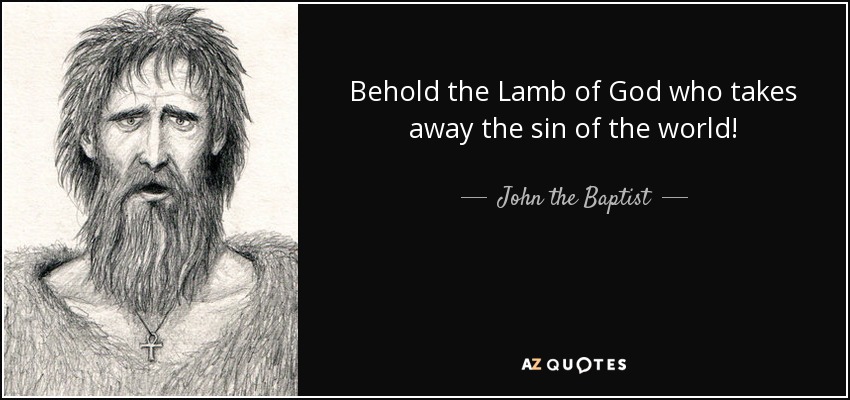
John the Baptist was not dressed in royal robes in the wilderness.
He was a prophet of cleanliness against pathogenic microbes for the villainous.

No one was greater among those born of women
yet the fire of heaven cleanses the sin that was taken as given.

The trees will produce wood and paper.
The majesty of mountain and plain will be savored. 
The glory of production from substance will be seen.
The greatness of stateliness will be gleaned.

The farmer waits for rain to water the precious crop.
You also must be patient for the return from the top
before the final stop.


The mulberry tree grew beneath the tower.
It cast a shadow that didn't touch the tower at any hour.
It shaded the grass so practical benefit wouldn't sour.

Thought or feeling doesn't cause an external event by will alone.
The mountain that is moved is the image of expectation grown.

It has to be considered to be known.
It has to be known to be owned. 
It has to be owned to be honed or blown.
It has to be honed to be shown.

Remembrance is a mental event that tenders thought about change.
Pragmatic evolution becomes a state for which there exists a range.

The elegant grace for the resultant condition 
self-governs for reasonable ambition.

The Lord God of Israel is good.
The goodness of duty is understood.

-----------------------

41 Beatus qui intelligit
Blessed who knows

1 Happy are they who consider the poor and needy!
the Lord will deliver them in the time of trouble.
2 The Lord preserves them and keeps them alive,
so that they may be happy in the land;
he does not hand them over to the will of their enemies.
3 The Lord sustains them on their sickbed
and ministers to them in their illness.
4 I said, "Lord, be merciful to me;
heal me, for I have sinned against you."
5 My enemies are saying wicked things about me:
"When will he die, and his name perish?"
6 Even if they come to see me, they speak empty words;
their heart collects false rumors;
they go outside and spread them.
7 All my enemies whisper together about me
and devise evil against me.
8 "A deadly thing," they say, "has fastened on him;
he has taken to his bed and will never get up again."
9 Even my best friend, whom I trusted,
who broke bread with me,
has lifted up his heel and turned against me.
10 But you, O Lord, be merciful to me and raise me up,
and I shall repay them.
11 By this I know you are pleased with me,
that my enemy does not triumph over me.
12 In my integrity you hold me fast,
and shall set me before your face for ever.
13 Blessed be the Lord God of Israel,
from age to age. Amen. Amen.

-------------------------
==================
------------------------

Eng. What is this supposed to do?

Chn.  这应该怎么办?           
            Zhè yīnggāi zěnme bàn?

Jpn.    これは何をすることになっていますか?                                         
            Korehanani o suru koto ni natte imasu ka?

Krn.   이것은 무엇을해야합니까?                                                               
            igeos-eun mueos-eulhaeyahabnikka?                             

Ltn.    Hoc est quod volo facere?                   
Itn.     Cosa dovrebbe fare questo?                                                     

Grk.    Τι πρέπει να κάνει αυτό;
             Ti prépei na kánei aftó?                                                     

Spn.    ¿Qué se supone que debe hacer esto?                                     
Frn.      Qu'est-ce que c'est censé faire?                             
Gmn.   Was soll das tun? 
Hng.     Mit kell tennie?       
Trk.       Bu ne yapmalı?               

Rsn.      Что это должно делать?
               Chto eto dolzhno delat'?

------------------------

Reward


Psalm 41

The psalm is addressed to the director of music for the temple as one that is 'of David.' It is possible that there was a standard musical form for the type of song.
It is an individual lament with a petition to be healed from illness. Individual laments are the most common type.

The last verse is not part of the individual expression itself. It represents a liturgical conclusion of the first segment of the Book of Psalms.

The parts are not equally divided of the 150 psalms in the book.

------------------------

Faith


First Isaiah contains the prophecies of the 8th-century prophet of Judah. These words were written either by himself or his contemporary followers in Jerusalem (from c. 740 to 700 BCE). There were some later additions such as chapters 24–27 and 33–39.

Second Isaiah (ch. 40–55) is the work of an anonymous 6th-century author who wrote during the Exile. Third Isaiah (ch. 56–66) was composed after the return from Exile.

Chapters 1-12 in Proto-Isaiah expressed oracles against Judah. These were from the prophet's early years. The theme of judgment is followed by the promise of restoration for the righteous.

The divine plan is to be realized on the "Day of the LORD". Jerusalem will be a model for the worldwide rule. The nations of the world will look to Zion (Jerusalem) for instruction. Israel is invited to join the plan.

Chapters 5-12 explain the significance of the Assyrian judgment against Israel. Chapters 13-23 presented oracles against foreign nations. The preparation of the nations for Yahweh's world rule is announced. These were from the middle years of the prophet.

The vision of the Apocalypse in chapters 24-27 was added at a later date.

Chapters 28-33 announce that a royal saviour (a messiah) will emerge in the aftermath of Jerusalem's punishment and the destruction of her oppressor. These oracles were from Isaiah's later ministry.
Chapters 34-35 tell how the redeemed exiles will be returned to Jerusalem.

Crocus

Isaiah 35:1-2

The wilderness and the dry land will be glad.
The desert shall rejoice and blossom.
It will blossom abundantly like the crocus
to rejoice in song.

The glory of Lebanon shall be given to it,
the majesty of Carmel and Sharon.
They will see the glory of the LORD,
the majesty of our God.

-------------------------

The wilderness will be glad.
The dry land will no longer be sad.

The desert shall rejoice and blossom.
The crocus will bloom as a symbol of promise.

The trees will produce wood and paper.
The majesty of mountain and plain will be savored.

The glory of production from substance will be seen.
The greatness of stateliness will be gleaned.

==================

Pray. Sing. Organize Order.


The epistle to James provides the counter-argument to salvation by grace. It doesn't argue that salvation doesn't come by the grace of God. The proposal is that good works are an expression of the faith by which salvation is rendered.

The person to whom this letter is ascribed is not held to be one of the two members of the Twelve who bore the name James (see Mt 10:2–3; Mk 3:17–18; Lk 6:14–15). He didn't identify himself as an apostle. He described himself as a servant of God and the Lord Jesus Christ. (James 1:1).

James, the brother of John, was killed by Herod Agrippa I (Acts 12:1–2). James, the son of Alphaeus, was not identified as a leader by scripture or tradition.

Another James is identified as a half-brother to Jesus (Matt.13:55). Paul went to visit this James in Jerusalem (Acts 21:18). Paul called this James, the brother of the Lord (Gal.1:19). Paul said that this person had received a visit from Jesus before the other apostles after the crucifixion (1 Cor.15:7 ). This was presented as evidence of the resurrection.

Paul wrote that it was James, Peter and John who recognized the grace that had been given to him (Gal.2:9).

This James was not a follower before Jesus died according to John 7:2-5. The gospel states that not even his brothers believed in him during his life.

He was executed in 62 CE according to Josephus. The apostle James was beheaded by order of King Herod Agrippa (Acts 12:1-2) is dated at 44 CE.

The letter was written prior to the meeting of the Jerusalem Council (Acts 15). James, along with Peter and Paul, affirmed the decision to take the gospel message to the Gentiles at that council. This council met in 49. This places the date for writing the letter between 45–48.

Such a significant event as the Jerusalem Council would have warranted comment from James, as he was writing to a Jewish Christian audience.

The letter is drawn from the Hebrew Bible and the sayings of Jesus. The letter is filled with offhand references, parallels and echoes of the sayings of Jesus. There are perhaps as many as 34. This suggests a composition before the sayings of Jesus were fixed and before authors used formal citations.

The letter is addressed to “the twelve tribes in the dispersion.” The term “twelve tribes” designates the people of Israel in Judaic scripture. The “dispersion” or “diaspora” refers to the non-Palestinian Jews who had settled throughout the Greco-Roman world (Jhn. 7:35).

The church is the new Israel in Christian thought. The address probably designates the Jewish Christian churches located in Palestine, Syria and elsewhere.

It is possible that the letter is meant more generally for all Christian communities. The “dispersion” has the symbolic meaning of exile from our true home as it has in the address of 1 Peter (1 Pt 1:1).

The Epistle of James is noteworthy because it makes no explicit reference to the death, resurrection or divine sonship of Jesus.  The Protestant reformer Martin Luther denied it was the work of an apostle and termed it an "epistle of straw".

James is a letter only in the most conventional sense. It has none of the characteristic features of a real letter except the address. It belongs rather to the genre of parenesis or exhortation. It is concerned almost exclusively with ethical conduct. It therefore falls within the tradition of Jewish wisdom literature like Proverbs or Sirach.

It consists of sequences of didactic proverbs to many passages in Sirach and to sequences of sayings in the synoptic gospels. Numerous passages in the letter treat of subjects that also appear in the synoptic sayings of Jesus, especially in Matthew’s Sermon on the Mount. James railed against the hypocritical believer who says one thing but does another.

James encouraged his readers to rejoice in trials, speak with restraint, keep the royal law of love and prove their faith by good works. He exclaimed that God exalts the humble to warn against unchecked desire and judgmentalism.

There is an ascetic tone to the epistle that warns against favor for the rich in order to express compassion for the poor.

The correspondence is too general to establish literary dependence. James represents a type of early Christianity that emphasized sound teaching and responsible moral behavior. Ethical norms are derived from a concept of salvation that involves conversion, baptism, forgiveness of sin and expectation of judgment (Jas 1:17; 4:12).

The Jewish work was written in an excellent Greek style which ranks among the best in the New Testament. It appears to be the work of a trained Hellenistic writer. It was not written by a Jerusalem Jew. It was either recorded by a secretary or re-written in Greek at a later time.

James placed a spotlight on the necessity for believers to act in accordance with our faith. Believers are to pray, sing, speak with reserve, give alms and behave in accord with the moral code.

James 5:7-8

Be patient until the coming of the Lord, beloved. The farmer waits for the precious crop from the earth with patience until it receives the early and the late rains. You also must be patient. Strengthen your hearts for the coming of the Lord is near.

-------------------------

The farmer waits for rain to water the precious crop.
You also must be patient for the return from the top
before the final stop.

==================

Love

The gospel of Mark begins with the baptism and temptation of Jesus. Matthew introduces a family tree that traces the origins of Jesus back to Abraham to show him as a fulfillment of Messianic prophecies. The genealogy in Luke draws the line back to Adam.

The title Son of David identifies Jesus as the healing and miracle-working Messiah of Israel. He was sent to work miracles for faith in salvation by the love of God. As Son of Man he will return to judge the world.

There are about 15 instances in which Matthew interprets some event in the life of Jesus as a fulfillment of a prophecy. Christianity was not a definite break with the Jewish religion.

It was a development that allowed for the extension of the invitation to Gentiles to join. Christianity is a continuation and fulfillment of that which had been set forth in the scriptures as the history of salvation.

The gospel reflects the struggle with the conflicts between the evangelist community and other Jews. There is sharp criticism for the scribes, Pharisees and Sadducees.

Chapters 1-4 in Matthew mainly deal with the miracle birth of Jesus and the events surrounding His early life. This primarily involves the commonly told Christmas story but also includes the genealogy.

The infancy narrative tells of the massacre of the innocents, the flight into Egypt and the journey to Nazareth. This material is unique to Matthew. It is one of the elements that demonstrates that the gospel was written for  a Jewish community.

The author was a male Jew that stood on the margin between traditional and non-traditional Jewish values. He was familiar with the technical legal aspects of scripture that were being debated in his time. The gospel was documented in a polished Semitic "synagogue Greek" that established the work as Hellenistic.

There are 5 sections after the infancy story. Each begins with a narrative that is followed by a discourse. Each section ends with the words "When Jesus had finished saying these things..."

The first narrative section begins when a man in a loincloth who lives by eating wild honey and locusts begins to prophesy of one who will come to baptize with the Holy Spirit and fire (3:11).

This prophet is John. He is likely a member of the ascetic Jewish Essene community. He eventually meets the one whom he believes to be the fulfillment of his prophesy.

Jesus receives the blessing of God with his baptism. A voice from heaven is heard to say, “This is my Son, the Beloved” (3:17).

He is led into the wilderness for forty days without food or water to be tested by Satan. Jesus emerges unscathed and triumphant. He begins to preach his message: “Repent! For the kingdom of heaven has come near” (4:17). His ministry begins.

His early ministry by word and deed in Galilee meets with success. The success leads to the Sermon on the Mount, the first discourse.

While the author of the Gospel of Mark emphasized the wonderful deeds that Jesus performed, Matthew places the major emphasis on the marvelous things that Jesus taught.

Some of the teachings were spoken directly to the inner group of disciples, but at different times and places Jesus addressed the 'multitude.'

Matt. 11:2-11

Jesus began to speak to the crowds about John after he sent the disciples from prison to speak to him: 'What did you go out in the wildersness to see? A reed shaken by the wind? What was it then? Someone dressed in soft robes? Look, those who wear robes are in royal palaces.

'Did you go to see a prophet? Yes, I tell you this is the one about whom it is written,

"See, I am sending my messenger ahead of you
to prepare your way before you."

'Truly I tell you no one has risen greater than John the Baptist among those born of women, yet the least in the kingdom of heaven is greater than he.'

-------------------------

John the Baptist was not dressed in royal robes in the wilderness.
He was a prophet of cleanliness against pathogenic microbes for the villainous.

No one was greater among those born of women
yet the fire of heaven cleanses the sin that was taken as given.

==================

Remembrance
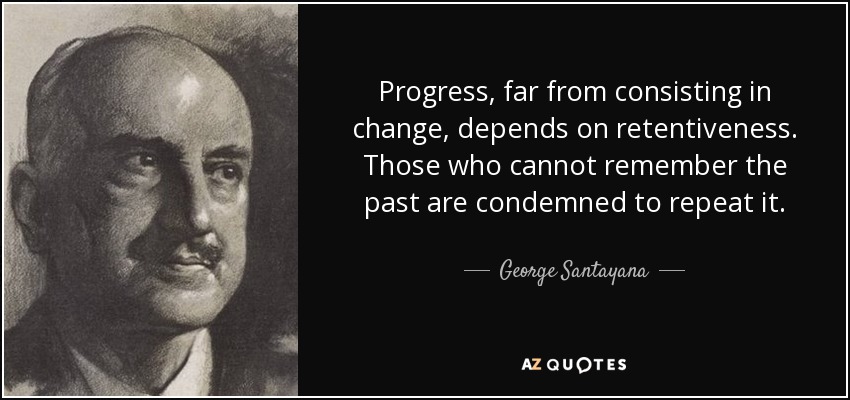
George Santayana
b. 12.16.1863 Madrid, Spain
d. 9.26.1952  Rome, Italy

George Santayana was a philosopher, essayist, poet and novelist. He was born in Spain, but moved to the USA when he was 8 years old. He was educated in the country and wrote in English. He is generally considered an American man of letters.

His heritage is rooted in the Spanish diplomatic society with its stress on high education and familiarity with the world community. His father, Agustín Santayana, was born in 1812. He had studied law and practiced for a short time before entering the colonial service for a posting to the Philippines.

He served an apprenticeship to a professional painter of the school of Goya while studying law. A number of his paintings remain in the private possession of the family.

His wife, Josefina, was born in Scotland. She was the daughter of a Spanish diplomat.  Josefina met Agustín while on vacation in Spain. They had met previously in the Philippines where Augustin had become the governor of Batang in 1845.

They were married in 1861. She moved to Boston to fulfill a promise she had made to her deceased husband, George Sturgis, to raise their children there. Augustin moved there later  for the education of George. Augustin didn't stay long due to the cold Puritanical climate. Jorge stayed and changed his name to George.

Santayana would become a principal figure in Classical American Philosophy. He went to Boston Latin school. Then he went to Harvard at the undergraduate and a graduate levels.

He was a student of William James and Josiah Royce. He added naturalism to their pragmatism. His emphasis on creative imagination was a harbinger of important intellectual turns on both sides of the Atlantic.

He was a naturalist before naturalism grew popular. He appreciated multiple perfections before multiculturalism became an issue. He thought of philosophy as literature before it became a theme in American and European scholarly circles.

He managed to naturalize Platonism, update Aristotle, fight off idealisms and provide a striking and sensitive account of the spiritual life without being a religious believer.

Santayana was both a literary and a philosophical figure. John Dewey praised his Life of Reason in 1907 as a contribution to moral philosophy that rivaled that of Emerson.

His one novel, The Last Puritan, was a  bildungsroman. The story was centered on the personal growth of its protagonist, Oliver Alden. Alden confronted the inevitable end of his Puritan belief.
Santayana was committed to metaphysical naturalism insofar as it tempered evolutionary theory with classical pragmatism.

He believed that human cognition, cultural practice and social institution have evolved so as to harmonize with the conditions present in their environment. Their value may then be adjudged by the extent to which they facilitate human happiness.

The position for evolutionary pragmatism is too optimistic in relation to liberal power, but his advocacy for classical reconstruction included the consideration of education for meritocracy. The openness to rebellion, revolution, world war or terrorism characterized the flaw for this kind of power.

He treasured the Spanish Catholic values, practices and worldview in which he was raised even though he was a self-declared atheist. He was a broad-ranging cultural critic. His critique spanned many disciplines.

He was profoundly influenced by Spinoza's life and thought. He was a devoted Spinozist in many respects.

Madrid
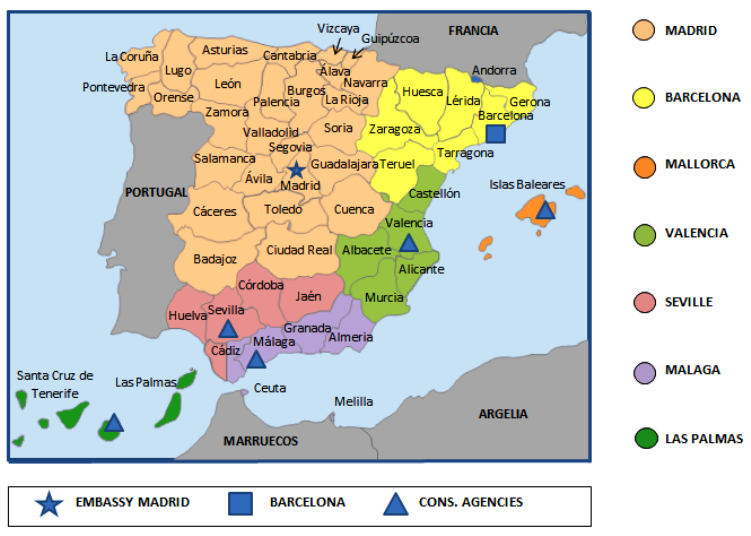
Madrid is the center of roads in Spain. It lies on the River Manzanares in the centre of both the country and the Community of Madrid.

It is the capital and most populous city of Spain. It is the seat of government and the residence for the monarchy. The crown is constitutionally instituted as the highest office of the country. Felipe VI from the house of Bourbon is the current monarch.

Madrid has preserved the look and feel of many of its historic neighborhoods and streets. Its landmarks include the Plaza Mayor, the Royal Palace, the Royal Theatre, the Buen Retiro Park, the 19th-century National Library, national museums and the Golden Triangle of Art.

The Peninsular War (1807-1814) against Napoleon during the reign of Ferdinand VII gave birth to a new country with a liberal and bourgeois character. Madrid experienced like no other city the changes caused by this openness.

The Spanish Revolution of 1854 was also known by the name Vicalvarada. It started with a confrontation between rebel troops under General Leopoldo O'Donnell, 1st Duke of Tetuan and government troops near the village of Vicálvaro.

This incident was followed by a military coup and a popular rebellion which occurred between June 28 and July 28, 1854 during the reign of Isabella II.

The Spanish Revolution ended the moderate decade (Década moderada) (1844-1854) and started the progressive biennium (Bienio progresista) (1854-1856).

George Santayana

Jorge Santayana was born on December 16, 1863 in Madrid and spent his early childhood in Ávila, Spain.

His mother, Josefina Borrás, had moved with her three surviving children to live in Madrid in 1861. She met Agustín Ruiz de Santayana, an old friend from her years in the Philippines. They married in 1862.

Josefina returned to Boston with her three Sturgis children in 1869. She had promised her first husband to raise their children in the United States.  She left the six-year-old Jorge with his father in Spain. Jorge and his father followed her to Boston in 1872.

Augustin soon returned alone to Ávila. He remained there the rest of his life. Jorge did not see him again until he entered Harvard College and began to take his summer vacations in Spain.

Jorge changed his name to George in Boston. He attended Boston Latin School and Harvard University. He studied under the philosophers William James and Josiah Royce. He was involved in eleven clubs as an alternative to athletics.

He was founder and president of the Philosophical Club, a member of the literary society known as the O.K., an editor and cartoonist for The Harvard Lampoon and co-founder of the literary journal The Harvard Monthly.

He studied for two years in Berlin after graduating Phi Betta Kappa in 1886. He returned to Harvard to write his dissertation on Hermann Lotze.

Lotze was a German philosopher and logician. He had a medical degree and was well versed in biology. He argued that if the physical world is governed by mechanical laws, developments in the universe could be explained as the function of a world mind. His medical studies pioneered work in scientific psychology.

Santayana taught philosophy while he worked on his dissertation. He became part of the Golden Age of the Harvard philosophy department. A number of his students became famous. T. S. Eliot, Robert Frost, Gertrude Stein, Horace Kallen, Walter Lippmann and W. E. B. Du Bois were among them. He became friends with Wallace Stevens.

He studied at King's College, Cambridge from 1896 to 1897. He received his Ph.D. from Harvard in 1889 and became a faculty member at Harvard University (1889–1912).

He would remain there until his departure at the zenith of academic success.

Santayana cherished academic life for its freedom to pursue intellectual interests and curiosity, but he found that certain aspects infringed on that freedom. Faculty meetings and university committees seemed primarily to be partisan heat over false issues. He rarely attended them.

The general corporate and businesslike adaptation of universities was increasingly less conducive to intellectual development and growth. He expressed concern about the evolving Harvard goal of producing muscular intellectuals to lead America as statesmen in business and government. Were not delight and celebration also a central aspect of education?

He experienced a metanoia or change of heart in 1893. He gradually altered his style of life from that of an active student turned professor to one focused on the imaginative celebration of life.

He began planning for his early retirement. He found university life increasingly less conducive to intellectual pursuits and delight in life.

He wrote the Life of Reason during this emotional crisis. It was published in 1906.

Life of Reason (5 Vol.'s)
Text

He integrated the impractical notion of perfection into an unheard of application to biology for his pragmatic theory of evolution. He argued that the ideal has a natural basis and everything natural has an ideal development.

Happiness is that which sanctions life. Existence is a mad and lamentable experiment without it. Progress does not depend upon the relentless drive to change. It requires retentiveness. When the drive to change is absolute, there are no grounds for improvement.

Experience is not retained. Consciousness remains in cognitive infancy as among savage primitives. Those who don't remember the past are condemned to repeat it.

Fanaticism is the redoubling of effort after the aim for it has been forgotten. It's like Wile E. Coyote in his efforts to stop the Road Runner.

His thought on religion did not assume a position of perpetual aggression towards theism. He repeated Bacon's maxim. A little philosophy provides the inclination to atheism. Depth brings consideration to religion. The God to whom depth in philosophy brings thought is different from the one from whom a little philosophy has estranged the common antagonist.

Santayana was an early adherent of epiphenomenalism. This is a position on the mind–body problem which holds that physical and biochemical events within the human body (sense organs, neural impulses and muscle contractions) are causal with respect to mental events (thought, consciousness and cognition).

Subjective mental events are completely dependent for their existence on corresponding physical and biochemical events within the body. There is no causal efficacy on physical events without action.

The appearance that a subjective mental state (such as intention) influences physical events is an illusion. Fear seems to make the heart beat faster, but the biochemical secretions of the brain and nervous system (such as adrenaline), not the experience of fear, is what raises the heartbeat. The position is a kind of mental tightrope for watching internal causation in somatic reaction.

Mental events are a kind of overflow that cannot cause anything physical. It's the counter to the claim to the existence of paranormal phenomena.

It provided the basis for the definition presented by Ducasse. A paranormal event does not have a physical cause. It's the basis for the description of belief in 'magical' things like telekenesis, clairvoyance or teleportation.

Satayana admired the classical materialism of Democritus and Lucretius. He was most favorable towards Lucretius of the three authors on whom he wrote in Three Philosophical Poets. He held Spinoza's writings in high regard. He called him his "master and model."

Santayana took advantage of a modest inheritance from the death of his mother to retire from Harvard and left for Europe indefinitely.

He divided his life into three phases in his autobiography, Persons and Places (1944).  The background (1863–1886) encompassed his childhood in Spain through his undergraduate years at Harvard.

The second period (1886–1912) was that of the Harvard graduate student and professor with a trans-Atlantic penchant for traveling to Europe. The third period (1912–1952) was as the retired professor writing and traveling in Europe who would eventually establish Rome as his home.

He lived eight years in Spain, forty years in Boston and forty years in Europe. He died in Rome at 88 years of age.

George Santayana
S. 乔治·桑塔亚娜
T. 喬治·桑塔亞娜

乔 Qiao   tall, stately            喬  kyo    high                Jo      じょ-  ジョ-       Jo   조  article   
治 zhi       to punish              治  ji       reign                ji       じ         ジ           ji    지  g     
桑 Sang   mulberry               桑  so      mulberry         San   さん    サン        San 산  mountain     
塔 ta         tower                    塔  to      pagoda             ta      た        タ            ta    타   ta           
亚 ya         second                 亞  a       rank                  ya     や        ヤ            ya   야  ha           
娜 na         elegant                 娜  da    graceful             na     な         ナ           na   나  I                               

------------------------

The mulberry tree grew beneath the tower.
It cast a shadow that didn't touch the tower at any hour.
It shaded the grass so practical benefit wouldn't sour.

Thought or feeling doesn't cause an external event by will alone.
The mountain that is moved is the image of expectation grown as known.

Remembrance is a mental event that tenders thought about change.
Pragmatic evolution becomes a state for which there exists a range.

It has to be considered to be known.
It has to be known to be owned.
It has to be owned to be honed or blown.
It has to be honed to be shown.

The elegant grace for the resultant condition
self-governs for reasonable ambition.

==================

Pure Experience

William James
Varieties of Religious Experience
Text

The Varieties of Religious Experience was written about natural theology from a medical point of view. William James was trained as a physician. He taught anatomy at Harvard, but never practiced medicine. He developed his interest in psychology and philosophy. He has been called the Father of American psychology.

His view of religion wasn't limited to the Christian perspective, but it was informed by it. This opened the door to the integration of the Christian and classical societies. This classically Christian position has room for development with the reformed epistemology of Plantinga and Craig.

James looked at the religious experience as an encounter with pure perception. There is the theme of individual contact with the manifest reality of the personal character of the oneness of the universe in the reports of this pure experience.

Cognition was minimized in relation to consciousness. The sense of benign purpose was identified by major representatives of  this phenomenal involvement with the Designer of the design for existence.

The subtitle for the book is A Study in Human Nature. This is significant in itself insofar as that which is human can be defined by way of contrast. Berkeley's emphasis on the immaterial was promoted to consider the mental view of material reality.

That which is common to the conceptions of the human and divine natures is the capacity to create. The difference is a matter of scale. The divine nature is held to have created the universe. This is beyond the capacity of human nature.

Humans create that which we are able to produce with our knowledge of materials. The knowledge is a relatively 'immaterial' memory of tests that involve components of substance.

The religious experience has produced written testimony regarding the special nature of the communion with that which was personal about the union with that which exists outside of the ordinary perspective on perception.

While this is interesting insofar as it is unusual, there is the question of practical value. Religion was developed with functional regard for religious awe. It is a system for organization that allows for personal and social applications.

The interaction between religion in government finds expression in respect for freedom, but this freedom is contained within the parameters of legal polity.

That which is legal about polity finds agreement with the medical paradigm defined by the goal against harm. The goal is presented with respect for the practical application against damage.

James developed this medical concern in relation to the warning against action in compliance to command hallucination. If someone 'hears' a voice that tells him to kill someone else, it is categorized as a hallucination due to the contradiction with the law against murder.

The command of the hallucination holds proximity to the antiquated definition of republic. When Cicero stated that insurrection was the chief concern for the security of the republic, he stated a legal opinion. When reported that the 'rebels' were executed without a trial, he reported an illegal action as though it were validated by his authority as consul.

His position was presented after Sulla had claimed dictator as a title in his consulship. He had taken Rome by armed force with his military leadership twice to promote his campaign against the Mithridates.

The story about the sword of Damocles was known to Cicero. It was most likely a case of fake news in the formation of Roman republic.

It set a bad precedent for reports on government action. If the leadership reports action in contradiction to the legal application of habeus corpus, it is presenting the image of being above the law. This may win some notoriety with respect for the special nature of leadership in government, but it loses credibility in legal authority as a consequence.

The collateral damage is such that the leadership is then compelled to use surveillance to watch for criminal reaction to the report of criminal action.

Where is the line for punishment to be drawn? Is the presumably 'false' report to be followed by violent law enforcement against objection to report of the action as a precedent for political policy? That would almost guarantee partisan partiality in judgment.

There is this consideration as well. Suppose people chose to assemble in the streets to protest the 'action.' What is law enforcement supposed to do? Are they to meet fire with fire to punish protest with violent action that could range from assault to summary execution?

The collateral damage of anger in reaction to the report would have produced more collateral damage with cruel punishment as the means to repress the protest. If the protest was non-violent the punishment would be cruel by virtue of the excess force used to put down the protest as a 'rebellion.'

Did Cicero produce security as the result of his report or did he antagonize the opposition with his defiance of regard for legal polity? He provoked a volatile reaction to invite the treatement of protest as riot with his report of execution without a trial.

Cicero provided an historical example of how not to act as consul.

William James was aware that his treatment of the topic of variety in religious experience had to be informed by his recognition of logical investigation.

His application of logic asked the question about the propensities of the experience. This addressed the psychological aspect of the inquiry. He also asked about the philosophical significance. The questions addressed the distinction between perception and conception in empirical investigation as it could be found in documentation.

The perceptual is existential. The conception is noetic or spiritual in judgment. Existential and spiritual judgments are combined after the separate experience of them. They can be synthesized for practical value.

He wrote, "In the matter of religions it is particularly easy to distinguish the two orders of question. Every religious phenomenon has its history and its derivation from natural antecedents. What is nowadays called the higher criticism of the Bible is only a study of the Bible from this existential point of view, neglected too much by the earlier church."  (p.005)

------------------------

The experience of existence is qualified by immaterial judgment.
Aesthetics avoid the abundance of pungence in indulgence.

The judgment of material by that which immaterial in mind
is established by test that qualifies the knowledge that we find.

==================

The religious literature for monotheism was organized in the category of the 'fear of God' by writers like Sirah. What was the biographic condition for this proposition? He was acutely aware that the predominant social view was conditioned by polytheistic stories.

What did those who agreed with the proposition have in mind with the intent of agreement? Aren't there a variety of experiences that can be categorized as fear or the fear of God?

These are manifestly questions of historical fact. The answer to them can decide the further question of the use of religious literature as a guide to life with the vicarious or literary experience of revelation.

The value of the revelation is not found in a work without error. Our theory allows that the book is a document of religious experience despite the errors and contradictions expressed by the different views expressed in it.

Royce would have called in the expression of a community. It is a true record of the inner experience of individuals who were wrestling with the crisis of their condition.

Existential facts are insufficient for determining value by themselves. Higher criticism doesn't confound the existential with the spiritual. It seeks to select the best expression of the spiritual with respect for the existential.  It could be called an immaterialist view of material existence.

The study has to be opposed to the pathological aspects of religion's existential conditions particularly with regard to the consideration of visions. There is an inclination to refrain from the analysis of something that is regarded as an area for devotion.

Error in over or under generalization presents itself as a problem in any categorization. An individual doesn't want to be categorized with generalization when the generality threatens to distort unique value.

A crab would probably be filled with a sense of personal offense at being categorized as a crustacean without apology. It is not difficult to imagine the creature saying, "I am no such thing." It might well say, "I am myself and myself alone." Generalization is the consequence for the question of the nature of a thing nonetheless.

Crustaceans are aquatic arthopods. They have shells. A crab is a crustacean, because it has a shell and lives mostly in water. Likewise the command hallucination to kill someone who doesn't present the threat of deadly force in an imminent way has to be judged as pathological.

The action of the 'new man' wasn't legal counsel because he reported an illegal punishment as his official reaction to the threat of a condition that he antagonized with his report. It was an open door to the perpetuation of abuse by the use of excess force.

---------------------------

Justice is the product of the union represented by good government.


John Jay was one of the statesmen who wrote as Publius to persuade the public to accept the United States Constitution. He became an important leader of the Federalist Party after the ratification of the Constitution in 1788.

He had been born into a wealthy family of merchants and statesmen in the New York city government. The family was of French and Dutch descent. They organized opposition to British policies in the time preceding the American Revolution.

He served as the ambassador to Spain after he helped ratify the US Constitution with the Federalist Papers (1788). Spain was persuaded to provide financial aid to the fledgling United States. He presented the persuasion during his term from 1779 to 1782.

He was a negotiator of the Treaty of Paris in which Britain recognized American independence.
He was an advocate for centralized government. He served as the first Chief Justice for the US when George Washington was president. He negotiated the highly controversial Jay Treaty with Britain.

It facilitated 10 years of peaceful trade between the United States and Britain in the midst of the French Revolutionary Wars. The wars began in 1792.

The treaty was designed by Alexander Hamilton and supported by President George Washington. It was signed in 1794.

It angered France and divided Americans. It inflamed the new growth of two opposing parties in every state. The pro-Treaty Federalists were opposed by the anti-Treaty Jeffersonian Republicans.

The Jeffersonians feared that closer economic or political ties with Great Britain would strengthen Hamilton's Federalist Party, promote aristocracy and undercut republicanism.

The Federalists favored the British and the Jeffersonian republicans supported France in the First Party System. The treaty was not replaced by another after it expired.

He was an opponent to slavery. When he served as Governor of New York from 1795 to 1801 he helped enact a law that provided for the gradual emancipation of slaves. The institution of slavery was abolished in New York in Jay's lifetime.

Jay wrote 5 of the 85 Federalist papers. The second one was his. It was about how the union provided protection from the dangers of foreign power.

The Federalist Papers #2
Text

He promoted the propriety of serious consideration for the Constitution. He argued that the government is an indispensable necessity.

People must cede to it some of their natural rights in order to vest it with requisite powers. The type of government was what the people were being asked to consider.

Did they want a single federal government or did they want separate confederacies?

Prosperity was dependent upon union. The wisest citizens were directed to obtain that objective.The division of the union would reduce the security of the nation.  It would not be wise to divide without thought about whether their proposal was better.

Independent America was not composed of detached and distant territories. It was one connected, fertile, widespread country whose portion was for liberty.

Providence had blessed it with a variety of productions from soil and toil. It has been watered with innumerable streams for the delight and accommodation of its inhabitants.

Navigable water formed a kind of chain round its borders as if to bind it together. The rivers ran at convenient distances. They were used as highways for the communication of aid, transportation and the exchange of commodities.

Providence had also been pleased to give this connected country to a united people with the same language and principles of government.

Many of her ancestors were driven from their homelands to favor factional power. Joint counsel in war established law for independence.

The inheritance of the union appears to be by the design of Providence. It should not be split into alien sovereignties.  We have been one with each citizen having the same rights, privileges and protection.

The nation sought peace, formed alliances, made treaties, entertained contacts with foreign states and won war.  Federal government was formed for political existence.

Habitations were in flames, citizens were bleeding, desolation progressed with hostility in a way that left little room for the organization of a reasonable and balanced government for the freedom of the people.

Liberty was the product of the convention in Philadelphia. The convention spent months in daily consultation for the love of the country to produce a plan for the people with their council.

The apprehension of imminent danger induced the formation of the Congress of 1774. A plan was recommended for ratification by officials elected by vote.

The body recommended measures for their constituents, but the media was flushed with stories of opposition from officials who sought the dictate of personal interest. This assault on sensibility happened soon after the recommendation was made to the public.

Ambition aimed at objects which did not correspond with the public good. Their pride demanded the rejection of advice for patriotic unity.

The majority of the people reasoned judiciously despite the bad press. They considered that the Congress was composed of officials from different parts of the country who were experienced in the formation of policy for the interests of the nation.

Members from that same Congress who have grown old in acquiring political information had carried their accumulated knowledge and experience through subsequent conventions in thinking that the prosperity of America is dependent upon union.

The convention was formed by election with the vote of the people. It has in turn voted to recommend the people adopt the proposal  for union with the Constitution.

Are more confederacies better than one? Those who are against the recommendation have opposed the continuance of security for the union.

Jay saw national government as necessary for negotiation with foreign states for the security and prosperity of the people in the country. He believed that division into confederacies would result in the loss of greatness.     

The union of the nation
is for the prosperity of the united station
in negotiation with foreign states
and protection from alien hates.


The problem with student loan debt was created by national intervention.

Student loans are offered as financial aid. National aid should be facilitated through state government.

National intervention for government control of school district policy has promoted local prejudice to hire or fire instructors and administrators with grant money for schools with lower incomes.

The populations for all the schools in our district were changed by the order for forced busing. The number of poor students was increased by the action.  .

Employees not qualified by instruction are favored over those with instruction and experience in education.

How many with instruction and experience in education have not been hired or have not been retained BECAUSE they got financial aid as a loan?

How many schools that have received a government grant (Title I) for the school have had to deal with a no pass policy even for students who have been doing their work?

The national government isn't supposed to make demands on local school administration, but the assumption of prejudice in the majority group has been used to force local administrators to adopt national 'guidelines.'

The no-pass policy has created major problems with student behavior, but national intervention won't allow the refusal of a bathroom pass to be limited to students who refuse to do their work.

The policy won't allow students who act like undocumented immigrants to be expelled for the disruption of class instruction.


Sunday, December 1, 2019

Rebuild

12.8.19
Emily Browning

Rebuild
Zion
重建锡安
Chóngjiàn xī ān
シオンを再構築
Shion o sai kōchiku
ps102
Rebuild Zion

I have a question
regarding the detection
of affection.

May I please have your assistance
in protection from persistence
for the malicious?

Will you help me to work through a crisis
to avert the danger of damage from harmful devices
used to force fortune to submit to prejudiced bias
that acts like a virus?

Please listen when I call.
Help me to make amends when I fall.

My days drift away like smoke.
My bones feel pain that makes pleasure a joke.

My heart was smitten like the grass when withered
like when the snake made time wave when it slithered.

The voice of my groans 
is honed by skin and bones.


I have become like an owl among the ruins
or the vulture in the wilderness far from humans.


I am like the lone sparrow on the house top.
I want to fly to where the line of sight stops.

Those who scoff have taken an oath against me.
My enemies delight in the way that they extol the beastly.

I have mingled tears with my drink.
I have destroyed worlds of thought to think. 

I have eaten crow rolled in ashes for bread
when I had come to regret that which I had said.

I have been lifted up and thrown away
by indignation wrapped in wrath portrayed.

My time passes like a shadow cast.
I wither like the grass that has passed.

Eternity endures forever.
Your name keeps us together.

You will have compassion for life
to help those who love rise above strife.

The time for mercy is a frame for grace.
It is appointed for the right length and place. 

The rubble from destruction
is a plea for reformed construction.

Your name will be revered by the nations.
Your glory will be seen by the respective stations
in various locations.

Zion will be rebuilt in Israel
that glory may be fulfilled as visible. 

Prayers will be answered for those who seek the divine will.
The request will not be despised for those who ask to pay the benign bill.

Let this be read by a future generation
that the unborn may praise the Spirit's sensation
with elation.

Heavenly light looked down from the holy height
to behold the earth in recovery from disaster's destructive appetite.

Freedom declares the choice of goodness
to avoid damage in the pursuit of fullness.

The groan of the falsely convicted has been heard
to obtain release from captivity interred as unearned.

The enlightenment used anti-monotheistic sentiment
to promote revolution based on anti-religious resentment.

Socialism was developed as a result
to apologize for the resultant tumult.

The spirit of rebellion against authority
is not a benefit to the majority.

Recognition of the right for Israel to exist
is praise for God in Jerusalem wished.

People gather together in worshipful service
to celebrate providence in the observably earnest.

My strength had been brought down before my prime.
The number of days had been shortened in time.

I said, "Do not take me from the midst of my prayer.
Your time endures for the salvation of care.

"The foundation of the earth was for heaven laid
in the beginning for this life that the Creator made.

"Special atonement did not build a foundation for love. 
The universal kind offered the promise for redemption by grace from above.

"Perfection is not a thing to be claimed throughout temporal reality.
It is a goal to which to aspire in what can be seen in the afternoon tea.

"Creation will perish, but the Father will endure
to provide what can be provided in the covenant that is sure.

"Change in the observable will by the Spirit become manifest
within the variables in the substance constantly blessed as best.

"Christ will change reality like a garment.
The world will be rearranged for benefit from the bargain.

"The Creator remains outside of that which is changed.
Time won't end in the foreign exchange. 

"The children of the divine heritage will continue.
Their offspring will stand fast with the faith of God in you."

------------------------

102 Domine, exaudi
Dominated, answer

1 Lord, hear my prayer, and let my cry come before you;
hide not your face from me in the day of my trouble.
2 Incline your ear to me;
when I call, make haste to answer me,
3 For my days drift away like smoke,
and my bones are hot as burning coals.
4 My heart is smitten like grass and withered,
so that I forget to eat my bread.
5 Because of the voice of my groaning
I am but skin and bones.
6 I have become like a vulture in the wilderness,
like an owl among the ruins.
7 I lie awake and groan;
I am like a sparrow, lonely on a house-top.
8 My enemies revile me all day long,
and those who scoff at me have taken an oath against me.
9 For I have eaten ashes for bread
and mingled my drink with weeping.
10 Because of your indignation and wrath
you have lifted me up and thrown me away.
11 My days pass away like a shadow,
and I wither like the grass.
12 But you, O Lord, endure for ever,
and your Name from age to age.
13 You will arise and have compassion on Zion,
for it is time to have mercy upon her;
indeed, the appointed time has come.
14 For your servants love her very rubble,
and are moved to pity even for her dust.
15 The nations shall fear your Name, O Lord,
and all the kings of the earth your glory.
16 For the Lord will build up Zion,
and his glory will appear.
17 He will look with favor on the prayer of the homeless;
he will not despise their plea.
18 Let this be written for a future generation,
so that a people yet unborn may praise the Lord.
19 For the Lord looked down from his holy place on high;
from the heavens he beheld the earth;
20 That he might hear the groan of the captive
and set free those condemned to die;
21 That they may declare in Zion the Name of the Lord,
and his praise in Jerusalem;
22 When the peoples are gathered together,
and the kingdoms also, to serve the Lord.
23 He has brought down my strength before my time;
he has shortened the number of my days;
24 And I said, "O my God,
do not take me away in the midst of my days;
your years endure throughout all generations.
25 In the beginning, O Lord, you laid the foundations of the earth,
and the heavens are the work of your hands;
26 They shall perish, but you will endure;
they all shall wear out like a garment;
as clothing you will change them,
and they shall be changed;
27 But you are always the same,
and your years will never end.
28 The children of your servants shall continue,
and their offspring shall stand fast in your sight."

-------------------------
==================
-------------------------

Eng. Will you please help me?

Chn. 你能帮我吗?
           Nǐ néng bāng wǒ ma?

Jpn.  助けてくれませんか?
           Tasukete kuremasen ka?

Krn.   도와주세요?
            dowajuseyo?

Ltn.     Placet et mihi?
Itln.     Mi aiuti per favore?
Spn.    Por favor podría usted ayudarme?
Frn.     Pouvez-vous m'aider s'il-vous-plaît?
Gmn.  Würdest du mir bitte helfen?
Hgn.    Kérem, segítsen nekem?

Grk.     Θα με βοηθήσετε;
             Tha me voithísete?

Rsn.    Не могли бы вы помочь мне?
             Ne mogli by vy pomoch' mne?

Trk.     Lütfen bana yardım eder misin?

-----------------------------

Psalm 102
 

The Book of Psalms is divided into 5 sections. Psalm 102 belongs to the 4th (Psalms 90-106).

Each song is identified by a sequence number. The numbering of the Septuagint differs from that of the Masoretic text. Protestants use the Masoretic sequence. The Septuagint and Vulgate unite psalms 9 and 10. It alters the numbers by one.

The kinds of psalms differ. There are hymns, communal laments, royal songs, individual laments and individual thanksgivings. Psalm 102 is an individual lament.

It opens with an invocation, followed by the lament and ends with an expression of confidence.
The description, "My days pass away like a shadow and I wither like the grass" (v.11) indicates the feeling of greater age as associated with the approach of winter.

The admission of temporal existence is contrasted with eternal time when the lament shifts toward thanksgiving. "You are forever. Your name lasts from age to age." (v.12)

Some of the psalms are attributed to David as a prayer in his name. (Ps.17 and 86) The psalmist identifies as "the afflicted" in the introduction of this kind. It is one of the 7 penitential psalms.

Those that refer to the psalmist by name express confidence in the descendants of David. Those that lament the afflicted condition are expressions of concern about the righteousness of the other descendants.

The songs celebrated the line of succession for the preservation of what was right about the leadership, but the laments of affliction encouraged repentance for redemption from error in the same line.

The psalmist has said in essence, "I believe that my faith will lead me in what is right, but I fear that I will be misled by error or will mislead. May God help me to believe in that which is best."

--------------------------

The Vision


The 6th chapter of the book records the vision of Isaiah in the year that Uzziah, the father of Jotham and king of Judah died.

The vision of divine glory stamped an indelible character on Isaiah’s ministry. It provided a key to understanding  his message. The majesty, holiness and glory of the promise of the inheritance took possession of his spirit.

He gained an awareness of human pettiness and sinfulness in the face of heavenly glory. The abyss between the sovereign holiness of the divine nature in relation to human sinfulness overwhelmed the prophet. He was left with gratitude for the grace of forgiveness for the fulfillment of the promise.

The reign of Jotham, Ahaz and Hezekiah lasted from about 750 to about 685 BCE.
Jotham was 25 years old when he began his rule and reigned for 16 years (2 Chr.27:1; 2 Kgs.15:33).

He inherited a strong government. It was organized with officers for administration. He was a contemporary with the prophets Isaiah, Hosea, Amos and Micah.

He is credited with having built the Upper Gate of the Temple of Jerusalem. (2 Chr.27:3)
2 Kings 15:37 mentions that Jotham fought wars against Rezin, king of the Arameans, and Pekah, king of Israel.

Ahaz was the son and successor of Jotham. He was 20 when he became king of Judah and reigned for 16 years.

Ahaz is portrayed as an evil king in the Second Book of Kings (2 Kings 16:2).

Ashur-nirari V led the Assyrians against the city of Arpad in northern Aram in 754 BCE. His successor Tiglath-Pileser III warred against Arpad in the years 743 to 740. The city was captured after three years.

Rezin of Damascus made an alliance with Pekah of Israel in the face of this threat. The two were therefore enemies of the pro-Assyrian king of Judah, Ahaz (Isa. 7:1).

Menahem, ruling in Samaria, sent tribute to Tiglath-Pileser (Biblical Pul) in order to "strengthen his hold on the kingdom," (2 Kgs 15:19), apparently against his anti-Assyrian rival Pekah.

Pekah had set up in a rival reign in Gilead to Menahem's Samaria-based kingdom in Nisan of 752. He became the sole ruler on the assassination of Menahem's son Pekahiah in 740/739. He died in 732/731.

Hezekiah was the son of Ahaz and the 13th king of Judah. He witnessed the destruction of the northern Kingdom of Israel by Sargon's Assyrians in c. 722 and was king of Judah during the siege of Jerusalem by Sennacherib in 701.

He is considered a righteous king by the author of the Books of Kings (2 Kgs. 18:3).

Isaiah wrote during the period that marked the expansion of the Assyrian empire and the decline of Israel. The Assyrians swept westward into Aram (Syria) and Canaan under King Tiglath-Pileser III (745-727).

The kings of Aram and Israel tried to pressure Ahaz king of Judah into joining a coalition against Assyria around 733.  Ahaz chose to ask Tiglath-Pileser for help instead. The decision was condemned by Isaiah.

Isaiah's wife was called "the prophetess" (Isa. 8:3). They had 3 sons. Each name represented the aspect of a prophesy. The eldest was named Shear-jashub. The name meant "A remnant shall return" (Isa. 7:3).

It was predicted that the assault on Jerusalem by Pekah and Rezin would fail.

The next son was named Immanuel. It meant "God with us" (Isa. 7:14). A siege on Jerusalem by Assyria would be complicated by the 'defense' by Egypt. Both armies would assemble outside of Jerusalem.

The resultant battle would destroy the vines of the vineyards and the domestic cattle that produced milk for curds. It was predicted that the city would be preserved at a cost.

The youngest was named, Maher-Shalal-Hash-Baz. It meant, "Spoil quickly, plunder speedily" (Isa. 8:3). The name predicted that the riches of Damascus and the spoils of Syria would be carried away by Assyria.

The fall of the northern kingdom was indicated by the names of the 3 sons. Only a remnant would escape the subsequent dispersion by the Assyrians. No kings would presume to claim the rule of the kingdom. No records were kept to document the state of the kingdom.

Assyria assisted Ahaz with the conquest of the northern kingdom in 722-721. This made Judah vulnerable to attack.

King Sennacherib of Assyria would invade the land to threaten the city of Jerusalem in 701 (Isa. 36:1). He would attack and capture the fortified cities of Judah before camping outside of the capital.

The perpetual ingratitude of a child toward his parent was regarded as the cause of revolt (Isa.1:1).
Israel and Judah are indicted for sin in chapters 1-5 of the Book of Isaiah. Revolt was indicated as a sickness of the head that made the hear faint.

The sickness was 'diagnosed' as probable to increase (Isa.1:5). A remant had been preserved to prevent the destruction that had visited Sodom and Gomorrah. (Isa.1:9).

The battles of the northern kingdom were seen as a portent for Judah. The blood of sacrificed animals could not appease the offense caused by ingratitude or pride. (Isa.1:11).

The practice of sacrifice established for appeasement in the past was a perpetuation of the immorality of the gods for whom the animals were sacrificed.

It was the will to love God and to serve others in the kingdom that served as the sacrifice for the law. Rebellion against the law would result in loss of the promise.

The city of peace was built on the elevated area so the people could go up to visit to ask to see judgment from the Judge of the nations.  The temple was the house for to watch for instruction in the competition to learn the way to walk on the path for the law. (Isa.2:3)

Insofar as the past was a vehicle for war as the means to battle for authority to establish the royal line for succession weapons would be subordinated to trade in order to keep military action limited to defense (Isa.2:4).

The nations then had soothsayers and fortune-tellers. The children of the Father ought not so to have degraded themselves, but they did.  They made concession to foreign practice or custom to show allegiance when they sought out foreigner alliance when they should have maintained alliance to the Author of the promise.

They entered into league with idols and false stories about gods to preserve belief in the corruption of human nature when they should have preserved respect for the law to provide sympathy and provision only as needed to care for those who needed assistance due to the adversity of circumstance.

Insofar as adversity was the cause of strife; strife was the cause of anger in disagreement; angry disagreement was the cause of conflict with respect for violent action to avenge perceived wrongs and violent action was the cause for cruel punishment, it was advised that some surplus in supply could be used to redress consequence from adversity.

The leadership of royalty was to serve as a model for conservative reform in the preservation of providence. This model was to serve elected office for the republican leadership of people in self-government with constitutional law.

Strife among the poor was the most likely area for conflict based on lack of  providence. Judgment for the resolution of conflict has to consider the rights of those who are willing to work as part of the team for the health of household productivity in the community is that which is expressed in the equit for the meek of the earth.

Those who avoid economic productivity by persistence in pressing accusation against others for personal gain from the neglect or abuse of authority in order to make it look like allegation is the responsibility for the community, need to correct their error or they will stand in need of correction. 

Isa. 11:4

With righteousness he shall judge the poor,
and decide with equity for the meek of the earth;
he shall strike the earth with the rod of his mouth,
and with the breath of his lips he shall kill the wicked.

-------------------------

The equity of righteousness will judge the poor.
Teamwork for civil rights will not be coerced as the door
to the place beyond what surplus can endure.

Those who subject the law to unreal idealist oppression
will be corrected by self-recognition or external correction.

Those who subject the law to rule by violence or the threat
will incur liability that will help them to self-correct or suffer debt.

Those who work for civil or human rights with respect
will receive recognition that will network to achieve earned consent.

==================

Freedom

Paul greeted several people in Romans 16. The most notable of these were Priscilla and Aquila. Both Aquila and Priscilla were in Rome until about 49 when Claudius expelled the Jews from the city (Acts 18:2).

Paul met the couple when he visited Corinth (c. 51). They did further ministry in Ephesus (Acts 18:19) around c. 53. They went to Rome from there. It is likely that they were not the first ones to take the gospel to Rome. The apostle greeted the church community that met in the their house (16:5).

The city was predominately populated by Gentiles. The church was comprised of both Jewish and Gentile believers (cf. 1:6, 7:1). Paul addresses both groups in this epistle. There was agreement about the importance of the law for civil society between Jews and Gentiles in the Christian community.

The message in Isaiah was rewritten for the audience. The Romans, Greeks and Jews in Rome had been informed about the role for religion in the empire. The sacrifice wasn't as important as the love for those for whom the sacrifice was offered. Finding the law of love inscribed in our hearts is the most important product of the action.

It was known that the Romans held republic as their form of government. The Greeks had preceded them with Athenian, Spartan and Macedonian monarchy. The Athenians had entertained democratic monarchy.

Plato had recorded the Phaedrus as a debate about love. Socrates argued for passionate love, but it was between men. Men associated with men as a popular form of political consensus. The influence on the democratic monarchy was populist as a result.

Plato would direct the criticism against democracy after the Spartans had gained the ascendance in Greek culture between the competing city states.

The author of the epistle argued that men chose to be with men because the women had chosen to be with women. (1:27) The passion resulted in a kind of agreement between the Athenians and Spartans that favored war against the Persian threat.  As long as the threat came from outside the realm, the enemy could be blamed for the fear of insecurity.

The Jews were cautioned even more than the Romans that while instruction in the law inspired appreciation for excellence (2:18) righteousness by faith as seen in Abraham (4:2) was the fundamental organizational principle for the community.

The law was to be found in the heart, not in the rite of circumcision. Polytheists, monotheists, Gentiles and Jews were all under the power of sin (3:9). Judgment had to be about deterring harmfulness from the behavior not about who was making the judgment. (2:3)

It was another reminder to form judgment against the sin as opposed to condemning the person whom had accused of  the 'sin.' The aversion of damage and the conversion of the sinner was the intent, not the destruction of the accused.

The state of nature came prior to the law. (2:12) It preceded the development of polytheism or monotheism. There was only the battle against the elements with or without the tribal society.

Primitive tribalism fashioned totems and smaller idols. Kingdoms had a god or a parthenon of gods and goddesses. Republic was fancied as an advanced regression insofar as 'no single' person would profit from the benefit of society in the state. They aspired to civilization, but they worshiped the creature rather than the Creator (1:25).

The promise of inheritance from Abraham to his descendants came by faith in the one God. It was the righteousness of faith that made him the father of many nations. We share in the faith in the One who who gives life to the dead and calls into existence the things that do not exist. (4:17)

Idolatry fashioned images. The stories of polytheism entertained rebellion against God. The spirit of rebellion was for lawlessness. The law and the prophets point to righteousness in relations, but faith is more important than works of the law (3:27).

Baptism cleanses the initiate from the sinfulness to the world as the works of darkness are washed from the portals of perception to reveal the light from the love of God the Father in his Son, Jesus Christ. Christ was sacrificed for the ungodly (5:6).

This was the free gift of the atonement as offered for the redemption of the fall from grace by Adam. The Son was offered as a sacrifice once for all. We were baptized into his death to die to rise into the newness of life (6:4).

We are no longer slaves to sin (6:20). We have been made free to walk in faith with righteousness.
The law is binding until death. When a married woman is bound to her husband by law it is for the length of his life. If her husband dies she is released from the obligation of marriage to her husband. (7:2)

Sinful passions rebelled against the law when we were living in the flesh. (7:5) We have been delivered from slavery to sin by our birth through baptism in Christ.

Not all who are descended from Israel belong to Israel (9:6). Isaiah wrote about a remnant. Free will is important in the discernment of righteousness in the law. There is a struggle to make the best choice in order to live by the direction of the conscience. Even with prayer we are left to test the water for what is best.

The author of the letter wrote as though Israel were lost to faith in salvation by works of the law. (9:32) We are not saved by our works, but by the grace that is shown to us despite the lack of brilliance in glory. How are we to ask for guidance from One in whom we have not believed? (10:14)

The Jews have not been rejected (11:1). Salvation has been offered to the Gentiles to give an incentive to adapt the continuum of faith for the extension of the gift to others. Experience is the guide until inspiration or invention reveals something better.

We are exhorted to present our bodies as a living sacrifice in worship. Hate evil. Hold fast to what is good. Love with affection. Outdo each other in showing honor. Rejoice in hope, Be patient in tribulation.

Be constant in prayer. Contribute to the needs of the present or the future community. Practice hospitality. Observe respect for authority. Pay your taxes. Owe no one anything, except for allegiance to love. (13:8)

The night is gone. The day is at hand. Cast off the works of darkness. (13:12)

May your steadfast hope encourage you to live in harmony with one another in Christ Jesus to glorify the Father with one voice. (15:5)

Rom. 15:4

Whatever was written in former days was written for our instruction, that by steadfastness and by the encouragement of the scriptures we might have hope.

-------------------------

That which was written in scripture was for our instruction
that by steadfast encouragement we might have hope to help us function.

==================

Lamb of God

The gospel of Matthew was written for a Jewish community.

The first chapter contains two distinct sections. The first lists the genealogy of Jesus from Abraham to his legal father Joseph, his mother's husband. The second part starts at verse 18. It provides an account of the virgin birth of Jesus Christ.

The second chapter describes the events after the birth of Jesus, the visit of the magi and the attempt by King Herod to kill the infant messiah, Joseph and his family's flight into Egypt and their later return to live in Nazareth in Israel.

The third chapter is the first to deal with the ministry of Jesus with events taking place some three decades after the close of the infancy narrative related in the previous two chapters. The focus of this chapter is on the preaching of John the Baptist and the Baptism of Jesus.

There are clear links with the Gospel of Mark for the first time since Matthew 1:1. Many scholars are certain a good portion of this chapter is a reworking of Mark 1. The chapter also parallels Luke 3.

A number of passages shared by Luke and Matthew, but not found in Mark, are commonly ascribed to the hypothetical source 'Q'.

The baptism of Jesus is described in the gospels of Matthew, Mark and Luke. John's gospel does not directly describe the baptism.

The baptism is one of the major theological events in the gospel narrative of the life of Jesus. Others include the Transfiguration, Crucifixion, Resurrection and Ascension.

Matt. 3:11

'I baptize you with water for repentance, but one who is more powerful than I is coming after me; I am not worthy to carry his sandals. He will baptize you with the Holy Spirit and fire.'
-------------------------

Baptism uses water to wash away sins for repentance.
The Holy Spirit baptizes with fire for entrance
to the new life in relation to the divine essence.

==================

Heart

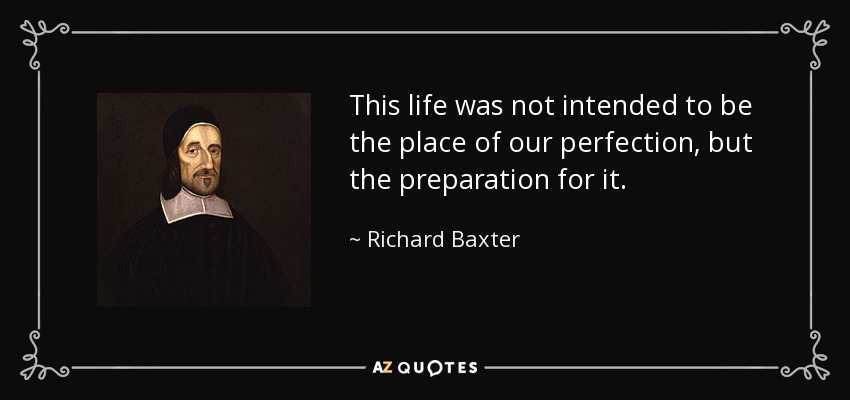
Richard Baxter
b. 11.12.1615 Rowton, England
d. 12.8.1691 London, Great Britain

Richard Baxter never received a higher commission than that of parish pastor to loom workers in Kidderminster. This did not stop him from becoming one of the most prominent English churchman of the 1600's with his written work.

He was a peacemaker who sought unity among Protestants as a highly independent thinker. He found his way to the center of every major controversy in England during his lifetime.

He was ordained into the Church of England, but he was not quite a Separatist and not quite a Conformist in his theology. He eventually registered as a non-conformist, but he expressed his opposition to the rebellion.

He wrote extensively after he was elected as the pastor for Kidderminster. He was as an emphatically theological writer for self-instruction with bible study and prayer. The instruction was for piety in personal behavior and social relations.

He retained a non-separatist Presbyterian approach and became one of the most influential leaders of the Nonconformists after the Restoration.

His views on justification are unconventional within the Calvinist tradition because his teachings emphasize the importance of repentance and faithfulness for credibility in the claim to salvation by faith.

Rowton is located near the border with Wales.
Map England 16th and 17th Centuries

Rowton is a small village located 7 miles north of the Market Town of Wellington, Shropshire. The village church of All Hallows is a medieval foundation which was reconstructed in 1881. It is recorded that Rowton had a Priest as early as 1086.

Shropshire is a county that sits on the western border of Wales. It is England's largest inland county. The River Severn, Great Britain's longest river, runs through the county. It exits into Worcestershire via the Severn Valley.

Major estates in Shropshire were granted to Normans after the conquest in 1066. Defensive castles were built at this time across the county to defend against the Welsh and enable effective control of the region. Ludlow Castle was among these.

The border with Wales was defined in the 16th century to confirm the Lordships formed prior to the Laws in Wales Act. This act of the English Parliament incorporated Wales as part of the Kingdom of England. 

Life

Richard Baxter was born at Rowton, Shropshire, at the house of his maternal grandfather on 12 November 1615, He was baptised at its then parish church at High Ercall. The village is included in the civil parish.

He had been educated by the local clergy who acted as tutors in Latin. He was then sent to the court of Ludlow Castle, the effective capital for Wales, for more tutelage in education.

He was persuaded to join the court in London for more education, but returned home before long. He spent time reading theology with a local clergyman.

He read the devotional writings of Anglican theologians with Calvinist views before moving on to the works of the orthodox Anglican theologian Richard Hooker and some Puritans who conformed to Anglican guidelines for authority.

He met 2 non-conformists in about 1634.

He became master of the free grammar school at Dudley in 1638. He was ordained and licensed by the Bishop of Worcester. He commenced as a minister there.

His success as a preacher was small at first. He was soon transferred to Bridgnorth, in Shropshire, as assistant to a Mr Madstard. He established a reputation for vigorously discharging the duties of his office.

Baxter remained at Bridgnorth for nearly two years.  He took a special interest in the controversy relating to Nonconformity and the Church of England during this time.

He became alienated from the Church on a number of matters. He rejected episcopacy in its English form after the requirement of the "et cetera oath."

The Convocation of the English Clergy traditionally met whenever Parliament met and was dissolved whenever Parliament was dissolved. Charles ordered Convocation to continue sitting even after he dissolved the Short Parliament in 1640.

The Convocation had not yet passed the canons which Charles had had Archbishop Laud draw up. The Laudian church policies were confirmed as the official policies of the Church of England. Convocation dutifully passed these canons in late May 1640.

The first canon asserted that the king ruled by divine right. The doctrine of Royal Supremacy was required by law. Taxes were due by the law of God, nature and nations.

This canon led many Ministers of Parliament to conclude that Charles and the Laudian clergy were attempting to use the Church of England as a way to establish an absolute monarchy.

Canons against popery and non-Trinitarian Christology were not controversial. The canon that condemned anyone who did not regularly attend service in their parish church or who attended only the sermon, not the full Prayer Book service, were regarded as controversial. Puritans believed that these rules were directed against them.

A declaration known to Puritans as the the Et Cetera Oath was to be administered to clergyman, clerics and candidates for ordination.

The oath declared approval for the doctrine, discipline or government in the Church of England as that which contained that which was necessary for salvation.

It qualified agreement with the episcopacy for the administration of the rite of marriage and the sacraments of Baptism and the Eucharist. The Church of England insisted on independence from the "usurpations and superstitions" of the see of Rome.

The key point was that the monarchy and the episcopacy of England were dedicated to the security of the realm.

The Puritans stated that the Canons of 1640 were unconstitutional. He claimed that Convocation was no longer legally in session after Parliament was dissolved.

The administration of the Et Cetera Oath also resulted in the Puritans' pro-Scottish sympathies becoming even more widespread.

Baxter became a moderate Nonconformist. He continued as such throughout his life. He was not exclusively tied to Presbyterianism even though he was regarded as a Presbyterianan. He often seemed prepared to accept a modified Episcopalianism. He regarded all forms of church government as subservient to the true purposes of religion.

The Calvinist position was irresolutely determined to define the monarchy as laying claim to absolute authority, so they opposed any measures perceived as such as corrupt. They formed a strange loop in their logic that prevented negotiation.

One of the first measures of the Long Parliament which lasted from 1640 to 1660 was to reform the clergy. A committee was appointed to receive complaints against them. The inhabitants of Kidderminster were among the complainants.

The vicar George Dance agreed that he would give £60 a year, out of his income of £200, to a preacher who should be chosen by certain trustees.

Baxter was invited to deliver a sermon before the people and was unanimously elected as the minister of St Mary and All Saints' Church in Kidderminster. This happened in April 1641, when he was 26 years old.

Kidderminster

Kidderminster is a town in Worcestershire, England. It is 17 miles (27 km) south-west of Birmingham and 15 miles (24 km) north of Worcester.

King Charles I had granted the Borough of Kidderminster a Charter in 1636.

The Reformed Pastor
Text

Baxter's ministry continued for about 19 years with many interruptions. He accomplished many reforms in Kidderminster and the neighborhood during that time.

He formed the ministers in the country around him into an association that united them irrespective of their differences as Presbyterians, Episcopalians and Independents.

The Reformed Pastor (1657) was a book which Baxter published in relation to the general ministerial efforts he promoted.

Baxter shared his experience to encourage other pastors in their vocation. The pastor's work was to glorify God and share the truth of the faith. Pastors are called to obey the commandments to seek knowledge so that they may grow in love as a model for piety.

English Civil War

England was united as kingdom during the rule of the House of Tudor. Ancestral Wales and the Lordship of Ireland were included in the union. There were 5 monarchs in the succession which ran from 1485 to 1603.

When Elizabeth I passed away without a successor the royal line was shifted to the House of Stuart from Scotland. While the same king ruled Scotland and England, there were different parliaments for each. The goal was to form a single parliament for Scotland and England as Great Britain.

The goal was opposed by Calvinists. The Puritans in England and the Presbyterians in Scotland accused the king of seeking an absolute monarchy. The union had been described as Protestant by the Etc. Oath. The oath included a pledge to accept the episcopacy in Church leadership.

The monarchy and the episcopacy were accused of corruption to refuse cooperation. James and Charles most likely suspended parliament in England in order to organize a single parliament for Great Britain. This was taken as evidence of the effort to claim absolute power.

The Protestation of 1641 was an effort to avert English Civil War by the claim of Protestant unity. Those over the age of 18 were offered the opportunity to sign the oath of allegiance to King Charles I and the Church of England as a way to reduce the tensions across the realm. Those that did not sign it were also listed under it as refusing to pledge the oath.

The oath broadened participation in government to the public. The privilege of authority also carred the responsibility of service to the crown for the protection of the realm. The English Reformation offered men in the public over the age of 18, the opportunity to assume a responsible position of authority in government.

Tensions continued to escalate between Parliament and King Charles I. Civil War broke out in August 1642. Baxter had recommended the Protestation. Worcestershire was a Royalist stronghold.

The English Civil War was a battle between royal and parliamentarian armies. The king directed a march to London in October 1642. London was held by parliament's main army as commanded by the Earl of Essex.

The royal force ran into resistance in Edgehill, 135 kilometeres (84 miles) northeast of the capital. Baxter was preaching in Alcester on 23 October, 32 km (20 mi.) east of the battle.

The battle was inconclusive but it was one of the first in the 4 year conflict of the first civil war. The king resumed his march on London, but the defending militia averted the march with reinforcements from the army of Essex.

Worcestershire was only 9 miles from Worcestershire. Essex marched his army from Northampton to Worcester after the king had marched his from Nottingham to Shewsbury.

Baxter moved to a parliamentarian stronghold in Coventry to promote the growth of sectaries after Worcester had been taken. Sectaries were nonconformist preachers. He found himself in company with no fewer than 30 fugitive ministers.

He officiated each Sunday as chaplain to the garrison. He preached a sermon each to the soldiery and the townspeople. He took his chaplaincy to Colonel Edward Whalley's regiment after the Battle of Naseby on 14 June 1645.

Naseby was 137 km (85 mi.) northeast of London and 92 km (57 mi.) north of Oxford, the royalist capital. The parliamentarian army had effectively destroyed the royalist force. Charles lost the bulk of his veteran infantry and officers, all of his artillery and stores, his personal baggage and many arms.

Parliament had won the first civil war within a year after the battle. King Charles I was executed on Tuesday 30 January 1649. He was beheaded by the judgment of parliament for crimes against the "people."

Baxter's connection with the Parliamentary army was characteristic of his reform. He supported sectaries and constitutional government over the republican form that the more radical leadership of parliament demanded.

He was summoned to London by Cromwell to assist in settling "the fundamentals of religion" during the Protectorate.

He regretted that he had not previously accepted the offer to become chaplain to Cromwell's Ironsides army unit, but he chose to preach about the divisions in the church when summoned to preach before him. He argued with him about liberty of conscience and even defended the monarchy in subsequent interviews.

Baxter stayed at the home of Lady Rouse, wife of the baronet, in Worstershire in 1647. He wrote most of a major work, The Saints' Everlasting Rest (1650) while there. He also promoted the establishment of a new University of Shrewsbury. Lack of funding prevented success.

He returned to Kidderminster where he became a prominent political leader. An all-day debate was held on 1 January 1650 with John Tombes at Bewdley to address leading issues between the contending parties in state and church. It was attended by about 1500 people on each side.

The Protectorate was the period during the Commonwealth when England and Wales, Ireland, Scotland and the English overseas possessions were governed by a Lord Protector as a republic.

The Protectorate began in 1653 when Oliver Cromwell was appointed Lord Protector of the Commonwealth under the terms of the Instrument of Government after the Barebone's Parliament.
A slim devotional work  under the title Call to the Unconverted to Turn and Live was published by Baxter in 1658.

Charles II issued the Declaration of Breda in which he made several promises in relation to the reclamation of the crown of England on 4 April 1660. The Convention Parliament proclaimed that King Charles II had been the lawful monarch since the execution of Charles I.

Baxter settled in London after the Restoration. When he was offered the episcopacy for the bishopric of Hereford in 1660, he declined it.

He preached in the capital until the Act of Uniformity 1662 took effect. The Act prescribed the form of public prayers, administration of sacraments and other rites of the Established Church of England according to the rites and ceremonies prescribed in the Book of Common Prayer.

Adherence to this was required in order to hold any office in the church as sanctioned by the government. It explicitly required episcopal ordination for all ministers, i.e. deacons, priests and bishops.

The Puritans had abolished many features of the Church during the Interegnum.

Baxter was barred from ecclesiastical office by the Act. He was not permitted to return to Kidderminster, nor was he allowed to preach.

He was prosecuted for preaching between 1662 and 1668. He was imprisoned for 18 months and was forced to sell two libraries.

It was during this period that he said, "I preached as never sure to preach again and as a dying man to dying men."

His writing was not outlawed. Baxter's health had grown worse, yet this was the period of his greatest activity as a writer. He wrote 168 or so separate works. These included major treatises such as the Christian Directory, the Methodus Theologiae Christianae and the Catholic Theology.

His Breviate of the Life of Mrs Margaret Baxter records the virtues of his wife and tenderness which otherwise might not have been known.

His theology caused a rift among the Dissenters. He differed from standard Calvinist doctrine on a number of important points. The atonement is not limited to a select few, but is available to all who will believe in Christ.

The righteousness that is imputed to the believer in the work of justification is not the righteousness of Christ, but is by virtue of the faith of the believer in Christ. Every sinner has a distinct agency of his own to exert in the process of his conversion to belief in Christ.

When he was released from prison he lived the remainder of his life peacefully from 1687 onwards. He died in London on 8 December 1691 (aged 76). His funeral was attended by churchmen as well as dissenters.

He was sincere in his conviction, but misguided by his independence. He was constant in the choice to argue in opposition to the ascendant leadership despite the benefit of national unity for security.
His position on the atonement as open to all who would accept Christ however was rightly defined for universal salvation.

Richard Baxter
S. 理查德·巴克斯特
T. 理查德·巴克斯特

理 Le     reason              理   ri         logic                       Ri    り         リ             Li   리   lee         
查 cha   to examine       查   no kanji                             cha  ちゃ-  チャ-          cha  차  car             
德  de    favor                德  toku      ethics                     do    ど         ド             deu  드  de               
巴  Ba    to hope            巴  ha         comma-design       Ba    ば       バ               Bag  박  foil       
克  ke    to restrain        克   koku    overcome               ku    く        ク              seu   스  s           
斯  si      this                  斯  shi        this                         su    す        ス               teo  터   foundation 
特  te     unique              特  toku     special                     ta     た-     タ-                           

-----------------------

The special atonement did not build a foundation for love.
The universal kind offered the promise for redemption by grace from above.

Perfection is not a thing to be claimed throughout temporal reality.
It is a goal to which to aspire in what can be seen in the afternoon tea.

=================

Religion

Baron d'Holbach
b. 12.8.1723  Edesheim, France
d. 1.21.1789  Paris, France

Paul-Henri Thiry or Baron d'Holbach was an encyclopedist and German philosopher in the French Enlightenment.

He was given the name Paul Heinrich Dietrich at his birth in Germany, but spent most of his life in Paris. He was well known for his atheism and his salon. His most famous work against nature was known as The System of Nature (1770).

His naturalism was based on a deterministic and materialistic metaphysic. He used the metaphysics for his polemics against organized religion. His ethical and political theory was utilitarian.

The close circle of intellectuals that d'Holbach hosted and sponsored produced the Encyclopedia. The Encyclopedia incorporated a number of revisionary religious, ethical and political works into an ideological frame that contributed to the French Revolution.

D'Holbach's visiting guest list included many of the most prominent intellectual and political figures in Europe. His salon was a shelter for radical thought and a hub for mainstream culture.

Edesheim, Germany

Edesheim is a village near the town of Landau in the Rhineland-Palatinate in Germany. It is located near the border with France. Landau is a long-standing cultural center. It is a market and shopping town surrounded by vineyards and wine-growing villages of the Palatinate wine region.

The area was part of France from 1680 to 1815. It was one of the Décapole, the ten free cities of Alsace. It received fortifications by Louis XIV's military architect Vauban in 1688–99. The town only had a population of about 5,000 in 1789, but it was one of Europe's strongest citadels.

Life
Causality

Paul-Henri Thiry Dietrich was baptized on 8 December 1723. His mother was Catherine Jacobina née Holbach (1684–1743). She was the daughter of Johannes Jacobus Holbach (died 1723). He was the Prince-Bishop's tax collector for the Roman Catholic Diocese of Speyer.

Paul's father was Johann Jakob Dietrich. He was a wine-grower.

Paul was raised in Paris by his uncle Franz Adam Holbach. His uncle had become a millionaire by speculating on the Paris stock-exchange.

Paul attended the Leiden University from 1744 to 1748 with his uncle's support. The university was founded in Leiden, Netherlands in 1575 by William, Prince of Orange, as a reward to the town for its defense against Spanish attacks. It is the oldest university in the Netherlands. It is known for an emphasis on social sciences.

He married his second cousin, Basile-Geneviève d'Aine (1728–1754), on 11 December 1750. They had a son whom they named Francois Nicholas.

Both his uncle and his father died in 1753. He was left with a large inheritance. He would remain wealthy throughout his life.

His wife died from an unknown disease in 1754. He moved to the provinces for a brief period with his friend Baron Grimm. He received a special dispensation from the Pope to marry his deceased wife's sister, Charlotte-Suzanne d'Aine (1733–1814) the following year.

They had a son, Charles-Marius (1757–1832) and two daughters Amélie-Suzanne (13 January 1759) and Louise-Pauline (19 December 1759 – 1830).

Holbach used his great wealth to throw the dinner parties for which he is famous. He owned a house in Paris in rue Royale, Butte Saint-Roch, which, generally, had a guest list restricted to serious intellectuals.

He retreated to his country estate at Grandval, Le Château de Grand-Val during the summer months when Paris was hot and humid. He invited friends to stay for a few days or weeks.

He invited Denis Diderot every year. Diderot was a writer who became best known for serving as co-founder, chief editor and contributor to the Encyclopédie along with Jean le Rond d'Alembert.

It was the first encyclopedia to include contributions from many named contributors. It was also the first to describe the mechanical arts. It included articles skeptical about Biblical miracles. This angered both religious and government authorities.

The biblical stories described events that displayed benefit from faith in the love of God that presented an alternative to ordinary polytheistic conventions that cultivated the expectation that intervention by supernatural beings would be coercive.

The beneficial outcome from faith in the love of God was promoted by the stories about the miracles. The miracles were a popular form of argument against classical determinism.

D'Holbach was known for his generosity. He often provided financial support discreetly or anonymously to his friends. Diderot was among them. It is thought that the virtuous atheist Wolmar in Jean-Jacques Rousseau's Julie, ou la nouvelle Héloïse is based on d'Holbach.

His close social circle shared at least a willingness to entertain views that many would have thought too radical to be discussed in other social settings. The coterie met from the 1750's into the 1780's.

The group evolved over time, but its core members included Denis Diderot, Jean d'Alembert; Friedrich-Melchior Grimm and the naturalist Charles-Georges Le Roy.

D'Holbach was a contemporary of British Empiricists like David Hume and Adam Smith. Enlightenment thought was greatly influenced by the new mechanical and deterministic science of Galileo Galilei and Isaac Newton.

He was more determined by his determinism than his fellow French philosophes Condillac, Condorcet, Diderot, d'Alembert, Helvetius, Rousseau and Voltaire. He embraced the hard determinism that is implicit in a world of matter governed by perfectly strict and absolute Newtonian laws of motion.

He was an ontological materialist. He denied the existence of anything like an immaterial spirit. He was most notably against belief in anything supernatural. This opposition specifically excluded the idea of human free will.

He wasn't content with opposition to that which was wrong about the use of freedom. He opposed the existence of the concept altogether.

Determined by Causality 

He developed many of the arguments in use today by philosophers who call themselves naturalists. Where Hume was a "soft determinist" or "compatibilist," d'Holbach accepted most of the implications of his belief that natural causes are behind all human actions.

His home residence was his salon. A salon was a gathering of people under the roof of an inspiring host, held partly to amuse one another and partly to refine the taste and increase the knowledge of the participants through conversation. Meetings were held regularly twice a week, on Sundays and Thursdays, in d'Holbach's home.

He authored and translated a large number of articles on topics ranging from politics and religion to chemistry and mineralogy for the Encyclopedie. He may have written several disparaging entries on non-Christian religions, intended as veiled criticisms of Christianity itself.

His philosophical writings were published anonymously or under pseudonyms. They were printed outside France, usually in Amsterdam by Marc-Michel Rey. His philosophy was expressly materialistic and atheistic and is today categorized into the philosophical movement called French materialism.

The System of Nature (Le Système de la nature) was published in 1770 under the name of Jean-Baptiste de Mirabaud, the secretary of the Académie française. Mirabaud had died ten years earlier.

The work denied the existence of a deity. It refused to acknowledge a priori argument as evidence. The universe was defined as nothing more than matter in motion bound by the inexorably natural laws of cause and effect.

His objective  in challenging religion was posited as primarily moral. He saw the institution of Christianity as the major obstacle to the improvement of society.

The foundation of morality was to be sought not in Scripture but in happiness. His happiness however was hedonistic. He argued that vice should be loved as the source of pleasure.

He wrote, "It would be useless and almost unjust to insist upon a man's being virtuous if he cannot be so without being unhappy. So long as vice renders him happy, he should love vice."
(System of Nature)

He presented "enlightened self-interest" as the mediating factor in the pursuit of happiness. One could only entertain his own pleasure insofar as it sustained that of others.

There is an attempt to flip the utilitarian formulation for the greatest happiness of the greatest number into the self-promotion posited by the consensus of the claim to liberal power.

Liberals claimed the authority to punish those in the legal polity who were not in agreement with the self interest of the claim to liberal power over the society. It's the way that they turn the presumption of democracy for the republic or kingdom into the mandate of dictatorship.

The scientific materialism of d'Holbach was put together with the economic materialism of Marx and Engles in the economic theory of socialism. Socialists circumvent the action of organization to provide a service to the public with private property.

They skip to the idea that those who have organized a successful service need to be punished by unsubstantiated allegations through government control.

D'Holbach argued for laissez faire in agreement with the proposal of private property by Locke, but it the argument was made superficial by the claim to liberal power over society with the promotion of violent aggression and cruel punishment by deception.

A limited budget has to exercise selection in the choice of products in order to maintain a surplus of 'cash' in the bank. Liberals seeks to remove choice as an option. This is the greatest drawback of the determinist position.

Holbach died in Paris on 21 January 1789, a few months before the French Revolution.  The authorship of his various anti-religious works did not become widely known until the early 19th century.

The argument for free will within legal polity allows for the consideration of causality. The materialistism of naturalistic determinism does not allow for the thought of free will.

Paul Dietrich, Baron d'Holbach
S. 保罗·迪特里希
T.  保羅·迪特里希

保 Bao     to ensure                     保  ho       protect        Po  ぽ-       ポ-         Pol  폴  pole           
罗 luo      to catch                       羅  ra        gauze           ru   る        ル          Di    디   d           
迪 Di       to enlighten                 迪  teki    edify            Dei でぃ-   ディ-     teu  트   t             
特 te        special                         特  toku   special         to    と        ト           li      리   Lee           
里 li         internal                       里  ri         internal        ri    りっ    リッ       hi     히   he           
希 xi        hope                            希  ki        hope            hi     ひ         ヒ                                     

---------------------------

The enlightenment used anti-monotheistic sentiment
to promote revolution based on anti-religious resentment.

Socialism was developed as a result
to apologize for the resultant tumult.

====================

Heart
https://i.pinimg.com/originals/ae/7a/23/ae7a2337cd5d1aea6c450aa35b0836a6.jpg

The central proposition of reformed epistemology is that beliefs can be justified by more than evidence alone. A primary argument against the existence of deity is that no one can see the divine nature.

Evidentialism argues that while belief other than through evidence may be beneficial, it violates some epistemic duty.

Central to reformed epistemology is the proposition that belief in God may be "properly basic" and not need to be inferred from other truths to be rationally warranted.

William Lane Craig described Reformed epistemology as "One of the most significant developments in contemporary Religious Epistemology." It denies the evidentialist take on rationality.

Alvin Plantinga distinguishes between what he calls de facto from de jure objections to Christian belief. A de facto objection is one that attempts to show that Christian truth claims are false.

De jure objections attempt to undermine Christian belief even if it is, in fact, true. Plantinga argues that there are no successful objections to Christian belief apart from those which are de facto (fact-based).

Reformed epistemology was named because it represents a continuation of the 16th-century reformed theology of John Calvin. He postulated a sensus divinitatis, an innate divine awareness of God's presence.

Calvin was trained as a lawyer. His church government was defined by local council. His defined human nature as totally depraved.

He emphasized providence to the Church as the answer to prayer. Bible study and instruction in the language were the key values in the advocacy for prayer.

Rebellion was not ruled out. No man was seen as sufficient to act as the sovereign due to corruption. Calvin's theology defaulted to the metaphysics and logic of Aristotle when it came to monarchy.

Republic with the regression to slavery and the slave trade was not explicitly endorsed until Locke implied that it was part of the liberal power of imperial civilization. This was a concession to the European competition with the Ottoman empire.

Since republic has been instituted major political changes with respect for constitutional law have been enacted. Slavery and the slave trade were outlawed. The right to vote for men of color and women was amended as explicit.

Calvin's influence on the political world was destructive with respect for leadership beyond the local level. The Reformed  epistemology has developed beyond the demotic design of local authority that entertains the spirit of rebellion against higher levels of political or social organization.

National level Calvinism had entertained higher levels of government as an instrument of punishment towards those who were not willing to attack with accusation those who were not operating in the sectarian mode of the secret surveillance state.

Local levels of perception have struggled with the story line of the imperial government since the prophesy of Ezekiel. The greatest happiness for the greatest number is a developmental form for the morality of legislated law that encourages the choice of goodness with free will in informed consent. 
Divine revelation has profound relevance in the context of this struggle.